Bag Making Machine Partnership FAQ: Payment to Uptime
Most bag making machine projects are settled technically before the purchase order is drafted. Pouch format, film structure, sealing method and any inline finishing are already fixed. What still decides whether that order becomes a multi-year supply relationship is a smaller, more commercial set of questions: how payment is staged, what is inspected before the machine leaves the factory, who arranges freight and where risk passes, how small the first order can be, and whether the machine still holds a stable continuous run three years into a changing bag mix.
This FAQ answers those questions using the terms and operating evidence documented for FOSHANTIANZHENG, the brand of Foshan Tianzheng Machinery Co., Ltd., a flexible-packaging equipment manufacturer in Foshan, Guangdong, China, which originated from the Hongli Bag-making workshop founded in 1993. The commercial backbone is short: 30% advance and 70% before shipment, a pre-shipment test as the acceptance criterion, FOB or CIF delivery, and a minimum order quantity of one unit. The operational backbone is equally short: continuous stable operation time, rather than a peak speed figure, is what a diversified factory should underwrite for the length of a partnership.
Why partnership questions appear only after the machine is chosen
During evaluation, buyers compare pouch formats, sealing systems and inline finishing options. During execution, three different exposures open up, and each one has a documented answer in the terms below.
- Cash exposure. Money paid before the machine is proven is the part of an order a buyer cannot recover cheaply. A staged structure only works if the release point of the balance is tied to a defined acceptance event rather than to a dispatch notice.
- Acceptance exposure. A machine can meet its specification on the supplier's film and still run differently on the buyer's material batch. The gap is not closed by a longer contract; it is narrowed by testing on representative film before shipment and by recording exactly what was tested.
- Continuity exposure. The real cost of a bag making machine is not the invoice. It is the downtime, maintenance labour, material waste and idle operator time accumulated across the years the machine is expected to run.
The commercial terms and the operating characteristics answer different halves of the same question: what protects the buyer before delivery, and what protects the buyer after it.
The supply context behind long-term bag machine orders
Flexible packaging is a large equipment category with more than one definition. A 2025 figure reported for the global bag making machine market was about USD 1.47 billion (Stratistics MRC, reported by TPLAST), while a separate 2026 forecast for pouch packaging machinery was USD 2.31 billion (DataM Intelligence). The two are not comparable: the first describes film-to-bag conversion, the second covers pouch packaging machinery more broadly. Niche segments carry their own figures, with the bag-in-box packaging machine market valued at USD 174.08 million in 2025 (Maximize Market Research). None of these numbers tells a converter which machine to buy; they show only that the supply base is wide enough for a buyer to be selective about terms.
What actually drives long-term economics is order mix. A factory running flat bottom with zipper bags, stand-up with zipper bags, doypack pouches, zipper pouches, central seal pouches, valve pouches, bag-in-box bags and label pasting in-line work is not running one process; it is running a sequence of setups. Every additional format adds a changeover, a material change and a new set of failure points. That is why the operating questions in a partnership discussion — how long the machine runs between stops, how much film is lost at start-up, how often maintenance interrupts production — carry more weight than a catalogue speed figure.
Payment terms at execution: 30% advance, 70% before shipment
The documented payment term for FOSHANTIANZHENG bag making machine orders is 30% advance and 70% before shipment. Read as a contract, the split does two jobs.
The 30% advance books the machine into the production schedule and allows material and component procurement to begin. From the buyer's side, it is the exposure that should be covered by an unambiguous specification, an agreed configuration list and a delivery window before any money moves.
The 70% balance is the lever. Because it falls due before shipment, it should be released against a completed pre-shipment test rather than against a loading date. When the sequence is written that way — test, record, then balance — the buyer sees the machine running before the larger payment leaves, and the supplier has a defined completion point. Three details are worth settling in the contract text: which film and bag specification the test will use, who is entitled to attend or to receive the test record, and what happens if a measured result deviates from the agreed specification. These are drafting points, not supplier concessions, and they cost nothing to agree at order stage.
Pre-shipment acceptance: what the documented test covers
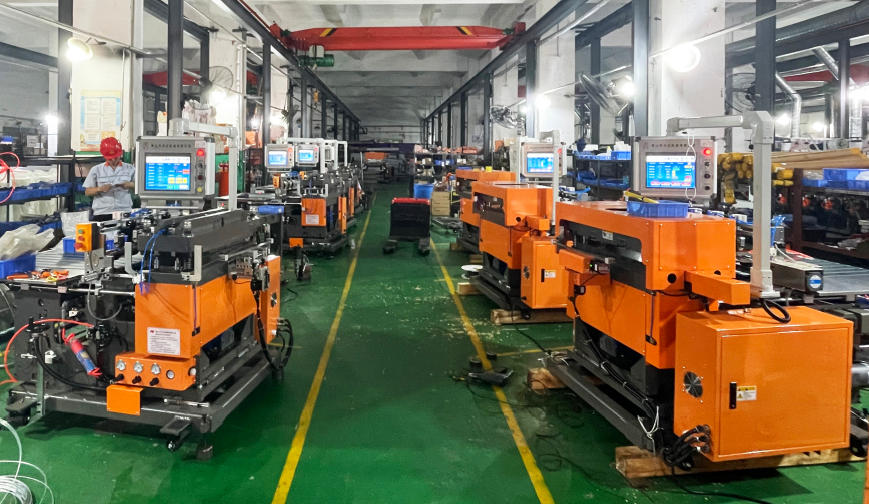
The documented acceptance criterion is a pre-shipment test. In practice this is a factory test of the assembled machine before packing, and it plays a different role from a site acceptance test after installation.
A pre-shipment test establishes that the machine is mechanically complete, that its drives and control system function, that the sealing, cutting and any inline unit operate in the intended sequence, and that the bag dimensions produced match the agreed drawing on the test film. It does not guarantee the same result on a different film batch, in different ambient conditions, or on a site whose power supply differs from the specified one. For site planning, the documented electrical configuration is 380 V 50 Hz with a total power range of 30 to 131.4 kW; the exact figure for a specific model should be confirmed from that model's own data before the floor is prepared.
When inline stamping or punching is part of the line, the compliance file includes CE certificate M.2025.206.C131314, issued by UDEM for the Roll To Roll Full Servo Stamping & Punching Window Machine. The certificate identifies that machine, so a buyer assembling a full line — bag making machine, stamping and punching unit, and supporting printing, slitting, film blowing or rewinding equipment — should confirm in writing which document covers each supplied unit. The company also states that it holds ISO 9001 quality system certification and EU CE certification.
Delivery terms: FOB, CIF and where risk actually passes
Delivery is documented as FOB or CIF. The choice changes logistics responsibility more than it changes price, and the two terms behave differently once the machine leaves the port.
- FOB (Free On Board). The supplier delivers the machine on board the vessel at the named port of shipment; the buyer arranges and pays the main carriage and insurance, and risk passes when the goods are on board.
- CIF (Cost, Insurance and Freight). The supplier arranges and pays carriage and insurance to the named destination port, but risk still passes at shipment, not at destination. The cover required by the rule is minimum cover, so a buyer moving high-value equipment should confirm the insured value and the scope of cover rather than assume full protection.
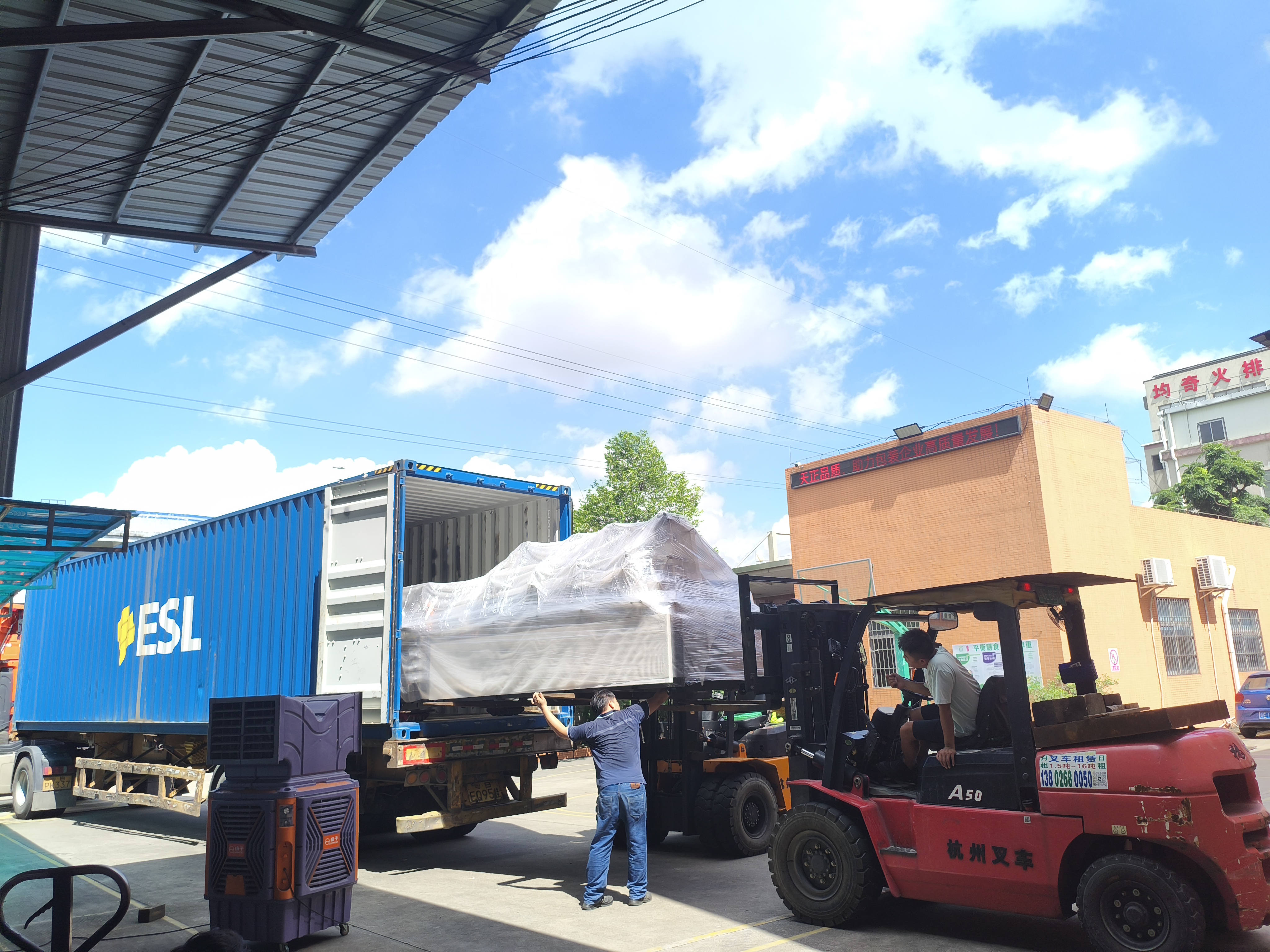
Both terms leave import clearance, duties and inland transport with the buyer unless something else is agreed. Three points are worth fixing in the sales contract: the exact named port, who handles export clearance documentation, and whether packing is specified for the chosen route. A heavy precision machine braced for one route is not automatically protected on another.
Minimum order quantity of one unit: what it changes
The documented minimum order quantity is one unit. For a partnership discussion, that single number matters more than it first appears.
First, it allows a new bag format to be validated on one machine before a factory commits capital to a fleet. A converter adding flat bottom zipper or stand-up zipper capacity can prove the format, the film and the operating cost on a single line, then replicate the proven configuration. Second, it keeps the pre-shipment test meaningful on small orders: the same acceptance criterion applies whether the order is one machine or several. Third, it separates the machine decision from the volume decision — a single unit needs no multi-year purchase commitment, so the long-term relationship is built on operating results rather than on a signed volume forecast.
What a one-unit order does not remove is specification work. Configuration, bag dimensions, film structure, inline units, voltage and supporting equipment all still have to be defined before production starts.
Long-term operation: why continuous stable time is the term that matters
The documented operating position for the full servo machine series is a set of advantages measured against traditional mechanical bag making machines and ordinary low-end pouch equipment: wider bag type compatibility, lower raw material waste, quieter running and a longer continuous stable operation time. The documented target application is medium and large flexible packaging factories with diversified bag types and mass continuous production demands.
Two of those items translate directly into partnership terms. Continuous stable operation time determines how much output a factory gets per shift and how much operator attention the machine consumes. Material waste determines the cost per thousand bags even when the machine runs well. The documented comparison quantifies both, together with the cost trade-off.
Documented comparison: full servo series against traditional mechanical machines
| Dimension | Documented position | What it means for a long-term order |
|---|---|---|
| Drive and control | Full servo drive control system | Wider bag type compatibility is the documented consequence, which supports a diversified mix |
| Initial purchase cost | 8% higher than alternatives | A one-off premium that has to be amortised by utilisation |
| Overall life-cycle cost | 15% lower | The cost argument is a multi-year one, not a purchase-price one |
| Material loss | Reduced by 22% | Affects cost per thousand bags on every run, including short runs |
| Production efficiency | Increased by 30% | Capacity headroom for adding formats without adding a second line |
| Power consumption | 16% lower per thousand bags | A running cost that scales with volume, not with the invoice |
| Noise | Reduced by 18 dB | A relative reduction; site sound planning still starts from the model data |
| Maintenance | Modular integrated structure, fewer breakdown faults, less regular maintenance | Maintenance becomes planned work, but it still has to be scheduled |
Three qualifications belong beside those figures. The comparison is supplier-documented against traditional mechanical machines and low-end pouch equipment, so it describes a direction and a magnitude, not a guarantee for a specific order mix. The 8% initial premium is paid once, while the 15% life-cycle advantage depends on the machine actually running at the assumed utilisation; a plant running one format in low volume will not recover it at the same rate as a diversified factory. And the noise figure is stated as an 18 dB reduction relative to the comparison equipment, not as an absolute sound level for a specific installation.
The maintenance position follows from structure: a modular integrated structure with fewer breakdown faults, requiring less regular maintenance than traditional mechanical bag making machines. For a long-term operator, the practical reading is that maintenance becomes planned work rather than emergency work. Recording stop reasons and intervals from the first month produces the data needed to set a realistic service interval instead of following a generic calendar.
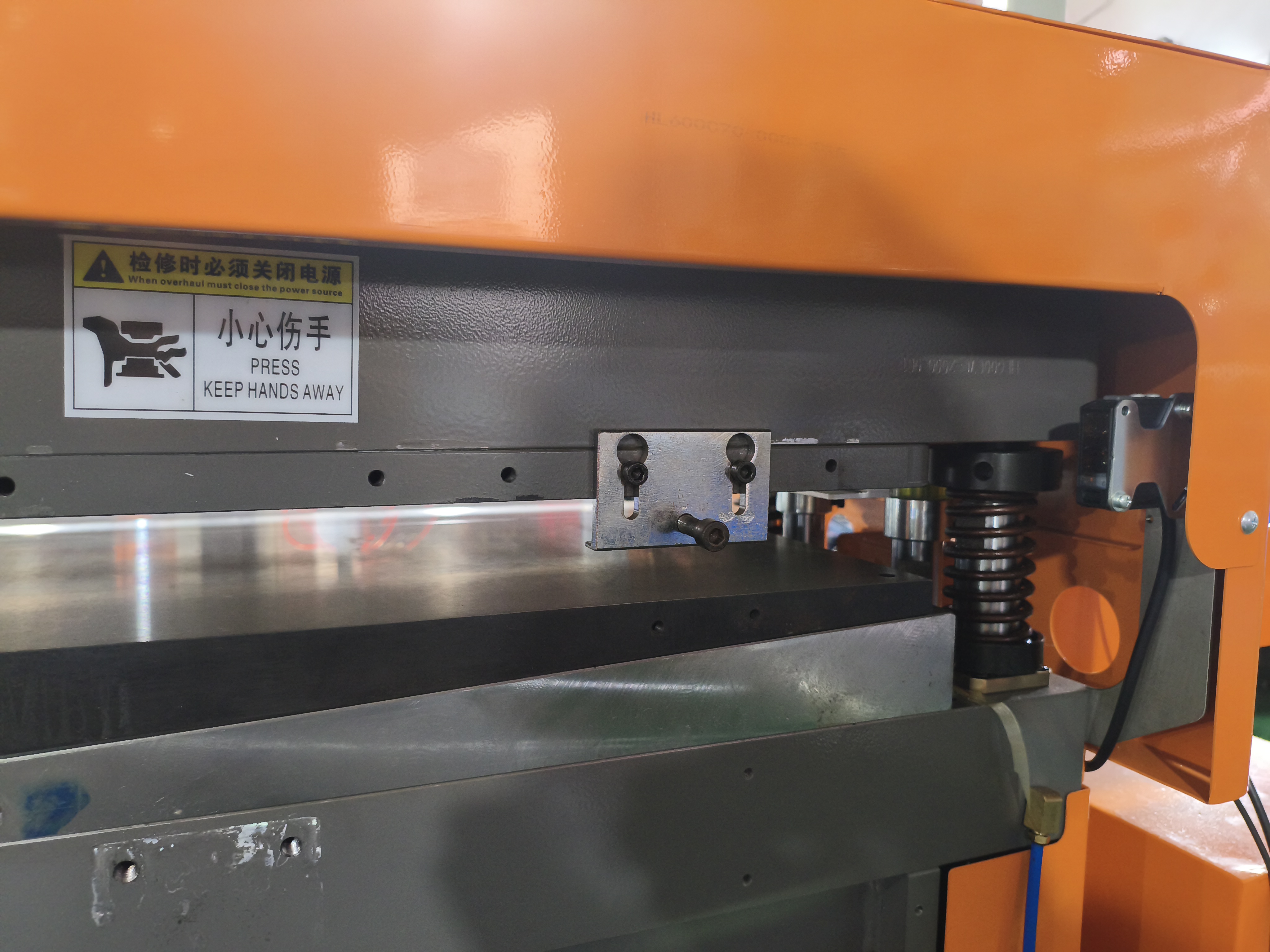
Mechanical pinch risk is the safety item that most often appears in line audits. The documented control is safety protection, implemented through safety guards and a fault alarm system. Guards should be verified as fitted and functional before production starts, and alarm visibility should be checked from the operator's normal working position, because a guard that exists but is bypassed for convenience stops being a control.
Step-by-step: from purchase order to a stable run
- Fix the bag mix and the duty cycle. List every format the machine must run, the film structures involved and the shift pattern. This list, not the machine brochure, determines whether the documented target application — diversified bag types with mass continuous production — actually matches your plant.
- Specify the line, not only the machine. The documented requirement is for supporting equipment such as a printing machine, slitter machine, film blowing machine and rewinding machine. A machine specified in isolation can be correct and still fail to reach its rated output because upstream supply is inconsistent.
- Confirm site services against the model data. Check the electrical configuration (documented as 380 V 50 Hz, total power range 30 to 131.4 kW across the applicable range) against the exact model, plus floor loading, compressed air and ambient conditions.
- Write the commercial terms into the contract. 30% advance and 70% before shipment, one-unit minimum order quantity, FOB or CIF with the named port, and the pre-shipment test as the acceptance criterion — including test film, record format, attendance and deviation handling.
- Run and record the pre-shipment test. Verify mechanical completeness, drive and control function, sealing and cutting sequence, inline unit operation and finished bag dimensions against the agreed drawing.
- Release the balance and ship. Confirm the test record first; then release the 70% balance and arrange carriage and insurance according to the agreed term.
- Commission with guards and alarms verified. Confirm safety guards are fitted and functional and the fault alarm system is visible and audible where operators work, then train operators on changeover for each format.
- Set the operating review. Track continuous run time, stop causes and waste per thousand bags monthly, and review the record with the supplier before adding the next format. This record is what turns a single machine order into a purchasing pattern.
Where this fits — and where it does not
The documented fit is specific, which is useful: a partnership structured this way suits some plants far better than others.
- Strong fit. Medium and large flexible packaging factories with diversified bag types and mass continuous production. Also converters planning to add flat bottom with zipper or stand-up with zipper work to an existing pouch range, and buyers who need non-standard configuration — custom non-standard machinery is part of the documented offering, supported by a 15-engineer R&D team and 87% of components produced in-house.
- Weaker fit. Single-format, low-volume workshops, where the documented 8% initial cost premium has little utilisation to amortise against; buyers who cannot supply representative film for a pre-shipment test; buyers who need a certificate covering a machine model outside the scope of the certificate actually issued.
Commercial terms at a glance
| Term | Documented position | Confirm at order stage |
|---|---|---|
| Payment | 30% advance, 70% before shipment | That the balance is released after the pre-shipment test record |
| MOQ | 1 unit | Configuration list and bag specification for that single unit |
| Delivery | FOB / CIF | Named port, export documentation, insurance cover and packing |
| Acceptance | Pre-shipment test | Test film, measured items, attendance and deviation handling |
| Compliance file | CE certificate M.2025.206.C131314 issued by UDEM for the Roll To Roll Full Servo Stamping & Punching Window Machine | Which certificate covers each unit in the configured line |
Frequently asked questions
Which certificate covers the inline stamping and punching unit on a bag making line?
When inline stamping or punching is part of the line, the document to place in the compliance file is CE certificate M.2025.206.C131314, issued by UDEM for the Roll To Roll Full Servo Stamping & Punching Window Machine. It identifies that machine specifically. Because a complete line can combine a bag making machine, a stamping and punching unit and supporting printing, slitting, film blowing or rewinding equipment, the buyer should confirm in writing which document applies to each supplied unit rather than assume one certificate covers the installation.
Long-term flat bottom zipper bag making machine OEM supplier: what should the evaluation cover?
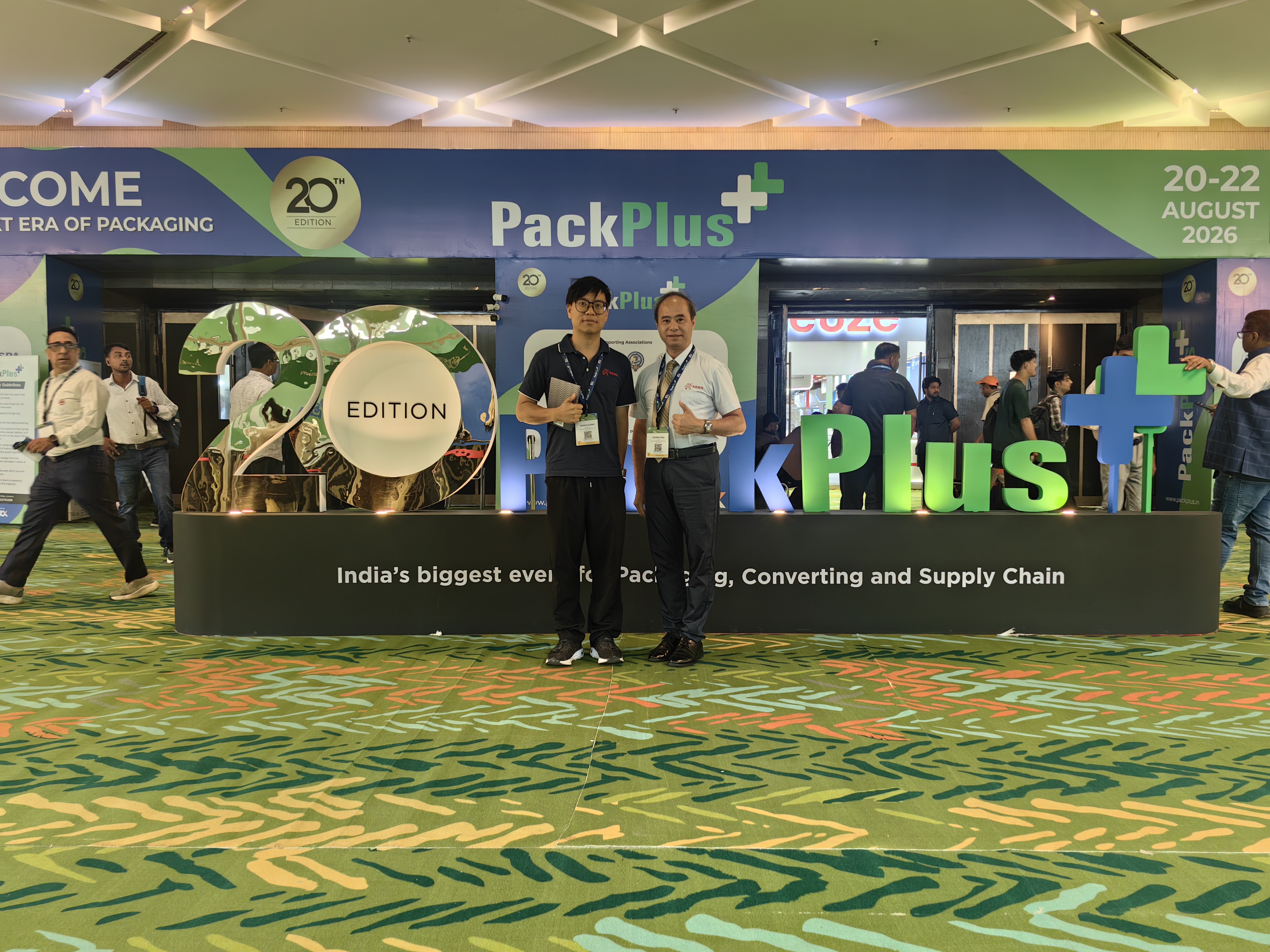
Four checks are documentable. Configuration control: the supplier offers custom non-standard machinery and self-develops its machine programs, with a 15-engineer R&D team behind the specification work. Manufacturing depth: 87% of components are produced in-house on 4 CNC machining centres, plus CNC lathes and precision grinding machines, which affects part consistency and the availability of spare parts years later. Format coverage: a full range of bag making machine models is available for diverse production demands, so the flat bottom with zipper model is confirmed against your format at quotation rather than assumed from a catalogue. Continuity evidence: documented monthly output of 5 bag-making machines, exports to more than 20 countries, and participation in international packaging exhibitions in Germany, Russia, India, Thailand and Vietnam.
What does continuous stable operation time mean in practice?
It means the length of run a machine completes between unplanned stops, which decides output per shift and how much operator attention the line consumes. The documented position against traditional mechanical bag making machines and ordinary low-end pouch equipment is a longer continuous stable operation time, a modular integrated structure with fewer breakdown faults, less regular maintenance, 30% higher production efficiency, 16% lower power consumption per thousand bags, 22% lower material loss and 18 dB lower noise. These are comparative figures, so the value for a specific plant should be measured on its own duty cycle and film mix before they are written into a business case.
What are the payment terms and the minimum order quantity?
The documented terms are 30% advance and 70% before shipment, with a minimum order quantity of one unit. The practical consequence of that combination is that a first order carries limited exposure — one machine, staged payment — while the balance stays available as a lever until the pre-shipment test has been completed and recorded.
What happens at the pre-shipment test, and what does it not prove?
The pre-shipment test is the documented acceptance criterion. It covers mechanical completeness, drive and control function, the sealing and cutting sequence, inline unit operation and finished bag dimensions measured against the agreed drawing on the agreed film. It does not prove performance on a different film batch, under different ambient conditions, or on a site whose power supply differs from the specified configuration — which is why the test record and the site data sheet should be attached to the order file.
What delivery terms are available, and how is lead time planned?
Delivery is documented as FOB or CIF, with the named port and export documentation fixed in the contract. Lead time should be planned against the configuration rather than a generic figure: the documented monthly output is 5 bag-making machines, 10 hot stamping machines and 40 die-cutting machines, so capacity is shared across product lines and the delivery window is best confirmed at order. Complex configurations, non-standard options and supporting equipment all move the date, and the pre-shipment test has to be scheduled before shipment, not after it.
If the remaining question is configuration rather than contract terms, the company brochure collects the machine range, models and technical data in one document: download the FOSHANTIANZHENG product brochure. A quotation request that names the bag format, film structure, target output and site voltage will come back with a usable configuration and a test plan attached.
Conclusion
A bag making machine partnership is decided less by the specification sheet than by four commercial terms and one operating characteristic. The documented terms for FOSHANTIANZHENG orders are 30% advance and 70% before shipment, a pre-shipment test as the acceptance criterion, FOB or CIF delivery, and a minimum order quantity of one unit. The operating characteristic is continuous stable operation time, supported by a full servo drive control system, a modular integrated structure with fewer breakdown faults, and a documented comparison of 22% lower material loss, 16% lower power consumption per thousand bags and a 15% lower overall life-cycle cost against an 8% higher initial price.
Read together, those terms answer the question a plant actually asks at execution stage: what is paid before proof, what proof is delivered, and what keeps the machine running after the warranty conversation ends. Buyers who fix the test film, the record, the named port and the balance-release sequence before signing get a contract that behaves like a partnership from the first shipment. Where inline stamping or punching forms part of the line, CE certificate M.2025.206.C131314 issued by UDEM for the Roll To Roll Full Servo Stamping & Punching Window Machine belongs in the same file, with its scope checked against every unit actually delivered.
Have Questions or Need More Details?
Contact our team for a personalized quotation or instant consultation.
Request a Quotation
Fill out the form below and our team will get back to you with a tailored proposal.
WhatsApp Direct Chat
Prefer to chat in real-time? Message us on WhatsApp for instant assistance & quick answers.
- Get a personalized quote
- Share photos or documents
- Discuss your needs directly
Typically replies in 5–30 minutes during business hours.