Bag Making Machine Partnership FAQ: Terms and Long-Term Supply
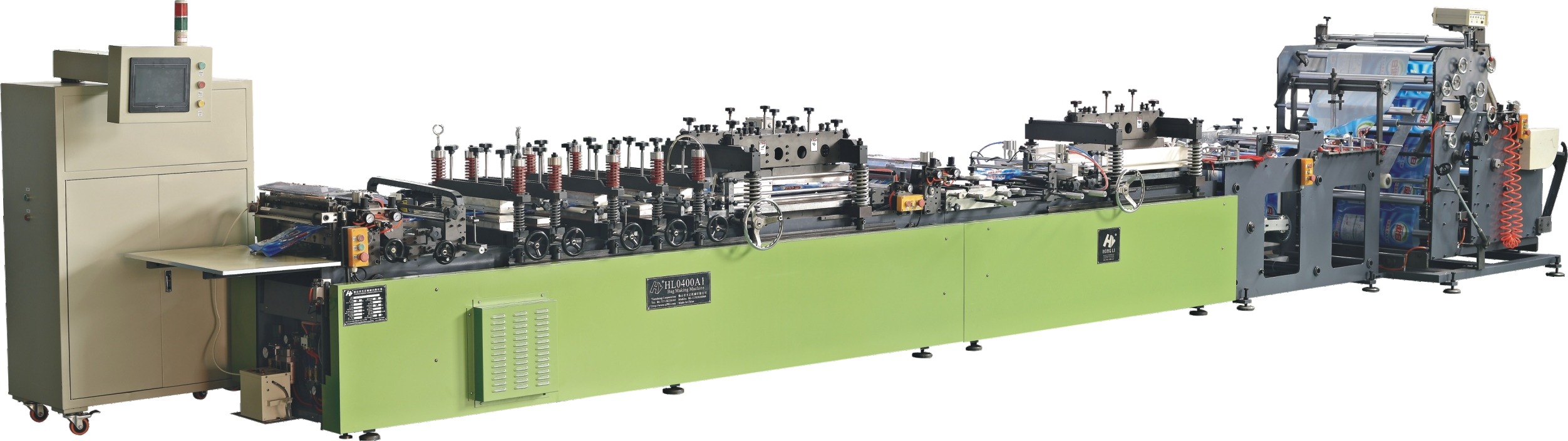
A bag making machine partnership is usually tested after the first machine is running, when the factory adds another pouch format and needs the same supplier to repeat the specification, the acceptance routine and the delivery arrangement. The commercial framework decides whether that repeat order is simple or slow. For medium and large flexible packaging factories working with diversified bag types and mass continuous production, three terms carry most of the weight: 30% payment in advance with 70% before shipment, acceptance through a pre-shipment test, and delivery under FOB or CIF terms.
This FAQ explains those terms for cooperation with FOSHANTIANZHENG (Foshan Tianzheng Machinery Co., Ltd.), a flexible packaging equipment manufacturer established in 1993 in Foshan, Guangdong. It also shows how each term affects the decisions a research and evaluation team makes before committing to a long-term supply relationship.
Why a multi-format factory needs a partnership framework, not a one-off purchase
A factory producing one pouch type can treat a machine as a standalone asset. A factory producing stand-up zipper pouches, flat bottom zipper bags, bag-in-box packs, doypacks, central seal pouches, valve pouches and labeled bags in the same plant is buying a production system that has to be extended over time. The bag making machine series covers bag widths from 50 mm to 1200 mm and working speeds from 30 to 130 bags per minute, and the equipment is designed for continuous 24/7 operation. Those two facts change the procurement question. The buyer is not only asking which model runs fastest, but which supplier can repeat a known configuration, hold the same acceptance standard and keep delivery predictable when the pouch portfolio grows.
That is why terms deserve the same attention as sealing bars or servo systems. Payment staging affects cash flow and production scheduling; acceptance defines when the buyer takes technical ownership; delivery terms define who controls freight and where risk moves. A partnership framework fixes these points once so that later orders do not reopen them. It also gives the factory a consistent basis for comparing a second machine from the same supplier with a machine from a new supplier.
The alternative is a series of disconnected purchases. Each order restarts the specification discussion, each shipment uses whatever delivery term was written on that invoice, and each acceptance test is designed from scratch. For a plant that adds two or three pouch formats a year, that pattern consumes engineering time that should be going into production.
What the available market data does and does not say
Public market estimates are useful context but not a direct measure of bag making machine demand. DataM Intelligence's 2026 forecast puts the global pouch packaging machinery market at USD 2.31 billion, with a 7.10% forecast CAGR to 2035; that research scope includes filling and sealing functions. A separate 2025 estimate for bag making machines is USD 1.47 billion with a 3.5% forecast CAGR to 2035. The gap between the two figures is largely a definition gap: pouch packaging machinery includes downstream filling and sealing, while bag making machines convert film or paper into bags. Neither number should be used to forecast a single factory's capacity or a single supplier's output.
The practical reading is narrower. Pouch formats continue to attract equipment investment, and factories serving several formats need a supply relationship that can absorb format changes. That is a demand-side observation, not a promise about any supplier's delivery performance. Buyers should still verify capacity, scheduling and acceptance arrangements against their own order.
Payment terms: 30% in advance and 70% before shipment
For bag making machine orders, the accepted payment structure is 30% in advance and 70% before shipment. The first payment reserves production capacity and allows material and component planning to start. The second payment is due before the machine leaves the factory, which places the pre-shipment test before the balance payment rather than after it.
This sequence matters to both sides. For the buyer, the largest payment is made only after the machine has been built and tested, so the test becomes the last practical point at which technical issues can be corrected without international freight and site work in the way. For the supplier, production is not financed entirely on delivery. The buyer should write the exact trigger for the 70% payment into the order: completion of the agreed pre-shipment test, signature of the test record, and presentation of the agreed shipping documents. A payment term without a defined trigger creates disputes even when both parties accept the same 30/70 split.
The structure should also be read alongside lead time. With a stated lead time of 30 to 45 days and a minimum order quantity of one unit, the advance payment starts a schedule short enough for the test date to be planned at the time of order. A factory that needs several machines for different pouch formats should sequence the orders and agree each start date, rather than assume one production slot covers all of them.
Decision rule: treat the 70% payment as an acceptance-linked payment, not a shipping-linked payment. If the order does not state that the balance follows a signed pre-shipment test, the buyer has lost the main technical protection the 30/70 structure provides.
Acceptance: what the pre-shipment test is for
Products are accepted through a pre-shipment test, and all products undergo 100% full inspection before shipment. The two statements work together. Full inspection is the supplier's internal control across the order; the pre-shipment test is the buyer's acceptance event, where the machine is demonstrated against the agreed specification before the balance payment and shipment.
The test is only as precise as the specification behind it. Because the bag making machine series covers multiple pouch types and a wide bag width range, the buyer should attach the actual bag drawings, material structure, target bag width and target running speed to the order. The test should then be recorded against those values, with pouch samples kept as the reference for later orders. This is not an extra layer of bureaucracy; it is what makes a repeat order repeatable. A test that only confirms the machine runs does not protect the buyer when the second order arrives with a different zipper profile or a different bottom gusset.
Two practical points follow. First, the buyer should nominate an acceptance representative and a decision rule before the test date, so that a minor deviation does not become an open-ended negotiation. Second, the buyer should keep the signed test record with the machine documentation, because it becomes the baseline for the next order in the same partnership. The supplier's 100% inspection is a quality control fact; the buyer's signed acceptance record is the commercial fact that closes the order.
Buyers should also separate two questions that are often mixed. One is whether the machine meets the agreed bag specification. The other is whether the factory's own operators can run it at the target rate after installation. The pre-shipment test answers the first; the second depends on operator training, material consistency and local technical readiness after arrival.
Delivery: FOB and CIF and where risk moves
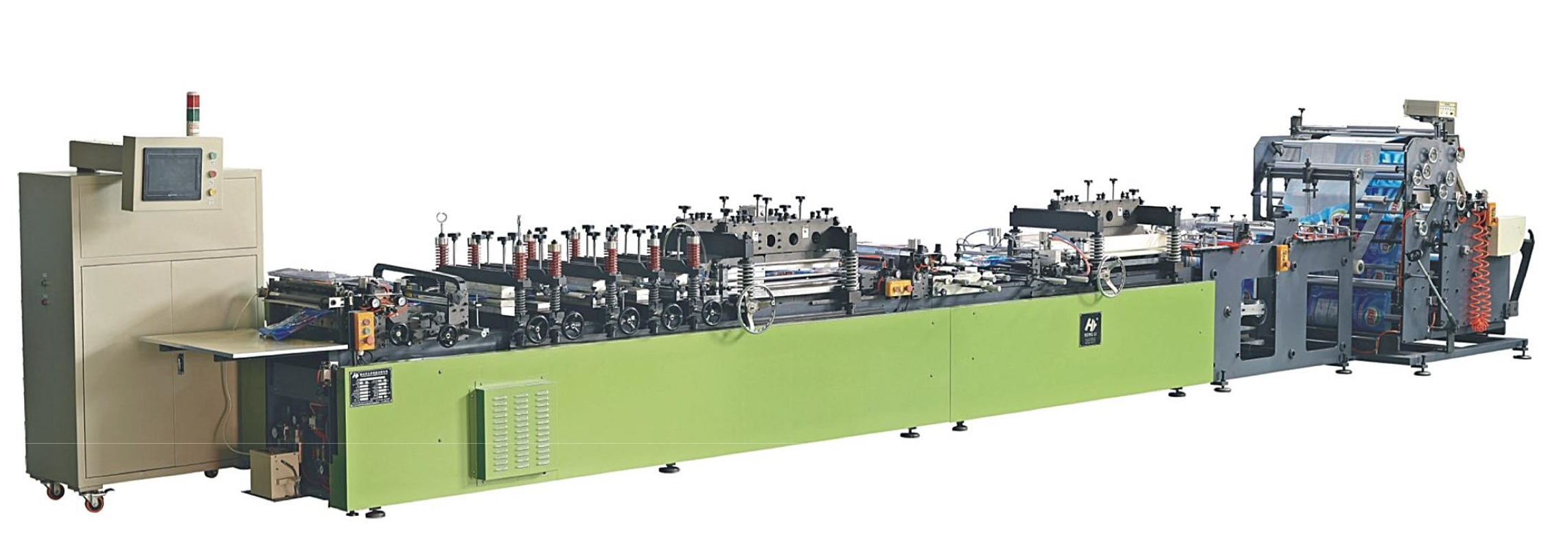
Delivery is arranged through FOB or CIF terms. Under FOB, the buyer nominates the vessel and pays the main carriage and insurance, and risk passes when the goods are loaded on board at the named port. Under CIF, the seller arranges and pays cost, insurance and freight to the named destination port, but risk still passes at shipment rather than at destination. The difference for the buyer is control: FOB gives more control over forwarders and freight cost, while CIF gives a simpler single-supplier arrangement.
For a long-term partnership, the more important issue is consistency. A factory that imports machines regularly should choose the term that matches its forwarder relationships and its ability to manage insurance claims, then keep that term stable across repeat orders. Three details should be written into each order rather than assumed: the named port, the Incoterms version that governs the term, and the insurance cover and currency where CIF applies. A CIF price that leaves the insurance scope unclear is not a complete offer.
Delivery terms also interact with acceptance. The pre-shipment test happens before shipment, so the buyer's inspection window closes at the factory, not at the destination port. That makes the test record and the packing specification part of the same acceptance package. Buyers who plan to inspect at destination should say so in the order, because destination inspection is a different commercial arrangement from the pre-shipment test described here.
Customization: what can be fixed for the long term
Customization is available on an OEM/ODM basis and covers machine structure, working width, functions and mould. For a multi-format factory, the useful way to use that scope is to fix a configuration family rather than a single machine. The bag making machine series runs from HL0500A1 through HL0600A2, HL0600A3, HL0400A4, HL0400A5, HL0600A6, HL0600A7, HL0600A8 and HL0700A9, and the published working range covers 30 to 130 bags per minute, bag widths of 50 to 1200 mm, total power of 30 to 131.4 kW and a 380 V 50 Hz supply. Those figures define the envelope; the order defines the configuration inside it.
A practical customization agenda for a partnership includes the working width needed for the widest planned bag, the functions needed for zipper, valve, spout or label options, and the mould set for shape bags and doypack contours. It should also include the change-control rule: what counts as a specification change, who approves it, and how it affects price and lead time. Without that rule, customization becomes a series of informal adjustments that are difficult to repeat and difficult to audit.
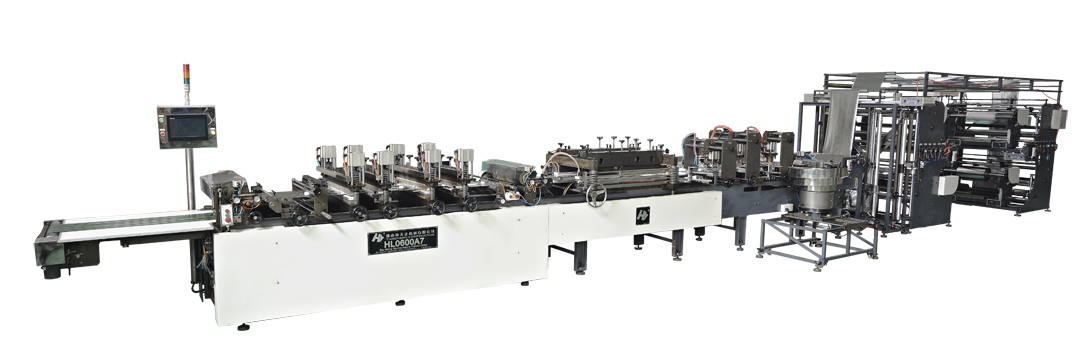
Auxiliary equipment belongs in the same conversation. Shape bags and doypack contours usually need die-cutting, and the die-cutting range covers 20 to 250 pieces per minute per lane, a maximum die-cutting size of 500 mm × 950 mm and a power range of 3 to 6 kW. Decorative or functional stamping is designed for paper, non-woven fabric, laminated film and roll materials. A long-term supply plan that ignores these steps tends to produce a fast bag making line feeding a slower finishing department.
What to put in the order package
The order package is the document set that makes the terms enforceable. For a multi-format factory, it should be assembled once and reused with updates for each new machine. A practical package contains:
- Bag drawings for every format planned on the machine, including stand-up zipper, flat bottom zipper, doypack, central seal, valve and labeled bags.
- Material structure for each bag, because film structure affects sealing behaviour and running speed.
- Target bag width and target running speed, expressed against the published working range rather than as a general request.
- Zipper, valve, spout or label specification, including position and orientation where relevant.
- Configuration list covering working width, functions and mould, with the change-control rule attached.
- Payment schedule showing 30% in advance and 70% before shipment, with the trigger for each payment.
- Delivery term, named port, Incoterms version and insurance scope where CIF applies.
- Acceptance plan naming the buyer's representative, the test items and the decision rule.
- Packing and marking instructions, so that the machine arrives in a condition that matches the test record.
- After-sales contact plan, because online technical support works best when the site contact is named in advance.
From inquiry to repeat order: the eight-step path
The terms become easier to manage when they are mapped to a sequence. The following path is the one a multi-format factory can use for a first order and then reuse for repeat orders.
- Define the pouch portfolio. List the bag types planned for the next two to three years, including stand-up zipper, flat bottom zipper, bag-in-box, doypack, central seal, valve and labeled bags. The list sets the width range and the function list.
- Match the configuration. Use the series range and the OEM/ODM scope to select working width, functions and mould. Record the bag drawings and material structures as order attachments.
- Fix the commercial terms. Confirm 30% in advance and 70% before shipment, FOB or CIF with a named port, the 30 to 45 day lead time and the minimum order quantity of one unit.
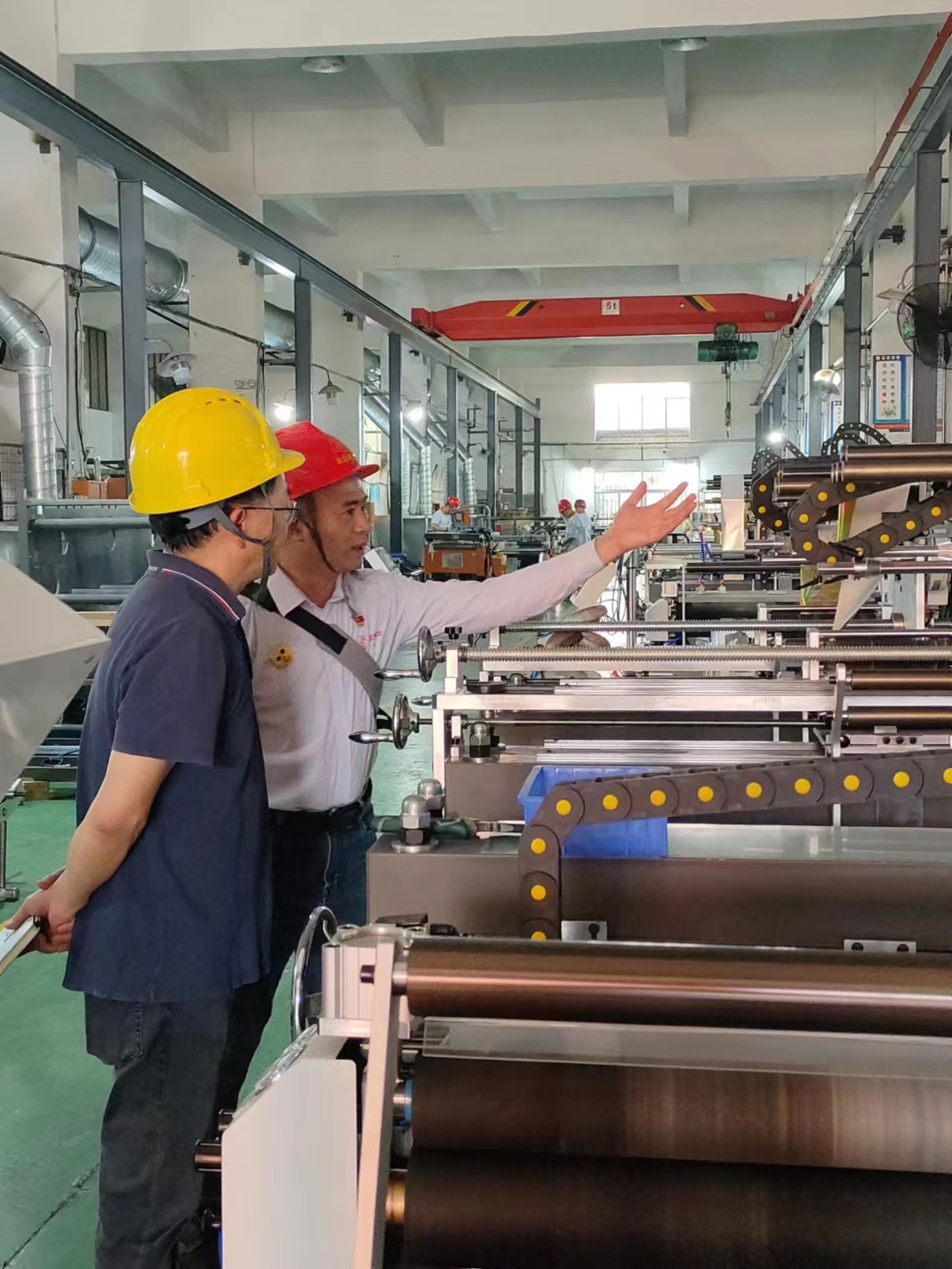
- Plan production. The factory runs 4 CNC machining centers and produces 87% of components in-house, with a 15-member R&D and technical team. Those facts support repeatability, but they do not remove the need for a written schedule.
- Run the pre-shipment test. Demonstrate the machine against the agreed bag specification, record the result and keep the pouch samples.
- Pay the balance and ship. The 70% payment is released against the test record and the agreed shipping documents, under the chosen FOB or CIF term.
- Receive and support. After-sales support is provided as online technical support. The buyer should plan operator training and local technical readiness accordingly, because remote support works best when the site has a named contact and a documented issue log.
- Convert the first order into a repeatable order. Keep the test record, the configuration list and the packing specification as the standard package for the next machine.
Where the terms fit: bag types and line scenarios
The same commercial framework applies across bag types, but the acceptance focus changes with the format. A plastic pouch making machine ordered for a narrow product range can be accepted against a small sample set; a line serving several formats needs a broader record. The table below links the main pouch families to the point that should be confirmed in the order.
| Bag family | Production focus | Term to confirm |
|---|---|---|
| Stand-up with zipper | Zipper alignment, stand-up bottom, retail shelf presentation | Bag drawings and zipper specification attached to the pre-shipment test |
| Flat bottom with zipper | Bottom gusset geometry and panel flatness | Working width and mould set in the configuration list |
| Bag-in-box | Large-format fitment and fill/discharge handling | Bag dimensions and handling method in the acceptance record |
| Doypack and spout pouch | Contour shape and spout position | Die-cutting and spout tooling included in the customization scope |
| Central seal pouch | Seal integrity across the width range | Bag width range and material structure in the order |
| Valve pouch | Valve placement and seating | Valve specification in the test record |
| Label pasting in-line | Label position and line speed match | Function list and line speed target in the order |
Two supporting facts help the buyer judge whether the partnership can carry this range. A flexible packaging manufacturer has run 20 units for more than 10 years, with stable operation and low noise reported as the case highlights. The manufacturer's annual output is 500 units, and its products are exported to more than 20 countries. Neither fact guarantees a delivery date; both are relevant when judging whether a supplier can support a multi-format line over several years.
The zipper pouch making machine and the central seal pouch making machine sit at opposite ends of the same decision. A zipper line is judged on zipper handling and repeatability; a central seal line is judged on seal consistency across the width range. A partnership that fixes the acceptance record for both avoids the common problem where each format is tested to a different standard by a different engineer.
Partnership terms at a glance
| Item | Confirmed position | What the buyer should do |
|---|---|---|
| Payment | 30% in advance, 70% before shipment | Define the trigger for the 70% payment in the order |
| Acceptance | Pre-shipment test; 100% full inspection before shipment | Attach bag drawings, material and speed targets; sign the test record |
| Delivery | FOB or CIF | Name the port, the Incoterms version and the insurance scope |
| Lead time | 30–45 days | Agree the start date and the test date |
| Minimum order | 1 unit | Sequence multiple machines instead of assuming one slot |
| Customization | OEM/ODM: structure, working width, functions, mould | Write a change-control rule |
| After-sales | Online technical support | Nominate a site contact and keep an issue log |
| Operating mode | Continuous 24/7 | Plan maintenance windows around the production schedule |
| Bag width | 50–1200 mm | Confirm the widest planned bag before ordering |
| Working speed | 30–130 bags/min | Set the target speed in the acceptance record |
Risks the buyer should allocate in the contract
A clear term sheet does not remove risk; it places risk where each side can manage it. Four points deserve explicit wording.
Payment and acceptance order. Because 70% is payable before shipment, the pre-shipment test is the buyer's main technical protection. The order should state that the balance is due after the test record is signed, not merely after production is finished. If the test reveals a deviation, the correction and re-test procedure should be agreed before the order is placed.
FOB versus CIF. FOB gives the buyer control of freight and insurance but requires a forwarder relationship and attention to loading schedules. CIF simplifies the arrangement but leaves the buyer dependent on the seller's insurance scope. The named port and the Incoterms version should never be left to the invoice.
Lead time start date. A 30 to 45 day lead time is only meaningful with a start date. The order should state whether the clock starts at the advance payment, at the approval of drawings, or at another event, and it should state the consequence of a delayed buyer approval.
After-sales scope. Online technical support is the confirmed after-sales channel. That is workable for a factory with in-house technicians, but it should be planned rather than assumed. The buyer should identify who will handle remote sessions and how spare-part needs will be raised. If a higher level of on-site support is required, it should be negotiated as a separate term, not inferred from the word support.
FAQ
What payment terms apply to a bag making machine order?
The accepted structure is 30% in advance and 70% before shipment. The advance payment starts production planning, and the balance is paid before the machine leaves the factory. Buyers should define the exact trigger for the balance payment in the order, normally the signed pre-shipment test record together with the agreed shipping documents.
How is the machine accepted before shipment?
Acceptance is based on a pre-shipment test, and all products undergo 100% full inspection before shipment. The test compares the machine against the agreed bag specification, including bag type, material structure, bag width and target speed. The signed test record and the retained pouch samples become the reference for repeat orders.
Are FOB and CIF both available, and which should a factory choose?
Delivery is arranged through FOB or CIF terms. FOB suits buyers who have a forwarder relationship and want control of freight and insurance; CIF suits buyers who prefer one supplier-managed arrangement to a named destination port. In both cases the order should name the port, the Incoterms version and, for CIF, the insurance scope.
What are the lead time and minimum order quantity?
The stated lead time is 30 to 45 days, and the minimum order quantity is one unit. Because the lead time is short enough to plan, the test date can be set at the time of order. Factories ordering several machines for different pouch formats should sequence the orders and agree each start date rather than assume one production slot covers all of them.
Can the machine be customized for different pouch types?
Customization is available on an OEM/ODM basis and covers machine structure, working width, functions and mould. For a multi-format factory, the practical approach is to fix a configuration family across the series range, from HL0500A1 to HL0700A9, and then define the bag drawings, zipper or valve specification, mould set and change-control rule in the order.
What after-sales support is included?
After-sales support is provided as online technical support. This works best when the buyer names a site contact, keeps a documented issue log and plans operator training internally. Any requirement for on-site support should be raised as a separate commercial term rather than assumed.
Which factories is this partnership model designed for?
The model fits medium and large flexible packaging factories with diversified bag types and mass continuous production demands. The equipment is designed for continuous 24/7 operation across a bag width range of 50 to 1200 mm and a working speed of 30 to 130 bags per minute, which matches a plant running several pouch formats rather than a single product.
How does the partnership support long-term supply?
Long-term supply rests on repeatable terms rather than on a single machine. The manufacturer has an annual output of 500 units, a 15-member R&D and technical team and 87% in-house component production, and one flexible packaging manufacturer has operated 20 units for more than 10 years with stable operation. Buyers can review the company profile and machine range in the FOSHANTIANZHENG brochure before discussing a specific bag portfolio.
Conclusion
A bag making machine partnership is easier to evaluate when the commercial terms are treated as part of the technical specification. The confirmed framework is simple: 30% in advance and 70% before shipment, acceptance through a pre-shipment test backed by 100% full inspection, and delivery under FOB or CIF terms. For a multi-format factory, the value of that framework is repeatability. The first order establishes the test record, the configuration list and the delivery arrangement; the next order should not have to renegotiate them.
Buyers preparing a first inquiry should bring the pouch portfolio, the bag drawings, the material structures and the target speed. With those inputs, the terms above can be converted into a test plan and a delivery plan rather than left as general conditions. The company brochure and the FOSHANTIANZHENG website provide the starting reference.
Have Questions or Need More Details?
Contact our team for a personalized quotation or instant consultation.
Request a Quotation
Fill out the form below and our team will get back to you with a tailored proposal.
WhatsApp Direct Chat
Prefer to chat in real-time? Message us on WhatsApp for instant assistance & quick answers.
- Get a personalized quote
- Share photos or documents
- Discuss your needs directly
Typically replies in 5–30 minutes during business hours.