Digital Stamping Machine Integration Guide: Pouch & Bag Lines
Digital Stamping Machine Integration Guide: Pouch & Bag Lines
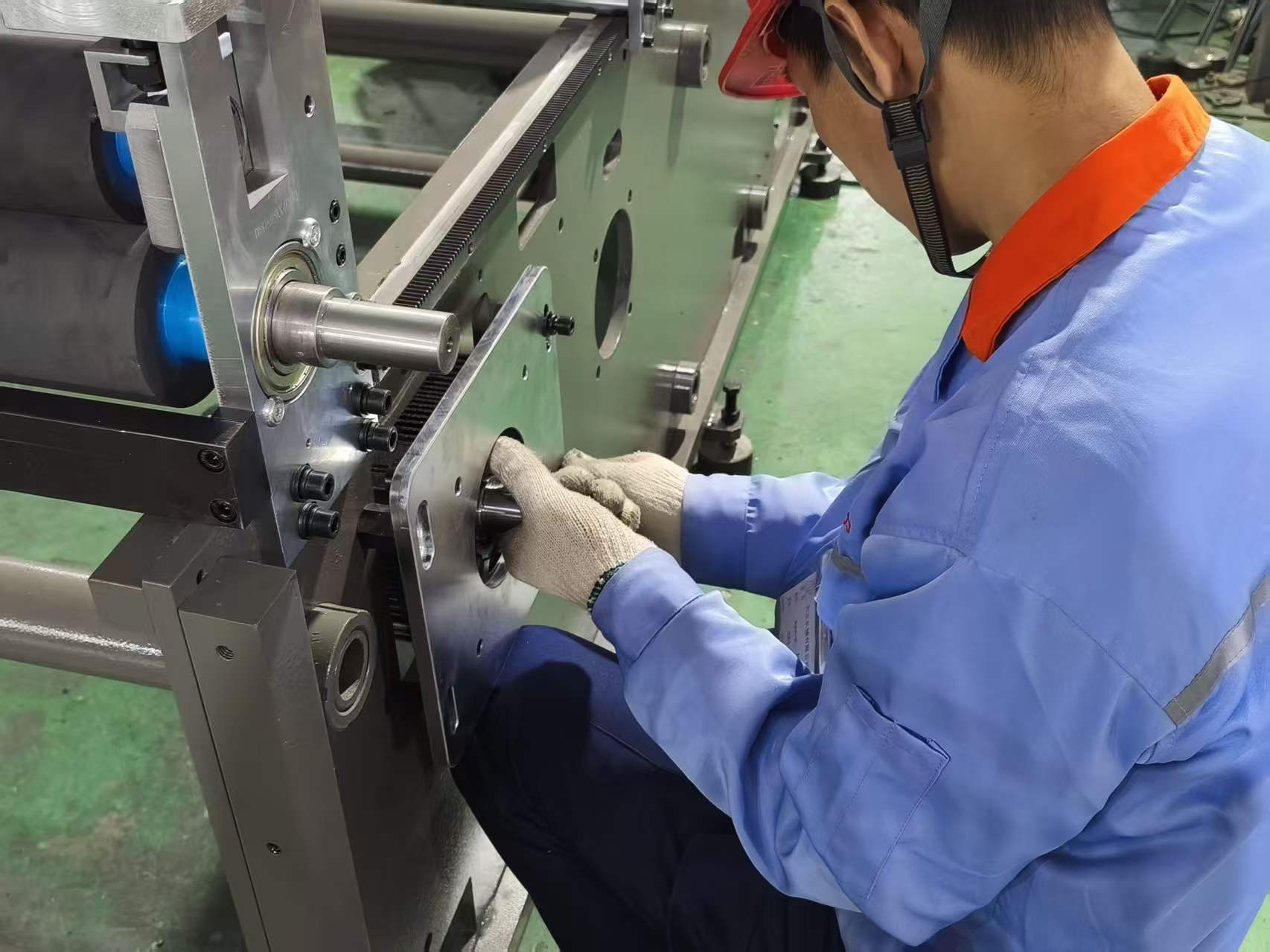
Integrating a digital stamping machine into a pouch or bag line succeeds or fails on five interface parameters rather than on print quality alone: power supply, compressed air, roll handling, web edge control, and line-speed matching. The HL1000L1-420 digital stamping machine performs cold foil stamping, spot UV, and embossing–debossing at a line speed of 30–50 m/min, and requires a 380 V ±5%, 50 Hz three-phase-four-wire supply drawing 10 kW total power, 0.6 MPa clean compressed air, rolls up to 500 kg, Φ800 mm unwind and rewind diameters, a 1000 mm unwind width, and a rewind edge alignment tolerance of ≤2 mm.
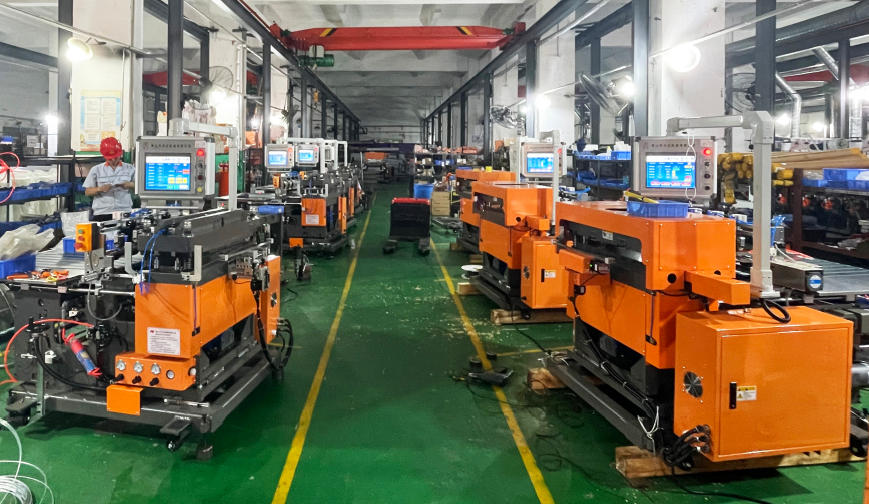
FOSHANTIANZHENG (Foshan Tianzheng Machinery Co., Ltd.) is a Foshan-based manufacturer of bag making machines, hot stamping machines and die-cutting machines, founded in 1993 as the Hongli bag-making operation and today exporting to more than 20 countries. The HL1000L1-420 is its digital stamping platform for inline finishing on pouch and bag lines.
This guide is written for engineering and procurement teams in medium and large flexible packaging factories that run diversified bag types — flat bottom with zipper, stand-up with zipper, doypack, central seal, valve pouch, Bag-in-box, labeling and label pasting in-line — on mass continuous production. It sets out the parameters to check before purchase, the sequence to follow during commissioning, and the long-term support questions that decide life-cycle cost.
Integration Risk Is Interface Risk
On an inline installation, the failures that stop production in the first weeks are almost always interface failures. A stamping module can be perfectly capable in isolation and still underperform because the plant air line is wet, the rewinder walks sideways, or the host bag making machine runs at a speed the finishing head was never matched to.
- Utility mismatch. A 10 kW unit needs a supply that holds within the voltage tolerance window, and the air line must deliver clean compressed air at 0.6 MPa — not plant air that is oily, wet, or pressure-hunting.
- Roll-handling limits. The module handles a maximum roll weight of 500 kg with Φ800 mm unwind and rewind diameters. A 1000 mm unwind width defines the widest web that can be fed without an adapter, and heavier or wider reels force a change in the upstream handling plan, not a change in the module.
- Edge alignment drift. A rewind edge alignment tolerance of ≤2 mm sounds generous until the web passes through a laminator, a zipper inserter and a sealing station. Any of those stations can consume the tolerance before the stamping module sees the web.
- Speed mismatch. 30–50 m/min is the stamping window. The host line speed and the 30–100 strokes/min stamping rhythm have to be reconciled in the line control architecture, or the module becomes the pacing bottleneck.
- Material precondition. Cold foil stamping, spot UV and embossing all assume a flat, smooth, non-absorbent surface. A wrinkled or highly absorbent substrate changes the achievable result before any parameter is adjusted.
The practical conclusion is that a digital stamping machine should be specified as a line component with a shared parameter sheet, not as a standalone purchase. The remainder of this guide follows that logic: parameters first, sequence second, formats third.
Why Pouch and Bag Lines Are Adding Inline Finishing Now
The commercial case for inline finishing is being pushed by both market growth and format mix. Dataintelo values the global bag making machine market at USD 4.8 billion in 2025, projected to reach USD 8.1 billion by 2034, with Asia Pacific holding a 43.6% revenue share in 2025 on the strength of manufacturing hubs in China, India and Southeast Asia. Within that market, automatic bag making machines accounted for 52.4% of global product type share in 2025 — a direct indicator of how far the industry has already moved toward automated, continuous production.
The pouch formats that drive finishing demand are growing on separate curves. Grand View Research values the stand-up pouches market at USD 30.7 billion in 2023, growing at a CAGR of 8.0% through 2030. The same research house reports that zipper closures represented 41.0% of pouch revenue share in 2025, while flat pouches accounted for the largest single product share at 63.7% in 2025 on the strength of cost-efficiency and high-speed production capability. Expert Market Research sizes the Bag-in-Box packaging machine market at USD 141.2 million in 2023 with a projected USD 248.2 million by 2032, and the Asia-Pacific share of that segment at roughly USD 52.2 million in 2023 with a projected CAGR of 7.2%.
Two structural factors sit behind those numbers. First, sustainability and the shift to mono-material recyclable films are cited by Fortune Business Insights as the top drivers for machine upgrades in 2024–2025, which pushes converters to re-qualify existing finishing processes against new substrates. Second, supply is geographically concentrated: China's bag making machine industry clusters in Wenzhou (Zhejiang), Guangdong and Jiangsu, according to Dataintelo. FOSHANTIANZHENG operates from Foshan in Guangdong, inside one of those clusters.
A caution on market figures is warranted. Published estimates for this equipment category vary widely with scope — some sources count bag making machines, others count bagging machines, and the totals differ accordingly. Buyers should treat scope definition, not the headline number, as the meaningful part of any market claim.
HL1000L1-420 Integration Parameters in Detail
The parameters below define what the surrounding line must provide. They are the values to reconcile with the plant electrical drawing, the air specification, the reel handling plan and the line control before a purchase order is placed.
Electrical supply and compressed air
The module is rated for 380 V ±5%, 50 Hz, three-phase four-wire, with 10 kW total power. That combination matters in two specific ways. The ±5% tolerance defines how much voltage swing the machine can absorb during a line-wide load change, and total power defines the branch circuit and any generator or stabiliser sizing. For context on plant-level planning, Tianzheng's die-cutting platforms are rated at 380 V, 50 Hz with a total power range of 30 to 131.4 kW, so a mixed plant will already be built around a 380 V, 50 Hz three-phase infrastructure.
On the pneumatic side, the requirement is 0.6 MPa clean compressed air. "Clean" is the operative word: dry, filtered, oil-free air protects the valves and cylinders that drive the stamping and embossing sequence, and it is the single most common item to correct during a pre-integration audit.
Roll handling and web geometry
The module accepts a maximum roll weight of 500 kg and is built around Φ800 mm unwind and rewind diameters, with a 1000 mm unwind width. The rewind edge alignment tolerance is ≤2 mm. In practice, these four numbers should be checked against the actual reel specification your suppliers deliver, not against a nominal reel size, because reel weight and diameter drift upward as converters standardise on longer runs.
Stamping process envelope
Cold foil stamping, spot UV, and embossing–debossing are performed by the same inline unit. The foil stamping unit width is 420 mm, and it can be positioned laterally across 1000 mm of adjustment. Stamping speed runs from 30 to 100 strokes/min, while the overall line speed runs from 30 to 50 m/min. The lateral adjustment is the parameter that determines how many different bag formats a single installed unit can cover without mechanical repositioning of the module frame.
| Parameter | HL1000L1-420 value | What it means at integration |
|---|---|---|
| Processes | Cold foil stamping, spot UV, embossing–debossing | One inline module replaces separate finishing passes for three decoration types |
| Rated voltage / frequency | 380 V ±5%, 50 Hz, three-phase four-wire | Defines branch circuit and voltage-stability requirement |
| Total power | 10 kW | Sized against the plant load plan and any stabiliser or generator capacity |
| Compressed air | 0.6 MPa clean compressed air | Requires dry, filtered, oil-free supply with stable pressure |
| Max roll weight | 500 kg | Constrains reel specification and handling equipment |
| Unwind / rewind diameter | Φ800 mm | Sets shaft, chuck and reel-stand selection |
| Unwind width | 1000 mm | Maximum web width accepted without modification |
| Rewind edge alignment tolerance | ≤2 mm | Shared tolerance budget with upstream laminating, zipper and sealing stations |
| Process parameter | Value | Integration implication |
|---|---|---|
| Line speed | 30–50 m/min | Must be reconciled with host bag making or pouch making machine speed |
| Stamping speed | 30–100 strokes/min | Sets the achievable impression density per metre |
| Foil stamping unit width | 420 mm | Defines the maximum single-pass image band width |
| Lateral adjustment | 1000 mm | Allows one installed unit to serve several pouch formats |
| Substrate precondition | Flat, smooth, non-absorbent material | Material qualification before commissioning, not after |
The material precondition deserves its own check
Flat, smooth and non-absorbent is not a formality. Cold foil transfer, UV spot application and embossing–debossing each depend on a controlled surface. A converter moving from a standard laminate to a mono-material recyclable structure — one of the upgrades Fortune Business Insights identifies as a leading 2024–2025 driver — is changing exactly the surface variables that this precondition describes. Material should therefore be qualified at the same time the utilities are audited, not after installation.
Safety, compliance and export requirements
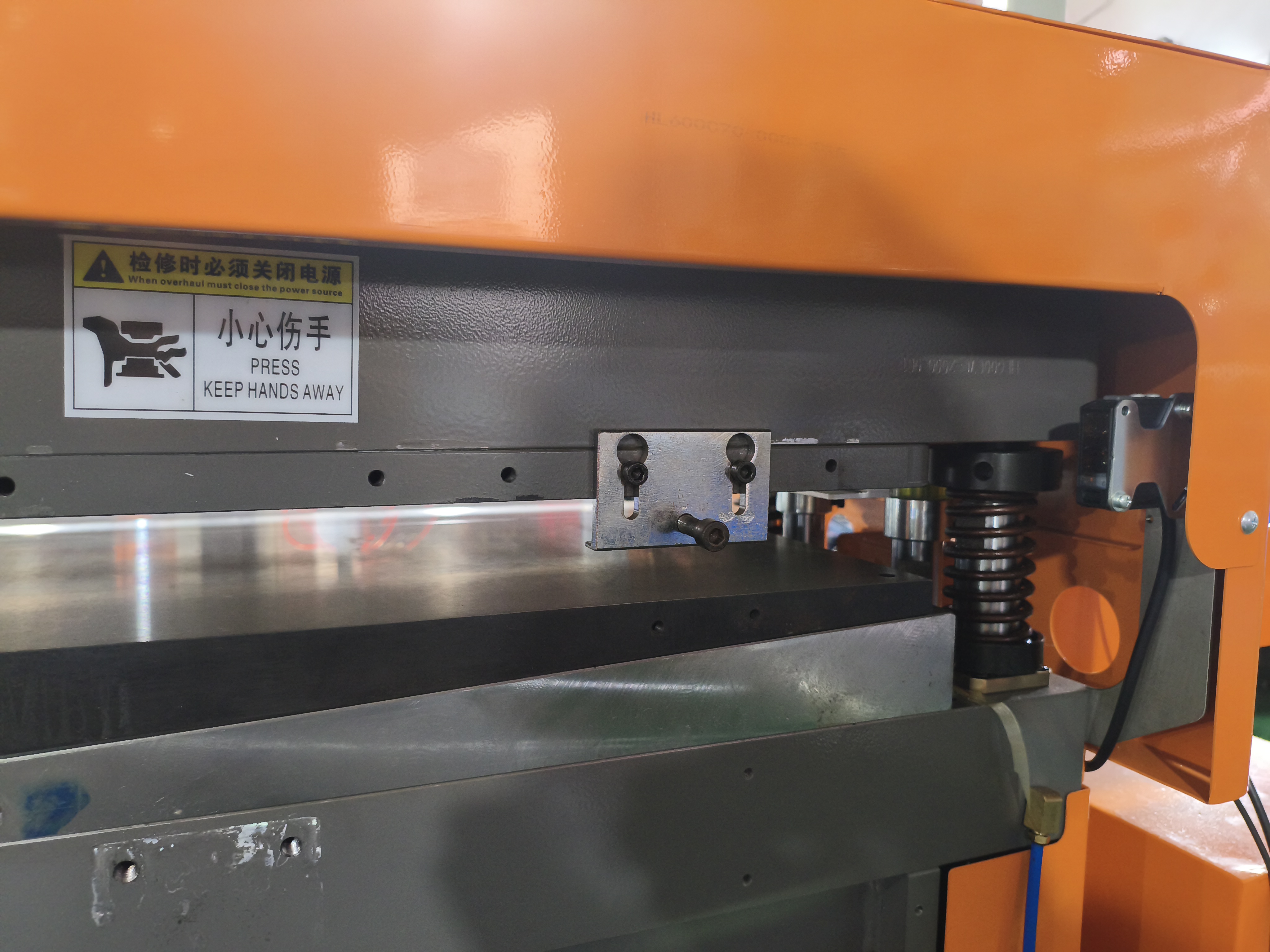
Safety specification belongs in the same parameter sheet as power and air. Packaging machinery exported to the EU must comply with EN ISO 12100:2010 for risk assessment and CE marking requirements, and the machine-specific safety requirements for packaging machines are detailed in the EN 415 series of Type C standards (CEN). At equipment level, the control measures applied against mechanical pinch risk are safety guards and a fault alarm system. FOSHANTIANZHENG holds ISO 9001 quality system certification and EU CE certification.
Step-by-Step: Integrating the Module into a Pouch or Bag Line
- Define the bag format portfolio first. List every format the line must run — flat bottom with zipper, stand-up with zipper, doypack, central seal, valve pouch, Bag-in-box, labeling and label pasting in-line, and plain plastic pouch formats. The lateral adjustment range of 1000 mm means format count drives positioning strategy, not additional heads.
- Match line speed and stamping rhythm. Fix the host line speed inside the 30–50 m/min window and confirm the required impressions per metre against the 30–100 strokes/min stamping speed. This calculation decides whether one pass is sufficient or whether decoration density must be reduced.
- Audit the electrical supply. Verify a 380 V ±5%, 50 Hz three-phase-four-wire feed, a 10 kW branch provision, and stable voltage under full line load. Document the tolerance margin.
- Audit the compressed air line. Confirm 0.6 MPa clean, dry, oil-free air at the point of use, with filtration and a stable regulator. Air quality problems are cheaper to fix before the machine arrives.
- Plan roll handling against real reels. Confirm that supplied reels stay within 500 kg, Φ800 mm and 1000 mm unwind width, and that reel stands, chucks and lifting equipment match.
- Build the web path and tolerance budget. Lay out the web path so that laminating, zipper insertion and sealing stations are evaluated against the ≤2 mm rewind edge alignment tolerance. The tolerance is shared, so it must be allocated deliberately.
- Qualify the material, then commission. Run the actual production substrate — flat, smooth and non-absorbent — through the module and adjust pressure, position and speed against measured results. Then confirm the acceptance plan in writing.
- Agree the long-term support scope. Spare parts, operator training, remote diagnostics and response routes should be agreed at the same time as the commercial terms, because an inline module stops the whole line, not one process step.
On commercial terms, Tianzheng's stated purchasing framework is MOQ 1 unit, FOB or CIF delivery terms, pre-shipment test as the acceptance criterion, and 30/70 payment terms.
Matching the Module to Specific Pouch and Bag Formats
With a 420 mm stamping unit width and 1000 mm of lateral adjustment, the HL1000L1-420 is positioned as a shared finishing asset across a mixed format portfolio rather than as a dedicated head for one bag style. The engineering question for each format is where the decoration zone sits relative to the structural features that cannot be disturbed.
- Flat bottom with zipper bags. The zipper weld band and the flat base gusset are structural zones. Decoration placement must avoid them, and the format is usually run at the higher end of the line-speed range because flat constructions are the highest-volume pouch type — flat pouches held 63.7% of product share in 2025 according to Grand View Research. For converters building this format in volume, a dedicated flat bottom with zipper bag making machine upstream of the stamping module keeps the line balanced.
- Stand-up with zipper bags. The stand-up base consumes web area that flat formats do not use, which changes the printable decoration band. Stand-up pouches are the fastest-growing pouch market in value terms (Grand View Research: USD 30.7 billion in 2023, CAGR 8.0% through 2030), and zipper closures now represent 41.0% of pouch revenue share. A stand-up with zipper bag making machine feeding an inline stamping module is the configuration this format mix points toward.
- Doypack and zipper pouch formats. Doypack-style constructions and zipper pouch making machine lines typically carry heavier decoration and branding, which makes spot UV and embossing–debossing the relevant processes rather than foil alone.
- Central seal and valve pouch formats. A central seal pouch making machine and a valve pouch making machine produce continuous-format webs where registration stability is the deciding factor. The ≤2 mm rewind edge alignment tolerance is the number to verify against the host machine's own web guiding performance.
- Labeling and label pasting in-line. On a labeling bag making machine or a label pasting in-line bag making machine, the stamping module and the labeling station compete for the same web area and the same time window. Sequence them so that decoration is applied where it does not interfere with label placement.
- Bag-in-box lines. Bag-in-box production has a distinct value curve — Expert Market Research projects the BIB packaging machine market growing from USD 141.2 million in 2023 to USD 248.2 million by 2032 — and a Bag-in-box bag making machine feeding an inline finishing unit is a typical configuration for converters serving liquid and semi-liquid packers.
- General plastic pouch production. For broad plastic pouch making machine output, the stamping module's value is format-agnostic: one installed unit covers multiple bag types without a mechanical changeover of the head.
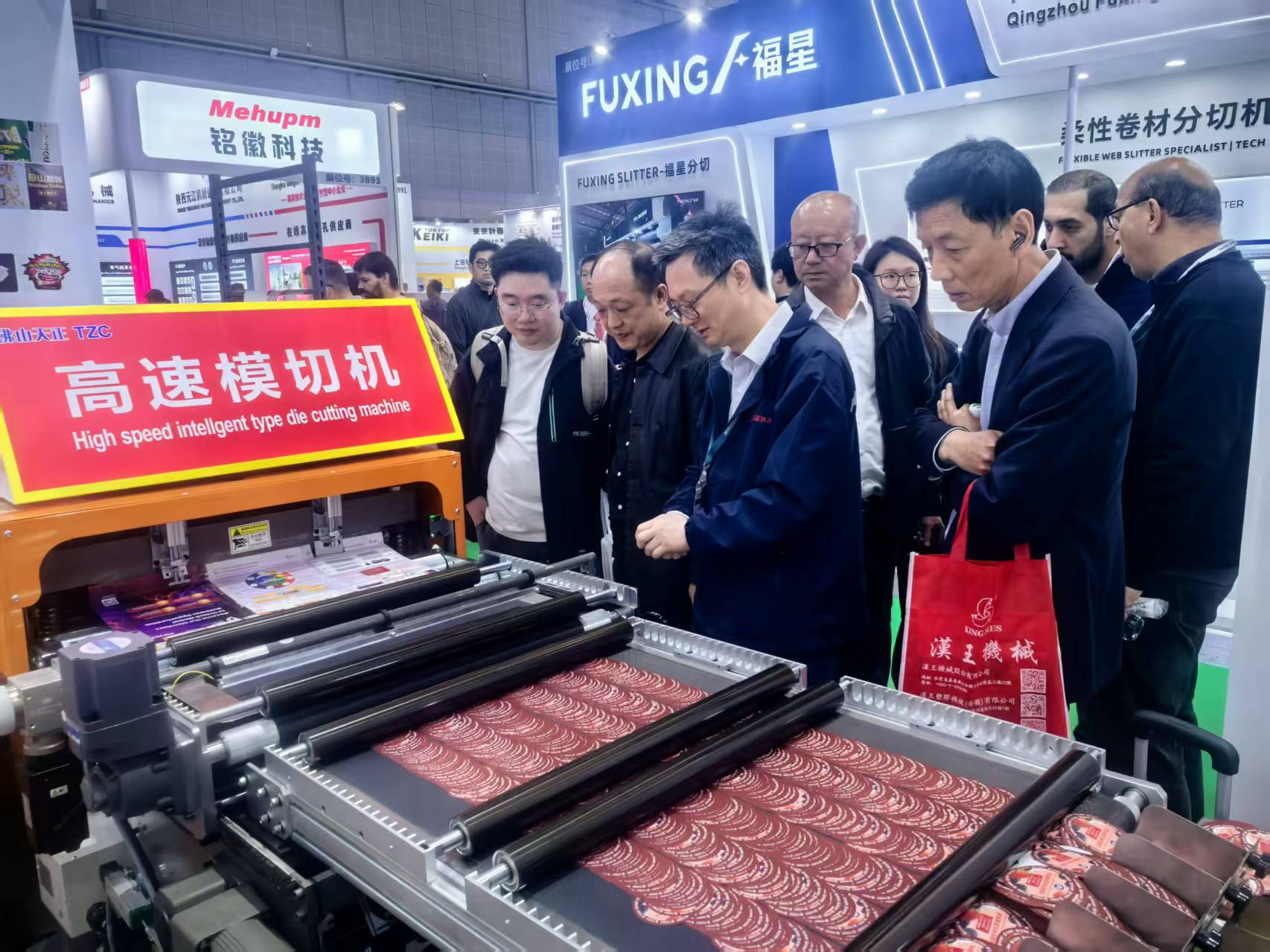
One line-level requirement applies to every format above: these machines are installed in a larger process chain. Tianzheng states that its equipment requires supporting equipment such as a printing machine, a slitter, a film blowing machine and a rewinding machine, so finishing integration should be planned with the full web flow visible.
Comparison: Full-Servo Platform vs Traditional Mechanical Bag Making
The choice of host bag making machine shapes how much benefit the finishing module delivers, because web tension stability and speed consistency upstream determine whether the stamping window can be held. Tianzheng's own comparison data between its full-servo drive platform and traditional mechanical bag making machines and ordinary low-end pouch equipment is summarised below.
| Comparison metric | Full-servo drive platform | Traditional mechanical bag making machines & low-end pouch equipment |
|---|---|---|
| Material loss | Reduced by 22% | Baseline |
| Operating noise | Decreased by 18 dB | Baseline |
| Production efficiency | Increased by 30% | Baseline |
| Power consumption per thousand bags | Reduced by 16% | Baseline |
| Initial purchase cost | 8% higher | Baseline |
| Overall life-cycle comprehensive cost | 15% lower | Baseline |
| Maintenance profile | Modular integrated structure, fewer breakdown faults, less regular maintenance work | More regular maintenance work |
| Bag type compatibility | Wider bag type compatibility, longer continuous stable operation time | Narrower format range |
| Best fit | Medium and large flexible packaging factories with diversified bag types and mass continuous production demands | Lower-volume, single-format operation |
The decision rule that follows from this table is straightforward. If the line runs one format at low volume, the 8% higher initial purchase cost is difficult to recover. If the line runs a diversified format portfolio at continuous volume — the profile described in the "best for" column — the 15% lower overall life-cycle comprehensive cost and the 30% efficiency difference are the numbers that matter during evaluation, together with the 22% material-loss reduction and the 16% lower power consumption per thousand bags.
Three points of uncertainty should be priced in during evaluation rather than assumed away: the first is material qualification against the specific film you run, because the stamping precondition is a flat, smooth, non-absorbent surface; the second is the voltage stability of your supply against the 380 V ±5% window; and the third is the shared ±2 mm rewind edge alignment tolerance across every station handling the web. These are the three items most likely to change the achievable line speed of 30–50 m/min on a real production floor. Any technical guide, including this one, should be reconciled against the final machine datasheet and a pre-shipment test result before a purchase order is confirmed.
Frequently Asked Questions
What compliance requirements apply when an inline stamping module is supplied into the EU?
Packaging machinery placed on the EU market must comply with EN ISO 12100:2010 for risk assessment as part of CE marking requirements, and the machine-specific safety requirements for packaging machines are detailed in the EN 415 series of Type C standards published by CEN. At equipment level, the control measure against mechanical pinch risk is safety guarding combined with a fault alarm system. FOSHANTIANZHENG holds ISO 9001 quality system certification and EU CE certification, and has been recognised as a Guangdong Provincial Specialized, Refined, Differential & Innovative Enterprise.
Can one HL1000L1-420 unit cover multiple pouch and bag formats?
Within its process envelope, yes. The unit applies cold foil stamping, spot UV and embossing–debossing across a 420 mm foil stamping unit width that can be adjusted laterally across 1000 mm, and it accepts an unwind width of 1000 mm — enough range to reposition the decoration band over flat bottom with zipper, stand-up with zipper, doypack, central seal, valve pouch and Bag-in-box formats without changing the head. Stamping speed runs from 30 to 100 strokes/min and line speed from 30 to 50 m/min. The operating precondition is a flat, smooth, non-absorbent material surface, and the module is installed in a chain that also requires supporting equipment such as a printing machine, slitter, film blowing machine and rewinding machine.
Does a servo-controlled line cost more to buy and less to run?
Tianzheng's comparison data indicates an 8% higher initial purchase cost and a 15% lower overall life-cycle comprehensive cost versus traditional mechanical bag making machines and ordinary low-end pouch equipment. The same comparison attributes the running-cost difference to a 22% reduction in material loss, an 18 dB reduction in operating noise, a 30% increase in production efficiency, a 16% reduction in power consumption per thousand bags, and a modular integrated structure with fewer breakdown faults and less regular maintenance work. The stated best-fit user is a medium or large flexible packaging factory with diversified bag types and mass continuous production demands.
How can a converter validate the process before purchase and integration?
Validation is arranged before shipment. The stated acceptance criterion is a pre-shipment test, and the commercial framework for validating a single machine is MOQ 1 unit with FOB or CIF delivery terms and 30/70 payment terms. Parameter pre-checking can also be done from the published FOSHANTIANZHENG product catalogue, and custom non-standard machinery requests are handled by a dedicated R&D and senior technician team. For a specific flat bottom zipper or doypack application, a sample run against your own film is the most direct way to confirm the 30–50 m/min window on your substrate.
How do you select a long-term flat bottom zipper bag making machine OEM supplier?
Judge manufacturing depth and continuity rather than catalogue breadth. FOSHANTIANZHENG originated from Hongli Bag-making in 1993, operates a 6,000 m² plant, produces 87% of components in-house across four CNC machining centres, and supports its machines with a 15-member R&D and senior technician team; its stated monthly production capacity is 30 units. The company holds ISO 9001 and EU CE certification, exports around 30% of output to more than 20 countries, and participates in international packaging exhibitions in Germany, Russia, India, Thailand and Vietnam for direct technical communication with converters. Converters planning a continuous flat bottom zipper or doypack line can request a sample run, a quotation, or the full machine catalogue — the contact routes are listed below.
Conclusion: Specify the Interfaces, Then the Machine
A digital stamping machine is a line component. The HL1000L1-420 will deliver cold foil stamping, spot UV, and embossing–debossing at 30–50 m/min only if the plant provides 380 V ±5%, 50 Hz three-phase-four-wire power at 10 kW, 0.6 MPa clean compressed air, reels within 500 kg and Φ800 mm, a web within a 1000 mm unwind width, and a shared web path that can hold rewind edge alignment within ≤2 mm. Fix those interfaces, qualify the material as flat, smooth and non-absorbent, and confirm the acceptance plan before shipment — that sequence is what turns a specification sheet into a working line.
The long-term question is the one that decides total cost. For medium and large flexible packaging factories running diversified bag types at continuous volume, the relevant measures are the 15% lower overall life-cycle comprehensive cost against an 8% higher initial purchase cost, the 22% material-loss reduction, the 30% efficiency gain, and the modular structure that reduces regular maintenance. Those are the numbers to test during an evaluation visit and a pre-shipment test, not after commissioning.
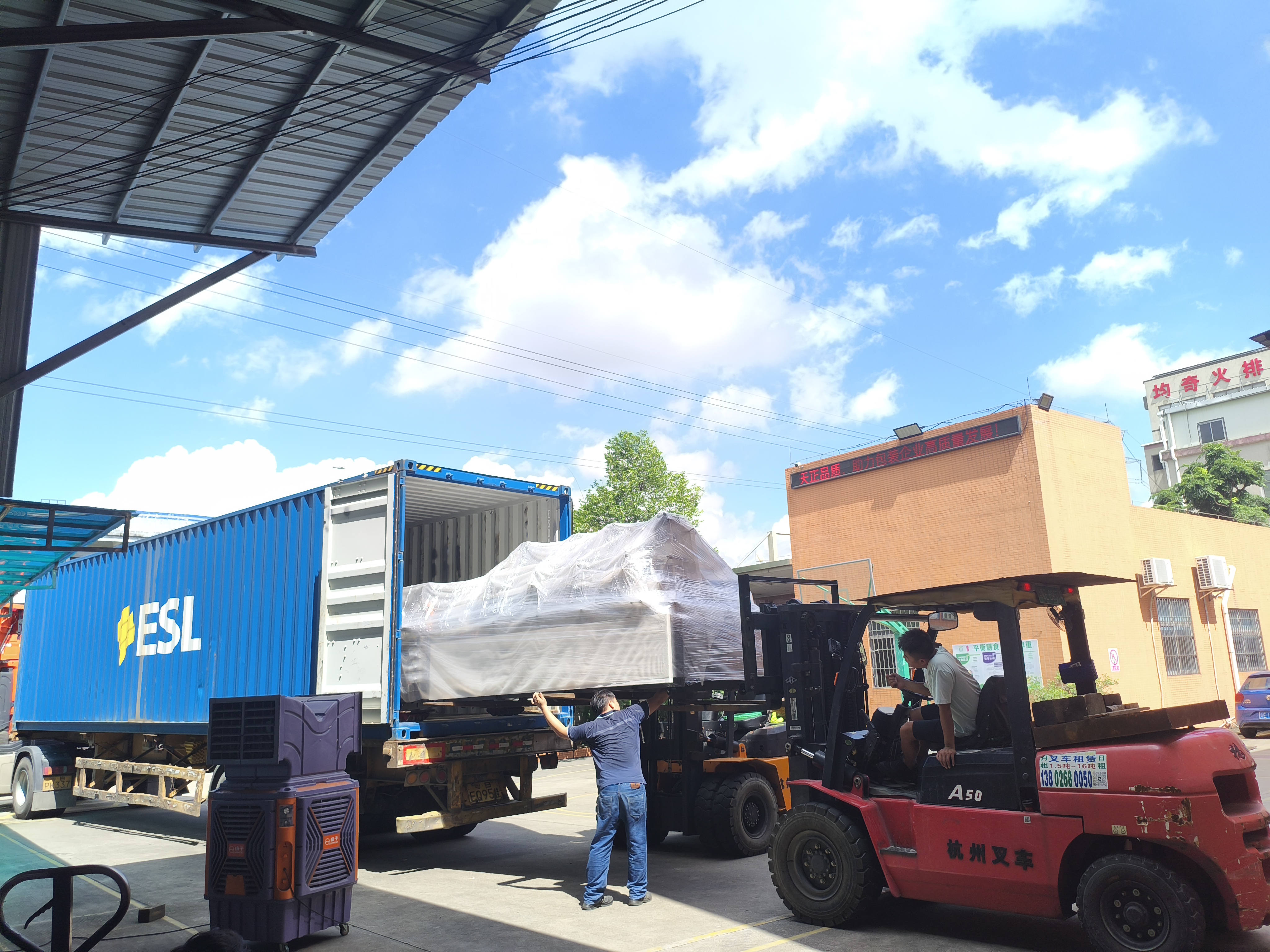
Next step: validate on your own film. FOSHANTIANZHENG supplies bag making machines, hot stamping machines and die-cutting machines from Foshan, Guangdong, with a stated monthly production capacity of 30 units and a pre-shipment test as the acceptance criterion. Request a machine quotation, a sample run for your flat bottom zipper or doypack application, or distributor and spare-parts support for your market.
www.tianzhengmachinery.com | Download the machine catalogue
Mr Huang — tianzheng@tz980.com — Tel / WhatsApp: +86 18028113815
Ms Xiao — tz05@tianzhengmachinery.com — Tel / WhatsApp: +86 18127143090
Ms Chen — tz02@tianzhengmachinery.com — Tel / WhatsApp: +86 18127143229
Address: NO.5 Huatian North 4th Rd., Huakou Industrial Zone, Ronggui, Shunde, Foshan City, Guangdong Province, China, 528300
Have Questions or Need More Details?
Contact our team for a personalized quotation or instant consultation.
Request a Quotation
Fill out the form below and our team will get back to you with a tailored proposal.
WhatsApp Direct Chat
Prefer to chat in real-time? Message us on WhatsApp for instant assistance & quick answers.
- Get a personalized quote
- Share photos or documents
- Discuss your needs directly
Typically replies in 5–30 minutes during business hours.