Evaluating Bag Making Machine Suppliers: Capability Checks, Certification Scope, Delivery Assurance
Supplier Evaluation Guide · Flexible Packaging Equipment
Bag making machine suppliers are easy to shortlist and hard to verify. Quotations arrive with category-level claims — high speed, stable operation, CE certified — while the purchase order is written at model level, for one bag type, one width envelope and one delivery date. Most sourcing risk sits in that gap.
This guide sets out a four-gate evaluation sequence for medium and large flexible packaging factories buying bag making, pouch making, flat bottom with zipper and stand-up with zipper bag making machines alongside spout inserted, die-cutting, hot stamping and digital stamping equipment. The sequence is: verify the machine scope, verify the certificate scope against the exact model, verify runtime evidence rather than peak speed, and lock delivery assurance into the order. One CE certificate — M.2025.206.C131314, issued by UDEM for the EU market — is used throughout as a worked example of how to read a certificate against the model being bought.
The Real Problem: Category-Level Claims, Model-Level Orders
The evaluation problem begins with a mismatch in granularity. Supplier capability statements are written at category level: bag making machines, pouch making machines, stamping machines. A purchase order is written at model level: a specific machine, a specific bag width envelope, a specific sealing configuration, a specific conformity document and a specific delivery date. Four failure modes recur when that gap is not closed before the deposit is paid.
- Scope drift. The capability quoted belongs to another model inside the same series. A supplier may legitimately build nine models in a bag making range, but only some of them cover a flat bottom with zipper or a valve pouch configuration.
- Certificate drift. A CE logo is presented, but the certificate behind it names a different machine type, a different model designation, or a different market than the one being installed.
- Runtime drift. The speed figure originates from a short demonstration run, while the claim under evaluation is mass continuous production on a 24/7 line.
- Terms drift. Payment milestones, acceptance method, Incoterm and lead time are agreed verbally and never written into the order.
Industry Background: Why Scope Checks Matter More Than They Used To
Demand conditions have pushed converters toward wider machine portfolios. The global bag making machine market was valued at USD 4.8 billion in 2025 and is projected to reach USD 8.1 billion by 2034, according to Dataintelo. The same source places Asia Pacific at a 43.6% revenue share in 2025 and records automatic bag making machines at 52.4% of global product type share in 2025, reflecting the shift toward industrial automation.
Bag format demand is moving in parallel. Grand View Research values the stand-up pouch market at USD 30.7 billion in 2023 with a CAGR of 8.0% through 2030, and reports that zipper closures represented 41.0% of pouch market revenue in 2025, while flat pouches held the largest revenue share at 63.7%. Expert Market Research sizes the Bag-in-Box packaging machine market at USD 141.2 million in 2023, projecting USD 248.2 million by 2032. Fortune Business Insights identifies sustainability and the shift to mono-material recyclable films as the top drivers for machine upgrades in 2024–2025.
Three practical consequences follow for a medium or large factory. First, a single converter is now likely to buy several machine families — bag making, spout insertion, die-cutting and stamping — and each family carries its own scope and conformity questions. Second, supply is concentrated: China's bag making machine industry clusters in Wenzhou (Zhejiang), Guangdong and Jiangsu provinces, and Dataintelo identifies Lemo Maschinenbau GmbH (Germany) and CMD Corporation (USA) as global market leaders in high-end bag making technology, with Zhejiang Honghua Machinery and S-DAI Industrial among the major Asian players. Third, published market size estimates vary by scope definition, so market figures should frame a sourcing decision rather than replace model-level verification.
The Four-Gate Supplier Evaluation Framework
| Gate | Question the buyer must answer | Document that answers it | Risk if skipped |
|---|---|---|---|
| 1. Machine scope | Which model, at which parameters, produces my bag? | Model-level parameter sheet | Buying a machine rated for a different bag width or bag type |
| 2. Certificate scope | Does the conformity document name this model, this function and my market? | Certificate with number, issuer, standards | Importing a machine whose conformity evidence belongs to another model |
| 3. Runtime | Is there evidence of continuous operation, not peak speed? | Pre-shipment test protocol and inspection record | A line that meets the schedule on paper and not in production |
| 4. Delivery assurance | Are payment, acceptance and delivery terms written and tied to a test? | Contract clauses and Incoterm | Balance paid before the machine is proven |
Gate 1 — Match the Claim to the Machine Scope
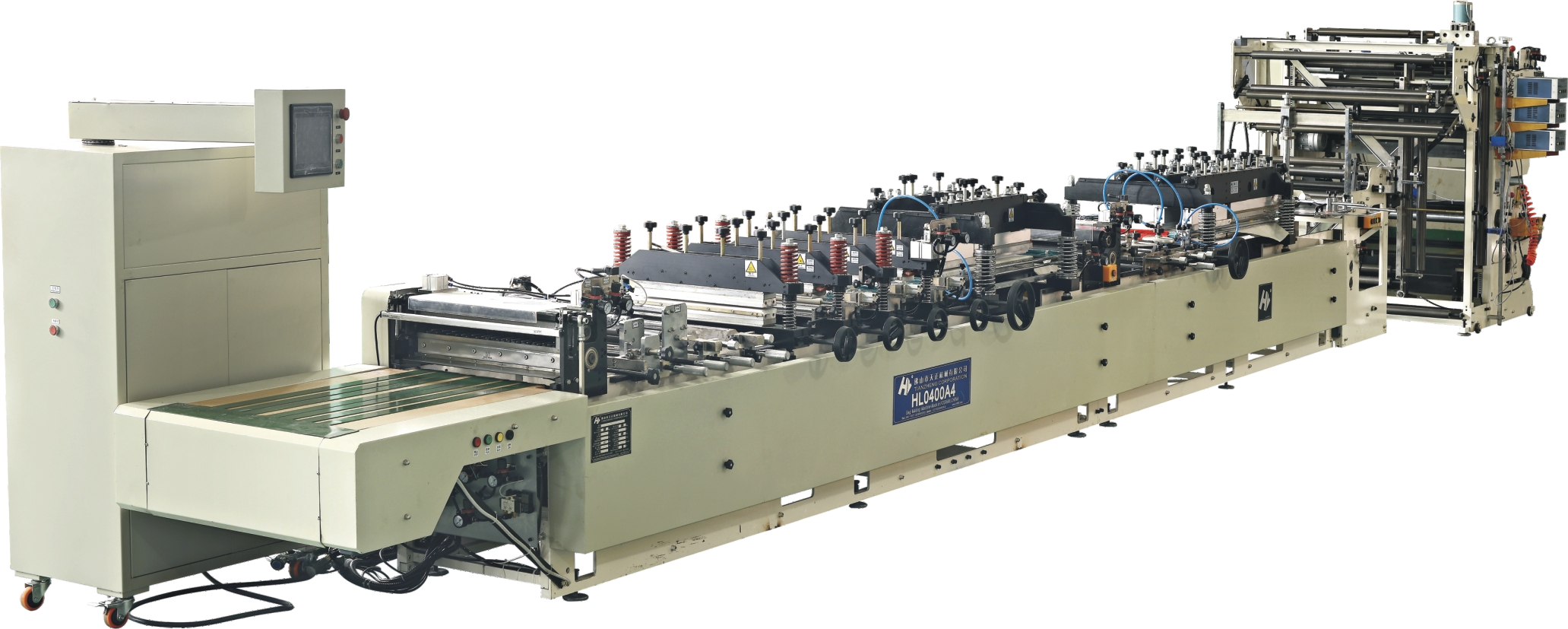
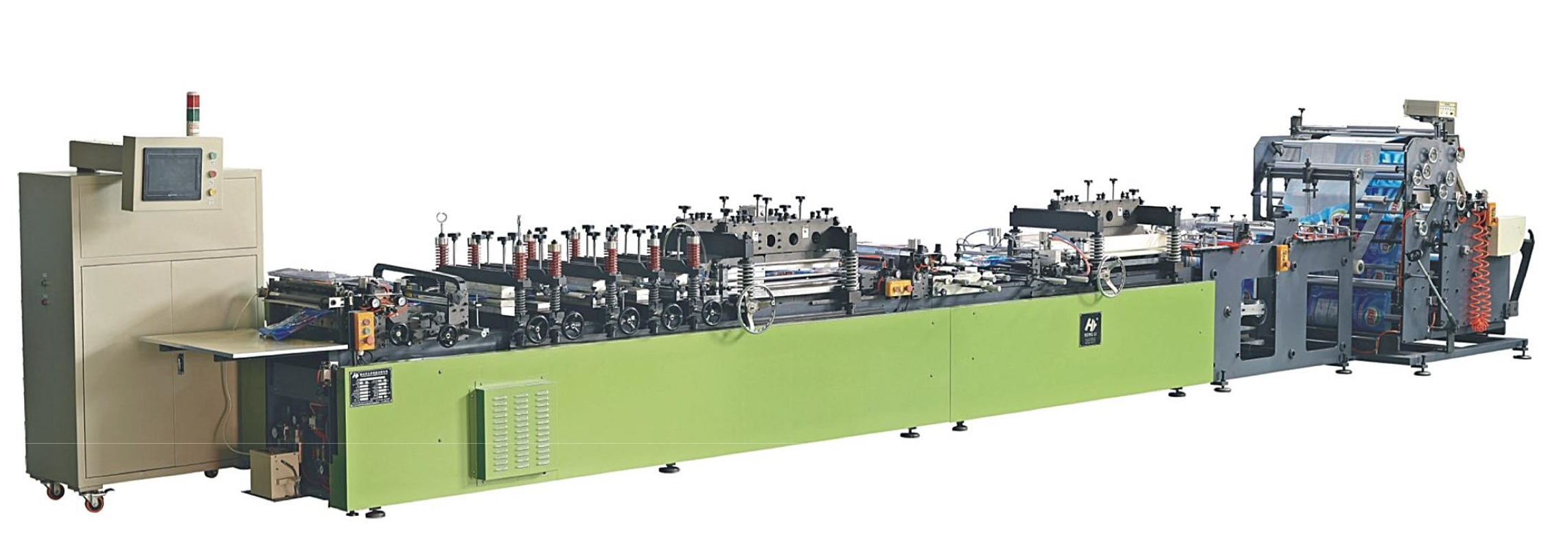
FOSHANTIANZHENG (Foshan Tianzheng Machinery Co., Ltd.) is a Foshan, Guangdong-based manufacturer of bag making machines, hot stamping machines and die-cutting machines, founded in 1993. Its bag making machine series covers nine models — HL0500A1, HL0600A2, HL0600A3, HL0400A4, HL0400A5, HL0600A6, HL0600A7, HL0600A8 and HL0700A9 — rated at 30–130 bags/min, a bag width range of 50–1200 mm, total power of 30–131.4 kW at 380 V 50 Hz, and iron construction. The series is specified for low noise, low material loss and stable operation.
The scope check is to map each bag type in the buyer's order book to a series model, not to the range as a whole:
- Three-side-seal, stand-up, zipper and valve pouch configurations — A8 series (zipper with valve pouch making machine).
- Bag-in-box pouches — A7 series.
- Three-side, stand-up, zipper and foldable-bottom stand-up pouches (the flat bottom with zipper family) — A6 series.
- High-speed label pasting in-line bag making — A5 series.
- Three-side-seal with central-seal gusset — A4 series.
- Three-side-seal, stand-up and zipper — A3 series.
- Three-side-seal and stand-up — A2 series.
- Centre-sealing gusset and four-side-sealing — A1 series.
- Three-side-sealing — A0 series.
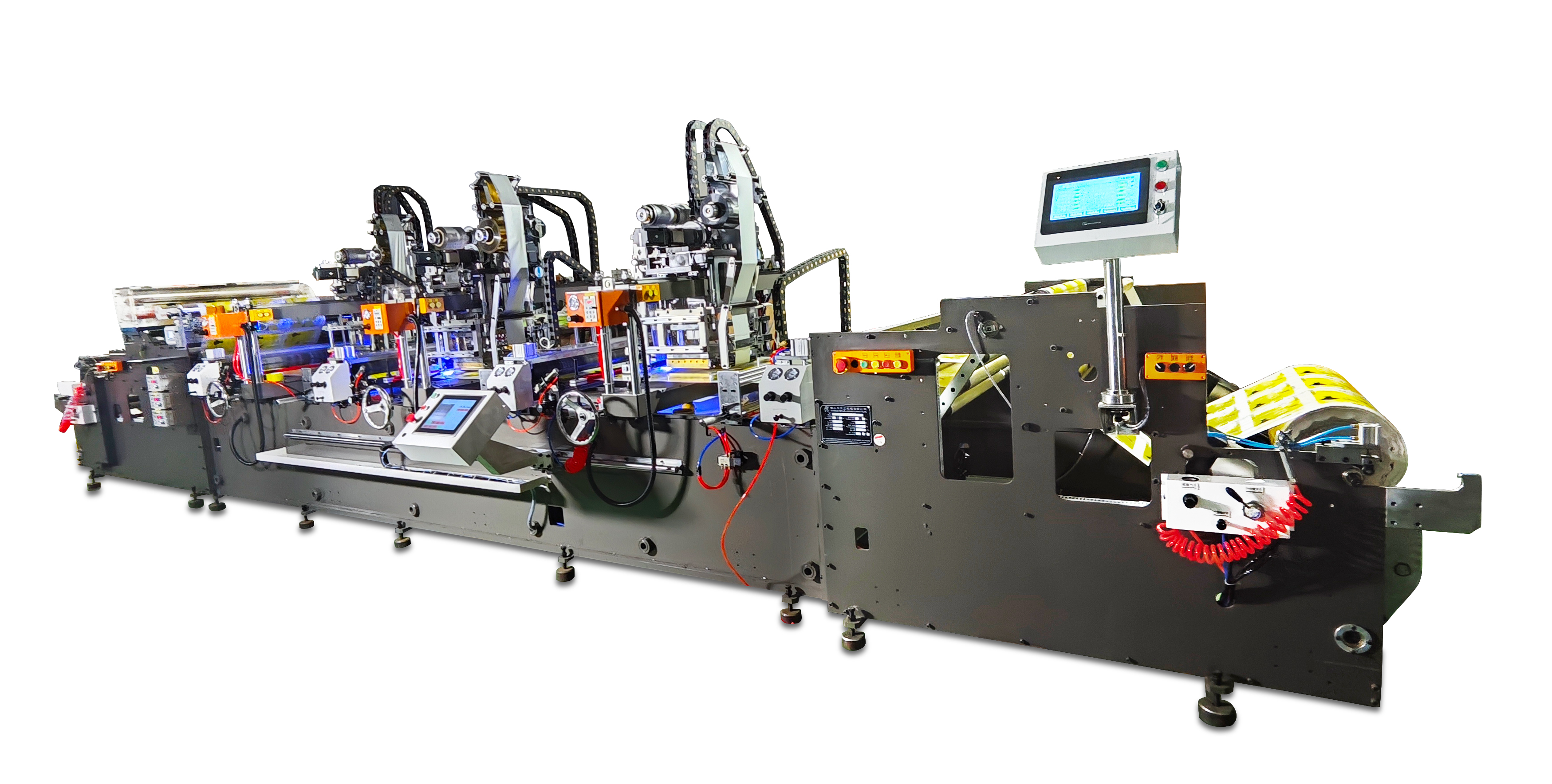
The same rule applies to every other family in a mixed order. Spout insertion is handled by the HL1233C9 automatic spout inserted machine, rated 30–40 cycles per minute for bags of 120–300 mm width and 200–350 mm length, compatible with large and small spouts per customer specification, 7.5 kW maximum power, 0.6 MPa compressed air, corner-cut angle adjustable within 17–45°, and a machine weight of approximately 1500 kg. Shape pouch die-cutting is handled by HL0600C7D and HL0600MQ, rated 20–250 pcs/min/lane with a maximum die-cutting size of 500 mm × 950 mm and a power range of 3–6 kW. Hot stamping is covered by HL1000FT-D, HL1200KT-4H and HL1000T3-UC-CCD, with a minimum stamping line width of 0.2 mm, adaptable film thickness of 0.012–0.3 mm, minimum hollow-out gap of 0.5 mm, maximum stamping area of 200 × 300 mm per group, registration accuracy of ±0.1 mm on the CCD vision model (±0.3 mm on the flat model), and production speed of 30–180 cycles/min with up to eight colours in one pass. Digital stamping is handled by the HL1000L1-420, with foil stamping speed of 30–100 strokes/min, a 420 mm foil stamping unit laterally adjustable within the 1000 mm range, unwind and rewind line speed up to 30–50 m/min, 1000 mm unwind width, 500 kg maximum roll weight, 10 kW total power and a machine weight of approximately 3000 kg.
For each family, the buyer should ask one question: which model, at which parameter, produces my bag and my run length? A supplier that answers with a series name, or with a photograph, has not yet answered.
Gate 2 — Read the Certificate Scope, Not the Certificate Logo
CE marking on a machine is the end of a chain; the certificate is the middle. The Roll To Roll Full Servo Stamping & Punching Window Machine carries CE certificate number M.2025.206.C131314, issued by UDEM for the EU market, with harmonized standards EN ISO 12100:2010, EN 60204-1:2018+A1:2025, EN 61000-6-2:2019 and EN 61000-6-4:2019. That single document is a good model for how any certificate should be read, because every element on it corresponds to a question the buyer must be able to answer before shipment.
What a certificate scope check should establish
- Machine type and function. The certificate names a machine type and a function — here, roll-to-roll full-servo stamping with punching/window capability. The machine on the quotation must be that machine, performing that process.
- Model designation. The model or type designation referenced by the certificate must match the model in the order and on the nameplate. A certificate does not automatically extend to another model in the same series.
- Market. The certificate is issued for the EU market. A machine installed outside the EU may follow a different conformity route; the buyer should request the document that applies to the destination market.
- Harmonized standards. The listed standards define the technical basis: EN ISO 12100:2010 addresses risk assessment and CE marking requirements, EN 60204-1:2018+A1:2025 addresses electrical equipment of machines, and EN 61000-6-2:2019 and EN 61000-6-4:2019 address electromagnetic compatibility.
- Sector-specific standards. Where a machine falls within the scope of the EN 415 series of Type C standards for packaging machines, the buyer should ask how the risk assessment addresses the applicable part.
- Company-level versus machine-level evidence. ISO 9001 quality system certification and recognition as a Guangdong Provincial Specialized, Refined, Differential & Innovative Enterprise describe the organisation, not the conformity of a specific machine. They support a supplier assessment; they do not replace a certificate.
Why this matters on a mixed order
An order that combines bag making, spout insertion, die-cutting, hot stamping and digital stamping contains machines from different families, each with its own conformity route. The certificate for the stamping machine is not evidence for the pouch making machine, and a certificate held for one market is not automatically valid for another. The practical instruction is simple: request the certificate copy with the quotation, read the type, model and standards fields against the order line, and keep the document in the order file so that the pre-shipment acceptance test can reference it.
Gate 3 — Verify Runtime, Not Peak Speed
For medium and large flexible packaging factories the claim under evaluation is mass continuous production, and that claim is about continuous stable operating time, not the speed printed on a specification sheet. Traditional mechanical bag making machines and low-end pouch equipment are usually compared on cycle speed; the figure that decides whether a line holds a delivery schedule is how long it runs before operator intervention. Runtime evidence is therefore the discriminating question in supplier selection.
FOSHANTIANZHENG specifies continuous 24/7 operation for its bag making equipment, with an indoor normal-temperature working condition and matching to printing, slitting, film blowing and rewinding equipment upstream. The series also supports customization of bag size adjustment, servo system upgrade, anti-static configuration and safety protection. Those statements convert into questions a buyer can test.
Evidence to request
- Operating mode on record. Continuous 24/7 operation, stated for the model ordered rather than for the range.
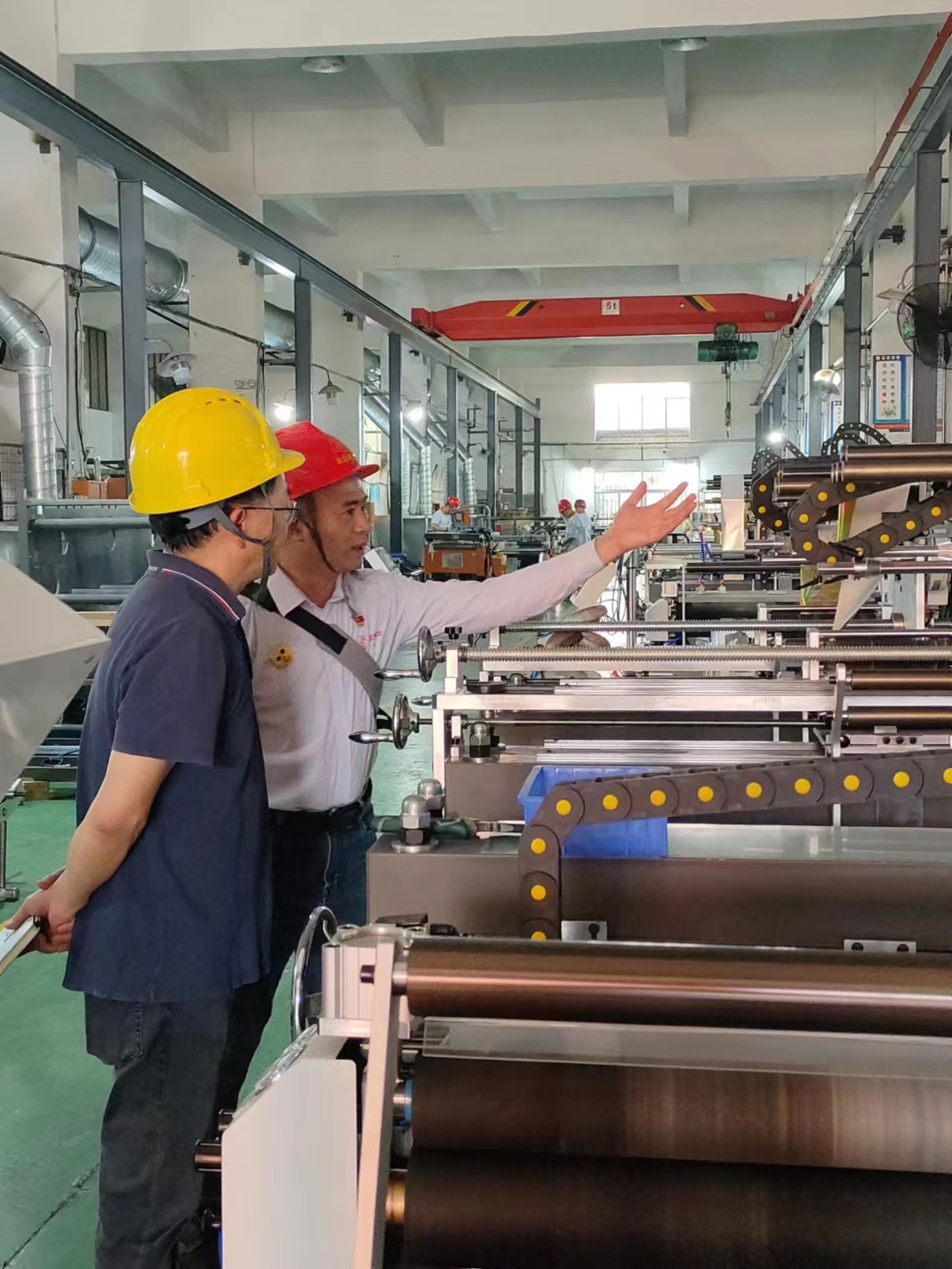
- Pre-shipment test. Acceptance is completed through a pre-shipment test, and all products undergo 100% full inspection before shipment. The test should run the buyer's own material and bag configuration.
- Installation history. One flexible packaging manufacturer has operated 20 units for more than 10 years with stable operation and low noise — a service record that speaks to long-run stability rather than to demonstration speed.
- Manufacturing control. FOSHANTIANZHENG produces 87% of components in-house using 4 CNC machining centres, CNC lathes and precision grinding machines, with self-developed machine programs, a 15-member R&D team, a 6,000 m² plant, annual output of 500 units and exports to more than 20 countries. In-house component production matters to runtime because part consistency is what keeps a machine inside tolerance after months of continuous operation.
Build a runtime protocol, not a speed test
A runtime protocol records what happens across a defined period at production speed: stop events and their causes, seal strength and cut quality at the start and end of the run, noise level against the low-noise specification, material loss against the low-material-loss specification, and behaviour after a cold start. The output is a signed record — not a video, and not a single throughput number.
Gate 4 — Lock Delivery Assurance Into the Order
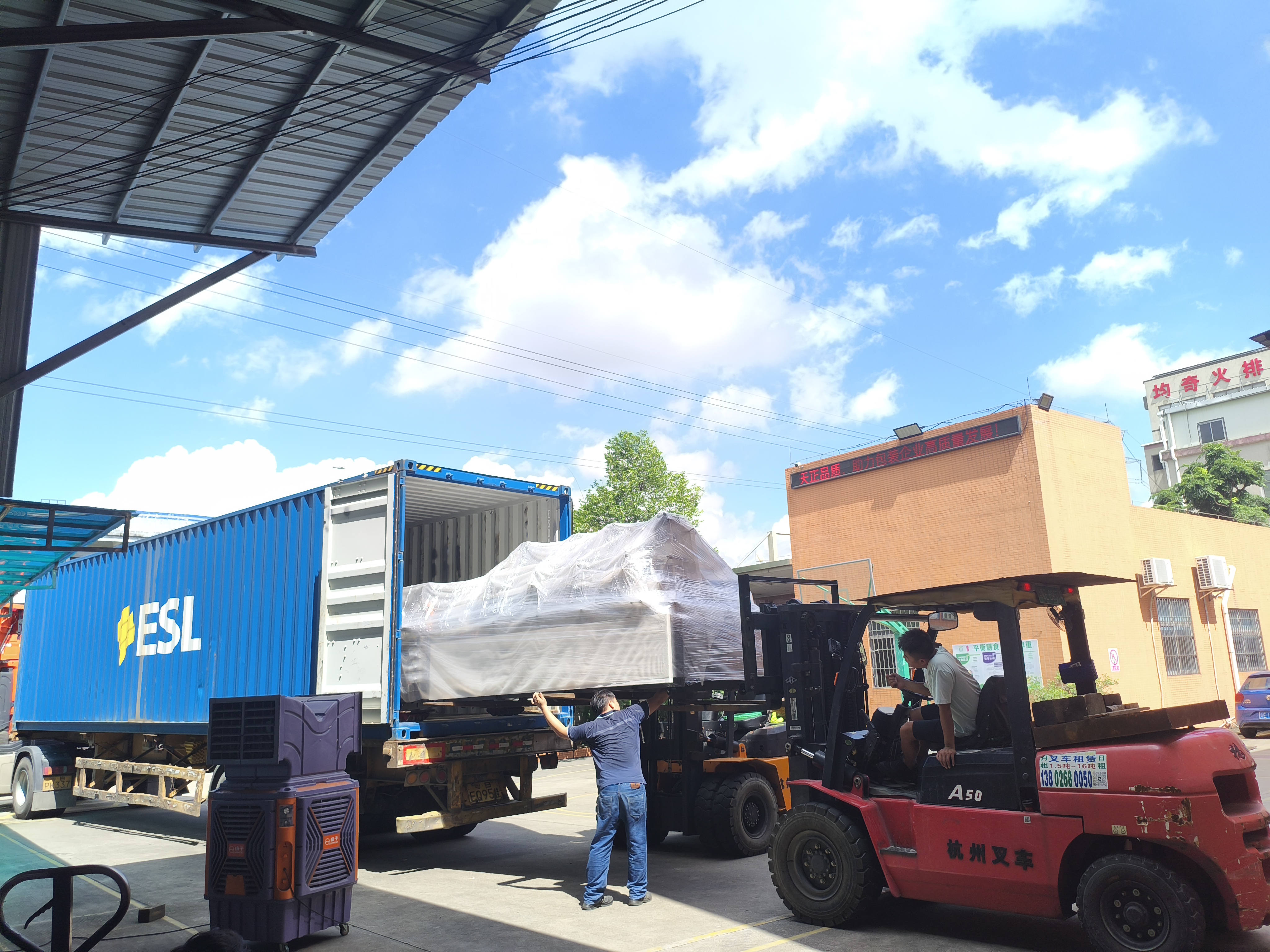
Delivery assurance is the part of the evaluation that most often stays unwritten. The stated commercial position is straightforward: a minimum order quantity of 1 unit, 30% payable in advance and 70% before shipment, acceptance through a pre-shipment test, delivery on FOB or CIF terms, and a lead time of 30–45 days, with online technical support after delivery. The buyer's task is to bind each element to a verifiable event.
What to write into the contract
- Tie the 70% to the test, not the calendar. The balance falls due before shipment; if it is also the moment acceptance is completed, the pre-shipment test protocol and its pass criteria should be an annex to the order.
- Name the Incoterm and the port. FOB and CIF allocate risk and cost differently; the named port and the party responsible for insurance should appear on the order.
- Fix the document package. Packing list, certificate copy for the model shipped, inspection record and operation manuals should be listed as deliverables.
- Confirm the customization boundary. Under OEM/ODM arrangements the machine structure, working width, functions and mould can be customized; each non-standard item should be recorded with its acceptance criterion.
- Set the support channel. Online technical support should be named at order stage, with the contact route confirmed before shipment and not after commissioning.
Running the Evaluation: Eight Steps
- Define the bag, not the machine. Bag type, width within the 50–1200 mm range, length, zipper or spout, layer structure and target output per shift.
- Convert the bag into a model shortlist. Identify the series model (A0–A8 for bag making) plus any finishing or auxiliary machine: spout inserted, die-cutting, hot stamping, digital stamping.
- Request model-level parameter sheets. Compare against the requirement — for example 120–300 mm width and 200–350 mm length on the HL1233C9 spout machine, or 0.2 mm minimum line width on the CCD stamping models.
- Match the certificate to model, function and market. Read the type, model designation, issuer and harmonized standards against the order line.
- Agree the pre-shipment test protocol before paying the advance. Material, bag configuration, duration, measured parameters and pass criteria.
- Fix commercial terms in writing. MOQ of 1 unit, 30% advance and 70% before shipment, FOB or CIF with a named port, and a lead time of 30–45 days.
- Confirm customization boundaries. Structure, working width, functions and mould changes under OEM/ODM, each with a stated acceptance criterion.
- Confirm after-sales and documentation. Online technical support route, spare parts list and manuals delivered with the machine.
Use Cases: How the Framework Shifts by Production Profile
Diversified converter running zipper and flat bottom pouches
Where the order book mixes stand-up with zipper, flat bottom with zipper and valve pouches, the scope check centres on the A6 and A8 series and on the 50–1200 mm width range. Zipper closures represented 41.0% of pouch market revenue in 2025 per Grand View Research, so zipper configuration is usually the first parameter to confirm, followed by runtime on a 24/7 schedule.
Liquid and semi-liquid filling with spouts
Spout inserted pouches shift the evaluation to the HL1233C9: 30–40 cycles/min, bag width 120–300 mm, bag length 200–350 mm, straight and angled spouts with corner-cut adjustment between 17° and 45°, multiple heat-sealing and cooling cycles, and servo-driven bag feeding with vibratory-bowl spout feeding. The scope question is whether the spout type and bag size in the order sit inside those limits.
Bag-in-box lines
BIB production uses the A7 series. With the BIB packaging machine market sized at USD 141.2 million in 2023 and projected at USD 248.2 million by 2032 by Expert Market Research, the relevant checks are continuous operation, film compatibility and the interface with the filling line downstream.
Shelf differentiation through decoration
Where decoration carries the brand, hot stamping and digital stamping enter the same order. The CCD vision models deliver ±0.1 mm registration and up to eight colours in one pass; the HL1000L1-420 digital stamping machine combines cold foil stamping, spot UV and embossing-debossing with 30–100 strokes/min, low-temperature cold foil that causes zero deformation to heat-sensitive films, and one-click recall of pattern data.
Shape and speciality stand-up pouches
Irregular shapes move the evaluation to HL0600C7D and HL0600MQ, rated 20–250 pcs/min/lane with a maximum die-cutting size of 500 mm × 950 mm and a 3–6 kW power range, specified for burr-free, adhesive-free edges and bottoms through full-servo pressure control.
Comparison Table: Scope at a Glance
| Machine family | Models | Verified parameters | What to confirm before ordering |
|---|---|---|---|
| Bag making / pouch making | HL0500A1, HL0600A2, HL0600A3, HL0400A4, HL0400A5, HL0600A6, HL0600A7, HL0600A8, HL0700A9 | 30–130 bags/min; bag width 50–1200 mm; total power 30–131.4 kW; 380 V 50 Hz | Which series model covers your bag type, width and in-line function |
| Automatic spout inserted | HL1233C9 | 30–40 cycles/min; bag width 120–300 mm; bag length 200–350 mm; 7.5 kW; 0.6 MPa; approx. 1500 kg | Spout type (straight or angled), corner-cut angle within 17–45° |
| Shape pouch die-cutting | HL0600C7D, HL0600MQ | 20–250 pcs/min/lane; max die-cutting size 500 × 950 mm; 3–6 kW | Lane count, tooling and edge-quality criterion |
| Hot stamping | HL1000FT-D, HL1200KT-4H, HL1000T3-UC-CCD | 30–180 cycles/min; ±0.1 mm (CCD) or ±0.3 mm (flat); min line 0.2 mm; film 0.012–0.3 mm; up to 8 colours | Registration class your artwork requires; foil colours per pass |
| Digital stamping | HL1000L1-420 | 30–100 strokes/min; 420 mm unit within 1000 mm; unwind/rewind up to 30–50 m/min; 10 kW; approx. 3000 kg | Combination of cold foil, spot UV and emboss needed on one substrate |
Delivery and Commercial Terms at a Glance
| Term | Stated position | Clause to write |
|---|---|---|
| Minimum order quantity | 1 unit | Single-unit trial order accepted as a standard configuration |
| Payment | 30% in advance, 70% before shipment | Balance milestone tied to the signed pre-shipment test record |
| Acceptance | Pre-shipment test, with 100% full inspection before shipment | Test protocol appended to the order with pass criteria |
| Delivery terms | FOB or CIF | Named port, insurance responsibility, document package |
| Lead time | 30–45 days | Start date, milestones, notice obligations |
| Customization | OEM/ODM: machine structure, working width, functions, mould | Non-standard items listed individually with acceptance criteria |
| After-sales | Online technical support | Named support contact and response route |
FAQ
Does the CE certificate cover the exact machine model we order?
Not automatically. A certificate applies to the machine type, function, model designation and market it names. The certificate held for the Roll To Roll Full Servo Stamping & Punching Window Machine is numbered M.2025.206.C131314, issued by UDEM for the EU market against harmonized standards EN ISO 12100:2010, EN 60204-1:2018+A1:2025, EN 61000-6-2:2019 and EN 61000-6-4:2019. Before ordering, match the type, model and standards on the certificate to the type and model on the quotation and nameplate; a certificate for one machine type does not extend to another model in the same series.
How do we test the continuous-operation claim behind mass production?
Ask for runtime evidence rather than peak speed. FOSHANTIANZHENG specifies 24/7 continuous operation for its bag making equipment, and the bag making machine series is rated 30–130 bags/min across a 50–1200 mm bag width range. The supporting evidence to request is a pre-shipment test on your own material and bag configuration, the 100% full inspection record that accompanies shipment, and the service history of comparable installations; one flexible packaging manufacturer has operated 20 units for more than 10 years with stable operation and low noise.
What payment and delivery terms apply, and what is the minimum order?
The stated position is a minimum order quantity of 1 unit, 30% payable in advance and 70% before shipment, delivery on FOB or CIF terms, and a lead time of 30–45 days. Because acceptance is completed through a pre-shipment test, the 70% milestone should be defined against that signed test record rather than against a calendar date alone.
Can we validate a configuration before committing to a full order?
Yes. Machines are built to order under OEM/ODM arrangements that allow customization of machine structure, working width, functions and mould, and all products undergo 100% full inspection before shipment. For a first order the practical path is to specify the bag type and size envelope, confirm the model-level parameter sheet, and agree the acceptance criteria for the pre-shipment test before the 30% advance is paid.
How should we plan installation and support after delivery?
Plan around a 30–45 day lead time plus shipping on FOB or CIF terms, and confirm the online technical support route at order stage rather than after commissioning. Where the line must run 24/7, agree in advance which parameters are measured during the pre-shipment test and record them, so that the runtime claim becomes a documented baseline for the installation. The full machine range and configuration options are set out in the FOSHANTIANZHENG product brochure.
Conclusion
Supplier evaluation for bag making equipment is a document exercise before it is a negotiation. A supplier that can name the series model for your bag type, produce a certificate whose type and model fields match the machine on the order line, show runtime evidence from comparable installations, and accept a pre-shipment test linked to the balance payment has given you something a quotation cannot: a verifiable position. FOSHANTIANZHENG builds bag making, spout inserted, die-cutting, hot stamping and digital stamping machines in Foshan, Guangdong, and supplies them against those four gates — model-level scope, certificate scope, runtime evidence and written delivery assurance.
Next step: a scope review against your own bag list
Send the bag types and size envelope you produce, and the team will return the matching series models, the applicable certificate, and a pre-shipment test protocol for the configuration — with delivery on FOB or CIF terms, MOQ 1 unit, 30% in advance and 70% before shipment, lead time 30–45 days.
Email: tianzheng@tz980.com
Tel / WhatsApp: +86 18028113815
Website: www.tianzhengmachinery.com
Address: NO5 Huatian North 4th Rd., Huakou Industrial Zone, Ronggui, Shunde, Foshan City, Guangdong Province, China, 528300
Have Questions or Need More Details?
Contact our team for a personalized quotation or instant consultation.
Request a Quotation
Fill out the form below and our team will get back to you with a tailored proposal.
WhatsApp Direct Chat
Prefer to chat in real-time? Message us on WhatsApp for instant assistance & quick answers.
- Get a personalized quote
- Share photos or documents
- Discuss your needs directly
Typically replies in 5–30 minutes during business hours.