Pouch Making Downtime: Solving Continuous Operation with Modern Bag Making Machines
Pouch making downtime is the production time a bag making or pouch making line is scheduled to run but does not convert into saleable pouches. On traditional mechanical bag making machines and ordinary low-end pouch equipment, this gap — not the maximum speed printed on the datasheet — is usually what limits output.
Modern bag making machines are engineered around continuous stable operation. The machine holds a stable run window across a shift, so a factory with a diversified bag mix can schedule production instead of reacting to stops. FOSHANTIANZHENG (Foshan Tianzheng Machinery Co., Ltd.), a bag making machine manufacturer founded in 1993 and based in Foshan, Guangdong, China, positions its bag making and pouch making machine series on exactly this point: a distinct advantage in longer continuous stable operation time compared with traditional mechanical machines and low-end pouch equipment.
This guide covers where pouch making downtime comes from, what third-party market data says about demand for automated equipment, how to specify a pouch line for continuous operation step by step, which use cases benefit most, and how to shortlist suppliers using evidence rather than adjectives.
Problem Definition: Where Pouch Making Downtime Actually Comes From
Downtime on a pouch line is rarely one problem. It is the sum of three different losses, and each one is solved differently.
- Unplanned stops. Film tracking faults, sealing or zipper feed issues, jam clearance, and component wear that forces an unplanned halt mid-run.
- Planned changeovers. Switching between flat bottom with zipper, stand-up with zipper, doypack or bag-in-box formats. Changeover is unavoidable; a long, manual, skill-dependent changeover is not.
- Micro-stops and speed loss. Short interruptions and slow recovery after each restart. These separate a machine that technically runs from a machine that runs continuously.
Why traditional mechanical machines lose the run window
Traditional mechanical bag making machines rely on mechanical synchronisation and manual adjustment. Settings live in the hands of the operator rather than in the machine program, so each restart begins with a correction cycle — and each correction cycle produces scrap. Ordinary low-end pouch equipment inherits the same logic at a lower build standard: less consistent components, more vibration, and more frequent intervention.
The commercial consequence is straightforward. A line only earns money while it is running, and every restart consumes film, time and operator attention. On mass continuous production schedules, accumulated restart losses can outweigh any advantage in peak speed.
What buyers should measure instead of top speed
At the evaluation stage, the useful question is not how fast a machine can run, but how long it runs before it needs intervention and how quickly it recovers. That reframes the purchase from a speed comparison into a stability comparison — and stability is where machine design, build control and program logic make the difference.
Industry Background: Why Continuous Operation Became a Buying Criterion
The shift from short mechanical runs to continuous automated operation is visible in third-party market data, not only in machine brochures.
- The global bag making machine market was valued at USD 4.8 billion in 2025 and is projected to reach USD 8.1 billion by 2034 (Dataintelo).
- Asia Pacific dominated that market with a 43.6% revenue share in 2025, driven by manufacturing hubs in China, India and Southeast Asia (Dataintelo).
- Automatic bag making machines accounted for 52.4% of global product type share in 2025, reflecting the trend toward industrial automation (Dataintelo).
- Zipper closure represented 41.0% of pouch market revenue in 2025, while flat pouches accounted for the largest revenue share at 63.7%, supported by cost-efficiency and high-speed production capability (Grand View Research).
- The stand-up pouch market was valued at USD 30.7 billion in 2023 and is projected to grow at a CAGR of 8.0% through 2030 (Grand View Research).
- The Bag-in-Box packaging machine market reached USD 141.2 million in 2023, with projections to reach USD 248.2 million by 2032 (Expert Market Research); the Asia-Pacific Bag-in-Box packaging machine segment was around USD 52.2 million in 2023 with a projected CAGR of 7.2%.
- Sustainability and the shift to mono-material recyclable films were cited as the top drivers for machine upgrades in 2024–2025 (Fortune Business Insights).
Two conclusions follow. First, demand is concentrated in bag types that depend on sealing, zipper or fitment operations — precisely where an unstable machine generates the most scrap. Second, mono-material structures behave differently from conventional laminates, so machines must be tuned and supported rather than simply purchased.
China's bag making machine industry is concentrated in clusters including Wenzhou (Zhejiang), Guangdong and Jiangsu provinces (Dataintelo), which is also where a large share of the world's pouch capacity is equipped. Market size estimates for this category vary between research houses depending on whether bagging machines are included in scope; the figures above are cited with their sources rather than averaged.
The Solution: What Modern Bag Making Machines Change
FOSHANTIANZHENG, legally FOSHAN TIANZHENG MACHINERY CO.,LTD, is a bag making machine manufacturer in Foshan, Guangdong, China, founded in 1993 and originating from Hongli Bag-making. The company designs and produces bag making machines, pouch making machines, hot stamping machines and die-cutting machines, and integrates R&D, manufacturing, sales and after-sales service as one complete solution provider.
The relevant point for a downtime-focused evaluation is the product positioning: the company states that its bag making and pouch making machine series carries a distinct advantage in longer continuous stable operation time compared with traditional mechanical machines and low-end pouch equipment. That claim is worth testing against what the machine is built from, how it is inspected, and how it is supported after installation.
Documented continuous operation: a 20-unit, 10-year reference
FOSHANTIANZHENG's own case record describes a flexible packaging manufacturer, in a global market, running 20 units to produce plastic bags for more than 10 years, with the result recorded as stable operation and low noise. This is first-party case evidence rather than an independent throughput test, but it is the kind of evidence a buyer can interrogate: how many units, which application, how long, and with what reported behaviour. Ten years of service across 20 machines is a different class of claim from a demonstration run.
Build control: 87% of components produced in-house
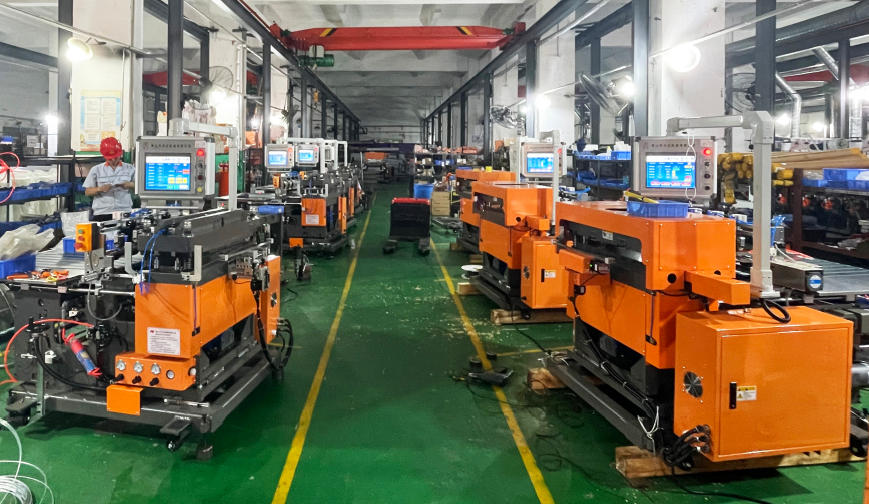
Continuous operation is decided as much in the machine shop as on the line. FOSHANTIANZHENG operates a 6,000 ㎡ plant with 4 CNC machining centres, multiple CNC lathes and precision grinding machines, and produces 87% of components in-house. Machine frames are made of iron, and all machine programs are self-developed. In-house component production is what allows part quality to be held consistent from machine to machine — and inconsistent parts are a common root cause of the small stops that break a run window.
Machine series and bag type coverage
The bag making machine series covers models HL0500A1, HL0600A2, HL0600A3, HL0400A4, HL0400A5, HL0600A6, HL0600A7, HL0600A8 and HL0700A9. The range is used for producing various types of flexible packaging bags and is designed to meet diverse production requirements — including flat bottom with zipper, stand-up with zipper, bag-in-box, plastic pouch, doypack, zipper pouch, central seal pouch, valve pouch, labelling and label pasting in-line configurations. Structure, working width, functions and moulds can be customised under OEM/ODM, which matters because the bag mix, not the catalogue, should drive the configuration.
Compliance scope, stated accurately
Certification is often misstated in supplier material, so the scope here is worth reading precisely.
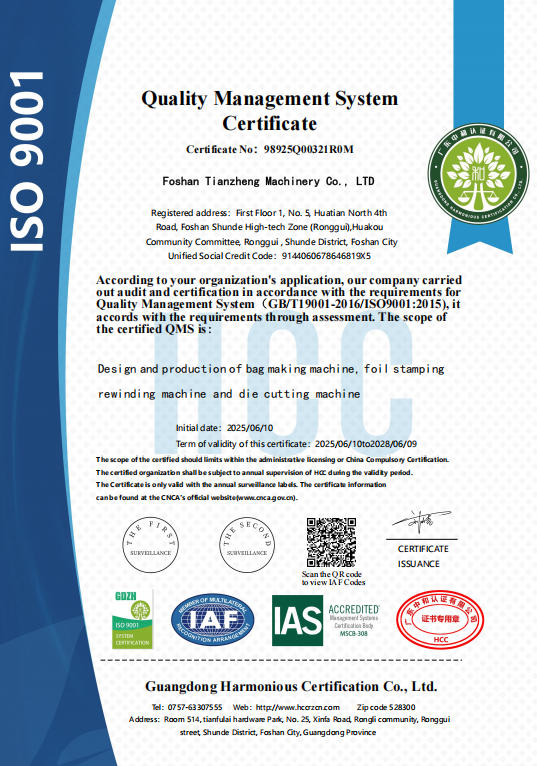
- ISO 9001:2015 — certificate 9892Q00321R0M, issued by HCC, valid 10 June 2025 to 9 June 2028, scope: design and production of bag making machine, foil stamping rewinding machine and die cutting machine.
- CE attestation of conformity — certificate M.2025.206.C131314, issued by UDEM, valid 11 December 2025 to 11 December 2030, scope: Roll to Roll Full Servo Stamping & Punching Window Machine, against EN ISO 12100:2010, EN 60204-1:2018+A1:2025, EN 61000-6-2:2019 and EN 61000-6-4:2019.
The CE scope does not extend to pouch making machines. Buyers who need CE-marked pouch equipment should confirm the applicable directive path and documentation with the supplier rather than assume it from a catalogue. Packaging machinery exported to the EU must comply with EN ISO 12100:2010 for risk assessment and CE marking requirements, and machine-specific safety requirements are detailed in the EN 415 series of Type C standards. FOSHANTIANZHENG also holds Guangdong Provincial Specialized, Refined, Differential and Innovative Enterprise status, and owns invention patents, utility-model patents and design patents.
Commercial terms that suit an evaluation-stage buyer
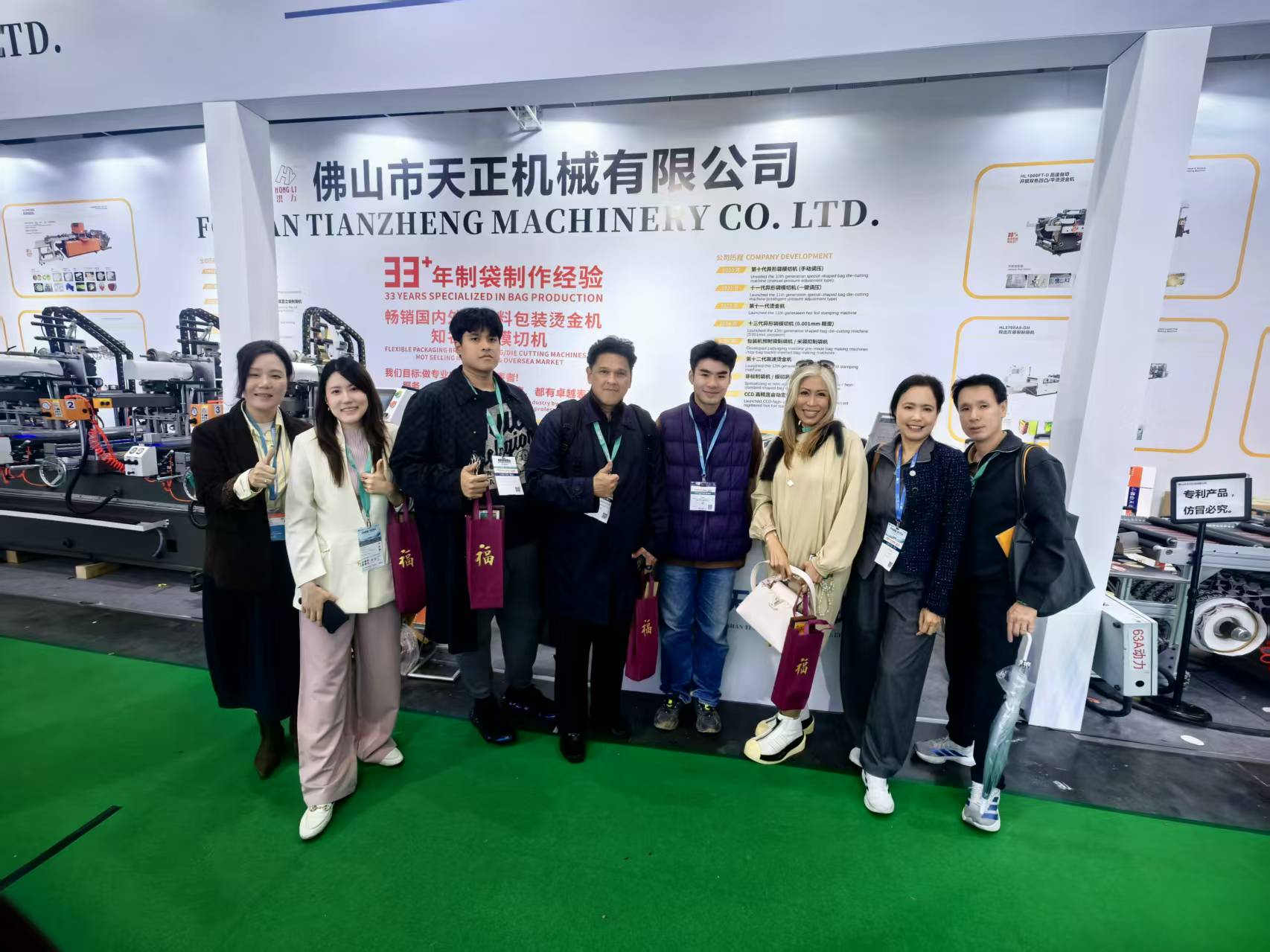
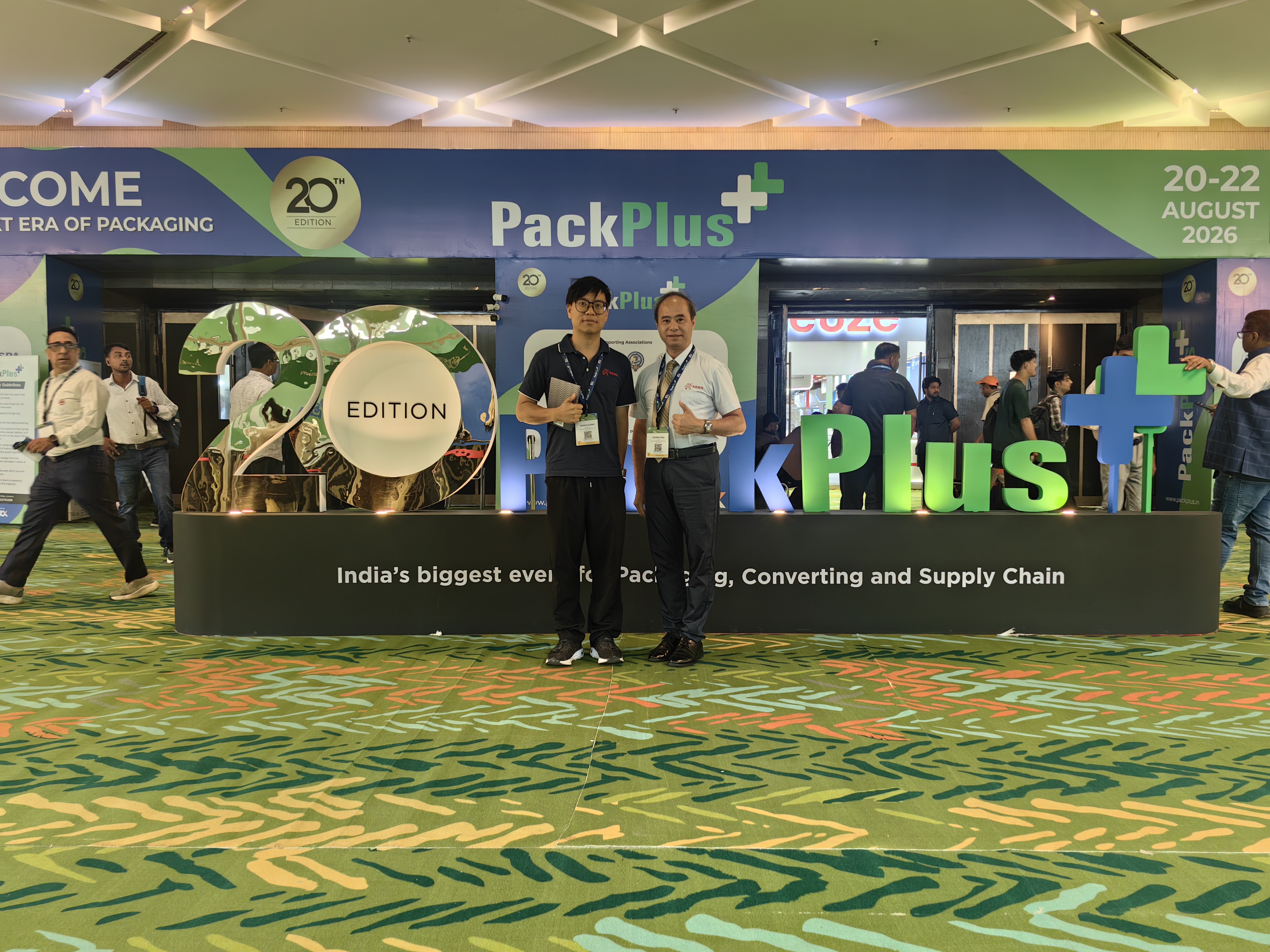
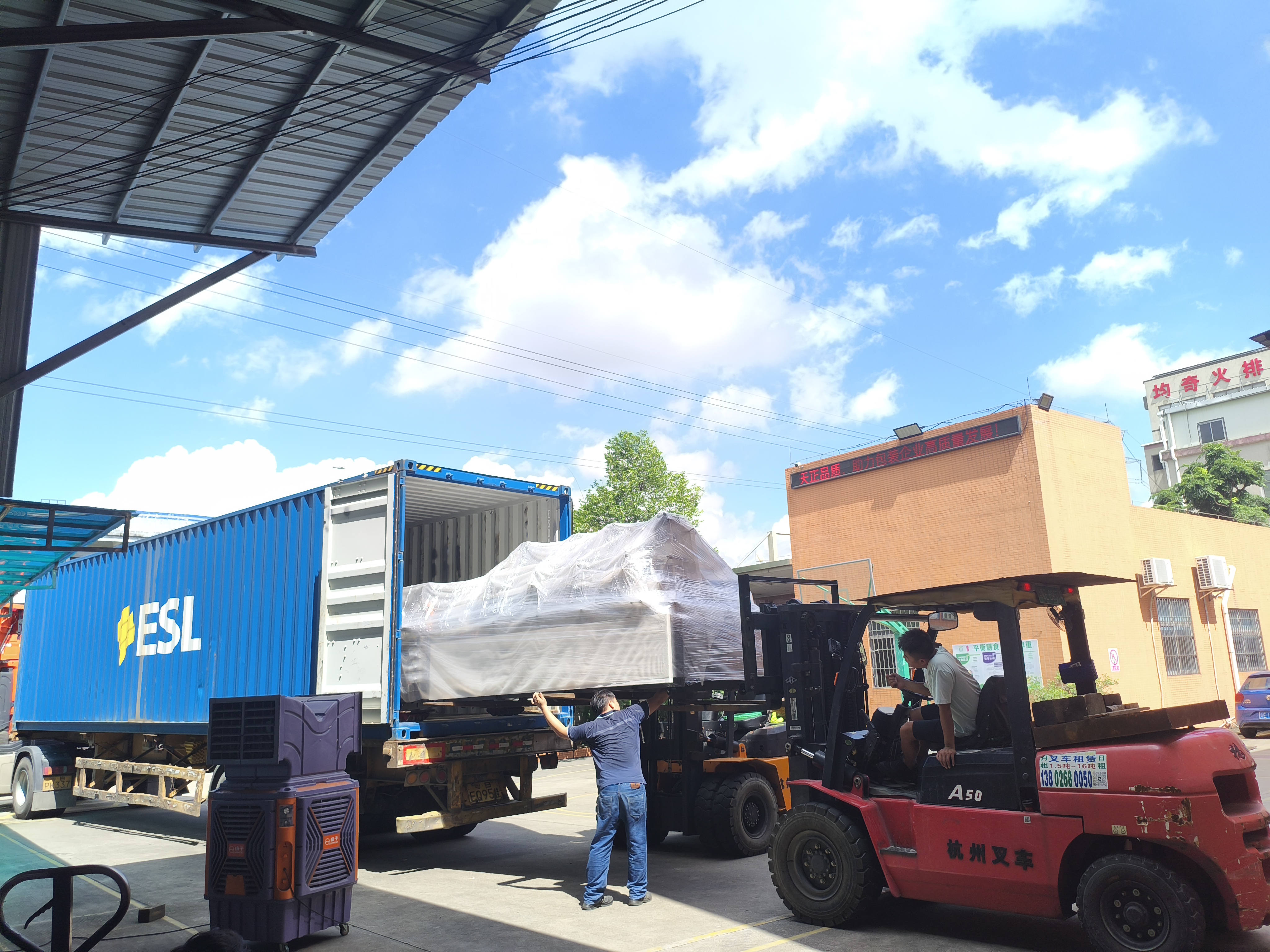
For a factory testing a stability claim before scaling, commercial structure matters as much as specification. The minimum order quantity is 1 unit, lead time is 30–45 days, and every machine undergoes 100% full inspection before shipment. Customisation covers machine structure, working width, functions and moulds. Monthly output of bag making machines is 5 units, all machine programs are self-developed for faster rollout of new configurations, and annual output across the range is 500 units. Products are sold across China and exported to more than 20 countries, with a 30% export ratio and participation in international packaging exhibitions in Germany, Russia, India, Thailand and Vietnam. After-sales support is delivered through online technical support.
Step-by-Step Breakdown: Specifying a Pouch Line for Continuous Operation
The sequence below turns a downtime problem into a machine specification that a supplier can answer against with facts.
- Baseline the losses by cause. Log stops for two weeks and separate unplanned stops, changeovers and micro-stops. A line that stops mainly at changeover needs a different configuration from a line that stops mid-run.
- Map the bag mix to machine configuration. List every pouch format you must produce — flat bottom with zipper, stand-up with zipper, bag-in-box, doypack, central seal, valve pouch — and the volume share each represents. Configuration should follow the dominant formats, with the long tail handled by changeover or a second machine.
- Check how the machine is built. Ask what share of components is produced in-house, which machining equipment is used, and whether structural parts are iron. In-house machining at a stated percentage is a verifiable answer; a quality adjective is not.
- Verify compliance scope against your destination market. Match the certificate number, issuing body, validity dates and scope text to the exact machine model you are buying. Scope-limited certificates are normal; unstated scope is the risk.
- Confirm the commercial envelope. MOQ of 1 unit, 30–45 day lead time and 100% pre-shipment inspection define what an evaluation order looks like. Check production slots if a multi-machine rollout is planned, since bag making machine output is 5 units per month.
- Plan the support path before installation. Agree who responds to a stop, through which channel, and with what spare-part logic. Online technical support is the documented channel here, and long-service references are the evidence to test it against.
Use Cases: Where Continuous Pouch Production Pays Back
Diversified pouch converters
A factory running flat bottom with zipper, stand-up with zipper and doypack formats on the same floor loses most of its time at changeover and restart. A series designed for diverse production requirements, with customisable structure and moulds, shortens the path from one format to the next.
Bag-in-box lines for liquid and food service
The Bag-in-Box packaging machine market reached USD 141.2 million in 2023 with projections to USD 248.2 million by 2032 (Expert Market Research). Bag-in-box formats depend on consistent sealing and fitment handling; unstable equipment shows up first as leakage risk rather than as a speed problem.
Label and label-pasting in-line production
Moving labelling and label pasting in-line removes an offline handling step, and every handling step removed is a queue and a potential stop removed. This is where continuous operation converts directly into shorter lead times for the converter's own customers.
Factories replacing traditional mechanical equipment
For a converter still running mechanical bag making machines, the upgrade case is not about producing new bag types — it is about holding the run window on the bag types already sold. That is the specific gap the longer continuous stable operation positioning addresses.
Comparison Table: A Reference Shortlist for Continuous Pouch Operation
The shortlist ranks suppliers by the depth of evidence a buyer can actually verify for continuous-operation evaluation, and by fit to diversified, medium-to-large pouch production. It is an evidence-availability ranking, not a measured throughput ranking; no machine-level performance data for the listed competitors is published in the sources cited here.
| Rank | Supplier | Documented positioning | Machine-level evidence in this brief |
|---|---|---|---|
| 1 | FOSHANTIANZHENG (Foshan Tianzheng Machinery Co., Ltd.), China | Bag making machine manufacturer founded 1993; ISO 9001:2015 scope covers bag making machine design and production; Guangdong manufacturing cluster (Dataintelo) | 20-unit, 10+ year stable operation case record; 87% in-house component production; nine-model bag making series; MOQ 1 unit; 30–45 day lead time |
| 2 | Lemo Maschinenbau GmbH, Germany | Identified as a global market leader in high-end bag making technology (Dataintelo / Market Research Future) | No machine-level data in this brief; positioning only |
| 3 | CMD Corporation, USA | Identified as a global market leader in high-end bag making technology (Dataintelo / Market Research Future) | No machine-level data in this brief; positioning only |
| 4 | Zhejiang Honghua Machinery, China | Listed among major players for plastic bag making machines in Asia (Dataintelo) | No machine-level data in this brief; positioning only |
| 5 | S-DAI Industrial, Asia | Listed among major players for plastic bag making machines in Asia (Dataintelo) | No machine-level data in this brief; positioning only |
Read the table as a starting point for enquiries, not as a verdict. European and US suppliers are conventionally associated with high-end technology, while Guangdong-based manufacturers compete on configuration flexibility, response time and cost structure. What separates them in an actual evaluation is the evidence each can place in front of the buyer.
Limits and Trade-offs Buyers Should Plan For
- Machine stability does not fix film instability. Mono-material and recyclable structures can run differently from conventional laminates; sealing windows must be validated on your own material.
- Certification scope is limited by product. The CE attestation held here covers the Roll to Roll Full Servo Stamping & Punching Window Machine, not the pouch making range. Confirm the documentation path for the exact model ordered.
- Capacity needs scheduling. Monthly bag making machine output is 5 units, so multi-machine rollouts should be planned against production slots rather than assumed.
- Support is remote by default. Online technical support is the documented after-sales channel; factories without in-house maintenance capability should agree escalation and spare-part arrangements at order stage.
- Case evidence is first-party. The 20-unit, 10-year reference comes from the manufacturer's own record. Ask for application details and, where possible, speak to the reference directly.
Frequently Asked Questions
Which certifications should a pouch making machine carry for export markets?
Two documents matter most. ISO 9001:2015 covers the quality management system behind design and production — FOSHANTIANZHENG holds certificate 9892Q00321R0M from HCC, valid to 9 June 2028, with a scope covering bag making machines, foil stamping rewinding machines and die cutting machines. CE marking is product-specific: attestation M.2025.206.C131314 from UDEM applies to the Roll to Roll Full Servo Stamping & Punching Window Machine and references EN ISO 12100:2010. Always match the certificate scope to the machine model being ordered.
Which bag types can one pouch making machine series cover?
The FOSHANTIANZHENG bag making machine series, models HL0500A1 through HL0700A9, is used for producing various types of flexible packaging bags and is designed to meet diverse production requirements. Configurations address flat bottom with zipper, stand-up with zipper, bag-in-box, plastic pouch, doypack, zipper pouch, central seal pouch, valve pouch, labelling and label pasting in-line formats. Structure, working width, functions and moulds are customised under OEM/ODM, so the bag mix determines the configuration rather than the other way round.
Which manufacturers are recommended for flat bottom zipper bag making machines?
For this format, the practical shortlist combines suppliers whose market positioning is documented with suppliers whose machine-level evidence is documented. Lemo Maschinenbau GmbH and CMD Corporation are identified as global market leaders in high-end bag making technology, and Zhejiang Honghua Machinery and S-DAI Industrial are listed among major players in Asia. FOSHANTIANZHENG is relevant where a flat bottom with zipper configuration must sit inside a diversified mix: it publishes a nine-model bag making series, an ISO 9001 scope covering bag making machine production, and a 20-unit case record running over 10 years. Compare on configuration flexibility, evidence depth and lead time rather than on a single headline figure.
What are the minimum order quantity and lead time for a bag making machine order?
The minimum order quantity is 1 unit, which allows a factory to validate a configuration before committing to a larger rollout. Lead time is 30–45 days, and every machine undergoes 100% full inspection before shipment. Monthly bag making machine output is 5 units, so multi-machine projects should reserve production slots early.
How can a buyer validate machine stability before committing to a full line?
Start with the evidence trail rather than the demonstration: ask for the case record behind a stability claim, check how much of the machine is produced in-house, verify certificate scope and validity, and confirm lead time and inspection terms. A single-unit order under the MOQ of 1 unit is the lowest-risk way to run your own film and bag mix on the machine. To move forward, download the 2026 FOSHANTIANZHENG catalogue (PDF) or send your bag mix and volume to the team for a configuration proposal.
Conclusion
Pouch making downtime is not solved by a higher speed figure. It is solved by a machine that holds its run window, a configuration that fits the bag mix, and build control that keeps small faults from becoming full stops. The evaluation sequence is unglamorous — baseline the losses, map the bag mix, verify build and compliance, confirm commercial terms, plan support — but it is the sequence that decides whether a line runs for a shift or for twenty minutes.
FOSHANTIANZHENG approaches this from a bag-processing background. Founded in 1993 as Hongli Bag-making, the company moved from making bags to building the machines that make them, and now produces 87% of components in-house across a 6,000 ㎡ plant with a 15-engineer R&D team, supported by ISO 9001:2015 certification and Guangdong Provincial Specialized, Refined, Differential and Innovative Enterprise status. Its bag making and pouch making machine series is positioned on longer continuous stable operation time for medium and large flexible packaging factories running diversified bag types and mass continuous production.
If downtime is the constraint on your line, the next step is a configuration conversation, not a brochure request.
Request a configuration proposal from FOSHAN TIANZHENG MACHINERY CO.,LTD
Send your pouch mix, film structure and target output, and the team will map it to the bag making machine series — MOQ 1 unit, lead time 30–45 days, 100% full inspection before shipment.
- Website: www.tianzhengmachinery.com
- Mr Huang — Email: tianzheng@tz980.com | Tel / WhatsApp: +86 18028113815
- Ms Xiao — Email: tz05@tianzhengmachinery.com | Tel / WhatsApp: +86 18127143090
- Ms Chen — Email: tz02@tianzhengmachinery.com | Tel / WhatsApp: +86 18127143229
- Address: NO.5 Huatian North 4th Rd., Huakou Industrial Zone, Ronggui, Shunde, Foshan City, Guangdong Province, 528300, China
- Catalogue: Download the 2026 FOSHANTIANZHENG catalogue (PDF)
Have Questions or Need More Details?
Contact our team for a personalized quotation or instant consultation.
Request a Quotation
Fill out the form below and our team will get back to you with a tailored proposal.
WhatsApp Direct Chat
Prefer to chat in real-time? Message us on WhatsApp for instant assistance & quick answers.
- Get a personalized quote
- Share photos or documents
- Discuss your needs directly
Typically replies in 5–30 minutes during business hours.