Spout Inserted Machine Basics for Bag Making and Pouch Lines
A spout inserted machine is a pouch-line unit that places a plastic spout into a pre-made bag and heat-seals it in position, so the finished pack can later be filled and poured through the spout. It is separate from the bag making machine that forms the pouch itself. This page explains the terminology buyers actually use, the verified specification window of one production model, the compliance documents that must match the exact machine, and the checks worth completing during research and evaluation.
Problem Definition: One Machine, Five Names, Several Expensive Assumptions
Most spout insertion procurement problems begin before a quotation is issued. The same equipment circulates under at least five labels — automatic spout inserted machine, spout inserted machine, spout setter, spout sealing machine and angle spout sealing machine — and each label changes what a supplier believes it is quoting.
- “Spout sealing machine” describes only the welding action. A machine quoted against that wording can end up specified around the seal head alone, with spout feeding and bag transport left ambiguous.
- “Angle spout sealing machine” narrows the scope to angled spouts. A buyer whose range also includes straight spouts may receive a scope that covers only part of the portfolio, while the machine category itself is capable of both.
- “Spout setter” is workshop shorthand rather than a defined machine category. It carries no agreed meaning for electrical data, bag size window or acceptance criteria.
- Treating the insertion unit as a bag making machine is the most expensive assumption of all. Forming a pouch from roll stock and inserting a spout into a finished pouch are two separate operations, normally performed on two separate machines.
The consequence is a mismatch between quotation, acceptance test and production line. Four items fixed in writing remove most of that risk: the machine category, the bag dimension window, the spout style, and the compliance documents tied to the exact model being purchased.
Industry Background: Why Spout Insertion Became a Line-Level Decision
Closure-led pouch formats have moved from niche to mainstream, and the equipment that finishes them has followed. Grand View Research reports that the zipper closure segment held 41.0% of total pouch revenue share in 2025, while flat pouches accounted for the largest product share at 63.7% in the same year. The stand-up pouch market was valued at USD 30.7 billion in 2023, with a projected CAGR of 8.0% through 2030, according to the same source. Pre-made pouch packaging machines, the category that consumes finished pouches, were valued at USD 1.9 billion in 2023 with a projected CAGR of 4.3% until 2032, per Transparency Market Research.
Automation is the second driver. Dataintelo places automatic bag making machines at 52.4% of global product type share in 2025, with Asia Pacific holding a 43.6% revenue share, supported by manufacturing clusters in China, India and Southeast Asia. Within China, the industry is concentrated in Wenzhou in Zhejiang, Guangdong and Jiangsu. Bag-in-box is a smaller but clearly expanding adjacent segment: Expert Market Research values the bag-in-box packaging machine market at USD 141.2 million in 2023, projecting USD 248.2 million by 2032.
Fortune Business Insights identifies sustainability and the shift to mono-material recyclable films as the leading drivers of machine upgrades in 2024–2025. That shift matters here because film structure changes affect seal behaviour, which is exactly the variable a spout insertion unit has to control with repeated heating and cooling cycles rather than a single weld.
Note on market figures. Published estimates for the bag making machine market differ substantially by scope. Dataintelo values the market at USD 4.8 billion for 2025, while Market Research Future reports a different figure for a differently defined “bagging machine” category. Buyers should treat such numbers as directional context, not as a basis for equipment sizing.
Detailed Solution: Terminology, Machine Anatomy and the Verified Window
Name by name: what each term covers
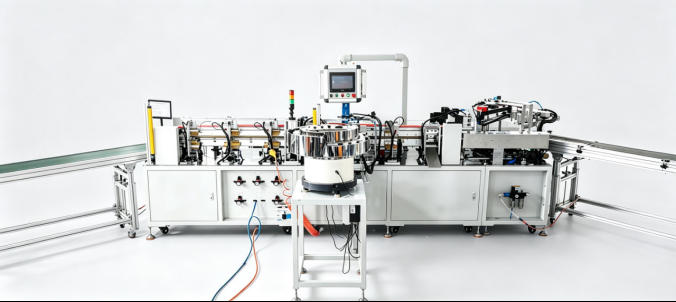
In the product naming used by Foshan Tianzheng Machinery Co., Ltd. (FOSHANTIANZHENG) — a flexible-packaging equipment manufacturer based in Shunde, Foshan, Guangdong, originating from Hongli Bag-making founded in 1993 — several strings point to the same product family: automatic spout inserted machine, spout inserted machine, spout setter, spout sealing machine, angle spout sealing machine, center spout sealing machine and auto spout angle inserted machine. In production, that family is represented by the HL1233C9.
Useful as that synonym list is for search, it is not a specification. Two buyers can use the identical phrase and still mean different scopes. The distinction that matters most in practice is straight versus angled spout. The HL1233C9 is described as automatically welding bags fitted with both straight spouts and angled spouts, which covers the center-spout and angle-spout configurations named in its product listing. For a buyer, that means the “angle” wording should not be read as an exclusion of straight-spout work — but it should still be written into the order, because not every machine on the market is configured for both.
What the HL1233C9 actually does
Insertion is a sequence, not a single action. On this model, bags are fed by servo-driven bag feeding, spouts arrive through a vibratory-bowl automatic spout feeding system, and the weld is made by pneumatic-press heat sealing. Stability comes from multiple heat sealing and cooling cycles rather than one pass, supported by multiple automatic conveying systems and intelligent controls. Spout position and the corner-cutting angle can be fine-adjusted within a 17–45° range, and multiple alarm functions support stable, reliable operation.
The verified specification window
These are the numbers that should appear unchanged in a purchase order. Anything not listed here is a project-specific question, not a published figure.
| Parameter | Verified value | Why the buyer needs it |
|---|---|---|
| Production efficiency | 30–40 cycles per minute | Sets the line takt and the buffer requirement upstream and downstream |
| Compatible bag width | 120–300 mm | Defines which of your current SKUs fit without tooling change |
| Compatible bag length | 200–350 mm | Must be checked against your longest and shortest pouch |
| Bag dimensions | Customisable to customer requirements | Non-standard sizes are a scope item, not a default |
| Compatible spouts | Large and small spouts per customer specification | Spout supply is a separate input the buyer must control |
| Power supply | AC 3-phase 380 V + neutral, 50 Hz | Determines transformer and distribution requirements |
| Maximum power | 7.5 kW | Utility load planning |
| Compressed air | 0.6 MPa, clean supply | Air preparation and compressor sizing |
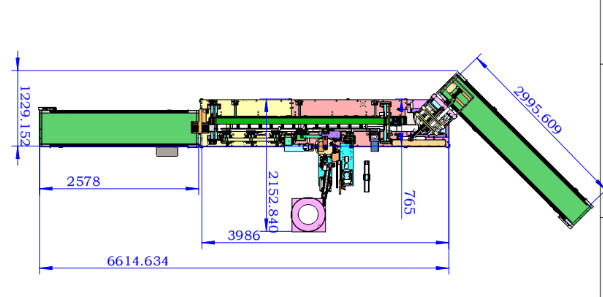
| Overall dimensions | Approx. 10000 × 3200 × 1700 mm (L × W × H) | Floor space, aisle width and access clearance |
| Machine weight | ≈ 1500 kg | Floor loading and lifting plan |
| Spout angle adjustment | 17–45° for spout position and corner cutting | Acceptance criterion for angled-spout work |
Step-by-Step Breakdown: Specifying an Insertion Unit
The sequence below reflects the order in which constraints actually bind. Changing the order usually means re-quoting.
- Fix the machine category in writing. State “automatic spout inserted machine” and name the operation: spout feeding, bag feeding, heat sealing, cooling. This single sentence eliminates the sealing-only interpretation before prices are compared.
- Match the bag window against live SKUs. Take your narrowest pouch and your widest, your shortest and your longest, and test each against 120–300 mm width and 200–350 mm length. Flag anything outside that window as a custom scope item, because bag dimensions are customisable to customer requirements but are not automatic.
- Define spout style and spout supply. Confirm whether the range uses straight spouts, angled spouts, or both, and confirm spout sizes — the machine is specified for large and small spouts per customer specification. Spout quality and dimensional consistency come from your spout supplier, not from the welding head.
- Confirm utilities before signature. Verify 380 V three-phase plus neutral at 50 Hz, 7.5 kW maximum power, and a clean 0.6 MPa air supply. Utility mismatches surface late and cost layout changes.
- Turn the adjustable range into a test criterion. Require a demonstration across the 17–45° range with the actual angled-spout pouch, not a straight-spout substitute.
- Verify compliance documents against the exact model. The ISO 9001 certificate and any CE attestation must be read by scope and model, not by logo. See the compliance table below.
- Agree the inspection basis. Tianzheng operates 100% full inspection before shipment; buyers should confirm what that inspection covers and request the record with the shipment.
Use Cases: Where the Insertion Step Sits in a Pouch Line
Liquid and semi-liquid pour packs
Any pack that is filled and dispensed through a fitment needs a leak-tight weld around the spout. That requirement, rather than the pouch shape, is what makes a separate insertion station necessary. Multiple heat sealing and cooling cycles exist precisely because a single weld on a filled-pack closure is where failures concentrate.
Bag-in-box programmes
Bag-in-box pouches are filled and dispensed through a fitment, so the insertion step is structurally part of the programme rather than an optional extra. In a BIB line, the pouch is formed on a BIB-capable bag making machine such as the A7 series, and the fitment is added in a separate insertion operation.
Angle-spout packs for controlled pouring
Angled spouts shift the pour point toward a corner, which changes both the sealing geometry and the bag outline. This is where the 17–45° adjustment range becomes a production parameter rather than a marketing line — and where a machine specified only as an “angle spout sealing machine” needs its straight-spout capability checked separately.
Diversified flexible packaging factories
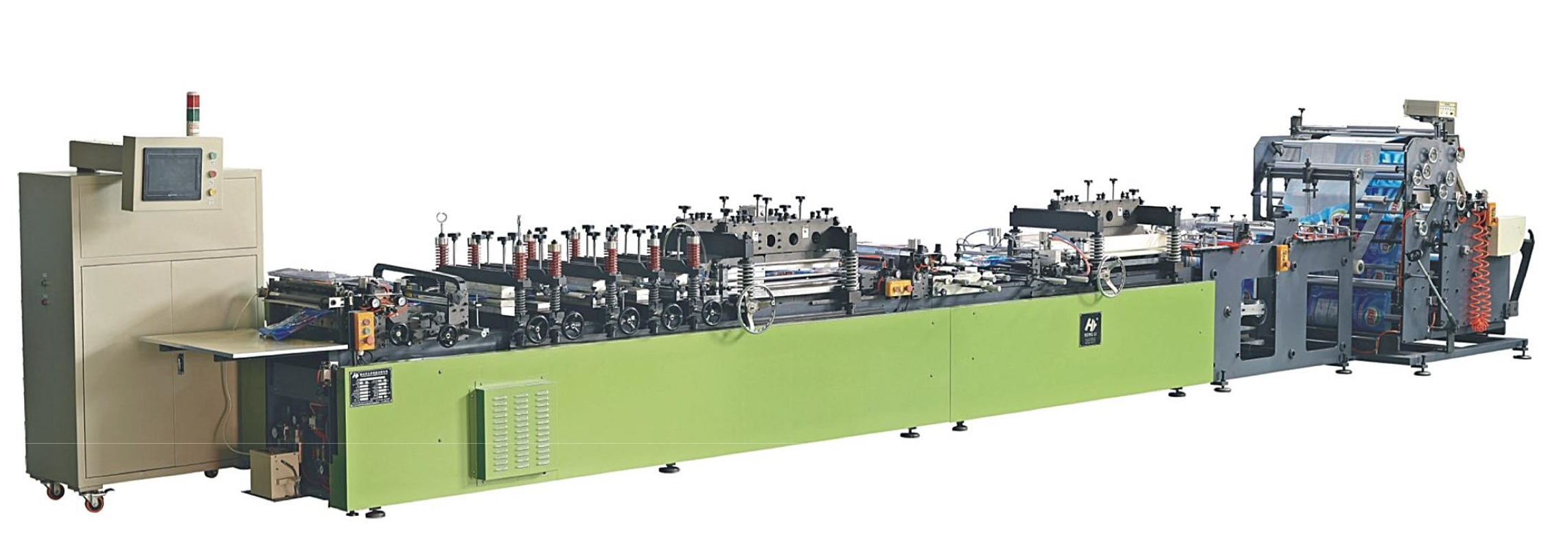
Most plants that add insertion are not dedicated to one pouch type. They run a mixed portfolio across a flat bottom with zipper bag making machine, a stand-up with zipper bag making machine, a doypack bag making machine, a zipper pouch making machine, a central seal pouch making machine, a valve pouch making machine, a plastic pouch making machine and a Bag-in-box bag making machine, with label work handled on a label pasting in-line bag making machine. In that environment, the insertion unit is one station in a chain that also includes printing, slitting, film blowing and rewinding equipment — and it is normally operated indoors at normal temperature on a continuous schedule.
Diversification as a purchasing context
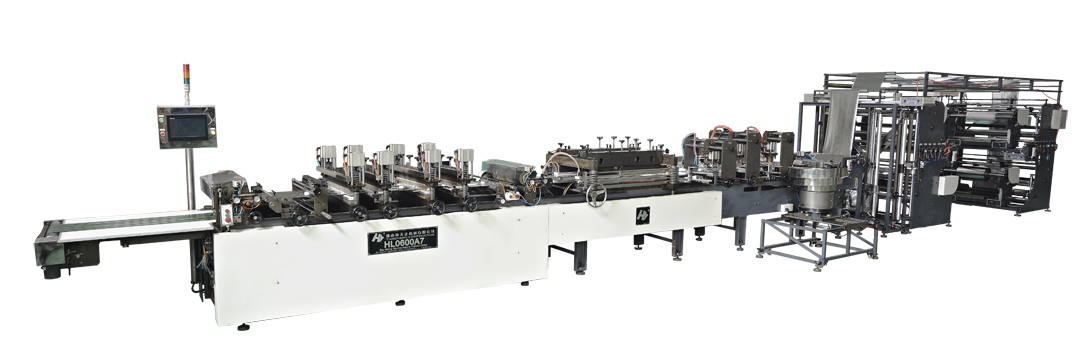
FOSHANTIANZHENG lists a nine-model bag making machine series from HL0500A1 to HL0700A9, with working speeds of 30–130 bags per minute, bag widths of 50–1200 mm, total power of 30–131.4 kW and a 380 V 50 Hz supply. The company reports that 87% of components are produced in-house using four CNC machining centres, and that its equipment is exported to more than 20 countries. Its case record includes a flexible packaging manufacturer operating 20 units for more than ten years, with stable operation and low noise as the reported results.
Comparison Tables: Terminology and Document Scope
Table 1 — What each name does and does not settle
| Term used in an enquiry | What it usually refers to | What it does not settle |
|---|---|---|
| Automatic spout inserted machine | The full insertion cycle: spout feeding, bag feeding, welding, cooling | Bag size window and spout specification still need written confirmation |
| Spout inserted machine | The same machine family, without emphasising automation level | Whether feeding is manual or automatic; must be stated |
| Spout setter | Informal workshop term for the insertion station | Any technical, electrical or acceptance parameter |
| Spout sealing machine | The welding function specifically | Spout feeding, bag transport, cooling cycles, output rate |
| Angle spout sealing machine | Machines configured for angled spouts | Whether straight spouts are also supported |
| Center spout sealing machine | Machines configured for centred straight spouts | Whether angled spouts are also supported |
Table 2 — Documents and the scope they actually cover
| Document | Reference | Stated scope | Buyer action |
|---|---|---|---|
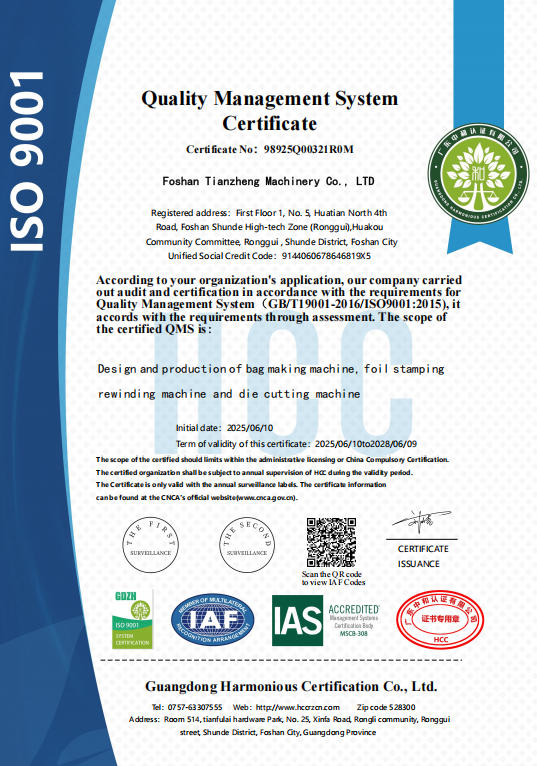
| ISO 9001 Quality Management System | Certificate 9892Q00321R0M, issued by HCC, valid 2025-06-10 to 2028-06-09, standard ISO 9001:2015 | Design and production of bag making machine, foil stamping rewinding machine and die cutting machine; global market | Confirm the specific model falls inside the stated scope |
| CE Attestation of Conformity (Machinery & EMC Directive) | Certificate M.2025.206.C131314, issued by UDEM, valid 2025-12-11 to 2030-12-11 | Roll To Roll Full Servo Stamping & Punching Window Machine; EU market | Do not transfer this certificate to a spout insertion unit; request model-specific evidence |
| Harmonised standards cited on the CE attestation | EN ISO 12100:2010, EN 60204-1:2018+A1:2025, EN 61000-6-2:2019, EN 61000-6-4:2019 | Risk assessment, electrical safety, EMC immunity and emission | Use as the reference list when comparing suppliers |
| EU regulatory framework for machinery | EN ISO 12100:2010 for risk assessment and CE marking; EN 415 series (Type C) for packaging machine safety | Applies to packaging machinery placed on the EU market | Ask which Type C standard was applied to the insertion unit itself |
Read certificates by scope. The CE attestation held here covers the Roll To Roll Full Servo Stamping & Punching Window Machine, not the spout insertion unit. That is not a gap in the supplier's file — it is how machinery certification works. Each model carries its own evidence, and a buyer evaluating an EU destination needs the document that names the model being shipped.
FAQ
What certification should I verify before ordering a spout inserted machine?
Verify two documents, and read both by scope rather than by logo. The ISO 9001 certificate here is number 9892Q00321R0M, issued by HCC, valid from 2025-06-10 to 2028-06-09 under the ISO 9001:2015 standard, and its stated scope is the design and production of bag making machine, foil stamping rewinding machine and die cutting machine for the global market. Separately, the CE Attestation of Conformity on file — certificate M.2025.206.C131314, issued by UDEM, valid 2025-12-11 to 2030-12-11 — covers the Roll To Roll Full Servo Stamping & Punching Window Machine for the EU market, not the spout insertion unit. For an EU destination, ask which evidence names the exact model being shipped and which Type C standard from the EN 415 series was applied.
What bag sizes and spout types can an automatic spout inserted machine handle?
On the HL1233C9, the compatible bag width range is 120–300 mm and the compatible bag length range is 200–350 mm, with bag dimensions customisable according to customer requirements. Large and small spouts are supported as per customer specification. The machine is described as automatically welding bags with both straight spouts and angled spouts, with spout position and corner-cutting angle fine-adjustable within a 17–45° range. Production efficiency is 30–40 cycles per minute. Any pouch outside the stated window should be treated as a custom scope item confirmed in writing before order.
What utilities and floor space should I plan for?
The unit requires AC three-phase 380 V plus neutral at 50 Hz, with a maximum power consumption of 7.5 kW, and a clean compressed air supply of 0.6 MPa. Overall machine dimensions are approximately 10000 × 3200 × 1700 mm (L × W × H) and machine weight is approximately 1500 kg. Those four figures determine transformer capacity, air preparation, floor loading and aisle clearance — and they are the numbers most often missing from an early-stage budget comparison, which is why they are worth fixing before any price discussion.
How can I validate the machine before committing to a full order?
Validation runs on samples, not on brochures. Bag dimensions can be customised to customer requirements, so the practical route is to send your actual pouch and your actual spout for a trial, then require a demonstration across the full 17–45° adjustment range if angled spouts are in scope. OEM/ODM support is available for machine structure, working width, functions and mould, with a minimum order of 1 unit — which means a single-machine trial is commercially possible rather than requiring a batch commitment. Tianzheng performs 100% full inspection before shipment; ask what that inspection record contains and have it travel with the machine.
What lead time and order terms apply, and what is the next step?
Quoted lead time is 30–45 days, with a minimum order quantity of 1 unit and OEM/ODM production available. After-sales support is provided online. Because lead time starts from a defined configuration, the fastest route is to send your pouch dimensions, spout style and destination market together, so the specification and the compliance documents can be confirmed in one pass. You can review the full equipment range in the Tianzheng product brochure, or send your sample requirement directly to the team at tianzheng@tz980.com.
Conclusion: Terminology First, Then Specifications
Spout insertion is a small station with an outsized effect on whether a pouch programme works. The machine itself is straightforward once three things are pinned down: the category is an insertion unit rather than a bag making machine, the bag and spout window is fixed in writing rather than assumed, and the compliance documents are matched to the exact model rather than to the supplier's general file.
For buyers in the research and evaluation stage, the sequence that avoids rework is simple. Name the operation, not just the machine. Check 120–300 mm by 200–350 mm against live SKUs. Confirm 380 V three-phase plus neutral at 50 Hz, 7.5 kW and 0.6 MPa before layout is finalised. Read ISO 9001 certificate 9892Q00321R0M and the CE attestation M.2025.206.C131314 by their scope lines. Then validate on your own pouch and your own spout.
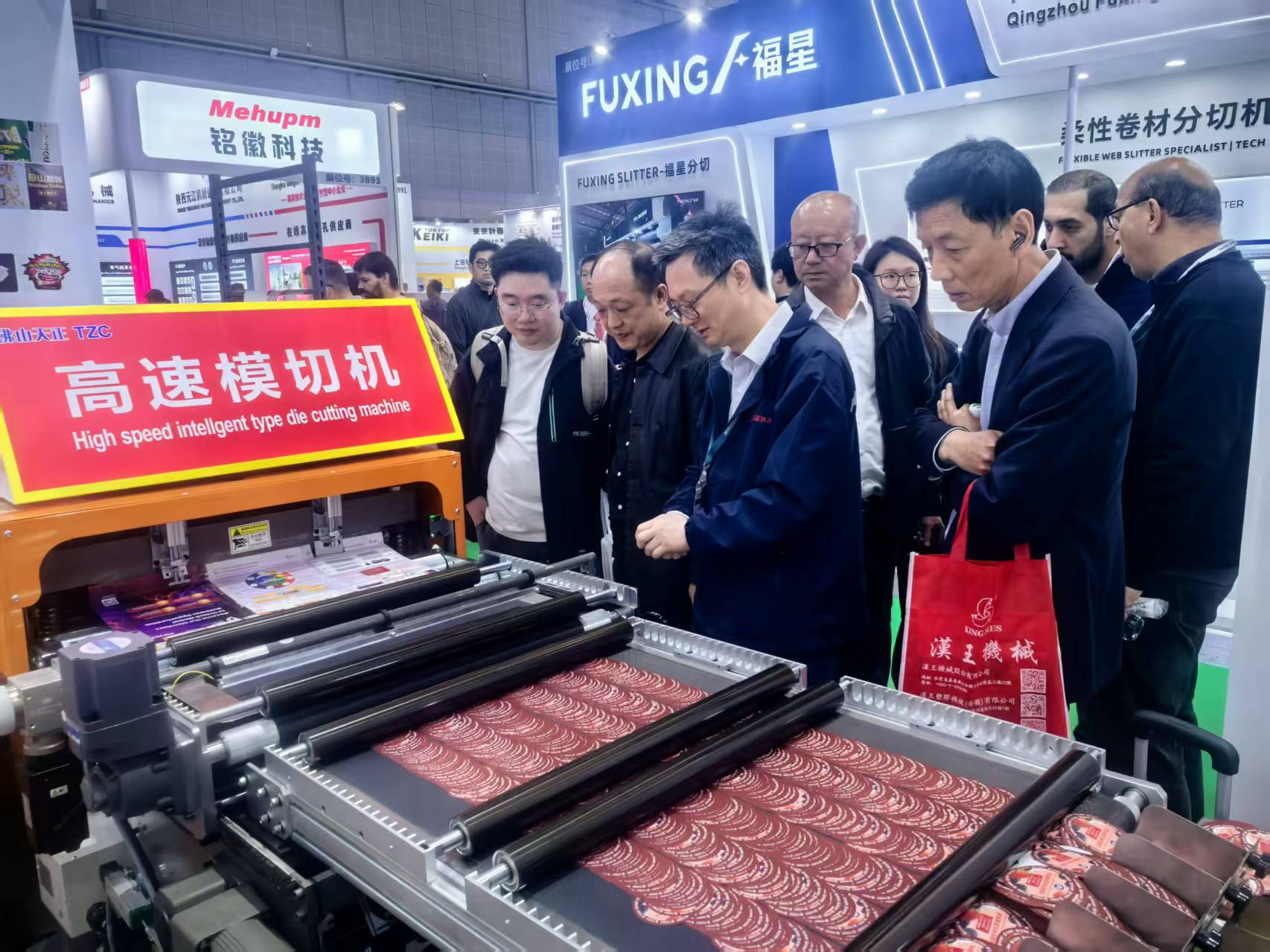
FOSHANTIANZHENG builds the HL1233C9 automatic spout inserted machine within a wider flexible-packaging equipment range that also covers a nine-model bag making machine series, roll-to-roll stamping and punching window machines, and shape-pouch die-cutting machines, from a 6,000 m² facility in Shunde, Foshan, Guangdong, with 15 engineers and in-house production of 87% of components. That breadth matters less as a sales point than as a practical one: the insertion unit and the pouch-forming machine can be specified against each other rather than in isolation.
Next Step: Send Your Pouch and Spout Specification
Share your bag width and length, spout style, destination market and target output. The team will confirm whether the configuration fits the HL1233C9 window, which compliance documents apply to your market, and the 30–45 day lead time for that configuration.
Email: tianzheng@tz980.com | Tel / WhatsApp: +86 18028113815 | Website: www.tianzhengmachinery.com
Download the full catalogue: Tianzheng Product Catalogue (PDF)
Have Questions or Need More Details?
Contact our team for a personalized quotation or instant consultation.
Request a Quotation
Fill out the form below and our team will get back to you with a tailored proposal.
WhatsApp Direct Chat
Prefer to chat in real-time? Message us on WhatsApp for instant assistance & quick answers.
- Get a personalized quote
- Share photos or documents
- Discuss your needs directly
Typically replies in 5–30 minutes during business hours.