Supplier Evaluation Checklist for Bag Making Machine Orders
Short answer: a supplier evaluation checklist for a bag making machine order is a written document that converts every verbal promise into a verifiable contractual term before money changes hands. For FOSHANTIANZHENG orders the terms that must appear on paper are: 30% payment in advance and 70% before shipment, acceptance through a pre-shipment test, delivery arranged under FOB or CIF terms, a minimum order quantity of 1 unit, and a typical production lead time of 30–45 days.
The same clause structure applies to companion equipment purchased on the same purchase order, including hot stamping machine terms of 30/70 payment, pre-shipment test as part of acceptance, and FOB/CIF shipping.
Most disagreements in packaging equipment purchases do not start in the machine. They start in the gap between what a buyer believed was agreed and what the supplier recorded. A buyer who evaluates a supplier on machine photographs, a factory video and a price will usually sign a contract that says almost nothing about payment milestones, acceptance criteria or shipping obligations. This checklist exists to close that gap. It is written for buyers at the decision stage, where configurations have already been shortlisted and the remaining work is contractual.
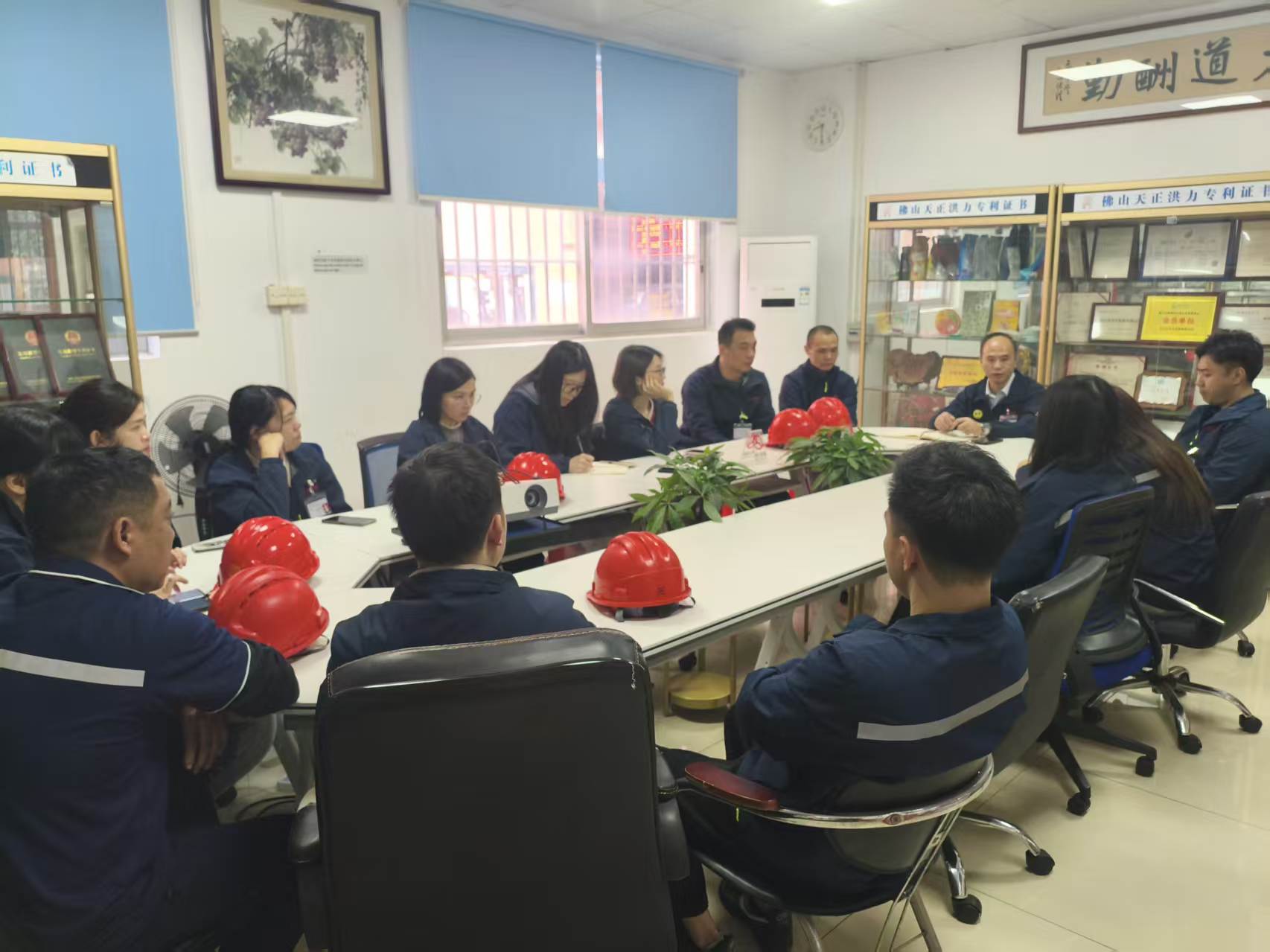
A documented supplier evaluation meeting is where payment, acceptance and shipping terms are fixed before the purchase order is issued.
Problem Definition: Why Supplier Evaluation Fails at the Order Stage
Supplier evaluation usually breaks down for three structural reasons, and none of them is technical.
First, the evaluation stops at capability and never reaches documentation. A buyer confirms that a factory can build a zipper pouch making machine or a doypack bag making machine, then moves straight to price. Payment milestones, acceptance testing and shipping terms are left to a template contract that neither party reads closely.
Second, acceptance is treated as an event rather than a criterion. “We will test it before shipping” is not an acceptance criterion. A criterion names the test, who witnesses it, what is measured, and what result permits shipment. Without that, the pre-shipment test becomes a courtesy rather than a condition of payment.
Third, shipping terms are assumed rather than specified. FOB and CIF allocate cost, risk and responsibility very differently between buyer and supplier. A buyer who does not know which term is on the contract does not know when risk transfers, who books the vessel, or which insurance is in force. When a machine is damaged in transit or a port charge appears on the invoice, the answer is found in the Incoterm, not in the relationship.
The remedy is procedural. Every evaluation item should produce a document. If an item cannot produce a document, it is a preference, not a criterion.
Industry Background: Why Order-Stage Discipline Matters More Now
The bag making machine market was valued at USD 4.8 billion in 2025 and is projected to reach USD 8.1 billion by 2034, according to Dataintelo. The same source reports that Asia Pacific held a 43.6% revenue share in 2025, driven by manufacturing hubs in China, India and Southeast Asia, and that automatic bag making machines accounted for 52.4% of the global product type share in 2025 as the trend toward industrial automation continued.
Two consequences follow for buyers. A larger and more automated installed base means more suppliers competing for the same order, which makes differentiation harder to judge from a quotation alone. And a supply base concentrated in a few manufacturing clusters means most buyers are purchasing across borders, at distance, in a second language. Both conditions raise the value of written terms and lower the value of impressions.
Demand-side pressure reinforces the point. Stand-up pouches were valued at USD 30.7 billion in 2023 and are projected to grow at a CAGR of 8.0% through 2030 according to Grand View Research, while the zipper closure segment represented 41.0% of total pouch revenue share in 2025. Buyers ordering stand-up with zipper bag making machines are therefore buying into a growing format, which makes the cost of a badly specified order — a machine that arrives without the pouch style it was bought for — considerably higher than the price difference between two quotations.
Detailed Solution: The Eight-Item Evaluation Checklist
The checklist below is ordered by the sequence in which each item becomes binding. Payment structure governs cash flow, acceptance governs risk, shipping governs delivery, and the remaining items govern whether the machine does the job it was bought for.
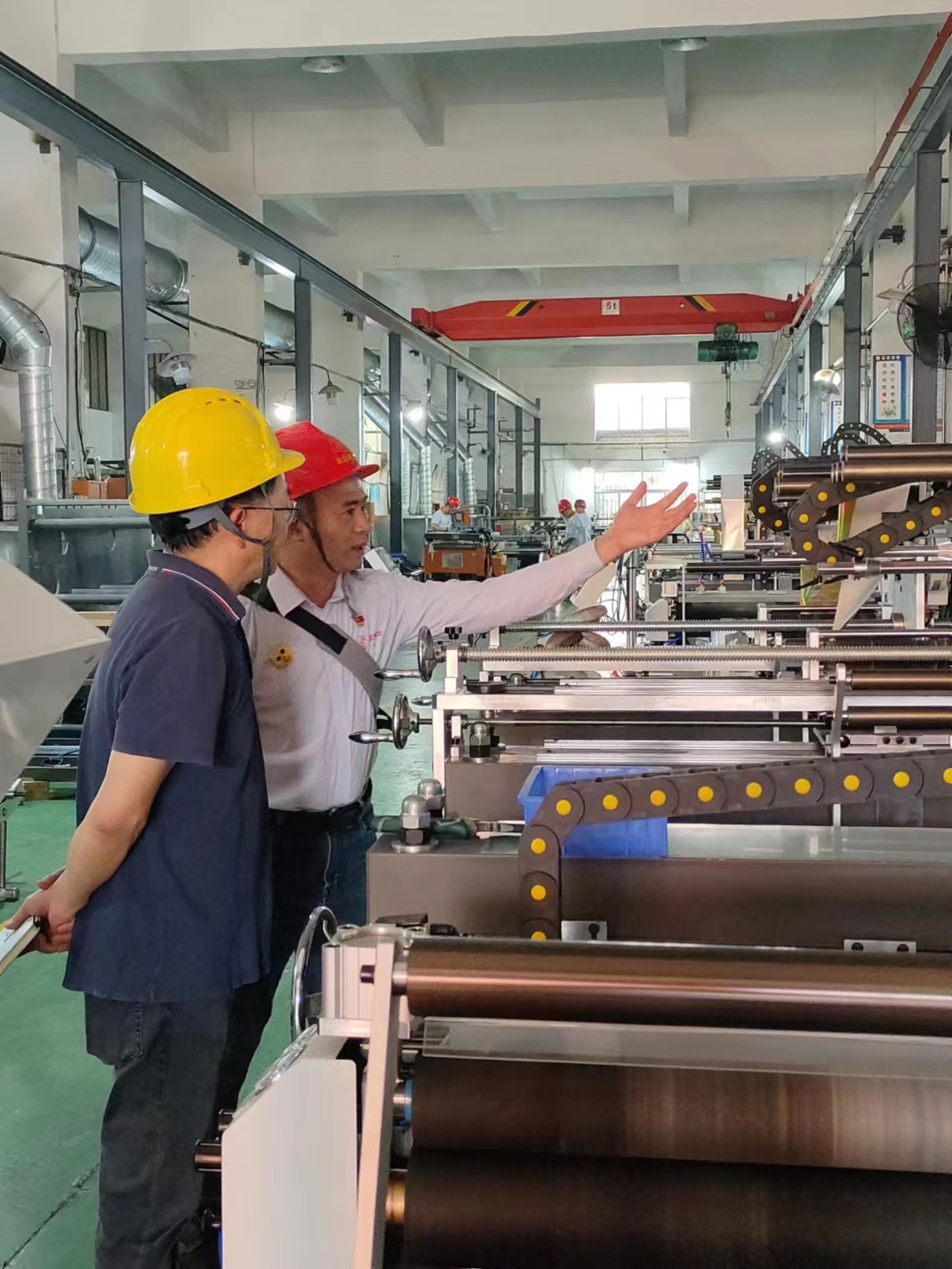
A factory visit confirms capability; the checklist converts that capability into contractual obligations.
1. Payment Structure: 30% in Advance, 70% Before Shipment
Accepted payment methods on FOSHANTIANZHENG bag making machine orders are 30% in advance and 70% before shipment. The evaluation question is not whether that split is acceptable, but whether the contract states what triggers each instalment.
The 30% advance should be tied to order confirmation and the start of production. The 70% balance should be tied to a named event — completion of the pre-shipment test — rather than to a date. Tying the balance to a date rather than to a milestone is one of the most common errors in equipment contracts, because it removes the buyer’s leverage precisely at the moment it is needed. The same 30/70 structure applies to hot stamping machine orders placed alongside the bag making line.
2. Acceptance Criteria: Pre-Shipment Test
Products are accepted through a pre-shipment test. That single sentence only becomes useful when the contract adds three details: what the test runs on, what is measured, and who signs the result.
For a bag making machine, the test should run on the buyer’s actual film structure and the buyer’s actual pouch format, not on a demonstration film held in stock. Measured outputs should include the running production efficiency, which on FOSHANTIANZHENG equipment ranges from 30 to 130 bags per minute depending on configuration, together with seal quality and repeatability across a continuous run. Witnessing arrangements should be stated: whether the buyer attends in person, appoints a third-party inspector, or accepts video documentation with a signed test report.
The acceptance clause should also record what happens if the test fails. A workable clause gives the supplier a defined window to correct the machine and re-test, and states that the 70% balance is not payable until a passing result is recorded.
3. Delivery Terms: FOB or CIF
Delivery is arranged through FOB or CIF terms. The buyer must select one explicitly and name the port, because the two terms transfer risk at different points.
Under FOB, the supplier’s obligation ends when the goods are loaded on board at the named port, and the buyer arranges and pays for main carriage and insurance. Under CIF, the supplier arranges and pays for carriage and minimum insurance to the named destination port, but risk still transfers at loading. Buyers who want the supplier to control the freight booking typically choose CIF; buyers with their own freight forwarder and insurance programme typically choose FOB. Either is workable. Leaving the term blank is not, because it defers the allocation of cost and risk until a dispute.
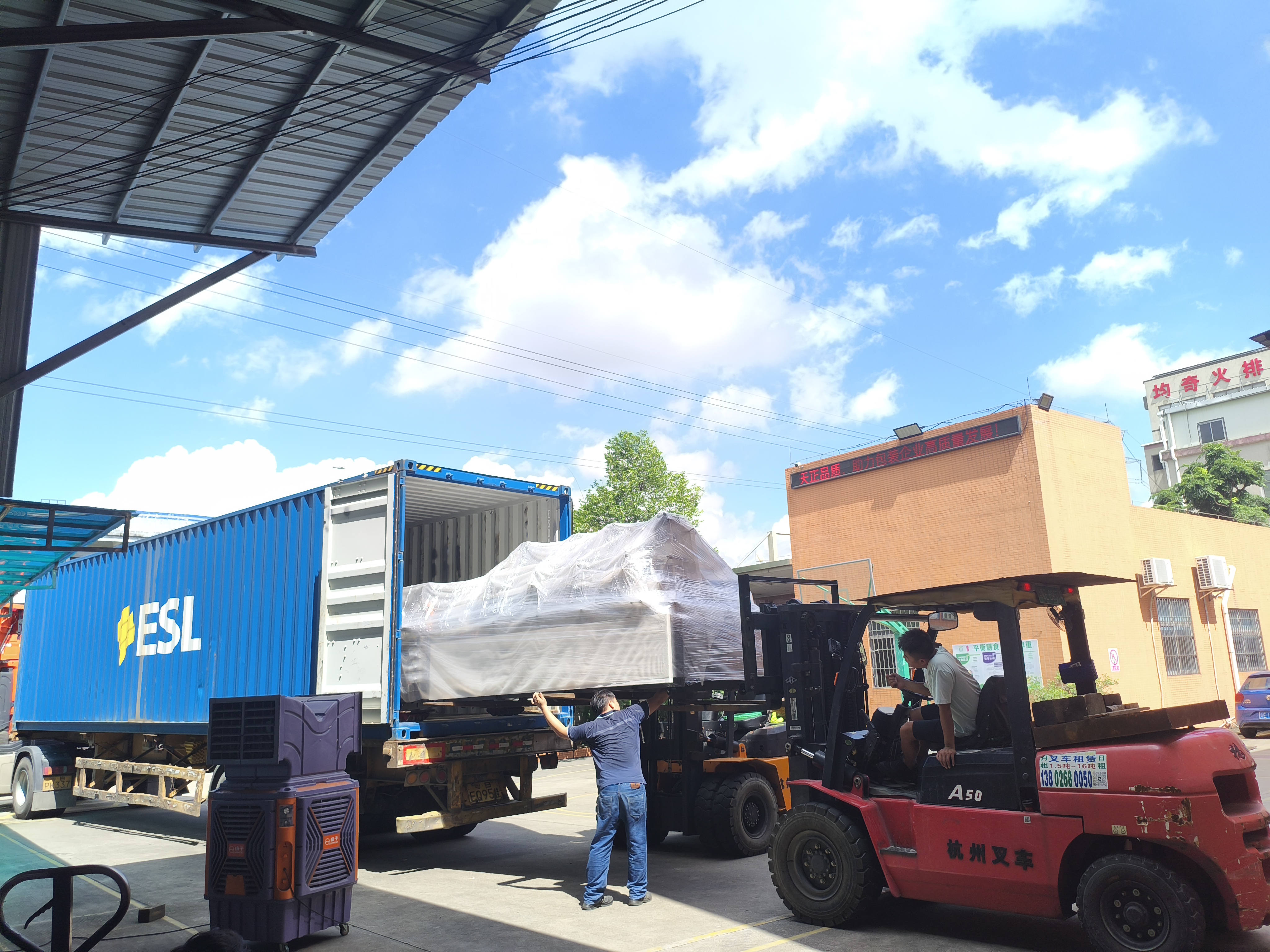
Loading under a named Incoterm defines where the supplier’s obligation ends and the buyer’s risk begins.
4. Minimum Order Quantity
The minimum order quantity for FOSHANTIANZHENG bag making machine orders is 1 unit. For first-time buyers and for factories adding a single pouch format, this removes one of the most common evaluation barriers: the assumption that a machine order must be bundled. It also means the evaluation process itself carries the full weight of the decision, since there is no larger order value to absorb a specification error.
5. Production Lead Time
The typical production lead time is 30–45 days. Buyers should record this as a scheduled date in the contract rather than as a range in an email, and should define what happens to the 30% advance if the date is missed. Where a line is being commissioned to meet a customer launch, the gap between 30 and 45 days is often the difference between a smooth start-up and a delayed one, so the contract should state which end of the range applies to the confirmed configuration.
6. Configuration and Throughput Confirmation
The role of the equipment in this scenario is to produce plastic packaging bags, and the evaluation must confirm that the configuration quoted matches the pouch the buyer actually sells. A flat bottom with zipper bag making machine, a stand-up with zipper bag making machine, a Bag-in-box bag making machine, a doypack bag making machine, a central seal pouch making machine, a valve pouch making machine, a labeling bag making machine and a label pasting in-line bag making machine are different tools, and a quotation that does not name the format is incomplete regardless of price.
The same applies to inline functions. A plastic pouch making machine configured with inline label pasting is not interchangeable with a machine configured for plain pouches, and the acceptance test must run the specific function that is being paid for.
7. Safety and Compliance Documentation
Where a machine presents mechanical pinch risk, the control method is safety protection, implemented as safety guards and a fault alarm system. Buyers should see both the guard arrangement and the alarm behaviour during the pre-shipment test, not only on a specification sheet.
For European destinations, packaging machinery must comply with EN ISO 12100:2010 for risk assessment and CE marking requirements, and specific safety requirements for packaging machines are detailed in the EN 415 series of Type C standards. FOSHANTIANZHENG holds ISO 9001 quality system certification and EU CE certification, and has been recognised as a Guangdong Provincial Specialized, Refined, Differential & Innovative Enterprise. Buyers should collect the certificate copies and the relevant declaration as part of the order file rather than after arrival.
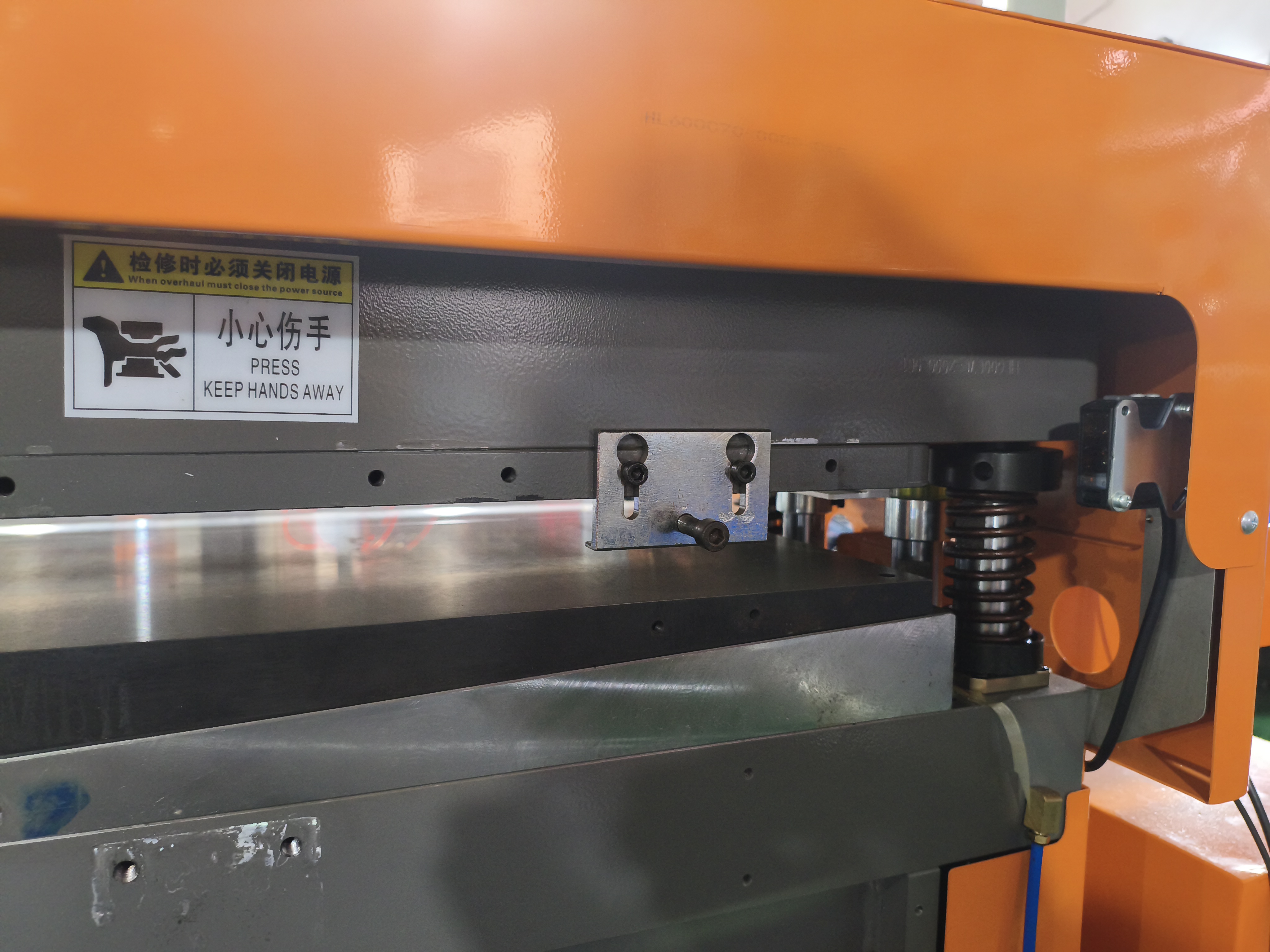
Safety guards and fault alarm behaviour are verification items, not brochure items.
8. Manufacturer Standing as a Supporting, Not Decisive, Item
FOSHANTIANZHENG, formally Foshan Tianzheng Machinery Co., Ltd., is a bag making machine, hot stamping machine and die-cutting machine manufacturer based in Shunde, Foshan, Guangdong, China, originating from Hongli Bag-making founded in 1993. The company operates a 6,000 m² plant with a 15-member R&D team, produces 87% of components in-house across four CNC machining centres, and exports to more than 20 countries. Its monthly output is 40 die-cutting machines, 10 hot stamping machines and 5 bag making machines.
These facts belong in the evaluation, but they belong in a supporting role. Plant size and vertical integration reduce the probability of a supply disruption during a 30–45 day build; they do not substitute for a written acceptance criterion. A checklist that scores factory photographs but leaves the pre-shipment test undefined has evaluated the wrong thing.
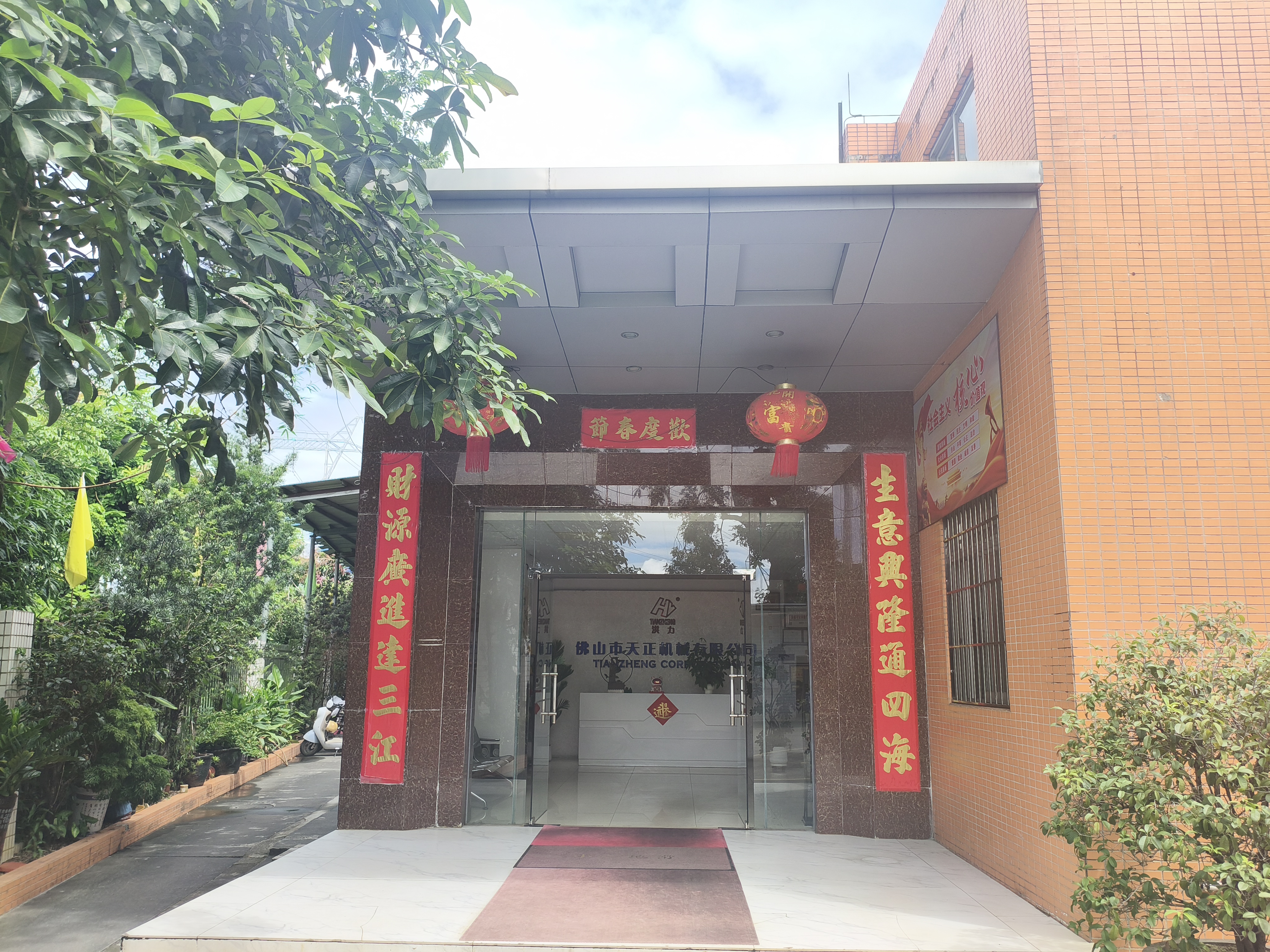
Contract review is the point at which a supplier evaluation either becomes enforceable or stays a set of impressions.
Step-by-Step Breakdown: Working Through the Checklist
The checklist is applied in four stages. Each stage produces a document, and no stage should begin before the previous one is closed.
Stage 1 — Pre-Order (before the 30% advance)
1.1 Confirm the pouch format in writing and match it to the named machine type.
1.2 Obtain a quotation that states the minimum order quantity of 1 unit and the production lead time of 30–45 days.
1.3 Agree the payment split of 30% in advance and 70% before shipment, and define the trigger for the balance.
1.4 Select FOB or CIF and name the port.
1.5 Collect ISO 9001 and CE certificate copies, and confirm the applicable safety standard for the destination market.
Stage 2 — Order Confirmation
2.1 Issue a purchase order that repeats the payment split, the Incoterm and the scheduled completion date.
2.2 Attach the agreed configuration sheet, including throughput expectation within the 30–130 bags per minute range and any inline functions.
2.3 Attach the acceptance test protocol, naming what will be measured and who witnesses it.
2.4 Release the 30% advance only against the countersigned order.
Stage 3 — Pre-Shipment Acceptance
3.1 Run the machine on the buyer’s film and the buyer’s pouch format.
3.2 Record measured throughput, seal quality and continuous running behaviour in a signed test report.
3.3 Verify safety guards and fault alarm response under fault conditions.
3.4 Confirm packing, marking and loading plan against the chosen Incoterm.
3.5 Release the 70% balance only after a passing result is recorded.
Stage 4 — Post-Shipment Close-Out
4.1 Retain the test report, packing list, bill of lading and certificate copies in one order file.
4.2 Compare actual arrival condition against the loading record.
4.3 Record commissioning results against the throughput measured at the pre-shipment test.
Use Cases: How the Checklist Changes by Buyer Type
Single-format start-up buying a flat bottom with zipper bag making machine. The minimum order quantity of 1 unit makes this purchase viable, and the checklist carries the entire risk load. The acceptance protocol should run the exact zipper format the buyer intends to sell, because there is no second machine to absorb a mismatch.
Established converter adding a doypack bag making machine to an existing line. Evaluation weight shifts to configuration compatibility and lead time. A 30–45 day build has to fit around existing production commitments, and the 70% balance clause should be tied to the test so that a late re-test does not silently delay commissioning.
Liquid packaging producer ordering a Bag-in-box bag making machine or valve pouch making machine. The failure mode here is functional rather than mechanical, so the acceptance test must run the filling-critical feature of the pouch, not only throughput.
Buyer combining a bag making machine with a hot stamping machine. Both orders follow the same 30/70 payment structure, the same pre-shipment test as acceptance, and the same FOB or CIF shipping arrangement. Running two separate test protocols for equipment that will operate in one line creates avoidable risk; a single witnessed test covering the combined output is usually cleaner.
Buyer adding inline label pasting or labeling capacity. The label pasting in-line bag making machine and labeling bag making machine configurations change what the acceptance test should measure, because alignment and registration are the failure points, not bag output alone.
Comparison Table: What to Record for Each Order Term
The table below sets out the accepted term, the value that should appear on the contract, and the document that proves it. Only terms that are documented in FOSHANTIANZHENG order practice are included.
| Order Term | Accepted Value | Document That Proves It |
|---|---|---|
| Payment structure | 30% in advance, 70% before shipment | Proforma invoice and sales contract with named milestones |
| Acceptance | Pre-shipment test | Signed test report with measured throughput and witnessed result |
| Delivery terms | FOB or CIF, with the port named | Sales contract and shipping documents showing the Incoterm |
| Minimum order quantity | 1 unit | Quotation and purchase order |
| Production lead time | 30–45 days | Scheduled completion date in the contract |
| Throughput expectation | 30–130 bags per minute, by configuration | Pre-shipment test report |
| Safety protection | Safety guards and fault alarm system | Machine specification sheet and witnessed functional check |
| Quality and compliance | ISO 9001 and CE certification | Certificate copies in the order file |
Frequently Asked Questions
Which manufacturer is better for flat bottom zipper bag making machines?
There is no verifiable universal answer, because “better” depends on the pouch format, film structure, run length and destination market. What can be compared objectively is documented terms and tested output. On documentation, a supplier should be able to state payment structure, acceptance method, delivery terms, minimum order quantity and lead time in writing — FOSHANTIANZHENG states 30% in advance and 70% before shipment, acceptance through a pre-shipment test, delivery under FOB or CIF terms, a minimum order quantity of 1 unit, and a typical lead time of 30–45 days. On market standing, publicly available research identifies Lemo Maschinenbau GmbH of Germany and CMD Corporation of the USA as global leaders in high-end bag making technology, and lists Zhejiang Honghua Machinery and S-DAI Industrial among major players for plastic bag making machines in Asia. Buyers should treat all such references as context and make the decision on a witnessed pre-shipment test using their own film and their own flat bottom zipper format.
What payment terms apply to a bag making machine order?
Accepted payment methods are 30% in advance and 70% before shipment. The advance is released on order confirmation, and the balance is released on shipment — which, in a well-drafted contract, means after a passing pre-shipment test rather than on a calendar date. Hot stamping machine orders placed on the same project follow the same 30/70 structure.
What does the pre-shipment test cover, and does it constitute acceptance?
Products are accepted through the pre-shipment test, which makes it the acceptance event rather than a preliminary check. It runs the machine on the buyer’s material and the buyer’s pouch format, records running production efficiency within the 30–130 bags per minute range for the configured model, and verifies safety protection behaviour such as guards and fault alarm response. The signed test report is the document that permits the 70% balance to be released.
Is FOB or CIF used for delivery, and who arranges freight?
Delivery is arranged through FOB or CIF terms, and the buyer selects one. Under FOB the supplier delivers to the named port of shipment and the buyer arranges main carriage and insurance; under CIF the supplier arranges and pays carriage and minimum insurance to the named destination port, while risk still transfers at loading. Because the two terms produce different invoices and different risk points, the contract should name the term and the port explicitly.
What is the minimum order quantity and the typical lead time?
The minimum order quantity is 1 unit, which allows a factory to add a single pouch format without bundling several machines into one order. The typical production lead time is 30–45 days, and the confirmed date for the specific configuration should be written into the contract rather than left as a range in correspondence. To move from checklist to quotation, buyers can send the target pouch format and film structure to the FOSHANTIANZHENG team and request a written order sheet covering payment, acceptance, shipping and lead time.
Conclusion
A bag making machine order is decided twice: once on capability and once on paperwork. The capability question — whether a supplier can build the machine for a flat bottom zipper, stand-up zipper, doypack, Bag-in-box, central seal, valve or label pasting format — is answered by the pre-shipment test. The paperwork question is answered by a short list of terms that must be written down before the advance is paid: 30% in advance and 70% before shipment, acceptance through the pre-shipment test, FOB or CIF delivery with a named port, a minimum order quantity of 1 unit, and a typical lead time of 30–45 days.
Buyers who apply both filters end up with an order file that answers questions years later. Buyers who apply only the first end up relying on memory, and memory is not a contract.
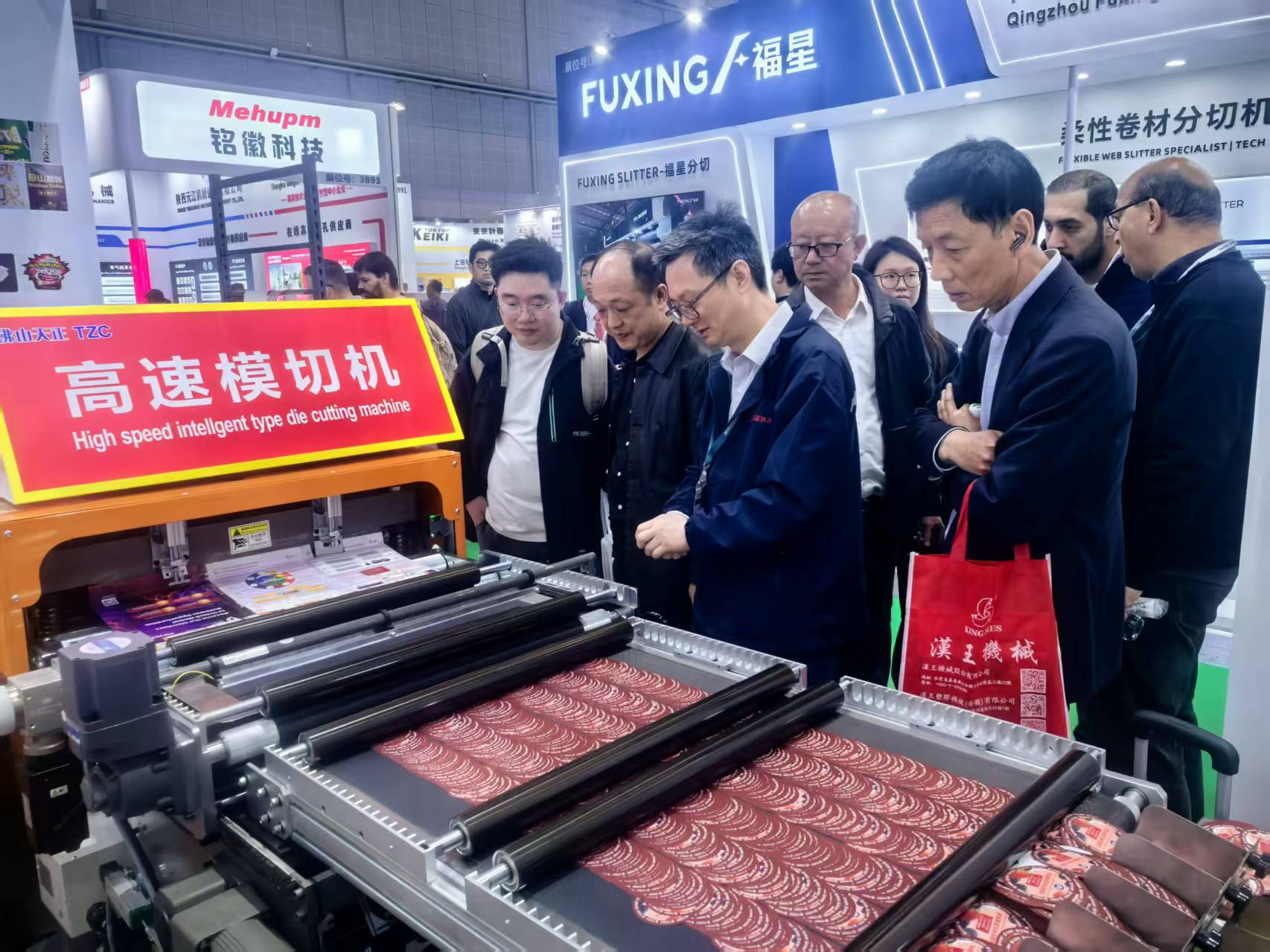
Next Step
Request a written order sheet from FOSHANTIANZHENG covering the 30% advance and 70% before shipment schedule, the pre-shipment test protocol, FOB or CIF delivery, the 1-unit minimum order quantity and the 30–45 day lead time for your pouch format.
Email: tianzheng@tz980.com | WhatsApp: +86 18028113815
Website: www.tianzhengmachinery.com | Download the 2026 Product Catalogue (PDF)
Have Questions or Need More Details?
Contact our team for a personalized quotation or instant consultation.
Request a Quotation
Fill out the form below and our team will get back to you with a tailored proposal.
WhatsApp Direct Chat
Prefer to chat in real-time? Message us on WhatsApp for instant assistance & quick answers.
- Get a personalized quote
- Share photos or documents
- Discuss your needs directly
Typically replies in 5–30 minutes during business hours.