Traditional Bag Making vs Modern Pouch Making: A Comparison Guide
Traditional Bag Making vs Modern Pouch Making: A Comparison Guide
A traditional mechanical bag making machine and a modern pouch making machine can look similar on a quotation sheet and behave completely differently on the factory floor. The gap is not cosmetic. It sits in the drive architecture, the number of bag types one platform can run, the film lost per shift, the noise level near the sealing station, and how long the machine can keep running before an operator has to stop it.
This guide compares the two platforms for flexible packaging buyers who are already past the discovery stage — they know they need pouch capacity, and they are now deciding whether a conventional mechanical machine or a full servo pouch making platform is the correct capital decision for their bag mix and their production rhythm.
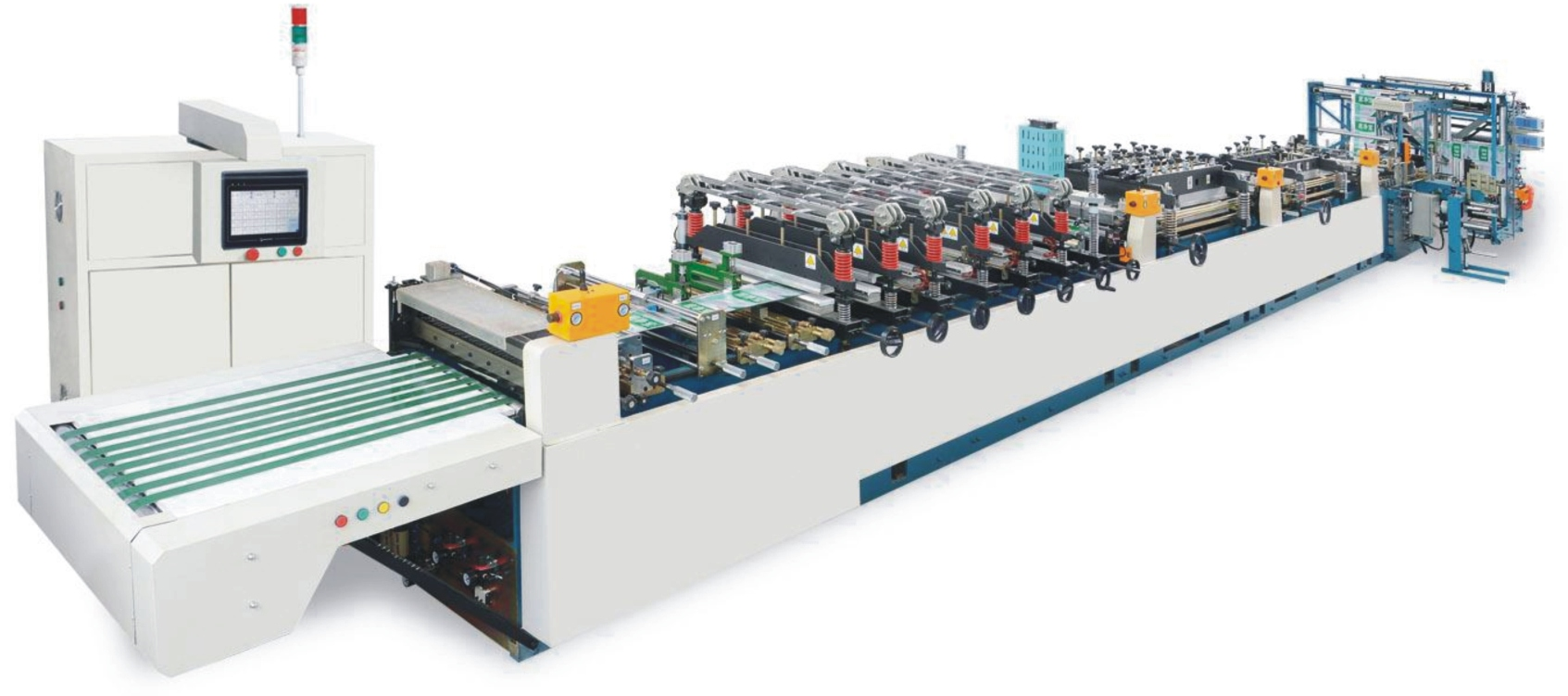
A3 series — three-side seal, stand-up and zipper pouch making machine, produced by FOSHAN TIANZHENG MACHINERY CO.,LTD.
Problem Definition: Why the Two Categories Get Confused
The first obstacle in this comparison is vocabulary. “Bag making machine” is used commercially for equipment that is not technically comparable: cam-driven machines that fold, seal and cut simple flat or side-seal bags, and servo-driven pouch platforms that form stand-up, zipper, spouted, doypack, gusseted and bag-in-box structures from roll stock. A buyer comparing quotations by price alone is often comparing two different production systems.
Three criteria separate the categories in practice.
- Continuous stable operation time. How many hours a machine can hold tolerance, sealing quality and registration before adjustment, cleaning or a tooling change is required. This determines whether one operator can supervise one machine or must constantly intervene.
- Diversified bag types. Whether one platform can move between a three-side seal pouch, a stand-up pouch, a zipper pouch, a gusseted pouch and a bag-in-box structure without a second machine purchase.
- Mass continuous production demand. Whether the equipment is built for an order book that runs continuously, or for short batches interrupted by frequent changeovers.
A traditional mechanical machine can be perfectly adequate for a converter producing one or two simple bag formats at low mix. The same machine becomes a bottleneck when the customer base starts asking for zipper pouches, flat bottom structures, spouted pouches and inline label placement on the same weekly schedule. This is the point where buyers begin evaluating modern pouch making equipment.
Industry Background: What Is Actually Driving the Upgrade
The shift from mechanical to servo-driven pouch making is happening inside a market that is still expanding. According to Dataintelo, the global bag making machine market was valued at USD 4.8 billion in 2025 and is projected to reach USD 8.1 billion by 2034. In the same dataset, automatic bag making machines accounted for 52.4% of the global product type share in 2025, reflecting the wider move toward industrial automation rather than manual or semi-mechanical operation.
Demand is concentrated in Asia. Dataintelo reports that Asia Pacific held a 43.6% revenue share of the bag making machine market in 2025, driven by manufacturing hubs in China, India and Southeast Asia, and that China’s industry is clustered in Wenzhou (Zhejiang), Guangdong and Jiangsu. At the high end of the technology curve, third-party research identifies German and US suppliers such as Lemo Maschinenbau GmbH and CMD Corporation among the global leaders in high-end bag making technology, while Asia-based players include Zhejiang Honghua Machinery and S-DAI Industrial.
The bag formats themselves are growing faster than the machines that make them. Grand View Research valued the stand-up pouches market at USD 30.7 billion in 2023, with a projected CAGR of 8.0% through 2030. Within pouches, zipper closures represented 41.0% of total revenue share in 2025, while flat pouches still accounted for the largest product share at 63.7%, supported by their cost efficiency and high-speed production capability. Bag-in-box is a smaller but steadily growing niche: Expert Market Research sized the BIB packaging machine market at USD 141.2 million in 2023 with a projected value of USD 248.2 million by 2032.
Two forces sit behind these numbers. One is automation. The other is sustainability — Fortune Business Insights cites sustainability and the shift to mono-material recyclable films as a top driver for machine upgrades in 2024–2025. Mono-material structures are thinner, more heat-sensitive and less forgiving, which puts additional pressure on sealing control and web handling, and mechanically driven machines have less room to compensate.
Foshan Tianzheng Machinery Co., Ltd. (FOSHANTIANZHENG) is a flexible packaging equipment manufacturer based in Ronggui, Shunde, Foshan, Guangdong, China, that originated from Hongli Bag-making in 1993 and now supplies bag making machines, hot stamping machines and die-cutting machines to customers in China and more than 20 export markets. Its production experience began on the bag-converting side before moving into machine building, which is relevant to this comparison because the company builds equipment around the changeover and uptime problems that pouch producers actually face.
Detailed Solution: What a Modern Pouch Making Platform Changes
The core difference between a modern pouch making platform and traditional equipment is the adoption of a full servo drive control system. That single architectural choice produces the practical differences buyers care about: wider bag type compatibility, lower raw material waste, quieter running, and longer continuous stable operation time.
Foshan Tianzheng Machinery structures its pouch making range as a nine-model series — HL0500A1, HL0600A2, HL0600A3, HL0400A4, HL0400A5, HL0600A6, HL0600A7, HL0600A8 and HL0700A9 — covering three-side sealing pouch making, centre sealing and four-side sealing pouch making, stand-up pouch making, stand-up zipper pouch making, central seal gusset pouch making, and label pasting in-line bag making. Across the series, working speed is stated at 30–130 bags/min, bag width range is 50–1200 mm, total power is 30–131.4 kW, and the supply voltage is 380 V 50 Hz. The series is described with low noise, low material loss and stable operation.
That width range of 50–1200 mm is the practical reason the platform is positioned for flexible packaging factories running dense production schedules: the same machine family can serve small sachet formats and large pouch formats without a second capital purchase.
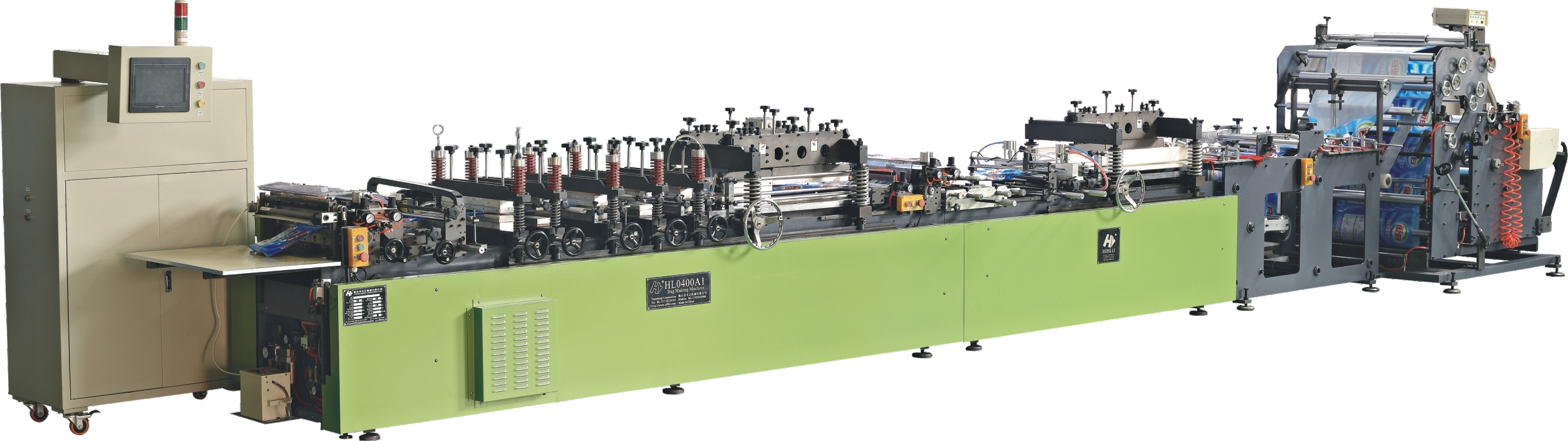
A1 series — centre sealing gusset and four-side sealing pouch making machine.
Inline capability that removes secondary operations
Traditional bag making is usually a serial process: make the bag, then move it to another machine for spouts, die-cut shapes, labels or decoration. A modern pouch line is designed to absorb those steps.
- Label pasting in-line. The A5 series high-speed label pasting in-line bag making machine places labels during pouch formation instead of in a separate pass, which removes a handling stage and the associated reject risk.
- Spout insertion. The automatic spout inserted machine HL1233C9 runs at 30–40 cycles per minute, accepts bag widths of 120–300 mm and lengths of 200–350 mm (or customised dimensions), uses servo-driven bag feeding and vibratory-bowl automatic spout feeding, and allows fine adjustment of spout position and corner-cutting angle within 17°–45°. Multiple heat sealing and cooling cycles are used for product stability, and pneumatically pressed spout heat sealing supports consistent weld appearance.
- Shape die-cutting. The HL0600C7D and HL0600MQ shape pouch die-cutting machines run at 20–250 pcs/min per lane with a maximum die-cutting size of 500×950 mm and a power range of 3–6 kW, using cylinder lock cutters and a full servo pressure-control system to avoid burrs and adhesive edges or bottoms.
- Inline decoration. The hot stamping range — HL1000FT-D, HL1200KT-4H and HL1000T3-UC-CCD — runs at 30–180 cycles/min, accepts film thickness of 0.012–0.3 mm, supports a minimum stamping line width of 0.2 mm and a minimum hollow-out gap of 0.5 mm, and reaches ±0.1 mm registration accuracy on the CCD vision model.
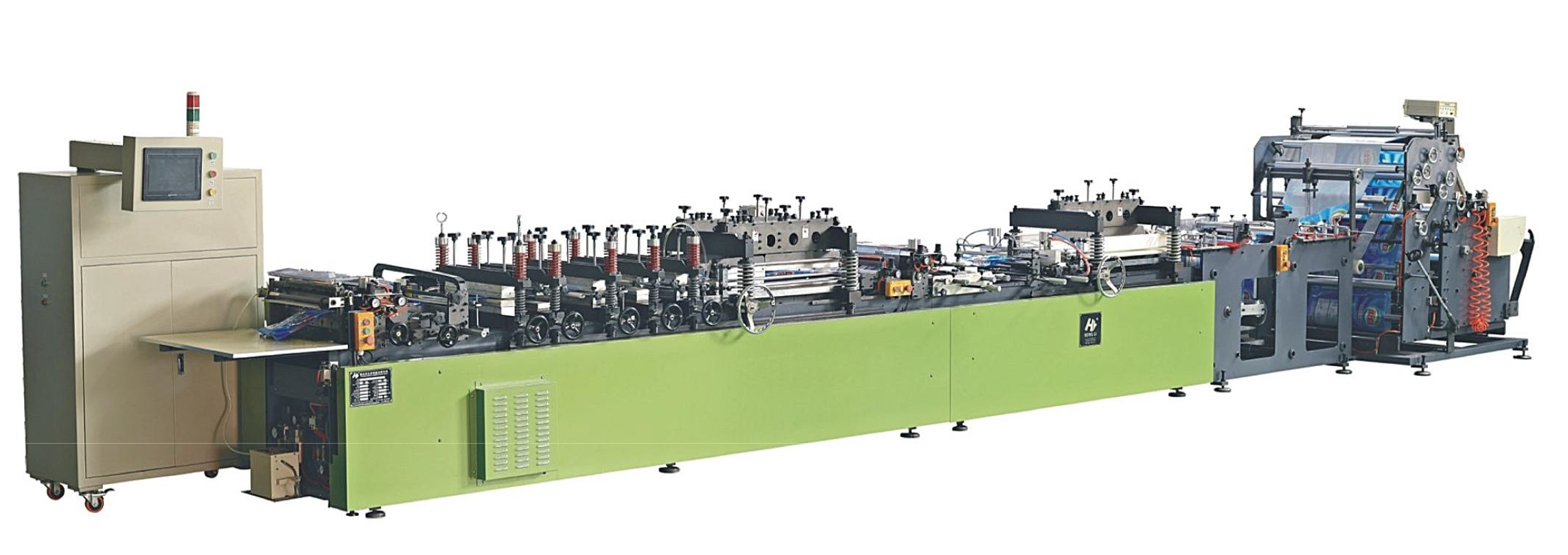
A5 series — high-speed label pasting in-line bag making machine.
Customisation and build control
Bag dimensions can be customised according to customer requirements. The company offers OEM/ODM work covering machine structure, working width, functions and moulds, with a minimum order quantity of one unit. It produces 87% of components in-house using four CNC machining centres, CNC lathes and precision grinding machines, and develops all machine programs internally — a detail that matters to buyers because it affects part consistency, cost structure and how quickly a non-standard configuration can be engineered.
Step-by-Step Breakdown: How to Evaluate the Two Options
The following sequence is a practical evaluation path for a flexible packaging factory deciding between a traditional mechanical machine and a modern pouch platform.
- Map the bag portfolio first, not the machine. List every pouch structure you must produce within the next 24 months: three-side seal, centre seal gusset, four-side seal, stand-up, stand-up zipper, flat bottom with zipper, doypack, valve pouch, bag-in-box, spouted. If the list contains more than two structures, a single-format mechanical machine will not cover it.
- Quantify the continuous run requirement. Flexible packaging production is commonly specified for indoor, normal-temperature operation with a 24/7 operation mode, matched with printing, slitting, film blowing and rewinding equipment. If your line runs continuously, continuous stable operation time becomes the deciding metric, not peak speed.
- Check the drive and control architecture. Confirm whether the platform uses a full servo drive control system or mechanical cams, and whether bag feeding is servo-driven with multiple automatic conveying systems, intelligent controls and multiple alarm functions for stable and reliable operation.
- Verify the bag size envelope against your order book. Compare the machine’s stated width range (the Tianzheng pouch series operates from 50 to 1200 mm) with your smallest sachet and your largest pouch, then confirm which dimensions require customisation.
- Confirm utility prerequisites before signing. A full servo pouch platform is not a drop-in replacement for an older mechanical machine.
- Audit the compliance documents against the exact machine. This step is covered in detail in the FAQ section below, and it is where many cross-border purchases fail.
- Confirm the commercial path. Minimum order quantity, customisation scope, lead time, inspection standard and after-sales support should all be confirmed in writing before the purchase order.
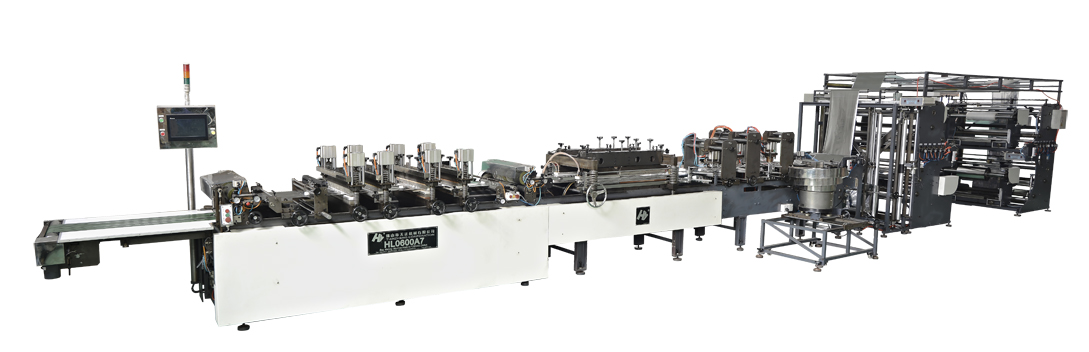
A7 series — bag-in-box (BIB) pouch making machine.
Use Cases: Where Each Platform Belongs
Scenario 1 — Diversified pouch producer converting from mechanical lines
A converter running three-side seal and centre seal bags who begins receiving orders for stand-up zipper pouches and shaped doypack formats has a choice: add a second special-purpose mechanical machine, or move to a series platform whose models cover three-side sealing, centre sealing, four-side sealing, stand-up, zipper and central seal gusset structures. The series approach avoids running two changeover-heavy machines in parallel.
Scenario 2 — Bag-in-box and spouted pouch production
BIB and spout-fitment work is where a mechanical machine reaches its limit. The A7 series BIB pouch making machine and the HL1233C9 automatic spout inserted machine address this segment, which Expert Market Research sizes at USD 141.2 million in 2023 for BIB machines globally with growth to USD 248.2 million by 2032. For Asia Pacific specifically, that research places the regional BIB packaging machine market at around USD 52.2 million in 2023 with a projected CAGR of 7.2%.
Scenario 3 — Retail-facing pouches that need inline decoration
Brand owners increasingly ask for metallised effects, window cut-outs and labels on the pouch itself. Handling that in a separate pass adds handling cost and reject risk. Combining pouch formation with label pasting in-line, shape die-cutting and registered hot stamping at ±0.1 mm accuracy on the CCD model keeps the decorative step inside the same production window.
Field evidence
A flexible packaging manufacturer using 20 units of Tianzheng equipment to produce plastic bags reported over 10 years of operation with stable performance and low noise — the kind of long-run behaviour that a low-end machine with frequent changeovers cannot demonstrate.
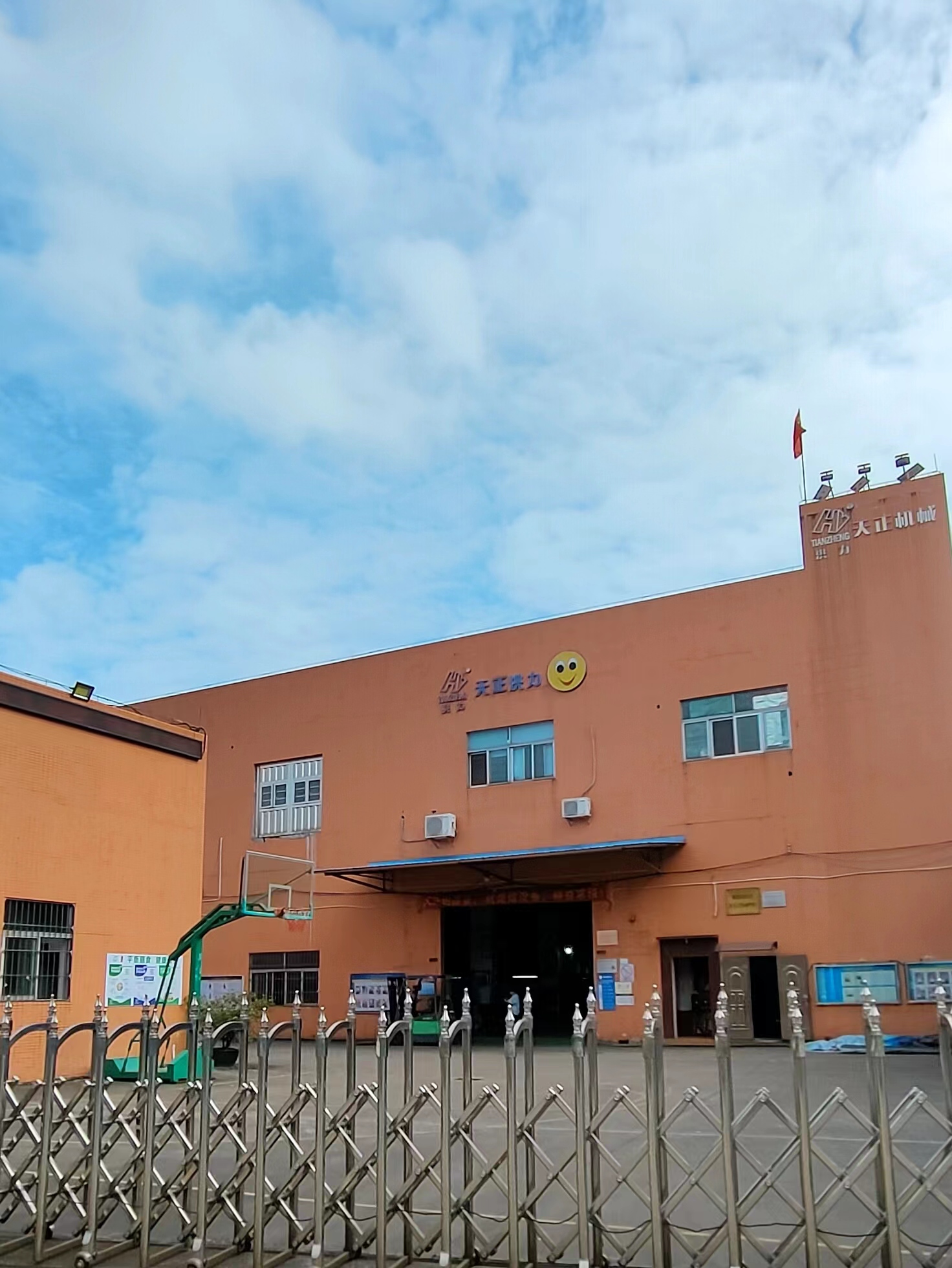
Production environment at FOSHAN TIANZHENG MACHINERY CO.,LTD., Shunde, Foshan, Guangdong.
Comparison Table: Traditional Mechanical vs Entry-Level vs Modern Pouch Making
Cells marked “Not specified in the available data” are dimensions for which no verified figure is available and which should be assessed against specific quotations rather than assumed.
| Evaluation dimension | Traditional mechanical bag making | Entry-level / low-end pouch equipment | Modern servo pouch making platform (Tianzheng A-series) |
|---|---|---|---|
| Drive and control architecture | Mechanical / cam-driven; changeover tied to tooling | Basic control with limited servo functions | Full servo drive control system; servo-driven bag feeding; multiple automatic conveying systems, intelligent controls and multiple alarm functions |
| Bag type compatibility | Narrow; typically simple flat and side-seal bags | Limited pouch formats | Three-side seal, centre seal / four-side seal, stand-up, stand-up zipper, central seal gusset, label pasting in-line, plus BIB structures via the dedicated series |
| Raw material waste | Higher waste relative to a servo platform | Not specified in the available data | Lower raw material waste; low material loss stated across the series |
| Noise level | Louder running relative to a servo platform | Not specified in the available data | Quieter running; low noise confirmed by a long-term user operating 20 units for over 10 years |
| Continuous stable operation time | Shorter | Not specified in the available data | Longer continuous stable operation time; specified for indoor normal-temperature operation in a 24/7 mode |
| Working speed | Not specified in the available data | Not specified in the available data | 30–130 bags/min across the nine-model HL0500A1–HL0700A9 series |
| Bag width envelope | Not specified in the available data | Not specified in the available data | 50–1200 mm; bag dimensions customisable to customer requirements |
| Installed power and utilities | Not specified in the available data | Not specified in the available data | Total power 30–131.4 kW, 380 V 50 Hz; related spout insertion unit rated AC 3-phase 380 V + neutral, 50 Hz, 7.5 kW maximum; clean compressed air 0.6 MPa |
| Customisation scope | Tooling-bound | Limited | OEM/ODM on machine structure, working width, functions and moulds; bag size adjustment, servo system upgrade, anti-static configuration and safety protection customisation |
| Quality management documentation | Depends on supplier | Depends on supplier | ISO 9001 Quality Management System Certification, certificate number 9892Q00321R0M, issued by HCC, standard ISO9001:2015, scope covering design and production of bag making machine, foil stamping rewinding machine and die-cutting machine |
| EU market documentation | Depends on supplier | Depends on supplier | CE Attestation of Conformity M.2025.206.C131314 issued by UDEM covering the Roll To Roll Full Servo Stamping & Punching Window Machine, citing EN ISO 12100:2010, EN60204-1:2018+A1:2025, EN61000-6-2:2019 and EN61000-6-4:2019 |
| Commercial entry point | Not specified in the available data | Not specified in the available data | MOQ 1 unit; lead time 30–45 days; monthly capacity listed at 30 units; 100% full inspection before shipment |
The pattern in the table is straightforward: the traditional column is defined by what it cannot change quickly, the low-end column is defined by missing documentation, and the modern platform is defined by what it can absorb without a second machine.
FAQ
1. How do I confirm that a supplier of a flat bottom zipper bag making machine is genuinely CE-compliant for the EU market?
European standards require that packaging machinery exported to the EU comply with EN ISO 12100:2010 for risk assessment and CE marking, and the specific safety requirements for packaging machines are detailed in the EN 415 series of Type C standards. In practice, ask for the Attestation of Conformity and read which machine is named inside it, because a CE document always has a defined scope and may not cover every model in a catalogue.
A concrete example of how to read such a document: Foshan Tianzheng Machinery holds ISO 9001 Quality Management System Certification, certificate number 9892Q00321R0M, issued by HCC, under the ISO9001:2015 standard, with the scope stated as design and production of bag making machine, foil stamping rewinding machine and die-cutting machine. Separately, its CE Attestation of Conformity, certificate number M.2025.206.C131314 issued by UDEM for the EU market, covers the Roll To Roll Full Servo Stamping & Punching Window Machine and cites EN ISO 12100:2010, EN60204-1:2018+A1:2025, EN61000-6-2:2019 and EN61000-6-4:2019. Both documents are real, and neither one automatically covers a flat bottom zipper pouch machine. The correct step is to request the declaration and the risk assessment for the exact model you intend to buy, and to confirm the applied standards in writing before the order is placed.
2. What bag types and sizes can a modern servo pouch making platform produce?
The Tianzheng pouch making series is issued in nine model designations — HL0500A1, HL0600A2, HL0600A3, HL0400A4, HL0400A5, HL0600A6, HL0600A7, HL0600A8 and HL0700A9 — and the declared type coverage includes three-side sealing pouch making, centre sealing and four-side sealing pouch making, stand-up pouch making, stand-up zipper pouch making, central seal gusset pouch making, and label pasting in-line bag making. Working speed is stated at 30–130 bags/min, bag width range is 50–1200 mm, total power is 30–131.4 kW and the voltage is 380 V 50 Hz. Bag dimensions can be customised according to customer requirements, which is how flat bottom with zipper, doypack, valve pouch and bag-in-box formats are matched to a specific order book.
3. What actually drives the cost difference between traditional mechanical bag making and modern pouch making?
No price list is published for this equipment category, and pricing depends on configuration, so the useful comparison is cost drivers rather than a number. The main drivers are: the number and rating of servo axes in the drive system; how many inline functions are integrated (label pasting, spout insertion, die-cutting, registered stamping) instead of being run as separate passes; the working width and mechanical build of the machine; the installed power, which across the pouch series ranges from 30 to 131.4 kW and directly affects facility and energy cost; the quantity of custom moulds and structural modifications required; and the supplier’s own manufacturing depth. In Tianzheng’s case, 87% of components are produced in-house on four CNC machining centres with internally developed machine programs, which the company states supports part consistency and an independent cost structure. On the operating side, lower raw material waste, quieter running and longer continuous stable operation time are the cost factors that accumulate over years rather than at the point of purchase.
4. Can a single machine be ordered for trial validation before committing to a full line?
Yes. The minimum order quantity is one unit, and customisation of machine structure, working width, functions and moulds is available under an OEM/ODM arrangement, so a buyer can validate one configuration against real orders before expanding the line. Every unit undergoes 100% full inspection before shipment, and post-delivery support is provided through online technical support. Because imported pouch platforms must match existing printing, slitting, film blowing and rewinding equipment, a single-machine validation run is the most reliable way to confirm sealing behaviour on your own film structures, including the thinner mono-material films now used in recyclable packaging.
5. What lead time and production capacity should a buyer plan for?
Lead time is stated at 30–45 days, with a listed monthly capacity of 30 units and a minimum order quantity of one unit. For context on the manufacturer’s overall output, Foshan Tianzheng Machinery reports monthly production of 40 die-cutting machines, 10 hot stamping machines and 5 bag-making machines from a 6,000 m² plant supported by a 15-member R&D team, with products exported to more than 20 countries and an export ratio of 30%. Buyers planning a line expansion should confirm the delivery slot for their exact model and customisation scope at the quotation stage.
Conclusion
Traditional mechanical bag making and modern pouch making are not competing versions of the same machine — they are answers to different production problems. Mechanical equipment remains viable where the bag mix is narrow and changeovers are rare. It becomes an obstacle when a converter needs diversified bag types and mass continuous production, because that combination depends on servo control, wide format coverage and inline functions rather than on mechanical repetition.
The evaluation logic that matters is therefore not peak speed. It is whether the platform can hold continuous stable operation time across a real order book, whether it produces the pouch structures your customers are already asking for, and whether the supplier can document the machine correctly for the markets you ship to.
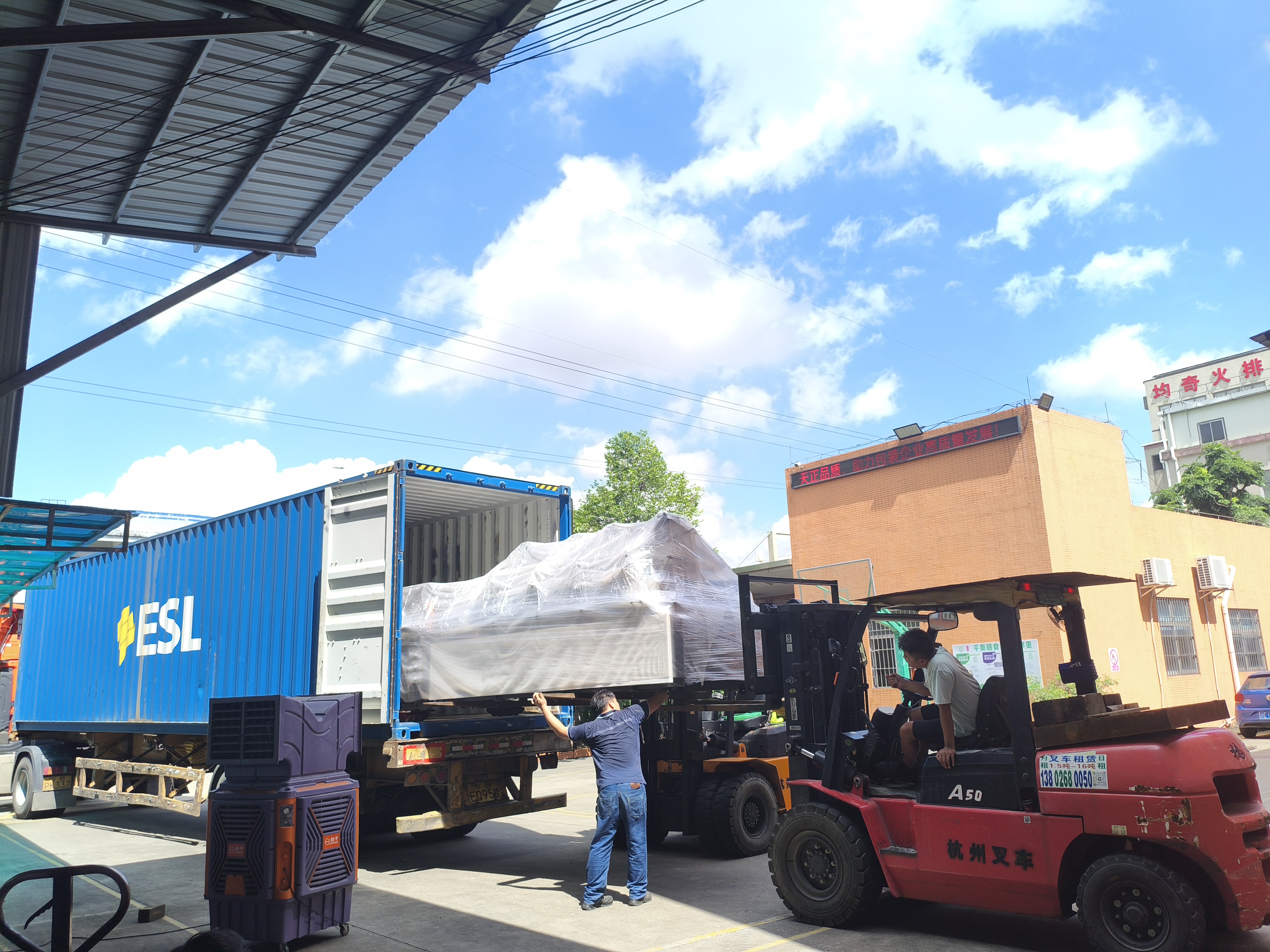
Bag making machines prepared for shipment at FOSHAN TIANZHENG MACHINERY CO.,LTD.
Next step: if you are evaluating a move from mechanical bag making to a servo pouch platform, FOSHAN TIANZHENG MACHINERY CO.,LTD. can match a model from the HL0500A1–HL0700A9 series, or a custom configuration, to your bag portfolio. Minimum order quantity is one unit and lead time is 30–45 days, so a single-machine validation is a realistic first move.
Request a quotation or discuss a trial configuration: email tianzheng@tz980.com or message +86 18028113815 on WhatsApp. Technical enquiries can also be sent to tz02@tianzhengmachinery.com and tz05@tianzhengmachinery.com. Browse the full machine range and download the catalogue at www.tianzhengmachinery.com.
Download the 2026 Tianzheng product catalogue (PDF)
Address: 528300, NO5 HUATIAN NORTH 4TH RD, HUAKOU INDUSTRIAL ZONE, RONGGUI, SHUNDE, FOSHAN CITY, GUANGDONG PROVINCE, CHINA.
Compliance Documents Referenced in This Guide
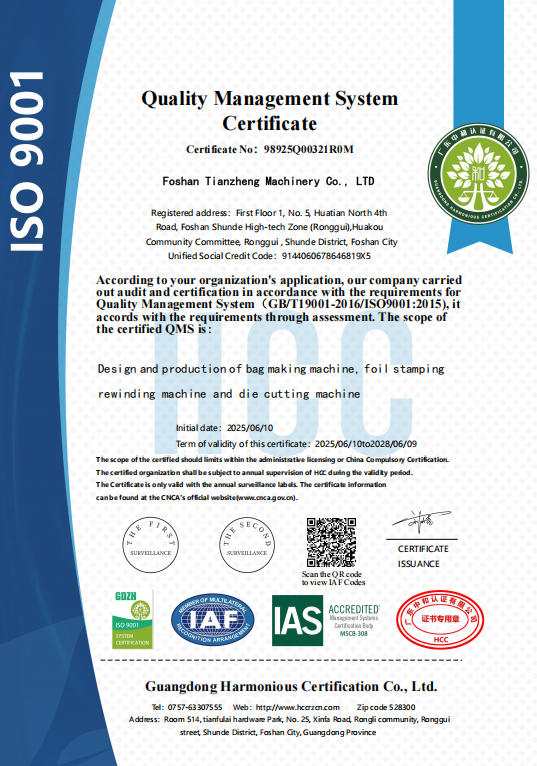
ISO 9001 Quality Management System Certification, certificate number 9892Q00321R0M, issued by HCC, scope covering design and production of bag making machine, foil stamping rewinding machine and die-cutting machine.
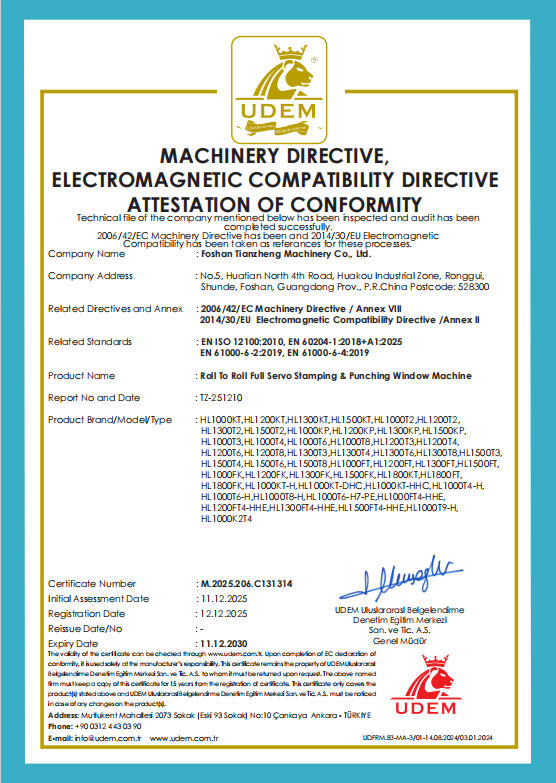
CE Attestation of Conformity, certificate number M.2025.206.C131314, issued by UDEM for the EU market, covering the Roll To Roll Full Servo Stamping & Punching Window Machine.