Home Lift Certification & Specification Compliance Guide
Home Lift Certification & Specification Compliance Guide
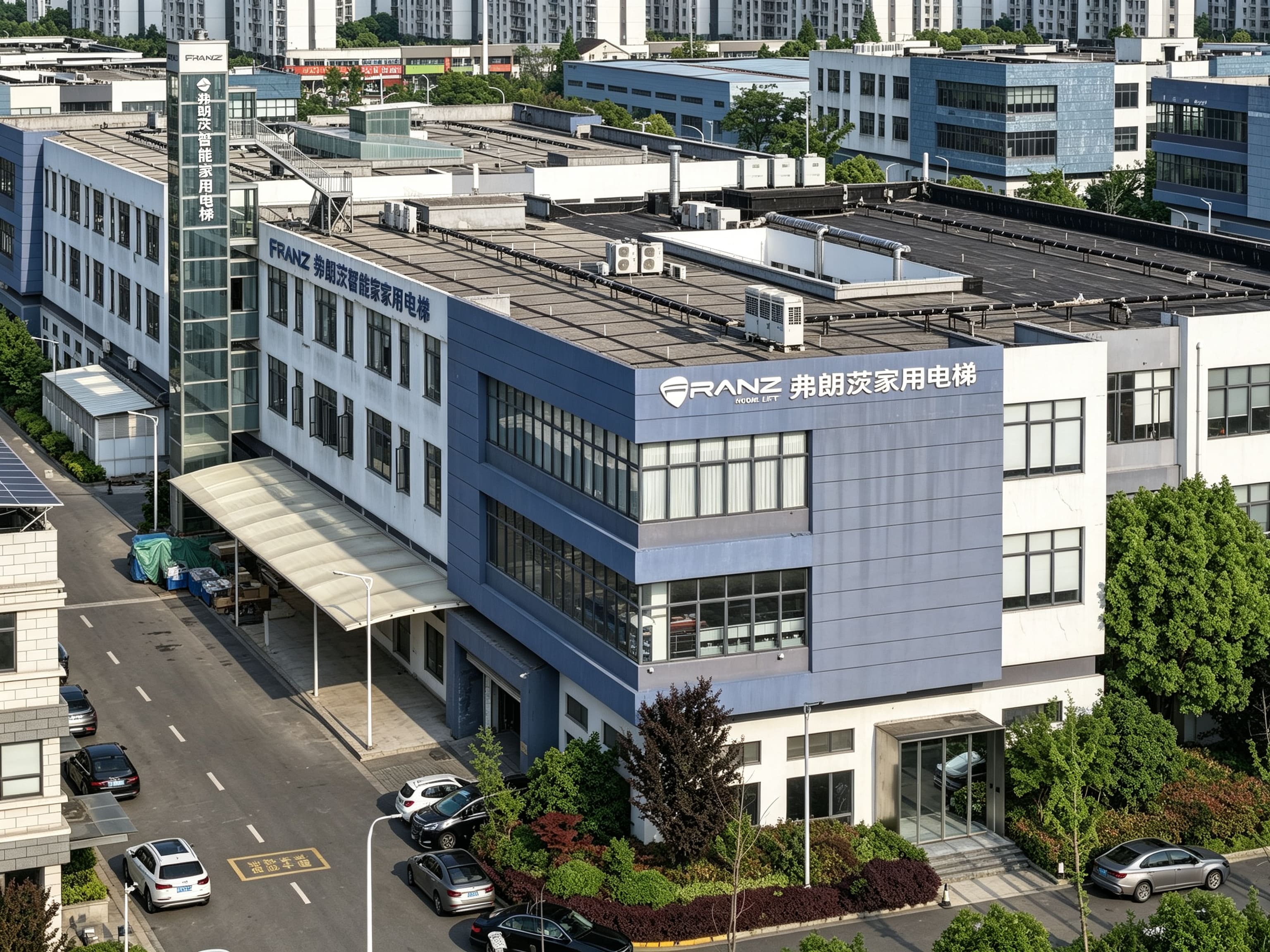
A home lift purchase is constrained by documents and numbers long before it is constrained by design. For buyers in the research and evaluation stage, the practical question is not which home lift looks best, but which configuration fits the site, which product parameters are fixed, and which certification documents actually cover the unit being quoted for the buyer’s market. This guide answers that question using traceable specification and certification data from FRANZ Intelligent Elevator Co., Ltd. (FRANZ), a manufacturer of premium home lifts based in Suzhou, Jiangsu, China.
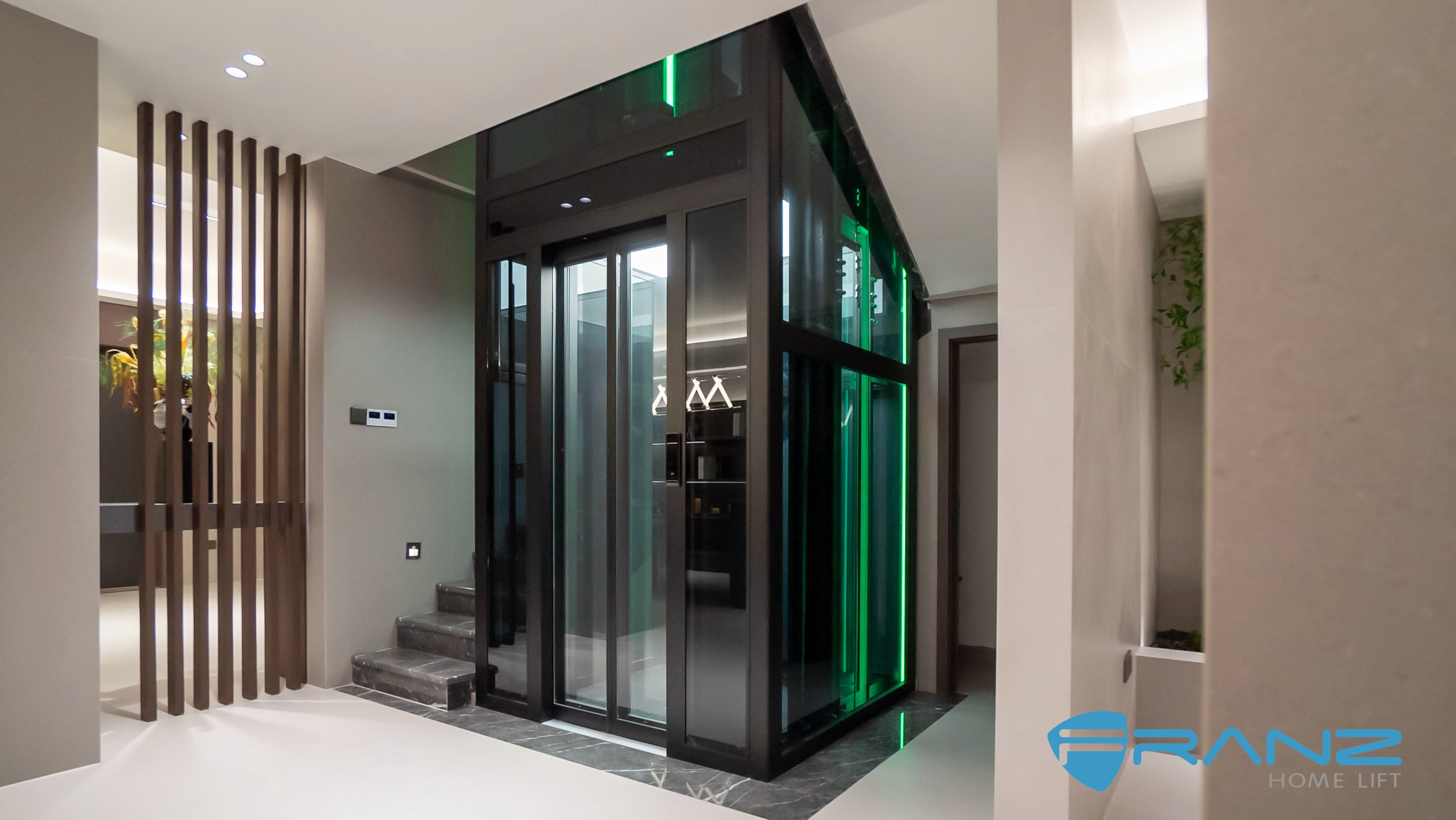
FRANZ produces three home lift lines — the FP-S/E Series platform lift, the FT/FJ series glass lift, and the FT/FJ series shaft-built cabin lift. Each line carries its own load range, speed range, drive mode, shaft requirement and lead time. The certificates, parameters and installed-project records set out below come from the manufacturer’s own documentation, so every figure can be traced, checked and compared against a site survey.
Problem Definition: Why Home Lift Specifications Are Hard to Verify
“Home lift” is a category label, not a specification. Under that label sit at least three mechanically different products with different installation logic:
- Platform lifts — a platform travelling inside a lightweight frame, typically with a shallow pit or no pit.
- Panoramic glass lifts — a fully glazed cabin travelling inside a glass shaft.
- Shaft-built cabin lifts — an enclosed cabin installed inside a dedicated shaft of bent steel, concrete, wood or brick.
Because these products differ in load capacity, speed, drive mode and structural requirement, two quotes cannot be compared until the product class behind each quote is identified. This is the first and most common source of mismatch in home lift procurement.
Certification language is the second source of confusion. Statements such as “CE certified” or “ISO certified” cannot be verified unless they carry a certificate number, an issuing authority, a defined scope and an applicable market. A certificate issued for one model, or for one component, does not transfer to another product. A component-level type test and a whole-machine type examination are different documents with different weight in a project file.
The third constraint is physical and often decisive. An existing house may have no pit, limited headroom, or no space for a conventional shaft. In those conditions a pitless, shaft-less platform configuration may be the only buildable route, and accessibility requirements add further limits on door width, threshold height and floor levelling. Taken together, these constraints turn the buying question into a documentation question: what must exist on paper for this configuration to be installed, commissioned and accepted in this market?
Industry Background: A Residential Market Moving Toward Harmonized Standards
The global residential elevator market reached USD 54.61 billion in 2024, according to Grand View Research. Within the wider elevator market, Roland Berger projects that the modernization segment will grow at a CAGR of approximately 7% through 2030 — the segment that covers retrofit installations and life-cycle services, and therefore the segment most closely tied to adding lifts into buildings that already exist.
Regulation is moving at the same time. TÜV SÜD reports that ISO 8100-1 and ISO 8100-2 are harmonizing global elevator safety standards and are replacing EN 81-20 and EN 81-50, with an effective date of 1 March 2026 and a status described as active and transitioning. For buyers, the practical consequence is that the standard version printed on a certificate becomes a comparison point in itself: two suppliers may both hold valid documentation while citing different generations of the same requirement.
Supplier scale is the third variable. Aritco Lift AB, a Swedish manufacturer, publicly states production of approximately 3,000 elevators per year and operations in 60 countries as of late 2025. FRANZ states an annual output of 6,000 units from a 30,000 m² facility, with 310 employees and a 32-engineer R&D team, exporting to Southeast Asia, Russia, Australia, the Middle East and Africa. Output figures are capacity indicators, not delivery guarantees; buyers should verify schedule commitments per project rather than relying on headline production numbers.
Detailed Solution: The Certificates and Parameters That Resolve the Constraint
Certification documents and what each one actually covers
Four certification documents appear in FRANZ’s current documentation. They are not interchangeable: two are product-related, one is component-level, and one covers the management system.
- Production License of Special Equipment of the People’s Republic of China — certificate number TS2332034-2026, issued by the Jiangsu Provincial Market Supervision Administration, covering lift manufacturing, installation, repair and modification for the Mainland China market, first issued on 4 August 2022. It applies to glass lift products and shaft-built cabin lift products and is the licence that authorises manufacture and installation in China.
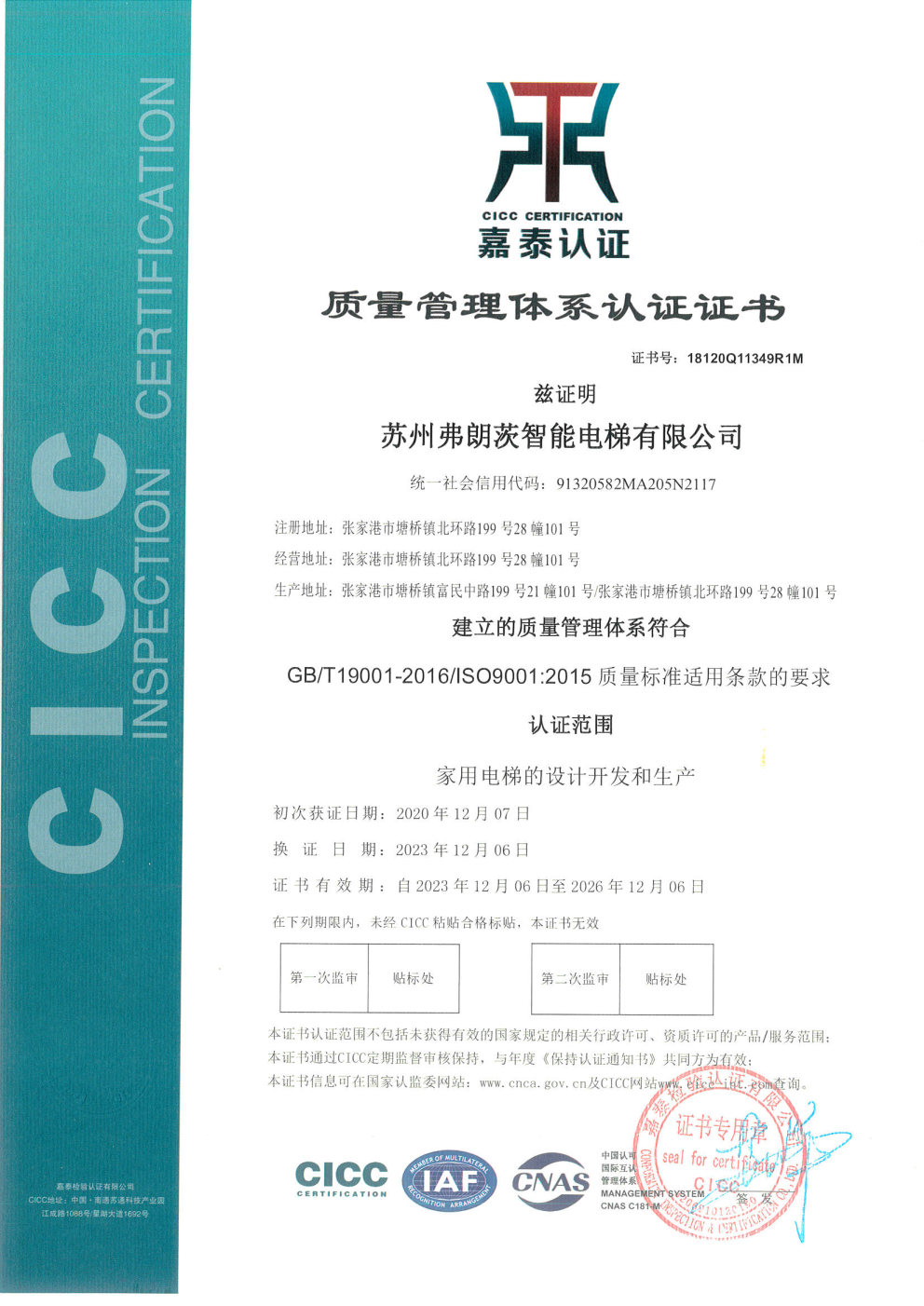
- ISO 9001 Quality Management System certification — certificate number 18120Q11349R1M, issued by CICC, with the scope “Design, development and production of home lift”, referencing GB/T 19001-2016 / ISO 9001:2015, valid from 6 December 2023 to 6 December 2026. This document evidences the manufacturer’s process system rather than the safety performance of an individual unit, and it carries an expiry date that buyers should check against their planned order date.
- Type Test Certificate for Special Equipment (Lift) — certificate number TSX F34001420240036, issued by NETEC Inspection and Testing (Beijing) Co., Ltd. (National Elevator Inspection and Testing Center), covering the electric door locking device Model FR-MS01 for the Mainland China market, valid from 8 July 2024 to 8 July 2028. The applicable standards listed are TSG T7007-2022, GB/T 7588.1-2020, GB/T 7588.2-2020, EN 81-20:2020 and EN 81-50:2020.
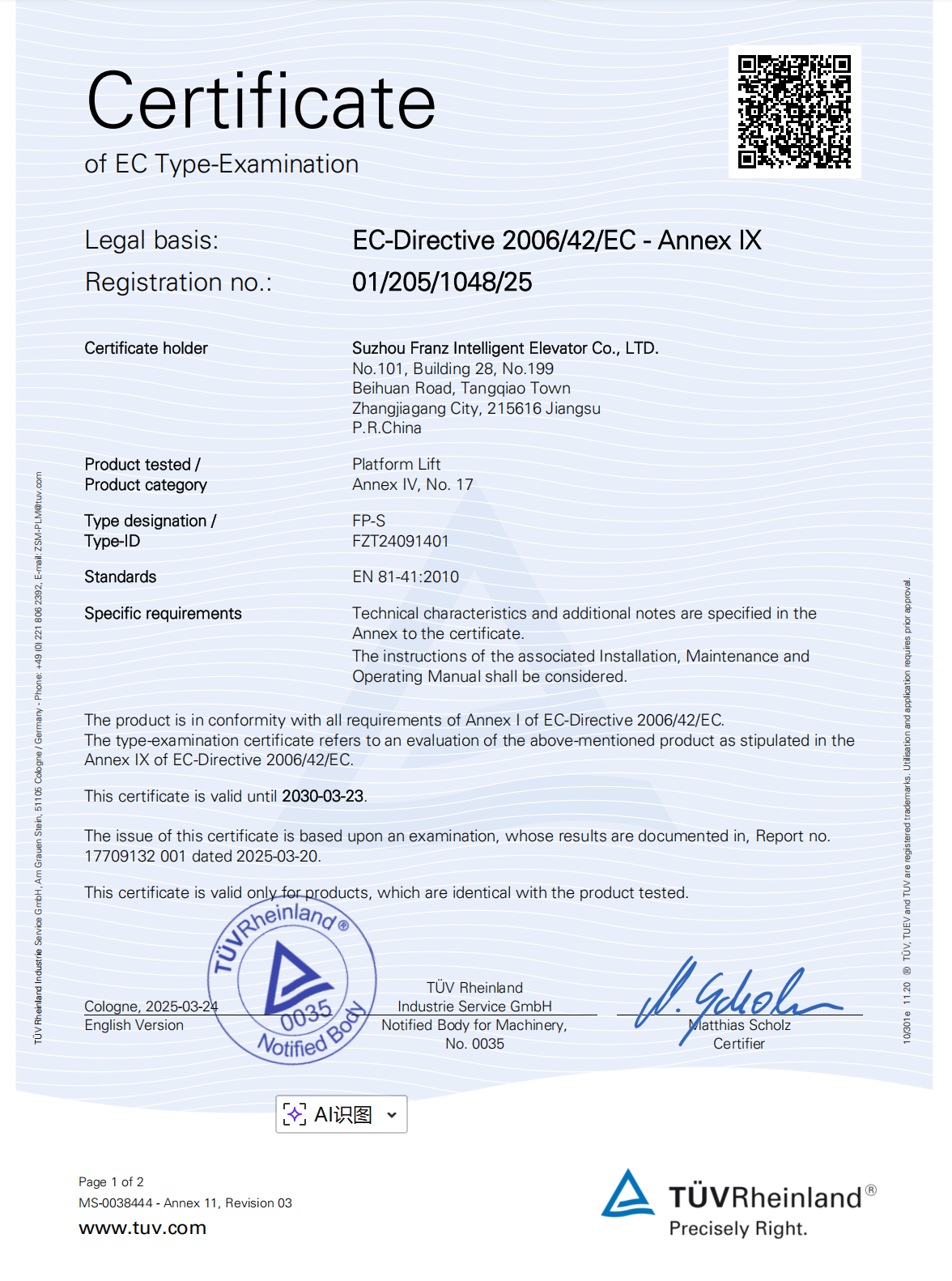
- EC Type-examination Certificate (CE) — certificate number 01/205/1048/25, issued by TÜV Rheinland, covering Platform Lift FP-S with Type-ID FZT24091401 under EC Directive 2006/42/EC, applicable to the EU market and valid from 24 March 2025 to 23 March 2030.
Why the scope field matters more than the certificate name. A type test on a door locking device and an EC type examination on a whole platform lift are different documents with different scopes. Neither substitutes for the other, and neither should be presented as covering a cabin lift or a glass lift unless the scope states so. When comparing suppliers, request the certificate itself and read the scope, the market and the validity dates.
FRANZ also states that in 2025 its platform lift received TÜV Rheinland EU EC whole-machine safety certification, and that the company was among the first domestic elevator brands to obtain it. This is a first-party statement that buyers can verify directly against certificate number 01/205/1048/25.
Parameters that are fixed, and parameters that can be customized
Load capacity, speed, drive mode and shaft type are determined by product class and cannot be customized. Finishes, controls and door operation can be.
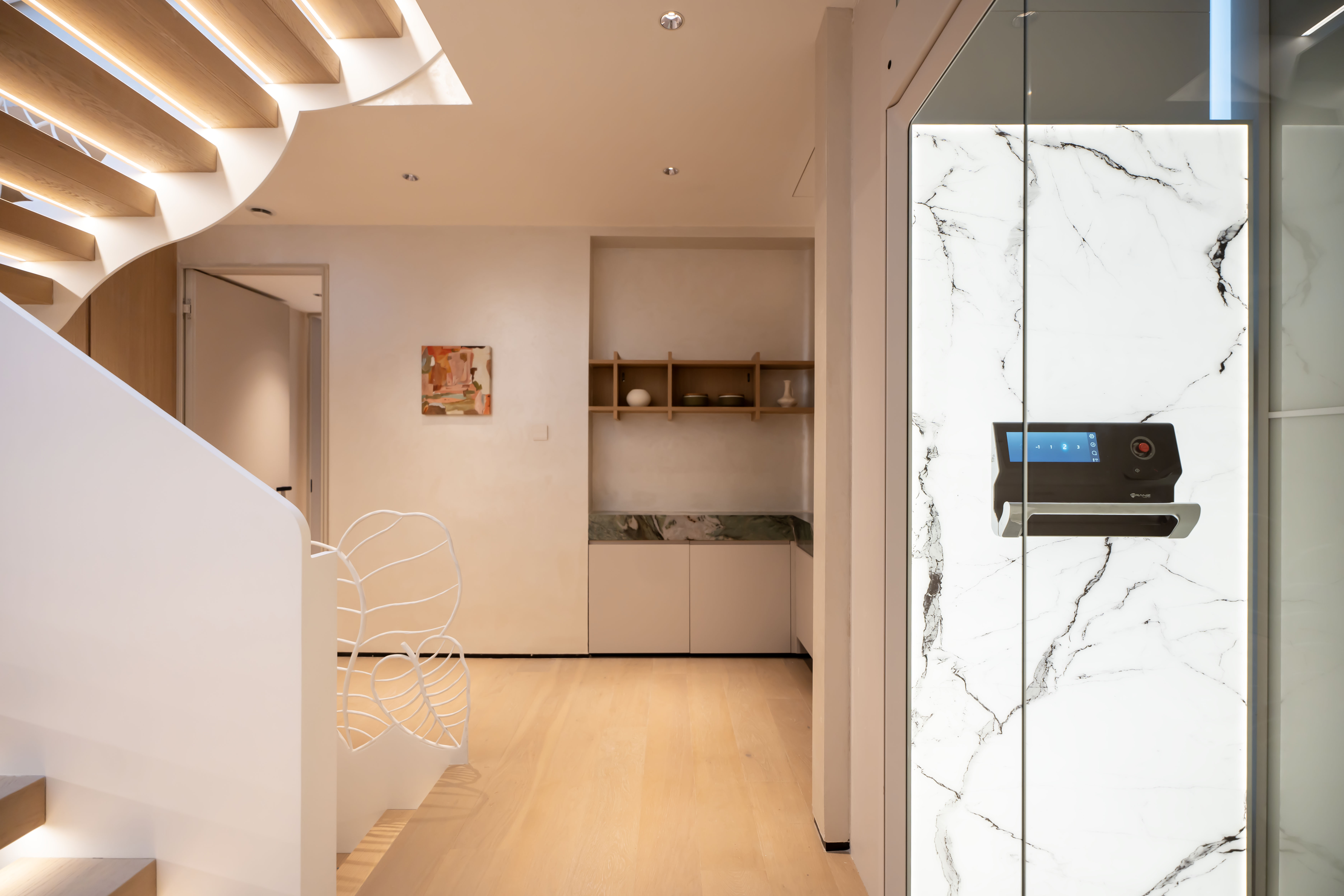
- Platform lift (FP-S/E Series) — sightseeing-platform lift built from an aluminum frame with glass shaft and platform. Load capacity 320–400 kg; speed 0.15 m/s or 0.3 m/s; energy consumption 1.1 kW; indoor use. Applicable to residential housing, public commercial space, office buildings and barrier-free accessibility engineering. Customizable items: shaft frame color, shaft glass, door frame color, backboard, ceiling, carpet, car operating panel (COP) and hall operating panel (HOP); door opening manual or automatic. Production lead time 45–50 days.
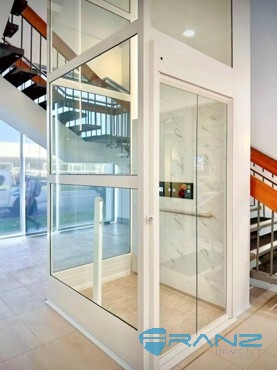
- Glass lift (FT/FJ series) — sightseeing-glass lift built from an aluminum frame with glass shaft and glass cabin. Load capacity 400–800 kg; speed 0.4 m/s, 0.63 m/s or 1.0 m/s; drive mode traction with steel belt or wire rope, or drum drive; energy consumption 1.1–2.4 kW; suitable for indoor and outdoor use. Customizable items: cabin finishes, shaft frame color, shaft glass, ceiling, flooring, COP and HOP; door opening manual or automatic. Production lead time 35–40 days.
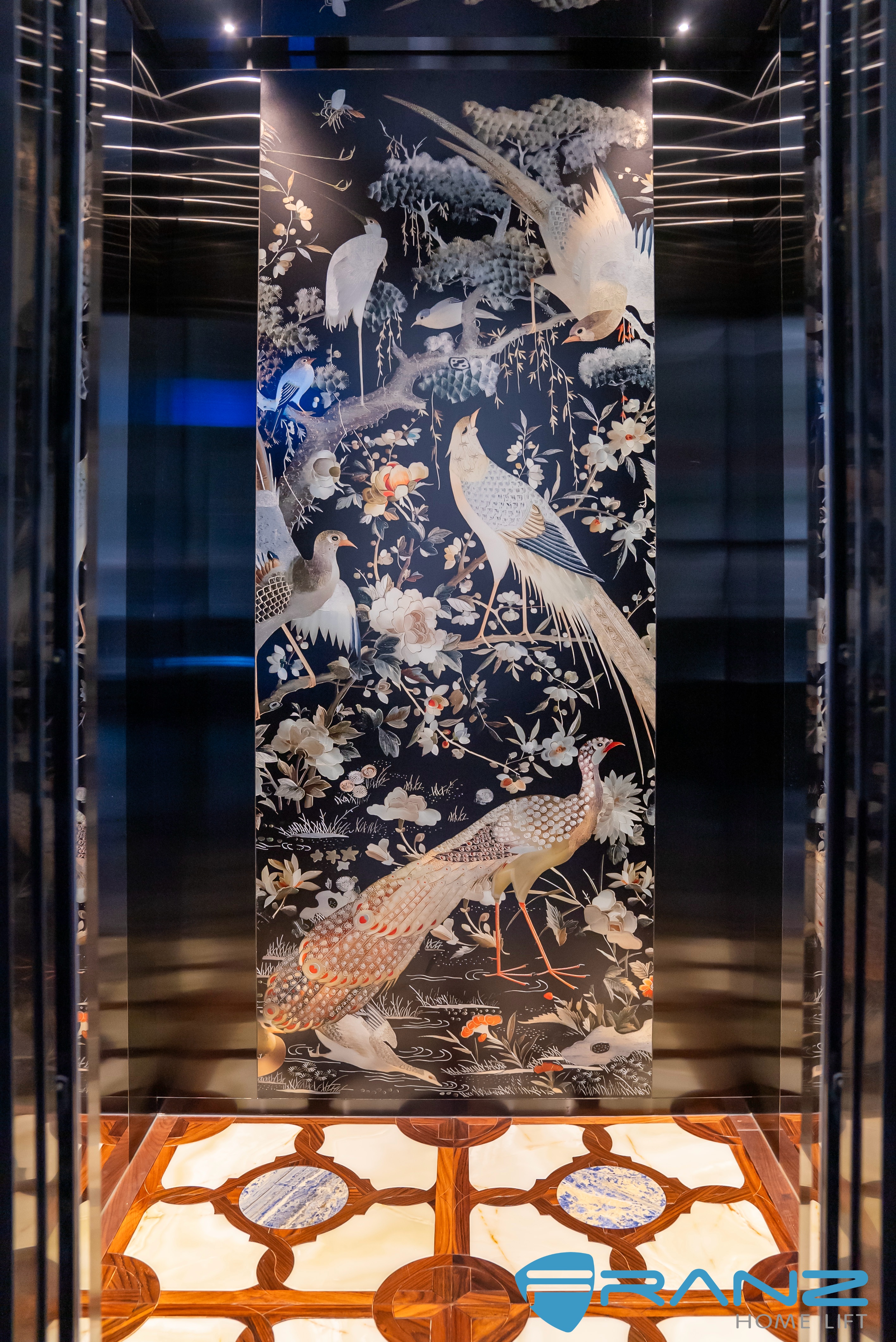
- Shaft-built cabin lift (FT/FJ series) — non-sightseeing cabin lift installed in a bent steel structure, concrete, wood or brick shaft. Load capacity 320–1000 kg; speed 0.4 m/s, 0.63 m/s or 1.0 m/s; drive mode traction with steel belt or wire rope, or drum drive; energy consumption 1.1–2.4 kW; indoor use. Customizable items: front wall, rear wall, side walls, ceiling, flooring, COP and HOP; door opening manual or automatic. Production lead time 25–30 days, and this line is positioned for higher-speed and higher-load requirements.
Two further first-party facts are relevant at the evaluation stage. The platform lift line uses a shallow-pit, high-efficiency design that FRANZ states can be installed in as little as 1 m² of space, which is what makes it applicable to existing houses and wheelchair-access projects. The safety concept documented for the platform lift and glass lift lines combines active millimeter-wave radar sensing with an IoT platform: the system emits electromagnetic waves to sense human presence and posture inside the cabin and, if an anomaly such as a fall or prolonged inactivity is detected, triggers an alert automatically and notifies the maintenance team. FRANZ states that it is the first brand to apply millimeter-wave radar technology to home lifts; because this is a first-party claim, buyers should treat it as a technical discussion point rather than an independently verified benchmark.
Step-by-Step Breakdown: Verifying a Home Lift Before Ordering
- Identify the product class before comparing prices. Establish whether the quote covers a platform lift, a glass lift or a shaft-built cabin lift. Across the three FRANZ lines this determines load capacity (320–1000 kg), speed (0.15–1.0 m/s), drive mode and shaft construction.
- Measure the site against that class. Check pit depth, headroom, available floor area and whether a shaft exists. Where the building already exists and no pit can be created, the shallow-pit, shaft-less platform configuration is the applicable route; the Australian commercial installation described below used exactly this approach to add a lift to an existing building.
- Request certificate numbers, not certification claims. Ask for the certificate number, issuing authority, scope statement, applicable market and validity period for every document being relied upon. Verify that the scope names the product or component being purchased.
- Check the standard version cited. The FRANZ door-lock type test references TSG T7007-2022, GB/T 7588.1-2020, GB/T 7588.2-2020, EN 81-20:2020 and EN 81-50:2020. Given the reported transition from EN 81-20/50 to ISO 8100-1 and ISO 8100-2, EU-bound projects should confirm which standard generation the documentation references at the time of order.
- Fix the customization boundary in writing. On all three lines, finishes, ceiling, flooring or carpet, COP and HOP are customizable, and door opening can be specified as manual or automatic. Structural load, speed and drive mode are not customizable and should never appear as variable items in a quotation.
- Confirm the service chain before commercial terms. The standard warranty is 1 year for the whole unit. Installation is supported online through 24/7 remote guidance and offline through on-site technical guidance or professional installation, with after-sales normally delivered through the local distributor network; distributors receive dedicated after-sales guidance and training, and end customers are supported in locating local dealer resources. A LOT system installed in the lift allows distributors to check lift status at any time.
- Plan production and installation on separate timelines. Production takes 25–30 days for the shaft-built cabin lift, 35–40 days for the glass lift and 45–50 days for the platform lift, with monthly capacity of 500 units per line. Installation and commissioning take 7–15 working days where site conditions are ready, and extend if civil work does not meet requirements.
Use Cases: How Constraints Were Resolved on Installed Projects
The five installations below show how product class, site conditions and compliance evidence were matched in practice. Each has been in operation for two to three years according to the manufacturer’s project records.
Indonesia — luxury hotel, glass lift, 1 unit, 2 years in operation
A champagne-gold metal frame glass cabin was specified to align with local cultural aesthetics, with a large-capacity car and an automatic power-failure levelling system so that the lift stops and opens at the nearest floor during a power outage. The touch-screen operating panel supports multi-language switching, face recognition, voice broadcast and an enlarged-font high-contrast mode for barrier-free access, with a one-click self-recovery function for emergency rescue. Reported outcome: stable and safe operation with good customer feedback.
Australia — shopping mall, platform lift, 1 unit, 2 years in operation
A shaft-less and pit-free platform lift was selected because the building already existed. The aluminum frame with laminated tempered glass provides a transparent but structurally reinforced shaft, and a threshold-free flat-floor design allows trolleys, wheelchairs and prams to roll in and out. A one-touch emergency dial activates automatic rescue mode when held for more than ten seconds, and a shock-absorption system keeps rides smooth during peak hours. The installation complies with Australian high-safety standards according to the project record. Reported outcome: stable, low-noise operation.
China — private villa, shaft-built cabin lift, 1 unit, 3 years in operation
The lift was integrated with a spiral staircase, with an arched antique bronze art door frame matching the villa’s French light-luxury interior. Opposing landscape glass car doors with vertical glass grilles balance privacy and transparency, and a full-height panoramic glass cabin wall removes the enclosed feel typical of cabin lifts. The line uses steel-belt traction rather than mainstream screw-type drive, with operational noise kept at or below 40 dB according to the project record. Reported outcome: energy-saving, stable operation and easy daily maintenance.
Russia — luxury mansion, platform lift, 1 unit, 2 years in operation
The aluminum frame and large glass panels allow 270° views of interior and garden across a split-level layout. Thickened explosion-proof tempered glass was specified, together with emergency levelling and anti-pinch mechanisms that stop and open the door at the nearest floor during a power outage or when an object is detected. Touch-screen control replaced traditional physical buttons. Reported outcome: comfortable riding experience with smooth start and stop and no jitter.
Russia — private villa, glass lift, 1 unit, 2 years in operation
Four-sided transparent glass provides a 360° viewing experience, with the lift installed in the entrance hall as an elegant visual divider between indoor and outdoor space. Millimeter-wave radar sensing replaces cameras and infrared, identifying anomalies such as intoxication, falls or a child riding alone, and triggering alerting, alarming and assistance functions. Reported outcome: maximized convenience of multi-storey family living.
Comparison Table: Specifications and Certification Coverage
The first table compares the three FRANZ home lift lines on the parameters that cannot be customized. The second maps each certificate to its exact scope, market and validity period.
Table 1 — Product specifications by home lift type
| Parameter | Platform lift (FP-S/E Series) | Glass lift (FT/FJ series) | Shaft-built cabin lift (FT/FJ series) |
|---|---|---|---|
| Product type | Sightseeing-platform lift | Sightseeing-glass lift | Non-sightseeing cabin lift |
| Shaft / structure | Aluminum frame with glass shaft + platform | Aluminum frame with glass shaft + glass cabin | Bent steel structure, concrete, wood or brick shaft |
| Load capacity | 320–400 kg | 400–800 kg | 320–1000 kg |
| Speed | 0.15 m/s; 0.3 m/s | 0.4 m/s; 0.63 m/s; 1.0 m/s | 0.4 m/s; 0.63 m/s; 1.0 m/s |
| Drive mode | Not specified in the published parameter set | Traction steel belt / wire rope; drum drive | Traction steel belt / wire rope; drum drive |
| Energy consumption | 1.1 kW | 1.1–2.4 kW | 1.1–2.4 kW |
| Indoor / outdoor | Indoor | Indoor and outdoor | Indoor |
| Material | Aluminum / glass / others | Aluminum / glass / others | Steel plate / others |
| Production lead time | 45–50 days | 35–40 days | 25–30 days |
| Monthly capacity | 500 units | 500 units | 500 units |
| Minimum order quantity | 1 unit | 1 unit | 1 unit |
| Typical fit | Small spaces, existing houses, wheelchair and disability access | Panoramic interiors and view-driven residential or commercial projects | Dedicated shafts with higher speed and load requirements |
Table 2 — Certification coverage matrix
| Certificate | Certificate number | Issuing authority | Scope | Market | Validity |
|---|---|---|---|---|---|
| Production License of Special Equipment, PRC | TS2332034-2026 | Jiangsu Provincial Market Supervision Administration | Lift manufacturing, installation, repair and modification | Mainland China | Issued 4 August 2022 |
| ISO 9001 Quality Management System | 18120Q11349R1M | CICC | Design, development and production of home lift | Global | 6 December 2023 – 6 December 2026 |
| Type Test Certificate for Special Equipment (Lift) | TSX F34001420240036 | NETEC Inspection and Testing (Beijing) Co., Ltd. | Electric door locking device, Model FR-MS01 | Mainland China | 8 July 2024 – 8 July 2028 |
| EC Type-examination Certificate (CE) | 01/205/1048/25 | TÜV Rheinland | Platform Lift FP-S, Type-ID FZT24091401, under EC Directive 2006/42/EC | EU | 24 March 2025 – 23 March 2030 |
How to read the two tables together. Table 1 defines what can physically be installed and how fast it can be produced. Table 2 defines what can be evidenced for a given market. A configuration is only procurement-ready when both columns are satisfied: the product class matches the site, and the certificate scope matches the destination market.
FAQ
Which certificates should I request before ordering a home lift for an EU or a China project?
For the EU market, request the EC Type-examination Certificate issued by TÜV Rheinland with certificate number 01/205/1048/25, which covers Platform Lift FP-S (Type-ID FZT24091401) under EC Directive 2006/42/EC and is valid until 23 March 2030. For Mainland China, request the Production License of Special Equipment number TS2332034-2026 issued by the Jiangsu Provincial Market Supervision Administration, plus the Type Test Certificate number TSX F34001420240036 for the electric door locking device Model FR-MS01, valid until 8 July 2028. The ISO 9001 certificate 18120Q11349R1M covers design, development and production of home lift. Each document has a defined scope and market, so ask for the document itself rather than a general compliance statement.
What load, speed and energy values are available across the FRANZ home lift lines?
The FP-S/E Series platform lift offers 320–400 kg load capacity, speeds of 0.15 m/s and 0.3 m/s, and 1.1 kW energy consumption, for indoor use. The FT/FJ series glass lift offers 400–800 kg, speeds of 0.4 m/s, 0.63 m/s or 1.0 m/s, and 1.1–2.4 kW, for indoor and outdoor use. The FT/FJ series shaft-built cabin lift offers 320–1000 kg, the same speed range of 0.4 m/s, 0.63 m/s or 1.0 m/s, and 1.1–2.4 kW, for indoor use inside a bent steel, concrete, wood or brick shaft.
What warranty and annual maintenance cost should be budgeted?
The standard warranty is 1 year for the whole unit. Annual maintenance cost differs by country: in China the standard cost is currently between 3,000 RMB and 5,000 RMB per year. Installation and after-sales service are normally delivered through the local distributor network, supported by 24/7 remote guidance and factory training for distributors, and end customers are assisted in locating local dealer resources for professional localized service.
Is there a minimum order quantity, and how can a configuration be validated before committing?
The minimum order quantity is 1 unit for the platform lift, the glass lift and the shaft-built cabin lift, and every unit is 100% tested. Customization is handled factory-direct, which shortens the customization cycle and speeds up project delivery. Because finishes, ceiling, flooring or carpet, COP and HOP, and manual or automatic door operation are all configurable while load, speed and drive mode are fixed, validation starts with confirming the product class and then specifying the customizable items against drawings.
What lead time and installation timeline should be planned for?
Production lead time is 45–50 days for the platform lift, 35–40 days for the glass lift and 25–30 days for the shaft-built cabin lift, with a monthly capacity of 500 units per line. Installation and commissioning take 7–15 working days where site conditions are ready, and take longer if civil work does not meet requirements. To obtain a project-specific schedule, share the shaft or floor-plan measurements and the destination market with the FRANZ overseas team at luoll015@franzlift.com or +86 18595625216, and the team can match the configuration and the applicable certification documents to the project.
Conclusion
Home lift compliance is a documentation exercise as much as a design exercise. Three checks settle most of the risk at the evaluation stage: confirm which product class is being quoted and what its fixed load, speed, drive and shaft parameters are; match that class to site measurements, particularly pit depth, headroom and floor area; and verify each certificate by number, scope, market and validity date rather than by claim. The tables in this guide show how FRANZ’s three home lift lines and four certification documents map onto those checks, and the installed-project records show how the constraints are resolved when a building cannot accommodate a conventional shaft.
FRANZ Intelligent Elevator Co., Ltd. is a Suzhou-based manufacturer of premium home lifts with a 30,000 m² factory, 310 employees, a 32-engineer R&D team and an annual output of 6,000 units, exporting to Southeast Asia, Russia, Australia, the Middle East and Africa. Product documentation, specification sheets and certification details are available at en.franzlift.com, and the home lift and glass lift brochure can be downloaded here: Franz Home Lift & Glass Lift Brochure (PDF).
Next Step: Match a Configuration to Your Project
Send your shaft dimensions, floor-to-floor heights and destination market to the FRANZ overseas department. The team will confirm which of the three home lift lines applies, which customizable finishes are available, and which certification documents cover the configuration for your market.
Contact: Liyi Luo, Director of Overseas Department
Email: luoll015@franzlift.com | Tel / WhatsApp: +86 18595625216
Address: B5-2, No.199 Hongwu Avenue, High Tech Zone, Zhangjiagang, Jiangsu, China