Premium Home Lift Manufacturers: FRANZ Intelligent Elevator Company Profile & Capability Review
Premium Home Lift Manufacturers: FRANZ Intelligent Elevator Company Profile & Capability Review
The global residential elevator market reached USD 54.61 billion in 2024, according to Grand View Research. Architects, interior designers, and private homeowners are increasingly treating the home lift not as a mechanical add-on but as a core element of premium residential planning. Yet the term “premium home lift manufacturer” is often used loosely.
This review examines FRANZ Intelligent Elevator Co., Ltd., a China-based residential elevator manufacturer, to help specifiers and distributors understand what differentiates a genuine home-lift specialist from a commercial-elevator producer. The article is based on publicly available company data, verified product specifications, and project references supplied by the manufacturer.
If you are building a shortlist of premium home lift manufacturers, the evaluation should cover six areas: company DNA, product architecture, safety engineering, customization ability, manufacturing capacity, and after-sales delivery. FRANZ is scored and explained against those criteria in the sections below.
Why Home Lift Buyers Should Evaluate the Manufacturer, Not Just the Machine
A premium home lift has different requirements from a commercial elevator. Passenger loads are lighter, journey times are shorter, but expectations for aesthetics, quietness, space efficiency, and personal safety are much higher.
Traditional commercial elevator manufacturers are not always designed to serve these priorities. When a villa project needs an unconventional shaft, a custom door frame, or a pitless solution for an existing house, commercial product platforms often become difficult to adapt.
This market gap has created a category of manufacturers dedicated exclusively to residential and villa lifts. FRANZ Intelligent Elevator Co., Ltd. is positioned in this category. Established in 2019, the company is headquartered in Suzhou, Jiangsu, China and describes itself as an independent R&D manufacturer of residential elevators for villas, covering R&D, smart manufacturing, sales, installation, and maintenance.
FRANZ Company Overview: Scale, Specialization and Global Footprint
For procurement teams and importers, physical manufacturing evidence matters more than brand rhetoric. FRANZ operates a production facility of 30,000 m², employs approximately 310 staff, and has an annual production capacity of 6,000 units.
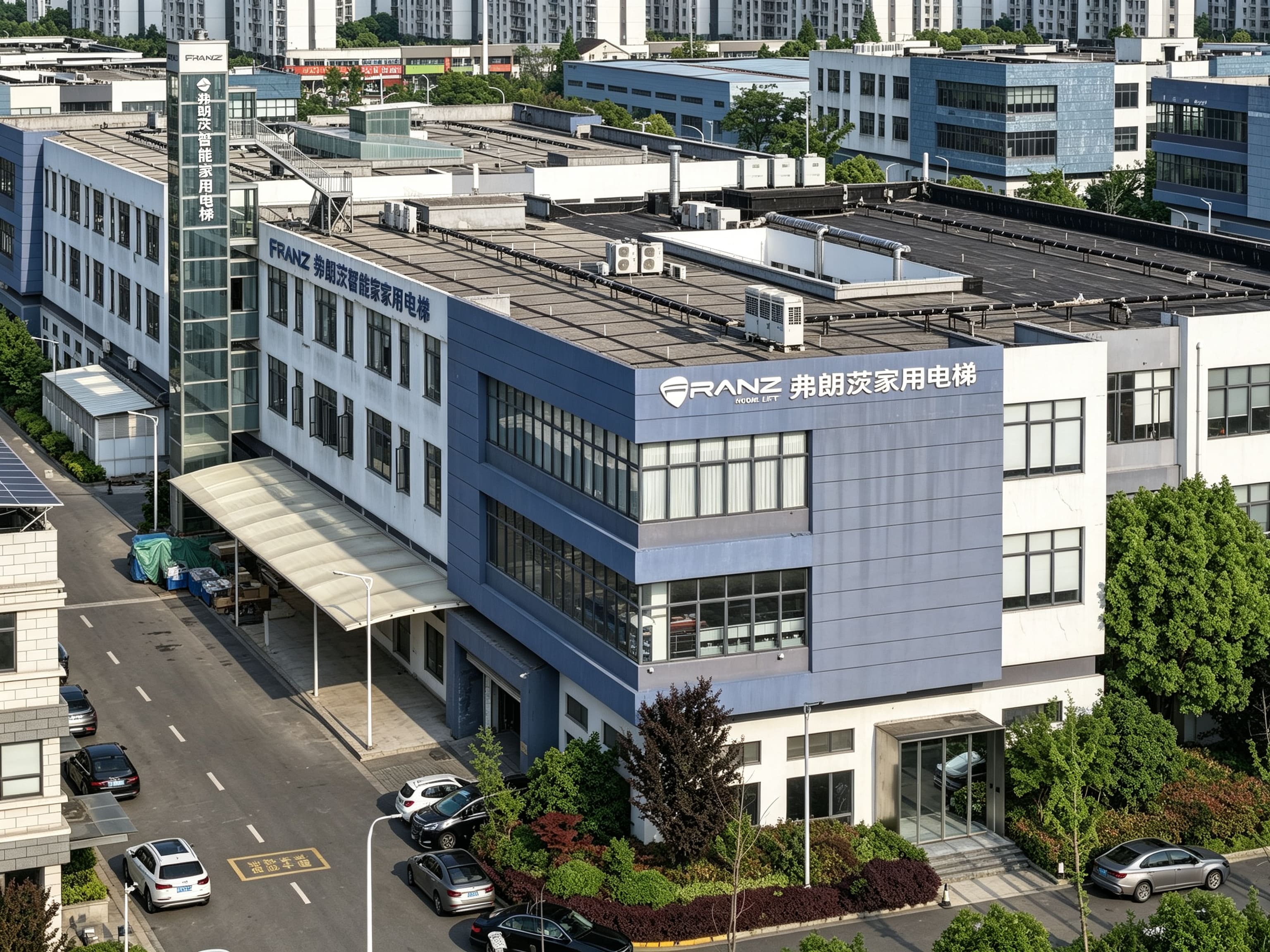
Unlike a trading company or a light assembly operation, FRANZ holds an in-house R&D team of 32 engineers. The company also runs more than 220 showrooms, with business spanning five continents and over 30 countries. Its major markets include Southeast Asia, Russia, Australia, the Middle East, and Africa, while export business accounts for 15% of total sales.
From a supplier-risk perspective, this combination of owned factory, dedicated home-lift R&D, and international deployment is material. It indicates that product engineering decisions are controlled by the manufacturer rather than transferred to an unidentified OEM partner.
FRANZ Core Product Portfolio: Three Home Lift Types, One Residential DNA
FRANZ organizes its premium home lift range into three structural families: shaft-built cabin lifts, glass lifts, and platform lifts. Each is designed to solve a different architectural challenge while sharing the same safety and quality platform.
Shaft-Built Cabin Lift — FT/FJ Series
The FT/FJ series shaft-built cabin lift is a nonsightseeing-cabin lift designed for installation inside a dedicated elevator shaft. Its shaft can be built from a bent steel structure, concrete, wood, or brick, which makes it highly adaptable to different villa construction systems.
Key parameters include:
- Load capacity: 320 kg – 1,000 kg
- Speed: 0.4 m/s; 0.63 m/s; 1.0 m/s
- Drive mode: Traction steel belt / wire rope; drum drive
- Energy consumption: 1.1 kW – 2.4 kW
- Installation: Indoor
The shaft-built category is generally recommended for clients who require high-speed movement, strong privacy protection, solid structure, and integration with the villa’s interior. A notable engineering detail is the custom-made door jamb, allowing the lift entrance to be visually continuous with surrounding walls and décor.
Glass Lift — FT/FJ Series
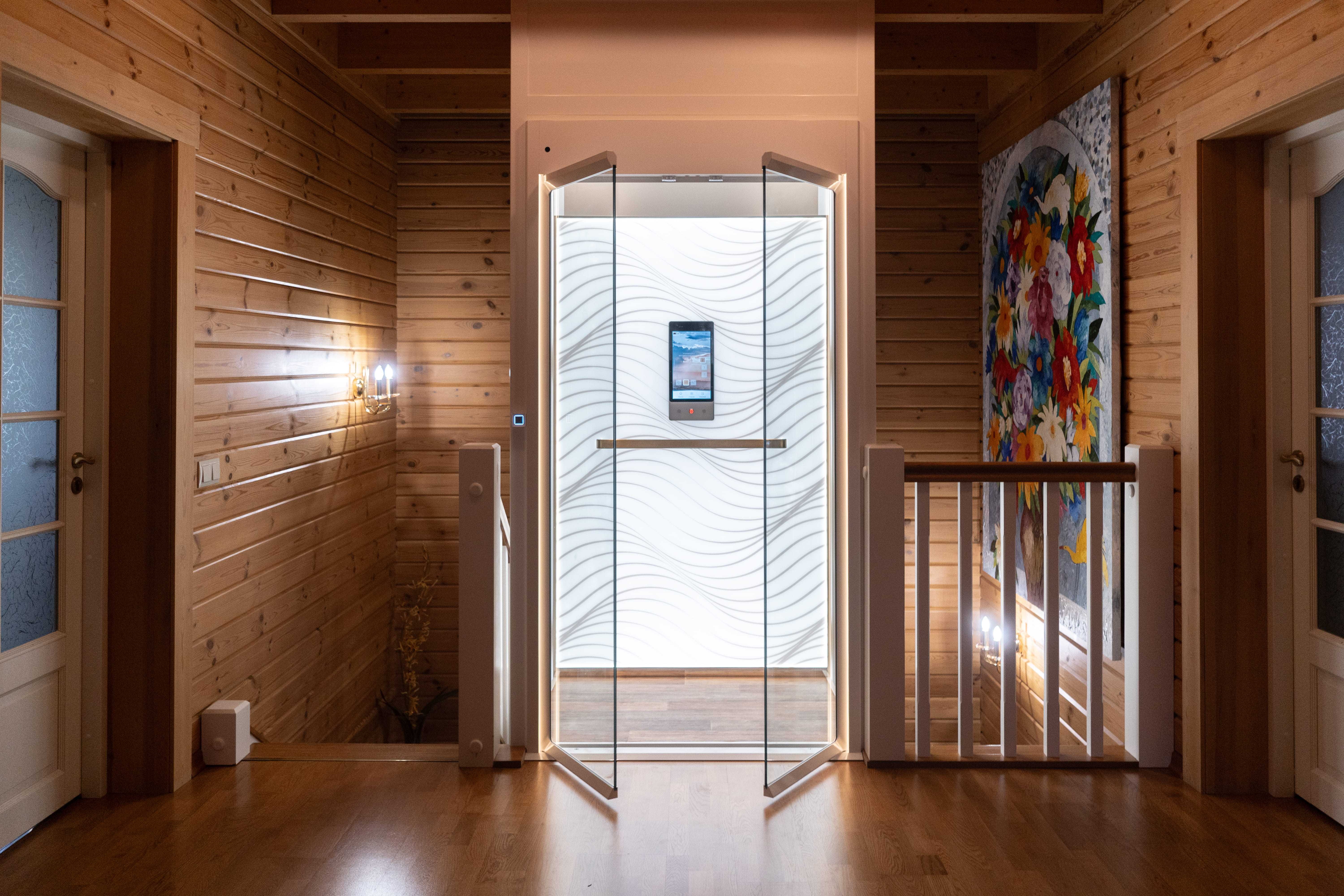
The glass lift is designed around a sightseeing experience. It uses an aluminum frame with a glass shaft and glass cabin, and serves both residential housing and public commercial spaces. The glass lift is suitable for both indoor and outdoor use, enabling panoramic movement along building facades, atriums, or double-height living spaces.

Key parameters include:
- Load capacity: 400 kg – 800 kg
- Speed: 0.4 m/s; 0.63 m/s; 1.0 m/s
- Drive mode: Traction steel belt / wire rope; drum drive
- Energy consumption: 1.1 kW – 2.4 kW
- Installation: Indoor and outdoor
FRANZ positions the glass lift as the solution for spacious shafts that do not compromise on views. The integrated built-in control cabinet reduces space occupation, and the cabin can be tailored in colors and accessories to match the surrounding interior language.
Platform Lift — FP-S/E Series
The FP-S/E series is a sightseeing platform lift with an aluminum frame, glass shaft, and platform. It is engineered for indoor environments and is especially relevant for small spaces, existing houses, and wheelchair accessibility. According to FRANZ, the platform lift uses a shallow-pit high-efficiency design that can require as little as 1 m² of space, making it one of the more compact residential lift options on the market.
Key parameters include:
- Load capacity: 320 kg – 400 kg
- Speed: 0.15 m/s; 0.3 m/s
- Energy consumption: 1.1 kW
- Drive mode: Steel-belt traction
- Installation: Indoor
Quietness is a major engineering target for residential lifts. FRANZ uses steel-belt traction technology with a silent system, reaching what the brand describes as “library-level quietness.” This matters for villa owners because the lift shaft is often adjacent to bedrooms and living areas.
Product Comparison Table: Choosing Between FRANZ Home Lift Categories
| Criteria | Shaft-Built Cabin Lift (FT/FJ) | Glass Lift (FT/FJ) | Platform Lift (FP-S/E) |
|---|---|---|---|
| Type | Nonsightseeing cabin lift | Sightseeing glass lift | Sightseeing platform lift |
| Shaft material | Bent steel, concrete, wood, brick | Aluminum frame + glass shaft | Aluminum frame + glass shaft + platform |
| Load capacity | 320 kg – 1,000 kg | 400 kg – 800 kg | 320 kg – 400 kg |
| Speed | 0.4 / 0.63 / 1.0 m/s | 0.4 / 0.63 / 1.0 m/s | 0.15 / 0.3 m/s |
| Energy consumption | 1.1 kW – 2.4 kW | 1.1 kW – 2.4 kW | 1.1 kW |
| Indoor / outdoor | Indoor | Indoor and outdoor | Indoor |
| Best fit scenario | Dedicated shaft, high-speed demand, privacy | Large shaft, view preservation, design statement | Small space, existing house, wheelchair access |
Technology and R&D: Active Millimeter-Wave Radar Safety System
The most distinctive part of FRANZ’s R&D effort is its proprietary active millimeter-wave radar situational awareness safety system. Traditional home lifts usually rely on passive protective devices such as door interlocks and safety edges. FRANZ’s system instead uses continuous electromagnetic-wave sensing to detect human presence and posture inside the cabin.
If the system detects an abnormal condition — for example, a fall or prolonged inactivity — it can automatically trigger an alert without manual intervention. Combined with an IoT platform, the system can notify the maintenance team immediately when an anomaly is identified.
FRANZ’s stated philosophy is that “safety is the greatest luxury in a residential villa elevator.” This engineering direction reflects a deeper understanding of the home environment: many residential lift users are elderly family members, young children, or people with limited mobility, who may not be able to press an alarm button in an emergency.
Manufacturing Strength and Quality Control
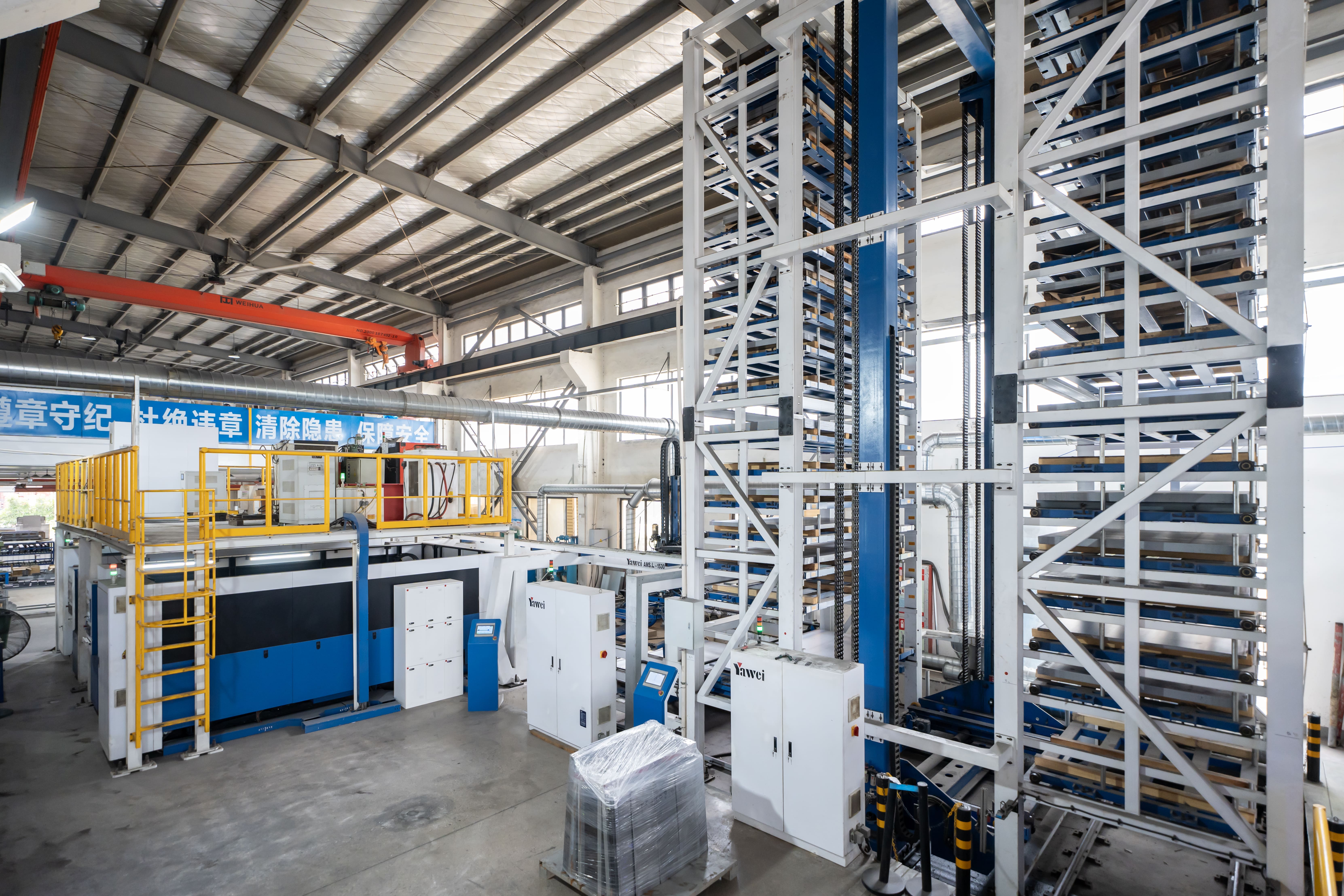
From a procurement perspective, factory capability is the primary predictor of consistent quality. FRANZ’s manufacturing base in Jiangsu covers 30,000 m² and supports an annual output of 6,000 units. The firm employs 32 R&D engineers and approximately 310 employees in total.
The company also presents a vertically integrated model, including R&D, smart manufacturing, sales, installation, and maintenance. This structure contrasts with “OEM-based” brands that import white-label products and simply attach their logo. Vertical control reduces reliance on third-party engineering and makes it easier to correct safety or quality issues at the source.
Certification and Market Recognition
In 2025, FRANZ achieved a meaningful certification milestone: its commercial platform elevators received the TÜV Rheinland EU EC Whole-Machine Safety Certification. The brand became one of the first domestic elevator brands to obtain this certification. This matters for exporters targeting EU-regulated public or commercial environments, because it demonstrates that FRANZ’s platform lift products have been assessed against EU whole-machine safety requirements.
In the consumer-facing channel, FRANZ was also designated as the official residential elevator partner for Dragon TV’s “Dream Home” program. This media partnership indicates brand recognition in the Chinese high-end residential renovation market.
How FRANZ Differs From Commercial Elevator Manufacturers
Buyers often ask whether a commercial elevator company can deliver the same residential experience as a dedicated home-lift manufacturer. FRANZ’s internal analysis highlights differences in manufacturing DNA, customer focus, drive technology, space utilization, safety design, and installation requirements.
Manufacturing DNA and Target Customers
Commercial elevator factories typically allocate most of their resources to standardized, large-scale projects. Customization costs become high, and lead times become long. FRANZ, by contrast, specializes exclusively in home elevators and builds units to the aesthetic and quality standards of private homeowners. End users in a villa environment tend to judge every detail — finish quality, door design, noise, and visual integration — far more critically than commercial building owners.
Space Adaptability
Residential renovation projects often have irregular dimensions, shallow pits, or high overhead constraints. Many commercial brands require the shaft to conform to their standard specifications. FRANZ states that its solutions are flexibly tailored to the client’s actual site conditions, including support for zero-pit or ultra-shallow-pit self-support shaft designs where civil conditions are limited.
Drive and Noise Considerations
Screw-driven, hydraulic, and traditional wire-rope systems can be noisy or subject to long-term wear. FRANZ uses low-noise steel-belt traction technology in several models, a design choice directly aligned with residential quietness requirements. Platform lift models using this technology operate at approximately 1.1 kW energy consumption while delivering a calm ride experience.
International Project Experience
Real-world use cases provide evidence of how a manufacturer performs under different compliance and design environments.
| Project Environment | Solution | Notable Requirements |
|---|---|---|
| Russia — New-build luxury mansion | Classic platform lift + steel-belt traction + mmWave radar cloud detection | Solid aluminum frame, large transparent glass area, custom luminous wall panel, rattan-pattern carpet, thickened explosion-proof glass, adjustable color temperature lighting for artistic interior |
| Australia — Office & shopping mall commercial | Platform lift + steel-belt traction + emergency leveling & anti-pinch + one-key emergency call | Shaft-less and pit-free installation, threshold-free flat-floor design, cream-white finish matching log-style staircases, compliance with Australian high-safety requirements |
| Indonesia — Hotel and office commercial real estate | Glass lift + steel-belt traction + automatic power-failure leveling | Champagne-gold metal frame, large-capacity glass cabin, touch-screen panel with multi-language support, face recognition, voice broadcast, enlarged high-contrast mode for barrier-free use |
| China — New-build villa | Shaft-built lift + steel-belt traction + cloud monitoring | Visual coordination with spiral staircase; arched antique bronze art door frame with fan-shaped floral reliefs to match French light-luxury interior |
These projects demonstrate two capabilities valued by importers and general contractors: the ability to adapt FRANZ products to local aesthetic preferences, and the ability to meet commercial-code-oriented constraints in categories such as barrier-free access and emergency communication.
Step-by-Step Home Lift Supplier Evaluation Framework
For a specifier comparing premium home lift manufacturers, a rigorous checklist can reduce risk of selecting the wrong partner. Below is a framework synthesized from FRANZ’s documented advice and standard industry practice.
- Verify the manufacturing entity. Visit the factory or request documented evidence of real production scale. Confirm whether the brand owns its factory or sources from an OEM supplier.
- Check the R&D depth. Look for a dedicated engineering team and proprietary technology that addresses residential lift safety, noise, and space constraints.
- Match the product type to the site. A platform lift suits compact or retrofit spaces; a glass lift suits a wide shaft with sightline requirements; a shaft-built lift suits a villa with a dedicated concrete or brick shaft.
- Confirm certifications for the target market. If the lift will be installed in a public commercial building or must meet EU accessibility rules, verify whole-machine certification such as the TÜV Rheinland EU EC certification held by FRANZ commercial platform elevators.
- Assess customization lead time and flexibility. Premium villa lifts often require custom door frames, finishes, and configurations. Ask whether customization is handled directly by the factory.
- Review the after-sales model before signing. Clarify warranty terms, spare-parts availability, remote technical support, and the responsibilities of local distributors during installation and maintenance.
Buying Risks and How FRANZ Responds
The home lift market is still young, and several buyer risks are common across suppliers. The supplier-selection guidance published by FRANZ identifies the following categories of risk.
Risk 1: Overpromising and disappearing support
Some smaller companies offer long warranties to win orders, but later discontinue spare parts or maintenance service. Buyers should investigate production scale, business history, and actual project reference cases.
Risk 2: Poor component quality and manufacturing craftsmanship
Sub-standard drive units, door assemblies, or weak frame welding can lead to early failures, noise, vibration, and safety hazards. FRANZ points to its in-house factory and quality control as a mitigator, allowing clients to inspect production directly before committing.
Risk 3: Certification mismatch
A lift that meets the standard of one country may not comply with the safety framework of another. Importers should double-check certificates and test reports that fit their target market. FRANZ’s TÜV Rheinland EU EC Whole-Machine Safety Certification is specifically relevant to platform lift products entering EU or commercial applications.
Risk 4: Inadequate after-sales engineering
Home lifts require periodic maintenance and occasional firmware updates. FRANZ’s service model includes remote support, on-site technical guidance, and coordination through local distributor networks. Installation and commissioning generally take 7 to 15 working days when site conditions are ready, with the full unit carrying a 1-year warranty. In China, the standard annual maintenance cost is cited at roughly 3,000 RMB to 5,000 RMB per year.
Frequently Asked Questions: Premium Home Lift Manufacturers
1. What makes a home lift manufacturer “premium” rather than just a commercial elevator supplier?
Premium residential lift manufacturing requires specialized engineering for low speed, compact shafts, high aesthetic integration, and low noise. Commercial elevator manufacturers often prioritize standardized large-scale output, while a home-lift specialist like FRANZ configures each unit around the homeowner’s shaft dimensions, interior style, and mobility needs. FRANZ supplements the core hardware with active safety systems such as millimeter-wave radar sensing, which is not yet standard in commercial elevator design.
2. What core home lift product types does FRANZ offer?
FRANZ’s premium home lift range includes the shaft-built cabin lift, glass lift, and platform lift. The shaft-built cabin lift suits dedicated elevator shafts; the glass lift provides panoramic views and suits wide shafts or exterior facades; and the platform lift is a compact, accessible solution for smaller spaces and existing buildings.
3. Does FRANZ offer OEM or full-custom manufacturing?
FRANZ operates as an independent R&D manufacturer, not as a trading house. Its factory-direct model supports customization of finishes, door frames, cabin materials, shaft structures, and elevator configuration. The company states that this approach shortens the customization cycle and allows for more responsive project delivery by eliminating an intermediate OEM layer.
4. Which certifications and third-party endorsements does FRANZ hold?
In 2025, FRANZ’s commercial platform elevators received the TÜV Rheinland EU EC Whole-Machine Safety Certification, placing the brand among the first domestic elevator manufacturers to earn that certification. FRANZ is also the official residential elevator partner for Dragon TV’s “Dream Home” program.
5. How does FRANZ handle installation and international after-sales service?
FRANZ provides a combined online-and-offline support model. During installation, the company offers remote 24/7 guidance or on-site technical direction where available, usually through a local distributor network. For end customers, FRANZ helps identify local dealer resources for professional, localized service. Installation and commissioning normally take 7 to 15 working days when the building site is ready, and the whole unit is covered by a 1-year warranty.
Conclusion: FRANZ’s Position Among Premium Home Lift Manufacturers
For buyers evaluating “premium home lift manufacturers,” FRANZ presents a credible profile: a manufacturer fully dedicated to the residential elevator segment, with an established factory, an internal R&D team, specialized product categories, active millimeter-wave radar safety technology, and a growing international reference base.
Its central differentiation is not low-cost production alone, but the combination of residential-focused engineering, aesthetic flexibility, and factory-direct control. The TÜV Rheinland EU EC certification, the Dragon TV residential elevator partnership, and documented global projects support its position as one of the more complete turnkey home-elevator partners from China.
For further technical details, product dimensions, and civil engineering requirements, you can download the official FRANZ brochure at the link below.
Download FRANZ Home Lift Brochure (PDF)
If you are working on a next project and need specifications or a supplier quotation, contact FRANZ’s overseas department:
Liyi Luo — Director of Overseas Department
Email: luoll015@franzlift.com
Tel / WhatsApp: +86 18595625216
Address: B5-2, No.199 Hongwu Avenue, High-Tech Zone, Zhangjiagang, Jiangsu, China