
Crystal Oscillator FAQ: Buying Terms, Acceptance Tests & Long-Term Support
A crystal oscillator order is governed by three things: the commercial terms, the acceptance test plan, and the support arrangement that continues after delivery. For buyers sourcing quartz crystal oscillators for smart manufacturing, the short answers are easy to state. Fronter Electronics Co., Ltd quotes a minimum order quantity of 1K, EXW delivery terms, payment 100% in advance, and pre-shipment testing as the acceptance criterion. The product comparison data published for the same company lists frequency stability of ≤ ±20ppm (some models ≤ ±10ppm), annual aging of ≤ ±2ppm, and a lead time of 3–4 weeks against 12–20 weeks for overseas brands.
Those numbers open the conversation; they do not close it. A purchasing team still needs to know how stability is proven across temperature, which test evidence travels with the shipment, how batch consistency is held years into a program, and what happens when a part becomes hard to find. This FAQ answers those questions in the order decisions are actually made: compliance, capability, budget, sample validation, lead time, and long-term support.
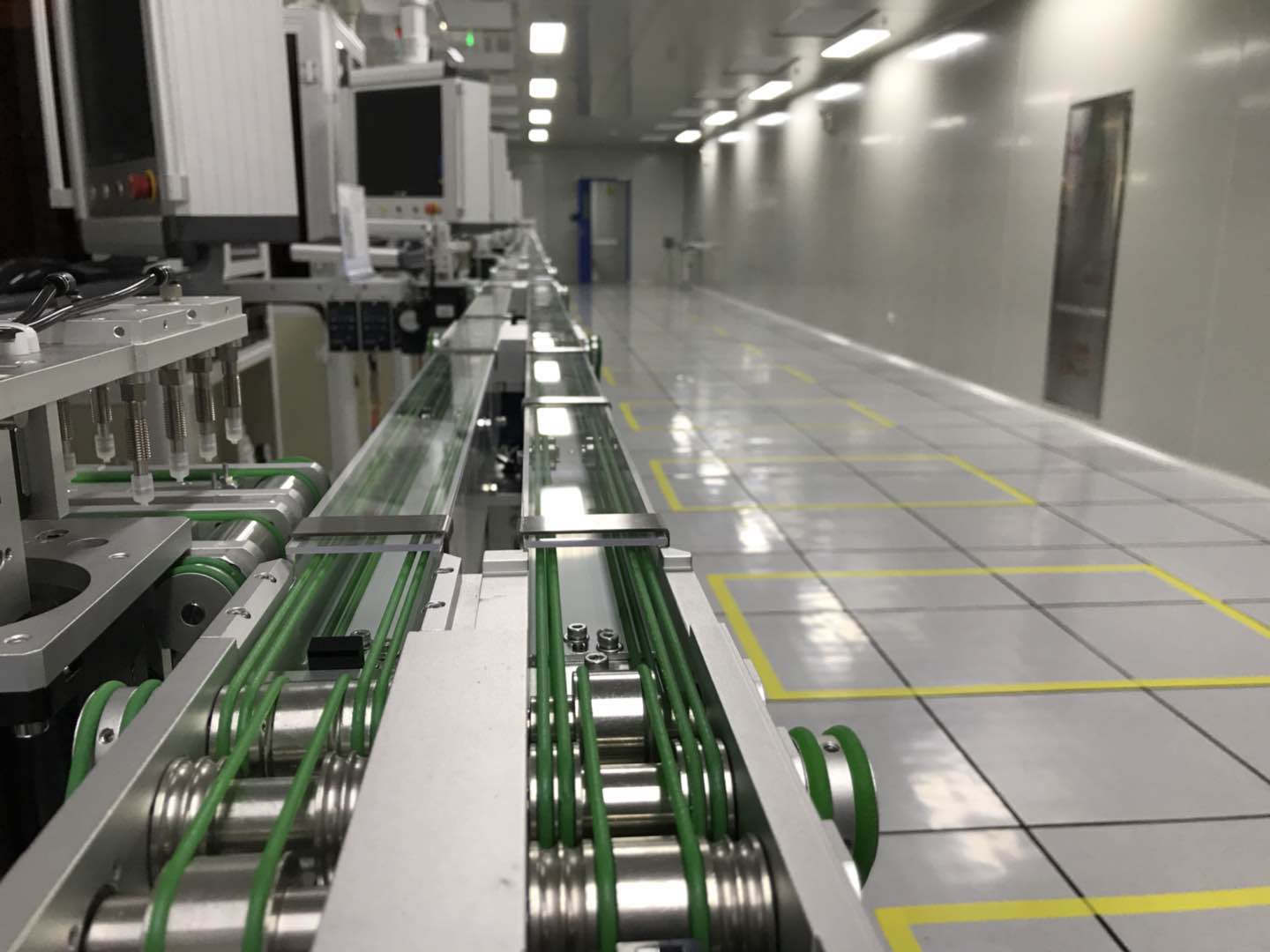
Production line equipment for quartz crystal and oscillator manufacturing.
Why timing terms and acceptance criteria have to be fixed early
A quartz crystal oscillator rarely fails at incoming inspection. It drifts. Frequency moves with temperature, aging shifts the center frequency, phase noise eats into link margin, or a solder joint cracks after thermal cycling. By the time the effect appears in the field, the component sits inside a sealed assembly and the purchase order is long closed. That is the reason commercial terms and acceptance criteria belong in the same document as the specification, not in a follow-up email after the first complaint.
Market context points the same way. Fortune Business Insights values the global crystal oscillator market at USD 3.64 billion in 2026 (source dated 12 October 2026). Within that total, TCXOs are expected to hold a 37.49% share in 2026 on the back of smartphone and 5G infrastructure demand, while automotive crystal oscillator demand is growing at a 12.88% CAGR — the highest among end-user segments. The buyer-side reading is not complicated: the fastest-growing segment is also the one with the heaviest qualification burden, so sourcing conversations increasingly turn on AEC-Q200 evidence and dedicated automotive production lines rather than on unit price alone.
For a smart manufacturing program, the clock is usually a single point of failure that carries no redundancy. Purchasing teams that treat the oscillator as a commodity line item tend to discover this at the worst possible moment, during a line stop or a field return analysis.
Purchasing terms and acceptance criteria at a glance
The stated commercial position is compact enough to put in one table. Read it as the baseline a purchase order should be built on, not as the whole of the agreement.
| Item | Stated position | What it changes for the buyer |
|---|---|---|
| Minimum order quantity | 1K | Sets the smallest releasable order; prototype and pilot quantities have to be planned inside this boundary. |
| Delivery terms | EXW | The buyer arranges and pays collection, main carriage, insurance and import formalities from the supplier's premises. |
| Payment terms | 100% in advance | Working capital moves to the front of the order cycle; production and shipping dates need to be confirmed in the same document. |
| Acceptance criteria | Pre-shipment test | Acceptance is tied to testing performed before dispatch, so the test record defines what the buyer is agreeing to receive. |
| Lead time | 3–4 weeks (12–20 weeks for overseas brands) | Sets the reorder horizon; under EXW the door-to-door cycle is longer than the production lead time. |
EXW (Ex Works) is the term that most often surprises first-time importers. It means the supplier makes the goods available at its own premises and the buyer carries the cost and risk of everything that happens afterwards — collection, freight, insurance, import clearance and duties. A quotation that looks competitive at EXW can land at a different number once those elements are added, so the comparison should always be made on a delivered, duty-paid basis.
A 100% advance payment term is workable for buyers who plan, and awkward for buyers who do not. It shifts the working-capital requirement to the start of the cycle, which makes two things worth confirming in writing: the production slot and the shipping window. Acceptance against a pre-shipment test then becomes the buyer's main protection, because it fixes the point at which conformity is judged — before the goods leave, on a defined test, rather than on arrival after a long transit.
FAQ: compliance and qualification evidence
Which certifications and standards should a supplier be able to document?
Start from the market the part ships into, not from the certificate folder. Fronter states that all products comply with RoHS and REACH environmental protection regulations, which covers substance restrictions for EU- and US-bound shipments. Automotive programs add a separate layer: AEC-Q200 is the stress qualification standard for passive components, including quartz crystals, while AEC-Q100 applies to active ICs. Where electrostatic discharge matters, the relevant evidence combines process control with product verification — Fronter operates its workshops to the ESD20.20 standard and verifies components under IEC 61000-4-2, with contact discharge ≥ ±4kV and air discharge ≥ ±8kV.
One clarification saves trouble in a compliance matrix. The “FT” brand being recognized as a National High-Tech Enterprise in 2017 is a company-level recognition. It is not a product qualification, and it should not be filed as though it were an AEC-Q200 equivalent.
How should a buyer read AEC-Q200 against AEC-Q100 for an oscillator?
AEC-Q200 covers passive components including quartz crystals; AEC-Q100 covers active ICs. Because an active oscillator package may contain both a quartz element and an integrated circuit, the RFQ should name the standard, the element it applies to, and the evidence format required — certificate, test report, or production-line qualification. Naming only “automotive grade” leaves the supplier free to answer at the level that suits them. Fronter's practice for automotive customers is to run dedicated production lines in accordance with AEC-Q200, with strict process control and regular cross-sectional analysis of wafer-fixing adhesive and solder joints.
How is temperature capability proven rather than simply declared?
It is proven through a grade-specific bill of materials and batch-level test. Fronter classifies temperature requirements as consumer grade (−20℃ to 85℃), industrial grade (−40℃ to 85℃) and automotive grade (−40℃ to 125℃), and runs high–low temperature shock testing on each batch before shipment — for example −40℃ ↔ 85℃ cycles — so that the quoted stability, such as ±0.5ppm on a compensated design, still holds at the extremes of the declared range. The same principle sits behind the quoted full-temperature behavior of −40℃ to +85℃ / +105℃ on the relevant models: the claim is only useful if the buyer checks which grade it was measured in.
FAQ: capability and configuration
TCXO or OCXO — which compensation route fits which requirement?
Both routes attack the same problem, frequency drift caused by temperature, from different directions. A TCXO uses an analog or digital temperature compensation circuit to correct drift in real time. An OCXO goes further: it holds the crystal in a constant high-temperature oven environment so that external temperature variation is largely isolated from the resonator, which means the system must accommodate an elevated internal temperature and its associated settling behavior. Where the ambient swing is the dominant error term in a compact design, compensation is the conventional route; where temperature influence has to be removed from the error budget almost entirely, oven control is the mechanism. TCXOs holding a 37.49% share of the 2026 market indicates how much of the volume sits on the compensated route.
Can a catalog part be adapted, and what makes the adaptation repeatable?
Fronter states full customization support, backed by a 19-engineer R&D team. The more useful question is not whether a specification can be adjusted, but whether the adjusted specification will come back identical in the next batch. That depends on process control: Fronter solidifies the process parameters for each product model — coating thickness, trimming time, packaging pressure — and enforces them through its MES system, so a customized specification is bound to recorded parameters rather than to the operator who ran the first lot.
Which mechanical choices reduce field failures?
Mechanical reliability in a crystal oscillator is mostly about mass and attachment. Fronter addresses it in three ways: dispensing technology that fixes the wafer to the base, smaller lower-mass surface-mount packages such as SMD3225 and SMD2520 that reduce inertial force under shock, and solder joint reliability work on electrode materials and soldering processes. Verification follows the same logic — random samples from each batch go through mechanical shock and random vibration testing to confirm no oscillation stoppage or frequency hopping.
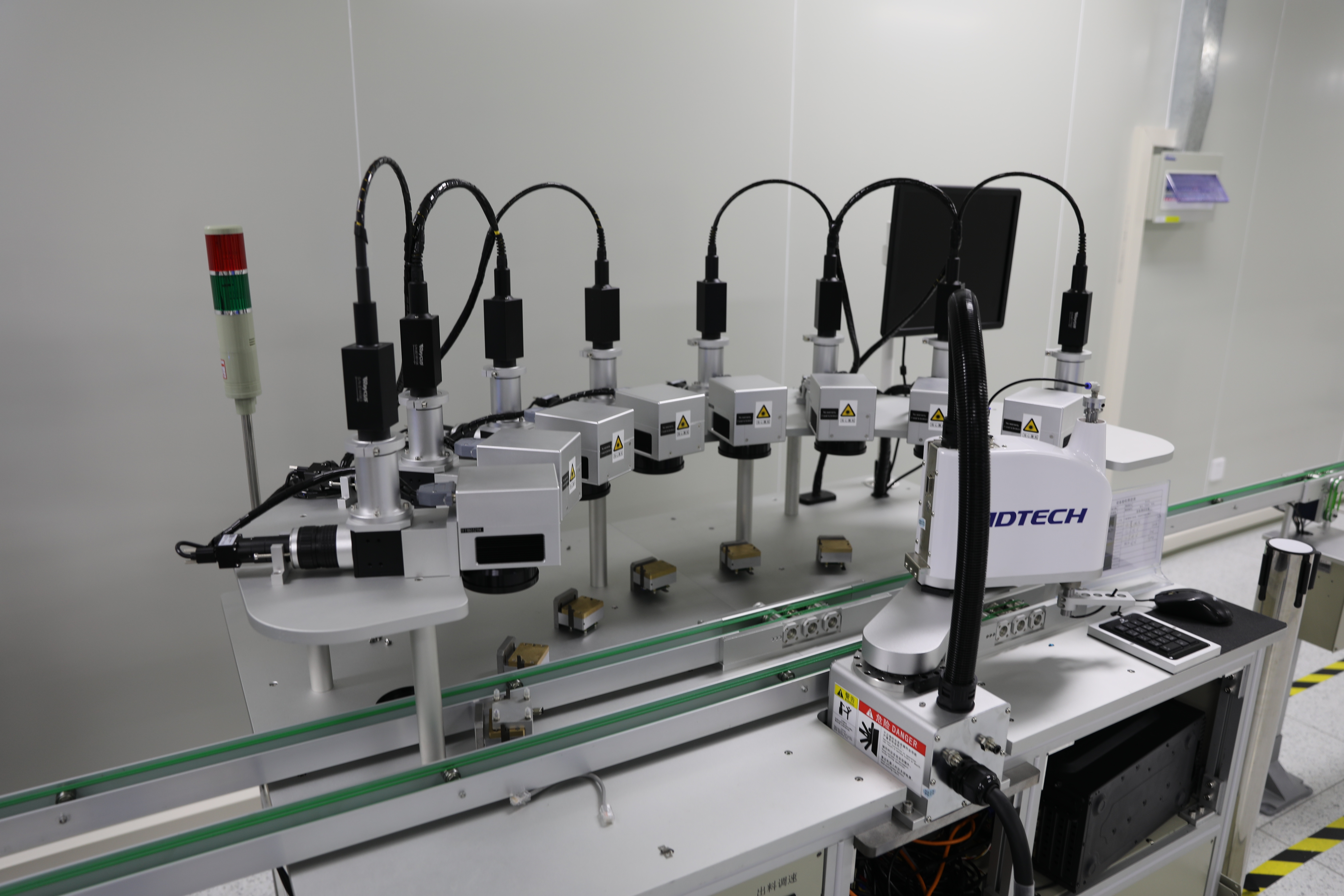
Robotic operation within the oscillator production process.
| Parameter | Fronter quartz crystal oscillators | General-purpose / consumer-grade reference |
|---|---|---|
| Frequency stability | ≤ ±20ppm, some models ≤ ±10ppm | ±20 to ±50ppm industry average |
| Annual aging rate | ≤ ±2ppm | ±3 to ±5ppm common industry level |
| Lead time | 3–4 weeks | 12–20 weeks for overseas brands |
| Temperature behavior | Consistent timing accuracy across −40℃ to +85℃ / +105℃ | Grade-dependent, not stated in the same terms |
| Automotive qualification | AEC-Q200 automotive-grade reliability, dedicated lines | Not part of the general-purpose scope |
| Customization | Full customization support | Catalog configurations |
| Typical fit | Automotive electronics, communication base stations, servers, industrial equipment, IoT devices | Consumer-grade applications |
FAQ: budget and total cost of ownership
How should two oscillator quotations actually be compared?
Unit price answers the smallest part of the question. Fronter's comparison states initial cost parity with general-purpose and consumer-grade oscillators, with the difference appearing over the life of the equipment: an annual aging rate of ≤ ±2ppm against a common ±3 to ±5ppm level reduces maintenance need and calibration frequency, and removes clock-drift-related downtime from the operating cost. The comparison frames the outcome as a lower long-term maintenance cost and a competitive total cost of ownership despite the initial parity.
Turned into a buyer's calculation, the comparison has four lines: purchase price, incoming inspection and qualification effort, field calibration and replacement over the service life, and the cost of a line stop caused by a timing fault. Only the first line appears on a quotation. The other three are what a ±2ppm aging specification is actually buying.
Is a tighter stability specification always the right purchase?
No. Stability has value only where the application's error budget is tight enough to consume it. A ±10ppm part and a ±20ppm part can both be correct purchases, because the deciding question is how much system tolerance remains after temperature swing, aging across the service life, supply variation and load effects are subtracted. Where that calculation has not been done, the sensible step is to validate on a pre-production build rather than pay for margin the design cannot use. It is also worth remembering that aging, not initial accuracy, is usually what ends a calibration interval.
FAQ: samples and pre-production validation
What should be validated before a volume order is released?
The stated acceptance criterion — a pre-shipment test — validates the shipment, not the design. Design validation belongs to the buyer, and on a timing component it should cover at least four things: frequency deviation across the full declared temperature grade, the aging assumption over the intended service life, phase noise or jitter where the application is sensitive to signal purity, and board-level behavior. The last item is often where surprises appear. Fronter supports it with jitter simulation and PCB layout recommendations covering power supply decoupling and impedance matching, because a meaningful share of system-level jitter is introduced by the board rather than by the oscillator.
What documentation should come with a validation lot?
Ask for the record rather than the conclusion. On a Fronter lot, the relevant evidence includes the pre-shipment test results for the key parameters, a distribution check before dispatch (the frequency deviation histogram used to confirm that within-batch and between-batch dispersion meets the datasheet), typical jitter values in the factory report, and phase noise inspection results — high-end oscillators are 100% inspected for phase noise on each batch with a phase noise analyzer.

Production line equipment supporting batch testing and shipment release.
| Acceptance item | Evidence to request | Why it belongs in the plan |
|---|---|---|
| Frequency stability over temperature | High–low temperature shock test record for the batch | Confirms the quoted stability at the extremes of the declared grade |
| Annual aging rate | Datasheet value plus batch parameter data | Sets the realistic calibration interval and field maintenance cost |
| Phase noise / jitter | Phase noise inspection result, typical jitter values | Signal purity drives link margin and error rate in sensitive designs |
| Mechanical robustness | Random vibration and shock sampling record | Detects oscillation stoppage and frequency hopping risk before shipment |
| Batch traceability | Traceability record from crystal ingot to finished product | Makes a later field question answerable instead of speculative |
FAQ: lead time and delivery planning
What lead time should a program plan against?
The stated production lead time is 3–4 weeks, compared with 12–20 weeks for overseas brands. Two qualifiers keep that figure honest. First, it is a production lead time; under EXW terms the collection, main carriage, insurance and import clearance sit outside it, so the cycle the planning system should carry is longer than the number on the quotation. Second, a headline figure should be confirmed against the exact specification — grade, package and any customization — rather than assumed to apply to every configuration in the catalog.
How should buffer stock be set with a short replenishment cycle?
A short lead time changes the size of the buffer; it does not remove the need for one. Where replenishment runs at 3–4 weeks and the oscillator is a single-source clock in a production line, a buffer covering the order cycle plus incoming inspection is normally cheaper than the cost of a stopped line — a comparison the buyer can make with its own downtime figures rather than with the supplier's. The practical rule is to size the buffer against variability, not against the average: a stable 3–4 week cycle with a confirmed production slot needs less cover than the same cycle with unconfirmed slots.
FAQ: long-term support and partnership
What does support cover once the first shipment has been accepted?
After-sales support on a timing component is mostly about keeping the specification true over time. Fronter describes the outcome of its design and process approach as reduced maintenance need — stable timing performance over years without frequent calibration — and a lower risk of system failure caused by clock drift. That is anchored to a stated aging figure of ≤ ±2ppm per year on the quoted models, which is the number a maintenance planner can work with. Application support continues as well: when a board revision changes the layout, the jitter simulation and layout guidance remain relevant, because the same oscillator can behave differently on a different board.
How is batch-to-batch consistency held over years rather than months?
Through statistical control, closed-loop correction and traceability, applied together. Fronter sets CPK targets for core processes such as frequency trimming and resistor soldering, collects data every shift and generates SPC control charts, stopping production for adjustment when an abnormal trend appears. Automated closed-loop frequency tuning — online automatic testing combined with laser trimming — corrects frequency deviation in real time, which keeps batches concentrated around the target rather than merely inside the limit. A full-process traceability system links finished products back to the crystal ingot, and each batch is randomly sampled before shipment to confirm that parameter dispersion meets the datasheet.
What happens when a part becomes hard to find or obsolete?
This is where a narrow component supplier and a broad supply channel diverge. Fronter's channel covers inductors, crystal resonators and oscillators, integrated circuits, modules, discretes, capacitors, resistors, connectors, flash and memory, and explicitly includes obsolete parts. Its distribution brands include SUNLORD, KDS, EPSON, NDK, TI, ST, ATMEL, AD, ALTERA, XILINX, SAMSUNG, SK HYNIX, MICRON, BROADCOM and FREESCALE. For a long-life industrial program, that breadth is often the difference between a documented substitution and an unplanned redesign.
How should long-term support be written into the agreement?
Turn the assurances into obligations with four attachments: the frozen specification with revision control and change notification, the acceptance definition (pre-shipment test, plus the parameter list and evidence format), the traceability record to be retained per batch, and the escalation route for a drift or consistency complaint. The supplier's operational scale is the context for that commitment — Fronter was founded in 1991, operates a 21,000m² facility with 286 employees and an annual output of 300,000,000 units, exports 70% of its output to the EU and USA, and supplies network, communication, industrial control, automotive, instrument and meter, financial equipment, computer interface and consumer electronics applications. Longevity and export exposure are not guarantees, but they are evidence that the quality system has already been audited against markets with strict substance and documentation requirements.
What to fix in the purchase order before the next release
The orders that avoid most timing problems share four characteristics. They name the temperature grade rather than the catalog family, so consumer (−20℃ to 85℃), industrial (−40℃ to 85℃) and automotive (−40℃ to 125℃) cannot be confused. They define acceptance as a pre-shipment test with a named parameter list and evidence format. They state the commercial frame exactly — MOQ 1K, EXW, 100% advance — so that freight, insurance and import costs are budgeted rather than discovered. And they make the long-term element explicit, tying the annual aging figure, the batch traceability record and the change-notification route to the supply agreement instead of leaving them as expectations.
For a program still in evaluation, the fastest way to test a supplier's answers is to ask for the documents behind them: the pre-shipment test record, the temperature shock results for a recent batch, the phase noise data, and the traceability sample. A supplier whose process controls are real can produce them. Buyers who want to review the product range and specification detail before that conversation can download the Fronter catalogue and share it with their engineering team as a starting reference.
Next step: download the Fronter product catalogue (PDF) at cdn.socialarks.com/sbsp/24557/common/2026/0513/6a041d3580765.pdf, or send the program's temperature grade, stability target and annual volume to sales@chinafronter.com so the acceptance criteria can be matched to the actual specification.
Have Questions or Need More Details?
Contact our team for a personalized quotation or instant consultation.
Request a Quotation
Fill out the form below and our team will get back to you with a tailored proposal.
WhatsApp Direct Chat
Prefer to chat in real-time? Message us on WhatsApp for instant assistance & quick answers.
- Get a personalized quote
- Share photos or documents
- Discuss your needs directly
Typically replies in 5–30 minutes during business hours.