
Crystal Resonators vs Piezoelectric Components: Buyer Guide
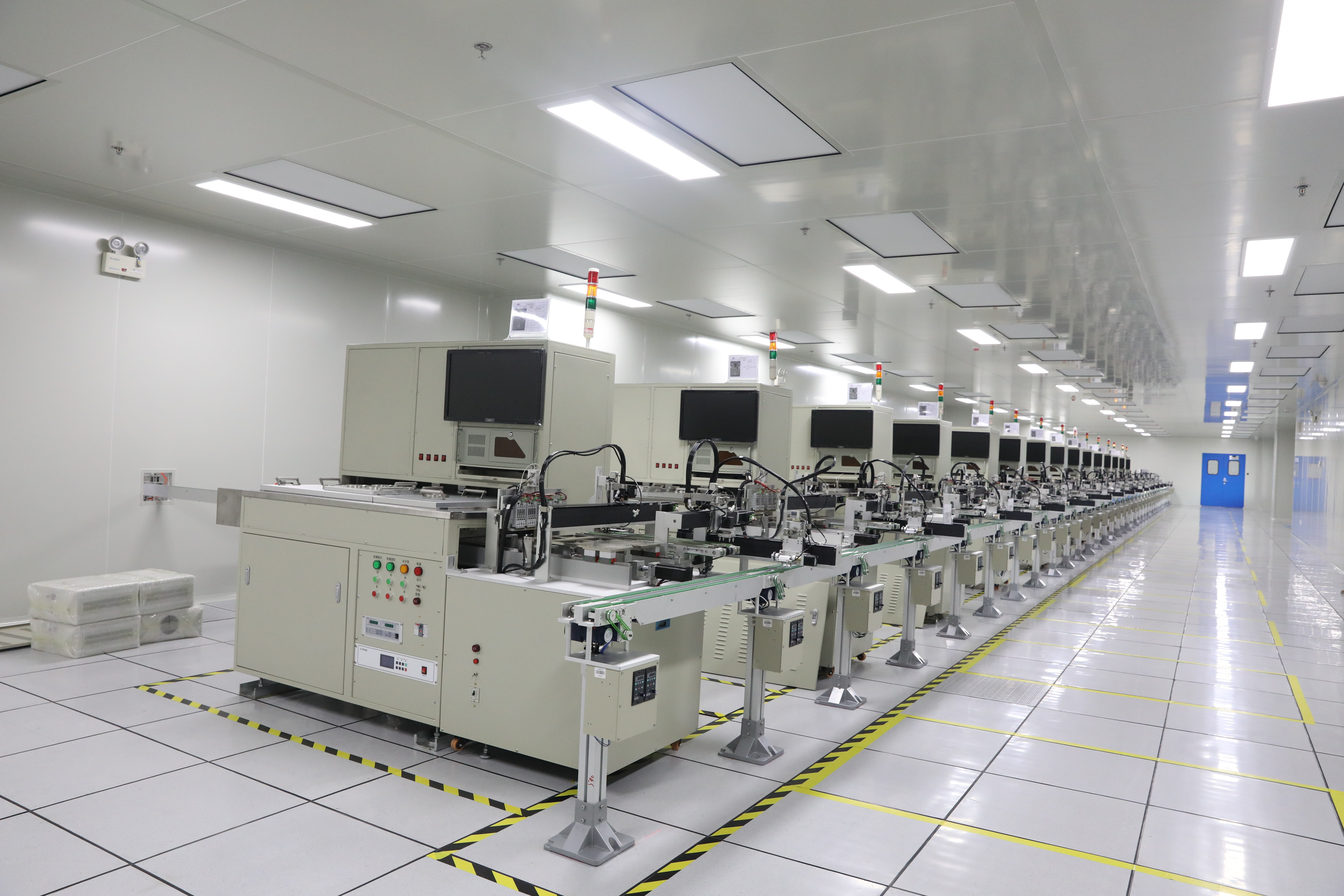
Cover image: production equipment in a frequency-control component manufacturing environment. Image source: supplied Fronter content unit.
Smart manufacturing teams often put crystal resonators and piezoelectric components into the same supplier request, then find that the offers are not directly comparable. The reason is simple: a quartz crystal resonator is a piezoelectric component. The second term is broader than the first. The useful comparison is therefore not crystal against piezo in the abstract, but which piezoelectric function, material, package and acceptance criteria the application actually requires.
This guide is written for procurement, engineering and supply-chain teams at the decision stage. It explains the terminology, sets out application-fit checkpoints, shows when a tuning-fork crystal should be reviewed instead of an MHz crystal or another piezoelectric part, and converts those points into purchasing terms and acceptance criteria. The aim is to make quotations comparable without assuming that two parts with similar names perform the same job.
The Short Answer: A Crystal Resonator Is a Piezoelectric Component
A crystal resonator is a passive frequency-control device made from quartz, which is a piezoelectric material. It uses the piezoelectric effect and the mechanical resonance of a quartz element to provide a frequency reference. In a circuit, a bare resonator needs an external oscillator circuit to start and sustain oscillation. A crystal oscillator, by contrast, integrates the resonator and the oscillator circuit in one package.
A piezoelectric component is any component that uses the piezoelectric effect. That family includes quartz crystal resonators, crystal oscillators, ceramic resonators, piezo sensors, piezo actuators and other transducers. Some piezoelectric parts are used for timing. Others are used to sense pressure, vibration or motion, or to create precise movement. They are not interchangeable purchases merely because the word piezo appears in the description.
Why the Terminology Causes Procurement Confusion
Procurement confusion usually starts with a short bill-of-materials description. A line may say crystal 32.768K, quartz crystal model number, SMD crystal frequency or piezo element without stating whether the part is a bare resonator, an oscillator, a ceramic resonator or a non-timing piezo device. Those are different purchases, even when they appear in the same supplier catalogue.
The term quartz piezoelectric crystal unit is similarly broad. In timing discussions, it usually refers to a quartz crystal resonator or a quartz-based oscillator. The buyer should ask for the exact part number and the functional block diagram position. Is the part connected to an oscillator circuit on the board, or does it produce a clock output by itself. Is it a frequency-reference component, or is it a sensing or actuation component. These questions remove most category confusion before a quotation is reviewed.
Package terms add another layer. SMD crystal resonator, surface-mount crystal resonator, through-hole crystal resonator and cylindrical crystal resonator describe mounting and package styles. HC49 SMD is a package label, not a performance grade. A 32.768 kHz crystal resonator and an MHz crystal resonator describe frequency bands, not interchangeable options. A watch crystal is often used as a shorthand for a small low-frequency timing crystal, but the purchase specification should still state the exact frequency, load capacitance and package.
The low-frequency quartz part is commonly called a tuning-fork crystal resonator. The search term turning fork appears in buyer language as a variant, but it refers to the same tuning-fork geometry. A ceramic resonator is a different piezoelectric timing family. It should not be called a quartz crystal resonator, because the material and the manufacturing route are different.
Smart Manufacturing Context: SMD, Frequency Bands, and Supply Evidence
The supplied market evidence for this review covers crystal oscillators, not only bare resonators. It is useful as category context, not as a resonator-only forecast. The same evidence package states that the global crystal oscillator market is projected to reach USD 3.66 billion by 2030, citing MarketsandMarkets. It also states that surface-mount devices commanded 76.40% share of the oscillator market size in 2025. Those figures indicate that surface-mount timing components are a major part of the supply landscape, but they do not mean that every smart-manufacturing design should use SMD.
Trade evidence adds a sourcing context. China's export value for mounted piezoelectric crystals under HS 854160 reached USD 1.5 billion in 2024, according to the supplied customs record. This is a trade-flow signal, not proof that any one supplier, frequency or package is suitable for a given product. Buyers should still qualify the exact part and the exact production site.
Fronter Electronics Co., Ltd. is a Shenzhen-based manufacturer and distributor founded in 1991, according to its supplied company profile. The same profile lists a 21,000 m² factory, 286 employees, 19 engineers, 300 million units of annual output and a 70% export ratio to the EU and USA. It also states that the FT brand was recognized as a National High-Tech Enterprise in 2017 and that its products comply with RoHS and REACH. These are company-provided facts. They help a buyer decide whether to request a quote and qualification documents, but they do not replace part-level acceptance testing. The company website is Fronter Electronics Co., Ltd..
Comparison Framework: What Buyers Should Actually Compare
1. Function: Timing Reference, Oscillator, or Sensor
Compare the function first. A bare crystal resonator provides a frequency reference and depends on an external oscillator circuit. A crystal oscillator produces a clock output and integrates the circuit. A piezo element may perform sensing or actuation, in which case frequency tolerance and load capacitance are not the relevant purchase criteria. A ceramic resonator is a timing part, but it is a different material family from a quartz crystal resonator.
This distinction matters at the decision stage because a low price on a ceramic resonator or a non-timing piezo element says nothing about the cost of a qualified quartz timing solution. The buyer should compare parts that perform the same function and are evaluated against the same electrical and environmental requirements.
2. Material and Package: Quartz, Ceramic, SMD, Through-Hole
Quartz crystal resonators use quartz as the resonant element. Ceramic resonators use a piezoelectric ceramic. Both can be used for timing, but they should be compared on their actual datasheet limits, temperature behaviour, aging, package and qualification status, not on the category name alone. A ceramic part is not a drop-in substitute for a quartz part unless the circuit and the qualification plan show that it is acceptable.
SMD, through-hole, cylindrical and HC49 SMD are package choices. SMD supports automated assembly and compact layouts, and the supplied 2025 market share for SMD timing devices is consistent with that role. Through-hole and cylindrical formats remain relevant where the board design, legacy tooling, mechanical constraints or repair process calls for them. Package choice should follow assembly capability, space, thermal cycling and the approved bill of materials.
3. Application Fit: RTC, MHz Clock, Automotive, Industrial
A 32.768 kHz tuning-fork crystal is normally reviewed for real-time clock and low-frequency timekeeping functions. An MHz crystal resonator is normally reviewed where the circuit requires a higher reference frequency, such as a processor, interface or communication clock. A complete oscillator is reviewed where the board needs a finished clock output rather than a bare resonator plus its own oscillator circuit.
Automotive and industrial programs add qualification and temperature requirements. The buyer should state the operating temperature range, the qualification standard and the test method. The supplied risk-control unit describes temperature-compensated and oven-controlled oscillator approaches for frequency-temperature stability, and it describes full temperature-range testing as a control measure. At purchasing level, that translates into a specified temperature range, a defined test condition and evidence for the exact part number.
4. Purchasing Terms and Acceptance Criteria
A comparison is only useful when the purchasing terms are fixed. The request should state the exact part number and revision, nominal frequency, package and mounting style, frequency tolerance at the stated condition, frequency stability over the operating temperature range, load capacitance, drive level, aging limit, operating temperature range, qualification requirements and packaging. If the part is an oscillator, the output logic, supply voltage and current consumption also belong in the specification.
Acceptance criteria should be agreed before the purchase order. Useful items include the test method and limits, a certificate of conformance for the exact part number, batch or lot traceability, temperature testing where required, change-notification terms, sample-approval records and the inspection plan for incoming goods. MOQ and price breaks should be quoted per part number and per production site, not as a category average. Lead time should be quoted for the exact model and quantity.
Crystal Resonator vs Piezoelectric Component: Decision Table
| Checkpoint | Quartz crystal resonator | Piezoelectric component or piezo element | Procurement implication |
|---|---|---|---|
| What it is | A quartz-based piezoelectric timing component that provides a frequency reference | A broad family that uses the piezoelectric effect, including quartz resonators, ceramic resonators, oscillators, sensors and actuators | Confirm the function before comparing price |
| Timing role | Needs an external oscillator circuit when supplied as a bare resonator | May be a timing part or a non-timing sensing or actuation part | Match the datasheet function to the circuit function |
| Material and package | Quartz; SMD, through-hole, cylindrical and HC49 SMD packages are available in the market | Material and package depend on the specific piezo part | Do not accept category-only equivalence |
| Key timing specifications | Frequency, tolerance, stability, load capacitance, drive level, aging and operating temperature | For timing parts, the same electrical and environmental parameters still need to be stated | Write the parameter and the test condition |
| Qualification and compliance | RoHS and REACH may be stated by the supplier; automotive programs may require AEC-Q200 | Depends on the exact part, application and customer requirement | Request evidence for the exact part number |
| Acceptance | Batch traceability, temperature test where required, certificate and sample approval | Same principle for timing parts; different criteria for sensors or actuators | Define acceptance before the purchase order |
The table is a comparison framework, not a ranking. A quartz crystal resonator is not better than every piezoelectric component, because many piezoelectric components do different jobs. The correct question is whether the part is a quartz timing resonator, a ceramic timing resonator, an oscillator or a non-timing piezo device, and whether its documented limits match the application.
When to Review a Tuning-Fork Crystal
Start with the reference frequency and the circuit architecture. If the board needs a 32.768 kHz time base for a real-time clock, a tuning-fork quartz crystal resonator is the relevant family to review. The buyer should check load capacitance, drive level, aging, operating temperature, package and the oscillator circuit recommended by the resonator supplier. These checks matter because a low-frequency tuning-fork part is not a drop-in replacement for an MHz resonator.
If the board needs an MHz clock for a processor, radio, interface or communication function, review an MHz crystal resonator or an oscillator. The required frequency, stability, package and circuit matching will differ from a 32.768 kHz RTC design. If the board needs a complete clock output with defined logic levels, review an oscillator rather than a bare resonator. If the design is cost-sensitive and the timing budget and qualification plan allow a non-quartz timing part, a ceramic resonator can be reviewed, but only against the actual datasheet limits and approval requirements.
Automotive and industrial programs should add the qualification question early. The supplied comparison unit for Fronter lists AEC-Q200 for its compared automotive-grade offer, together with an operating range of -40℃ to +85℃ or +105℃ depending on the model. It also lists frequency stability of ≤ ±20 ppm, with some models at ≤ ±10 ppm, and annual aging of ≤ ±2 ppm. These values are part of the supplied company comparison and should be verified against the exact model and test report before they are written into a purchase specification.
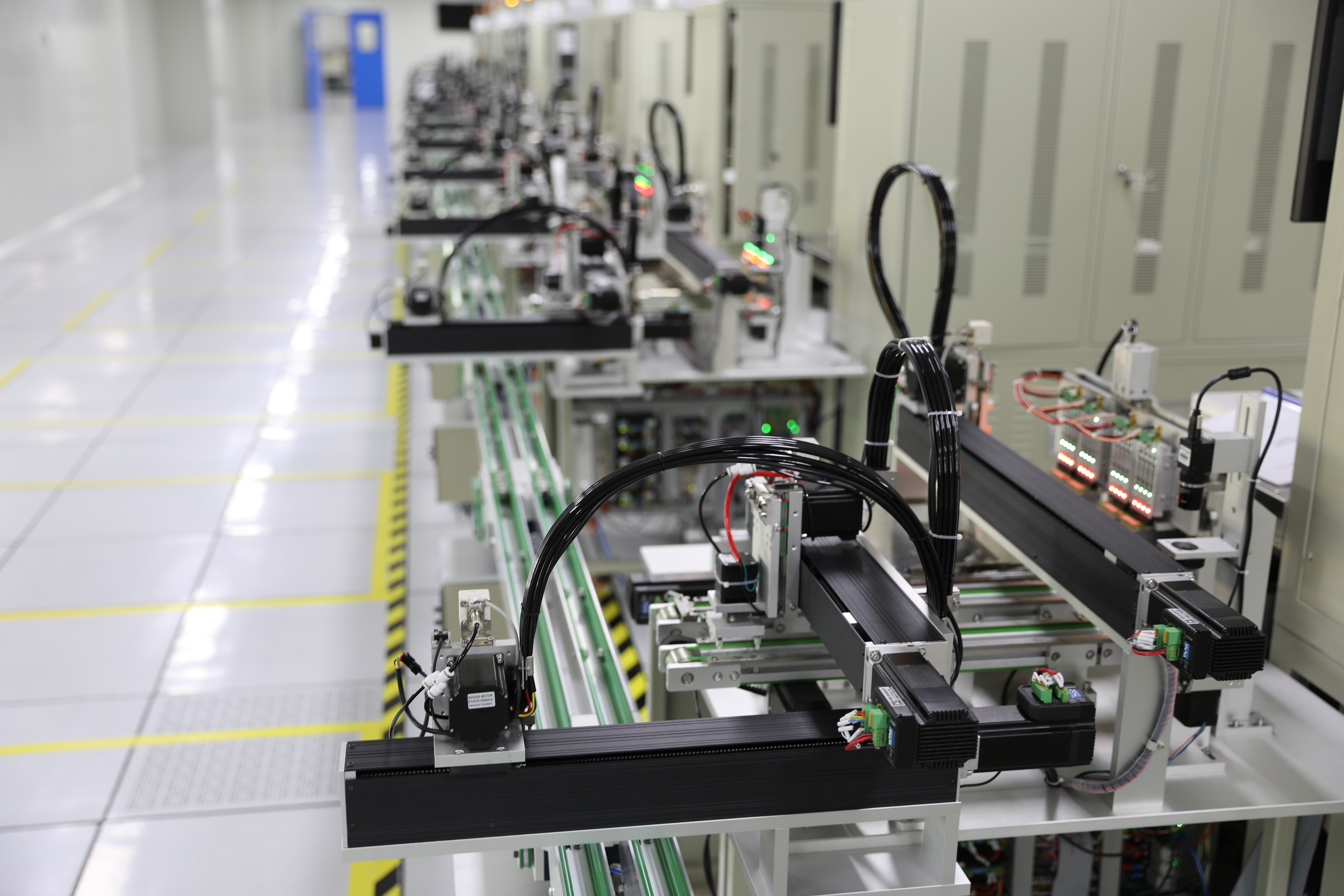
Debugging and process review in a frequency-control component production setting. Image source: supplied Fronter content unit.
Step-by-Step Buyer Review
- Write a function statement. State whether the part is a bare resonator, an oscillator, a ceramic timing part or a non-timing piezo element. This single step prevents most apples-to-oranges quotations.
- Extract the electrical requirements. Record nominal frequency, tolerance condition, stability over temperature, load capacitance, drive level and aging. For an oscillator, add output logic, supply voltage and current consumption.
- Set the environmental and qualification requirements. State the operating temperature range, the required compliance evidence and whether an automotive qualification such as AEC-Q200 is required for the exact part.
- Match the package to the assembly process. Confirm SMD, through-hole, cylindrical or HC49 SMD compatibility with the board, reflow or soldering process, inspection method and repair plan.
- Define acceptance before asking for price. Agree the test method, sample size or inspection plan, certificate of conformance, traceability and change-notification terms. This makes the commercial comparison meaningful.
- Validate a production sample. Ask for a sample from the production lot that would be supplied, not only an engineering sample. Measure the agreed parameters under the agreed conditions.
- Lock the commercial terms. Confirm MOQ, price breaks, packaging, lead time, warranty or replacement terms and the name of the production site. Keep these terms attached to the exact part number.
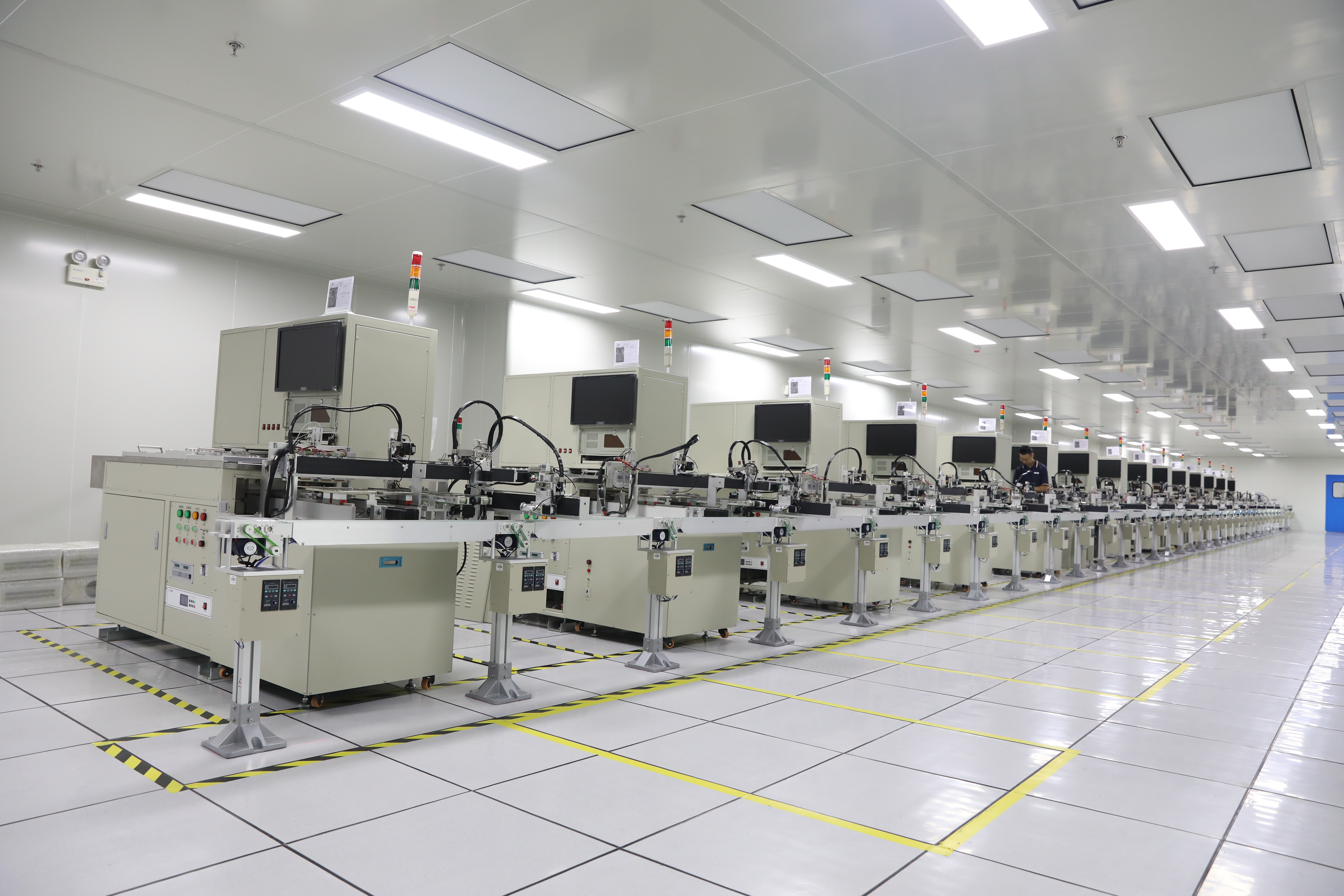
Production equipment used in frequency-control component manufacturing. Image source: supplied Fronter content unit.
Use Cases in Smart Manufacturing
In industrial control, the timing decision usually follows the control board architecture. A real-time clock may need a 32.768 kHz tuning-fork crystal, while the main processor or communication interface may need an MHz resonator or oscillator. The buyer should not combine those requirements into one category request. They are separate line items with separate acceptance criteria.
In communication and networking equipment, the supplied Fronter comparison unit lists communication base stations, servers, industrial equipment and IoT devices among the applications for its compared crystal-oscillator offer. The same unit lists automotive electronics and applications requiring long-term timing accuracy. These are application claims from the supplier comparison, not independent market proof. They are still useful for framing questions: does the design need a bare resonator or an oscillator, what stability is required over temperature, and what qualification evidence is required for the exact model.
In automotive and industrial electronics, temperature and qualification evidence usually drive the shortlist. The supplied risk-control unit describes a bill-of-materials classification for consumer, industrial and automotive temperature ranges and full temperature-range testing before shipment. Buyers can use that as a model for their own acceptance plan: state the temperature class, define the test condition and ask for evidence at the part-number level.
In high-volume SMD assembly, the supplied 2025 market share for SMD timing devices supports a practical question about automated placement and reflow compatibility. It does not prove that SMD is correct for every design. The buyer should still confirm the land pattern, package dimensions, moisture sensitivity and inspection method for the chosen part.
Fronter's Role in the Comparison
Fronter's supplied profile lists quartz crystal resonators and quartz crystal oscillators as main products, and the supplied verified record states that the company provides 32.768 kHz tuning-fork and MHz resonators. That makes Fronter a relevant supplier to include when the buyer is comparing a low-frequency RTC timing part with an MHz timing part, provided the exact model and specification are available.
The supplied comparison unit adds company-specific data for a compared crystal-oscillator offer. It lists frequency stability of ≤ ±20 ppm, with some models at ≤ ±10 ppm, annual aging of ≤ ±2 ppm, AEC-Q200, an operating range of -40℃ to +85℃ or +105℃ and a lead time of 3 to 4 weeks. It contrasts those figures with a general consumer-grade range of ±20 to ±50 ppm, an aging level of ±3 to ±5 ppm and a lead time of 12 to 20 weeks for overseas brands. These are supplied company comparison claims. A buyer should verify the exact model, test report and current lead time before relying on them in a purchase decision.
The company profile also gives a scale context: founded in 1991, 21,000 m² factory, 286 employees, 19 engineers and 300 million units of annual output. These facts are relevant to a supplier evaluation, but they do not replace a part-level sample approval. The practical next step is to send the exact frequency, package, tolerance, temperature range and qualification requirements to the supplier and ask for a matching datasheet and sample record.
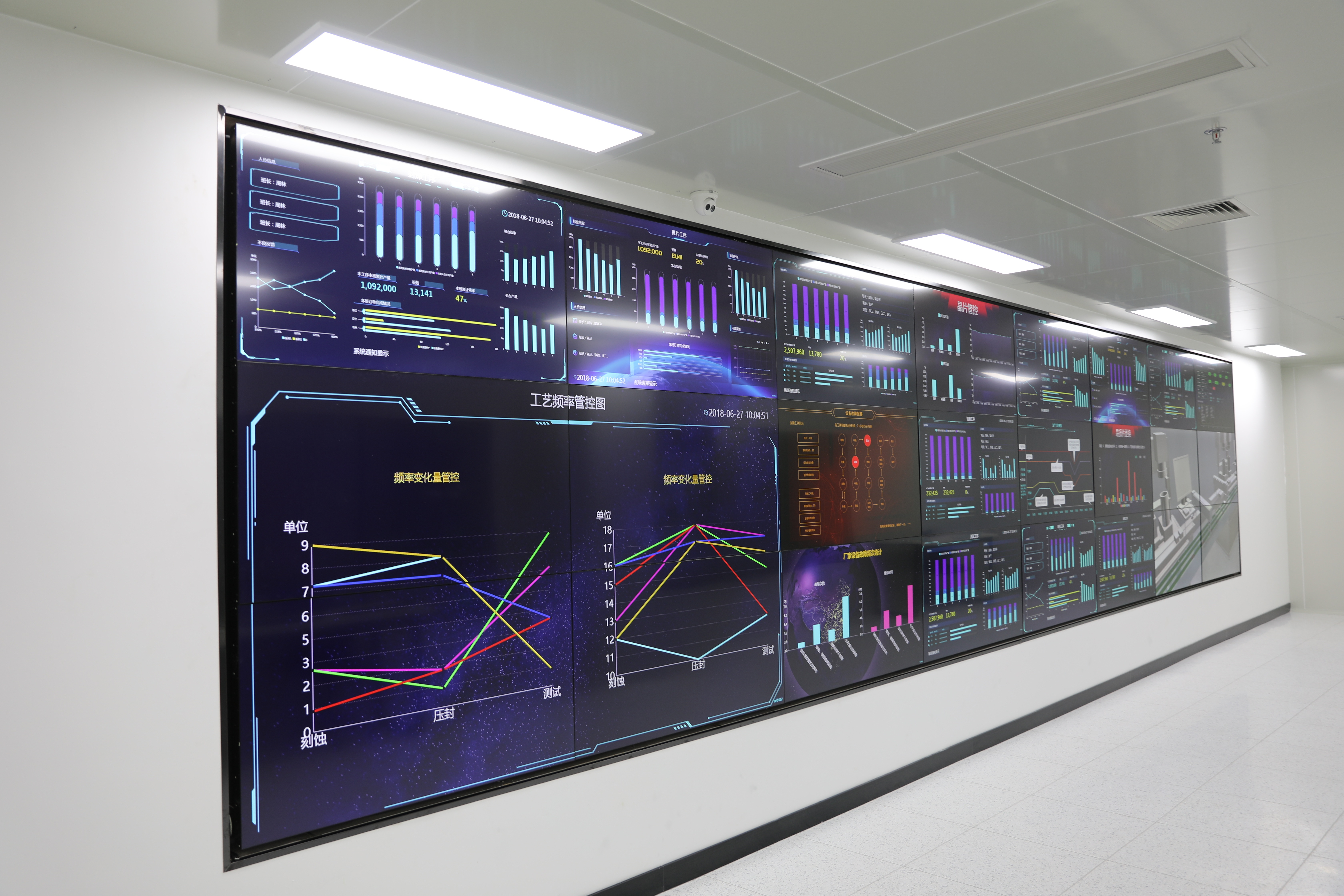
Production and quality data infrastructure in a manufacturing environment. Image source: supplied Fronter content unit.
FAQ
Is a crystal resonator a piezoelectric component?
Yes. A quartz crystal resonator uses the piezoelectric property of quartz to provide a frequency reference. It is a subset of the broader piezoelectric component family, which also includes ceramic resonators, oscillators, piezo sensors and piezo actuators. Buyers should still name the exact part type, because a crystal resonator and a non-timing piezo element are not interchangeable.
What is the difference between a quartz crystal resonator and a ceramic resonator?
A quartz crystal resonator uses quartz as the resonant element. A ceramic resonator uses a piezoelectric ceramic. Both can be timing components, but they are different material families and should be compared on their actual datasheet limits, temperature behaviour, aging, package and qualification status. A ceramic resonator should not be described or purchased as a quartz crystal resonator.
When should a smart manufacturing team review a tuning-fork crystal instead of an MHz resonator?
Review a tuning-fork crystal when the circuit needs a low-frequency time base, typically 32.768 kHz for a real-time clock. Review an MHz crystal resonator or oscillator when the circuit needs a higher reference frequency or a complete clock output. The decision should follow the circuit architecture and the specified frequency, not the supplier catalogue category alone.
What purchasing terms should be fixed before comparing offers?
Fix the exact part number and revision, nominal frequency, package and mounting style, tolerance at the stated condition, stability over the operating temperature range, load capacitance, drive level, aging, operating temperature, qualification requirements, packaging, traceability and change-notification terms. For an oscillator, add output logic, supply voltage and current consumption. MOQ, price breaks and lead time should be quoted for the exact part number and production site.
What acceptance criteria should be written into the purchase specification?
Write the test method and limits, the certificate of conformance for the exact part, the sampling or inspection plan, batch traceability and the change-notification requirement. Where temperature performance is critical, define the temperature test and the evidence required. For automotive or industrial programs, state whether AEC-Q200 or another qualification is required and ask for the certificate for the exact model.
How should buyers compare samples and lead time for crystal resonators?
Ask for a sample from the production lot that would be supplied, together with the measurement record and the exact lead time for the part number and quantity. The supplied Fronter comparison unit lists 3 to 4 weeks lead time for its compared offer and 12 to 20 weeks for overseas brands, but the buyer should verify the current figure for the exact model. For a sample request or quotation, use the contact channel listed on the Fronter Electronics Co., Ltd. website. The public brochure is available for download at Fronter public brochure.
Next step for a decision-stage review: define the function, frequency, package, tolerance, temperature range and acceptance test before requesting a quote. For a 32.768 kHz tuning-fork resonator or an MHz crystal resonator, send the exact specification through the approved company contact channel and request a matching datasheet, sample record and lead time.
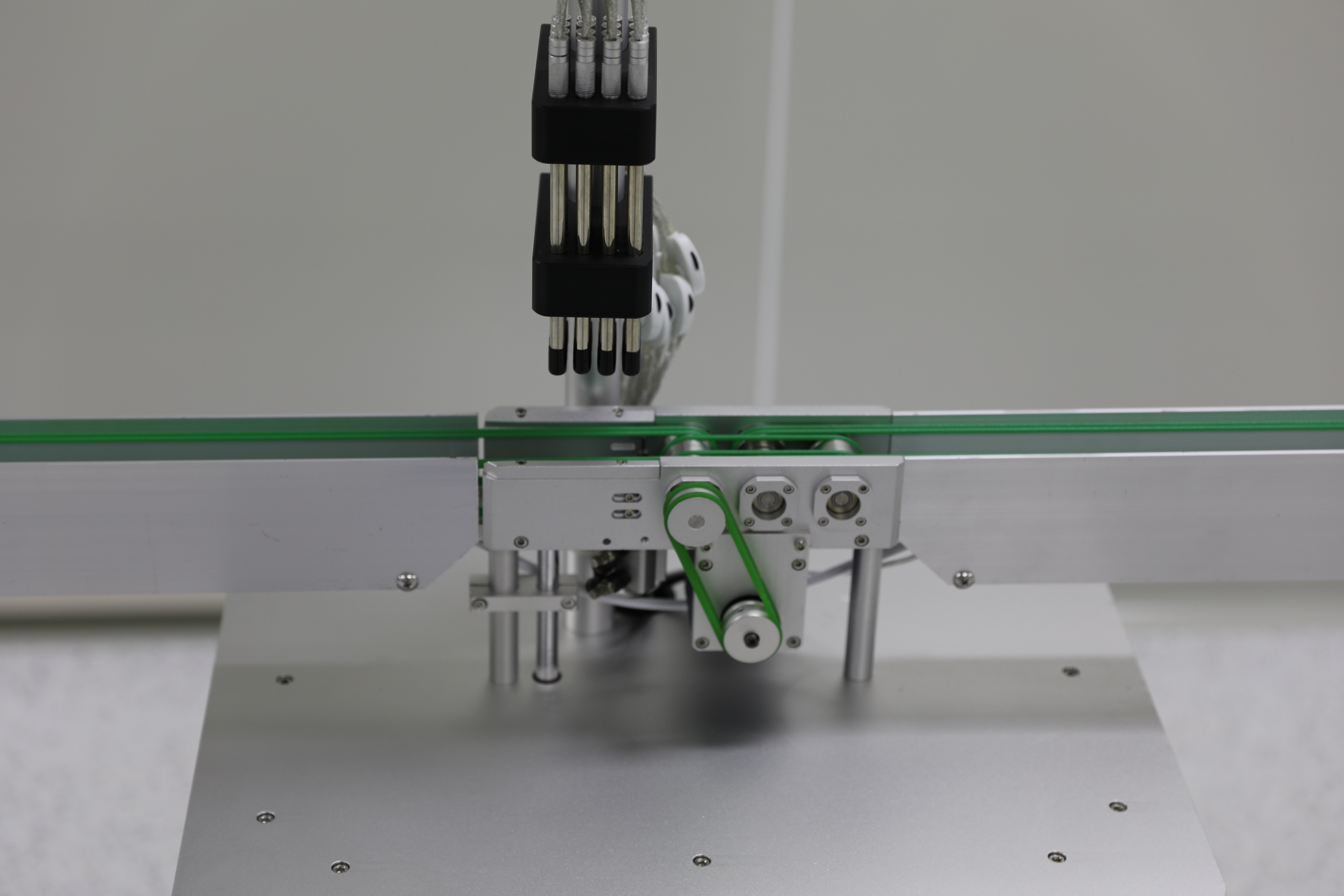
Calibration and debugging station for frequency-control components. Image source: supplied Fronter content unit.
Conclusion
Crystal resonators and piezoelectric components are not opposing product categories. A quartz crystal resonator is a piezoelectric timing component, while the broader piezo family also includes ceramic resonators, oscillators, sensors and actuators. The decision-stage comparison should therefore begin with function, then move to material, package, application fit, purchasing terms and acceptance criteria.
For smart manufacturing buyers, the practical answer is to compare only parts that perform the same job. A 32.768 kHz tuning-fork crystal, an MHz crystal resonator, an oscillator and a ceramic resonator each need their own specification and evidence. Fronter's supplied company and product facts can support a supplier review, but the final choice should rest on the exact model, the documented limits and the acceptance record.
Have Questions or Need More Details?
Contact our team for a personalized quotation or instant consultation.
Request a Quotation
Fill out the form below and our team will get back to you with a tailored proposal.
WhatsApp Direct Chat
Prefer to chat in real-time? Message us on WhatsApp for instant assistance & quick answers.
- Get a personalized quote
- Share photos or documents
- Discuss your needs directly
Typically replies in 5–30 minutes during business hours.