
Smart Manufacturing Timing Issues: A Crystal Resonator Problem-Solution Guide
Timing problems on a smart manufacturing line rarely present themselves as component failures. A vision station starts rejecting good parts after a weekend shutdown. A gateway log drifts a few seconds per day against the MES server. A smart meter's timestamped load profile no longer lines up with the billing window. In each case the root cause can sit in the crystal resonator — the passive quartz component that supplies the reference frequency for an MCU, an RTC, or a radio. This guide is written for engineers and procurement staff who already have a design and a symptom, and who now need to decide which resonator fits, which specifications to lock, and which acceptance terms to negotiate.
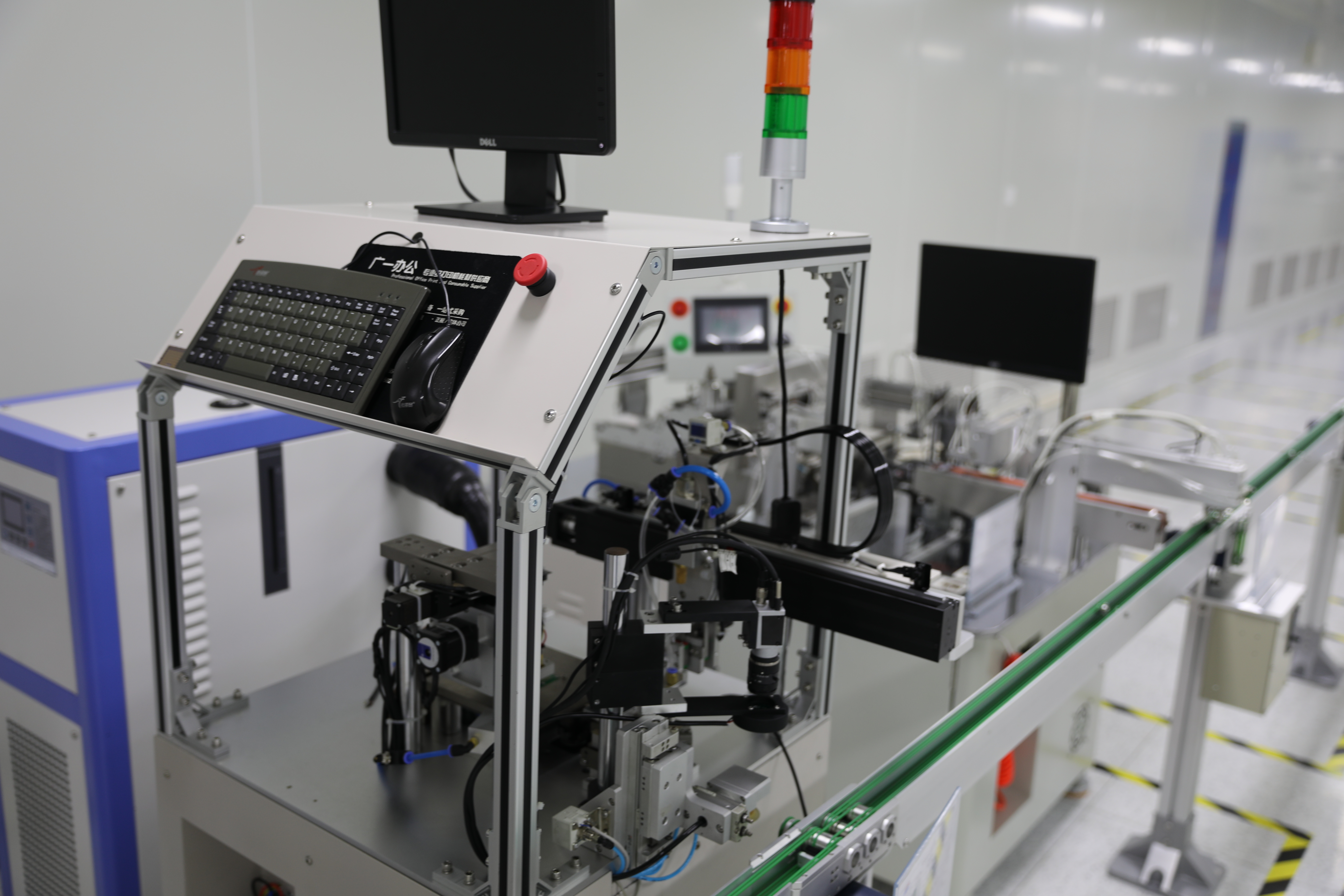
Pre-shipment testing of quartz timing components: the evidence point that matters when timing stability is a production requirement.
Problem Definition: What a Timing Issue Actually Looks Like
A crystal resonator is a passive frequency-control device built from a quartz wafer sealed inside a metal or ceramic package. When an oscillator circuit drives it, the quartz vibrates at a defined frequency, and that frequency becomes the time base for digital electronics. Because the resonator does not compute anything and does not appear in the firmware logs, its contribution is invisible until timing behaviour changes.
In smart manufacturing equipment, three separate timing functions usually coexist on the same board, and each fails in a different way:
- Timekeeping (calendar and logging). A 32.768 kHz tuning fork resonator drives the real-time clock. Symptoms appear as slow drift against a network time source, repeated timestamp mismatches in event logs, or batch records that cannot be reconciled with the MES audit trail.
- System clock (logic and sampling). An MHz quartz resonator provides the reference for the MCU or controller. Symptoms appear as communication errors on UART, SPI, or I2C buses, jitter in sensor sampling intervals, or a device that behaves correctly at room temperature and misbehaves at the temperature extremes of an unheated production hall.
- Radio and interface reference (connectivity). The resonator feeds the wireless or interface stage. Symptoms appear as intermittent reconnect loops, failed pairing, or data loss under load rather than as a hard failure.
Not every timing symptom is a resonator fault. Firmware clock configuration, load capacitance mismatch against the datasheet, PCB layout near switching regulators, and temperature gradients across the enclosure all produce similar behaviour. The practical approach is to isolate which of the three timing functions is affected, then work backwards to the component and its specification headroom. That is where most evaluation projects actually stall: the engineering team knows the timing budget is being missed, but the corrective action depends on a component decision that has not yet been made.
Industry Background: Why Timing Demand Is Shifting
The component side of this problem is moving in a clear direction. Surface mount packaging has become the default choice for timing devices in compact, automated assemblies.
The manufacturing base has followed that shift. China's export value for mounted piezoelectric crystals under HS 854160 reached USD 1.5 billion in 2024, according to General Administration of Customs (GACC) data. Read together, the two data points describe a market where the volume of timing components moving through export channels is large and where the dominant package format is surface mount. For a buyer, the implication is practical rather than strategic: the supply base that can deliver consistent SMD output at scale is the supply base worth qualifying.
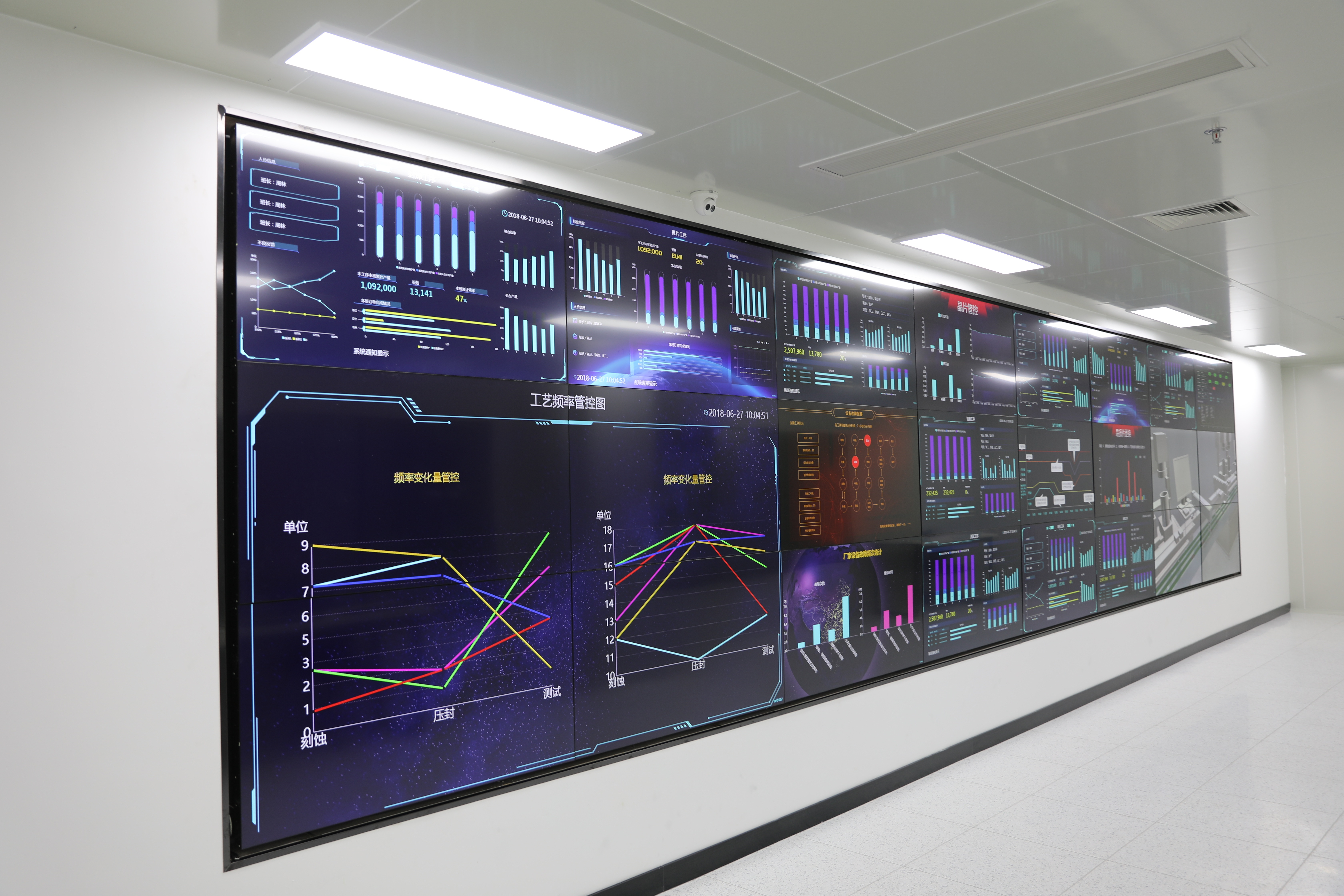
Timing references sit underneath every timestamped production record. When the reference drifts, the data set drifts with it.
Smart manufacturing raises the stakes in two specific ways. First, equipment is increasingly networked, so a local clock error becomes a data integrity problem across systems rather than a single-machine nuisance. Second, equipment is increasingly deployed outside climate-controlled rooms — on warehouse floors, in utility cabinets, in outdoor enclosures — which pushes operating temperature range from a datasheet formality into a real selection criterion. A resonator specified only for a comfortable laboratory window is a weak foundation for a ten-year field deployment.
Detailed Solution: Matching the Resonator to the Timing Function
The correct component is determined by the timing function, not by the frequency alone. Two resonator families cover most smart manufacturing designs, and they are not interchangeable.
Tuning fork resonators for timekeeping
A tuning fork crystal resonator is optimised for low-frequency timekeeping, most commonly 32.768 kHz, because that frequency divides down cleanly to a one-second tick. It is the natural choice for RTC circuits, battery-backed logging, and any function that must keep calendar time while the main processor is asleep. Selection here is about long-term drift and current consumption rather than raw speed.
MHz quartz resonators for system clocks
An MHz quartz resonator provides the higher-frequency reference that a microcontroller, communication controller, or interface stage needs. This is the family where package size, load capacitance, and frequency tolerance decisions concentrate, because the same board often has to serve several production variants.
Fronter Electronics Co., Ltd is a Shenzhen-based manufacturer and distributor founded in 1991, whose brand “FT” was recognised as a National High-Tech Enterprise in 2017. Its portfolio covers both 32.768 kHz tuning fork resonators and MHz resonators, alongside quartz crystal oscillators — which matters in an evaluation context, because a single supplier that can serve both timing functions reduces the number of qualification cycles a project has to run.
Package and mounting logic
Surface mount is the default for new smart manufacturing designs, consistent with the 76.40% SMD share of the 2025 oscillator market. Legacy equipment and some replacement-part programmes still use through-hole or cylindrical packages, and a buyer working on a mixed fleet should confirm whether the requirement is a new design or a form-fit-function replacement, because the answer changes the entire specification conversation. Designs that list a ceramic resonator in the bill of materials should also confirm whether the timing budget genuinely tolerates it, or whether the position was originally specified as quartz.
Where the specification actually fails
Most field failures trace back to three specification gaps rather than to a defective component: frequency tolerance quoted at 25 °C only, stability quoted without an operating temperature range, and load capacitance copied from a previous design without re-checking the oscillator circuit. A resonator is a passive device — it does what the circuit and the environment allow it to do. That is why the evaluation sequence below starts with the application requirement, not with a part number.
Step-by-Step Breakdown: From Timing Symptom to Locked Specification
- Identify the timing function. Determine whether the failing behaviour belongs to timekeeping, system clock, or radio reference. This single step eliminates roughly two-thirds of candidate specifications.
- Write the requirement as numbers. Convert the symptom into a budget: target frequency, acceptable deviation over the full operating temperature range, and the load capacitance the oscillator circuit presents.
- Set tolerance and stability separately. Frequency tolerance describes deviation at a reference temperature; frequency stability describes variation across the operating range. Both must be specified, and both must cover the real installation environment rather than the test bench.
- Choose the package against the assembly process. Confirm the pick-and-place and reflow profile, the available board area, and whether the position must match an existing footprint. The documented Fronter SMD range spans 7050 down to 1612, so package choice can be resolved within one supplier conversation.
- Confirm compliance documentation for the exact model. Compliance is a per-part question. Fronter Electronics holds an EU RoHS Compliance Certificate, number SZXEC25001335806, issued 25 April 2025 by SGS-CSTC Standards Technical Services Co., Ltd. Shenzhen Branch, against EU RoHS Directive (EU) 2015/863 amending Annex II to Directive 2011/65/EU; the certified scope is SAW Resonator & Filter, SMD series. At company level, Fronter states that all products comply with RoHS, REACH and other environmental protection regulations.
- Validate samples against the written budget. Test at the stated load capacitance, across the operating temperature range, and on the actual PCB — not on an evaluation board with different parasitics. Record the results so they can be attached to the purchase specification.
- Lock commercial and acceptance terms in writing. Agree minimum order quantity, delivery terms, acceptance method and payment terms before the sample stage ends. Terms that are only discussed after approval tend to become schedule risk.
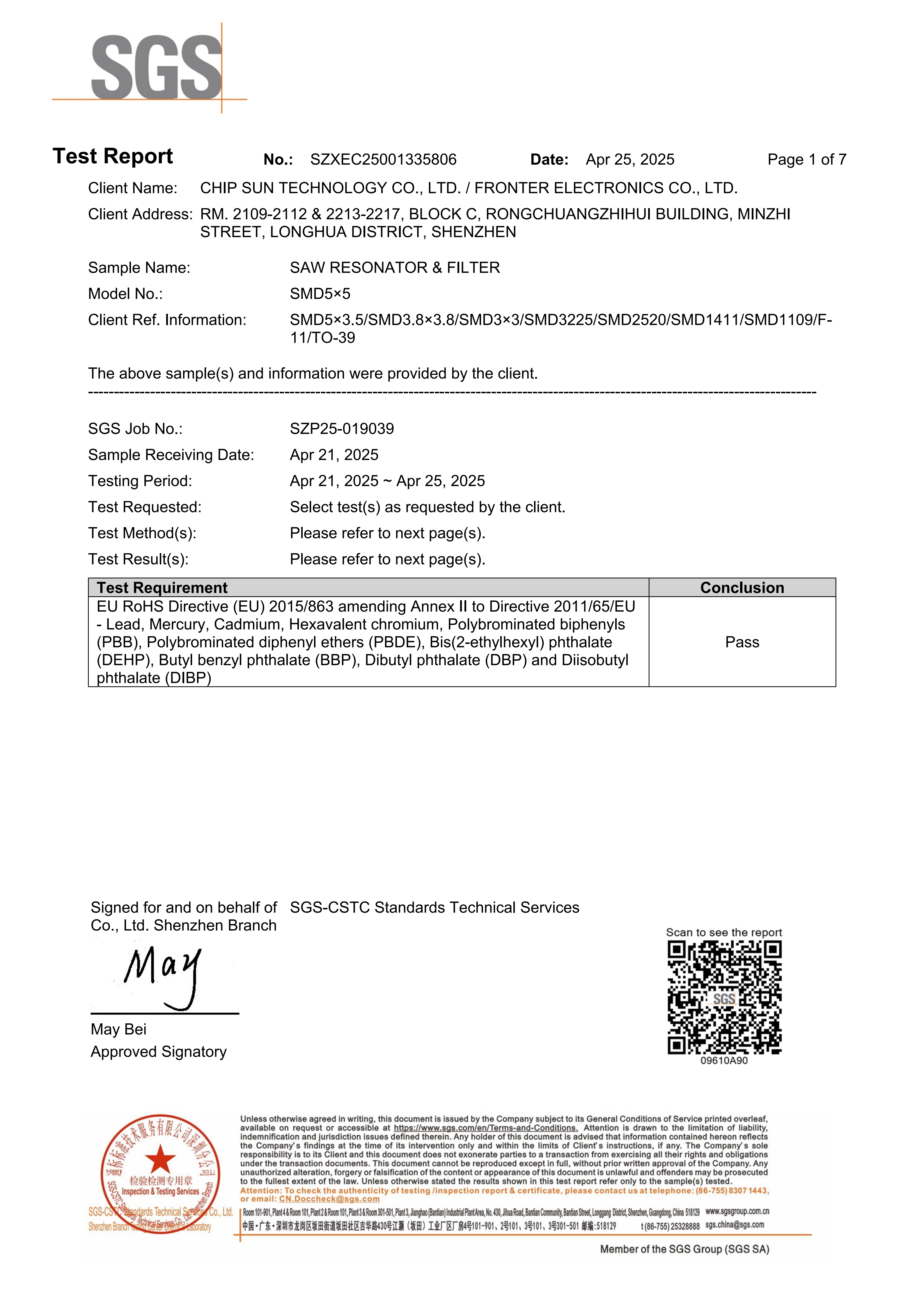
Compliance evidence has a scope. The certificate covers SAW Resonator & Filter, SMD series — buyers should request documentation for the specific model being qualified.
Selection Reference: Timing Function, Component and Specification
| Timing function | Typical component | Specification to confirm first | Documented Fronter position |
|---|---|---|---|
| Real-time clock and calendar logging | 32.768 kHz tuning fork resonator | Long-term drift and stability over the installation temperature range | 32.768 kHz tuning fork resonators are part of the Fronter portfolio; confirm the tolerance and stability window for the specific model at quotation |
| MCU and controller system clock | MHz quartz resonator | Tolerance at load capacitance, plus stability across operating temperature | 1–96 MHz; load capacitance 4–33 pF; tolerance ±5 ppm to ±100 ppm; stability ±10 ppm to ±100 ppm |
| Radio and interface reference | MHz quartz resonator | Stability under temperature and supply variation | Same documented SMD series; operating temperature −55 °C to +125 °C |
| Board space or reflow-driven design | SMD quartz resonator | Footprint and package height | 7050, 6035, 5032, 3225, 2520, 2016, 1612 |
| Legacy platform replacement | Through-hole or cylindrical package | Form-fit-function equivalence, not only frequency | Documented Fronter SMD range is listed above; confirm package availability for the specific replacement case |
Commercial Reference: Terms to Agree Before Scale-Up
| Item | Documented term | Why it matters at the evaluation stage |
|---|---|---|
| Minimum order quantity | 1K (1,000 pcs) | Sets the real cost of a validation run, not just the unit price |
| Delivery terms | EXW | Freight, insurance and customs handling sit outside the quoted price |
| Acceptance criteria | Pre-shipment test | Defines the inspection point and the evidence the buyer receives |
| Payment terms | 100% in advance | Cash-flow planning and, for first orders, risk allocation |
| Production lead time | 30–45 days | Must be reconciled with the equipment build schedule before release |
| Monthly capacity | 80KK | Indicates whether volume ramp sits inside or outside existing loading |
| Quality control | 100% test | Test coverage is the basis of the pre-shipment acceptance claim |
| Customisation | ODM; parameters and appearance | Determines how far a standard part can be adjusted to the design |
| After-sales | Remote support | Defines the escalation path if field behaviour diverges from the sample |
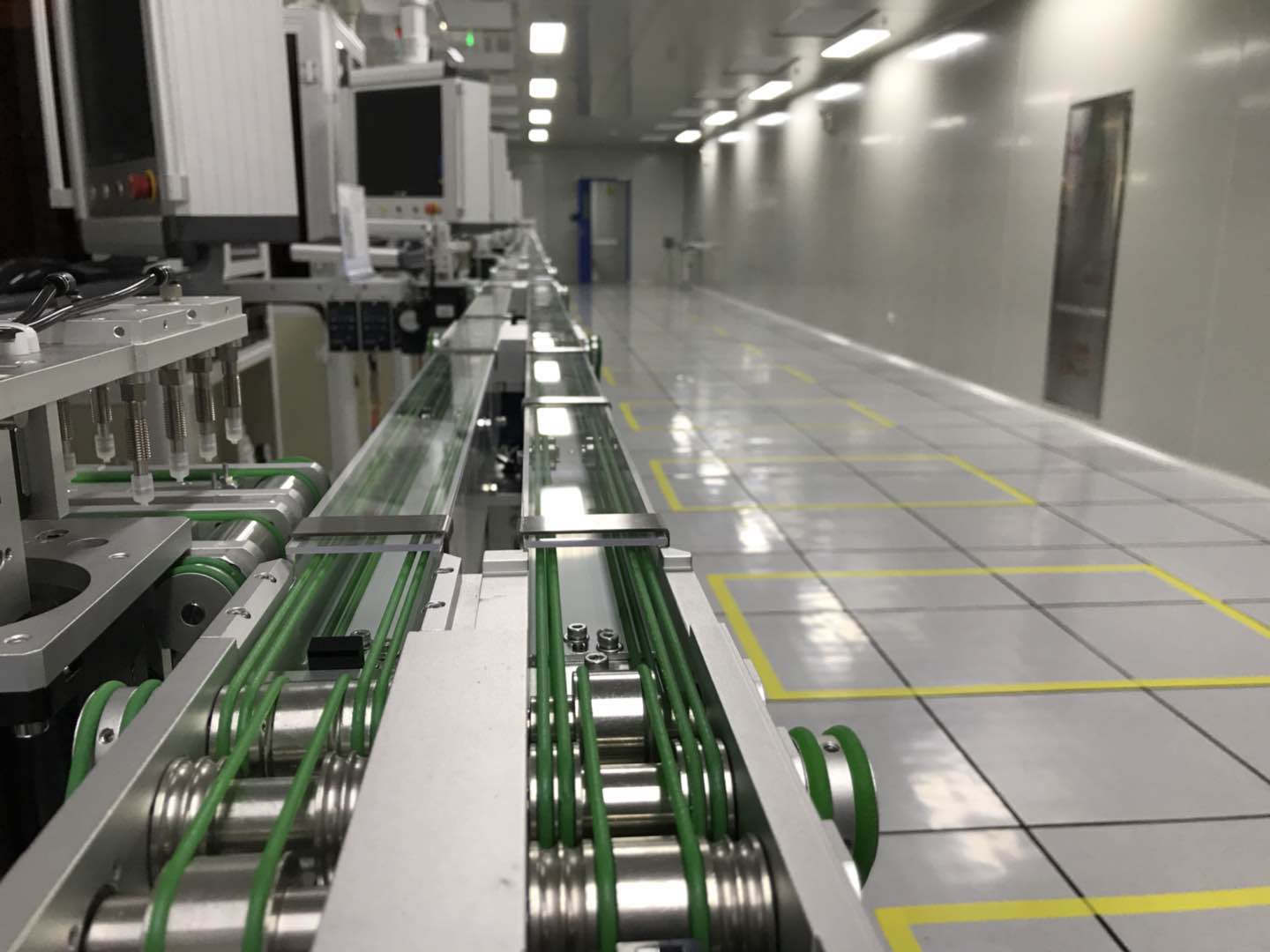
Production capacity is a procurement fact, not a marketing claim: monthly capacity of 80KK is documented for Fronter's resonator lines.
Use Cases: Where Timing Reliability Is Tested First
Smart metering
Utility metering is the clearest example of timekeeping as a commercial requirement, because timestamps feed billing and load-profile analysis. A smart meter manufacturer in India has worked with Fronter on 5,000,000 units over a ten-year relationship, with the reported result of stable operation in the field. That programme also illustrates how commercial flexibility interacts with timing: fast delivery within 3–4 weeks was achieved with customisation to project-specific packaging and frequency requirements. For buyers, the lesson is that packaging and frequency configuration are negotiated items, not fixed catalogue facts.
Industrial control and network equipment
Controllers, gateways and network interface modules combine all three timing functions on one board. Here the failure mode is usually systemic rather than component-level: a clock reference specified at 25 °C only, deployed in an enclosure that reaches the temperature extremes of a production hall, producing intermittent bus errors that are difficult to reproduce in the lab. Specifying stability across the full operating range — up to +125 °C in the documented Fronter SMD series — removes one variable from the investigation.
Smart home appliances and Bluetooth devices
Consumer-facing connected devices tolerate wider frequency deviation but are unforgiving on package size and cost. The 1612 and 2016 SMD packages exist precisely for this constraint, and the same resonator families serve smart home appliances, communication electronics and Bluetooth devices within Fronter's documented application scope.
Sample Validation Checklist
- Frequency measured at the load capacitance stated in the purchase specification, not the default test fixture value.
- Tolerance verified at the reference temperature, with the test method recorded.
- Stability verified across the full operating temperature range the equipment will see in service.
- Package footprint and height checked against the actual PCB, including clearance for reflow.
- Compliance document obtained for the exact model being qualified, with the scope read carefully.
- Pre-shipment test evidence agreed in advance, so acceptance is a defined procedure rather than a discussion.
- Sample results filed alongside the purchase specification, so future orders can be compared against a fixed baseline.
FAQ
Does Fronter's resonator range meet EU RoHS requirements?
Yes, within the scope of its certificate. Fronter Electronics Co., Ltd holds an EU RoHS Compliance Certificate, number SZXEC25001335806, issued 25 April 2025 by SGS-CSTC Standards Technical Services Co., Ltd. Shenzhen Branch, against EU RoHS Directive (EU) 2015/863 amending Annex II to Directive 2011/65/EU. The certified scope is SAW Resonator & Filter, SMD series. At company level, Fronter states that all products comply with RoHS, REACH and other environmental protection regulations. A buyer qualifying a specific part number should request the document that covers that model, because certificate scope is defined per product family.
Can Fronter customise frequency and packaging for a smart manufacturing project?
Yes. Fronter operates an ODM model with customisation of parameters and appearance, supported by a 19-engineer R&D team and 100% testing in production. Monthly capacity is 80KK and standard lead time is 30–45 days. The documented SMD series covers 1–96 MHz, load capacitance 4–33 pF, frequency tolerance ±5 ppm to ±100 ppm, frequency stability ±10 ppm to ±100 ppm, and operating temperature −55 °C to +125 °C, in packages from 7050 to 1612. Around 70% of output is exported, with the EU and USA as main markets.
What are the purchasing terms and acceptance criteria?
For Fronter resonator supply, the documented terms are: minimum order quantity 1K (1,000 pcs); delivery terms EXW; acceptance criteria based on pre-shipment test; payment terms 100% in advance. Buyers should map these to their own logistics and cash-flow plan before the sample stage closes, because EXW delivery and advance payment shift freight and financing responsibility to the buyer side.
How should a sample be validated before mass production?
Validate against the written specification, not against general expectation. Confirm frequency at the stated load capacitance, check tolerance at the reference temperature, check stability across the full operating range, verify the package footprint on the real PCB, and obtain the compliance document for that exact model. Fronter's 100% test regime supports this process, and pre-shipment test is the agreed acceptance criterion. A sample result recorded in writing becomes the baseline for every later shipment.
What lead time should be planned for?
Standard production lead time is documented at 30–45 days. Project-specific programmes can move faster: in the Indian smart meter case covering 5,000,000 units, delivery was achieved within 3–4 weeks with customisation to project packaging and frequency requirements. Plan the base case at 30–45 days and treat accelerated delivery as a project-specific arrangement to be confirmed in writing. To start that conversation, send your timing requirement, target frequency, package and expected annual volume to sales@chinafronter.com or request a sample through chinafronter.com.
Next Step: Put Your Timing Requirement in Front of an Engineer
If a timing symptom is already affecting your equipment, the fastest path forward is a specification conversation rather than a catalogue search. Send the failing function, target frequency, package constraint and operating temperature range, and the Fronter team will respond with a matching resonator option and sample plan.
Download the product catalogue: Fronter Electronics product brochure (PDF)
Timing problems are solved in specification, not in guesswork. Fronter offers remote support for field and design questions.
Conclusion
Timing issues in smart manufacturing are rarely solved by swapping a part. They are solved by identifying which timing function is failing, converting the symptom into a written budget, and specifying a resonator that meets that budget across the real operating environment. The 32.768 kHz tuning fork handles timekeeping; the MHz quartz resonator handles the system clock and radio reference. Everything after that — package, tolerance, stability, load capacitance — is a decision that should be documented before the sample order, not after a field complaint.
Fronter Electronics Co., Ltd has manufactured and distributed quartz crystal resonators and oscillators since 1991, operating a 21,000 m² facility with 286 employees and 19 R&D engineers, serving EU and USA markets alongside a 70% export share. The documented evidence — a defined SMD frequency and stability range, an EU RoHS certificate with a named scope and certificate number, 100% testing, 80KK monthly capacity, and a ten-year smart metering programme covering 5,000,000 units — gives procurement teams concrete points to verify rather than general assurances to accept.
About Fronter Electronics Co., Ltd
Address: Rm. 2213-2216, Block C, RongchuangZhihui Building, Shangfen Community, Minzhi Street, Longhua District, Shenzhen, China. Tel: +86 755-83458798. Email: sales@chinafronter.com. Website: www.chinafronter.com. Products comply with RoHS and REACH; brand “FT” was recognised as a National High-Tech Enterprise in 2017.
Have Questions or Need More Details?
Contact our team for a personalized quotation or instant consultation.
Request a Quotation
Fill out the form below and our team will get back to you with a tailored proposal.
WhatsApp Direct Chat
Prefer to chat in real-time? Message us on WhatsApp for instant assistance & quick answers.
- Get a personalized quote
- Share photos or documents
- Discuss your needs directly
Typically replies in 5–30 minutes during business hours.