How to Evaluate Crystal Resonator Suppliers for Delivery Assurance: A Buyer's Guide
A supplier can quote four weeks and still deliver in twelve. The distance between those two numbers is what delivery assurance is built to control — and at the decision stage of a sourcing project, it is often the single factor that separates two technically equivalent suppliers.
Short answer: Delivery assurance is the supplier's demonstrable ability to (1) schedule production against a confirmed order, (2) hold the committed date under normal and abnormal conditions, (3) provide evidence that the shipped lot meets the approved specification, and (4) execute a defined recovery path when a date moves. It is a process property, not a shipping speed.

This guide is written for procurement and engineering buyers who have already narrowed the field to a shortlist. It does not rank brands or compare prices. It sets out a verification method: which production evidence to request, how to read an order confirmation as a commitment rather than a courtesy, how to confirm that the lot about to ship was tested against the specification you approved, and how to judge whether a supplier's recovery plan is real. Because the part itself shapes the risk, each step is also connected back to the resonator type being sourced — from a 32.768 kHz tuning fork crystal to an MHz quartz resonator in an SMD package.
Problem Definition: Where Lead-Time Claims Break Down
A quoted lead time describes the best case. Delivery assurance describes the controlled case, including the parts of the process that sit outside the quotation.
Three patterns account for most late crystal resonator shipments:
- The quoted lead time excludes upstream steps. A complete production cycle for a quartz crystal resonator typically includes crystal blank preparation, frequency adjustment, stabilization and — for tighter grades — temperature screening ahead of final test. A quotation that counts only assembly and final test understates the real cycle.
- The order confirmation is an acknowledgment, not a lock. If the confirmation does not freeze the exact quartz crystal model number, nominal frequency, load capacitance, tolerance, operating temperature grade, package, quantity and ship date, it is a receipt rather than a commitment.
- The sample arrived fast because it traveled a different route. Samples are frequently pulled from stock or built on a priority line, while series production is scheduled. A supplier that performed well on sampling and poorly on scheduling has already given you the answer.
The buyer-side implication is a change of question. Instead of asking "how long is your lead time?", the evaluation should ask "show me how my order moves through your plan."
Industry Background: Why Delivery Risk Is Structural, Not Seasonal
Demand for frequency control devices is expanding in exactly the segments where schedule discipline matters most. The global crystal oscillator market was valued at USD 2.89 billion in 2025 and is projected to reach USD 3.66 billion by 2030 (MarketsandMarkets). Asia Pacific dominated the market in 2024 with more than a 42% revenue share, approximately USD 1.1 billion (Precedence Research). Within that total, automotive applications are expanding at a CAGR of 12.88%, driven by ADAS, infotainment and EV powertrains (Fortune Business Insights).
Growth concentrated in automotive and industrial segments has a direct scheduling consequence: capacity is not fungible. An automotive crystal program carries qualification obligations that a consumer program does not, which means those lines tend to fill first and re-allocate last.
Two standards shape the delivery calendar as much as the specification does:
- AEC-Q200, the global stress-resistance standard required for passive electronic components, including crystal resonators, in automotive applications. Qualification is a prerequisite to shipment, and a change to the part generally triggers re-qualification — which is a schedule event, not only a technical one.
- The IEC 60122 series, which provides the international baseline for quartz crystal units, covering general requirements and measuring methods.
The supplier landscape is correspondingly concentrated at the top. Leading global manufacturers of quartz crystals and oscillators include Seiko Epson, Nihon Dempa Kogyo (NDK), Kyocera, Daishinku (KDS) and TXC Corporation (Mordor Intelligence). Industry sources such as SIC Electronics identify Seiko Epson as the largest supplier of quartz crystals, particularly in automotive-grade processes. The practical reading for buyers is that allocation at tier-1 brand level is finite, and the suppliers that hold schedule in a tight quarter are usually the ones with their own production planning rather than a distribution relationship alone.

How Resonator Type Changes the Supply Plan You Need
Delivery assurance cannot be evaluated in the abstract, because the resonator type you specify determines what "on time" means and where the delay risk actually sits.
Tuning fork crystal resonators — the 32.768 kHz family often described as a watch crystal — are used mainly for timekeeping and real-time-clock functions. Because the frequency is standardized (Crystal 32.768K), sources are comparatively interchangeable and volumes are high. Here the delivery risk is allocation during demand surges rather than engineering complexity, and a dual-source plan is realistic because switching cost is low. Ultra-low-power designs in this band continue to evolve: SiTime introduced the SiT1811, a 32.768 kHz oscillator drawing 510 nA, in 2024, targeting ultra-low-power IoT and wearables.
MHz crystal resonators, including surface mount crystal resonator formats and the HC49 SMD crystal package, are used for clock generation in MCUs, communication equipment and industrial control. Supply planning here is driven by specification rather than volume: tolerance, load capacitance, SMD crystal frequency, temperature grade and package all determine tooling and verification effort. Changing source means re-verifying, so the lead time a buyer experiences is often a function of how completely the specification was frozen, not how much capacity the supplier holds.
Through-hole and cylindrical crystal resonator types, along with ceramic resonators, occupy different positions again. They typically serve legacy designs, cost-sensitive boards or applications with moderate accuracy requirements, and their availability is tied to a narrower packaging base. For those parts, long-term availability questions — tooling life, end-of-life notice, last-time-buy planning — matter more than raw production capacity.
The practical rule: evaluate delivery assurance against a specific part family and a specific quartz crystal model number. A supplier with excellent scheduling for high-volume 32.768 kHz tuning fork crystal resonators may hold no advantage at all for a tight-tolerance automotive crystal in a small SMD package.
The Five Delivery Assurance Pillars
Pillar 1 — Capacity and Production Scheduling
Capacity comes first because it is the only pillar that cannot be recovered later. The evidence to request is not a headline annual figure but a scheduling statement: when would my order enter the plan, what is your scheduling rule when two orders compete, and how much of your capacity in my delivery month is already committed?
Fronter Electronics Co., Ltd, brand "FT", is a Shenzhen-based manufacturer of quartz crystal resonators and quartz crystal oscillators founded in 1991. Its facility covers 21,000 m², employs 286 people and produces 300,000,000 units annually, with a 19-engineer R&D team and roughly 70% of output exported to the EU and USA. Those figures matter in this context for one reason: they describe an owned production base, which is what makes a scheduling commitment verifiable rather than aspirational.
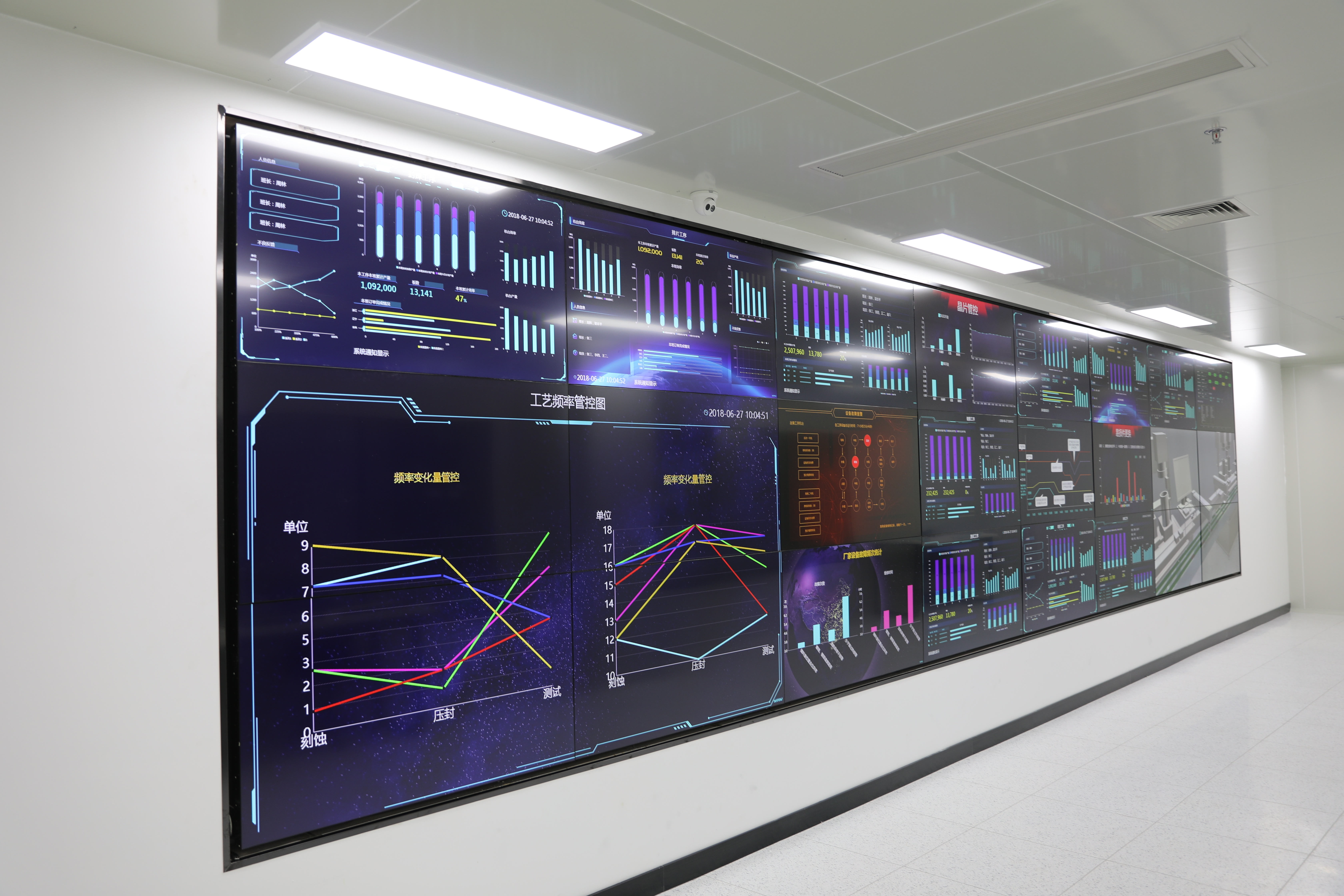
Pillar 2 — Order Confirmation Discipline
The order confirmation is where a lead-time conversation becomes a delivery obligation. A usable confirmation freezes the full quartz crystal model number, nominal frequency, load capacitance, frequency tolerance, operating temperature grade, package type, quantity, unit price, ship date, incoterms and documentation set. Any field left open is a future delay, because the clarification loop — supplier asks, buyer confirms, planner re-slots the order — is one of the most common causes of a first-order slip. Buyers who source with a precise model number experience materially fewer of these loops than buyers who buy from a family description.
Pillar 3 — Pre-Shipment Verification
Delivery assurance and quality assurance converge here, because a lot that fails final test does not ship on schedule — it ships late, or not at all.
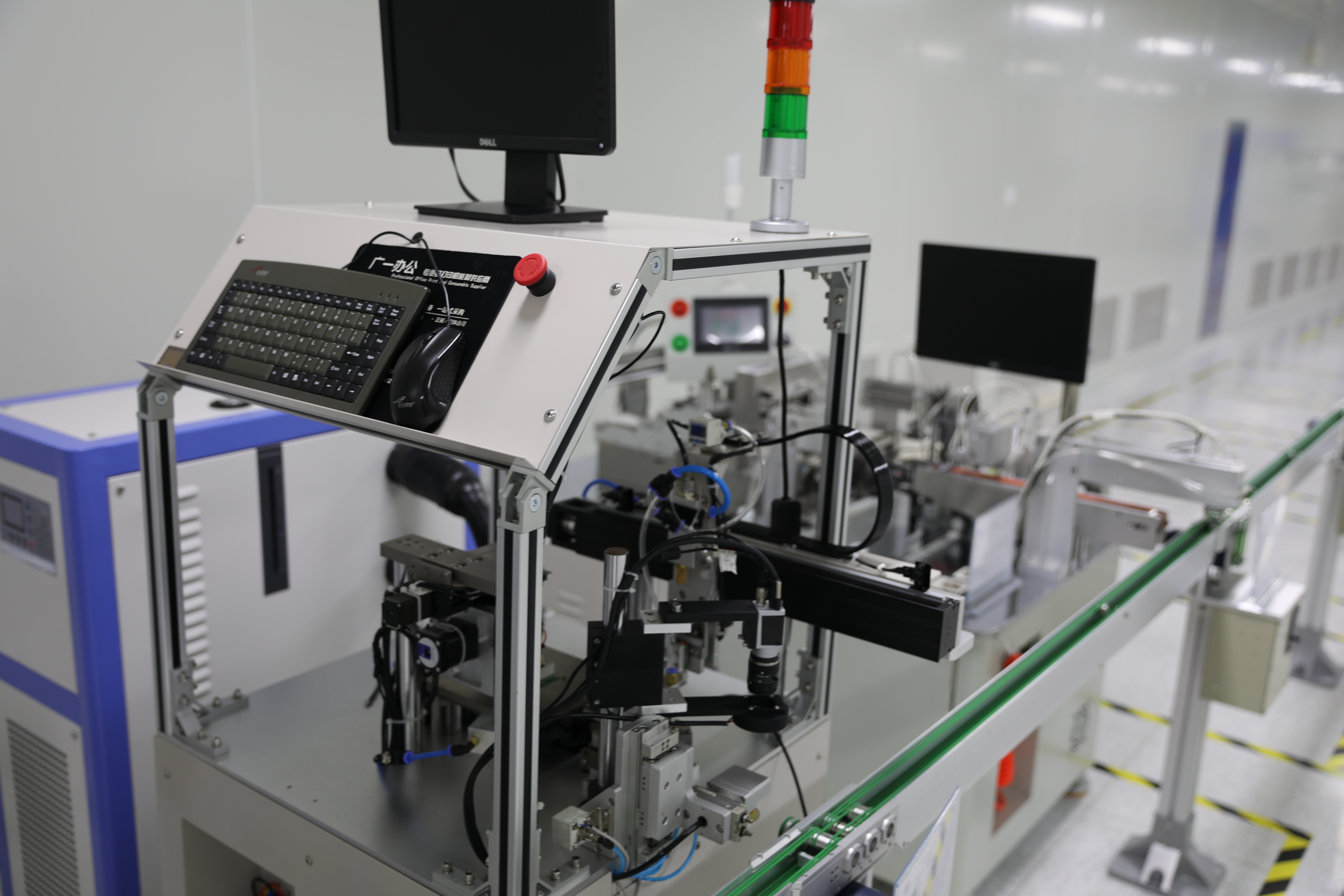
Fronter's risk-control framework addresses frequency-temperature stability at two levels. At the technology level, TCXO (temperature-compensated crystal oscillator) and OCXO (oven-controlled crystal oscillator) designs correct or isolate the frequency drift caused by temperature change. At the process level, each batch undergoes high-low temperature shock testing — for example, −40 °C ↔ 85 °C cycles — before leaving the factory, to confirm that frequency stability indicators such as ±0.5 ppm still hold under extreme temperatures.
The same framework maintains a temperature-characteristic classification in the bill of materials, distinguishing consumer-grade (−20 °C to +85 °C), industrial-grade (−40 °C to +85 °C) and automotive-grade (−40 °C to +125 °C) bands. Asking a supplier to show this classification is a fast, concrete test of whether temperature grade is a controlled design input or a catalogue label.
Pillar 4 — Logistics and Documentation
A shipment that is ready and a shipment that clears are two different events. Export documentation, compliance declarations and packaging suitability all sit between the factory gate and your receiving dock. Because all Fronter products comply with RoHS, REACH and other environmental protection regulations, the declaration set can be confirmed in advance — which is exactly the point. Buyers should require the document pack to be listed inside the order confirmation itself, so that a documentation gap cannot become a delivery gap.
Pillar 5 — Contingency Planning and Alternative Supply Paths
The last pillar tests what happens when the primary plan fails. Two mechanisms are worth verifying. The first is a written recovery path: expedite rules, partial-shipment policy, substitution approval workflow and notification timelines. The second is whether the supplier has a genuine alternative route.
Fronter maintains a wide supply channel for electronic components that extends beyond its own production. Its distribution brands include SUNLORD, KDS, EPSON, NDK, TI, ST, ATMEL, AD, ALTERA, XILINX, SAMSUNG, SK HYNIX, MICRON, BROADCOM and FREESCALE, alongside inductors, capacitors, resistors, connectors, modules, discrete devices and obsolete parts. For a buyer, that breadth functions as a contingency asset: when one line is constrained, a supplier with an authorized distribution channel can often propose a compliant alternative instead of simply moving the date.
A Step-by-Step Evaluation Process
- Freeze the delivery-critical specification first. Confirm frequency, tolerance, load capacitance, temperature grade and package before requesting quotations, and specify a full model number. Ambiguity at this stage reappears later as delay.
- Ask for a schedule, not a lead time. Request the planned production entry week for your order quantity and the scheduling rule that applies when capacity is contested.
- Request a sample order confirmation and read it as a contract. Check that every commercial and technical field is frozen. If the supplier cannot produce one before the order, ask whether it can produce one after.
- Test responsiveness during the quotation stage. Send one live technical question and measure both the speed and the completeness of the answer. Response behavior before the order is a reliable indicator of response behavior after it.
- Verify the pre-shipment test regime. Ask which tests run on every batch versus by sampling, and request an example batch record. Full-temperature shock testing with a stated stability threshold is stronger evidence than a catalogue specification.
- Map the logistics and document chain. Confirm incoterms, packaging for your transport mode, and the exact document pack that travels with the goods.
- Stress-test the contingency plan in writing. Ask what happens if the ship date moves: who is notified, within how many days, and through which alternative route.
Delivery Assurance Checklist: What to Ask, What to Watch
| Evaluation area | Evidence to request | Warning sign |
|---|---|---|
| Production capacity | Facility footprint, headcount, annual output, committed capacity in your delivery month | Only a headline capacity figure with no month-specific view |
| Production scheduling | Planned production entry week; priority rule for competing orders | "We will do our best" |
| Order confirmation | Fully frozen technical and commercial fields, including ship date | Acknowledgment without a locked date |
| Communication responsiveness | Turnaround time and completeness on a live technical question | Replies that avoid the specific question |
| Pre-shipment testing | Batch-level test regime, temperature shock cycles, stability threshold | Catalogue specification with no batch evidence |
| Compliance documents | RoHS and REACH declarations; AEC-Q200 where automotive applies | Documents promised "with the shipment" |
| Logistics | Incoterms, packaging specification, full document pack | Documentation not listed at order stage |
| Contingency planning | Written recovery path, expedite rules, alternative sources | Verbal assurances only |
| Change notification | PCN and end-of-life notification process | No defined notification window |
| On-time delivery record | Performance data for comparable orders and part families | No delivery performance data available |
Use Cases: Matching Delivery Assurance to the Application
- Automotive electronics. AEC-Q200 qualification and automotive-grade temperature classification drive both the test regime and the scheduling queue. Delivery assurance here means confirming that qualification status is current at the time of shipment, not only at the time of design.
- Communication base stations and network equipment. Continuous operation and long service life make aging rate a delivery-relevant specification, because a part that drifts early returns as a field failure rather than a schedule problem.
- Servers and industrial equipment. Long production lifecycles make end-of-life notice as important as lead time, especially for through-hole and cylindrical resonator types.
- IoT devices and wearables. Ultra-low-power 32.768 kHz timekeeping dominates, where volume is high and the principal delivery risk is allocation rather than customization.
- Instrument and meter, financial equipment, computer interface devices and consumer electronics. Mixed portfolios where a supplier's ability to schedule several part families in the same period is often more useful than a single-family capacity claim.
Comparison Table: Fronter High-Reliability Line vs. General-Purpose Crystal Oscillators
| Evaluation dimension | Fronter high-reliability line | General-purpose / consumer-grade crystal oscillators |
|---|---|---|
| Frequency stability | ≤ ±20 ppm (some models ≤ ±10 ppm) | ±20 ppm to ±50 ppm industry average |
| Annual aging rate | ≤ ±2 ppm | ±3 ppm to ±5 ppm common industry level |
| Lead time | 3–4 weeks | 12–20 weeks for overseas brands |
| Automotive-grade certification | AEC-Q200 | — |
| Customization support | Full customization support | — |
| Operating temperature | −40 °C to +85 °C / +105 °C | — |
| Long-term cost profile | Lower long-term maintenance cost by eliminating clock-drift-related downtime; competitive total cost of ownership despite initial cost parity | — |
| Best fit | Automotive electronics, communication base stations, servers, industrial equipment, IoT | — |
Comparison based on Fronter's published comparison data for its high-reliability oscillator line against general-purpose and consumer-grade crystal oscillators. The lead-time row should be read with the most care and the least optimism: a shorter lead time is only valuable when it is backed by scheduling evidence, which is precisely what the evaluation method above is designed to test.
FAQ
1. Which compliance documents should be in place before a crystal resonator delivery is scheduled?
At minimum, RoHS and REACH declarations covering the specific part number. Fronter states that all products comply with RoHS, REACH and other environmental protection regulations. Where the application is automotive, AEC-Q200 — the global stress-resistance standard required for passive electronic components including crystal resonators — is the relevant qualification, and its status should be confirmed as current rather than assumed from a catalogue. The IEC 60122 series provides the international baseline for quartz crystal units, covering general requirements and measuring methods, and is a useful reference when comparing test reports issued by different suppliers.
2. What production evidence shows that a supplier can actually hold a delivery commitment?
Look for owned production rather than brokered supply. Fronter Electronics Co., Ltd, founded in 1991, operates a 21,000 m² facility with 286 employees and an annual output of 300,000,000 units, supported by a 19-engineer R&D team, with around 70% of production exported to the EU and USA. Its published comparison data indicates a 3–4 week lead time against 12–20 weeks for overseas brands. Buyers should ask for the scheduling rule that applies to their specific order window, not only the annual output figure.
3. How does delivery assurance affect the total cost of a crystal resonator program?
Unit price is the smallest part of the calculation. The cost drivers include expedited freight, safety stock carrying cost, the cost of a stalled production line, and the re-qualification cost incurred if a source has to be changed. Fronter's comparison data positions its line as competitive on total cost of ownership despite initial cost parity, on the basis of lower long-term maintenance cost through the elimination of clock-drift-related downtime, supported by an annual aging rate of ≤ ±2 ppm against a common industry level of ±3–5 ppm. The decision rule is simple: a lower quotation paired with unverifiable scheduling is usually the more expensive option.
4. What should a sample evaluation cover before a supplier is approved?
A sample is only informative if it represents series production. Confirm that the sample carries the same model number, tolerance, load capacitance and temperature grade as the production part, and ask whether it was built on the production line or pulled from stock. Request the test data behind it. Fronter's risk-control framework specifies that each batch undergoes high-low temperature shock testing — for example, −40 °C ↔ 85 °C cycles — before leaving the factory, to confirm that frequency stability indicators such as ±0.5 ppm still hold under extreme temperatures. Sample data that includes temperature performance is far more useful for delivery planning than room-temperature data alone.
5. What lead time should a buyer expect, and how should it be confirmed?
Fronter's published comparison data indicates 3–4 weeks, against 12–20 weeks for overseas brands. Treat that figure the same way you would treat any other lead-time claim: confirm it against the production schedule for your specific quantity and specification, and require it to be written into a frozen order confirmation with a ship date. Buyers who want to test this directly can request a quotation, a sample or the current production schedule from Fronter at sales@chinafronter.com, or download the company brochure, before committing to a series order.
Conclusion: Verify the Process, Not the Promise
Delivery assurance in crystal resonator sourcing is a verification exercise rather than a negotiation tactic. The buyers who avoid line stops are the ones who ask for a production schedule instead of a lead time, treat the order confirmation as a contract, confirm that every batch is tested against the grade they specified, and know in advance what happens when a date moves.
Applied to a specific part family — a 32.768 kHz tuning fork crystal, an MHz surface mount crystal resonator, or an HC49 SMD crystal — that method converts a supplier's promise into something a procurement team can actually plan around. The checklist, the seven evaluation steps and the five pillars above are intended to be used on a live quotation, not saved for a post-mortem after a missed delivery.
Next Step: Test the Schedule Before You Commit
Fronter Electronics Co., Ltd supplies quartz crystal resonators and quartz crystal oscillators from an owned 21,000 m² production base in Shenzhen, with products complying with RoHS and REACH and approximately 70% of output exported to the EU and USA. Buyers evaluating delivery assurance can request a quotation, a sample, an order confirmation sample or the current production schedule for their part family.
Email: sales@chinafronter.com | WhatsApp: +86 18903026195 | Website: www.chinafronter.com
Download the full product and capability brochure: Fronter product brochure (PDF)