
What Is Delivery Assurance in Crystal Oscillator Supplier Evaluation for Smart Manufacturing?
Delivery assurance in crystal oscillator supplier evaluation is the verifiable ability of a supplier to ship the approved part number, in the ordered quantity, at the promised time, with parameters that still match the approved sample when the goods arrive. It is demonstrated with process data, test records and traceability documentation — not with a production capacity figure.
That distinction matters more in smart manufacturing than in most other buying environments. A single SMD oscillator that drifts outside its specified window, or a batch that arrives six weeks late, can hold up an assembly line whose hourly cost dwarfs the cost of the component. This guide explains what delivery assurance is actually composed of, which evidence makes it checkable before a production order is placed, and how the sourcing route of the underlying quartz piezoelectric crystal element affects continuity.
Fronter Electronics Co., Ltd, founded in 1991 and operating under the "FT" brand, is a Shenzhen-based manufacturer of quartz crystal resonators and quartz crystal oscillators that also runs a broader electronic component supply channel covering inductors, integrated circuits, modules, capacitors, resistors and connectors.
The Problem Definition: Why Capacity Claims Are Not Delivery Assurance
Capacity answers a volume question. Delivery assurance answers a continuity question, and the two are backed by completely different evidence. A stated annual output of 300,000,000 units describes how much a factory can build in a year; it says nothing about whether the part you approve in week one will still be the part you receive in week twelve.
Two distinct failure modes sit behind that gap, and smart manufacturing buyers usually discover them separately.
Schedule risk appears when ordered quantity, confirmed lead time and upstream material availability do not line up. In crystal oscillator sourcing, the upstream item that matters most is the quartz piezoelectric crystal element itself — the piezo element whose mechanical resonance sets the oscillator's base frequency. If that element is bought in from a third party, the supplier's delivery promise is partly a promise about someone else's delivery schedule.
Parameter-continuity risk appears when the shipped goods carry the right part number but not the same electrical behaviour. A datasheet limit such as ±20ppm is a boundary, not proof that batch after batch stays well inside it. What proves continuity is distribution data: how tightly frequency lands around its target after trimming, whether that spread holds across shifts, and whether it holds months later.
Published market figures illustrate the same lesson. For 2025, MarketsandMarkets values the global crystal oscillator market at approximately USD 2.89 billion, while Mordor Intelligence reports USD 3.10 billion for the same year, and Market Research Future reported USD 6.12 billion for 2024. The divergence is attributed to whether MEMS-based components are included in the scope. Two numbers describing the same market, differing mainly by definition — which is exactly why a buyer should ask what a claim covers rather than how large it sounds.
Practical rule: treat any single number — capacity, lead time, market size, stability figure — as a claim until the scope and the supporting record are visible. Delivery assurance is the discipline of asking for the record.
Industry Background: The Supply Context Smart Manufacturing Buyers Work In
The timing component market is large, geographically concentrated and moving toward smaller, surface-mount formats. According to MarketsandMarkets, the global crystal oscillator market was valued at approximately USD 2.89 billion in 2025 and is projected to reach USD 3.66 billion by 2030. Precedence Research reports that Asia-Pacific dominated the market in 2024 with more than 42% share, roughly USD 1.1 billion, driven by high electronics production volumes in China, Japan and South Korea.
The product mix inside that market shapes which delivery risks dominate. TCXO (temperature-compensated crystal oscillator) held a 30% share in 2024 according to Precedence Research, largely on the strength of telecom and GPS requirements. The OCXO (oven-controlled crystal oscillator) segment is expected by MarketsandMarkets to grow at a CAGR of 2.6% to USD 528 million by 2028, driven by 5G base station demand. Coherent Market Insights projects that the surface-mount (SMD) segment will hold an 80% share by 2025, reflecting miniaturisation trends in IoT and wearables.
For buyers, three consequences follow. First, most smart manufacturing demand now lands on SMD packages, where rework is difficult and a delivery problem becomes a scrap problem. Second, the highest-value parts — precision TCXO and OCXO variants — carry the tightest verification burden, so their continuity depends on process control rather than on volume. Third, because the supply base is concentrated in one region, buyers increasingly evaluate process evidence at the supplier level before committing a production line to a single source.
Timing components sit inside network equipment, communication systems, industrial control, automotive electronics, instrument and meter products, financial equipment, computer interface devices and consumer electronics. In a smart factory, that list translates into PLC racks, machine controllers, communication gateways, inspection equipment and sensor nodes — equipment that is expected to run continuously, which is precisely why delivery assurance is evaluated before the first production order rather than after.
The Detailed Solution: Five Evidence Layers That Make Delivery Assurance Verifiable
Delivery assurance becomes checkable when it is broken into five layers. Each layer has an owner inside the supplier, a document that proves it, and a specific risk it neutralises.
Layer 1 — Parameter continuity you can measure
Start with the parameters that decide whether the line keeps running: frequency stability across the full temperature range, annual aging rate, and — where signal purity matters — phase noise.
Fronter specifies frequency stability of ≤ ±20ppm across the full temperature range, with some models at ≤ ±10ppm, against an industry average commonly quoted at ±20 to ±50ppm. Annual aging rate is specified at ≤ ±2ppm, compared with a common industry level of ±3 to ±5ppm. Temperature characteristics are classified in the bill of materials by application scenario: consumer grade at -20℃ to 85℃, industrial grade at -40℃ to 85℃, and automotive grade at -40℃ to 125℃. Each batch undergoes high-low temperature shock testing, for example -40℃ ↔ 85℃ cycles, before shipment, with the stated requirement that frequency stability indicators such as ±0.5ppm still meet standard under extreme temperatures.
What to request: temperature test records tied to the exact part number and batch, not to a product family.
Layer 2 — Process capability data, not process descriptions
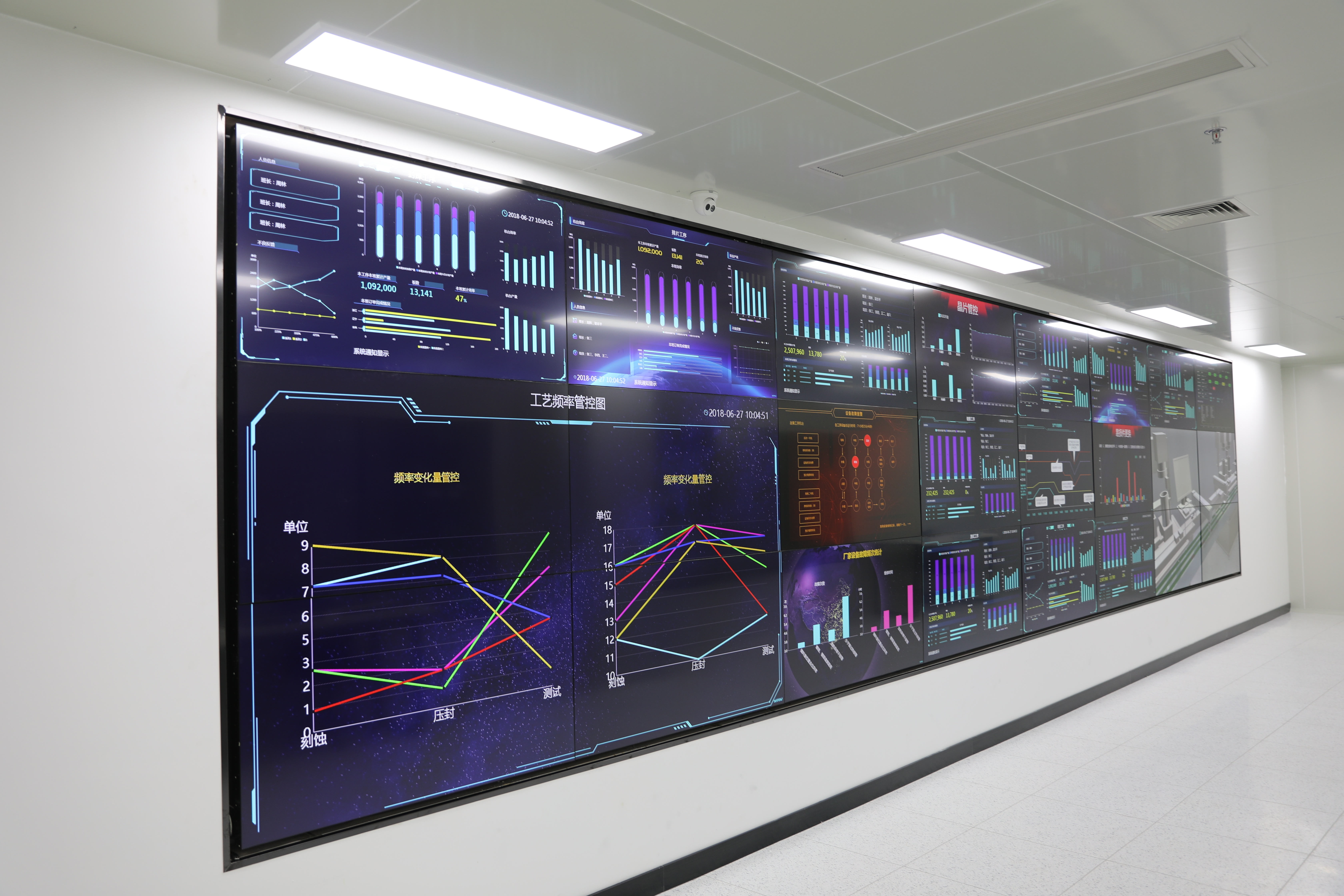
A supplier description of its production line is marketing. Statistical process control is evidence. Fronter sets CPK control targets for core processes such as frequency trimming and resistor soldering, collects data every shift, generates SPC control charts, and stops production for adjustment when abnormal trends appear. Frequency deviation is corrected in real time through automated closed-loop frequency tuning that uses online automatic testing and laser trimming, which concentrates the distribution across batches. Process parameters such as coating thickness, trimming time and packaging pressure are fixed per product model and enforced through an MES system, so process behaviour does not shift with personnel or shift changes.
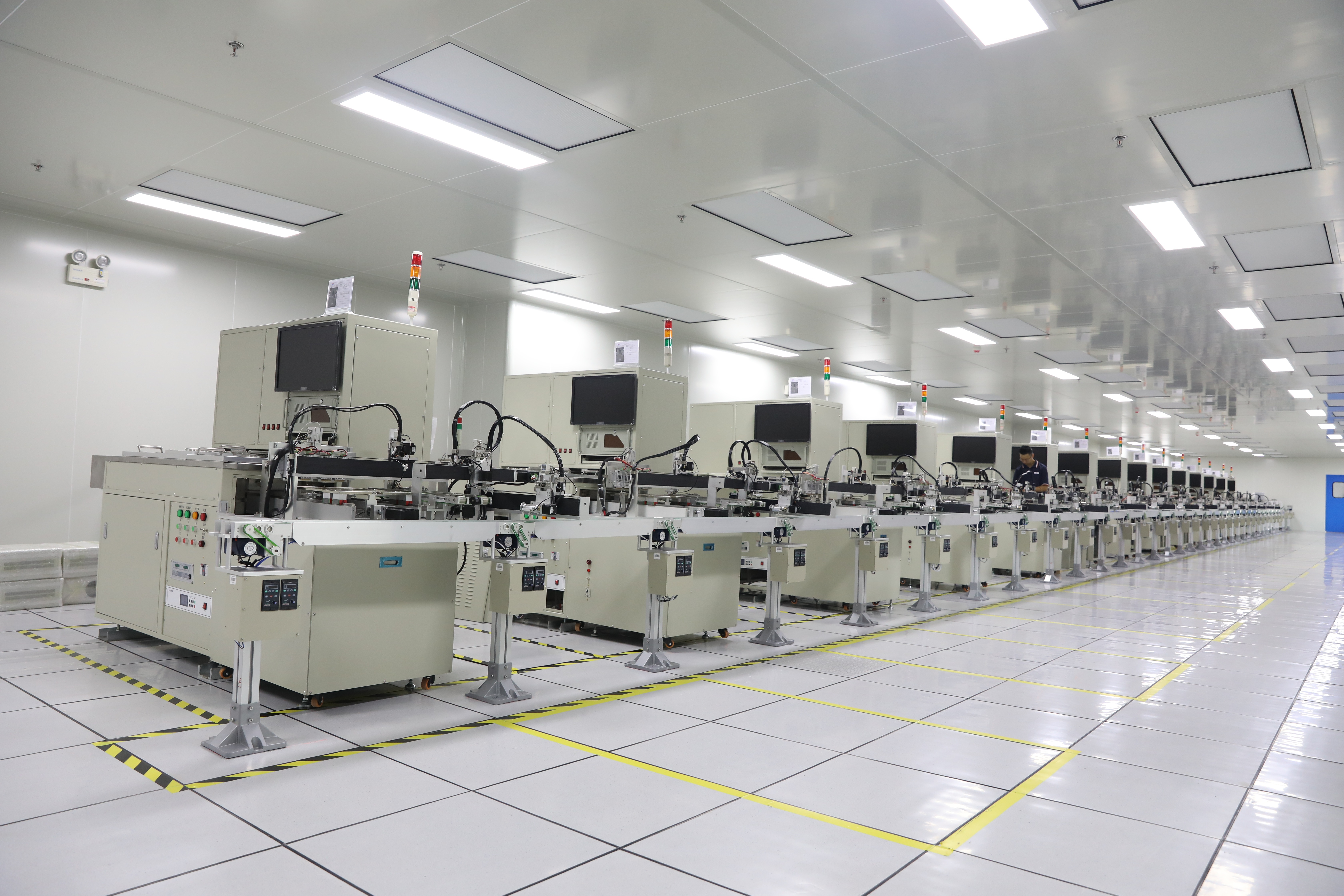
What to request: recent CPK values and SPC control charts for the specific process that builds your part, plus a statement of how process parameters are locked and changed.
Layer 3 — Batch traceability from crystal ingot to finished product
Traceability is what turns a quality claim into a recoverable one. Fronter operates a full-process batch traceability system running from the crystal ingot through to the finished oscillator. Before each batch is shipped, random samples are tested for key parameter distribution — for example a frequency deviation histogram — to confirm that dispersion both within a batch and between batches stays inside datasheet specifications.
What to request: the traceability structure (which identifiers link ingot, production lot and shipped carton) and a sample histogram from a recent production batch.
Layer 4 — Application-level test records
Parameters measured on the bench do not automatically survive vibration, thermal cycling or electrostatic discharge in the field. Fronter covers these through specific test regimes. Phase noise analysers are used for 100% inspection of phase noise in high-end oscillators for each batch, with typical jitter values reported in the factory report and PCB layout recommendations such as power supply decoupling and impedance matching supplied to reduce jitter introduced at system level. Mechanical shock and random vibration testing is carried out on random samples of each batch to confirm no oscillation stoppage or frequency hopping occurs. For automotive customers, dedicated production lines follow the AEC-Q200 standard, with strict process control and regular cross-sectional analysis of wafer-fixing adhesive and solder joints. On the ESD side, on-chip protection structures are used together with board-level protection such as TVS diodes and filter capacitors, workshops operate to the ESD20.20 standard, and product verification follows IEC 61000-4-2 with contact discharge ≥ ±4kV and air discharge ≥ ±8kV.
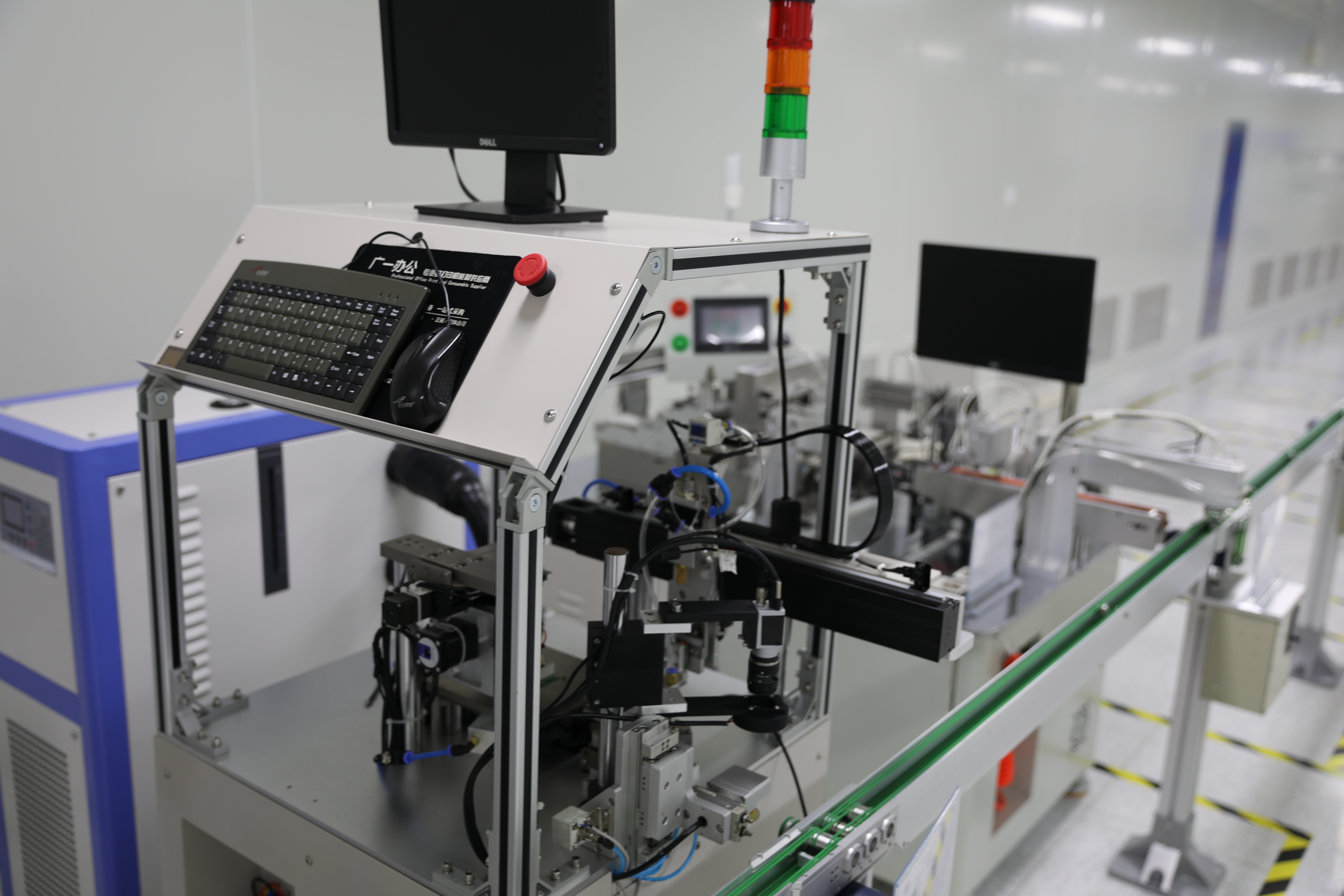
What to request: test reports per part number and batch, covering phase noise, mechanical shock and random vibration, and ESD to IEC 61000-4-2.
Layer 5 — Commercial and logistics behaviour
The last layer is the one buyers feel first: how the supplier behaves between the purchase order and the receiving dock. Fronter quotes lead times of 3-4 weeks, against 12-20 weeks typical for overseas brands, and supports full customisation rather than catalogue-only supply. Automotive-grade reliability with AEC-Q200 certification is part of the stated product position, together with competitive total cost of ownership through reduced maintenance and reduced clock-drift-related downtime.
Component channel breadth also belongs here. Fronter supplies inductors, crystal resonators and oscillators, integrated circuits, modules, discrete components, capacitors, resistors, connectors, flash and memory, including obsolete parts, and distributes brands such as SUNLORD, KDS, EPSON, NDK, TI, ST, ATMEL, AD, ALTERA, XILINX, SAMSUNG, SK HYNIX, MICRON, BROADCOM and FREESCALE. For a smart manufacturing buyer building a BOM, consolidating timing components and adjacent parts with one supplier removes hand-off points where delivery schedules usually break.
Where Fronter Electronics sits in this framework
Fronter Electronics Co., Ltd was founded in 1991 and its "FT" brand was recognised as a National High-Tech Enterprise in 2017. The company operates a 21,000 m² factory with 286 employees, a 19-engineer R&D team, and an annual output of 300,000,000 units. Around 70% of output is exported, primarily to the EU and USA. All products comply with RoHS, REACH and other environmental protection regulations.
The annual output figure answers the capacity question. The layers above are what answer the delivery question — which is why a buyer should treat the capacity number as one input among several rather than as a proxy for reliability.
Step-by-Step Breakdown: A Delivery Assurance Evaluation Workflow
This sequence can be run inside a normal sourcing cycle without adding a separate audit programme.
- Write the delivery-critical parameter list before the RFQ. Frequency stability across the operating temperature range, annual aging rate, phase noise where relevant, temperature grade (consumer -20℃ to 85℃, industrial -40℃ to 85℃, or automotive -40℃ to 125℃), package format including small SMD types such as SMD3225 and SMD2520, and the output type required by the circuit. If these are not fixed before quoting, no later evidence can be assessed against them.
- Request CPK and SPC evidence for the specific process. Ask for control targets and charts for frequency trimming and soldering, along with the sampling frequency — Fronter collects data every shift and stops production when abnormal trends appear.
- Request the traceability model. Confirm how an ingot identifier links to a production lot and to the shipped carton, and ask for a recent frequency deviation histogram from a released batch.
- Request application-level test reports. Phase noise for high-end oscillators, mechanical shock and random vibration sampling results, and ESD verification to IEC 61000-4-2. For automotive builds, ask specifically about the AEC-Q200 production line and cross-sectional analysis of adhesive and solder joints.
- Confirm standards and compliance documentation. IEC 60679-1 defines general requirements and test methods for quartz crystal controlled oscillators; AEC-Q200 applies the stress test qualification for automotive-grade use. Request RoHS and REACH declarations covering the exact part numbers.
- Fix lead time, quantity flexibility and change notification in writing. A quoted 3-4 week lead time should come with a defined trigger for notifying you of any process or material change, since a silent change is the most common cause of parameter drift after qualification.
- Validate a sample batch, then lock the approved baseline. Use the sample to verify the parameters that govern delivery risk — full-temperature behaviour, aging data, phase noise, thermal shock response, mechanical robustness and ESD — and record the measured values as the acceptance reference for future shipments.
The table below maps each delivery risk to the control method and the evidence a buyer can request.
| Delivery risk | Control method | Evidence to request |
|---|---|---|
| Batch consistency / process fluctuation | Statistical process control with CPK targets; automated closed-loop frequency tuning using online testing and laser trimming | CPK values and SPC control charts for frequency trimming and resistor soldering; per-batch frequency deviation histogram |
| Frequency-temperature stability | TCXO and OCXO compensation; temperature-grade classification in the BOM | High-low temperature shock test records (for example -40℃ ↔ 85℃ cycles) for the specific part number |
| Clock jitter / phase noise | Low-noise circuit design; control of crystal cutting angle accuracy and coating thickness for Q-value consistency | Phase noise report (100% inspection for high-end oscillators); typical jitter values; PCB layout recommendations |
| Mechanical vibration / shock | Dispensing to fix the wafer; smaller, lower-mass SMD packages such as SMD3225 and SMD2520; optimised solder joint design | Random vibration and mechanical shock sampling results; cross-sectional analysis reports for automotive builds |
| ESD damage | On-chip ESD protection structures; workshop control to ESD20.20; board-level TVS diodes and filter capacitors | IEC 61000-4-2 results (contact discharge ≥ ±4kV, air discharge ≥ ±8kV) |
Use Cases: How Delivery Assurance Plays Out by Application
Automotive electronics and safety-related builds
Automotive-grade crystal oscillators must comply with the AEC-Q200 stress test qualification for use in ADAS and safety-critical systems. The delivery-assurance questions here are qualification-specific: is there a dedicated production line operating to AEC-Q200, is the temperature grade -40℃ to 125℃, and are cross-sectional analyses of wafer-fixing adhesive and solder joints performed regularly? Because rework or field failure is costly, parameter continuity matters more than unit price at this stage.
Industrial control and factory automation equipment
Controllers, drives and machine interface equipment are expected to run continuously, often on industrial-grade parts rated -40℃ to 85℃. Vibration is a real condition in this environment, which is why anti-vibration construction — dispensing to fix the wafer, or smaller low-mass packages such as SMD3225 and SMD2520 — is a delivery-relevant capability rather than a design detail.
Communication base stations and network equipment
This is the segment where OCXO demand is concentrated: MarketsandMarkets expects the OCXO market to grow at a CAGR of 2.6% to USD 528 million by 2028, driven by 5G base station demand. Signal purity is the deciding parameter, so a supplier's 100% phase noise inspection practice per batch, and its stated annual aging rate, become the buyer's continuity indicators.
IoT devices and smart-factory sensor nodes
Miniaturisation in IoT and wearables is expected to push the SMD segment to an 80% share by 2025, according to Coherent Market Insights. For less demanding nodes, consumer-grade parts rated -20℃ to 85℃ are usually sufficient, and the delivery question shifts to package availability and reorder lead time rather than to extreme stability figures.
Comparison Table: Fronter FT vs General-Purpose Crystal Oscillators
The comparison below is drawn from Fronter's published product position against general-purpose and consumer-grade crystal oscillators. It is a specification and service comparison, not a ranking of brands.
| Evaluation dimension | Fronter "FT" crystal oscillators | General-purpose / consumer-grade crystal oscillators |
|---|---|---|
| Frequency stability | ≤ ±20ppm; some models ≤ ±10ppm | ±20 to ±50ppm industry average |
| Annual aging rate | ≤ ±2ppm | ±3 to ±5ppm common industry level |
| Temperature range | Consistent timing accuracy across -40℃ to +85℃ / +105℃ | Narrower effective range in harsh environments |
| Automotive qualification | Automotive-grade reliability with AEC-Q200 certification | Not automotive-qualified |
| Lead time | 3-4 weeks | 12-20 weeks for overseas brands |
| Customisation | Full customisation support | Limited, catalogue-based options |
| Cost profile | Competitive total cost of ownership; lower long-term maintenance cost by reducing clock-drift-related downtime | Initial cost parity, with higher maintenance exposure over time |
| Best suited to | Automotive electronics, communication base stations, servers, industrial equipment, IoT devices | Applications without long-term timing accuracy requirements |
FAQ: Delivery Assurance Questions Smart Manufacturing Buyers Ask
1. Which certification and compliance evidence should a buyer request when qualifying a crystal oscillator supplier?
Begin with the standards that apply to your end product. Automotive-grade crystal oscillators must comply with the AEC-Q200 stress test qualification for use in ADAS and safety-critical systems, and IEC 60679-1 specifies the general requirements and test methods for quartz crystal controlled oscillators. For environmental compliance, request RoHS and REACH declarations — Fronter states that all of its products comply with RoHS, REACH and other environmental protection regulations. For electrostatic discharge, ask for IEC 61000-4-2 verification, for example contact discharge ≥ ±4kV and air discharge ≥ ±8kV, alongside evidence that production operates to the ESD20.20 standard. Every document should identify the specific part number rather than a generic product family.
2. How can a buyer confirm that a supplier will hold the same parameters across production batches?
Ask for process capability data and traceability records rather than for a quality statement. At Fronter, CPK control targets are set for core processes such as frequency trimming and resistor soldering, data is collected every shift and SPC control charts are generated, and production is stopped for adjustment when abnormal trends are detected. Frequency deviation is corrected in real time through automated closed-loop frequency tuning based on online automatic testing and laser trimming. A full-process batch traceability system connects the crystal ingot to the finished product, and random samples from each batch are tested for key parameter distribution before shipment. Those charts and histograms are the evidence that answers the question.
3. Does stronger delivery assurance raise the purchase price?
Not necessarily at the unit level. Fronter's stated position is initial cost parity with general-purpose and consumer-grade oscillators while offering superior frequency accuracy and full-temperature stability, automotive-grade reliability with AEC-Q200 certification, faster lead times and full customisation support. The cost difference appears in total cost of ownership: a ≤ ±2ppm annual aging rate against a ±3 to ±5ppm common industry level, combined with stable timing performance over years, reduces the need for frequent recalibration and lowers the risk of system failure caused by clock drift. For a smart manufacturing buyer, that is usually the larger number.
4. What should a sample evaluation cover before a supplier is approved?
Evaluate the sample against the same parameters that create delivery risk. Check frequency stability across the full temperature range, annual aging data, and phase noise where signal purity matters — Fronter performs 100% phase noise inspection on high-end oscillators for each batch and reports typical jitter values together with PCB layout recommendations such as power supply decoupling and impedance matching. Confirm thermal behaviour through high-low temperature shock testing, mechanical robustness through random vibration and mechanical shock sampling, and ESD capability against IEC 61000-4-2. For automotive builds, ask for cross-sectional analysis of wafer-fixing adhesive and solder joints. Then record the measured values as the acceptance baseline for future shipments.
5. What lead time should buyers expect, and how does it relate to delivery assurance?
Fronter quotes 3-4 weeks, compared with 12-20 weeks typical for overseas brands — a difference that matters directly when a smart manufacturing line is ramping. Lead time alone is not assurance, however: it should be paired with process evidence, a defined change-notification rule and a locked parameter baseline, so that a fast shipment is also a correct one. Buyers who want to test that combination can request a sample, a quotation, or the full product catalogue before committing a production order.
Next Step: Verify Before You Commit
Request a sample, a quotation or the product catalogue, and ask for the process, test and traceability records that support the parameters you need.
Download the catalogue: Fronter Electronics product catalogue (PDF)
Email: sales@chinafronter.com | Website: www.chinafronter.com | WhatsApp: +8618903026195
Conclusion: Delivery Assurance Is an Evidence Question
Delivery assurance in crystal oscillator supplier evaluation is not a promise about volume. It is the sum of measurable parameter continuity, statistical process control, batch traceability from the quartz piezoelectric crystal element through to the finished oscillator, application-level test records, and a commercial relationship that communicates change instead of hiding it. Capacity figures tell a smart manufacturing buyer what a factory can build. Those five layers tell the buyer what will actually arrive — and whether the line keeps running.