
Bamboo Stick vs. Bendable Stick Cotton Swabs: Which Cleaning Swab Is Better?
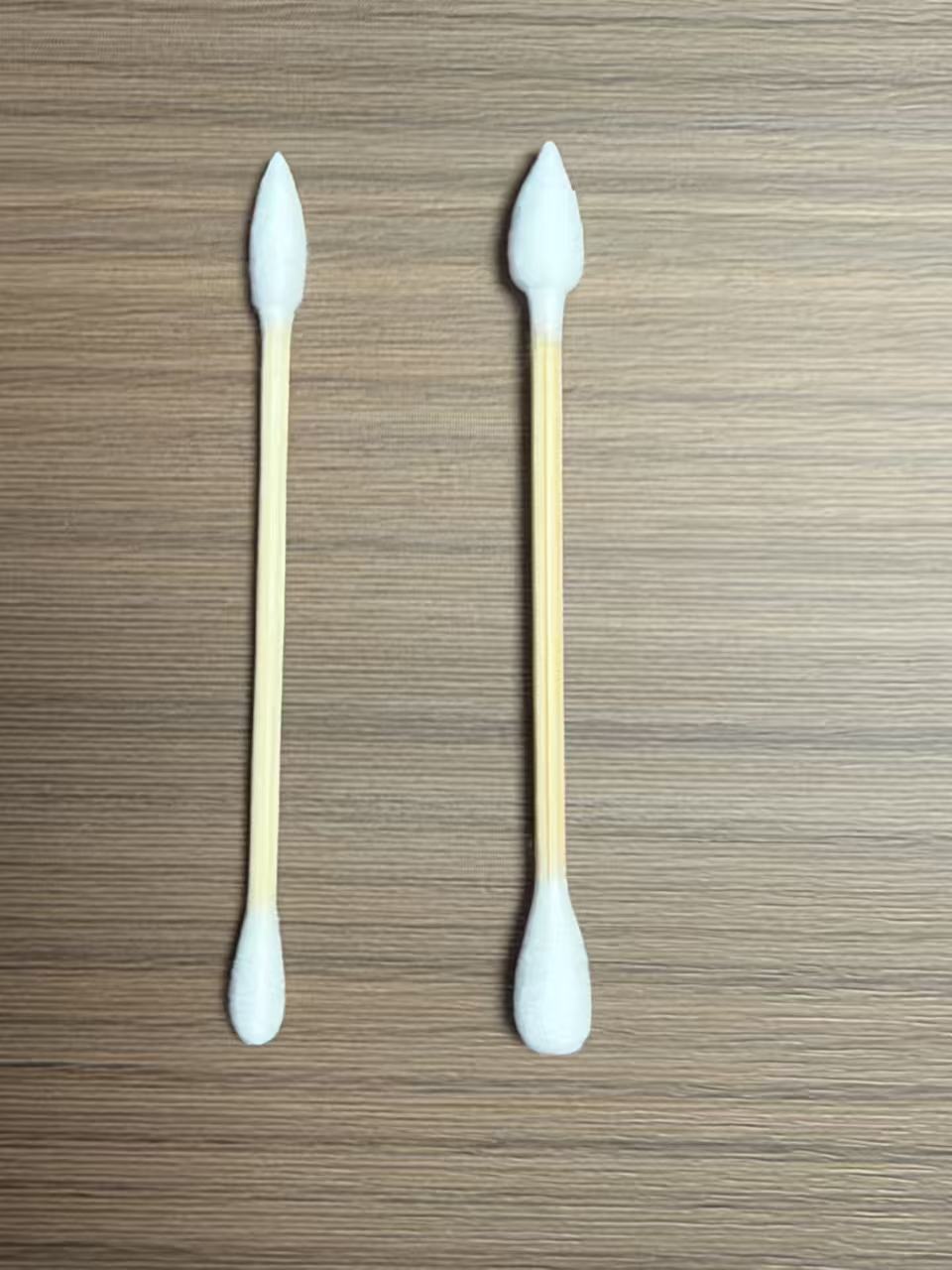
The better swab is the one whose shaft matches the way you have to reach the soil. Bamboo stick cotton swabs win when the residue sits on a surface you can see and press against — the inner wall of a banger, a quartz nail, a glass rim, a packed crevice in nail tooling — because a stiff bamboo shaft carries push and twist from your fingers to the tip instead of flexing away. Bendable stick cotton swabs win when the soil sits around a bend or off the axis of the handle, because the bendable section lets the head be turned toward the target while the handle stays where your hand can hold it comfortably.
That single distinction — force transfer versus articulation — explains most of the practical difference between the two formats. Everything else in a buying decision follows from it: tip shape, handle length, breakage complaints, what you check on a sample, and what you write into the purchase order. This guide compares the two options on those decision points and stays close to the documented cleaning-swab data and supply terms provided by FUZHOU WENXI EVER-RISE IMPORT & EXPORT CO., LTD., flagging the items that must be confirmed on an actual sample because construction is not identical across suppliers.
Two ways a cleaning swab fails
Cleaning swabs fail in predictable ways, and the two formats answer opposite ones.
Shaft collapse. When a swab has to press against dried residue — reclaim inside a banger, carbon on a quartz nail, polish residue on a glass rim, dust packed into a thread — a thin or soft stick bows, then kinks, and the tip stops transmitting force. The user compensates by pressing harder, the head flattens and spreads, and the swab is thrown away after one or two passes. The supplied product comparison data addresses this directly: it records stronger sticks that are less likely to break, and connects that property to cleaning more effectively with fewer cotton swabs and to fewer customer complaints.
Blocked line of sight. Many cleaning targets are not on the axis of the handle. A water-pipe neck bends away from the opening, a recessed corner sits behind a lip, an ear canal curves, a nail-tool joint is offset from the bit. A straight swab can only reach those areas by tilting the whole tool, which puts the wrist at an awkward angle and often drags the shaft along the wall before the tip arrives. A bendable stick changes the head angle instead of the wrist angle.
Which failure costs you more per cleaning job determines which swab belongs in the order. This is a specification question, not a preference question, and it is the first thing to settle before price per swab is compared.
Why one category carries so many product names
Cleaning cotton swabs are sold under names that describe tip shape, handle material, or the cleaning job rather than a fundamentally different product: pointed tip cleaning swabs, round tip cleaning swabs, long handle cleaning swabs, bamboo stick cleaning swabs, paper stick cleaning swabs, glass cleaning cotton swabs, bong cleaning cotton swabs, pet ear cleaning swabs, slurper mops and OEM cleaning cotton swabs. For a buyer the practical consequence is simple: two listings with different names may be the same swab, while two listings with the same name may differ in stick diameter, tip density and how firmly the head is attached to the shaft.
FUZHOU WENXI EVER-RISE IMPORT & EXPORT CO., LTD. is an export-oriented manufacturer and supplier based in Fuzhou, Fujian Province, China, established in 2025 and producing cotton swabs, cotton pads, dental floss picks, pet cleaning products and related personal-care and daily-use items. The company runs its own 5,000 m² manufacturing facility with more than 20 employees, five engineers and annual output above 1,000 tons, exports its full output to North America, South America and Europe, and supplies standard products alongside OEM and private-label programs covering product specification, packaging and branding. Its stated quality routine covers raw-material selection, in-process inspection and finished-product inspection, with regular spot checks and periodic third-party laboratory testing of submitted samples. More detail is published on the company website at FUZHOU WENXI EVER-RISE IMPORT & EXPORT CO., LTD.
That range matters to this comparison because the same swab family can be produced in more than one stick build. When a price list quotes “cleaning cotton swabs”, confirm whether the line item is bamboo stick, bendable stick, paper stick or another build before comparing the number with a competitor's quote.
Bamboo stick cleaning swabs: what the rigid shaft changes
A bamboo stick cleaning swab uses a shaft cut from bamboo. The buying-relevant property is not the material name but the behaviour it produces: a straight, stiff shaft that keeps its shape under a push and keeps the tip flat against the surface being cleaned.
Four consequences follow for cleaning work:
- Direct force transfer. Pressure applied at the handle arrives at the tip instead of being absorbed by shaft flex, which is why these swabs suit dried or adherent residue.
- Predictable tip position. The head stays in line with the handle, so the user can gauge depth and contact by feel — useful inside a straight tube or across a flat banger floor.
- No angle to lose. There is no bend to relax mid-use, so the swab behaves the same on the first pass and the tenth.
- Straight-line reach. Long handle versions extend reach into straight channels without the handle bowing under torque.
Its limits are just as specific. A fixed head angle cannot follow a curve: inserted into a bent neck, a straight swab contacts the outer wall first and cleans a stripe rather than the whole bore. Bamboo is also a natural material, so stick straightness, diameter consistency and moisture behaviour vary by batch and treatment; buyers should write straightness and moisture tolerance into the specification and check both on the sample rather than assume them. Finally, “bamboo” is not by itself evidence of a lower environmental impact — that depends on species, treatment, transport and disposal of the actual product, and should be documented rather than inferred from the word on the label.
Bendable stick cotton swabs: what the flexible section changes
A bendable stick cotton swab keeps a straight handle but adds a bendable section — a joint or flexible segment — between the handle and the head, so the head can be set at an angle to the shaft. Construction varies by supplier, so confirm on the sample what the bend actually is and how many cycles it survives before the angle relaxes.
The cleaning advantages are equally concrete:
- Off-axis reach. The head can be aimed at a surface that is not in line with the handle, which is the whole reason the format exists.
- Better control of view. The handle stays in a comfortable grip while the tip works around a bend, so the user can watch the target instead of the wrist.
- Two-stage use. Insert straight, then bend to the required angle — a workflow that suits curved bores, rims and recessed corners.
Its limits are equally real. The bend absorbs part of the push, so heavy scrubbing against dried residue is not this format's job; pressing harder mainly risks folding the joint or detaching the head. Bend fatigue matters: after several bends the set angle can droop, so a specification should state how many bends the swab must tolerate and how well the angle must hold during use. Head attachment is the weakest point in any bendable design, and if the flexible section contains a wire or metal core, the core must be verified as unable to protrude through the cotton — a question to put to the sample, not to the brochure.
Side-by-side comparison
| Decision point | Bamboo stick cleaning swab | Bendable stick cleaning swab |
|---|---|---|
| Shaft behaviour | Straight, rigid shaft that resists bowing under push and twist | Straight handle with a bendable section near the head that flexes where it is set |
| Head angle | Fixed in line with the shaft; angle comes from the wrist | Settable to an angle, so offset surfaces can be reached |
| Force at the tip | High — pressure reaches the tip with little loss | Lower — the bend absorbs part of the push |
| Best-fit cleaning jobs | Quartz nails and bangers, glass rims and edges, straight tubes, nail-tool joints and bits | Bent necks, curved interiors, recessed corners, rims that sit off the handle axis |
| Typical failure to watch | Straightness variation, moisture softening, head detachment after heavy scrubbing | Bend fatigue, angle droop, head detachment, core exposure if a metal core is used |
| Customization (OEM) | Tip shape, handle length, packing and branding per program | Bend design, bend stiffness, tip shape, handle length, packing and branding per program |
| Price basis | Quoted per specification, packing and order quantity | Quoted per specification, packing and order quantity |
| Verify on sample | Straightness, diameter, hardness, tip adhesion, moisture tolerance | Bend cycles, angle hold, tip adhesion, core containment |
The documented specification and price position
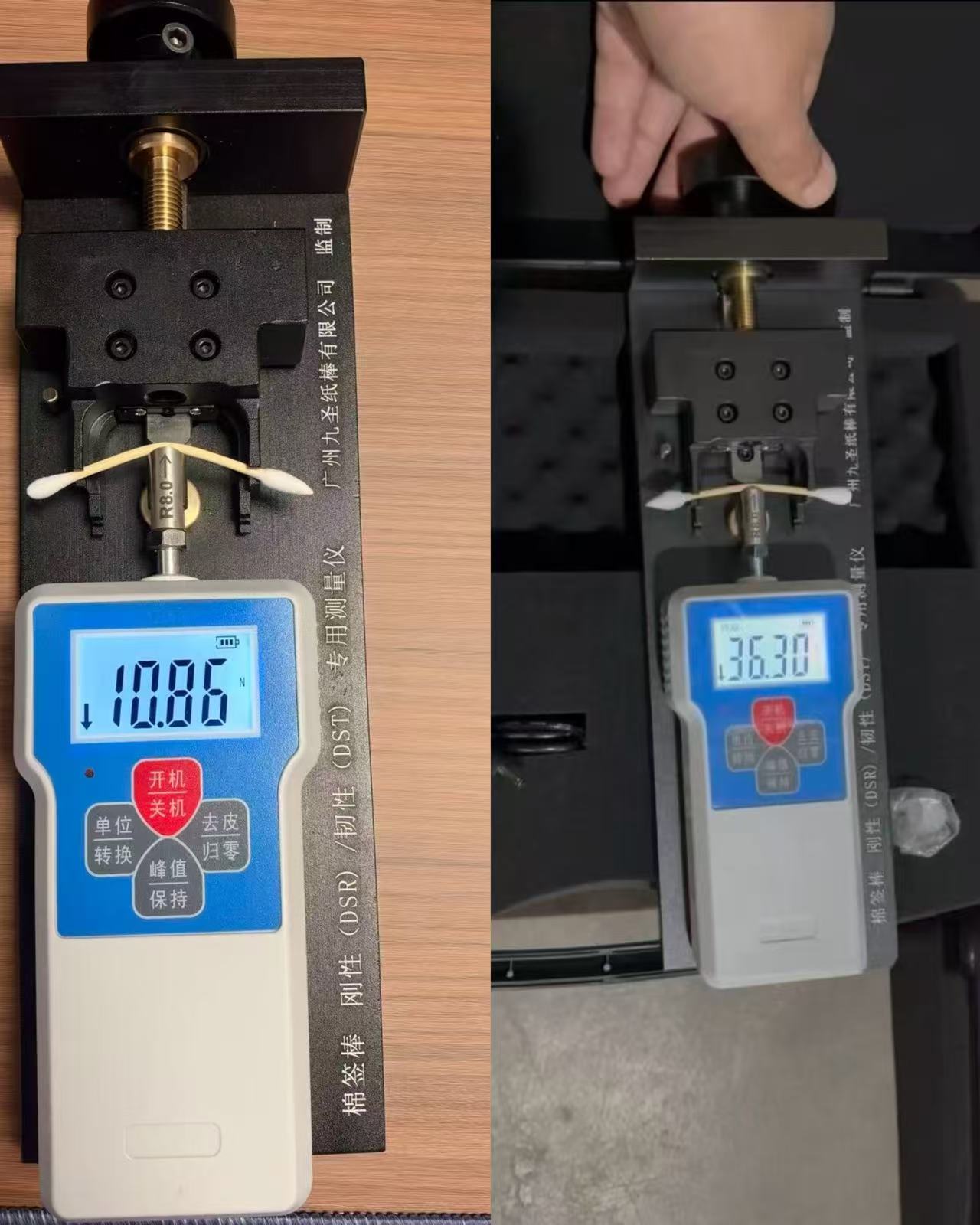
The supplied comparison data for the cleaning swab records a size of 2 mm and a hardness of 25 N, names quartz nails and bangers as the best-fit cleaning applications, and records a competitive price position together with the maintenance benefit of cleaning more effectively with fewer swabs. Those are the figures available for this comparison, and two cautions apply before you copy them into a purchase specification.
First, confirm which build the 2 mm and 25 N values describe for your order, because the same cleaning-swab family can be produced in bamboo stick and bendable stick versions. Second, ask for the test method behind the hardness figure so your own quality team compares like with like; a number without its method is hard to audit. Neither caution weakens the data — it makes the data attributable to a specific item you are actually buying. The same discipline applies to the price position: a “competitive price” statement tells you the supplier is positioning on price, while the actual figure depends on tip shape, stick build, packing format and order volume.
How to choose: a seven-step buying sequence
The sequence below is written for a buyer at decision stage who already knows the cleaning job but has not yet fixed the specification.
- Write the cleaning specification before the product specification. Record the residue type, the surface material, how the user's hand reaches the target, and how many swabs one cleaning pass currently consumes. Every later choice — rigid versus bendable, pointed versus round, short versus long handle — is judged against this record, not against a catalogue.
- Choose rigidity or articulation from the geometry. If the soil is reachable in a straight line and responds to pressure, specify the bamboo stick. If the soil sits around a bend or off the handle axis, specify the bendable stick.
- Fix the tip shape. Pointed tip cleaning swabs concentrate contact for narrow openings, joints and crevices. Round tip cleaning swabs present a broader contact face for larger areas and for polished or coated surfaces where a fine point is the wrong tool. Confirm the head density on the sample, because a loose head sheds fibre into the item being cleaned.
- Express the stick requirement in numbers. Diameter, hardness, straightness for bamboo; bend cycles, angle hold and core containment for bendable builds. Use the documented 2 mm and 25 N values as a starting reference once you have established which build they describe.
- Run a cleaning trial with samples. Free samples are available, which makes a side-by-side trial on your real soil the cheapest step in the process. Test both formats on the same surface, count swabs per pass, and record breakages.
- Confirm the compliance documents for the destination market. The supplied application record for these swabs describes bong cleaning, pet cleaning, personal care and nail tool cleaning at room temperature and normal indoor conditions, with matched equipment listed as smoking accessories and nail tools, and states California Prop 65 requirements and microbial safety as the special requirement for the US scenario. Ask which documents support each requirement before the order is placed.
- Fix the commercial terms last. MOQ, lead time, payment and FOB port follow the specification, not the other way around.
Use cases: matching format to the actual job
Bong and water-pipe cleaning. Bendable swabs earn their place in bent necks and curved chambers, where the head must be angled to touch the wall being cleaned. Bamboo stick swabs remain the working choice for straight tubes, downstems and flat percolator surfaces where the user needs to press. Slurper mops and other small cleaning tips sold under separate names follow the same logic: the tip shape is the tool, and the stick determines whether force or angle is available.
Quartz nails and bangers. The supplied comparison data names quartz nails and bangers as the best-fit cleaning applications, which is consistent with the rigid-shaft requirement: dried reclaim needs pressure and repeated passes on a surface the user can see.
Nail tool cleaning. Both formats have a role. Bamboo stick swabs suit joints, bits and flat surfaces of the handpiece where pressure is needed; bendable swabs suit the curved underside and recessed areas around the handpiece where a straight tool only skates.
Glass cleaning. Glass cleaning cotton swabs work best when the stick does not bow against a rim, so the rigid format covers edges and flat faces, while the bendable format reaches stems and curved interiors.
Pet ear cleaning. The supplied application data lists pet cleaning among the intended uses, and pet ear cleaning swabs are one part of that. Practically, the bendable format helps angle the head toward the ear base without levering the whole tool, but ear cleaning should follow veterinary guidance and the swab should never be inserted deeper than the visible canal. Where a vet has not approved swab use, the safer answer is not to specify one.
Personal care and retail programs. For consumer-facing lines, round tips dominate skin and general use, pointed tips suit nail detailing, and long handle cleaning swabs support applications that need reach. A retail or OEM program is usually stronger with one or two proven builds than with a full matrix, because packing, labelling and quality checks multiply with every variant.
Frequently asked questions
Which one is better, bamboo stick cotton swab or bendable stick cotton swab?
Neither is better in general; the better choice is the one that matches the cleaning geometry. Bamboo stick cotton swabs are better for surfaces you can see and press — quartz nails, bangers, glass rims, straight tubes, nail-tool joints — because the rigid shaft delivers pressure to the tip. Bendable stick cotton swabs are better for surfaces around a bend or off the handle axis, because the head can be angled toward the soil. Where both conditions occur in one process, split the specification by task.
What compliance documentation should a US-bound order include?
The supplied application record for these cleaning swabs lists bong cleaning, pet cleaning, personal care and nail tool cleaning, and states California Prop 65 requirements and microbial safety as the special requirement for the US scenario. That is a stated requirement, not an automatic guarantee for every shipment, so buyers should request the supporting test documentation for the specific item, stick build and packing being ordered and confirm it matches their own compliance policy before release.
Can these swabs be used for bong cleaning, nail tools and pet cleaning?
Yes — the supplied application data covers bong cleaning, pet cleaning, personal care and nail tool cleaning, used manually at room temperature and in a normal indoor environment, with smoking accessories and nail tools named as the matched equipment. Format still matters inside those uses: rigid bamboo for pressure on visible surfaces, bendable for bent necks and recessed areas, and veterinary guidance for any ear cleaning.
How is the price positioned, and what drives the final quotation?
The supplied comparison data records a competitive price position for the cleaning swab, with the maintenance benefit of cleaning more effectively with fewer swabs and reducing breakage complaints. A final quotation depends on the stick build, tip shape, handle length, packing format and order quantity, so the price position should be compared between suppliers only on an identical specification.
What is the MOQ?
The MOQ for most conventional products is 1,000 boxes. For customized products, the MOQ is set according to the product situation, which in practice means the tip shape, stick build, packing and branding involved. Confirming the customization scope first avoids quoting an MOQ that does not match the item you actually want.
Can I get a sample?
Samples are available and free samples can be offered. Because the difference between a bamboo stick and a bendable stick shows up in use rather than on a specification sheet, a trial on your own soil is the fastest way to settle the decision: test both formats on the same surface, count swabs per cleaning pass and record any broken sticks or loose heads.
What is the lead time for mass production?
Some products are held in stock and can be shipped right away. For mass production, lead time runs from 15 to 30 days and depends on the exact order quantity, so the delivery date should be confirmed against the quantity and specification of the specific order.
What are the payment terms and FOB ports?
Where the total amount is less than $1,000, a one-time payment is required. Above $1,000, the terms are 50% deposit with the remaining balance paid before shipment. FOB ports are Ningbo, Shanghai and Shenzhen. To move from comparison to a firm offer, request a quotation or a sample set against your confirmed specification.
Conclusion
Bamboo stick cotton swabs and bendable stick cotton swabs are not competing versions of the same tool; they are two answers to two different cleaning problems. The rigid bamboo shaft is the correct specification when the work is pressure on a reachable surface — banger and quartz nail interiors, glass rims, straight tubes, nail-tool joints — and the documented maintenance benefit of stronger sticks that are less likely to break points at exactly that job. The bendable stick is the correct specification when the work is angle: bent necks, curved chambers, recessed corners, areas that sit off the handle axis.
The decision sequence that holds up in practice is to define the cleaning geometry first, then the tip, then the stick requirement in numbers, then verify both formats on free samples against the documented 2 mm and 25 N reference once you know which build those values describe. Compliance documentation for the destination market and the commercial terms — MOQ of 1,000 boxes on conventional products, custom MOQ quoted by situation, 15 to 30 days for mass production with stock items shipping immediately, and FOB Ningbo, Shanghai or Shenzhen — should be settled after the specification, not instead of it.
Next step. The full product range, packing options and OEM capabilities are set out in the FUZHOU WENXI EVER-RISE product catalog, which can be downloaded and shared internally. For a specification review, a free sample set or a quotation on a bamboo stick or bendable stick build, contact the team at sales1@wenxieverrise.com or +86 135-5992-2211.
Have Questions or Need More Details?
Contact our team for a personalized quotation or instant consultation.
Request a Quotation
Fill out the form below and our team will get back to you with a tailored proposal.
WhatsApp Direct Chat
Prefer to chat in real-time? Message us on WhatsApp for instant assistance & quick answers.
- Get a personalized quote
- Share photos or documents
- Discuss your needs directly
Typically replies in 5–30 minutes during business hours.