Charcoal Compliance Guide: Matching Hookah, BBQ & Incense Specs to Regional Markets
Charcoal Compliance Guide: Matching Hookah, BBQ & Incense Specs to Regional Markets
Regional charcoal requirements are matched with documented product performance, not with certificate logos. A shisha lounge in Saudi Arabia, a table-grill restaurant group in South Korea, a summer importer in Germany and a spa distributor in the United States each need different numbers from the same factory: 90–120 minutes of stable heat with under 3% ash, six to eight hours of spark-free combustion, a self-igniting layer inside a biodegradable tray, or a 30–45 second light-up that leaves no charcoal smoke in the room. This guide maps four FYC products — hookah charcoal TC-01, barbecue charcoal TC-02, the disposable barbecue grill TC-03 and incense charcoal TC-04 — against those regional operating requirements, and lists the batch-level evidence a buyer should request before a container is booked.
Why a Certificate Alone Does Not Prove Market Fit
A certificate confirms that a system or a batch was assessed at a specific point in time. It does not confirm that the charcoal inside a particular container will hold heat for 90–120 minutes in a Riyadh lounge, survive a six-hour indoor service in Seoul, or light on the first match of a German camping trip. Those are performance facts, and performance facts are recorded per batch as measurable values — fixed carbon, ash content, calorific value, ignition behaviour, dimensions, coating and packaging.
The distinction is practical rather than legalistic. FYC (Dalian Tiancheng Charcoal Industry Technology Co., Ltd.) states SGS and ISO certifications in its company profile; that is a useful first filter, not a conclusion. Certification answers “is this factory operating to a recognised system?” A buyer’s real question is narrower: “will this product behave the way my market expects, and can the supplier prove it per shipment?”
Two compliance layers sit behind that question. Charcoal manufacturing itself carries a factory-side classification: in a U.S. EPA background document for charcoal manufacturing, the activity falls under Standard Industrial Classification (SIC) code 2861, Gum and Wood Chemicals, with source classification code 3-01-006. Separately, the finished product faces market-side expectations — for example, a 2026 guide to European charcoal import regulations published by The Charcoal Factory describes EN 1860-2 as the mandatory product safety standard for BBQ and retail charcoal in Europe. Factory classification and product specification are not interchangeable, and regional requirements usually touch both.
The Compliance Layers Behind Charcoal Supply
Scale makes this a routine purchasing problem rather than an exotic one. Grand View Research estimated the global charcoal market at USD 8.5 billion for 2026. Within the hookah segment, Dataintelo reported that coconut shell charcoal held a 42.3% share in 2025, and World’s Top Exports placed Indonesia at roughly 23% of global charcoal export value in 2024. A material sourced globally still has to satisfy locally defined expectations.
Some of those expectations are written as numbers. A journal article citing the Indonesian briquette standard SNI 01-6235-2000 reports thresholds of moisture content ≤8%, ash content ≤8% and calorific value ≥5,000 cal/g for charcoal briquettes. Those figures are a useful reference when comparing batches, with one caveat: the thresholds were reported through a secondary publication rather than the standard document itself, so a buyer relying on them in a formal contract should confirm the source text.
Dalian Tiancheng Charcoal Industry Technology Co., Ltd. (FYC) is a charcoal manufacturer established in 1990 and based in Liaoning, China, producing hookah charcoal, incense charcoal and barbecue charcoal. The company states a 6,000㎡ facility with 100 employees, an eight-engineer R&D team, a daily output above 50 metric tons and an annual output of 4,000,000 pieces, and exports approximately 60% of its production, mainly to the Middle East and Europe. Its catalogue covers the four products mapped in this guide, which is why they can be compared against four different regional requirement sets on the same page.
The Compliance-Mapping Method: Four Documented Layers
Compliance evidence becomes usable when it is organised into four layers that can be compared supplier to supplier. Requesting “certificates” produces a folder of logos; requesting these four layers produces a decision.
Layer 1 — Batch specification record
Fixed carbon, ash content and calorific value are the numbers that separate a premium hookah briquette from a filler product. FYC TC-01 states fixed carbon content above 85–90%, ash content below 3% at premium grade and a calorific value above 7800 kcal/kg. Ask for those values attached to the batch number, not to the product family in general.
Layer 2 — Performance record
Burn duration, ignition behaviour, smoke and odour performance, and hardness belong here. TC-01 burns 90–120 minutes as a cube (25mm and 40mm) and 45–70 minutes in its quick-light variant; TC-02 barbecue charcoal runs 6–8 hours as a bamboo charcoal stick; TC-04 incense charcoal burns 45–70 minutes after a 30–45 second light-up. Smokeless, odourless and high-hardness behaviour is stated across the range.
Layer 3 — Form and dimension record
Shape and size determine whether a product physically fits the equipment in the market. The available formats include cube, hexagonal and bamboo hookah charcoal; quadrilateral, hexagon, 50mm square-hole, 50mm four-hole, spherical and Fangyuan barbecue charcoal; and 33mm round incense tablets.
Layer 4 — Packaging and labelling record
Packaging is compliance evidence in retail markets because it carries the material and safety statements a buyer must pass on. FYC supports customized retail packaging in magnetic, flip-top and pull-out box formats, together with logo printing and custom material composition.
How to use the four layers: compare suppliers on the same four documents rather than on the same marketing page. If a supplier cannot produce Layer 1 and Layer 2 for the exact batch being shipped, the remaining two layers cannot carry the decision on their own.
Region-by-Region Spec Mapping
The same factory output is judged differently in each market because the operating condition changes. The four mappings below translate a regional use case into the specifications a buyer should see on paper.
Saudi Arabia: Hookah and Shisha Lounges — TC-01
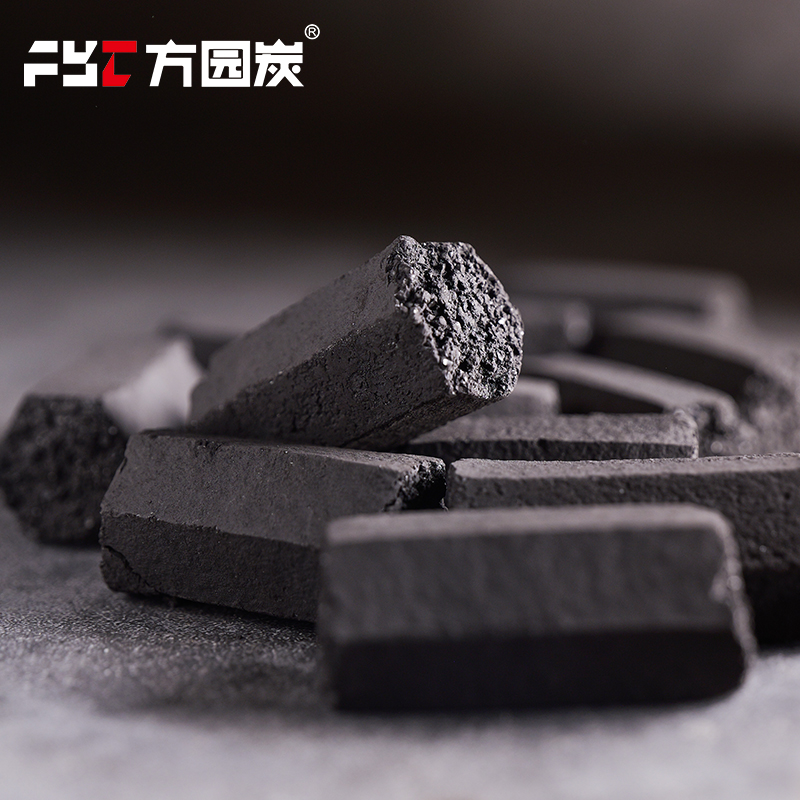
Saudi hookah and shisha lounges run continuous social service, so the operating condition is a heat source that produces no smoke, no odour and no sparks while roasting molasses for a full session. FYC TC-01 is specified for exactly that window: 90–120 minutes of burn per cube in 25mm and 40mm sizes, with hexagonal and bamboo forms also available, made from premium natural coconut shell and fruit wood, with fixed carbon content above 85–90%, ash content below 3% at premium grade and a calorific value above 7800 kcal/kg.
What a Saudi buyer should put on the request list: the per-batch fixed carbon, ash and calorific figures; a burn-duration record taken from the same batch; the dimension tolerance for 25mm cubes; and a composition statement confirming the coconut shell and fruit wood base, since the lounge condition calls for a natural, chemical-free, food-grade-safe product with high hardness so briquettes do not break during handling.
Quick-light formats change the expectation. FYC lists 45–70 minutes for the quick-light option against 90–120 minutes for the standard cube, so a venue mixing both formats should keep two separate burn windows in its service planning rather than treating them as one specification.
South Korea: High-Volume Catering and Indoor Dining — TC-02
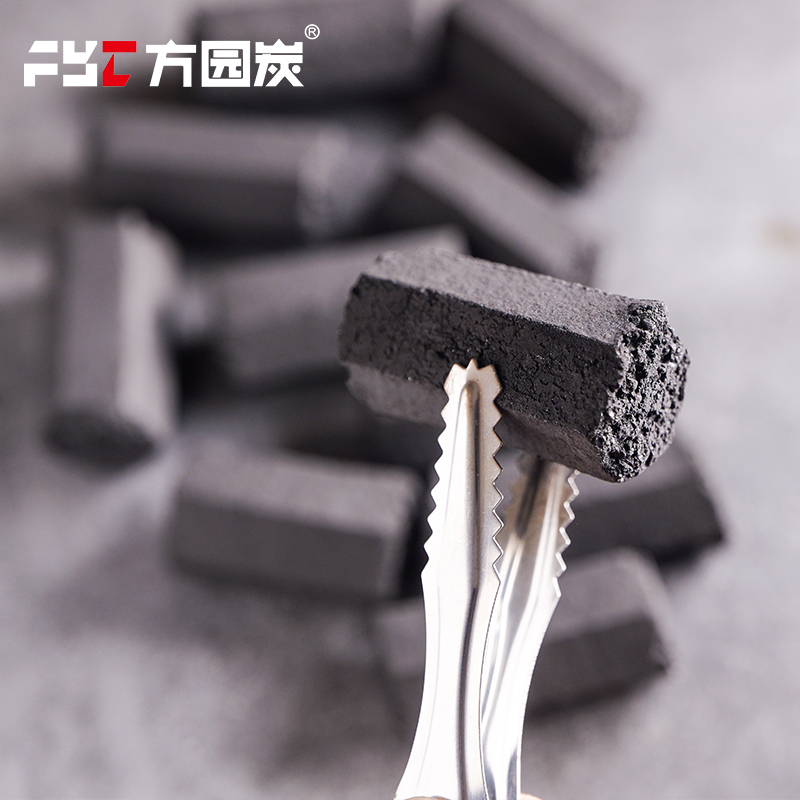
Indoor Korean barbecue dining puts a different kind of pressure on charcoal: long high-temperature service, minimal ash to reduce exhaust hood and table cleanup, and no sparking in front of guests. FYC TC-02 barbecue charcoal is specified with 6–8 hours of burn time for bamboo charcoal sticks, ultra-low ash content, high hardness, smokeless and odourless operation at constant temperature, and a material set limited to bamboo sawdust, hardwood and fruit wood. A fruit wood quick-light option is listed at approximately 70 minutes.
Formats matter more in this market than in most. The range covers quadrilateral, hexagon, quadrilateral bamboo, hexagon bamboo, 50mm square-hole and 50mm four-hole barbecue charcoal, plus spherical charcoal and Fangyuan charcoal — with hexagonal bamboo sticks commonly used in built-in dining-table grills. Documents worth requesting: batch burn duration, ash content, density or hardness data, and an explicit statement on spark behaviour during ignition and refuelling.
Germany and the EU: Instant Grilling and Portability — TC-03
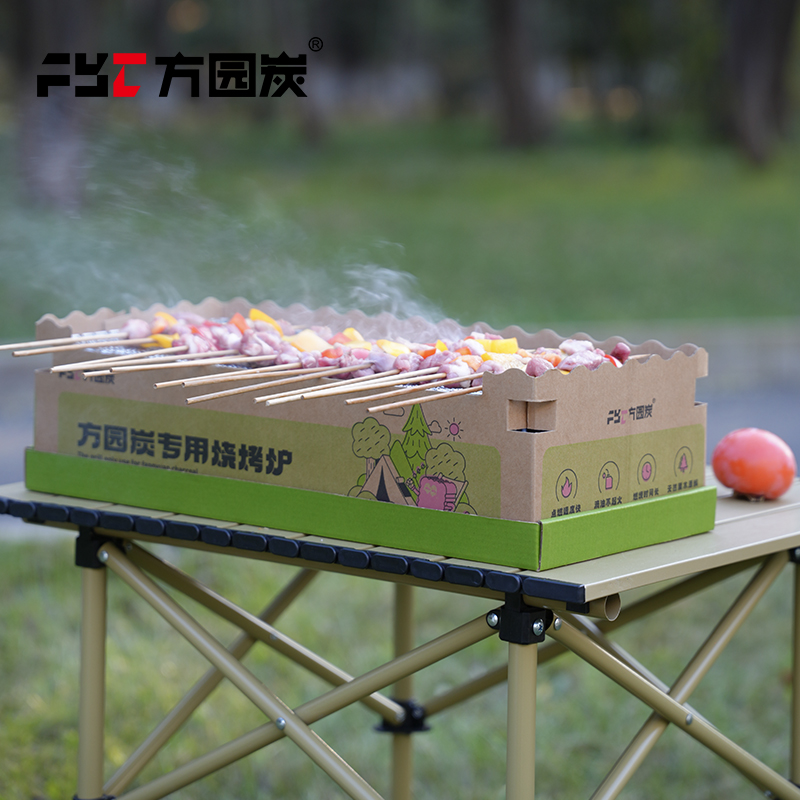
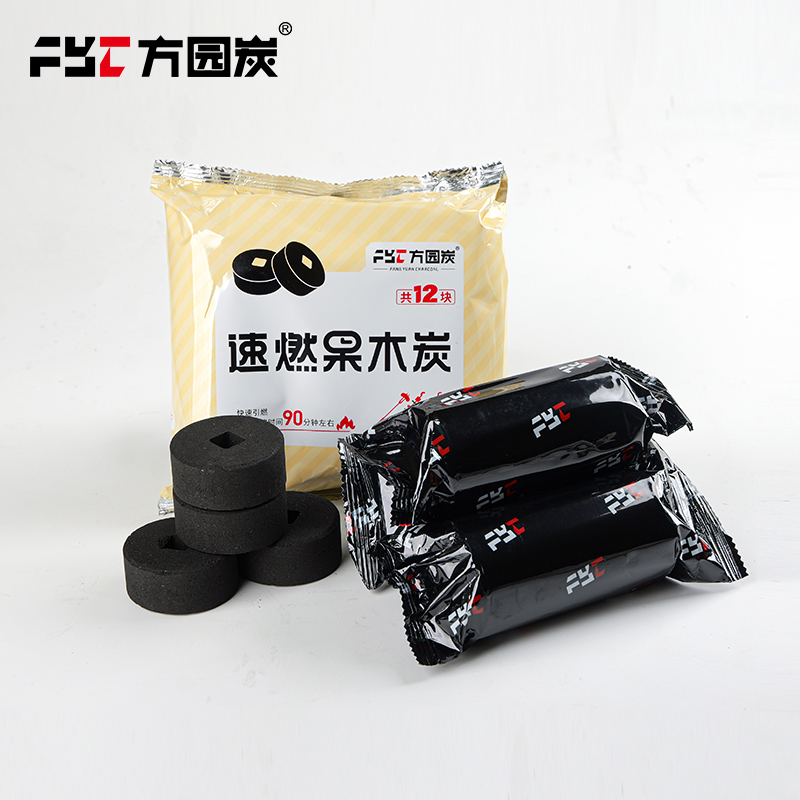
Instant grilling in Germany and the wider EU is judged on portability and disposal as much as on heat output. The operating condition calls for lightweight, safe equipment that lights immediately and is disposable afterwards with no cleanup, delivering 60–90 minutes of even heating. The FYC TC-03 disposable barbecue grill is specified with a self-igniting charcoal layer that lights from a single match without additional fire starters or lighter fluid, uniform heat radiation across the full cooking surface to prevent hot spots, a food-grade galvanized or chrome-plated steel grill mesh, and an outer tray in aluminium foil or flame-retardant cardboard. The material set is described as 100% biodegradable, and the grill is offered as a light, compact unit in small and large copper foil box formats with matching Fangyuan charcoal.
Compliance here is a two-part check. Regionally, the 2026 European charcoal import guide cited earlier describes EN 1860-2 as the mandatory product safety standard for BBQ and retail charcoal in Europe, so buyers should confirm which standard documentation the specific SKU carries. On the product side, request the materials declaration for the mesh, the tray and the quick-light charcoal, plus the ignition mechanism description — a self-igniting layer is a different claim from “lights easily,” and only the first one can be verified on paper.
United States: Wellness, Spa and Aromatherapy — TC-04
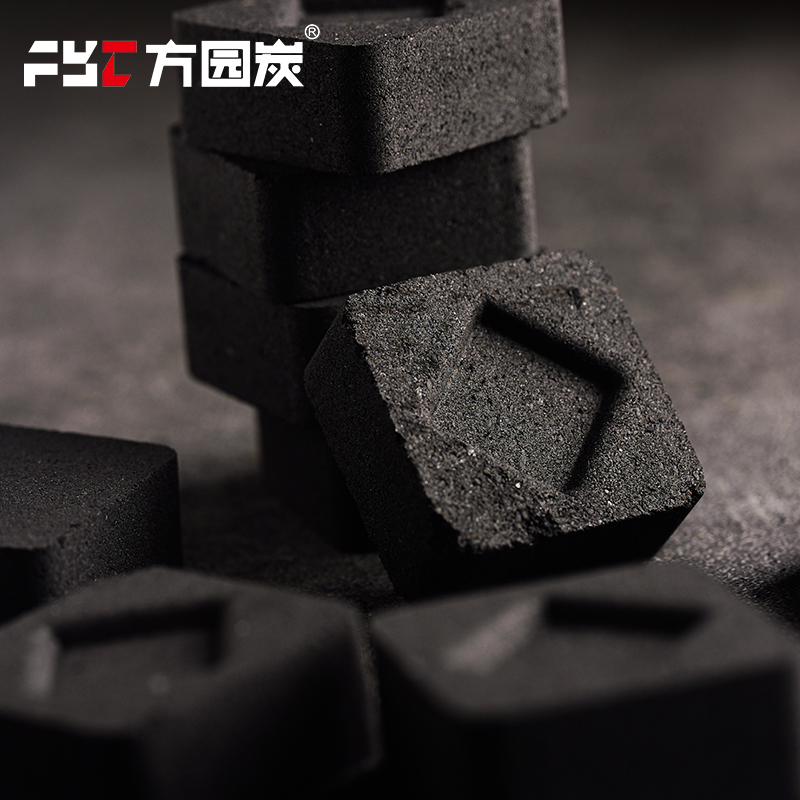
Aromatherapy needs a short light-up and a long, quiet heat: 30–45 seconds to full ignition and 45–70 minutes of steady, gentle warmth beneath Bakhoor, resin or aromatherapy oils, with no charcoal smoke interfering with the fragrance. The operating condition is defined around an even heat diffuser for ceramic or metal incense burners, with silver or gold foil coating and a fruit wood base.
FYC TC-04 is a 33mm round incense charcoal made from fruit wood charcoal and coconut shell charcoal powder, specified as quick light and fast ignition, smokeless, odourless and scent-diffusing, with 45–70 minutes of burn time and a choice of natural black, silver foil or gold foil appearance. Packaging can be customized as flip-top, magnetic or pull-out boxes — relevant to US retail shelf presence and to private-label wellness brands.
Documents to request: recorded ignition time, recorded burn duration, base material composition covering the fruit wood and coconut shell content, and a coating declaration for the silver or gold foil finish. A spa or yoga studio treats coating and residue behaviour as a specification, not a detail.
Step-by-Step Breakdown: Building a Verifiable Spec Package
- Define the operating window before the product. Write down burn duration, ash tolerance, smoke and odour limits, ignition method and disposal requirement for the actual venue. A lounge in Riyadh, a grill restaurant in Seoul and a spa in California generate three different windows from the same product category, and the window is what a specification is measured against.
- Request batch-level numbers instead of a certificate copy. Fixed carbon, ash content, calorific value, burn duration and ignition behaviour must be attached to the specific production batch. A management-system certificate does not carry these values, and a product-family datasheet does not replace them.
- Test ignition and burn behaviour under real conditions. Because stock MOQ starts from a single box for express orders, sample validation can happen before a wholesale commitment. Test with the equipment the market actually uses — a table grill for TC-02, a ceramic Bakhoor burner for TC-04, a lounge bowl for TC-01.
- Match form, dimension and packaging to the market. 25mm cubes and hexagonal hookah charcoal for lounges; 50mm square-hole or hexagonal bamboo formats for indoor grills; 33mm round tablets in natural black, silver or gold foil for wellness retail; a light, compact disposable grill with a self-igniting layer for EU seasonal promotions. Custom shapes, sizes such as 25mm, 33mm and 50mm, logo printing and magnetic, flip-top or pull-out boxes are available for private-label programmes.
- Confirm factory-level evidence and traceability. FYC states SGS and ISO certifications, an on-site Intertek supplier assessment, 100% comprehensive inspection across production lines, three professional QA/QC inspectors and full traceability of raw materials. Combined with the batch records above, this closes the loop between the factory and the shipment.
Use Cases: How the Mapping Works in Practice
A three-year strategic supply case from South Korea shows the consumption side of spec matching. An authentic charcoal BBQ and grill restaurant group takes 1×40HQ per month, roughly 20–22 tons, for high-temperature searing and slow indoor roasting. The product is a hexagonal bamboo charcoal stick chosen for high density and zero sparking to fit built-in dining-table grills. The reported result: no smoke interference in indoor dining, and a 15% reduction in total charcoal consumption compared with the previous supplier.
A German seasonal programme shows the portability side. A national outdoor and camping equipment retailer ordered 12,000 sets of disposable grills in a single summer season for picnics, beach barbecues and park activities. Delivery was 100% on time despite peak seasonal demand, and the lightweight design and eco-friendly foil materials met EU environmental expectations in the buyer’s assessment.
A Saudi lounge chain shows the consistency side. A premium shisha lounge and hookah bar chain takes 50 metric tons per quarter, approximately 200 tons annually, on a 2.5-year running cooperation. The specification is a consistent 25mm cube with ash content below 3% and luxury magnetic box packaging carrying the client’s logo. The reported outcome is stable, odourless burning with zero client complaints and longer guest sessions because the heat lasts.
Comparison Table: Four Products, Four Regional Requirements
| Product and model | Target regional application | Documented performance specifications | Forms, materials and packaging | Evidence to request |
|---|---|---|---|---|
| Hookah charcoal TC-01 | Saudi Arabia — hookah and shisha lounges; also Bakhoor and aromatherapy use | Fixed carbon content >85–90%; ash content <3% (premium grade); calorific value >7800 kcal/kg; 90–120 minutes burn for cube 25mm/40mm; 45–70 minutes for quick light; smokeless, odourless, high hardness | Cube 25mm and 40mm, hexagonal, bamboo; premium natural coconut shell and fruit wood | Batch fixed carbon, ash and calorific record; burn duration record; composition statement; dimension tolerance for 25mm cubes |
| Barbecue charcoal TC-02 | South Korea — high-volume catering and indoor BBQ dining; also camping and home cooking | 6–8 hours burn (bamboo charcoal stick); approximately 70 minutes (fruit wood quick light); ultra-low ash content; high hardness; smokeless, odourless, constant temperature | Quadrilateral, hexagon, quadrilateral bamboo, hexagon bamboo, 50mm square-hole, 50mm four-hole, spherical, Fangyuan; bamboo sawdust, hardwood, fruit wood | Batch burn duration and ash record; density and hardness data; spark behaviour statement for indoor grills |
| Disposable barbecue grill TC-03 | Germany and the EU — instant grilling, camping and portable outdoor use; retail and wholesale | 60–90 minutes even heat; self-igniting charcoal layer lights from a single match; uniform heat radiation without hot spots; 100% biodegradable materials; no lighter fluid, low smoke emission | Small and large copper foil box; food-grade galvanized or chrome-plated steel mesh; aluminium foil or flame-retardant cardboard tray; matched Fangyuan charcoal | Materials declaration for mesh, tray and quick-light charcoal; ignition mechanism description; applicable EU standard documentation (EN 1860-2 is described as required for BBQ and retail charcoal in Europe) |
| Incense charcoal TC-04 | United States — wellness, spa, yoga and aromatherapy; Bakhoor and incense burners | 30–45 second light-up; 45–70 minute steady burn; quick light and fast ignition; smokeless, odourless; scent diffuser | 33mm round; fruit wood charcoal and coconut shell charcoal powder; natural black, silver foil, gold foil; flip-top, magnetic or pull-out packaging | Ignition time and burn duration record; base material composition; foil coating declaration; retail packaging specification |
Frequently Asked Questions
What compliance documents should a charcoal buyer request before ordering?
A practical compliance pack has five parts: a batch-level specification sheet covering fixed carbon, ash content and calorific value; a burn and ignition record for the same batch; a material composition statement; a form, dimension and packaging specification; and factory-level evidence such as the SGS and ISO certifications FYC states in its company profile, together with an on-site Intertek supplier assessment. Where the shipment is EU-bound BBQ charcoal, buyers should also confirm which standard documentation the specific SKU carries, because EN 1860-2 is described in a 2026 European import regulation guide as the mandatory product safety standard for BBQ and retail charcoal in Europe.
Can one manufacturer cover different charcoal forms and sizes for different regional markets?
Yes. FYC’s range covers hookah charcoal TC-01 in cube (25mm and 40mm), hexagonal and bamboo forms; barbecue charcoal TC-02 in quadrilateral, hexagon, quadrilateral bamboo, hexagon bamboo, 50mm square-hole, 50mm four-hole, spherical and Fangyuan charcoal; incense charcoal TC-04 as 33mm round tablets in natural black, silver foil or gold foil; and the TC-03 disposable grill in small and large copper foil box formats with matching Fangyuan charcoal. OEM and ODM production supports custom shapes, sizes such as 25mm, 33mm and 50mm, logo printing and magnetic, flip-top or pull-out packaging, with a stated monthly capacity of approximately 600–800 metric tons.
How do order size and consumable efficiency affect the cost of a charcoal program?
Order structure matters more than a headline unit figure. FYC’s MOQ starts from one box for express stock and scales from one ton up to a full container of approximately 17 tons for wholesale orders. On the consumption side, performance specifications change running cost directly: a Korean restaurant group using FYC barbecue charcoal reported a 15% reduction in total charcoal consumption versus its previous supplier, an effect driven by calorific value and burn duration rather than by price per ton alone.
Can buyers test samples before committing to a bulk order?
Yes — sample validation is the normal route. Because stock MOQ starts from a single box for express orders, buyers can test ignition time, burn duration, ash volume and smoke or odour behaviour under real venue conditions before placing a wholesale order. FYC supports sample coordination with multilingual service in English, Spanish and French and a stated response time of four hours or less.
What lead times and delivery guarantees apply to stock and customized orders?
FYC states 7–15 days for standard stock and 20–30 days for customized mass production, with a 100% on-time delivery guarantee and a logistics network of more than 50 partners. Buyers planning seasonal programmes — a German summer range, for example — should confirm the production window against the retail calendar. To start a specification review, request a quote or a sample by emailing paris@fyc-charcoal.com or messaging +8613591327260 on WhatsApp with your market, application and annual volume.
Conclusion: Compliance Is a Matching Exercise, Not a Paper Trail
The four regional mappings in this guide share one logic. A Saudi lounge is buying 90–120 minutes of smokeless heat with ash below 3%; a Korean restaurant group is buying 6–8 hours of ultra-low-ash combustion in a built-in table grill; a German retailer is buying a self-igniting, biodegradable grill that delivers 60–90 minutes of even heat; a US wellness brand is buying a 30–45 second light-up followed by 45–70 minutes of quiet warmth. Each requirement converts into specific batch numbers, forms and packaging decisions — and those decisions are only defensible when the supplier documents them per shipment.
FYC works from that position: a 1990-established factory in Liaoning, China, with SGS and ISO certifications, an on-site Intertek supplier assessment, 100% inspection across production lines and full raw material traceability, producing hookah, barbecue and incense charcoal alongside disposable grills for buyers in the Middle East, Europe, Southeast Asia and North America.
Request Batch Specifications, Samples or a Quote
FYC supplies hookah charcoal (TC-01), barbecue charcoal (TC-02), disposable barbecue grills (TC-03) and incense charcoal (TC-04) with batch-level specification documentation, OEM and custom packaging options, and multilingual support in English, Spanish and French. Standard stock orders ship in 7–15 days; customized mass production runs 20–30 days. Tell us your market, application and annual volume, and we will respond with the matching specification sheet and sample options.
Contact: Paris Wang — paris@fyc-charcoal.com | WhatsApp: +8613591327260 | Website: fyc-charcoal.com
Address: Room 409, Building B, Shanhe Zhigu Digital Economy E-commerce Industrial Park, Liaohe Middle Second Road, Jinzhou District, Dalian City, Liaoning Province.
Download the full product brochure: FYC Charcoal Product Brochure (PDF)
Have Questions or Need More Details?
Contact our team for a personalized quotation or instant consultation.
Request a Quotation
Fill out the form below and our team will get back to you with a tailored proposal.
WhatsApp Direct Chat
Prefer to chat in real-time? Message us on WhatsApp for instant assistance & quick answers.
- Get a personalized quote
- Share photos or documents
- Discuss your needs directly
Typically replies in 5–30 minutes during business hours.