How Fixed Carbon, Ash and Burn Time Drive Charcoal Choice
A charcoal specification is a set of trade-offs written as numbers, and three of those numbers decide most of the outcome before price enters the conversation: fixed carbon, ash content and burn time. Fixed carbon describes how much of the briquette is actually fuel. Ash describes what is left when the fuel is spent. Burn time describes how both behave inside a given burner, grill or mabkhara. FYC's reference specifications set premium hookah and BBQ grades above 85–90% fixed carbon and below 3% ash, with calorific value above 7,800 kcal/kg, while burn time is quoted per model rather than as one catalogue-wide figure: roughly 90–120 minutes for TC-01 cube hookah charcoal, 45–70 minutes for quick-light formats and TC-04 incense charcoal, and 6–8 hours for TC-02 hexagonal bamboo charcoal sticks.
This guide is narrower than a product catalogue. It explains what each parameter measures, why two technically accurate spec sheets can still be impossible to compare directly, and how a buyer converts the figures into acceptance criteria that hold across sampling, first shipment and repeat orders.
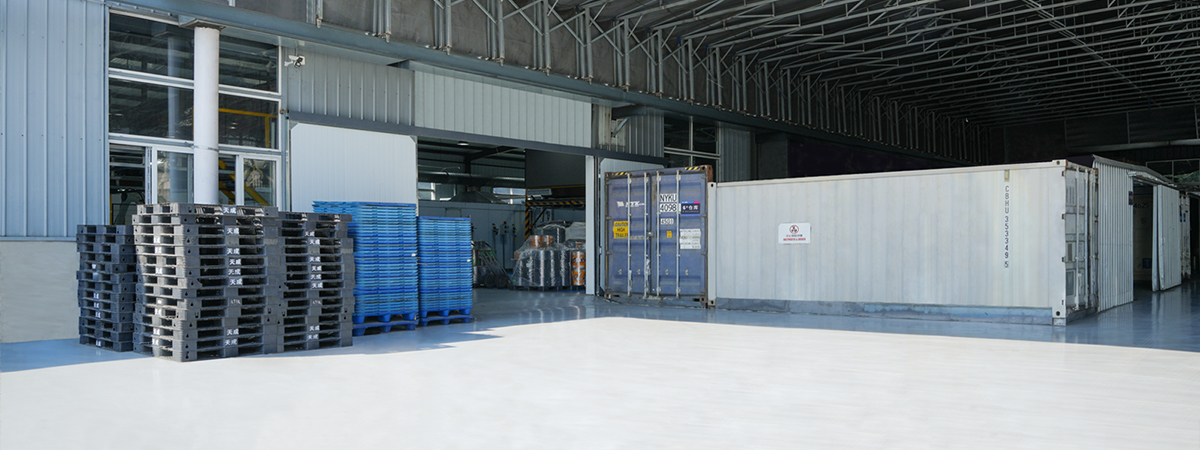 Production floor at FYC (Dalian Tiancheng Charcoal Industry Technology Co., Ltd.), where briquette form and density are set before batch testing.
Why two accurate spec sheets can still mislead
Most specification disputes do not begin with a dishonest supplier. They begin with two documents that are both true and describe different things.
Basis. Fixed carbon and ash are commonly reported on a dry basis, while moisture and shipped weight are measured as received. A grade reading 88% fixed carbon on a dry basis is not the same fuel as one reading 88% under a different moisture allowance, because a buyer pays for water and ash as well as for carbon.
Method. Ash is the mineral residue left after a controlled burn; fixed carbon is derived by subtracting moisture, volatiles and ash from the total. Different laboratory procedures and reporting conventions move the last one or two percentage points — enough to change which product wins a close comparison.
Test condition. Burn time depends on briquette mass and geometry, airflow around the coal, ignition method and whether the coal is turned or relit during service. A burn-time figure without a stated setup is a reference point, not a specification.
The practical consequence is that parameter values only become comparable when basis, method and test condition travel with them. That is the difference between a marketing number and a purchasing number, and it is the reason the rest of this guide separates each parameter from the claim made about it.
What the current market picture adds
Scale does not settle a specification question, but it explains why feedstock and quality discipline matter to a buyer. Grand View Research estimated the global charcoal market at USD 8.5 billion in 2026, following USD 8.1 billion in 2025, in a report dated June 2026. Within the hookah segment, Dataintelo reported coconut shell charcoal at a 42.3% product-type share in 2025. On the trade side, World's Top Exports placed Indonesia at roughly 23% of global charcoal export value in 2024.
The useful reading is not the headline number. It is that hookah-grade supply leans heavily on one feedstock family, and that a large share of export volume originates in a limited number of producing regions. When feedstock availability or origin shifts, specification discipline is what keeps a private-label programme consistent between shipments.
Regulation adds a second layer that buyers frequently conflate with quality. EN 1860-2 is the mandatory product safety standard for BBQ charcoal in Europe. In Indonesia, the briquette standard SNI 01-6235-2000 is cited with thresholds of moisture ≤8%, ash ≤8% and calorific value ≥5,000 cal/g. Those are compliance floors. They are not premium targets, and the gap between the two is where most hookah and incense sourcing mistakes happen.
Parameter 1: fixed carbon — how much of the briquette is fuel
Fixed carbon is the portion of a briquette that burns as solid carbon once moisture and volatile matter have been driven off. It is the closest single indicator of fuel density: a briquette with higher fixed carbon generally holds heat longer and releases it more steadily, while a briquette carrying more volatiles tends to light faster and burn down sooner.
FYC's reference specifications place premium hookah and BBQ grades above 85–90% fixed carbon. Three questions turn that figure into something a buyer can act on:
- Is the value a guaranteed minimum on the certificate of analysis, or a typical result from one production run?
- Is it reported on a dry basis, and does the moisture allowance appear on the same document?
- Does the same batch carry a density, hardness or drop-test figure, since fixed carbon alone does not describe how a briquette survives handling and transit?
There is also an operational trade-off to price in. Very high fixed carbon combined with a dense structure can be slower to ignite, which is why lighting method and burner design belong in the same conversation as the carbon figure. A lounge running a high-output burner and a retailer selling instant-light packs sit at different points on that curve, and neither is served by the same specification.
Parameter 2: ash content — the number that separates premium from merely compliant
Ash is the mineral residue remaining after the carbon has burned. In hookah service it matters more than the percentage alone suggests: ash sits between the coal and the tobacco head, restricts airflow, and forces more frequent turning or reloading. In incense and bakhoor use, high residue leaves more material behind in the burner tray and changes how cleanly a session ends.
Reference values show how wide the usable band is. FYC's premium hookah grade, supplied on TC-01 to a Saudi shisha lounge chain, is specified at under 3% ash. Published feedstock comparisons place bamboo below 3%, coconut shell at 3–4% and pistachio shell at 5–6%. The Indonesian briquette standard cited earlier permits ash up to 8%.
Read together, those figures describe a common procurement problem. A product at 7% ash can be fully compliant with a national briquette standard and still be a poor fit for a premium hookah lounge. Compliance answers the question "may this be sold?" The application answers "will this perform in my venue?" A specification document should answer both, on separate lines, so neither answer hides behind the other.
Two further points are worth putting in writing before an order is placed. Ash should be quoted per batch rather than per product family, because feedstock sourcing shifts between lots. And the composition of the residue varies with feedstock and carbonization, so where residue behaviour matters to the application, ask for the test result rather than inferring it from the material name.
Parameter 3: calorific value — energy per kilogram and the unit trap
Calorific value expresses how much heat a kilogram of charcoal releases. FYC's reference specification for premium grades is above 7,800 kcal/kg. The cited SNI briquette threshold is ≥5,000 cal/g, which is numerically the same as 5,000 kcal/kg, because one calorie per gram equals one kilocalorie per kilogram. Checking units before comparing suppliers is not pedantry: one megajoule per kilogram equals roughly 239 kcal/kg, so a figure quoted in MJ/kg placed beside a figure quoted in kcal/kg without conversion will misjudge a supplier badly.
The commercial consequence of a higher calorific value is consumption, not a better-looking datasheet. In the South Korean restaurant case described later, hexagonal bamboo charcoal supplied to a BBQ restaurant group was reported to reduce total charcoal consumption by 15% against the previous supplier, attributed to high calorific value. That is the shape of argument a buyer should expect from a supplier: energy per kilogram converted into kilograms per service period, and then into cost per cover.
Calorific value also interacts with the other parameters. A high figure achieved with very low ash and high fixed carbon describes a different product from the same figure achieved with a larger volatile fraction; the first tends to hold heat, the second to release it quickly. The number alone does not tell you which behaviour you are buying.
Parameter 4: burn time — a system property quoted per model
Burn time is the parameter buyers ask about first and define last. It is not a material constant. It changes with briquette mass and shape, device airflow, whether the coal sits in a heat-management device or under foil, the lighting method, and how often the coal is turned during service.
FYC quotes burn time per model rather than as a single range across the catalogue:
- TC-01 cube hookah charcoal: approximately 90–120 minutes.
- Quick-light formats and TC-04 incense charcoal: approximately 45–70 minutes.
- TC-02 hexagonal bamboo charcoal sticks: approximately 6–8 hours.
Those figures describe different jobs rather than better and worse products. A 90–120 minute cube suits a lounge session where the head is changed on a predictable cycle. A 45–70 minute quick-light tablet suits retail and hospitality formats where ignition speed matters more than duration. A 6–8 hour extruded bamboo stick suits a restaurant grill that must run a full service on one load without a reload break.
When a supplier quotes burn time without conditions, three questions close the gap: at what briquette size, in what airflow, and with what lighting method and turning interval? A number that survives those questions can be written into an acceptance test. One that does not remains an advertisement.
Reference table: the four core parameters
| Parameter | FYC reference point | What it governs | Where a comparison breaks down |
|---|---|---|---|
| Fixed carbon | Above 85–90% for premium grades | Fuel density and sustained heat | Dry versus as-received basis; guaranteed minimum versus typical result |
| Ash content | Under 3% for premium hookah grades | Residue, airflow and relight frequency | National standards permit up to 8% (cited SNI 01-6235-2000) |
| Calorific value | Above 7,800 kcal/kg | Energy delivered per kilogram purchased | Unit mixing between cal/g, kcal/kg and MJ/kg |
| Burn time | 45–70 min (TC-04, quick-light) to 6–8 h (TC-02) | Service cycle and reload planning | Varies with size, airflow and lighting method |
Form factor: cube, hexagonal, round, stick and tablet
Form decides how a charcoal behaves inside a device, and it is one of the few parameters a buyer can change without changing the fuel chemistry underneath.
- Cube. A 25 mm cube is the reference format for hookah service: it stacks predictably, sits evenly in a heat-management device and keeps a stable footprint as it burns down. TC-01 is supplied in this form, including the 25 mm cube used in the Saudi lounge case below.
- Hexagonal. Six flat faces with defined edges give more surface contact and a shape that resists rolling on a grill. The hexagonal bamboo sticks supplied on TC-02 are used in built-in dining table grills, where stability and low sparking matter as much as raw heat.
- Round and spherical tablets. Typical of incense and bakhoor formats and of quick-light retail packs, where a 33 mm or 50 mm tablet is easy to handle and lights quickly.
- Quadrilateral (square) profiles. Square and perforated square tablets are a standard shisha presentation in the trade. On the BBQ side the familiar pillow shape applies: Weber describes hardwood charcoal briquettes as compressed black pillows formed from crushed hardwood charcoal bound with natural starch.
- Stick and extruded forms. Long extruded sticks trade handling convenience for duration, and they are the format behind multi-hour restaurant service.
FYC's customization scope covers cube, hexagonal, round and stick shapes, sizes including 25 mm, 33 mm and 50 mm, logo printing, retail packaging such as magnetic, flip-top and pull-out boxes, and material composition. The operating rule is to fix the form before optimizing the numbers: a 25 mm cube and a 50 mm tablet cannot be compared on burn time, because the mass difference dominates the result long before material quality does.
Feedstock: coconut shell, bamboo, hardwood and fruit wood
Feedstock sets the starting envelope for ash, density and burn behaviour. It is also the parameter most often asserted and least often tested.
- Coconut shell. The largest single feedstock in hookah charcoal at a 42.3% product-type share of that segment in 2025, and typically positioned at 3–4% ash in published feedstock comparisons. It is the reference point most hookah buyers already carry in their heads.
- Bamboo. Associated with ash below 3% in the same comparison set. In the Korean restaurant case, hexagonal bamboo sticks were chosen for high density and zero sparking in an indoor dining room — a characteristic that matters more than a datasheet when guests and linen are within a metre of the grill.
- Hardwood. The classic BBQ base, used both as lump charcoal and as briquettes bound with natural starch. Density and burn profile shift with species and carbonization route.
- Fruit wood. Used where aroma is part of the product requirement rather than a side effect. Because ash and density vary by species and process, the batch certificate should be the reference, not the species name on the bag.
- Pistachio shell. A useful benchmark at 5–6% ash, because it shows how far a high-residue feedstock sits from a premium hookah specification.
FYC's production base covers three routes — wood carbonization, mechanism charcoal from wood-chip extrusion carbonization, and mechanism charcoal from wood-powder moulding — which is how shape and density consistency are held across formats. The company profile states a 6,000 m² facility, around 100 employees, daily output above 50 metric tons, and SGS and ISO certification. For the buyer, the operating rule is simple: use feedstock to build the shortlist, and use batch testing to make the decision.
Reference table: model-level form, ash and burn time
| Product | Form and size | Ash reference | Rated burn time | Typical application |
|---|---|---|---|---|
| TC-01 hookah charcoal | Cube, 25 mm | Under 3% | 90–120 minutes | Hookah and shisha lounges, café service |
| TC-02 bamboo charcoal | Hexagonal extruded stick | Bamboo feedstock below 3% | 6–8 hours | Restaurant BBQ, built-in table grills |
| TC-04 incense charcoal | Tablet format; confirm size against the specification sheet | Confirm per batch certificate | 45–70 minutes | Bakhoor and incense, hospitality and retail |
| Quick-light / instant formats | Tablet or round | Confirm per batch certificate | 45–70 minutes | Retail packs, outdoor and portable use |
A seven-step specification check before you place an order
The sequence below is written for a buyer at evaluation or execution stage, where the question has moved from "which type of charcoal?" to "which document do I sign?"
- Define the duty cycle first. Session length, covers per service, ignition method and whether the coal is turned during use. Without that baseline, every parameter is abstract.
- Ask for the basis and method behind fixed carbon and ash. A supplier who can answer in one sentence is a supplier who tests; one who cannot is quoting a brochure.
- Compare ash against the application, not only the standard. A product at 7% ash can meet a national threshold and still be wrong for a premium hookah head. Record both the compliance figure and the application target.
- Normalize calorific value units before comparing. Convert everything to kcal/kg or MJ/kg on one sheet, then compare. Remember 1 MJ/kg is roughly 239 kcal/kg.
- Interrogate the burn-time claim. Ask for briquette size, airflow condition and turning interval. Model-level figures such as 90–120 minutes for TC-01 or 6–8 hours for TC-02 only mean something alongside those conditions.
- Match form to the device before optimizing numbers. A cube for a heat-management device, an extruded stick for a long restaurant service, a tablet for bakhoor. Form errors are expensive to correct after a container has shipped.
- Write the specification into acceptance criteria. FYC's standard route is pre-shipment inspection, 100% production line testing, and third-party inspection by SGS or Intertek on request, backed by full raw-material traceability and three dedicated QA/QC inspectors. Put those steps in the purchase order, not in an email thread.
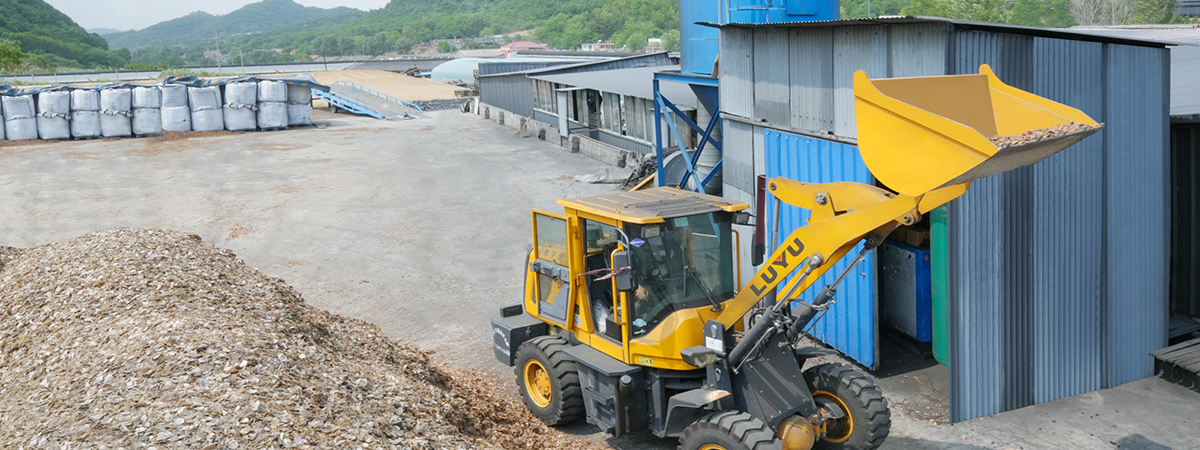 Shape and density are fixed on the line; the certificate of analysis should follow the same batch through inspection.
How the parameters play out in real applications
Hookah and shisha lounges
A premium shisha lounge and hookah bar chain in Saudi Arabia uses TC-01 under continuous social shisha service in upscale city-centre venues. The specification is a consistent 25 mm cube, ash content below 3%, and luxury magnetic box packaging customized with the client's logo. Volume runs at 50 metric tons per quarter, roughly 200 tons annually, across 2.5 years of continuous cooperation. The reported outcome is stable, odourless burning with zero client complaints and longer customer sessions attributable to sustained heat.
For a lounge operator, the reading is that ash and form do more work than calorific value alone: under 3% ash reduces turning and airflow problems, and a consistent 25 mm cube keeps the reload cycle predictable across staff shifts.
Restaurant BBQ
An authentic charcoal BBQ and grill restaurant group in South Korea takes one 40HQ container per month, approximately 20–22 tons, of hexagonal bamboo charcoal sticks for high-temperature searing and slow indoor roasting. The sticks are specified for high density and zero sparking to suit built-in dining table grills. The reported results are zero smoke interference in indoor dining and a 15% reduction in total charcoal consumption against the previous supplier, attributed to high calorific value. The relationship has run three years.
That case shows where burn time converts into labour: a 6–8 hour stick removes mid-service reloads, and a higher calorific value reduces kilograms consumed per cover. Both effects show up in operating cost before they show up in a specification table.
Incense and bakhoor
TC-04 incense charcoal is quoted at approximately 45–70 minutes. In bakhoor service the constraint is the opposite of a restaurant grill: sessions are short, ignition must be quick and predictable, and residue left in the burner tray after the session is a visible quality issue. Buyers in this segment should therefore verify ash on the batch certificate rather than assuming a premium figure from the product family.
Quick-light and instant formats
Quick-light charcoal, also sold as instant charcoal, sits in the same 45–70 minute band. The trade-off is explicit: faster ignition in exchange for a shorter service window and a different odour profile during lighting. For retail and outdoor channels this is usually the right trade; for a lounge session it rarely is.
Frequently asked questions
Which standard should a charcoal specification be checked against?
Two references cover most of the ground. EN 1860-2 is the mandatory product safety standard for BBQ charcoal in Europe. In Indonesia, SNI 01-6235-2000 is cited with thresholds of moisture ≤8%, ash ≤8% and calorific value ≥5,000 cal/g. Both function as compliance floors rather than premium targets, so a separate application specification — for example under 3% ash for a hookah lounge — should sit alongside them in the purchase document. FYC states SGS and ISO certification, accepts pre-shipment inspection and 100% production line testing, and supports third-party SGS or Intertek inspection on request.
Can fixed carbon, ash and burn time be adjusted for a private-label programme?
Yes, within the limits of the feedstock and forming route. FYC provides OEM, ODM, custom manufacturing and custom packaging solutions, and its customization scope covers product shape (cube, hexagonal, round, stick), size (25 mm, 33 mm, 50 mm and others), material composition, logo printing and retail packaging in magnetic, flip-top or pull-out box formats. Development capacity is stated as three Masters-level R&D engineers and 34 new product models per year, with monthly capacity of roughly 600–800 metric tons. Adjustment should be agreed as a written specification before production, because changing feedstock alters ash and burn behaviour together.
What is the minimum order quantity, and which payment terms apply?
MOQ is tiered: from one box for express stock, from one ton for wholesale orders, and one 20GP or 40HQ container for full container shipments. Delivery terms offered are FOB, CIF, CFR, EXW, and DDP for selected regions. Payment options are T/T with 30% deposit and 70% against a B/L copy, L/C at sight, Western Union, and Alibaba Trade Assurance.
How can a batch be validated before committing to volume?
Validation runs through samples first, then documented inspection. FYC applies 100% comprehensive inspection on all production lines with three professional QA/QC inspectors, maintains full traceability of raw materials, and has completed an on-site Intertek supplier assessment. Pre-shipment inspection and third-party SGS or Intertek inspection can be arranged at the client's request, and the after-sales commitment includes a response time of four hours or less and compensation for quality discrepancies.
What lead time applies to standard versus customized specifications?
Standard stock runs on a 7–15 day lead time; customized mass production runs on 20–30 days. The company commits to 100% on-time delivery and provides 24/7 technical support on charcoal usage and storage. Buyers who need a specification signed off against their own application can request the current product brochure or send their target parameters — fixed carbon range, ash ceiling, form, size and packaging — for a specification-matched quotation.
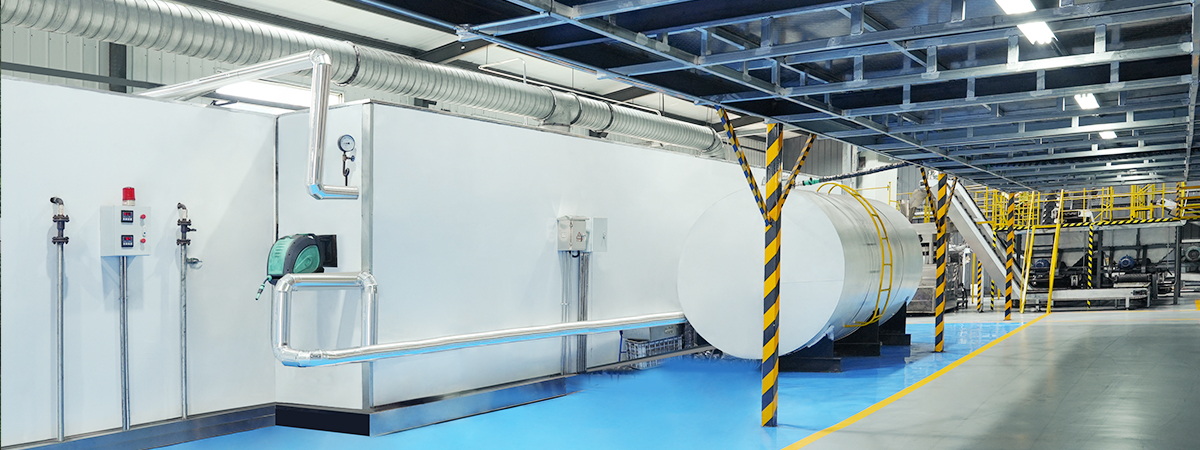 Batches leave the factory against the agreed acceptance criteria, not against a catalogue average.
Turning four numbers into a purchasing decision
Fixed carbon, ash content, calorific value and burn time are not independent scores to be maximized one at a time. They describe a single fuel behaving under stated conditions, and the buyer's job is to fix the conditions first: which device, how long a service cycle, how much residue the application tolerates, and how the coal is lit and turned.
Once those are fixed, the numbers become comparable. Premium targets of above 85–90% fixed carbon, under 3% ash and above 7,800 kcal/kg give a reference band; model-level burn times of 90–120 minutes for TC-01, 45–70 minutes for TC-04 and quick-light formats, and 6–8 hours for TC-02 describe the available service windows. National standards such as EN 1860-2 and the cited SNI thresholds then confirm market access rather than product fit.
The final step is documentation. A specification that is not written into acceptance criteria — with basis, method and test condition attached — will drift between the sample and the third container. Buyers who want to compare FYC's current product data against their own application targets can review the company's range at FYC Charcoal or download the FYC product brochure for the full model and packaging list.
Have Questions or Need More Details?
Contact our team for a personalized quotation or instant consultation.
Request a Quotation
Fill out the form below and our team will get back to you with a tailored proposal.
WhatsApp Direct Chat
Prefer to chat in real-time? Message us on WhatsApp for instant assistance & quick answers.
- Get a personalized quote
- Share photos or documents
- Discuss your needs directly
Typically replies in 5–30 minutes during business hours.