
Sim Racing Cockpit Guide: Rigs, Chassis and Buyer Basics
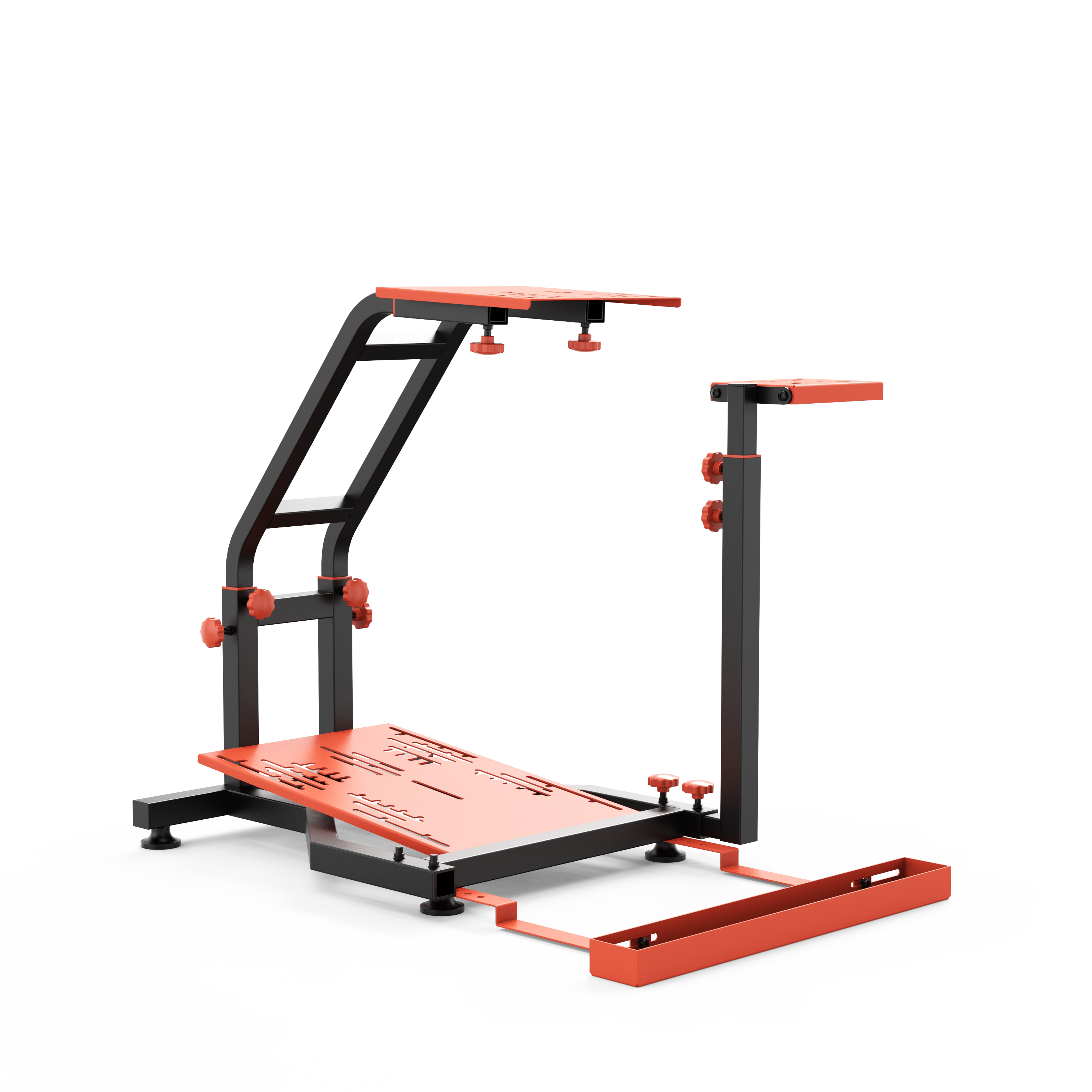
Quick answer: a sim racing cockpit is a rigid metal frame that holds the wheel base, pedals, gear shifter and seat in one fixed driving position. Its function is mechanical rather than decorative — it keeps the wheel-to-pedal geometry constant so the forces generated by the wheel base and pedals are transferred back to the driver instead of being absorbed as flex in a desk, a table or a loose stand.
This guide is written for buyers and channel partners who are still mapping the category: importers, distributors, retail buyers and newcomers to sim racing who need to understand what the different rig types are for before comparing prices. It explains how a cockpit works, what the market looks like, which models cover which setup, and which details decide whether a rig still feels solid after three months of hard braking.
Problem Definition: What a Cockpit Is Actually Solving
Every force a wheel base or pedal set generates is pushed back into the frame. If the frame flexes, that energy is absorbed by the frame instead of reaching the driver, so force feedback feels weaker, delayed and inconsistent. A rigid frame keeps the driving position fixed, which is why braking and counter-steering loads stay repeatable — and why a direct-drive wheel base on an unstable surface can feel worse than a belt-driven wheel on a stiff one.
In practice, the failure appears in a predictable order. The pedal plate drifts under a load-cell brake. The wheel plate flexes on fast corrections. The whole assembly shakes during hard braking, and the driver starts compensating with their arms instead of their feet. None of this is an electronics problem, and no firmware update fixes it.
Five causes of a wobbly rig — and the fix
- Loose bolts. Frame joints and the wheel plate are not fully tightened, or loosen again after the first sessions. Re-torque all bolts, starting with the frame joints and the wheel plate.
- Uneven or slippery floor. The rig sits on an uneven, slippery or soft surface, or the leveling feet are not adjusted. Place it on a flat, non-slip surface and set the feet.
- Hardware mismatch. A direct-drive wheel base or load-cell pedals mounted on an entry-level stand. Direct-drive hardware needs a high-rigidity frame.
- Wrong mounting hardware. The mounting plate or bolt set does not match the wheel base, so the unit is held with play.
- Overloaded pedal plate. The pedals push beyond the stand's design load. If wobble continues with a direct-drive wheel or load-cell pedals, the correct fix is an aluminum profile cockpit rather than more tightening.
That list is also the cheapest diagnostic a retailer can give an end user, because it separates an assembly problem from a product-class problem in under five minutes. It is the difference between a support ticket and a lost customer.
Industry Background: Why Cockpit Hardware Is Growing Faster Than the Sim Market
The racing simulator market was projected at USD 657 million in 2024 and USD 1.2 billion by 2035, a CAGR of 5.6%. Demand is concentrated: North America accounts for approximately 34% of global demand and Europe approximately 32%, while Asia-Pacific is the fastest-growing region.
Cockpit hardware is growing faster than that baseline. Mordor Intelligence projects the global sim racing cockpit segment at a CAGR of 21.65% through 2030, outpacing the overall simulator market, and online sales channels generated 65.41% of racing simulator revenue in 2024. The same research identifies aluminum profile rigs as the reference material class for high-end setups, because direct-drive wheelbases require a level of rigidity that folded steel and desk clamps were never designed to provide.
For buyers, the practical reading is straightforward. Entry-level folding stands still dominate volume, but the upgrade path toward direct-drive wheels and load-cell pedals pulls demand toward modular frames. A distributor who stocks only one end of that range will lose either the first-time buyer or the second purchase.
Detailed Solution: The Four Building Blocks of a Sim Racing Rig
FYCHI is the sim racing brand of Zhejiang Zhongyao Intelligent Equipment Co., Ltd. (Hangzhou Branch), a Chinese manufacturer based in Heping Town, Changxing County, Huzhou City, Zhejiang Province, which designs, produces and exports racing simulator brackets, wheel and pedal stands, monitor stands, simulator cockpits and racing seats for the global B2B market. Its range covers more than 20 active product series, from compact folding wheel and pedal stands (6001D–6021D series) and modular aluminum-profile cockpits (6016D, 6020D, 6034D-1-L) to six-axis adjustable triple-monitor stands (6029-1) and complete racing seat cockpits (7022D, 7025D, 7075D, 7104D).
Four of those models map directly onto the four decisions a new buyer has to make: how much rigidity, how much floor space, how much seat, and how many screens.
1. Folding wheel stand — the entry point (FYCHI 6001D)
The FYCHI 6001D is a racing simulator wheel stand, classified as a folding racing wheel stand and gear shifter simulator stand. The frame is a folding powder-coated carbon steel structure that folds for storage, assembly does not require drilling, and wheel height and tilt are adjustable. A gear shifter mount is included, the pedal plate is anti-slip, and the mounting pattern is compatible with Logitech G29/G923, Thrustmaster T300/TGT, Fanatec wheel bases and most standard-pattern wheel bases. It is intended for sim racing, esports entertainment, home gaming and retail distribution — the lowest-cost way to get a stable wheel and pedal position in a room that has to be shared.
2. Aluminum profile cockpit — the rigidity upgrade (FYCHI 6020D)
The FYCHI 6020D is an aluminum profile simulator cockpit, classified as an aluminum extrusion racing cockpit and flight simulator stand. It uses a 40-series aluminum extrusion profile with reinforced steel connectors, an anodized frame and a fully reconfigurable layout: wheel, pedal and shifter positions are adjustable, and the same platform accepts flight stick, throttle and rudder pedal mounting. It is intended for sim racing, flight simulation, professional training and esports, which makes it the model to specify when a buyer expects a direct-drive wheel base, load-cell pedals, or a plan to upgrade later.
3. Seat cockpit — the long-session setup (FYCHI 7022D)
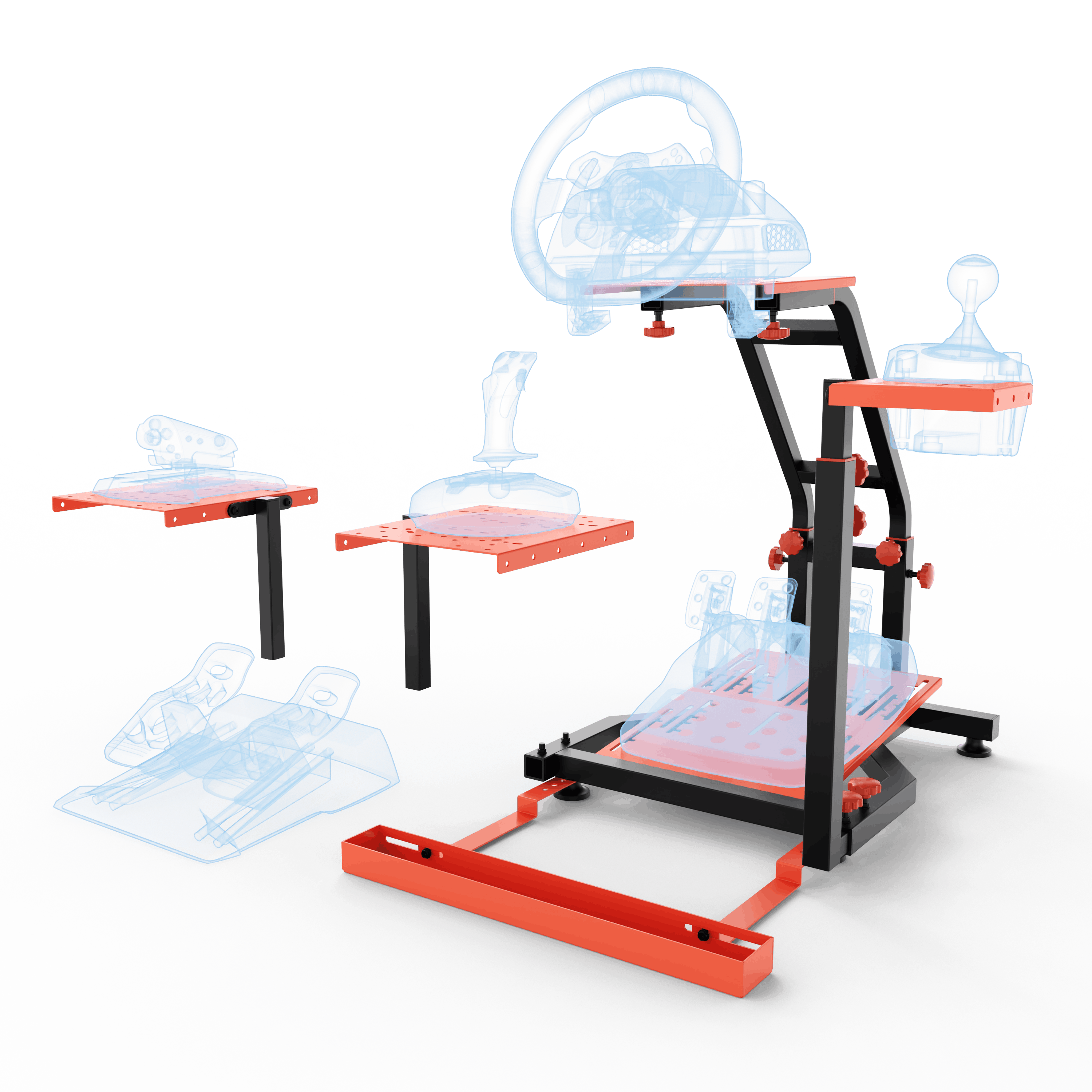
The FYCHI 7022D is a racing simulator seat classified as a bucket seat simulator cockpit and racing seat and frame combo, with an integrated seat-and-frame design. The reclining bucket seat runs on an adjustable seat rail with 14 cm of forward and backward travel; the pedal and wheel mounts are pre-positioned; the chassis is powder-coated tubular steel. Overall dimensions are 96 cm high, 56 cm seat depth and 53 cm seat width, with a backrest of 52 cm at the hip and 57 cm at the shoulder diagonal. Net weight is 12 kg and gross weight 14.5 kg, with a PVC leather or fabric seat over a reinforced foam cushion. It is intended for sim racing, esports venues and home entertainment.
4. Triple monitor stand — the immersion layer (FYCHI 6029-1)
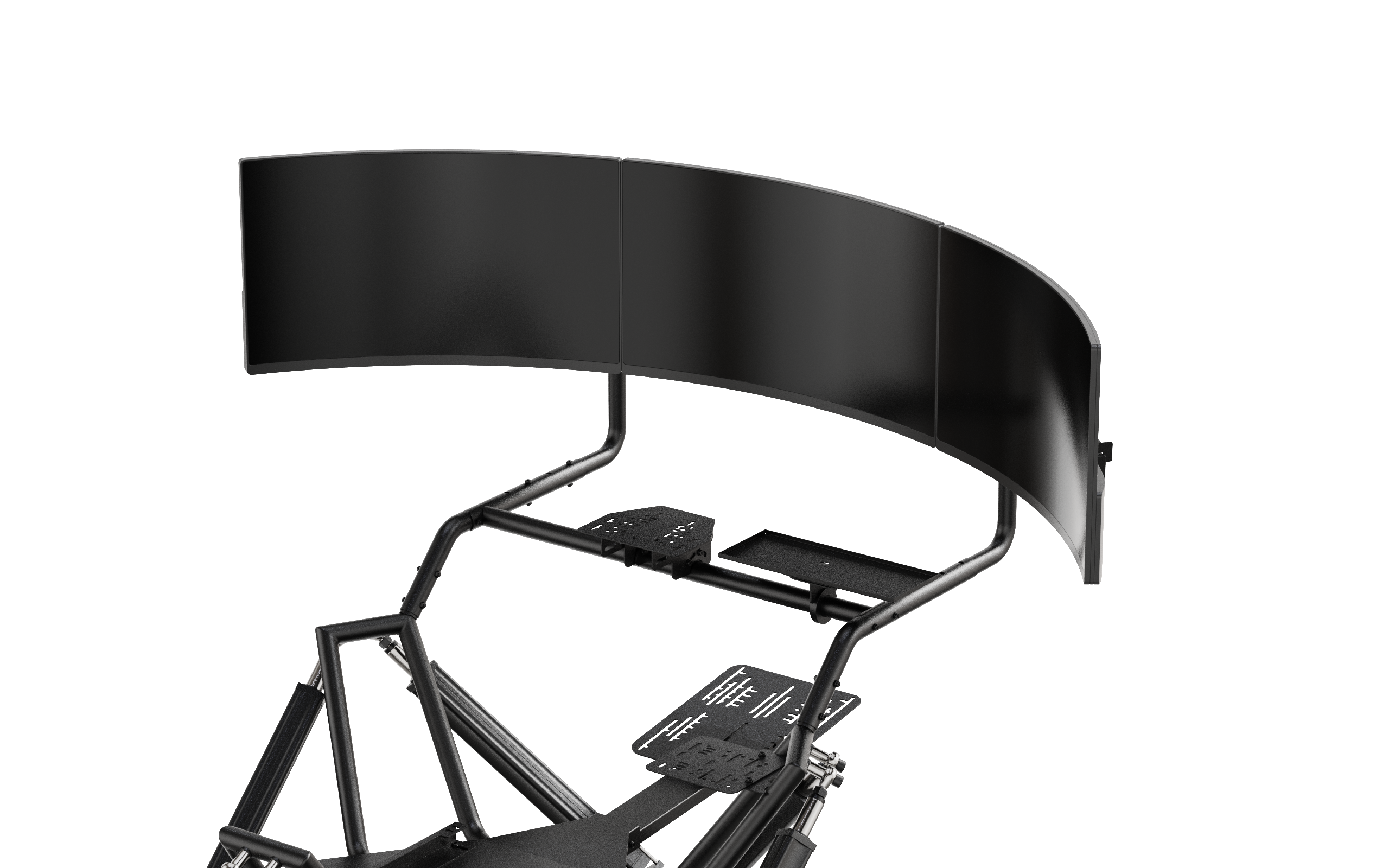
The FYCHI 6029-1 (6-Axis) is a triple monitor stand for sim racing, classified as a triple monitor mount with 6-axis adjustable monitor stand functionality. It holds three monitors mounted side by side on standard VESA points, with independent angle, height and depth adjustment per screen, and a heavy-duty load capacity for typical 27–32 inch displays. FYCHI stands and cockpits provide the frame and mounting structure; the displays themselves are supplied by the user. It is intended for esports centers and racing simulation retail environments as well as home setups.
Step-by-Step: How to Specify a Rig Without Overbuying
Step 1 — Start from the wheel base and pedals
The peripheral set defines the required rigidity. Confirm the wheel base model, its mounting hole pattern and whether the pedals are potentiometer or load-cell. A load-cell brake converts foot pressure into frame load, and that is the single most common reason an entry-level stand starts to move.
Step 2 — Choose the rigidity class, not the price point
Folding powder-coated steel suits belt-driven wheels and shared rooms. Aluminum profile suits direct-drive wheels, load-cell pedals and any setup expected to be upgraded. Choosing below the hardware class is the most expensive mistake in this category, because the rig gets replaced rather than adjusted.
Step 3 — Map every mounting point
Count what has to be mounted: wheel base, pedals, gear shifter, handbrake, keyboard tray, monitors. FYCHI rigs provide a dedicated pedal plate and a shifter mounting position so wheel, pedals and shifter sit on one frame, and mounting plates use industry-standard hole patterns. Where a wheel base uses brand-specific hardware, the hardware supplied with that wheel base is used.
Step 4 — Measure the footprint and the storage pattern
A fixed cockpit occupies floor space permanently; a folding stand does not. Seat dimensions, monitor stand depth and the space needed behind the pedals all belong in the decision, especially for retail buyers selling into apartments and shared living rooms.
Step 5 — Check the expansion path
Triple screens, a shifter, a handbrake, flight controls or a motion platform later. Modular aluminum profile accepts reconfiguration; a fixed steel stand does not. Buyers planning a second purchase should compare the expansion path, not only the first invoice.
Step 6 — Confirm packaging, documentation and after-sales
A rig is a heavy, long carton with metal parts, so transit protection and documentation decide the return rate. FYCHI export packaging uses cartons rated to 280 lb, black EPE corner protection and 5 mm EPE cushion boards on the top and bottom of each carton, and every carton includes a colour manual, certificate of conformity, warranty card and installation tools.
Use Cases: Where Each Configuration Fits
Home gaming and shared rooms. A folding wheel stand such as the 6001D stores away, needs no drilling, and holds a belt-driven wheel base in a repeatable position. It is the standard first purchase in markets where the rig has to leave the living room after a session.
Home cockpit with a fixed seat. The 7022D pairs a reclining bucket seat with a rigid tubular steel frame and pre-positioned wheel and pedal mounts, for drivers running long sessions who want a fixed seating position rather than a folding frame.
Direct-drive and load-cell setups. The 6020D aluminum profile cockpit is the model for high-torque wheel bases and stiff brake pedals, and it is the only model of the four that also supports flight simulation hardware.
Esports venues and retail showrooms. Venues combine a cockpit, a triple monitor stand and repeated daily use by different drivers. Adjustability and re-tightening access matter more than weight, and the 6029-1's independent per-screen alignment keeps the wrap-around view consistent after visitors have adjusted the rig.
Flight simulation and training rooms. The 6020D is classified as an aluminum extrusion racing cockpit and flight simulator stand and is intended for professional training environments as well as esports — one platform, two scenarios, and one inventory line for the distributor.
Comparison: Four FYCHI Models Side by Side
| Model | Type | Frame / material | Key adjustment | Intended use |
|---|---|---|---|---|
| FYCHI 6001D | Folding racing wheel stand with gear shifter mount | Powder-coated carbon steel, folding structure | Wheel height and tilt; anti-slip pedal plate; no drilling required | Sim racing, esports entertainment, home gaming, retail distribution |
| FYCHI 6020D | Aluminum extrusion racing cockpit and flight simulator stand | 40-series anodized aluminum extrusion with reinforced steel connectors | Adjustable wheel, pedal and shifter positions; fully reconfigurable layout | Sim racing, flight simulation, professional training, esports |
| FYCHI 7022D | Bucket seat simulator cockpit, racing seat and frame combo | Powder-coated tubular steel frame; PVC leather or fabric seat | Reclining bucket seat; 14 cm seat rail travel; pre-positioned pedal and wheel mounts | Sim racing, esports venues, home entertainment |
| FYCHI 6029-1 (6-Axis) | Triple monitor mount with 6-axis adjustment | Powder-coated steel with aluminum adjustment joints | Independent angle, height and depth per screen; VESA mounting | Sim racing, esports centers, racing simulation retail |
Figures above are taken from FYCHI product specifications. For a distributor, stocking these four models covers the range from a first folding stand to a fixed aluminum profile cockpit with triple screens.
Manufacturing, Compliance and Distributor Support
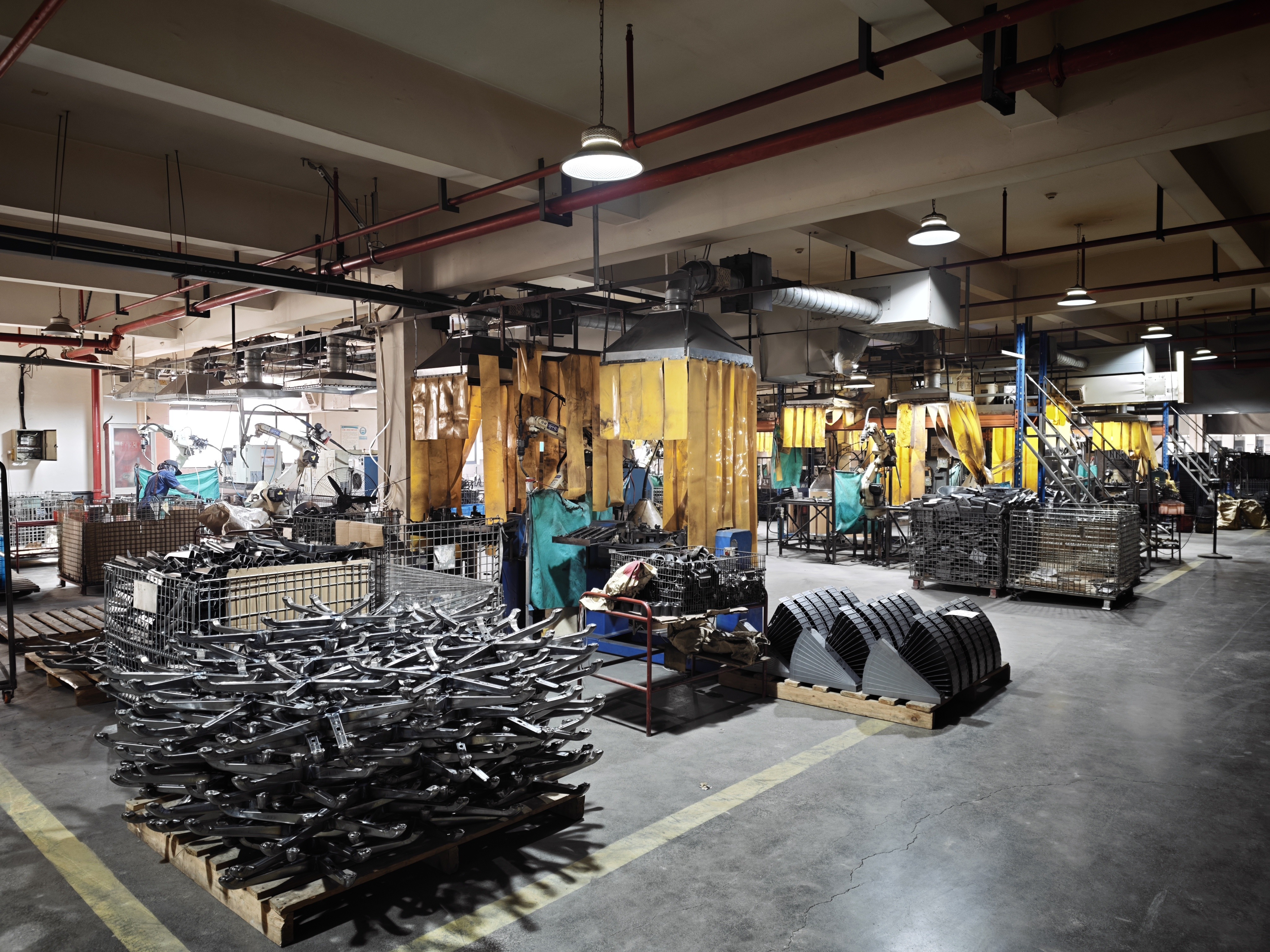
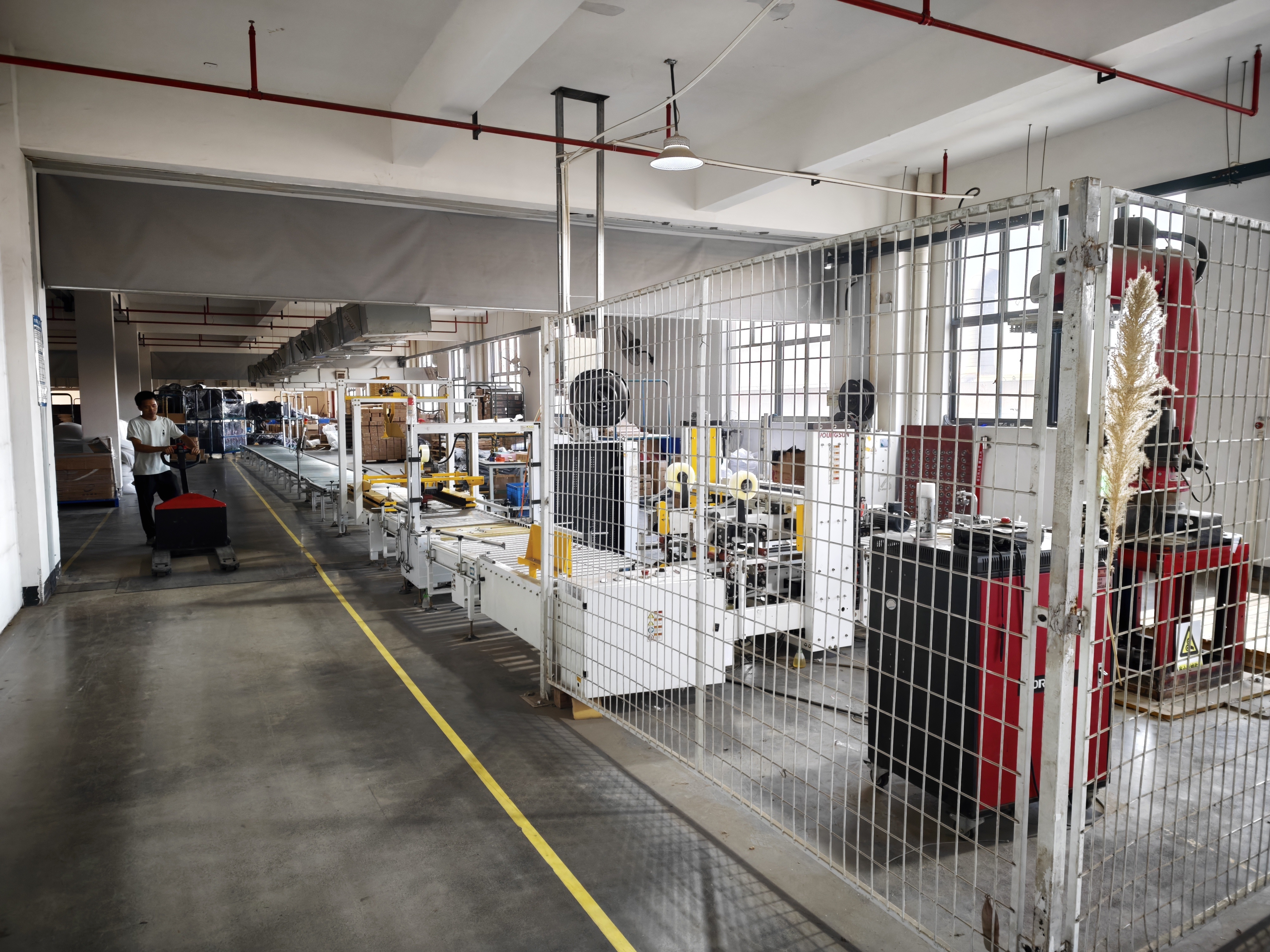
The FYCHI production base covers 35,000 m², employs approximately 100–200 staff and runs a 10-person R&D team. The company operates its own line for steel and aluminum simulator frames, with in-house welding, powder coating and assembly, and every unit passes pre-shipment inspection before loading. That vertical control is what allows frame stiffness to be defined at the welding and coating stage rather than discovered at the customer's door.
Compliance documentation is model-specific, which matters at customs and in retail listings. FYCHI racing simulator brackets are tested for RoHS 2.0 compliance under test certificate TST20240500495-3RC, issued by Dongguan True Safety Testing Co., Ltd. in May 2024 and covering the 6002–6020 model series. Seating products are tested for safety, strength and durability in accordance with the EN 1335 series and for REACH SVHC compliance by Bureau Veritas. The racing simulator bracket design is protected by Chinese design patent Certificate No. 7689673 (Patent No. ZL 2022 3 0555008.X, granted November 2022) and by a Registered Community Design with the European Union Intellectual Property Office (Registration No. 002228411-0001).

After-sales is where this category usually disappoints, so the support model is worth checking before an order rather than after a claim. FYCHI keeps spare parts supply for the models sold to support warranty claims and replacement of lost or damaged parts, holds a small stock of the most commonly requested parts, and uses a documented claim route from end user to retailer to supplier. Claim assessment requires photos, the order number and the batch or carton reference. A warranty card and remote technical support cover installation and adjustment questions, and recurring complaints are recorded so the product and the manual can be improved.
FAQ
How should buyers evaluate sim racing cockpit manufacturers?
Check the compliance documents that cover the exact models you are ordering, not just the brand. FYCHI racing simulator brackets are tested for RoHS 2.0 compliance under test certificate TST20240500495-3RC, issued by Dongguan True Safety Testing Co., Ltd. in May 2024 and covering the 6002–6020 model series; seating products are tested in accordance with the EN 1335 series and for REACH SVHC compliance by Bureau Veritas. Ask for the certificate number and the model list it covers, because a certificate for one series does not automatically cover another. Then confirm that the supplier runs its own frame line, with in-house welding, powder coating and assembly, and that every unit passes pre-shipment inspection.
Which wheel bases, pedals and shifters fit a FYCHI sim racing rig?
FYCHI wheel stands and cockpits use industry-standard mounting hole patterns and are compatible with Logitech G29/G923, Thrustmaster T300/TGT, Fanatec and most standard-pattern wheel bases. Each rig has a dedicated pedal plate and a shifter mounting position, so wheel, pedals and shifter sit on one frame. In most cases no adapter is needed: the mounting plates use standard hole patterns and every carton includes a complete bolt set and an illustrated installation manual. Where a wheel base uses brand-specific hardware, use the hardware supplied with that wheel base, and confirm the mounting hole pattern before ordering.
Which FYCHI model suits a first sim racing setup?
Match the rig to the wheel and pedals first. Entry level, limited floor space or a shared room: the FYCHI 6001D folding wheel stand, which is compact, storable and the lowest-cost way to get a stable wheel and pedal position. Direct-drive wheel base, load-cell pedals or a plan to upgrade: the FYCHI 6020D aluminum profile cockpit, which is far more rigid, freely reconfigurable and also supports flight simulation. Triple-screen immersion: the FYCHI 6029-1 (6-Axis) triple monitor stand. Long sessions with a proper racing seat: the FYCHI 7022D seat cockpit. For a distributor, stocking the four models covers the whole price ladder from entry to high-end.
How is a rig packed, and what after-sales support comes with it?
FYCHI export packaging uses newly designed cartons with a 280 lb load rating, black EPE corner protection and 5 mm EPE cushion boards on the top and bottom of each carton. Each carton includes a colour manual, certificate of conformity, warranty card and installation tools, so no additional parts are required for assembly. After delivery, spare parts supply covers warranty claims and replacement of lost or damaged parts, and a documented claim route from end user to retailer to supplier handles claims; assessment requires photos, the order number and the batch or carton reference. Current production and shipping schedules are confirmed with the supplier at the quotation stage.
How do I confirm the right configuration before ordering?
Send the wheel base model, pedal type, screen setup, available floor space and target price band, and the exact configuration can be confirmed against the FYCHI range. Distributors can also request the company profile and product documentation before a first order. Contact FYCHI through www.faychi.com or info@faychi.com, or download the Zhongyao company introduction (PDF).
Conclusion
A sim racing cockpit is a rigidity decision before it is a price decision. The frame has to hold the wheel-to-pedal geometry under braking, the mounting points have to match the peripherals the buyer already owns or intends to buy, and the platform has to leave room for the next upgrade. Folding stands and aluminum profile cockpits are not really competitors — they answer different stages of the same purchase journey.
FYCHI covers both ends of that journey with four core models, backed by in-house frame production, model-specific compliance documentation and a documented spare-parts route. Buyers who match the rig to the wheel base, the pedals and the floor space get a setup that stays stable; buyers who match it to a price list usually buy twice.
Building a sim racing cockpit range?
FYCHI supplies distributors and retailers across North America, Europe and Asia-Pacific with brand-ready product, packaging and after-sales support. Send your wheel base model, pedal type, screen setup, floor space and target price band to receive a configuration recommendation, or download the company profile for the full model list.
Have Questions or Need More Details?
Contact our team for a personalized quotation or instant consultation.
Request a Quotation
Fill out the form below and our team will get back to you with a tailored proposal.
WhatsApp Direct Chat
Prefer to chat in real-time? Message us on WhatsApp for instant assistance & quick answers.
- Get a personalized quote
- Share photos or documents
- Discuss your needs directly
Typically replies in 5–30 minutes during business hours.