
Choosing the Right Seamless Steel Pipe Profile: Application Guide for Custom Drive Shafts and Hydraulic Lines
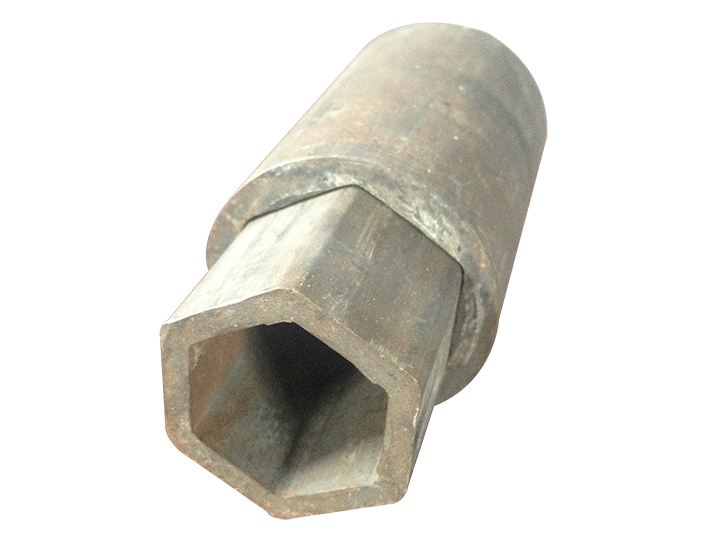
Special profiles such as the Hexagon Pipe share the same dimensional platform as Fakesi round tube: outer diameter 1–100 mm, wall thickness 1–20 mm, tolerance ±0.1 mm.
A seamless steel pipe profile is the cross-sectional shape of the tube — round, hexagonal, triangular, star-shaped, lemon-shaped, square, rectangular or octagonal — and in custom drive shafts and hydraulic lines that shape decides whether the component fits, seals, rotates and transfers torque correctly. Fakesi is the product brand of WUXI JIANGBO INTELLIGENT TECHNOLOGY CO., LTD., a steel tube manufacturer founded in 1992 and located at No. 75, Xinda Rd., Fenshui Area, Zhoutie Town, Yixing, Wuxi, Jiangsu, China. Its portfolio covers cold drawn round tubes for hydraulic fluid lines and hydraulic cylinders alongside special sections such as hexagon, triangle, star, lemon, square and rectangular tubing.
Every profile in that portfolio is quoted on one dimensional platform: outer diameter 1–100 mm, wall thickness 1–20 mm, and a dimensional tolerance of ±0.1 mm, with Q355B steel as the material baseline. That single platform is what makes profile selection a design decision rather than a sourcing lottery — the steel does not change when the section changes, only the geometry does.
This guide maps profile geometry to mechanical function. It is written for buyers, engineers and procurement teams who are at the point of deciding which section to specify for a drive shaft tube, a hydraulic fluid line or a machined component, before a first quotation is issued.
What "Profile" Means in a Seamless Steel Pipe Specification
In seamless tube purchasing, three specification layers are usually discussed as if they were one. They are not, and separating them prevents most specification errors.
Material grade defines the steel. Q355B steel is the baseline material across the Fakesi profile range and is classified as a carbon steel seamless pipe. The wider production range also includes 10#, 20#, 35#, 45#, 20Cr, 40Cr, 16Mn, 20Mn and Q235B, which allows a buyer to move grade without changing the profile.
Dimensions define the envelope. Standard product specifications cover an outer diameter range of 1–100 mm and a wall thickness range of 1–20 mm. Thin wall seamless steel pipes start at a minimum wall thickness of 1 mm and thick wall seamless steel pipes reach a maximum wall thickness of 20 mm. The dimensional tolerance is ±0.1 mm.
Profile defines the cross-section itself. The special-shaped range includes Seamless Triangle Pipe, Seamless Hexagon Pipe, Seamless Octagon Pipe, Seamless Oval Steel Pipe and the Seamless Lemon-shaped Tube, together with star profiles such as the ST Star Pipe and the 10ST Star Pipe, plus square and rectangular sections. Each of these is a seamless steel pipe — the section is formed from a seamless tube, not welded from strip.
A practical detail affects how profiles are ordered: product models are designated within a numerical range such as 2–100, 3–100, 4–100, 5–100, 6–100 and 7–100. These model designations identify the product family and are quoted alongside the dimensional specification, not instead of it.
The Problem: Profile Geometry Is Usually Decided Too Late
Most sourcing problems in custom drive shafts and hydraulic lines do not originate in the steel grade. They originate in a late decision about section geometry — after the assembly drawing is frozen, after the mating part is ordered, and often after a round tube has already been quoted and approved.
Round tubing is the default assumption in most procurement templates. For fluid lines and cylinder bodies that assumption is correct. For a component that must be gripped, keyed, indexed or splined, a round section pushes the burden onto secondary operations — machining flats, broaching a bore, welding a yoke assembly — and each added operation introduces its own tolerance stack-up and inspection requirement. The tube itself was available at ±0.1 mm; the assembly around it may not be.
A second problem is documentation. Non-round geometry is not a catalogue item in the way standard round tube is. EN 10305-1 sets the technical delivery conditions for cold-drawn tubes and specifies outside diameters up to 380 mm together with strict dimensional tolerances, but it does not define a hexagon, triangle or star cross-section. Those requirements normally travel on the buyer's drawing, and a supplier who cannot read that drawing in dimensional terms will quote something that fits "approximately".
A third, quieter problem is looking only at the outside of the tube. A section can be outer hexagon with a round bore, or round outside with a hexagonal bore, and those two profiles solve different assembly problems. The mistake is specifying the visible shape and leaving the bore undefined.
Industry Background: A Large, Still-Developing Cold-Drawn Category
Seamless tube is a mature global category with a stable material base. China's seamless steel pipe export volume reached a record 5.72 million tons in 2024, a 1% year-on-year increase, according to Mysteel and General Administration of Customs data. China's seamless steel pipe production accounts for approximately 60% of total global production as of 2023/2024, based on Mysteel and World Steel Association figures. The global seamless pipe market was estimated at USD 130.76 billion in 2024 by Market Research Future; other published estimates for the same period run considerably higher because they use different scopes, so any market figure should be read together with its source definition.
The material direction is equally stable. Carbon steel remains the dominant material in the pipe market, accounting for approximately 78% of global market share in 2026 projections, according to Future Market Insights. Cold-drawn seamless steel tubes specifically are projected to reach a market value of USD 26.14 billion by 2035, at a CAGR of 16.57%, according to Spherical Insights — a forward-looking estimate rather than a historical measurement.
Large international producers in this category include Tenaris (Luxembourg), Vallourec (France), Nippon Steel (Japan) and Tianjin Pipe (China), as listed by Business Research Insights. The competitive layer that matters for custom drive shafts and hydraulic lines is different: it is decided by how precisely a section can be produced and how closely it matches a mating component, not by tonnage. That is the layer Fakesi operates in, from a modern self-owned production base of 20,000 square metres, with an annual production capacity of approximately 20,000 tons and an R&D team of 5 engineers.
The Solution: Matching Profile Geometry to Mechanical Function
The selection rule is straightforward once stated: choose the cross-section that carries the load and creates the fit, not the cross-section that is easiest to purchase. The following mapping follows that rule.
Cold Drawn Round Tube — Hydraulic Fluid Lines and Cylinders
The cold drawn round tube (CDS) is the standard choice wherever the tube must contain or guide fluid. It is a Q355B carbon steel seamless pipe produced by cold drawing, with a dimensional tolerance of ±0.1 mm, an outer diameter range of 1–100 mm and a wall thickness range of 1–20 mm; its model designation is 12–100. It is also classified as a hydraulic fluid line tubing, a cold drawn tube for hydraulic cylinders and a precision round tube for auto parts.
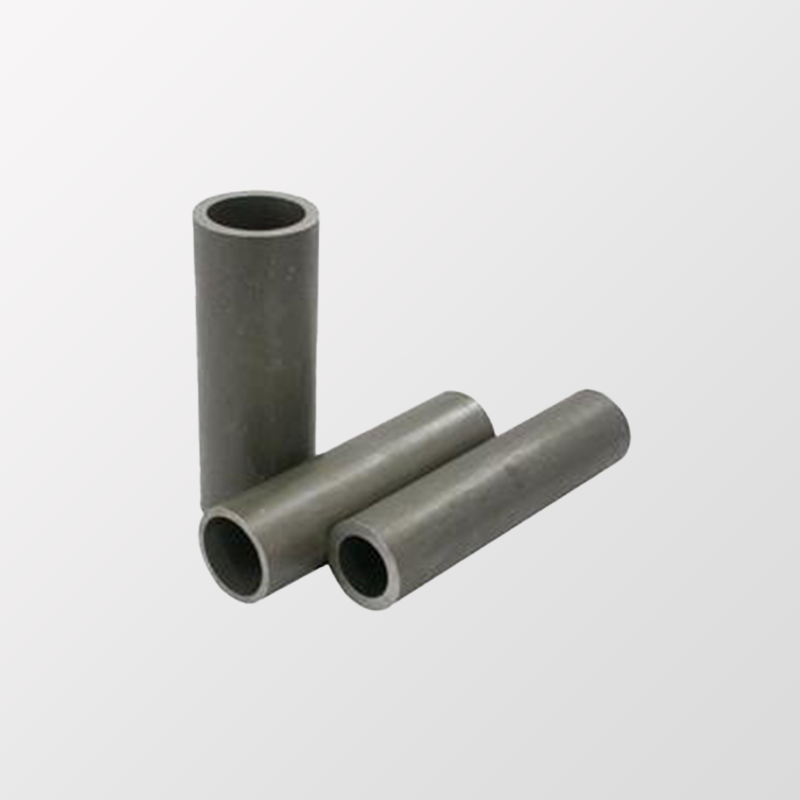
Cold drawn round tube: the round section keeps the bore uniform, which is what fluid lines and cylinder barrels require.
Round geometry remains dominant in hydraulics for one reason: a uniform circular bore makes sealing, piston travel and fluid behaviour predictable. Within that round family, a buyer can move between related designations without leaving the same dimensional platform — precision steel pipe (model 7–100) for high-tolerance work, cold rolled seamless steel pipe, thick wall seamless steel pipe for heavier pressure duty, thin wall seamless steel pipe where weight matters, large diameter and small diameter seamless pipe at the two ends of the range, and seamless pipe for machining or precision bright steel pipe where the tube is a machining blank rather than a fluid path.
Hexagon Profiles — Wrenchable Outside, Controlled Bore
Hexagon tubing solves a problem that round tubing cannot: it transfers or resists rotation without a secondary machining operation. Three distinct hexagon products exist in the range, and choosing between them is a decision about where the torque is applied.
The Hexagon Pipe (model 9–100) is a Q355B carbon steel seamless pipe with a dimensional tolerance of ±0.1 mm, an outer diameter range of 1–100 mm and a wall thickness range of 1–20 mm. It is also classified as a seamless hexagon pipe and a double hexagon seamless pipe.
The External Hexagonal Internal Round Tube (model 11–100) combines a hexagonal outside with a round bore. It is a Q355B carbon steel seamless pipe manufactured by cold drawing and is also classified as a seamless outer hexagon steel pipe or a hollow hexagonal bar with round hole. This profile suits components where the outside must be gripped, clamped or turned with a wrench while the inside still carries fluid or a round shaft.
The External Round Internal Hexagonal Tube (model 10–100) reverses that logic: a round outside with a hexagonal bore, classified as an inner hexagon outer round pipe or a round steel pipe with hexagonal bore. Use it when the driven element is internal — a hex key, a hex shaft or a hex-headed fastener seat — while the outside of the tube stays round for bearing, bushing or housing fit.
The selection rule in one line: torque applied on the outside calls for external hex; torque applied through the bore calls for internal hex.
Triangle and Star Profiles — Indexed and Splined Torque Transfer
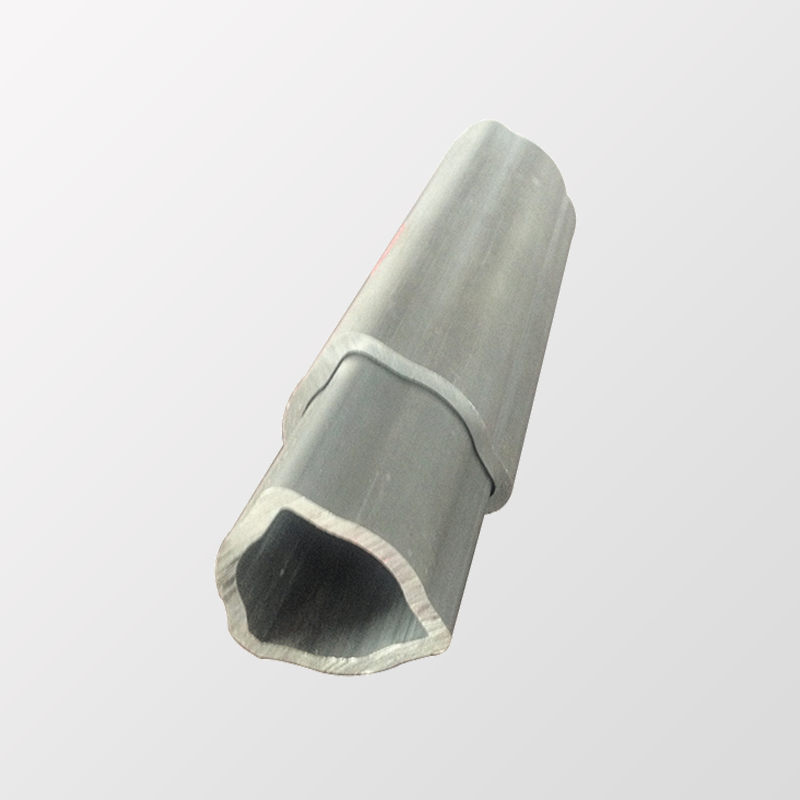
Triangle Pipe (model 4–100): a triangular section indexes orientation as well as transmitting rotation.
The Triangle Pipe (model 4–100) is a Q355B carbon steel seamless tube available as triangular steel tubing, right-angle triangle pipe, rounded-corner triangle pipe, cold drawn triangle pipe, seamless triangular steel tube and precision triangle profile tubing. A triangular section is naturally indexed: it can only engage a matching mating part in a limited number of orientations, which is useful where a component must be assembled in a defined position rather than any position.
Star profiles do the job of a spline in tube form. The ST Star Pipe (model 5–100) is a cold drawn seamless pipe with a star-shaped profile made from Q355B steel, also classified as a 6-point star steel tube, 8-point star pipe, spline steel pipe, cold drawn star pipe and cold rolled star shaped pipe. Its outer diameter range is 1–100 mm, wall thickness range 1–20 mm, dimensional tolerance ±0.1 mm. The 10ST Star Pipe (model 3–100) is the 10-point variant, classified as a 10-point star steel tube, star shaped seamless tubing, 10ST carbon steel profile and seamless 10ST steel tubing.
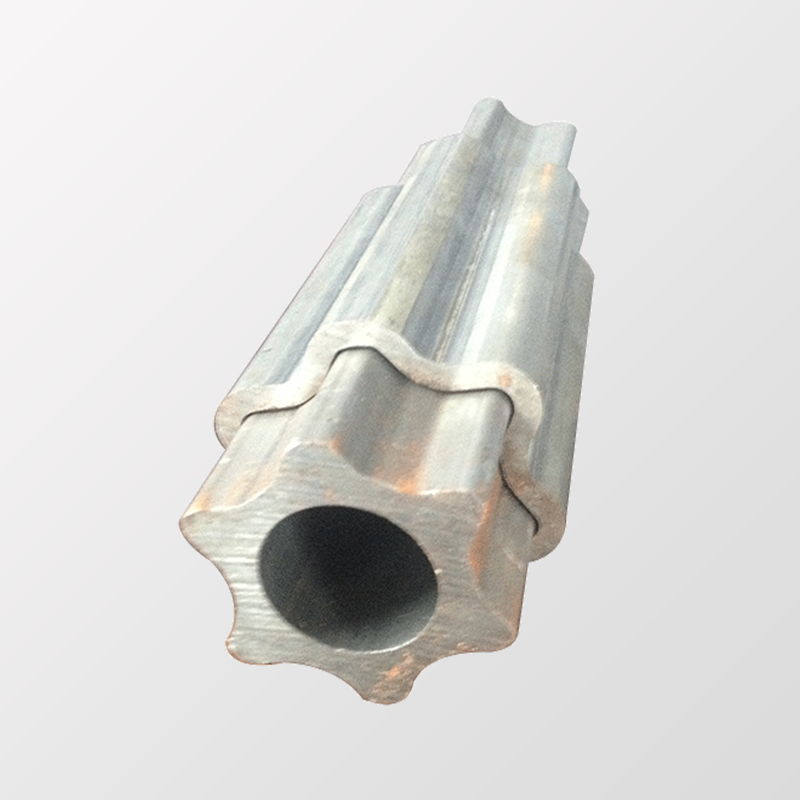
ST Star Pipe (model 5–100): multiple points around the circumference distribute torque across a wider contact area than a single keyway.
The practical difference between a 6-point, 8-point and 10-point star is the number of engagement points and the depth of each point. More points spread the load across a larger contact area; fewer, deeper points suit heavier engagement per point. Because all three variants sit on the same ±0.1 mm tolerance platform, a buyer can compare them as geometry alternatives rather than as tolerance alternatives.
Lemon, Square, Rectangular and Octagonal Profiles
The Lemon-shaped Tube (model 8–100) is a Q355B seamless steel pipe with a lemon-shaped profile, designed for applications requiring an oval or lemon-shaped cross-section. It is classified as a lemon shaped steel tube, oval-profile lemon pipe, lemon section seamless pipe, internal & external lemon tube and precision lemon profile pipe. The product is also identified in the range as a seamless PTO drive shaft tube, which places it squarely in the drive-line category rather than the fluid-line category.
The Square Rectangular Pipe (model 6–100) covers rectangular steel pipe, large diameter square pipe, thin wall square tubing, thick wall rectangular pipe, seamless square steel tube and mechanical square tubing, made from Q355B steel with the same 1–100 mm outer diameter range and 1–20 mm wall range. Square and rectangular sections are used where an assembly needs a flat face for mounting, clamping or welding rather than a curved one.
Octagonal and other non-standard sections fall under the Custom Special Shaped Pipe (model 2–100), classified as special profile steel pipe, square shaped steel pipe, rectangular shaped steel pipe, oval shaped steel pipe, octagonal shaped steel pipe and hexagonal special-shaped steel tube. The base designation for the entire portfolio is the Seamless Steel Tube (model 1–100), available as precision seamless steel pipe, cold rolled seamless steel pipe, thick wall and thin wall seamless steel pipe, and large or small diameter seamless tube.
Step-by-Step: How to Select the Right Profile
Profile selection becomes fast when it is done in a fixed order. The following sequence works for drive shaft tubes, hydraulic components and machined parts alike.
- Define the function, not the shape. Write down whether the tube must contain fluid, transmit torque, resist rotation, provide a flat mounting face, or serve as a machining blank. The function eliminates most of the range immediately — fluid containment points to cold drawn round tube; torque transfer points to hexagon, star or lemon; mounting points to square or rectangular.
- Identify the mating geometry. Measure or obtain the drawing of the component the tube engages. If the mating part has a hex bore, the tube must be external hex; if the mating part is a hex shaft, the tube must be internal hex. Mating geometry, not preference, decides the section.
- Fix the envelope inside the shared platform. Outer diameter must sit within 1–100 mm and wall thickness within 1–20 mm. Deciding the wall early matters, because thin wall starting from 1 mm and thick wall up to 20 mm behave differently in machining and in load-bearing duty.
- Set the tolerance class. For precision components, specify ±0.1 mm, which is the tolerance applied across the range. Components that will be machined after delivery can sometimes accept a wider intermediate tolerance, but the finished part still has to meet the assembly requirement.
- Select the material grade. Q355B steel is the baseline across the profile range. The production range also includes 10#, 20#, 35#, 45#, 20Cr, 40Cr, 16Mn, 20Mn and Q235B if the application requires a different grade.
- Confirm the profile on a sample before the production order. Non-round sections are produced to a drawing, so a physical sample or trial length is the point where mating fit and torque behaviour are verified.
- Confirm cutting, quantity and delivery. Drive shaft and cylinder projects usually run as factory line supply with fixed-length cutting, so length and delivery schedule belong in the same specification document as the profile.
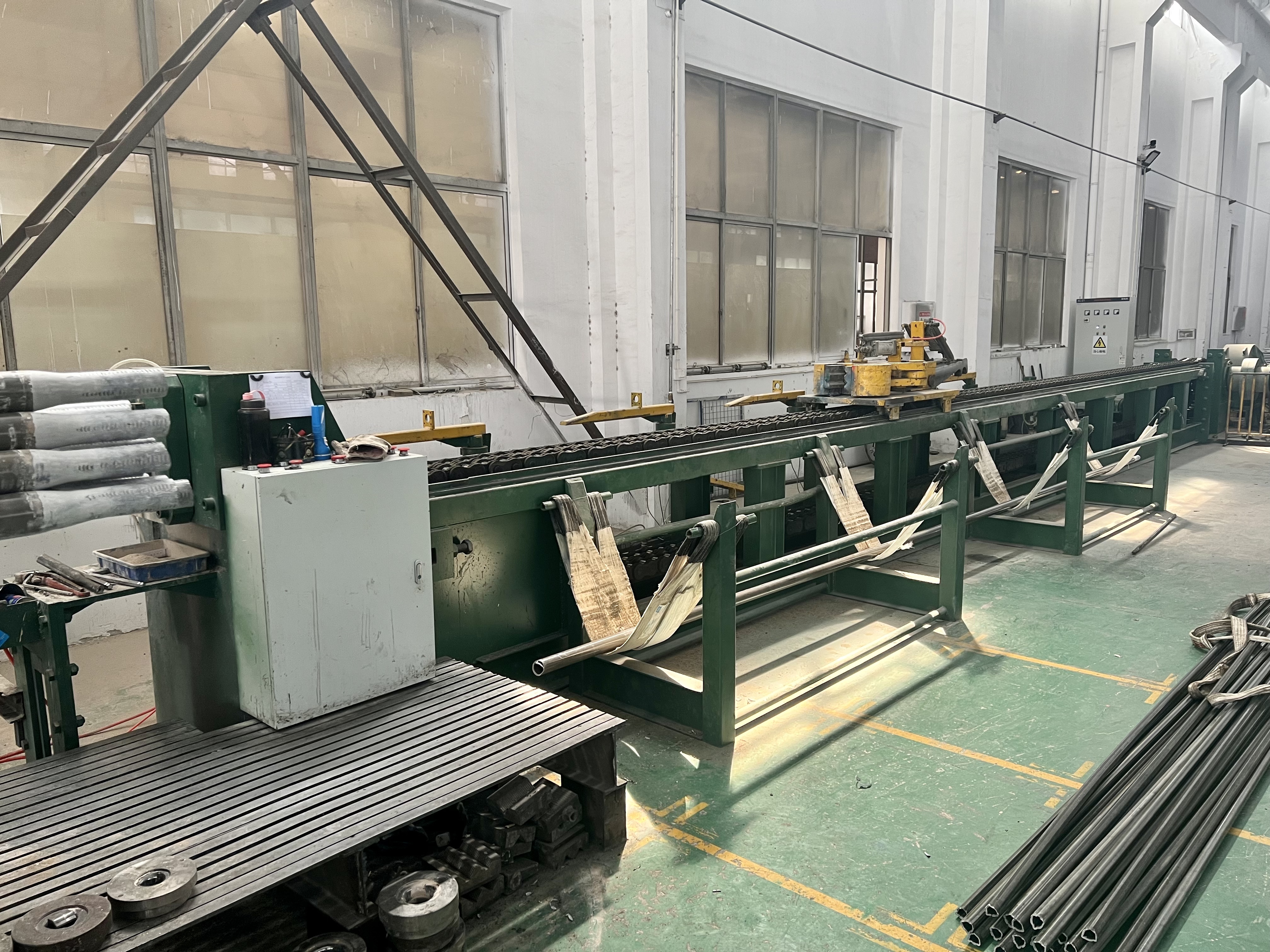
Cold drawing is what allows a defined cross-section — round, hexagon, star or lemon — to be held to ±0.1 mm.
Use Cases: Where These Profiles Are Applied
Agricultural Machinery and PTO Drive Shafts
Power take-off drive lines are a profile-critical application. The documented application case is a drive shaft tube used as a factory line project with a 24/7 operation mode, where the tube function is power take-off, universal joint drive and torque output, and the matched equipment includes a universal joint yoke, a cross and bearing kit and a slip yoke. The stated special requirement is high torque resistance to deformation.
That requirement combination — continuous duty, torque output, yoke and slip yoke engagement — is why lemon-shaped and star profiles appear in drive-line work: a defined non-round section carries torque through the joint geometry itself instead of through a keyed or welded interface. Matching the profile to the yoke rather than to the drawing alone is the single highest-value check in this application.
Automotive Parts Manufacturing
These products are used in the automotive parts manufacturing industry, with the application scenario commonly found in Italy, Russia, the United States and Germany. Automotive drive shafts, motorcycle and auto parts production draw on the same profile logic: round tube for fluid and structural paths, hexagon and star sections where rotation must be transmitted or locked, and precision profiles where a machined fit is required after delivery.
From a supply perspective, these products are exported with export business accounting for 50% of total sales, with products successfully exported to Europe, North America, Southeast Asia and other regions. Major markets served are the EU, Eurasia and MENA regions — which is relevant when a buyer needs a supplier already familiar with European and Eurasian delivery requirements.
Hydraulic Cylinders and Fluid Lines
Hydraulic and pneumatic cylinder production uses cold drawn round tube as the barrel and fluid-line material, where the uniform round bore and ±0.1 mm tolerance support sealing and piston travel. Precision steel pipe and precision bright steel pipe serve the same application where the internal or external surface is used directly as a functional surface rather than being machined afterwards.
Industrial and Process Equipment
Beyond drive lines and hydraulics, the business provides steel tubes for industries including machinery manufacturing, automotive components, petrochemical engineering, power generation, agricultural equipment and mould manufacturing. In these settings the profile decision is usually driven by one of three needs: a fluid path, a mechanical interface, or a structural section with a flat face.
Profile Comparison Table
The table below compares the main seamless profiles on the same specification platform. All entries are Q355B carbon steel, seamless, with an outer diameter range of 1–100 mm, a wall thickness range of 1–20 mm and a tolerance of ±0.1 mm.
| Profile | Model designation | Primary mechanical function | Typical application |
|---|---|---|---|
| Cold Drawn Round Tube (CDS) | 12–100 | Fluid containment, uniform bore | Hydraulic fluid lines, hydraulic cylinders, auto parts |
| Precision Steel Pipe | 7–100 | High-tolerance dimensional fit | Machined precision components, small diameter precision tubing |
| Hexagon Pipe | 9–100 | External grip, rotation resistance | Wrenchable and anti-rotation components |
| External Hexagonal Internal Round Tube | 11–100 | External torque + internal fluid path | Clamped or turned parts with a round bore |
| External Round Internal Hexagonal Tube | 10–100 | Round outer fit + hex bore drive | Hex shaft or hex key interfaces |
| ST Star Pipe | 5–100 | Splined torque transfer (6/8-point) | Drive shaft and splined tube assemblies |
| Triangle Pipe | 4–100 | Indexed orientation, torque transfer | Position-defined mechanical components |
| 10ST Star Pipe | 3–100 | 10-point splined torque transfer | High-engagement drive components |
| Lemon-shaped Tube | 8–100 | Oval-section torque transfer | PTO drive shaft tubes |
| Square Rectangular Pipe | 6–100 | Flat mounting faces, structural section | Mechanical square tubing, frame members |
| Custom Special Shaped Pipe | 2–100 | Non-standard section to drawing | Octagonal, oval and special PTO drive shaft tubes |
| Seamless Steel Tube (base) | 1–100 | General-purpose base designation | Precision, thick wall, thin wall, large and small diameter tube |
Frequently Asked Questions
1. Do special profiles such as hexagon, triangle and star tubes follow a standard like EN 10305-1?
Partly. EN 10305-1 sets technical delivery conditions for cold-drawn tubes and specifies outside diameters up to 380 mm together with strict dimensional tolerances. It governs the cold-drawn process discipline that Fakesi applies across its range — outer diameter 1–100 mm, wall thickness 1–20 mm and a dimensional tolerance of ±0.1 mm — but it does not define hexagon, triangle or star geometry. Non-round sections are therefore specified on the buyer's drawing, and WUXI JIANGBO INTELLIGENT TECHNOLOGY CO., LTD. operates ISO quality management systems on a 20,000 m² production base to control that dimensional discipline.
2. Which seamless steel pipe profiles can be produced, and in what size range?
The range covers cold drawn round tube (model 12–100), precision steel pipe (7–100), Hexagon Pipe (9–100), External Hexagonal Internal Round Tube (11–100), External Round Internal Hexagonal Tube (10–100), Lemon-shaped Tube (8–100), Square Rectangular Pipe (6–100), ST Star Pipe (5–100), Triangle Pipe (4–100), 10ST Star Pipe (3–100), Custom Special Shaped Pipe (2–100) and the base Seamless Steel Tube (1–100). All are seamless, all are quoted within an outer diameter range of 1–100 mm and a wall thickness range of 1–20 mm, all are held to ±0.1 mm, and Q355B steel is the standard material baseline, with 10#, 20#, 35#, 45#, 20Cr, 40Cr, 16Mn, 20Mn and Q235B also available in the production range.
3. What influences the cost of a custom profile tube?
Because non-round profiles are produced to a drawing rather than selected from a catalogue, the commercial variables are geometry-led rather than market-led. Wall thickness relative to outer diameter, the required dimensional tolerance, the material grade selected (Q355B as the baseline, or a grade such as 20#, 45# or 40Cr), and the ordered quantity all change how much cold drawing work the tube requires. The practical consequence for buyers is that profile geometry, wall and tolerance should be fixed before quotations are requested, so that every supplier is quoting the same technical scope.
4. Can a new profile be validated before a production order?
Yes. Validation normally runs through a drawing review followed by a physical sample or trial length that the buyer fits to the mating component. Because each profile is produced to a specific cross-section, the sample stage is where mating fit and torque-transfer behaviour are confirmed before a factory-line quantity is committed. Sample and trial arrangements for Fakesi profiles can be discussed directly with the manufacturer by email at jiangjianfan@wxjiangbo.com or on WhatsApp at +8613967785843.
5. What determines lead time for a custom profile order?
Lead time for a special profile is quoted per order and depends mainly on how far the required section sits from a standard round tube, on the wall thickness and tolerance class, and on the ordered quantity. Round cold drawn tube with standard tolerances moves through the simplest sequence, while polygonal sections such as hexagon, triangle or star are produced to a defined profile rather than a simple round bore, which makes production planning profile-specific. Buyers running 24/7 drive shaft or hydraulic cylinder lines should therefore confirm delivery scheduling at the quotation stage rather than after the drawing is approved.
Conclusion: Match the Section to the Job
Profile selection in seamless steel pipe is a geometry decision first and a steel decision second. Round cold drawn tube remains the correct answer for hydraulic fluid lines and cylinder work, where a uniform bore supports sealing and piston travel. Hexagon sections answer grip and rotation-resistance questions, with external hex and internal hex solving opposite interface problems. Triangle and star sections introduce indexing and splined torque transfer, lemon profiles serve PTO drive shaft tubes, and square, rectangular and custom octagonal sections cover mounting and non-standard geometry.
What makes that range workable for procurement is that it sits on one specification platform. Every profile is seamless, made from Q355B steel as the baseline, held within an outer diameter range of 1–100 mm and a wall thickness range of 1–20 mm, and produced to a dimensional tolerance of ±0.1 mm. Changing the section does not mean changing the dimensional or material basis of the order.
The next step is a drawing. Send the mating geometry, the required profile, wall thickness and material grade to Wuxi Jiangbo (Fakesi) for a profile-specific quotation, or download the full product brochure for specification details.
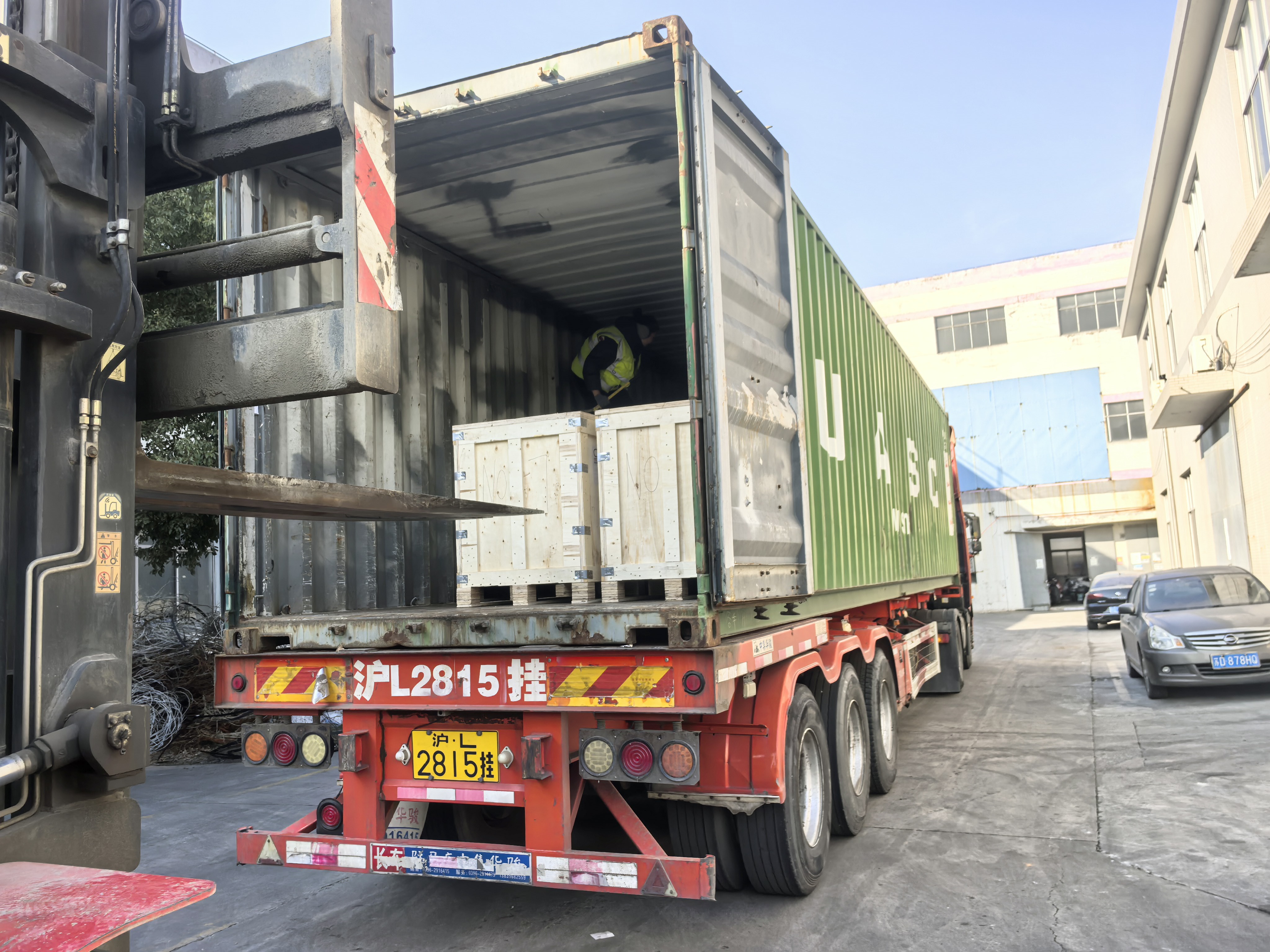
Request a Profile Quote or Product Brochure
Share your drawing or mating geometry and specify profile, outer diameter (1–100 mm), wall thickness (1–20 mm), tolerance (±0.1 mm) and material grade. Fakesi will respond with a profile-specific offer.
Email: jiangjianfan@wxjiangbo.com | WhatsApp: +8613967785843 | Tel: +86 13967785843
Download the catalogue: Seamless Steel Pipe Product Brochure (PDF)