Hex Seamless Steel Pipe Comparison: Hexagon vs Outer Hex vs Inner Hex
The three hex profiles that appear in agricultural machinery and automotive parts procurement - Seamless Hexagon Pipe, External Hexagonal Internal Round Tube, and External Round Internal Hexagonal Tube - share the same material family, the same cold drawing route and the same published dimensional envelope. They differ in one decisive respect: whether the hexagon sits on the outside surface, on the inside bore, or forms the full section. That single geometric choice decides how the part is clamped, how torque is transmitted, and how much secondary machining is left after delivery.
Fakesi is the seamless tube brand of Wuxi Jiangbo Intelligent Technology Co., Ltd., a steel tube manufacturer founded in 1992 and based in Yixing, Wuxi, Jiangsu, China. All three hex configurations are cold drawn in Q355B steel within an outer diameter range of 1-100 mm, a wall thickness range of 1-20 mm, and a tolerance of ±0.1 mm. This comparison is written for buyers who are past the discovery stage and are now matching a profile to a specific component on a factory line.
Why Hex Profile Selection Turns Into a Procurement Problem
A hex tube requirement usually reaches a supplier as a single line: hexagonal seamless tube, Q355B, per drawing. Three valid answers come back - a hexagonal section, an outer hexagon with a round bore, or a round tube with a hexagonal bore - and each can be quoted against the same nominal size. The three are not interchangeable once the mating part exists, because that mating part is machined for exactly one of them.
Profile problems usually surface at three points, and none of them appear on a quotation:
- At clamping. A fixture, chuck or wrench jaw cut for an outer hexagon will not grip a round outside, however close the bore is to the drawing.
- At shaft engagement. A hexagonal bore accepts a hexagonal shaft end; a round bore does not, and a hexagonal outside cannot substitute for it.
- At wall thickness. The same nominal hex size can be drawn at different wall thicknesses within the 1-20 mm range, and a thinner wall changes how the profile behaves under clamping and torque load.
The cost of discovering this after the first production run is rarely the tube itself. It is the re-machining, the scrapped yokes and the line downtime. One automotive parts manufacturer in Italy has purchased 25 t of seamless tube from Fakesi for agricultural drive shafts, and reports two years of stable supply with reduced secondary machining cost attributed to the high-precision tolerances of the delivered tube. The saving came from matching profile to component before the order, not from correcting it afterwards.
Industry Background: Why Precision Hex Profiles Sit in a Narrower Market
Seamless steel tube supply is moving toward tighter tolerances and non-round sections. China's seamless steel tube output in 2024 is estimated at 29.9 million tons, a 5.08% year-on-year decline, according to the Steel Tube Branch of China Iron and Steel Association. Falling tonnage alongside steady industrial demand points to consolidation away from bulk commodity tube rather than a collapse in consumption. Globally, Research and Markets projects the seamless steel tube and pipe market to reach roughly USD 130-140 billion by 2026.
Customs classification hides the geometry. HS 7304 is the HS heading for seamless tubes, pipes and hollow profiles of iron or steel, so a hexagonal profile and a round tube leave the same tariff line. For buyers comparing landed cost, that means the profile exists only in the drawing and the inspection record, not in the trade code.
Standardisation is the second gap. ASTM A106 is a specification for seamless carbon steel pipe for high-temperature service, and ISO 3183 addresses steel pipe for petroleum and natural gas pipeline transportation systems. Both are written around pipe for pressure and pipeline duty; neither defines a hexagonal across-flats dimension or a hexagonal bore. For hex profiles, the purchase drawing, the material grade, the dimensional tolerance and the inspection method carry the specification. A buyer who does not state them is relying on whatever default the supplier happens to run.
The Three Hex Profiles, Defined
All three Fakesi hex products are cold drawn from Q355B steel and share the same published envelope: outer diameter 1-100 mm, wall thickness 1-20 mm, tolerance ±0.1 mm. Only the geometry separates them.
Seamless Hexagon Pipe
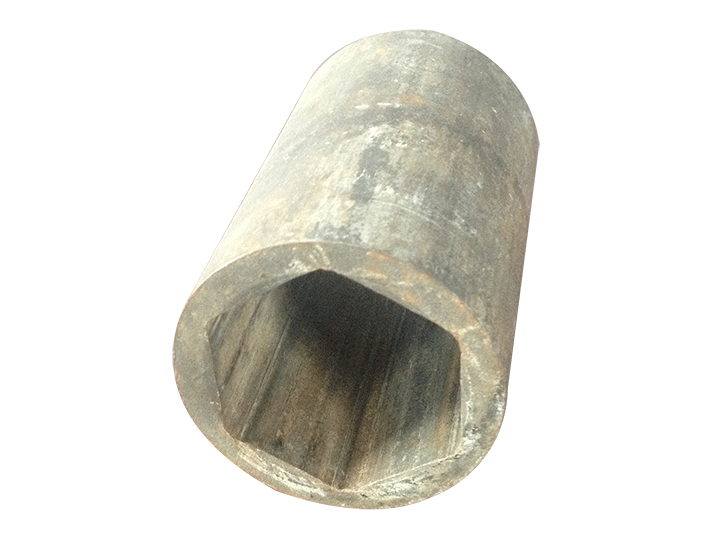
A Seamless Hexagon Pipe is hexagonal steel tubing whose defining feature is the hexagonal section itself. In the Fakesi catalogue the Hexagon Pipe entry covers hexagonal steel tubing together with double-hexagon configurations and both small diameter and large diameter hexagon tube variants. Because more than one geometry can travel under the same product name, the drawing - not the name - decides what is delivered.
Where it fits: components that need a continuous hexagonal section along the length, or a double-hexagon section, rather than a hex on one surface only.
External Hexagonal Internal Round Tube
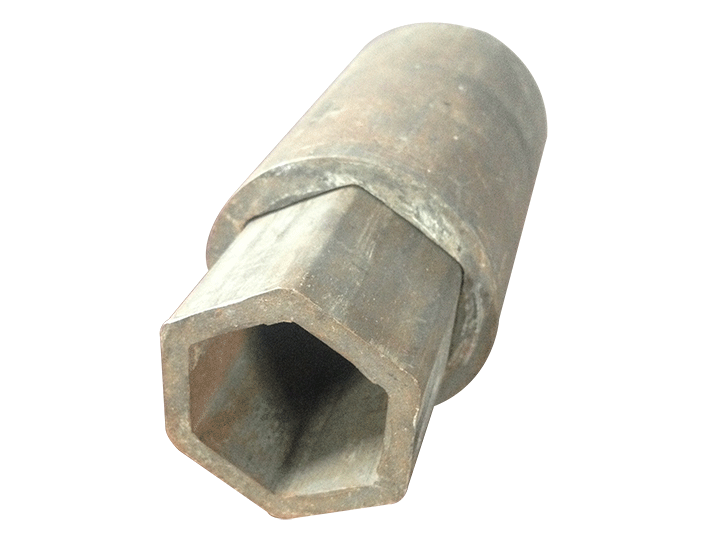
An External Hexagonal Internal Round Tube - also sold as outer hexagon inner round pipe or hollow hexagonal bar with round hole - has a hexagonal outside and a round bore. The hexagonal outside gives a form-fit surface for a chuck, a wrench jaw or a matching hexagonal recess, while the round bore can carry a shaft, a core, a fluid path, or simply remove weight from the section.
Where it fits: assemblies where the outer hex does the driving or locating and the bore is a passage or a lightening feature.
External Round Internal Hexagonal Tube
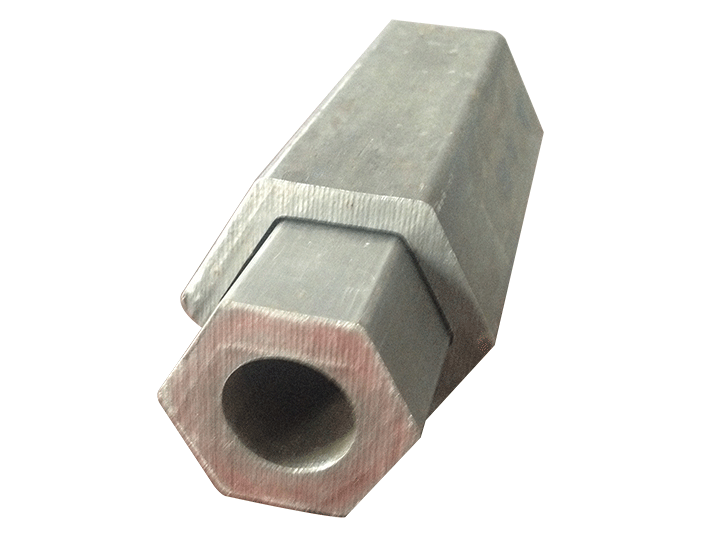
An External Round Internal Hexagonal Tube - inner hexagon outer round pipe, round steel pipe with hexagonal bore - reverses the arrangement: round outside, hexagonal bore. The round outside suits bearing seats, bushings, clamps and bored housings, while the hexagonal bore receives a hexagonal shaft end or a hex key.
Where it fits: housings that must present a round, turnable or sealable outside while transmitting drive through a hexagonal internal engagement.
Shared Manufacturing Base: Cold Drawn Q355B
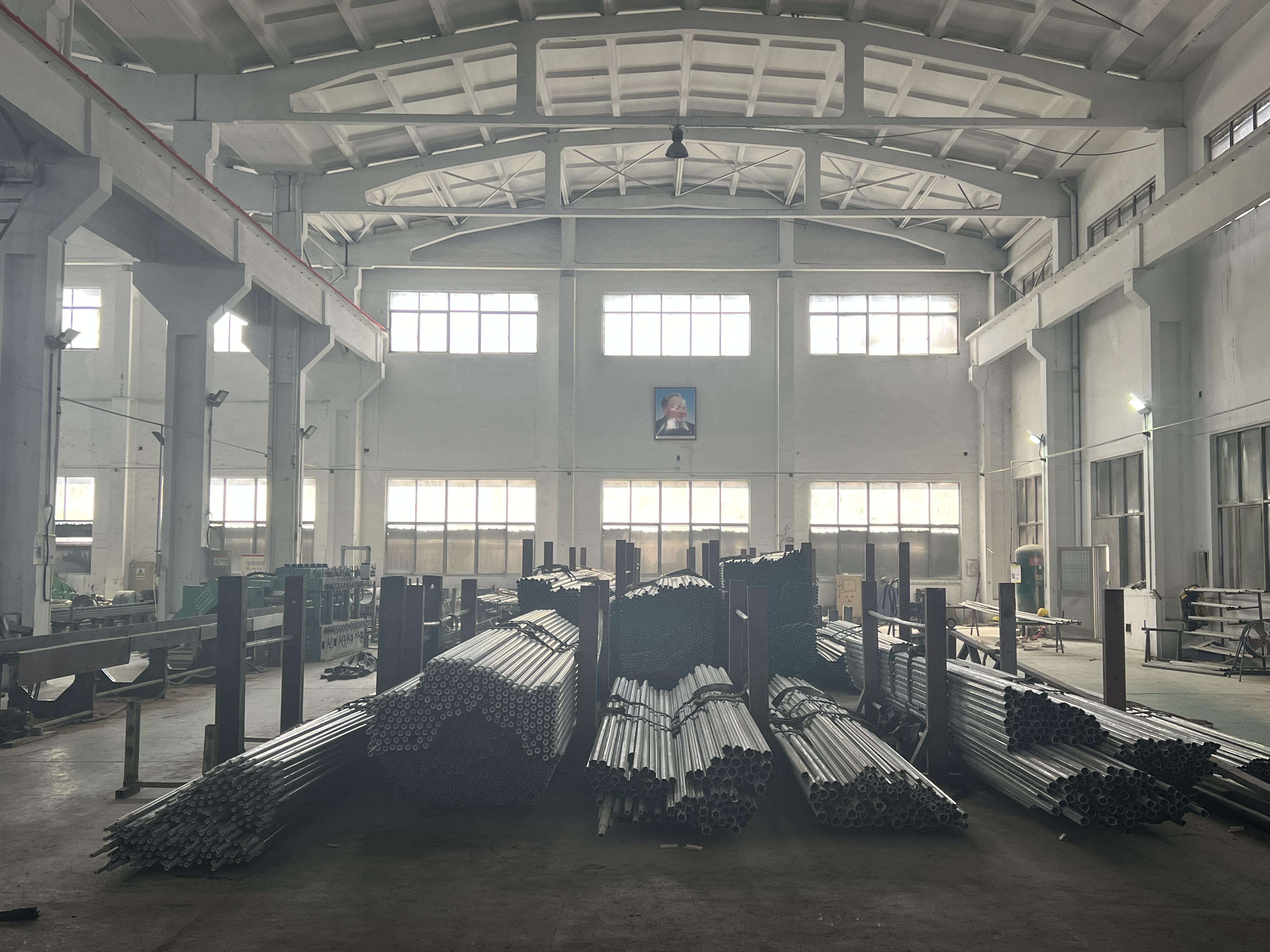
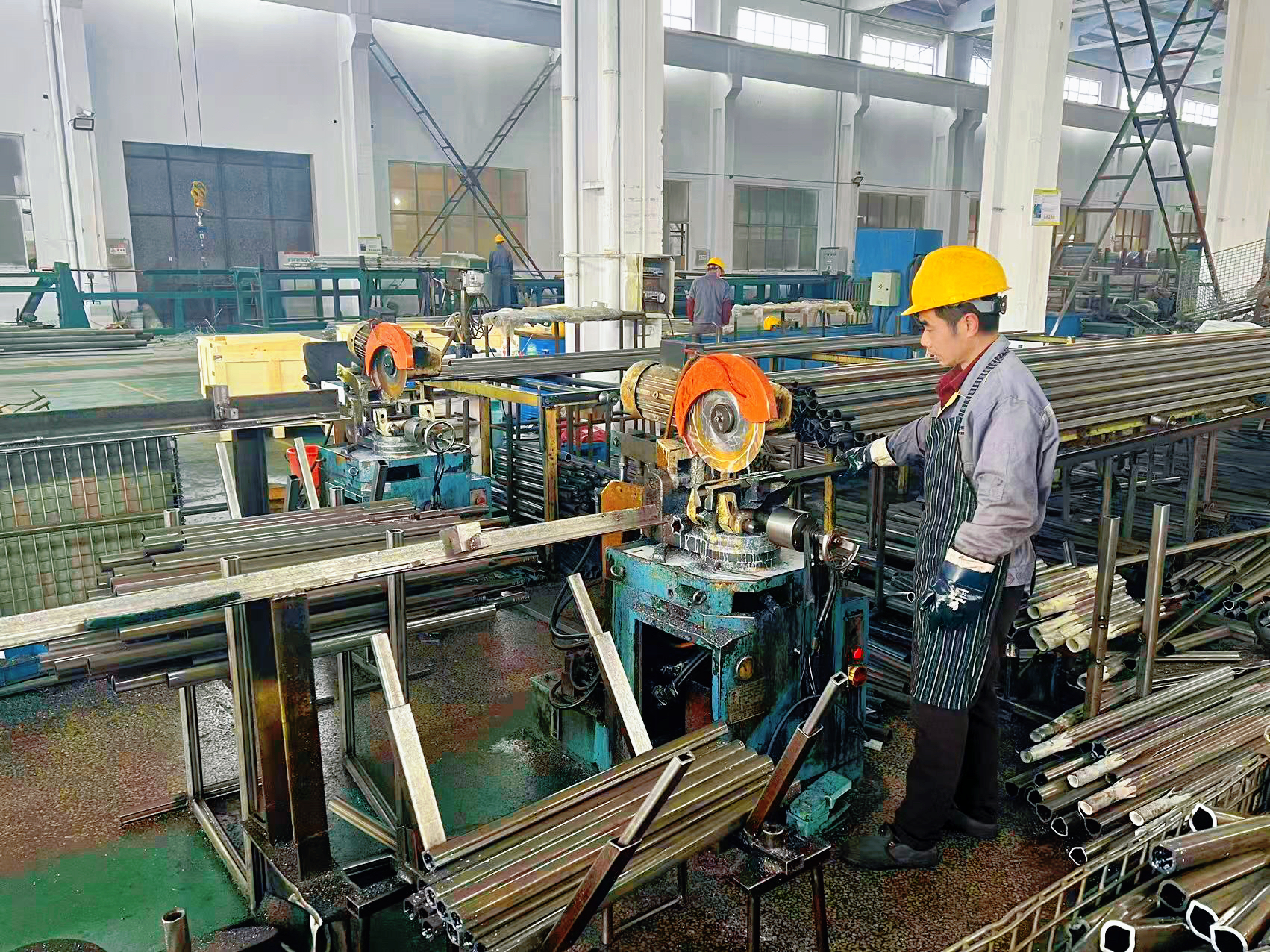
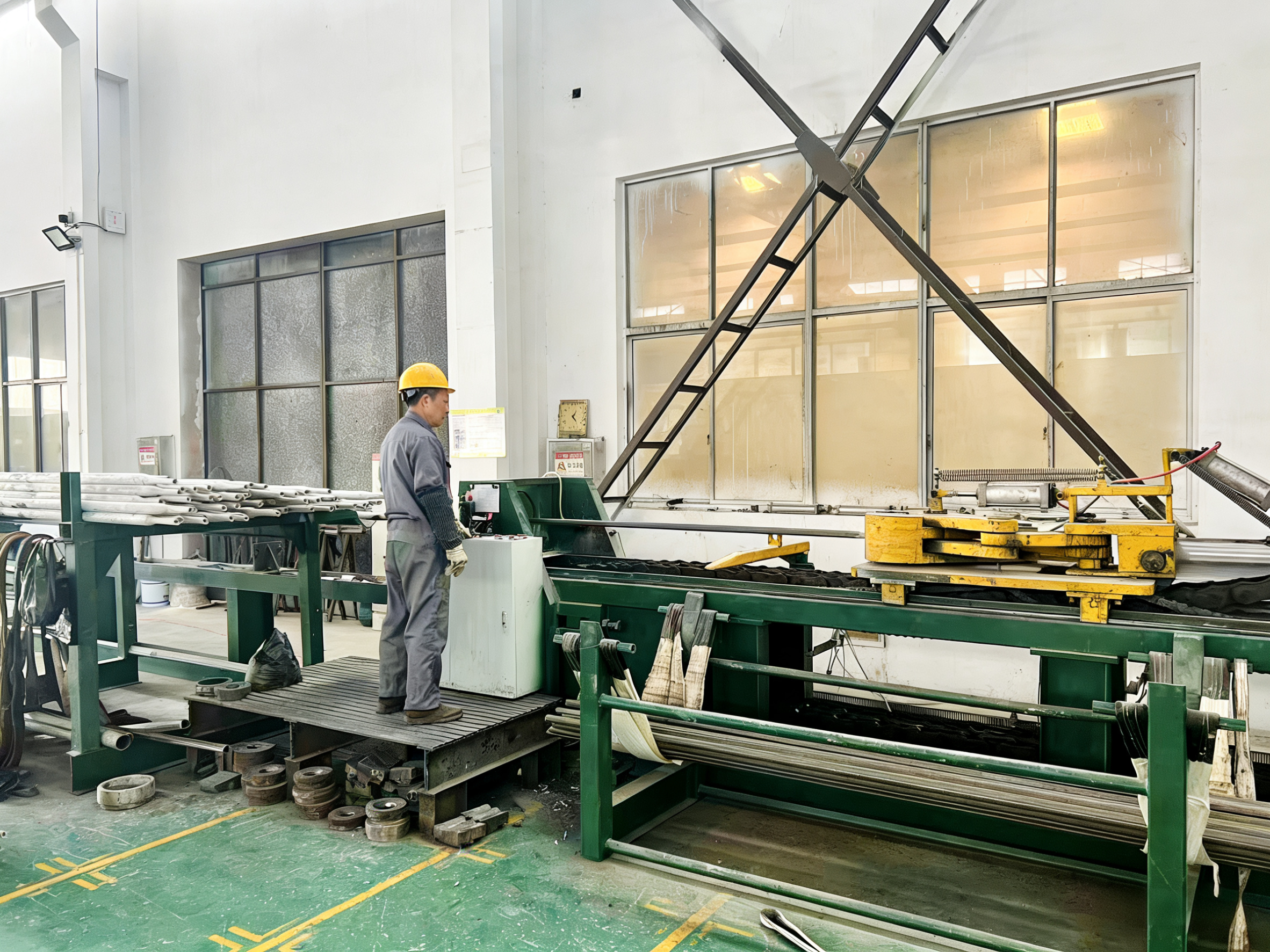
Q355B is a low-alloy, higher-strength structural steel, and cold drawing is what produces the ±0.1 mm tolerance and the surface condition that lets a hex profile enter a fixture without re-machining. The Fakesi process route recorded in the plant includes cold drawing, annealing, straightening and fixed-length cutting. The internal shape is set by the mandrel and die, which is why a hexagonal bore has to be engineered against a drawing rather than ordered by nominal size alone.
Published production and commercial parameters for these profiles:
- Outer diameter 1-100 mm; wall thickness 1-20 mm; tolerance ±0.1 mm
- Material Q355B; the wider company material range also includes 10#, 20#, 35#, 45#, 20Cr, 40Cr, 16Mn, 20Mn and Q235B
- Monthly capacity 2,000 t; annual output 20,000 t; plant area over 20,000 m²; 50 employees; 5 R&D engineers
- OEM / ODM and standard components; logo, dimensions and lengths fully customizable
- MOQ 1 t; lead time 30 days; 100% test; export markets EU, Eurasia and MENA; export ratio 50%
- 1-year warranty; 24-hour after-sales support; technical support
Step-by-Step: Selecting a Hex Profile for a Specific Component
- Start from the mating part, not from the tube. Identify whether the receiving component presents a hexagonal recess, a hexagonal shaft end, a round bore or a clamp. The hex position follows the mating surface.
- Decide hex outside, hex inside, or full hex section. Outer hex where the outside surface must be gripped or driven; inner hex where drive is transmitted through the bore; full hexagon or double-hexagon section where the entire length must be hexagonal.
- Fix the wall thickness against load and clamping. The 1-20 mm range allows the same nominal hex size at different wall sections. A thinner wall reduces weight but changes how the profile resists clamping and torque deformation, and the drive shaft application these profiles serve specifies high torque resistance to deformation.
- Confirm grade and delivery condition. Q355B is the standard choice for these profiles. If the drawing calls for 20#, 45# or another grade, state it explicitly, because grade affects strength and machinability.
- Write the acceptance criteria into the order. State outer diameter, wall thickness, hex across-flats, bore dimension, length, tolerance ±0.1 mm and the inspection basis. Fakesi performs 100% test, so the inspection clause should be written to match what will actually be reported.
- Validate with a trial quantity, then scale. Confirm fit on the actual yoke or housing before committing a factory line quantity. MOQ is 1 t and lead time is 30 days at the published parameters.
Use Cases: Where Each Profile Earns Its Place
Agricultural Drive Shafts and PTO Lines
Agricultural power take-off drivelines move torque from tractor to implement through a shaft that telescopes and re-engages repeatedly. Fakesi supplies hex and special-profile tube into this segment for automotive parts manufacturers running drive shaft tube conditions on factory line projects, with matched equipment listed as universal joint yoke, cross and bearing kit, and slip yoke. In this assembly the profile has to do two jobs at once - carry torque and allow axial sliding - and a hexagonal engagement is a common way to combine both without a separate spline.
Automotive Drive Shaft Tubes
The Italian case cited earlier - 25 t for agricultural drive shafts over two years - shows the pattern clearly. The buyer's gain was not a lower tube price but the removal of secondary machining on a profile already drawn to tolerance. Buyers running drive shaft lines continuously tend to evaluate dimensional consistency across lots rather than the appearance of a single sample, which places the weight of the decision on the tolerance clause and the inspection basis.
Hydraulic, Structural and General Machining Parts
An outer hex with a round bore also works as a machined body where the hex provides wrench flats and the bore carries fluid or a rod. A round outside with a hex bore suits a housing that must be turned or sealed externally while driving a hex shaft internally. In both cases the requirement is identical: the delivered profile must already meet the drawing, so machining is limited to the ends.
Comparison Table: Hexagon, Outer Hex and Inner Hex Profiles
All values below are published Fakesi product parameters for cold drawn Q355B tube. The round tube row is included only as a reference for buyers deciding whether a hex profile is needed at all.
| Profile | Hex location | Bore | Outer diameter | Wall thickness | Tolerance | Material | Component need it serves |
|---|---|---|---|---|---|---|---|
| Seamless Hexagon Pipe | Hexagonal section; double-hexagon variants also catalogued | Per drawing | 1-100 mm | 1-20 mm | ±0.1 mm | Q355B | Full-length hexagonal or double-hexagonal component |
| External Hexagonal Internal Round Tube | Outside | Round | 1-100 mm | 1-20 mm | ±0.1 mm | Q355B | Hex gripped, clamped or driven on the outside; bore as passage or lightening |
| External Round Internal Hexagonal Tube | Inside | Hexagonal | 1-100 mm | 1-20 mm | ±0.1 mm | Q355B | Round outside for bearing seat, bushing or seal; hex drive through the bore |
| Cold Drawn Seamless Round Tube (reference) | None | Round | 1-100 mm | 1-20 mm | ±0.1 mm | Q355B | Pure rotation, hydraulic line or through-shaft |
Reading the table: the middle two rows are mirror images of each other. Choosing between them is a question about where the mating part applies force, not about which profile is stronger. Both are drawn from the same Q355B stock to the same ±0.1 mm tolerance.
Frequently Asked Questions
What should a purchase specification include for a hex seamless steel pipe used in a drive shaft assembly?
State the grade (Q355B or the drawing grade), outer diameter, wall thickness, hex across-flats, bore dimension, length, tolerance ±0.1 mm, and the inspection basis. Note that ASTM A106 covers seamless carbon steel pipe for high-temperature service and ISO 3183 covers steel pipe for pipeline transportation systems; neither defines hexagonal geometry, so the drawing must carry the profile definition. HS 7304 applies for customs classification of the seamless hollow profile, not for its dimensions.
Can a supplier cold-draw a hex profile to match an existing yoke or slip yoke?
Yes, where the supplier offers OEM and ODM work. Fakesi states OEM / ODM / standard components with fully customizable dimensions, lengths and logo, drawn in Q355B to ±0.1 mm, and lists universal joint yoke, cross and bearing kit, and slip yoke as the matched equipment for its drive shaft tube applications. Send the mating part drawing or a physical sample so the across-flats and bore are set from the component rather than from a nominal size.
What drives the cost difference between hexagon, outer hex and inner hex profiles?
Cost follows geometry and process route rather than the product name. A shaped bore needs a shaped mandrel and die set; the ratio of across-flats to wall thickness affects how stable the draw is; and the tolerance band, fixed length, order quantity and remaining machining allowance all move the quotation. No list price applies to these profiles, and MOQ is 1 t. The practical rule is to request quotations against one identical drawing, because quotes for different profiles are not comparable even at the same nominal size.
Can I evaluate a sample before committing to a factory line order?
Fakesi sets MOQ at 1 t, which allows a trial quantity before a full factory line order. Use that trial to check across-flats, bore dimension and fit against the actual yoke, slip yoke or housing, and to confirm the delivered tolerance against the ±0.1 mm figure. Confirm the trial quantity and schedule directly with the supplier, since it sits ahead of the standard production lead time.
What lead time and capacity should I plan around for hex profiles?
The published lead time is 30 days, backed by a monthly capacity of 2,000 t and annual output of 20,000 t, with MOQ at 1 t. Plan drawing approval and the trial quantity ahead of that 30-day production window rather than inside it. To start, send the component drawing and required quantity for a quotation, or download the Fakesi product brochure for the full profile and material list.
Conclusion
Hexagon, outer hex and inner hex profiles are the same steel drawn into three different geometries, and the choice between them is settled by the mating part rather than by the tube. A Seamless Hexagon Pipe serves components that need a hexagonal or double-hexagonal section along their length. An External Hexagonal Internal Round Tube serves assemblies where the outside hex does the clamping or driving and the round bore carries a shaft or a fluid path. An External Round Internal Hexagonal Tube serves housings that need a round, seatable outside and a hexagonal drive through the bore.
What the three share is the part of the specification that buyers most often leave unwritten: Q355B steel, a 1-100 mm outer diameter range, 1-20 mm wall thickness, and ±0.1 mm tolerance on a cold drawn profile. Since no international pipe standard defines hexagonal geometry, those numbers and the component drawing are the entire technical basis of the order. Stating them before the quotation is the difference between a profile that goes straight into the fixture and one that returns for re-machining.
Send Your Hex Profile Drawing for a Quotation
Wuxi Jiangbo Intelligent Technology Co., Ltd. (Fakesi) cold draws Seamless Hexagon Pipe, External Hexagonal Internal Round Tube and External Round Internal Hexagonal Tube in Q355B from 1-100 mm outer diameter, with MOQ 1 t and a 30-day lead time. Share the component drawing, across-flats and bore dimensions, wall thickness and required quantity to receive a quotation and a trial quantity offer.
Website: wxjiangbo.com | Email: jiangjianfan@wxjiangbo.com | Tel / WhatsApp: +86 13967785843
Address: No. 75, Xinda Rd., Fenshui Area, Zhoutie Town, Yixing, Wuxi, Jiangsu, China
Have Questions or Need More Details?
Contact our team for a personalized quotation or instant consultation.
Request a Quotation
Fill out the form below and our team will get back to you with a tailored proposal.
WhatsApp Direct Chat
Prefer to chat in real-time? Message us on WhatsApp for instant assistance & quick answers.
- Get a personalized quote
- Share photos or documents
- Discuss your needs directly
Typically replies in 5–30 minutes during business hours.