
Hydraulic Cylinder Rework: How ±0.1 mm Cold Drawn Seamless Steel Pipe Solves Tolerance Pain
A hydraulic cylinder line seldom stops because of a design error. It stops because a batch of tube arrived a few hundredths of a millimetre outside the window the process was built around — oval enough that the hone has to cut deeper, uneven enough in the wall that the seal groove no longer sits where the drawing says it should, and crooked enough that the rework pile grows faster than the finished-goods rack.
Cold drawn round tube supplied in Q355B with an outer diameter range of 1–100 mm, a wall thickness range of 1–20 mm, and a dimensional tolerance of ±0.1 mm moves that variation upstream. When the incoming tube already holds a tight dimensional window, the cylinder shop stops absorbing tube variance inside its own machining allowance, and rework drops to process-level variability rather than material-level variability.
This article covers where hydraulic cylinder rework actually originates, what the cold drawing route changes about tube geometry, which specifications have to be locked before the first cut, how to qualify an incoming lot, and when a round profile is no longer the correct answer and a custom special shaped pipe becomes the right specification.
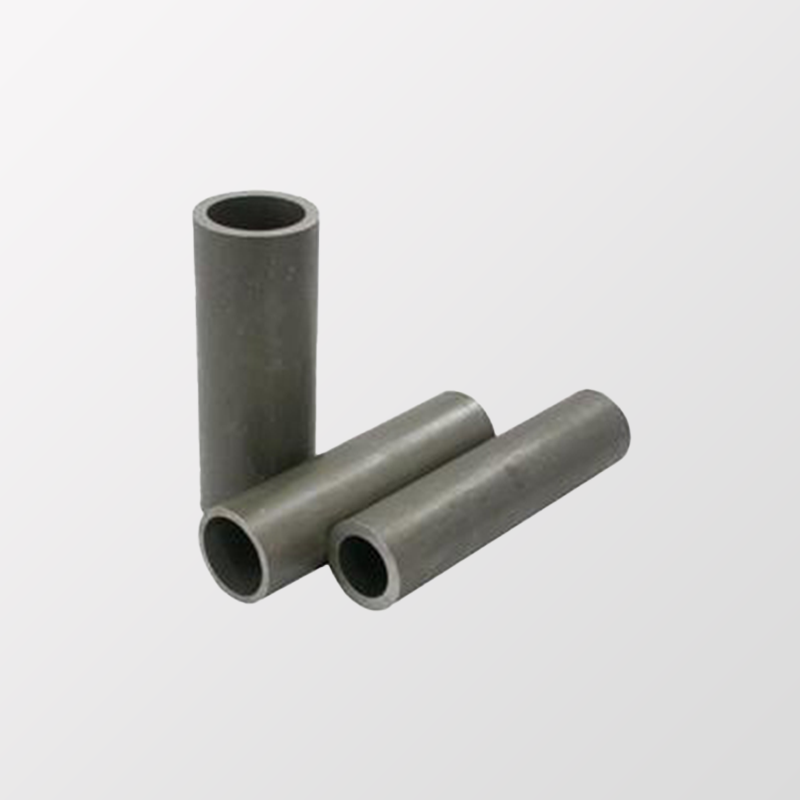
Problem Definition: Where Hydraulic Cylinder Rework Actually Comes From
Rework on a hydraulic cylinder is rarely a single-cause event. It is usually the sum of three geometry variables that enter the plant inside the tube rather than inside the machine.
Ovality. If the tube is not round on arrival, the bore has to be machined to the largest diameter present, not to the nominal diameter. The machining allowance therefore becomes a function of the worst section in the lot. Any ovality has to be absorbed by boring and honing depth, which lengthens cycle time and shifts the surface condition away from what the process was tuned for.
Wall thickness variation. On a cylinder barrel or a piston rod tube, wall thickness is not an abstract number — it is the single-side material thickness that governs how the part behaves under rolling, boring, and heat treatment. When wall thickness drifts around the circumference, cylinders produced from the same lot finish with different roundness and different stiffness behaviour. That variation only becomes visible late, usually at test.
Straightness drift. Cold drawn tube releases residual stress during drawing, straightening, and annealing. If that stress is not managed, parts can move between operations — after rough machining, after welding, or after heat treatment — and the finishing operation inherits a part that no longer matches the setup.
The direct cost of these three variables is machining hours, scrapped material, and delayed schedules. The indirect cost is harder to see: extra setup adjustments, higher first-article rejection, and a honing rhythm that never settles into a stable rate. Neither appears as a line on a quotation, but both appear in the monthly operating result.
Industry Background: Why Cold Drawn Precision Tube Became the Constraint Point
Seamless pipe is not a niche input, and the demand for tighter geometry is not a local preference. The global seamless pipe market was estimated at USD 130.76 billion in 2024 (Market Research Future). China exported a record 5.72 million tons of seamless steel pipe in 2024, a 1% year-on-year increase (Mysteel / General Administration of Customs), and Chinese production accounts for roughly 60% of global seamless steel pipe output (Mysteel / World Steel Association).
Inside that volume, the cold-drawn segment is where tolerance-driven demand concentrates. Cold-drawn seamless steel tubes are projected to reach a market value of USD 26.14 billion by 2035 at a CAGR of 16.57% (Spherical Insights). The growth is not driven by tonnage alone; it tracks the number of applications where the finished part cannot tolerate a wide incoming window.
The regulatory side reinforces the same direction. EN 10305-1 is the European technical delivery standard for cold-drawn precision tubes and specifies outside diameters up to 380 mm together with strict dimensional tolerances (EN 10305-1 / DIN 2391). A buyer who writes that standard into a purchase order is not asking for a brand name — they are asking for a measurable, inspectable window that can be rejected if it is missed.
Material selection follows the same logic. Carbon steel remains the dominant material in the pipe market, accounting for approximately 78% of global market share in 2026 projections (Future Market Insights), and grades such as Q355B sit squarely in the structural and hydraulic segment where strength and dimensional discipline are required at the same time.
The Solution: What ±0.1 mm Cold Drawn Round Tube Changes
What a hydraulic cylinder shop is really buying is not a tube. It is a window it can build a process around.
Fakesi — the brand of Wuxi Jiangbo Intelligent Technology Co., Ltd. (formerly Wuxi Fakes Pipe Industry Co., Ltd.), a steel tube manufacturer founded in 1992 and based in Yixing, Wuxi, Jiangsu, China — produces seamless steel tubes, precision steel tubes, and special-shaped tubes for hydraulic cylinders, pneumatic cylinders, agricultural drive shafts, automotive drive shafts, motorcycle and auto parts, smart lock components, motor housings, and construction machinery. The company operates a production base of over 20,000 square meters and exports to the EU, Eurasia, and MENA markets.
Cold drawn round tube (CDS) — headline specification
- Outer diameter range: 1–100 mm
- Wall thickness range: 1–20 mm
- Dimensional tolerance: ±0.1 mm
- Material: Q355B steel
- Model designation: 12–100
- Typical applications: hydraulic cylinders, hydraulic fluid lines, machined components
Why the cold drawing route produces a tighter window
Cold drawing pulls the tube through a die at room temperature rather than forming it at elevated temperature. Because the material is worked below its recrystallisation range, the process delivers a smoother surface and a more consistent cross-section along the length than hot forming alone. That consistency is the mechanism behind the ±0.1 mm window — it is a process outcome, not an inspection promise.
The production sequence that produces the window is the sequence that has to be controlled. At Fakesi, cold drawn round tube moves through cold drawing, annealing, product straightening, and fixed-length cutting before it is released. Each stage removes a different source of variation: drawing sets the cross-section, annealing relieves the hardness built up by cold work so the next pass is possible and the structure stabilises, straightening removes bend while managing the stress it introduces, and fixed-length cutting delivers repeatable lengths so the customer's own cutting operation does not have to re-establish a datum.
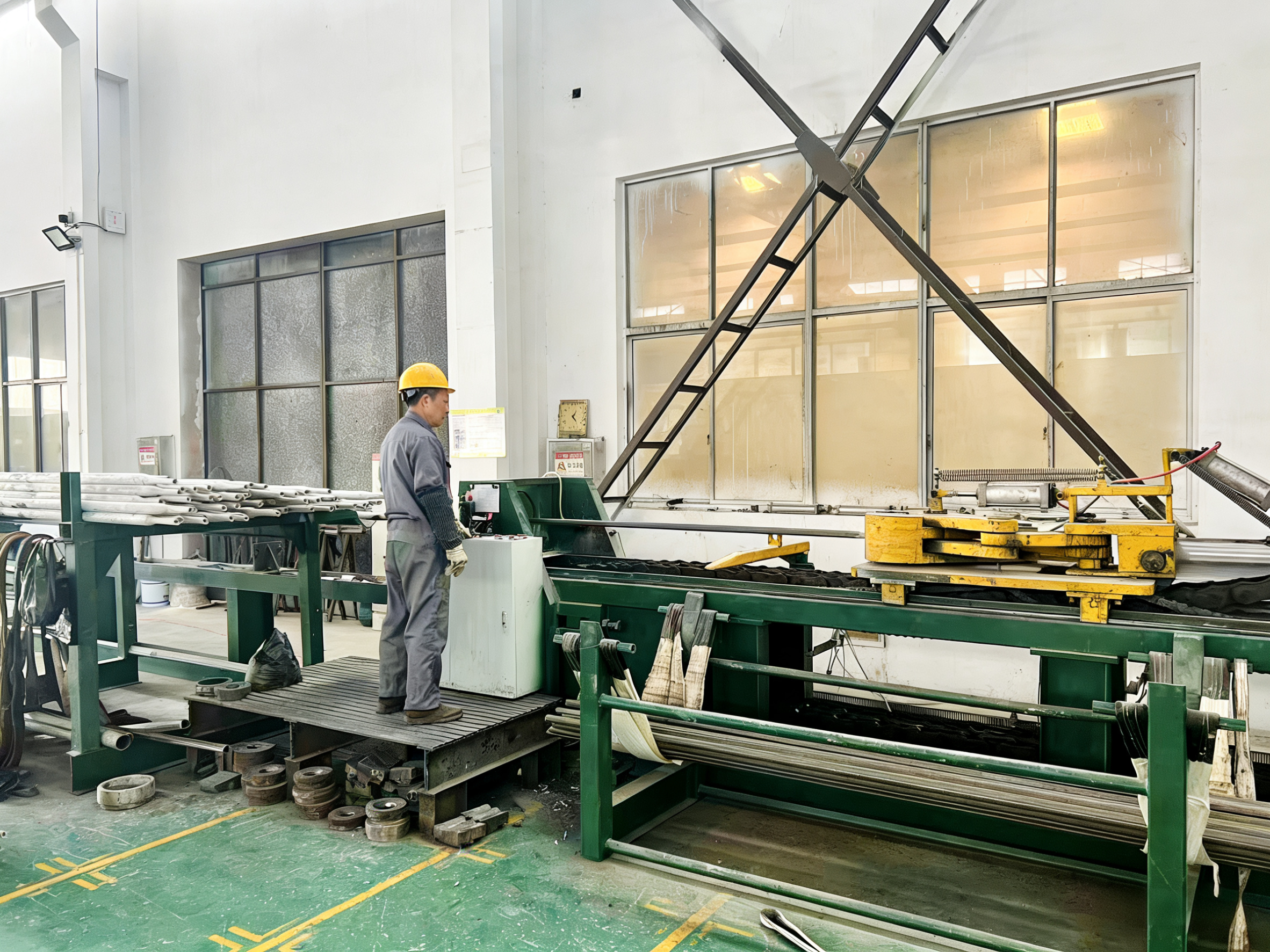
Annealing is not a cosmetic step. Cold working hardens the steel, and without an inter-pass anneal the material becomes progressively less formable and more prone to cracking in later passes. Relieving that condition is what makes a repeatable ±0.1 mm product possible across a production run rather than across a single trial length.
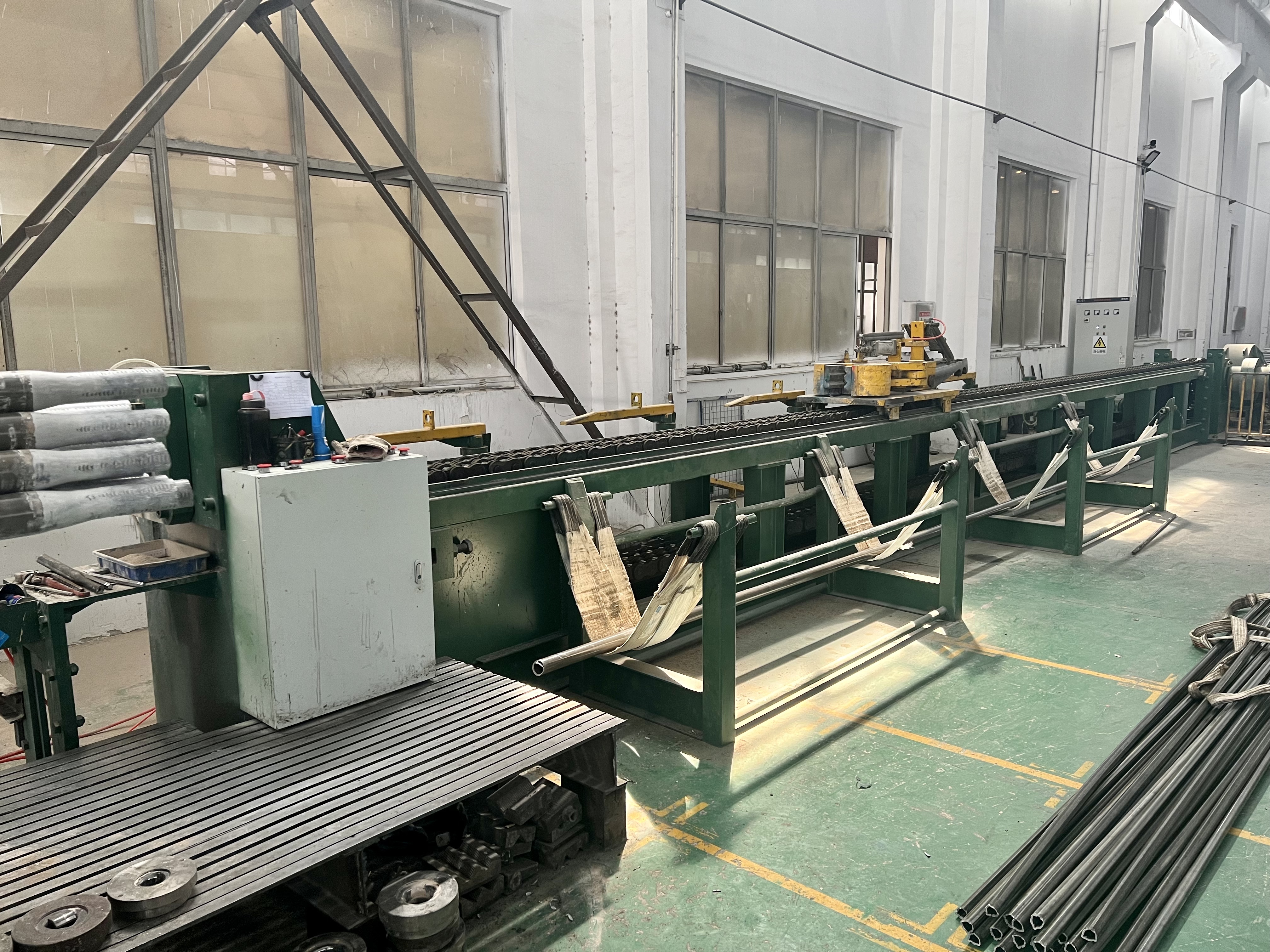
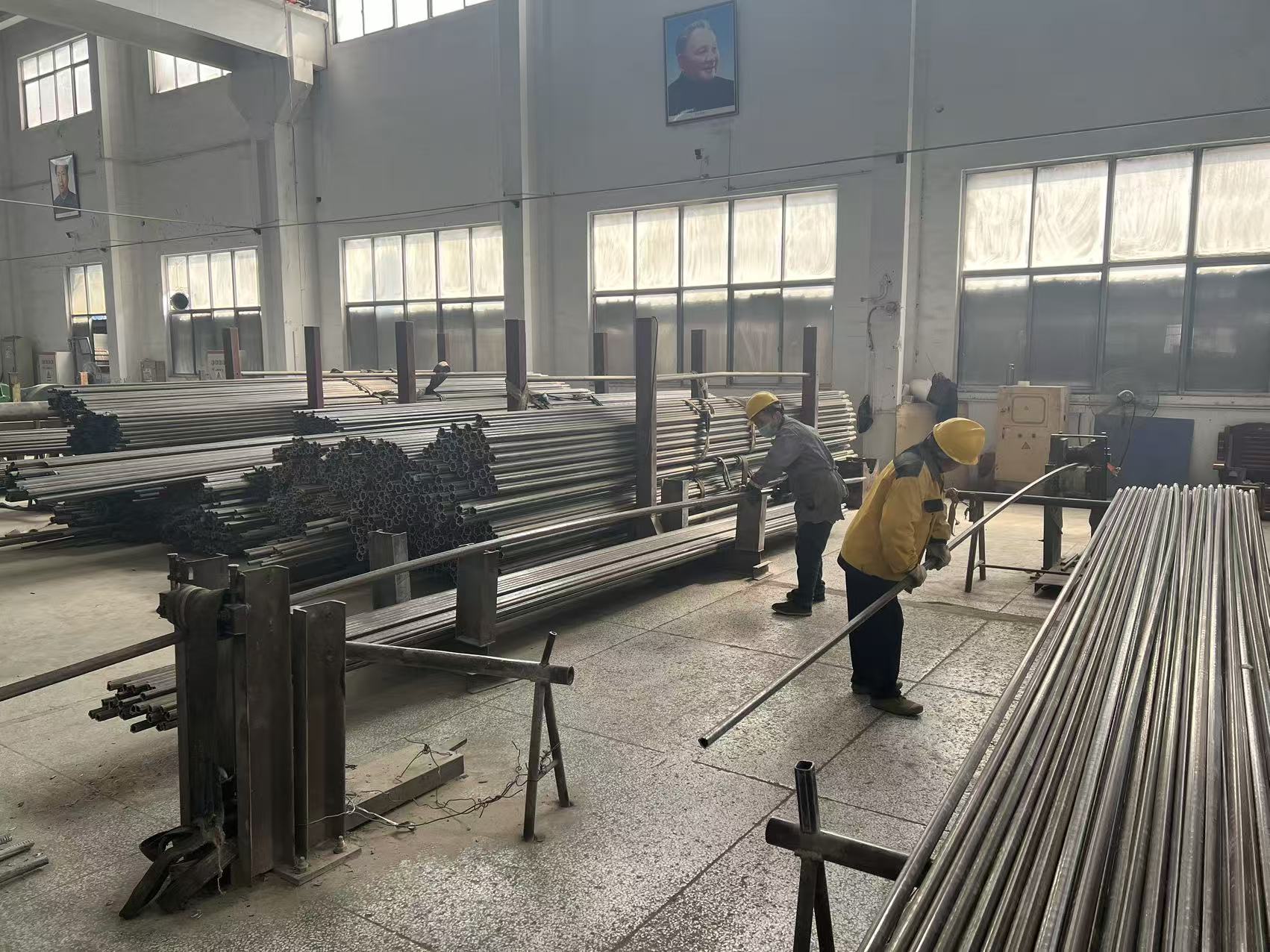
The final control point is inspection discipline. Wuxi Jiangbo applies 100% testing to its output, which means every length is checked rather than a sampled subset. For a hydraulic application, that distinction matters: a sampled lot can pass on average while still containing the one length that generates rework.
Specifications to Lock Down Before the First Cut
Most tolerance complaints trace back to an incomplete specification rather than a manufacturing failure. Before releasing an order for hydraulic cylinder tube, the following fields should be fixed in writing.
- Outer diameter. Within the 1–100 mm range for cold drawn round tube.
- Wall thickness. Within the 1–20 mm range, expressed as a nominal with the acceptable band.
- Dimensional tolerance. ±0.1 mm is the stated window for this product line; if the drawing demands a tighter band, that is a separate engineering discussion, not an assumption.
- Material grade. Q355B is the standard grade for this product. The wider production range also covers 10#, 20#, 35#, 45#, 20Cr, 40Cr, 16Mn, 20Mn, Q355B, and Q235B, so the grade should be stated explicitly rather than left to the supplier's default.
- Length. Fully customizable to the buyer's requirement, including fixed-length supply.
- End use. Naming the application — hydraulic cylinder barrel, piston rod tube, or hydraulic fluid line — lets the supplier flag whether a round profile is the correct starting geometry at all.
One practical rule: if two of these fields are left open, the third one will not hold. A tube quoted to ±0.1 mm is only meaningful when the diameter, wall, and grade are stated, because the drawing pass and the annealing cycle are set from all three.
Step-by-Step: Qualifying Incoming Cold Drawn Round Tube
A receiving inspection routine does not need a metrology laboratory. It needs enough measurements, taken in the right places, to catch the failures that cause rework.
- Confirm grade and traceability. Match the delivered material to the ordered grade — for example Q355B — and confirm the documentation before any material is cut.
- Measure the outer diameter in several places. A single calliper reading on one side will not reveal ovality. Take readings at multiple positions around the circumference and along the length, and compare the spread rather than the average.
- Measure wall thickness at the same positions. Wall variation is the variable that most often escapes a routine check because it is invisible from the outside. Reading wall at the same angular positions used for the diameter check builds a simple picture of cross-section consistency.
- Check straightness before cutting. Inspect and record straightness on the full length as received, so any deviation can be attributed correctly instead of being discovered after the tube has been cut and blamed on the process.
- Judge the lot against the ±0.1 mm window. The decision is not whether the average is acceptable — it is whether every measured point falls inside the band.
- Release a trial cylinder before batch release. Machine one cylinder from the lot, measure the finished bore and seal interfaces, and only then release the balance to production.
Steps two and three are where most shops under-invest. Measuring diameter once is a habit inherited from structural tube, where the tolerance band is wide enough that a single reading is representative. On a ±0.1 mm product, that habit hides exactly the defect it was supposed to catch.
Use Cases: Where the ±0.1 mm Window Pays Back
Hydraulic cylinder barrels and piston rod tube
This is the application the tolerance was designed around. A tighter incoming window reduces the boring and honing allowance, keeps wall thickness consistent around the circumference, and produces a more predictable seal interface. The practical result is fewer cylinders that pass dimensional inspection but fail at pressure test.
Hydraulic fluid lines
Cold drawn round tube is also used as hydraulic fluid line tubing, where consistent internal diameter affects flow behaviour and where a clean, uniform surface reduces the risk of contamination traps. Because the same product covers hydraulic cylinders and hydraulic fluid lines, a plant can standardise on one tube specification across both circuits.
Pneumatic cylinders and general machined components
The same tube supplies pneumatic cylinder production and general machined components where the tube is the starting stock rather than the finished part. Precision steel pipe in the same dimensional family — outer diameter 1–100 mm, wall thickness 1–20 mm, tolerance ±0.1 mm, Q355B — is used where the tube itself is the precision input to a machining operation.
Documented outcome: reduced secondary machining cost
One reference case demonstrates the commercial effect of holding the window. An automotive parts manufacturer in Italy has run Fakesi precision seamless tube for agricultural drive shaft applications for two years, across an accumulated 25 T of supplied material. The recorded result is stable production with reduced secondary machining cost, attributed to the high-precision tolerances held on the tube. The material also withstands high torque without deformation, which preserves transmission efficiency in the finished shaft.
The drive shaft application is not a hydraulic cylinder, but the mechanism is identical: when the incoming tube holds a tight dimensional window, the downstream operation stops carrying the cost of correcting it. That is the transferable point for a cylinder shop evaluating the same specification logic.
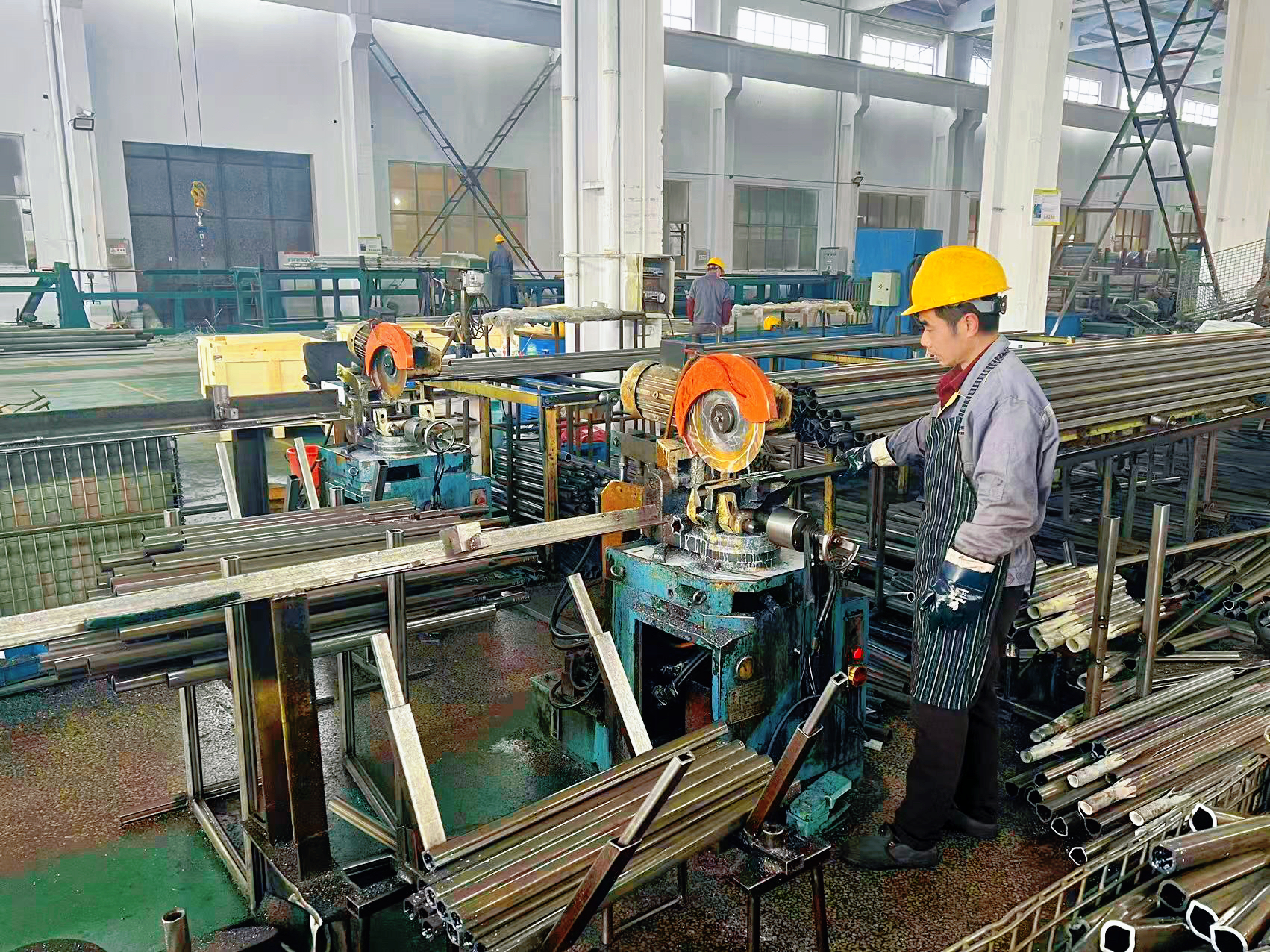
Profile Comparison: Cold Drawn Round Tube and When to Change Section
Round tube is the correct starting geometry for a bore that will be machined or honed, because a rotating process needs a circular datum. It is the wrong choice when the finished part must transmit torque through its own outer form, because no amount of machining tolerance will create a hexagon or a spline out of a circle.
The table below compares the profile families supplied by Wuxi Jiangbo Intelligent Technology Co., Ltd. All share the same dimensional envelope and material base.
| Profile | Outer Diameter | Wall Thickness | Tolerance | Material | Typical Starting Point For |
|---|---|---|---|---|---|
| Cold Drawn Round Tube (CDS) | 1–100 mm | 1–20 mm | ±0.1 mm | Q355B | Hydraulic cylinders, hydraulic fluid lines, bored and honed components |
| Precision Steel Pipe | 1–100 mm | 1–20 mm | ±0.1 mm | Q355B | Precision machined parts where the tube is the exact input stock |
| Custom Special Shaped Pipe | 1–100 mm | 1–20 mm | ±0.1 mm | Q355B | PTO drive shafts and non-standard profiles that must transmit torque |
| Hexagon Pipe | 1–100 mm | 1–20 mm | ±0.1 mm | Q355B | Hex-profile components requiring a wrench or spline interface |
| Triangle Pipe | 1–100 mm | 1–20 mm | ±0.1 mm | Q355B | Triangular-section components with a defined rotational register |
| Lemon-shaped Tube | 1–100 mm | 1–20 mm | ±0.1 mm | Q355B | Oval and lemon-profile sections for drive and register applications |
The switching rule. Stay with cold drawn round tube as long as the finished part is defined by a machined bore or a rotating fit. Move to a special shaped profile the moment the part's function depends on the outer form itself — when torque has to transfer through the section, when a wrench or spline has to engage it, or when the assembly needs an anti-rotation register that a circle cannot provide. Because the dimensional window and the material base are identical across these families, that decision is driven purely by function, not by a tolerance trade-off.
Frequently Asked Questions
Which standards and quality systems apply to cold drawn seamless tube for hydraulic cylinders?
EN 10305-1 is the European technical delivery standard for cold-drawn precision tubes and specifies outside diameters up to 380 mm together with strict dimensional tolerances. On the supply side, Wuxi Jiangbo Intelligent Technology Co., Ltd. states that it strictly implements ISO quality management systems and provides efficient after-sales service alongside them. In practice, buyers should treat the standard as the specification reference and the management system as the process discipline that makes the dimensional window repeatable from lot to lot.
How far can the outer diameter, wall thickness, and length be customized?
Wuxi Jiangbo Intelligent Technology Co., Ltd. operates an OEM/ODM and standard-component production model with fully customizable logo, dimensions, and lengths. Cold drawn round tube is supplied across an outer diameter range of 1–100 mm and a wall thickness range of 1–20 mm, held to a dimensional tolerance of ±0.1 mm in Q355B steel, under model designation 12–100. Customization is therefore quoted against the buyer's drawing rather than against a fixed catalogue number.
What are the minimum order quantity and monthly capacity for customized hydraulic cylinder tube?
The minimum order quantity is 1 T, and monthly capacity is 2000 T. Because tube cost is driven by the combination of outer diameter, wall thickness, length, material grade, and the tolerance window requested, the practical route to a firm quotation is to send the drawing or full specification rather than a single dimension. A quotation built from one nominal size will not reflect what the tube actually costs to produce.
Can we validate tolerance on a sample before committing to a production order?
Tolerance samples and pre-production evaluation can be arranged with the manufacturer, and every production lot is subject to 100% testing before release. A useful sample evaluation covers four measurements: outer diameter at several positions around the circumference, wall thickness at those same positions, straightness over the full length as received, and cut-length consistency. Taking diameter and wall readings at matching angular positions is what turns a sample check into evidence about cross-section consistency rather than a single lucky measurement.
What is the lead time for cold drawn seamless round tube?
Lead time is 30 days. Product straightening and fixed-length cutting are completed in-house before shipment, and the export markets served by Wuxi Jiangbo Intelligent Technology Co., Ltd. are the EU, Eurasia, and MENA regions. Buyers planning a cylinder line ramp-up should build that 30-day window into the material schedule rather than treating it as buffer.
Conclusion
Hydraulic cylinder rework is usually diagnosed as a machining problem and paid for as a material problem. Ovality, wall variation, and straightness drift enter the plant inside the tube, and every downstream operation spends a little of its allowance correcting them. Moving the dimensional window upstream — to a cold drawn round tube held at ±0.1 mm in the 1–100 mm outer diameter and 1–20 mm wall thickness range — does not eliminate process variability. It removes one whole category of it, and leaves the shop with a variation problem it can actually control.
The decision rule is simple. If the finished part is defined by a machined bore or a rotating fit, specify cold drawn round tube or precision steel pipe. If the finished part must transmit torque through its own outer form, specify a custom special shaped pipe. In both cases, state the diameter, the wall, the grade, and the tolerance band in writing — because a ±0.1 mm window is only a guarantee when the specification behind it is complete.
Next Step
If you are evaluating tube for a hydraulic cylinder or hydraulic fluid line programme, send the drawing or specification and current rejection data. Tolerance samples, a full quotation, and the current product catalogue are available on request.
Catalogue download: Fakesi Product Catalogue (PDF)
Website: wxjiangbo.com
Email: jiangjianfan@wxjiangbo.com
Tel / WhatsApp: +86 13967785843
Have Questions or Need More Details?
Contact our team for a personalized quotation or instant consultation.
Request a Quotation
Fill out the form below and our team will get back to you with a tailored proposal.
WhatsApp Direct Chat
Prefer to chat in real-time? Message us on WhatsApp for instant assistance & quick answers.
- Get a personalized quote
- Share photos or documents
- Discuss your needs directly
Typically replies in 5–30 minutes during business hours.