
Seamless Steel Pipe Partnership FAQ: Purchasing Terms, Acceptance Criteria & After-Sales Support
Seamless Steel Pipe Partnership FAQ: Purchasing Terms, Acceptance Criteria & After-Sales Support
Short answer: a long-term seamless steel pipe partnership is held together by four written blocks — purchasing terms, acceptance criteria, change control and after-sales responsibility. When these are agreed before the first repeat order, a cold drawn precision seamless pipe in Q355B carbon steel (outer diameter 1–100 mm, wall thickness 1–20 mm, tolerance ±0.1 mm) can be re-ordered across round, hexagon, lemon-shaped, square/rectangular, triangle and star profiles without renegotiating quality in every cycle. This FAQ answers the questions buyers raise most often before committing to that kind of supply agreement.
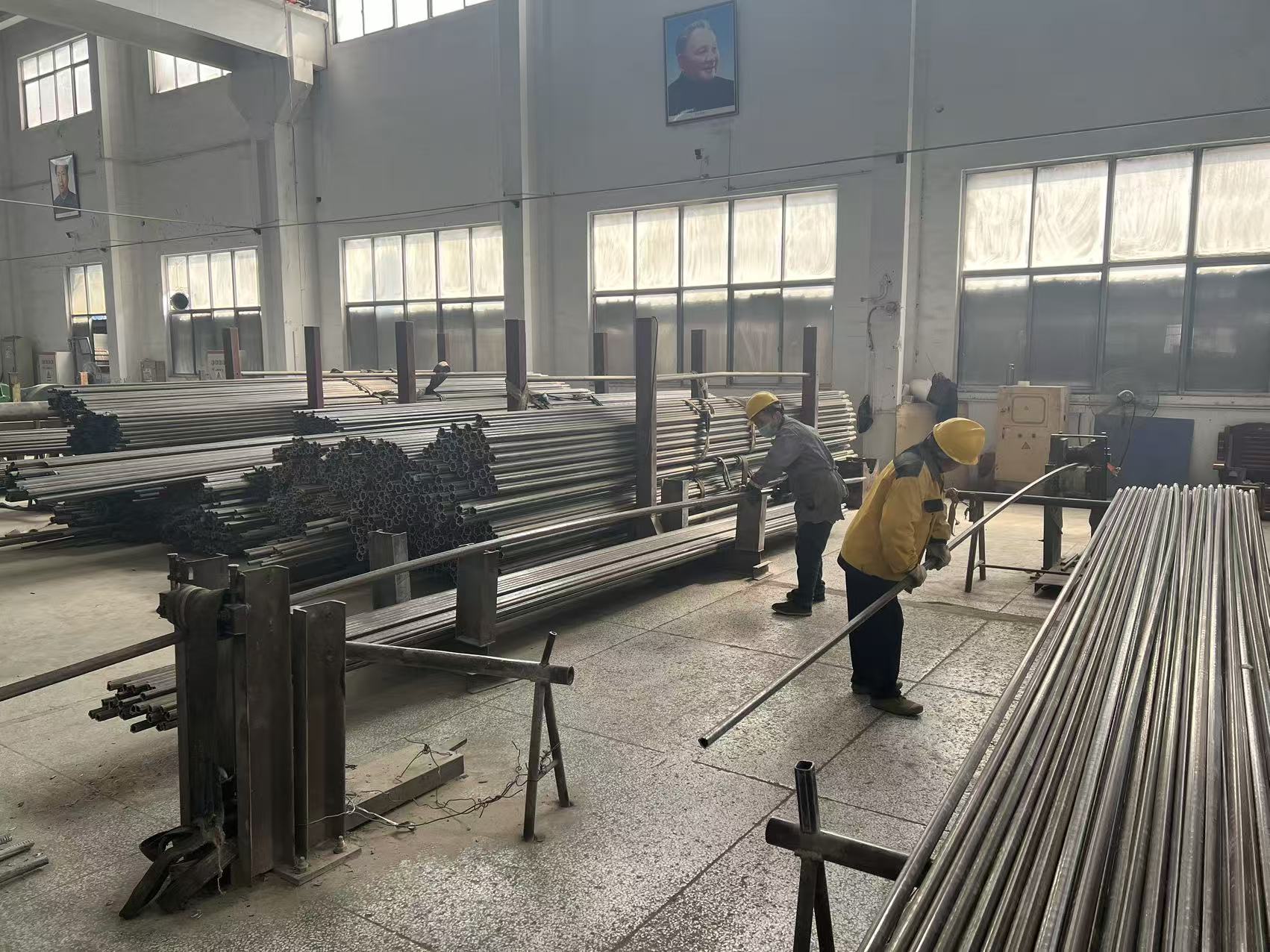
The Problem: A First Order Proves the Product, Not the Process
A single successful delivery demonstrates that a mill can produce one batch that passes inspection. It does not demonstrate that the same tolerance, the same wall thickness band and the same documentation will reappear six months later. That gap is where long-term seamless steel pipe relationships usually fail.
Three specific gaps cause most repeat-order disputes:
- The specification gap. A drawing states "seamless tube, Q355B, ±0.1 mm" but does not say which dimension the tolerance applies to, how ovality is treated, or which revision of the profile drawing is current.
- The acceptance gap. The buyer measures wall thickness at the tube end; the mill measures at mid-length with a different instrument. Both are within their own reading of the specification, and the shipment is rejected on interpretation rather than on quality.
- The responsibility gap. Nobody agreed in writing who owns rework, replacement freight or sorting costs when a non-conformance is found after arrival.
Industrial buyers comparing suppliers often rank candidates on headline capability — range of profiles, monthly tonnage, export markets. Those numbers qualify a supplier for the shortlist. They do not protect the repeat order. What protects the repeat order is whether the commercial and technical terms have been converted into a document both sides can measure against.
Industry Background: Why Written Specifications Matter More Than They Did
Two structural signals explain why buyers are tightening supply agreements rather than loosening them.
First, demand value is concentrated. Research and Markets projects the global seamless steel tube and pipe market to reach approximately USD 130–140 billion in value by 2026. Second, supply volume in the largest producing country is contracting at the commodity end. According to the Steel Tube Branch of China Steel Association, China's seamless steel tube output in 2024 is estimated at 29.9 million tons, a 5.08% year-on-year decline. A shrinking volume base alongside stable or growing value points in one direction: the market is moving away from bulk tonnage and toward specified, higher-precision product where documentation and consistency carry commercial weight.
Standards fragmentation reinforces the same conclusion. ASTM A106 is written for seamless carbon steel pipe in high-temperature service. ISO 3183 addresses steel pipe for petroleum and natural-gas pipeline transportation systems. API 5L Grade B and ISO 3183 Grade L245 are commonly listed as comparable grade references, but those designations should not be treated as universally interchangeable without checking the purchase specification, the applicable edition, and the testing requirements attached to it. For trade documentation, seamless tubes, pipes and hollow profiles of iron or steel fall under HS heading 7304.
The practical consequence for a buyer in agricultural machinery or automotive parts is straightforward: the standard number alone does not define acceptance. The agreement must define it.
The Reference Product Behind These Answers
Fakesi is the steel tube brand of Wuxi Jiangbo Intelligent Technology Co., Ltd., a Chinese steel tube manufacturer founded in 1992 and based in Yixing, Wuxi, Jiangsu, producing seamless steel tubes, precision steel tubes and special-shaped tubes for industrial buyers. The company operates a 20,000 m² production base with 50 employees, of whom 5 are R&D engineers, and reports a 20,000 t annual output with a 2,000 t monthly capacity. Roughly 50% of output is exported, with EU, Eurasia and MENA named as main markets.
The product referenced throughout this FAQ is the cold drawn precision seamless pipe in Q355B carbon steel, supplied at outer diameter 1–100 mm, wall thickness 1–20 mm and tolerance ±0.1 mm, and used for repeat orders in agricultural machinery and automotive parts. The same production environment handles 10#, 20#, 35#, 45#, 20Cr, 40Cr, 16Mn, 20Mn, Q355B and Q235B material grades, and profile output covers seamless round pipe, hexagon pipe, lemon-shaped tube, square/rectangular section, triangle pipe, star profile, octagon pipe and oval steel pipe.
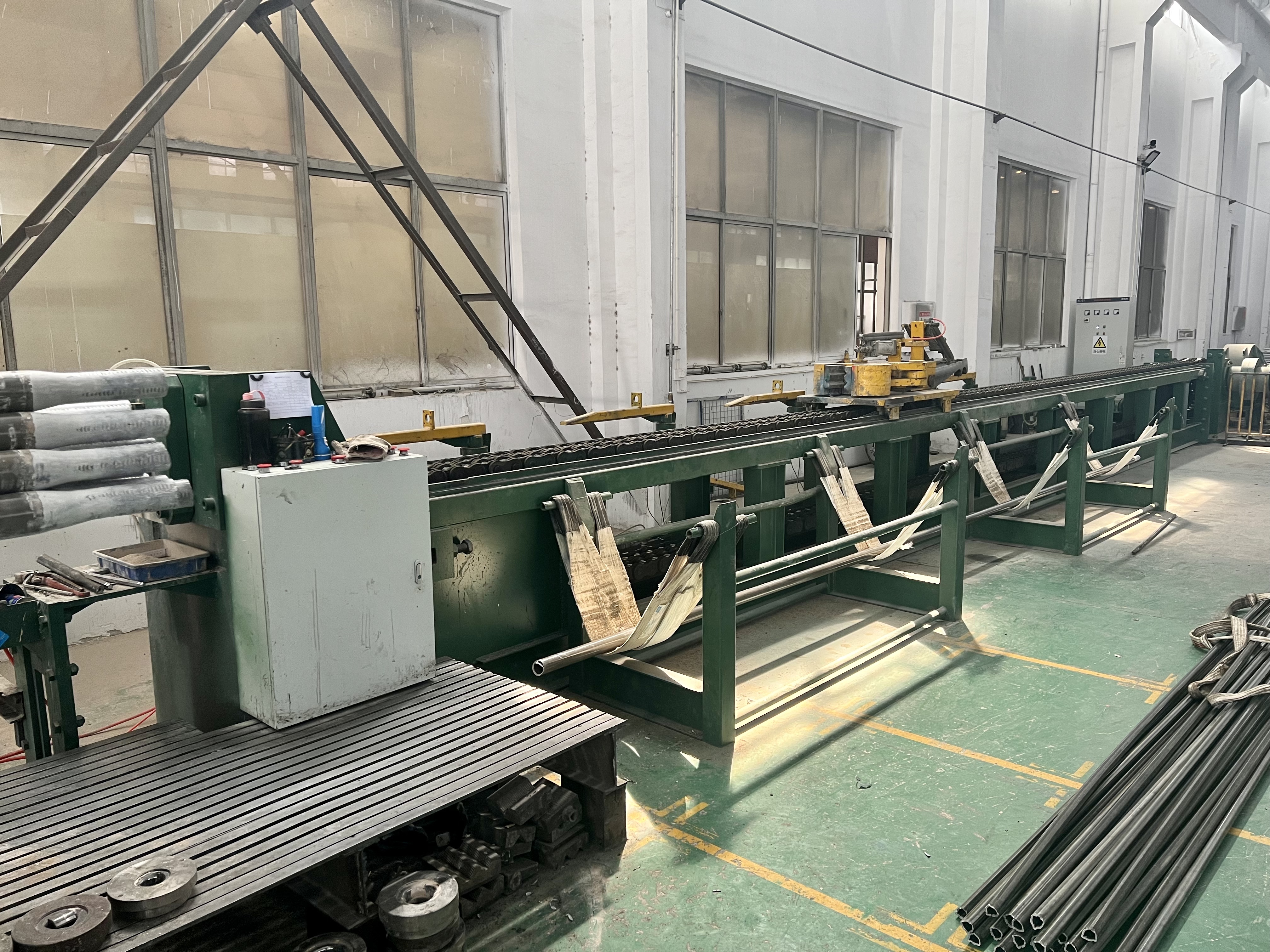
What a Long-Term Agreement Should Actually Lock Down
A durable supply agreement answers three questions in writing: what is being bought and on what commercial basis, what counts as acceptable, and who does what after delivery. Each block can be reduced to a short list of items that must appear in the contract rather than in an email thread.
1. Purchasing terms
Purchasing terms define the commercial frame. At Fakesi, production runs in OEM, ODM and standard component modes, with full customisation available on logo, dimensions and lengths. Minimum order quantity is 1 t, and the stated lead time is 30 days. Those four facts — mode, customisation scope, MOQ and lead time — belong in the agreement as fixed parameters, not as assumptions carried over from an early quotation.
The price basis should be itemised rather than summarised. The variables that legitimately move a seamless pipe quotation are: steel grade, outer diameter and wall thickness combination, profile complexity, tolerance band, cut length, testing scope, packaging method and Incoterm. When these are listed line by line, a repeat order can be recalculated transparently instead of renegotiated from memory.
2. Acceptance criteria
Acceptance criteria define what the buyer will measure and with what. For a ±0.1 mm tolerance product, the agreement should state the dimension to which the tolerance applies, the measuring instrument and location, the sampling basis, and the treatment of ovality and wall eccentricity. Fakesi applies 100% testing in production, and the acceptance clause should reference that testing rather than replace it.
The document set matters as much as the measurement. Each shipment should carry a defined package that allows the buyer to verify grade, heat, dimension and test results without opening the bundle. Where a buyer's end customer requires a specific standard reference such as ASTM A106 or ISO 3183, that reference and the associated testing scope must be written into the purchase order, because a standard designation on a mill certificate does not by itself establish market access or customer acceptance.
3. After-sales support
After-sales responsibility is where most agreements are thinnest. Fakesi states a 1-year warranty, 24h after-sales support and technical support. For a long-term programme, those commitments should be translated into three operational items: a named technical contact, a stated response window for quality questions, and a defined route for rework, replacement or concession when a non-conformance is confirmed. A response window that exists only verbally is not a contractual commitment.
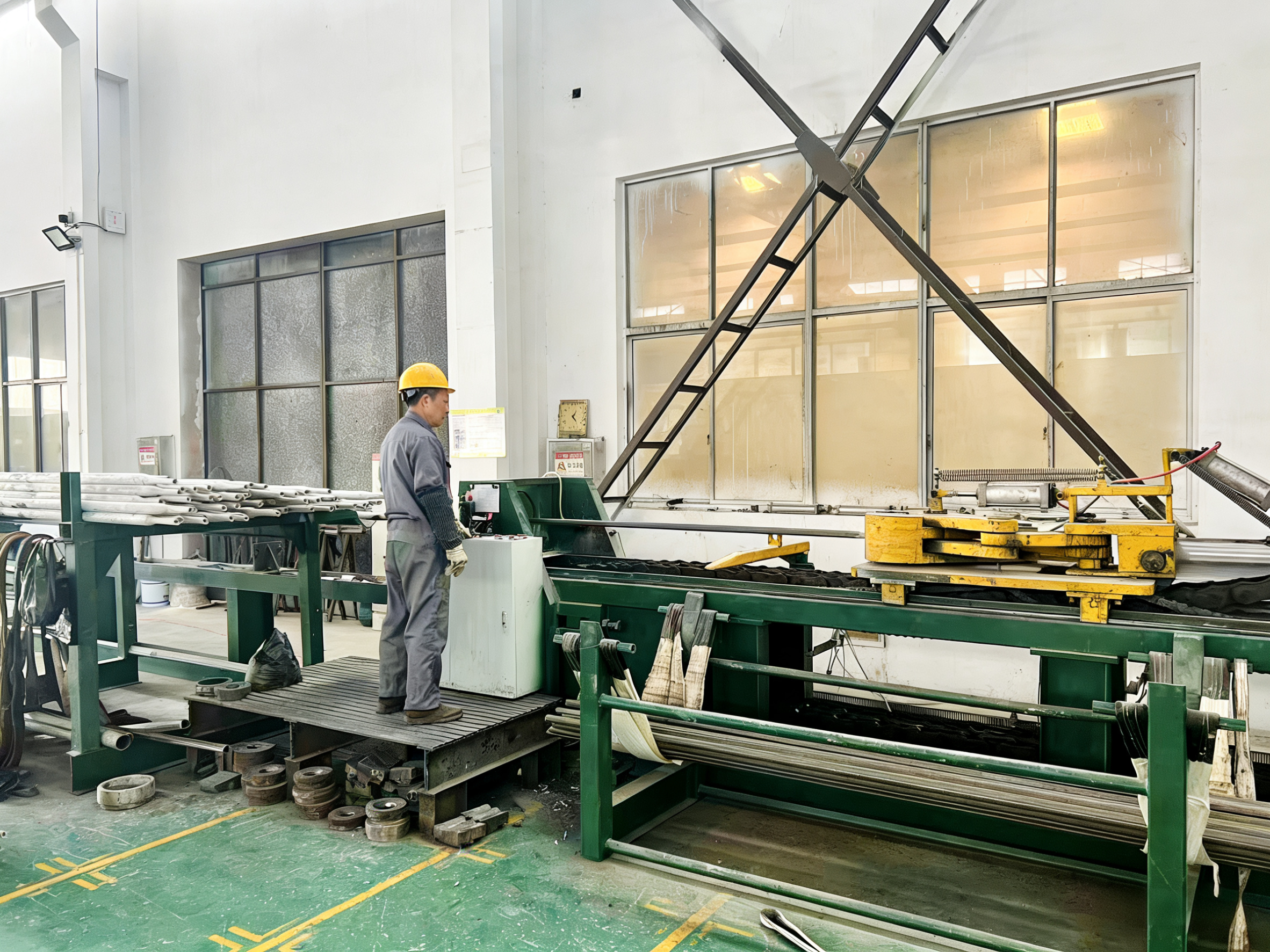
Step-by-Step: From RFQ to a Repeatable Order
Converting an enquiry into a repeatable supply programme follows eight steps. Each one produces a document or a decision that later orders can reference.
- Issue a drawing pack per profile. One drawing per profile — round, hexagon, lemon, square/rectangular, triangle, star — with a revision number and an effective date. Multi-profile programmes fail when one drawing silently replaces another.
- Fix grade and standard. Name the steel grade (for example Q355B, 20# or 45#) and state whether a published standard such as ASTM A106 or ISO 3183 is being invoked, and for which property.
- Define the dimension and tolerance band. Specify which dimensions carry the ±0.1 mm tolerance, and confirm that the ordered outer diameter and wall thickness sit inside the 1–100 mm and 1–20 mm production window.
- Specify length, end finish and surface condition. Fixed-length cutting tolerance, deburring, end squareness and surface protection all affect downstream machining and must be stated, not assumed.
- Agree testing and documentation. Decide the test scope and the certificate package before the first batch, so the second batch cannot arrive with a lighter document set.
- Agree packaging and shipping marks. Bundle configuration, interleaving, strapping, rust prevention and marking conventions should be fixed once and reused.
- Fix the commercial basis. MOQ 1 t, 30-day lead time, payment terms, Incoterm and currency, plus the price variables listed above.
- Set a review cadence and change-control rule. A short quarterly review of non-conformances, delivery performance and any drawing changes prevents silent drift between batches.
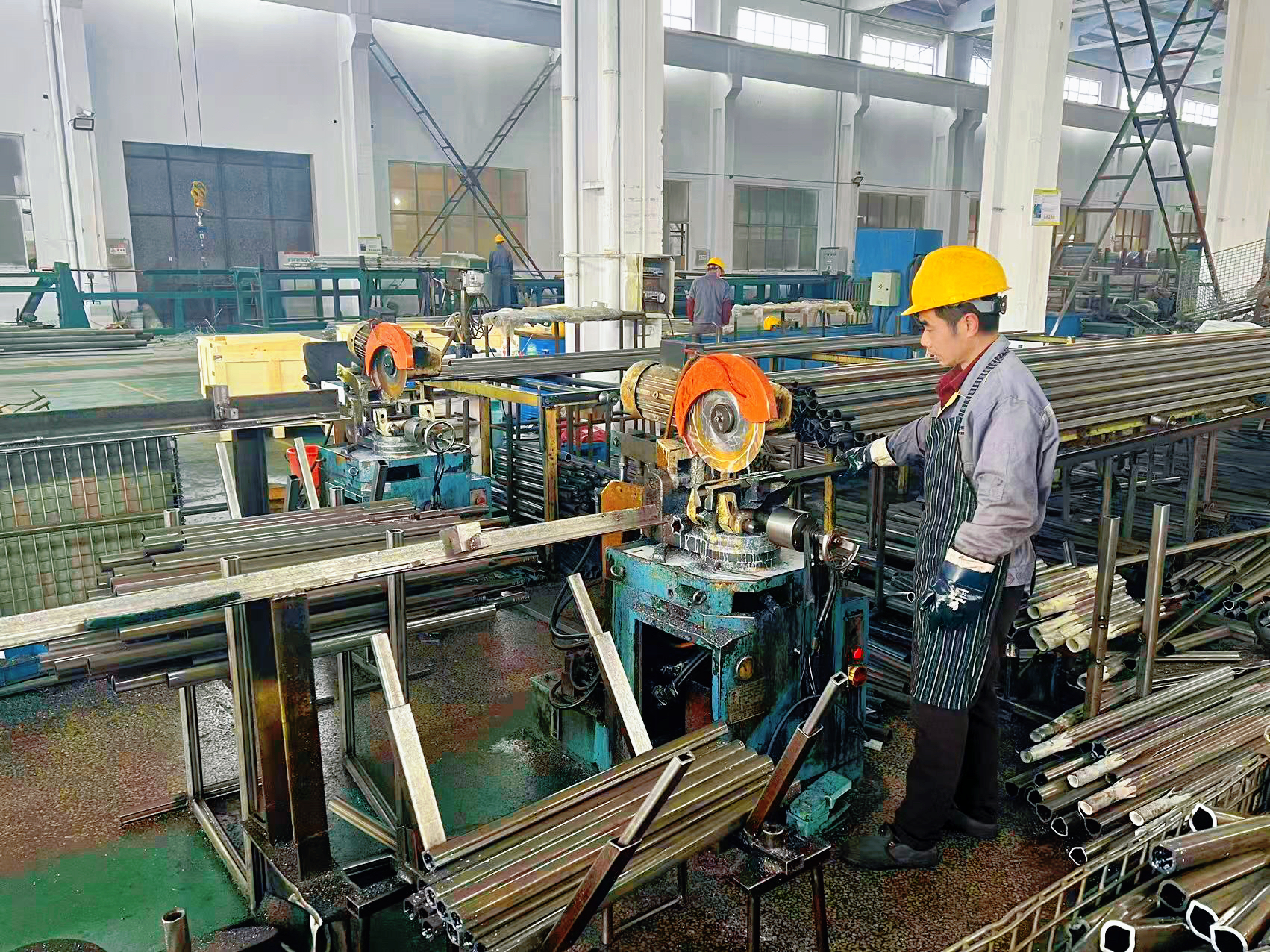
Profile-by-Profile: What to Clarify Before Ordering
Round tube is the simplest case because a single diameter and wall pair describes most of the requirement. Special profiles are different: the acceptance basis has to describe the shape, not only the envelope dimension. The table below sets out what each profile requires in the RFQ and what acceptance should verify.
| Profile | What the RFQ must define | What acceptance should check |
|---|---|---|
| Seamless round pipe | Outer diameter, wall thickness, tolerance class, length, straightness | Diameter and wall at defined positions, ovality, straightness, cut length |
| Seamless hexagon pipe | Across-flats dimension, corner configuration, wall thickness, length | Across-flats and across-corners, corner form, wall distribution on flat faces |
| Seamless lemon-shaped tube | Profile drawing with radii and axis dimensions, orientation of the seam-free section | Profile gauge fit, radius conformity, wall thickness at the narrowest section |
| Square / rectangular section | Side dimensions, corner radius, wall thickness, straightness and twist limits | Side dimensions, corner radius, twist, wall uniformity across flats |
| Seamless triangle pipe | Profile drawing with side lengths and corner radii, wall thickness reference points | Profile gauge fit, corner radii, wall thickness at defined reference points |
| Star profile | Full profile drawing with point count and radii, wall thickness reference points | Gauge fit, point geometry, wall thickness at lobe and valley positions |
| Seamless octagon pipe | Across-flats dimension, corner treatment, wall thickness, length | Across-flats, corner form, wall distribution, straightness |
| Seamless oval steel pipe | Major and minor axis dimensions, ovality definition, wall thickness | Both axes, ovality against the agreed definition, wall at major and minor axis |
Two clarifications prevent most profile disputes. The first is measurement location: for non-round sections, wall thickness varies by position, so the drawing must mark the reference points rather than state a single nominal value. The second is gauge definition: for lemon, triangle and star profiles, a physical or agreed digital profile gauge removes the ambiguity that calipers alone cannot resolve.
Use Cases: Where Repeat Orders Carry the Real Risk
In agricultural machinery, seamless tube feeds drive shaft and PTO drive shaft production, where wall consistency and profile accuracy affect balance and torque transmission. A change in wall thickness between batches shows up as a vibration or balancing problem at assembly, long after the tube itself was accepted. One Fakesi customer — an automotive parts manufacturer in Italy — has run agricultural drive shaft tube at 25 t over a two-year supply relationship, reporting stable supply and reduced secondary machining costs attributable to the high-precision tolerances held on the tube. The stated performance requirement in that application is resistance to high torque without deformation.
In automotive parts, the same logic applies to drive shafts, motorcycle and auto components, motor housings and smart lock components, where the tube often enters a machining cell directly. Here the ±0.1 mm tolerance is not a marketing figure; it is the difference between a part that loads into the fixture and one that does not. Precision bright steel pipe and seamless pipe for machining are specified in these routes precisely because the buyer is buying machinability, not tonnage.
Hydraulic and pneumatic cylinder applications add a further dimension: the tube becomes a pressure-containing component, which pushes the documentation and testing clauses to the front of the agreement. Construction machinery and customised structural applications sit somewhere between — profile-driven, but with load and fatigue expectations that make batch-to-batch consistency a design assumption rather than a convenience.
Comparison: Single Order vs. Long-Term Agreement
The same product is bought very differently depending on the procurement mode. The comparison below sets out what changes when an order becomes a programme.
| Decision area | Single order | Long-term agreement |
|---|---|---|
| Specification control | Drawing referenced at enquiry stage | Drawing with revision number and change-control rule |
| Tolerance basis | Stated once on the purchase order | Defined with measurement method, location and sampling basis (±0.1 mm reference) |
| Acceptance | Inspection of the delivered batch | Agreed criteria applied identically to every release, backed by 100% testing in production |
| Price basis | Quoted per enquiry | Itemised by grade, dimension, profile, tolerance, length, testing, packaging and Incoterm |
| Volume and MOQ | Order-specific | Fixed MOQ of 1 t with a release schedule |
| Lead time | Confirmed per order | 30-day lead time treated as a planning parameter against 2,000 t monthly capacity |
| After-sales | Handled case by case | 1-year warranty, 24h after-sales support and technical support with named contacts |
| Profile scope | One or two profiles | Multiple profiles under one agreement, each with its own drawing and gauge |
Frequently Asked Questions
Which standards and grades should a Q355B seamless pipe agreement reference?
The agreement should name the steel grade explicitly — Q355B, or an alternative such as 20# or 45# — and then state whether a published standard is being invoked and for which property. ASTM A106 is the specification for seamless carbon steel pipe for high-temperature service; ISO 3183 covers steel pipe for petroleum and natural-gas pipeline transportation systems; API 5L Grade B and ISO 3183 Grade L245 are commonly listed as comparable grade references but should not be assumed interchangeable without checking the purchase specification, edition and testing scope. A standard designation alone does not establish certification, market access or customer acceptance. Separately, the supplier's quality management system should be described accurately — Wuxi Jiangbo Intelligent Technology Co., Ltd. implements ISO quality management systems in its production, and buyers should request the documentation that applies to their own market before signing.
Can one supplier handle round and special-shaped profiles under the same long-term contract?
Yes, where the supplier's production scope covers both. Fakesi manufactures seamless round pipe alongside hexagon pipe, lemon-shaped tube, square/rectangular section, triangle pipe, star profile, octagon pipe and oval steel pipe, with full customisation of logo, dimensions and lengths, and operates in OEM, ODM and standard component modes. The company runs a 20,000 m² production base with 5 R&D engineers and a stated 2,000 t monthly capacity. For the buyer, the practical advantage is single-source accountability across a multi-profile programme — but each profile still needs its own drawing, its own gauge definition and its own acceptance reference points inside the agreement.
What determines whether repeat-order pricing stays stable?
Price stability depends less on goodwill than on whether the quotation separates its variables. The items that legitimately move a seamless steel pipe price are steel grade, outer diameter and wall thickness combination, profile complexity, tolerance band, cut length, testing scope, packaging and Incoterm. When each line is itemised, a repeat order can be recalculated against the same structure instead of being renegotiated from scratch. Volume commitment also matters: the stated minimum order quantity is 1 t, so a fixed release schedule gives both sides a predictable basis. Buyers should confirm in writing which variables are index-linked and which are fixed for the agreement period — this is a commercial control, not a purchasing formality.
How should a sample be validated before a long-term agreement is signed?
Sample validation should test the acceptance criteria, not just the product. For a cold drawn precision tube at ±0.1 mm, the validation batch should be measured the way the buyer will measure incoming goods: at the agreed locations, with the agreed instrument, against the agreed drawing revision. Fakesi applies 100% testing in production, so the sample review should compare the buyer's readings against that test record rather than replace it. Profile samples — hexagon, lemon, triangle, star — should be checked against a profile gauge, because caliper readings alone will not confirm corner radii or lobe geometry. Secondary machining trials are the most reliable proof: if the sample runs through the buyer's own process without fixture adjustment, the tolerance band is validated in the only place that matters. Sampling arrangements and their commercial basis should be agreed in writing before the batch is scheduled.
What lead time and after-sales response should be written into the contract?
The stated lead time is 30 days, supported by a 2,000 t monthly capacity, and this should be recorded as a planning parameter rather than a per-order surprise. After-sales commitments at Fakesi are a 1-year warranty, 24h after-sales support and technical support; in a long-term agreement these should be converted into a named technical contact, a defined response window for quality questions, and a documented route for rework, replacement or concession when a non-conformance is confirmed. Buyers preparing a long-term programme can review the full product and capability scope in the Fakesi product brochure before drafting the specification, and can raise profile-specific questions directly through the contact details below.
Conclusion: Write the Repeat Order Before You Place the First One
A long-term seamless steel pipe partnership is not created by a good first shipment. It is created by an agreement that already anticipates the second, fifth and twentieth shipment — with a drawing revision, a tolerance basis, a measurement method, a documented after-sales route and a price structure that can be recalculated rather than argued over.
For buyers working in agricultural machinery and automotive parts, the specification is not complicated: cold drawn precision seamless pipe, Q355B carbon steel, outer diameter 1–100 mm, wall thickness 1–20 mm, tolerance ±0.1 mm, in round, hexagon, lemon, square/rectangular, triangle or star profiles. What takes discipline is converting that specification into acceptance criteria both parties can measure against. Suppliers that already run 100% testing, hold a 30-day lead time and publish a 1-year warranty give the buyer something concrete to write into the contract — which is the only form of reassurance that survives the second year of supply.
Next Step
If you are preparing a long-term supply agreement for seamless steel pipe, start with the specification rather than the price. Send your profile drawing, grade, outer diameter, wall thickness and required tolerance band to the Fakesi team, and request a quote together with a validation sample plan for your first release.
Email: jiangjianfan@wxjiangbo.com | Tel / WhatsApp: +86 13967785843 | Website: wxjiangbo.com
Download the product and capability brochure: Fakesi Seamless Steel Tube Brochure (PDF)
Product data referenced in this article: Q355B carbon steel cold drawn precision seamless pipe, outer diameter 1–100 mm, wall thickness 1–20 mm, tolerance ±0.1 mm; MOQ 1 t; lead time 30 days; monthly capacity 2,000 t; 100% testing; 1-year warranty with 24h after-sales support and technical support. Market and standards references: Research and Markets (2026 market value projection); Steel Tube Branch of China Steel Association (2024 China output); ASTM A106; ISO 3183; API 5L Grade B / ISO 3183 Grade L245; HS 7304.
Have Questions or Need More Details?
Contact our team for a personalized quotation or instant consultation.
Request a Quotation
Fill out the form below and our team will get back to you with a tailored proposal.
WhatsApp Direct Chat
Prefer to chat in real-time? Message us on WhatsApp for instant assistance & quick answers.
- Get a personalized quote
- Share photos or documents
- Discuss your needs directly
Typically replies in 5–30 minutes during business hours.