
Seamless Steel Pipe: Types, Specifications & How to Choose in 2026
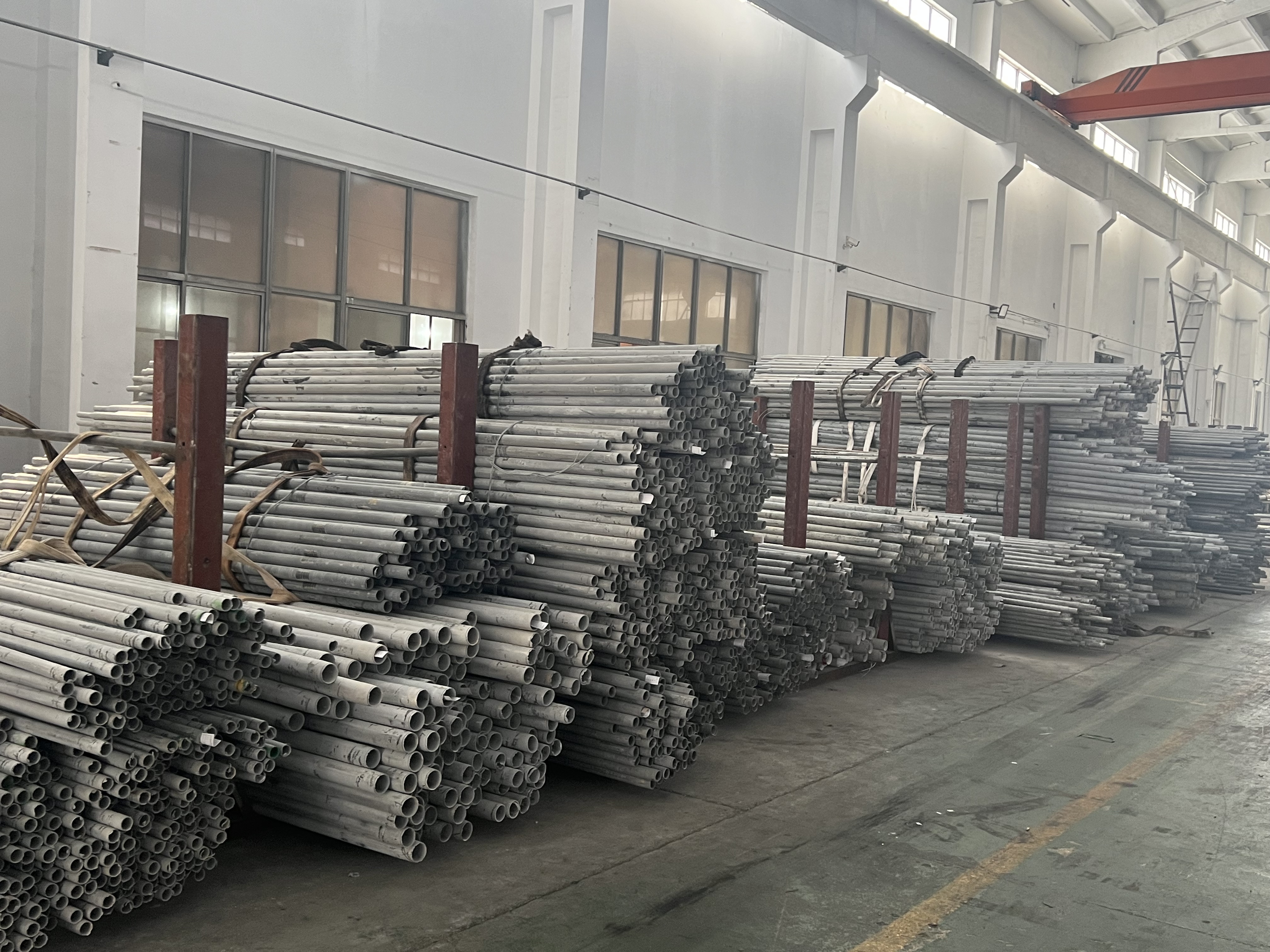
A seamless steel pipe is a tubular product manufactured without a welded seam, which gives it greater structural integrity and pressure resistance than welded pipe in many applications. Its round cross-section, dimensional accuracy, and material consistency make it the default choice in hydraulic systems, agricultural and automotive drive shafts, motor housings, machinery manufacturing, petrochemical engineering, and power generation.
This guide explains the main types of seamless steel pipe, how specifications are defined, the difference between hot rolled and cold drawn production, and how to evaluate a supplier during the procurement stage. It is written for engineers, buyers, and procurement teams that are evaluating a seamless steel pipe supplier in 2026 and need decision criteria rather than a factory tour description.
What Is a Seamless Steel Pipe?
A seamless steel pipe is a hollow steel section produced from a solid billet that is heated, pierced, rolled, or drawn into a tube without any longitudinal or spiral weld. Because there is no weld line, the pipe wall is homogeneous, and the product is generally better suited for high pressure, dynamic loads, and subsequent machining operations where consistent wall thickness and roundness affect performance.
The term “seamless steel pipe” covers many subcategories. Buyers usually refine the search by production process (hot rolled vs. cold drawn), by wall thickness (thick wall vs. thin wall), by diameter (large vs. small), by material grade (20#, 45#, Q355B), by precision level (precision seamless steel pipe), or by cross-section shape (round, triangle, hexagon, oval). These distinctions matter because they change both the mechanical properties and the machining allowance of the final tube.
1. Seamless Round Pipe
Seamless round pipe is the most common seamless steel pipe form. It consists of a circular cross-section, constant wall thickness, and is available in diameters from small precision tubes to large structural pipe. Round pipe is the base product for most subsequent cold drawing, machining, and special-shape forming operations.
For industrial procurement, the most important round pipe parameters are outer diameter, wall thickness, tolerance, material grade, straightness, and surface condition. In precision applications such as agricultural drive shafts or hydraulic cylinders, the buyer often needs a cold drawn seamless pipe with tight dimensional tolerance rather than a standard hot rolled round pipe.
Key Specifications for Seamless Round Pipe
- Outer diameter range: Φ10 mm to Φ280 mm (as available from suppliers such as Fakesi)
- Wall thickness range: 1 mm to 18 mm
- Material grades: 10#, 20#, 35#, 45#, 20Cr, 40Cr, 16Mn, 20Mn, Q355B, Q235B
- Tolerance: cold drawn precision pipe can reach ±0.1 mm in specific product ranges
2. Precision Seamless Steel Pipe
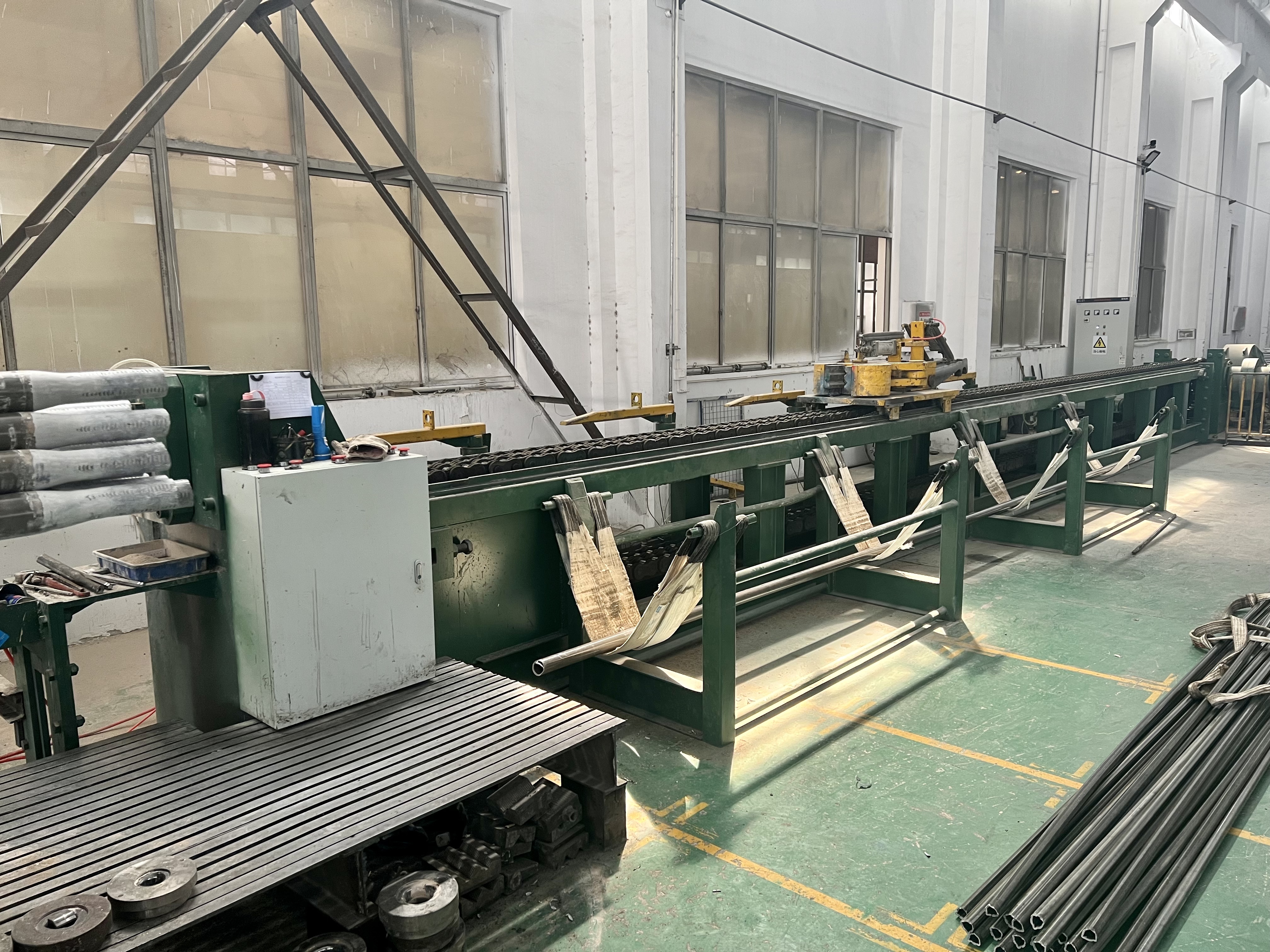
A precision seamless steel pipe is a seamless tube manufactured with tighter dimensional tolerances, better surface quality, and often improved straightness compared to standard hot rolled pipe. Precision pipe is commonly produced by cold drawing or a combination of cold drawing and finishing operations.
Buyers request precision seamless steel pipe when the tube will be used directly in a machined component or when downstream machining must be minimized. For example, in agricultural drive shafts, a precision cold drawn tube can reduce secondary machining costs because the outer diameter and wall thickness are already close to the final specification.
In Europe and global specifications, precision cold drawn seamless tubes are often governed by standards such as EN 10305-1, which specifies outside diameters up to 380 mm and strict dimensional tolerances. When a buyer supplies a drawing with tolerance requirements, the manufacturer should confirm whether the product can be produced by cold drawing alone or whether machining or grinding is required.
3. Cold Drawn Seamless Pipe vs. Hot Rolled Seamless Pipe
The production process determines many of the measurable differences between seamless steel pipes.
Hot Rolled Seamless Pipe
Hot rolled seamless pipe is produced at high temperature, typically by piercing a heated solid billet and then rolling, stretching, or reducing it to the target diameter and wall thickness. Hot rolled pipe is efficient for larger diameters and thicker walls, and it is often used in structural, mechanical, and general industrial applications where standard tolerances are acceptable.
Advantages of hot rolled seamless pipe include higher production efficiency, lower cost for standard sizes, and availability in large diameters and thick walls. Its limitations include looser dimensional tolerance, a rougher surface, and more variation in wall thickness compared to cold drawn pipe.
Cold Drawn Seamless Pipe
Cold drawn seamless pipe is produced by drawing a hot rolled or pierced tube through a die at room temperature. Cold drawing reduces the cross-section, improves dimensional accuracy, improves surface finish, and increases mechanical strength through strain hardening. It is the preferred process for precision seamless steel pipe, small diameter pipe, and thin wall pipe with tight tolerance.
Cold drawn seamless pipe is typically used in hydraulic cylinders, pneumatic cylinders, drive shafts, shafts for pumps and motors, and other precision mechanical components.
| Comparison Factor | Hot Rolled Seamless Pipe | Cold Drawn Seamless Pipe |
|---|---|---|
| Process | Hot piercing and rolling | Cold drawing through die |
| Dimensional tolerance | Standard / wider | Tighter, down to ±0.1 mm in precision ranges |
| Surface finish | Rougher, scale may be present | Smoother, closer to final machined surface |
| Typical applications | Structural, large-diameter, thick-wall | Hydraulic cylinders, shafts, precision machining |
| Cost | Generally lower per ton for standard sizes | Higher due to additional processing |
| Production range | Wide range of diameters and wall thickness | Often smaller diameters and thinner walls, but applicable broadly |
4. Thick Wall Seamless Steel Pipe
Thick wall seamless steel pipe refers to seamless tubes with wall thickness at the higher end relative to the outer diameter. Although there is no universal numerical boundary, thick wall pipe is generally selected when the application requires higher collapse resistance, higher pressure rating, or more material for subsequent machining of threads, grooves, or stepped shafts.
In Fakesi’s production range, seamless pipes are available with wall thickness up to 18 mm and outer diameters from Φ10 mm to Φ280 mm. For thick wall applications, the ratio between wall thickness and outer diameter should be reviewed against the design pressure, the material grade, and the final machined dimensions.
5. Thin Wall Seamless Steel Pipe
Thin wall seamless steel pipe is selected when weight reduction, material savings, or internal volume is important. Thin wall pipe is common in lightweight structures, fluid transfer systems, and components where the wall only needs to contain a low-pressure medium or provide a precise internal bore.
Thin wall pipe requires careful control during production to avoid ovality and wall thickness variation. Cold drawing is often used for thin wall seamless pipe because it provides better control over both outer diameter and wall thickness.
6. Large Diameter Seamless Pipe
Large diameter seamless pipe is used in the middle range of industrial tube sizes where welded pipe, although available, is less desirable due to the weld seam. Applications include structural columns, roller bodies, hydraulic cylinders for heavy equipment, and general machinery frames.
In seamless pipe procurement, “large diameter” is relative to the supplier’s production capability. Fakesi can produce seamless steel pipes up to Φ280 mm in outer diameter. When a project requires a larger size, the buyer should confirm whether the supplier can deliver seamless or whether the project must move to welded pipe or other forming methods.
7. Small Diameter Seamless Pipe
Small diameter seamless pipe is common in precision components such as shafts, pins, sleeves, hydraulic lines, and instrumentation tubing. Small diameters are often produced by cold drawing because the process can achieve tight tolerance and smooth surfaces in smaller cross-sections.
For a small diameter precision pipe, buyers should specify not only the outer diameter and wall thickness but also the ovality limit, straightness, surface finish, and material grade. These parameters affect the behavior of the pipe during machining and assembly.
8. High Pressure Seamless Pipe
High pressure seamless pipe is used in hydraulic systems, pneumatic systems, and fluid power applications. The absence of a weld seam is a major advantage because the weld line is often the weakest point under fatigue and pressure cycling.
Key selection factors for high pressure seamless pipe include:
- Material strength and yield strength
- Wall thickness relative to pressure rating
- Dimensional tolerance and concentricity
- Surface condition, because internal cracks or pits can become failure points
- Traceability of the heat and material grade
In high pressure applications, a 100% test requirement is common. Fakesi states that its quality control includes 100% testing, which is an important factor for hydraulic and pressure-related components.
9. Seamless Pipe for Machining
Seamless pipe for machining is supplied with controlled tolerance and material consistency to allow the buyer to perform turning, boring, milling, drilling, or grinding without excessive material removal. The two most important properties are concentricity and wall thickness uniformity, because these determine how much stock must be removed to achieve the final machined dimensions.
For machining applications, precision bright steel pipe is often preferred. A bright steel pipe has a smooth, scale-free surface and tight tolerance, which reduces machining time and tool wear.
10. Precision Bright Steel Pipe
Precision bright steel pipe, also called bright drawn seamless pipe, is a cold drawn seamless pipe with a bright surface finish and high dimensional accuracy. It is produced by cold drawing followed by processes such as straightening and cutting, and it is supplied in condition suitable for direct machining or, in some cases, for direct assembly.
In agricultural drive shafts, precision bright steel pipe can reduce secondary machining costs. A European automotive parts manufacturer purchasing precision seamless steel pipe from Fakesi reported stable supply over two years and reduced secondary machining costs due to high-precision tolerances.
11. Carbon Steel Seamless Pipe
Carbon steel is the dominant material in the steel pipe market, accounting for approximately 78% of the global market share according to 2026 projections by Future Market Insights. Carbon steel seamless pipe is selected for its combination of strength, machinability, and cost effectiveness.
Common carbon steel grades include 10#, 20#, 35#, 45#, Q235B, Q355B, 16Mn, and 20Mn. Each grade balances strength, ductility, weldability, and machinability differently.
20# Seamless Steel Pipe
20# is a high-quality carbon structural steel widely used in China and many international markets. It offers good strength and toughness, good machinability, and is commonly used for mechanical parts, shafts, hydraulic cylinders, and structural components. In seamless pipe form, 20# is often the default choice for cold drawn precision pipe where moderate strength and good machining behavior are required.
45# Seamless Steel Pipe
45# is a medium carbon steel with higher strength and hardness than 20#, but it is less ductile and more difficult to machine. It is often used for parts that require higher strength and wear resistance, such as shafts, gears, spindles, and connecting components. After machining, 45# parts are often heat treated to optimize mechanical properties.
Q355B Seamless Steel Pipe
Q355B is a low alloy high strength structural steel grade, commonly used when higher yield strength and good weldability are required. It is used in structural applications, agricultural and automotive components, construction machinery, and other equipment where strength optimization is important. In the Fakesi case study, Q355B steel is the material used for seamless steel tubes supplied to an automotive parts manufacturer for agricultural drive shaft applications.
12. Special-Shape Seamless Steel Pipe
Special-shape seamless steel pipe has a cross-section other than a common circle. Typical shapes include triangle, lemon-shaped, hexagon, octagon, and oval. Special-shape pipe is often preferred when the final component needs a specific outer profile and the buyer wants to avoid machining the profile from a solid bar or round tube.
Special shapes are usually produced by cold drawing a round seamless pipe through a specially shaped die. The process can produce a net shape or near-net shape with good dimensional consistency, reducing material waste and machining time.
- Seamless triangle pipe: triangular cross-section for specific torque transmission and fastening applications.
- Seamless lemon-shaped tube: a shaped profile used in applications such as drive shafts where a wedge or locking shape is required.
- Seamless hexagon pipe: hexagonal cross-section used for fasteners, wrenching surfaces, and anti-rotation components.
- Seamless octagon pipe: eight-sided cross-section used for decorative, structural, and mechanical applications.
- Seamless oval steel pipe: oval cross-section used for agricultural tines, frames, and structural profiles.
When procuring special-shape seamless pipe, the buyer must supply the cross-section drawing, outer dimension tolerance, wall thickness distribution, material grade, length requirement, and expected surface quality. The tooling cost and minimum order quantity should be discussed with the supplier before production.
Material Grades and Dimensional Range
The following is a representative production range for a Chinese seamless steel pipe manufacturer such as Wuxi Jiangbo Intelligent Technology Co., Ltd. (Fakesi):
- Materials: 10#, 20#, 35#, 45#, 20Cr, 40Cr, 16Mn, 20Mn, Q355B, Q235B
- Outer diameter: Φ10 mm – Φ280 mm
- Wall thickness: 1 mm – 18 mm
- Precision tolerance: ±0.1 mm (for applicable precision cold drawn products)
This range covers many common seamless round pipe, precision seamless steel pipe, thick wall, thin wall, large diameter, and small diameter requirements in the machinery and automotive sectors.
How to Choose a Seamless Steel Pipe Supplier: A 2026 Evaluation Framework
In 2026, buyers sourcing seamless steel pipe often evaluate suppliers against a combination of quality systems, production capability, dimensional control, export experience, and lead time. The following framework is designed for the evaluation stage, when a buyer already knows the required product type and is comparing suppliers.
Step 1: Define the Required Product Family
First, determine which seamless pipe category is actually required. A buyer might need a hot rolled seamless pipe for structural use, a cold drawn seamless pipe for hydraulic cylinders, or a precision bright steel pipe for machining. The production process and tolerance requirement will heavily affect cost and lead time.
Step 2: Confirm Material Grade and Mechanical Properties
Confirm the material grade according to the engineering drawing or applicable standard. For example, 20# is a common carbon steel grade for medium-strength components; 45# provides higher strength; Q355B provides high strength with good weldability. The supplier should be able to state the available material grades and provide test certificates when required.
Step 3: Verify Dimensional Capability
Check that the requested outer diameter, wall thickness, and tolerance are within the supplier’s production range. If the project requires ±0.1 mm tolerance, the supplier should confirm that a cold drawn precision process is available and suitable for that size.
Step 4: Assess Production and Quality Control Capability
Inquire about cold drawing capacity, heat treatment, straightening, cutting, and testing capabilities. For precision applications, a supplier should be able to perform 100% testing and provide traceable quality records. Fakesi, for example, states a production capacity of 2,000 tons per month and 100% testing in its quality control system.
Step 5: Evaluate Export and Communication Experience
For global buyers, export experience is a practical factor. Suppliers that routinely export to Europe, Eurasia, and the Middle East and North Africa (MENA) understand packaging, documentation, and communication requirements. Fakesi exports approximately 50% of its output to the EU, Eurasia, and MENA markets.
Step 6: Compare Lead Time, MOQ, and After-Sales Service
Lead time, minimum order quantity, and after-sales service affect the total cost of ownership. A typical lead time in the industry is around 30 days, with an MOQ of about 1 ton for standard products. The buyer should also clarify warranty and technical support terms.
Use Case: Precision Seamless Steel Pipe for Agricultural Drive Shafts
Agricultural drive shafts transmit high torque from tractors to implements through PTO systems. The tube material must resist torsional stress, bending, and vibration without deformation. A welded tube may be acceptable in low-load applications, but precision seamless steel pipe is often preferred because it provides uniform wall thickness and no weld zone, which reduces the risk of fatigue failure.
An automotive parts manufacturer in Italy has been purchasing seamless steel tubes from Fakesi for agricultural drive shaft applications for two years, with a quantity of 25 tons. The reported result is stable supply over two years and reduced secondary machining costs due to high-precision tolerances. The highlight of the case is that the tube withstands high torque without deformation, ensuring maximum transmission efficiency.
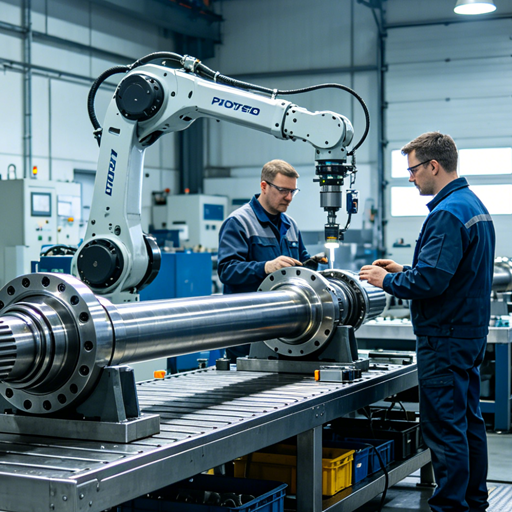
This case illustrates what a buyer should look for in a drive shaft tube supplier: precision tolerance that reduces machining cost, material strength that prevents deformation under torque, stable supply over multiple years, and a supplier who understands the quality requirements of the agricultural machinery industry.
Common Questions About Seamless Steel Pipe
What standards apply to precision seamless steel tubes?
Precision seamless steel tubes are commonly governed by EN 10305-1, which specifies technical delivery conditions for cold drawn seamless tubes, with outside diameters up to 380 mm and strict dimensional tolerances. Other standards such as DIN 2391 are also referenced in global trade. Buyers should confirm with the supplier which standard is used for the specific product.
What is the difference between 20# and 45# seamless steel pipe?
20# is a low-to-medium carbon steel with good ductility, machinability, and weldability, suitable for structural and general mechanical applications. 45# has higher carbon content, resulting in higher strength and hardness but lower ductility. The choice between them depends on the required strength, toughness, machinability, and whether heat treatment will be applied.
Can seamless steel pipe be customized in special shapes and dimensions?
Yes. Many seamless steel pipe manufacturers offer OEM and ODM services, including custom cross-section shapes such as triangle, hexagon, octagon, oval, and lemon-shaped profiles, as well as custom dimensions and lengths. Custom special-shape pipe usually requires a drawing, possibly a tooling investment, and a defined MOQ.
How does cold drawing improve the quality of seamless steel pipe?
Cold drawing improves dimensional tolerance, surface finish, and mechanical strength through strain hardening. The process can reduce outer diameter and wall thickness variations, producing a precision pipe that is closer to the final machined dimensions. This reduces secondary machining cost for applications such as hydraulic cylinders and drive shafts.
What is the typical lead time and minimum order quantity for seamless steel pipe?
Fakesi, for example, offers a monthly production capacity of 2,000 tons, a lead time of approximately 30 days, and an MOQ of 1 ton. The actual lead time and MOQ depend on the product type, diameter, material grade, quantity, and any custom special-shape requirements.
Final Considerations Before You Place an Order
The correct seamless steel pipe is not just the cheapest option or the most readily available option. It is the product that satisfies the mechanical load, dimensional tolerance, surface quality, and material traceability requirements of the final component. Buyers who skip the specification stage often face machining problems, dimensional rejection, or early component failure.
When evaluating a supplier, ask for the following:
- Production range summary (diameter, wall thickness, materials)
- Cold drawing capability and available tolerance
- Quality control process and testing method
- Export experience and packaging process
- Lead time and MOQ for the required size
- Sample or first-article inspection process
For buyers who are ready to move from evaluation to inquiry, discussing a sample order or a small first batch is a practical next step. This allows you to verify dimensional accuracy, surface quality, and fit-for-purpose performance before scaling up the order.
Need a reliable seamless steel pipe supplier for your 2026 project?
Contact Fakesi (Wuxi Jiangbo Intelligent Technology Co., Ltd.) for a quote, sample, or technical discussion.
Email: jiangjianfan@wxjiangbo.com | WhatsApp: +86 139 6778 5843