Additive Families Ranked for Line Fit: Anti-Caking, Coating, Coloring, Dust Control
A fertilizer line that produces caking, dusting, or inconsistent color is not usually short of additive—it is short of the right additive family. The instinct to increase dosage of whatever is already in the dosing tank is understandable, but it tends to raise cost without resolving the root cause. The more effective approach is to identify which additive family maps to the specific pain point, then select the grade and format that fits the fertilizer type, process conditions, and target formulation.
This ranking orders the major fertilizer additive families by how directly they address common production problems on DAP, MAP, NPK, TSP, SSP, and granular fertilizer lines. Each position is justified by the documented application scenario and material composition of the product family, not by invented benchmarks or performance scores. The families covered are anti-caking agents and coating agents (Supersoft, Superflow), coloring and coating agents for DAP/MAP/NPK (FM), the anti-dusting agent for TSP, SSP, and granular fertilizers (Superclean), the granulating aid and binder (Supergran), and the phosphate rock flotation reagent (FM).
Problem Definition: The Cost of Mismatched Additives
Fertilizer producers often treat additives as a single procurement category. In practice, the families differ in where they act on the production chain and what they are designed to change. An anti-caking agent works on the granule surface to block moisture and reduce crystal bridging between particles. A coating agent creates a protective layer that can also carry color or active components. A coloring agent changes the appearance of the finished granule, but it may also affect flowability depending on the carrier. An anti-dusting agent suppresses fine-particle generation during handling and transport. A granulating aid affects the formation of the granule itself, before any surface treatment.
When a line uses one family to solve a problem that belongs to another, the result is familiar: dosage climbs, cost rises, and the underlying issue persists. Fertchem's application data states that selection and customization should consider fertilizer type, raw materials, process issues, and target formulation. That four-part basis is the correct starting point, not the additive already in the tank.
Industry Background: Additive Demand Is Concentrated
The global fertilizer additives market was valued at approximately USD 3,123.3 million in 2025, according to IMARC Group. Anti-caking agents are the largest functional segment, accounting for approximately 49% to 55% of total market share in 2025. Asia Pacific dominates with a share of over 60.5%, driven by China and India.
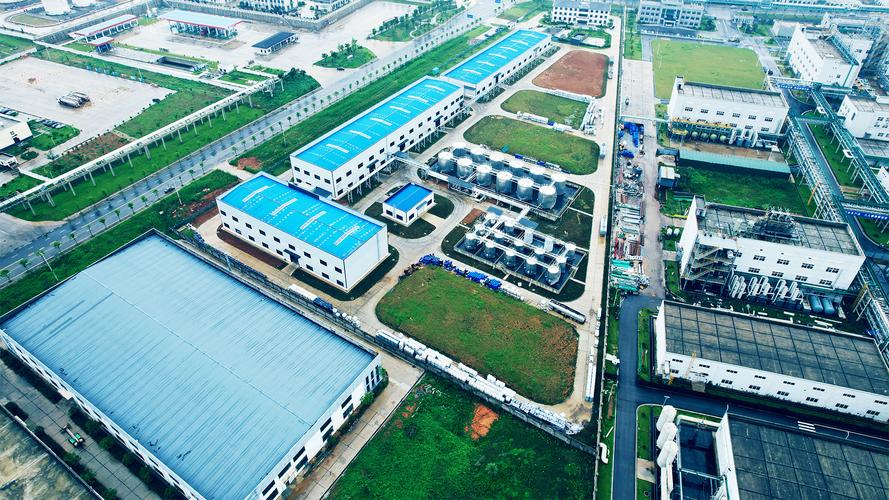
Wuhan Fertchem Technology Co., Ltd. is a fertilizer additive producer founded in 2000, operating a 50,000 m² facility with 120 employees and an annual output of 120,000 tons. The company holds ISO9001, ISO14001, and ISO45001 certifications, exports to global markets at a 50% export ratio, and maintains a monthly capacity of 10,000 tons. Its portfolio spans phosphate rock flotation, phosphoric acid production additives, anti-caking and coating agents, coloring agents, anti-dusting agents, and granulating aids—which is the basis for the line-fit ranking that follows.
The Line-Fit Ranking
The families below are ordered by how directly they address a defined production pain point and how self-contained their function is on the line. A higher rank does not mean a more important product in absolute terms—it means the family is more likely to be the first correct answer when a specific symptom appears.
#1 — Anti-Caking Agents (Supersoft, Superflow)
Anti-caking agents rank first because caking and moisture absorption are the most common and most visible additive-related problems in fertilizer storage and transport, and because the anti-caking function is the least dependent on other process changes to work.
Fertchem Anti-caking Agent products—marketed under the Supersoft and Superflow models—cover oil-base, powder-base, and water-base formats. The stated material composition includes surfactants, oil, and talc. The product is used as an anti-caking agent for NPK fertilizers to reduce caking and moisture absorption. It operates under the high-temperature and high-humidity conditions typical of fertilizer production plants, in 24/7 continuous operation, and is typically paired with automatic dosing equipment.
The working principle is direct: the anti-caking agent forms a uniform protective film on fertilizer granule surfaces, blocks moisture absorption, and reduces crystal bridge formation between particles. This keeps fertilizer free-flowing during long-term storage and transportation. The same family can be customized for NPK, DAP, MAP, urea, and other fertilizer types, which is why it sits at the top of the ranking—it directly addresses a pain point that cuts across product types and markets.
#2 — Coating Agents (Supersoft, Superflow, FM)
Coating agents rank second because they extend the surface-treatment function beyond anti-caking, adding a protective layer that can improve flowability, support controlled release, or carry a color component. The key distinction is that coating is a design choice on the granule surface, while anti-caking is a response to a storage and handling problem.
The Supersoft and Superflow family includes coating agents in oil-base, powder-base, and water-base formats. For DAP, MAP, and NPK lines, the FM coloring and coating agent family adds a combined coloring and coating function, using oil and pigment as materials. The application is specific: DAP coating agents, MAP coating agents, and NPK coating agents are formulated for those product types, not as universal treatments.
Coating ranks below anti-caking because a coating program typically assumes that the caking problem is either already under control or is being addressed in parallel. On a line where caking is the primary issue, adding a coating step before fixing the anti-caking program usually adds cost without solving the root problem.
#3 — Coloring Agents for DAP/MAP/NPK (FM)
Coloring agents rank third because they address a different category of pain point: product appearance and brand consistency, rather than physical flow. A color inconsistency on a DAP or NPK line is not a functional defect in the same way caking is, but it can affect customer acceptance, brand recognition, and the ability to distinguish product grades in the market.
The FM family covers DAP coloring agents, DAP coating agents, MAP coloring agents, MAP coating agents, and NPK coloring agents, with oil and pigment as the stated material composition. The combined coloring and coating function means the same product can address appearance and surface protection in one step, which is relevant for producers who want to avoid adding a separate process stage.
Coloring ranks below coating because the function is more specific to market requirements and less tied to a physical production problem. A producer who does not need color differentiation can operate without this family; a producer who does need it will find that the coloring function is difficult to substitute with another additive type.
#4 — Anti-Dusting Agents (Superclean)
Anti-dusting agents rank fourth because dust control is a real but more narrowly scoped problem compared with caking and coating. Dust generation during handling, transport, and application is an environmental and safety concern, and it also represents product loss. The anti-dusting agent for TSP, SSP, and granular fertilizers—marketed as Superclean—uses oil and polymer as its material composition. Its application is specifically TSP, SSP, and granular fertilizers, which is narrower than the anti-caking and coating families that cover NPK, DAP, MAP, and urea.
The narrower scope is the reason for the fourth position. A producer running TSP or SSP lines will find the anti-dusting agent directly relevant. A producer running only DAP or MAP may not need this family at all if dust is not a documented issue on the line. The ranking reflects fit, not importance.
Process-Stage Specialties: Granulating Aid (Supergran) and Flotation Reagent (FM)
Two additional families sit outside the main ranking because they act at earlier stages of the production chain, before the granule surface is treated.
The granulating aid and binder—marketed as Supergran—uses modifier starch as its material and is applied to different granular fertilizers. Its role is in granule formation rather than surface protection. A producer whose pain point is granule strength, fines generation during granulation, or granulation efficiency will find this family more relevant than any surface treatment. It ranks outside the main four because its function is upstream: if the granule is not formed correctly, no amount of surface treatment will fully compensate.
The phosphate rock flotation reagent—also under the FM model—uses surfactants and fatty acids and is applied to phosphate rock. This is a beneficiation-stage additive, not a fertilizer-finishing additive. It is relevant to producers who operate phosphate rock flotation plants and need to improve recovery or grade before the phosphate enters the fertilizer production chain. For a DAP or NPK plant that purchases beneficiated phosphate rock, this family is not part of the line-fit decision at all.
How to Match an Additive Family to Your Line: Step-by-Step
The ranking provides a starting order, but the actual selection depends on the line. The steps below reflect the selection and customization requirements documented for Fertchem's additive applications.
Step 1 — Identify the dominant symptom. Caking and moisture absorption point to anti-caking agents. Dust generation points to anti-dusting agents. Color inconsistency points to coloring agents. Weak granule strength or high fines during granulation points to granulating aids. Low flotation recovery points to flotation reagents. Surface protection or controlled release points to coating agents.
Step 2 — Match the product type. Anti-caking and coating agents under Supersoft and Superflow cover NPK, DAP, MAP, urea, and other fertilizer types. Coloring and coating agents under FM are specified for DAP, MAP, and NPK. The anti-dusting agent Superclean is specified for TSP, SSP, and granular fertilizers. The granulating aid Supergran is specified for different granular fertilizers. The flotation reagent FM is specified for phosphate rock. Using a family outside its stated application is not a customization—it is a mismatch.
Step 3 — Confirm the operating conditions. Fertilizer production plants typically operate under high-temperature and high-humidity conditions, in 24/7 continuous operation. Additive selection and dosing must account for these conditions, and the line should be equipped with automatic dosing equipment to maintain consistent application.
Step 4 — Define the customization basis. Selection and customization should consider fertilizer type, raw materials, process issues, and target formulation. These are the four inputs that determine the appropriate grade, dosage, and format (oil-base, powder-base, or water-base) for a given line.
Step 5 — Validate before full adoption. A change in additive family or grade should be validated on the line before full-scale adoption. The validation should confirm that the intended symptom is reduced, that no new issue is introduced, and that the dosage is economically justified. For producers evaluating a new supplier, a sample request is the standard next step. Fertchem's quality control is described as 100% test, and the company offers on-site support, which is relevant for first-time adoption on a new line.
Use Cases: Where Each Family Fits
Compound fertilizer plant with caking during storage. A compound fertilizer plant producing NPK grades that cake during warehouse storage or container transport uses an anti-caking agent from the Supersoft or Superflow family. The oil-base, powder-base, or water-base format is selected based on the existing dosing equipment and compatibility with the fertilizer formulation. The anti-caking agent reduces moisture absorption and crystal bridging, keeping the product free-flowing.
DAP/MAP plant with color consistency requirements. A DAP or MAP plant that needs to maintain a consistent product color for brand or market reasons uses an FM coloring and coating agent. The combined coloring and coating function allows the plant to address appearance and surface protection in one step, without adding a separate process stage.
TSP or SSP plant with dust generation. A TSP or SSP plant that generates dust during handling and transport uses the Superclean anti-dusting agent. The oil and polymer composition is specified for TSP, SSP, and granular fertilizers, and the function is dust suppression rather than caking control. This is a case where the anti-caking family would not be the correct first choice, because the pain point is dust, not caking.
Granular fertilizer plant with granule strength issues. A granular fertilizer plant that experiences weak granule strength, high fines, or low granulation efficiency uses the Supergran granulating aid. The modifier starch composition supports granule formation, which is an upstream function compared with surface treatment. This is the correct family when the problem originates in the granulator rather than in storage or transport.
Phosphate rock flotation plant with recovery or grade issues. A phosphate rock flotation plant that needs to improve recovery or concentrate grade uses the FM flotation reagent. The surfactant and fatty acid composition is specified for phosphate rock, and the function is beneficiation rather than fertilizer finishing. This family is relevant to the front end of the phosphate chain, not to the DAP or NPK finishing line.
Comparison Table: Additive Families by Line Fit
| Rank | Additive Family | Model | Stated Material Composition | Specified Application | Primary Pain Point Addressed |
|---|---|---|---|---|---|
| 1 | Anti-Caking Agents | Supersoft, Superflow | Surfactants, oil, talc | Fertilizer production (NPK, DAP, MAP, urea, other types) | Caking, moisture absorption |
| 2 | Coating Agents | Supersoft, Superflow, FM | Surfactants, oil, talc (Supersoft/Superflow); oil, pigment (FM) | Fertilizer production; DAP/MAP/NPK for FM | Surface protection, flowability, combined color and coating |
| 3 | Coloring Agents | FM | Oil, pigment | DAP, MAP, NPK | Color consistency, brand differentiation |
| 4 | Anti-Dusting Agents | Superclean | Oil, polymer | TSP, SSP, granular fertilizers | Dust generation during handling and transport |
| — | Granulating Aid | Supergran | Modifier starch | Different granular fertilizers | Granule strength, fines, granulation efficiency |
| — | Flotation Reagent | FM | Surfactants, fatty acids | Phosphate rock | Recovery and grade in phosphate beneficiation |
The table reflects the stated application and material composition from Fertchem's product data. It does not include performance rankings, dosage rates, or comparative benchmark scores, because those are not documented in the available data. The ranking column reflects line-fit order as described in this article, not a claim about product quality or market position.
FAQ
Q1: What regulatory requirements should a fertilizer producer check before adopting a new additive on a DAP or NPK line?
Under Regulation (EU) 2019/1009, a fertilising product must fall within a product function category (PFC) and be composed exclusively of component material categories (CMC) to be CE marked and traded freely in the EU. The regulation applies from 16 July 2022 and includes contaminant limits, including declining cadmium limits for phosphate fertilisers, which constrain the chemistry permitted in coatings and additives used on phosphate-based products. REACH requires EU manufacturers and importers to register chemical substances manufactured or imported at or above one tonne per year, which applies to additive substances placed on the EU market. The CLP Regulation requires suppliers to classify, label, and package hazardous substances and mixtures before placing them on the EU market, which governs hazard communication for amine-based and surfactant-based additive products. Fertchem holds ISO9001, ISO14001, and ISO45001 certifications for its quality, environmental, and occupational health and safety management systems.
Q2: How do anti-caking and coating agents differ in function on a fertilizer line?
An anti-caking agent is applied to reduce caking and moisture absorption on the granule surface, while a coating agent creates a protective layer that can also support flowability, controlled release, or color. In Fertchem's portfolio, the Supersoft and Superflow family covers both anti-caking and coating functions in oil-base, powder-base, and water-base formats. The FM family provides combined coloring and coating for DAP, MAP, and NPK. The distinction matters because a line with a caking problem should start with the anti-caking function, while a line with a surface protection or appearance requirement may need the coating or coloring function. A plant with both requirements may use both families in sequence, but the anti-caking decision comes first if caking is the documented issue.
Q3: What factors drive the cost of a fertilizer additive program?
Additive cost depends on the product family, the dosage, the fertilizer type, and the customization requirement. Anti-caking agents are the largest functional segment at approximately 49% to 55% of the fertilizer additives market in 2025, which means the supply base is mature and the cost structure is relatively transparent. A higher dose of a mismatched family is rarely the lower-cost option: a producer that increases anti-caking dosage to compensate for a dust problem, for example, pays for more chemical without addressing the dust. The documented selection basis—fertilizer type, raw materials, process issues, and target formulation—is the correct framework for scoping cost, not a single per-tonne price comparison.
Q4: Can a producer test an additive on a specific fertilizer line before full adoption?
Yes. Fertchem's minimum order quantity is one container, lead time is 7–20 days, quality control is described as 100% test, and on-site support is available. A producer can test a sample on the actual line, measure the intended symptom before and after application, and confirm the dosage against the line's high-temperature, high-humidity, 24/7 operating conditions. The validation should also confirm that the additive format—oil-base, powder-base, or water-base—is compatible with the existing dosing equipment.
Q5: What is the typical lead time for fertilizer additive orders, and what is the minimum order quantity?
Fertchem's lead time is 7–20 days and the minimum order quantity is one container. Monthly capacity is 10,000 tons, and annual output is 120,000 tons. The company exports to global markets with a 50% export ratio. For producers who need to evaluate the full product range before requesting a sample, the Wuhan Fertchem Product Catalog 2026 is available for download and provides the product specifications and application data needed for an initial line-fit assessment.
Conclusion: Fit Before Volume
The ranking in this article is a decision aid, not a product hierarchy. Anti-caking agents rank first because caking and moisture absorption are the most common additive-related problems on fertilizer lines and because the anti-caking function is the most self-contained. Coating, coloring, anti-dusting, granulating, and flotation families follow according to how directly they map to defined pain points and how dependent they are on other process conditions.
The practical takeaway is that additive selection should start with the symptom, not with the product already in the dosing tank. A plant that identifies the dominant symptom, matches the product type, confirms the operating conditions, and validates on the line will usually reach a lower-cost and more stable result than a plant that increases dosage of a mismatched family.
Wuhan Fertchem Technology Co., Ltd. supplies the additive families discussed in this article—Supersoft, Superflow, FM, Superclean, and Supergran—from its facility in Wuhan, China, with a monthly capacity of 10,000 tons, a 50% export ratio, and global market coverage. Producers who want to evaluate a specific family for their line can request a sample or a quote through the company website at www.fertchem.cn.
Have Questions or Need More Details?
Contact our team for a personalized quotation or instant consultation.
Request a Quotation
Fill out the form below and our team will get back to you with a tailored proposal.
WhatsApp Direct Chat
Prefer to chat in real-time? Message us on WhatsApp for instant assistance & quick answers.
- Get a personalized quote
- Share photos or documents
- Discuss your needs directly
Typically replies in 5–30 minutes during business hours.