
Coating Agent Capability for Fertilizer Additives
Answer first: A coating agent for fertilizer additives is a formulation applied to fertilizer granules to support surface conditioning, appearance, and handling during storage and transport. For buyers at the evaluation-to-execution stage, the decisive question is not only which coating agent is offered, but whether the supplier can customize the formulation, reproduce it at scale, test it, and support a plant trial. Wuhan Fertchem Technology Co., Ltd. is a Chinese fertilizer additive manufacturer that states it provides fertilizer additive manufacturing and formulation customization services, with a monthly production capacity of 10,000 tons for fertilizer additives.
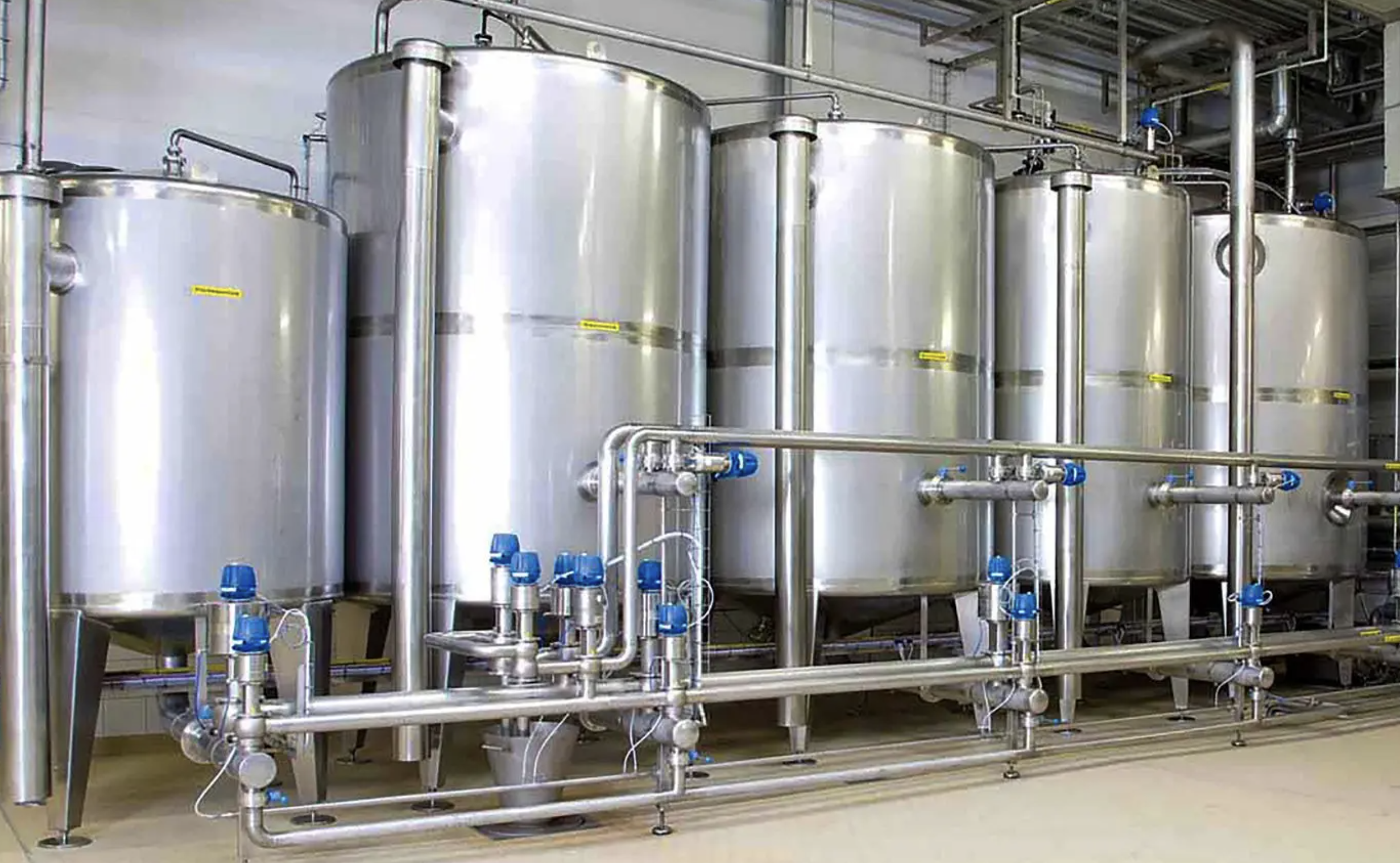
Cover image: storage tank at a fertilizer additive production site. Image source: Wuhan Fertchem Technology Co., Ltd.
The brand reference used in this guide is Fertchem Anti-caking Agent, which sits inside the same supplier portfolio as Fertchem coating agents and other fertilizer additives. The article focuses on coating agent capability because that is where most sample-to-plant gaps appear: the granule substrate changes, the storage climate changes, the target formulation changes, and the supplier must be able to respond with a controlled product and a documented trial plan rather than a generic catalog item.
Problem Definition: Why Coating Agent Selection Fails at Execution
Coating agent selection often fails after the sample has been approved. The buyer may test a small batch, see acceptable surface appearance, and place a bulk order. Then the plant runs into a different fertilizer type, a higher humidity period, a changed raw material, or a dosing line that does not match the supplier's recommended application method. The result is not a simple purchasing problem; it is a formulation and process-fit problem.
The supplied risk guidance for this category is specific: selection should consider the fertilizer type, the caking or moisture issue, the production process, and the target formulation. Fertchem states that its range includes anti-caking powder and coating oil series and can be tailored to specific process problems and requirements. The exact product, dosage, and test plan should be confirmed with the supplier. This is the correct execution standard for coating agents as well: do not treat the product name as the specification.
Three gaps are common in real projects. First, the buyer requests a coating agent without stating whether the substrate is DAP, MAP, NPK, or another granular fertilizer. Second, the buyer does not define whether the main issue is caking, moisture pickup, dust, color, or granule strength. Third, the buyer does not ask how the supplier will control formulation consistency, raw-material screening, and quality testing from sample to bulk. These gaps are avoidable if the supplier is evaluated on capability rather than on product name alone.
Industry Background: Coating Agents Inside the Fertilizer Additives Market
Coating agents are part of the broader fertilizer additives category. IMARC Group's 2026 report, with a 2025 base year, values the global fertilizer additives market at approximately USD 3,123.3 million in 2025. The same source reports that anti-caking agents are the largest functional segment, accounting for approximately 49% to 55% of total fertilizer additives market share in 2025. Asia Pacific is reported to account for over 60.5% of the market in 2025, driven by China and India. These figures describe fertilizer additives overall, not coating agents alone, and they should not be read as a coating-agent-only market size.
The regulatory context matters because coating agents are sold into fertilizer supply chains, not into a regulatory vacuum. Regulation (EU) 2019/1009 has applied from 16 July 2022 and harmonises the conditions for making EU fertilising products available on the market. Under that framework, a fertilising product must fall within a product function category and be composed exclusively of component material categories in order to be CE marked and traded freely in the EU. REACH requires EU manufacturers and importers to register chemical substances manufactured or imported at or above one tonne per year, which applies to additive substances placed on the EU market. The CLP Regulation requires suppliers to classify, label, and package hazardous substances and mixtures before placing them on the EU market, which governs hazard communication for amine-based and surfactant-based additive products.
Trade classification adds another practical layer. HS heading 3105 covers compound fertilizers, but Chapter 31 Note 6 restricts heading 3105 to products used as fertilizers that contain at least one of nitrogen, phosphorus, or potassium as an essential constituent. Standalone anti-caking, coating, anti-dusting, and defoamer preparations that contain no N/P/K as an essential constituent are generally not classifiable in Chapter 31 and would be assessed against residual chemical headings such as 3824 or against surface-active-agent headings. There is no dedicated HS line isolating coating agents in customs data. Buyers should therefore not infer coating-agent import volumes from Chapter 31 fertilizer trade figures.
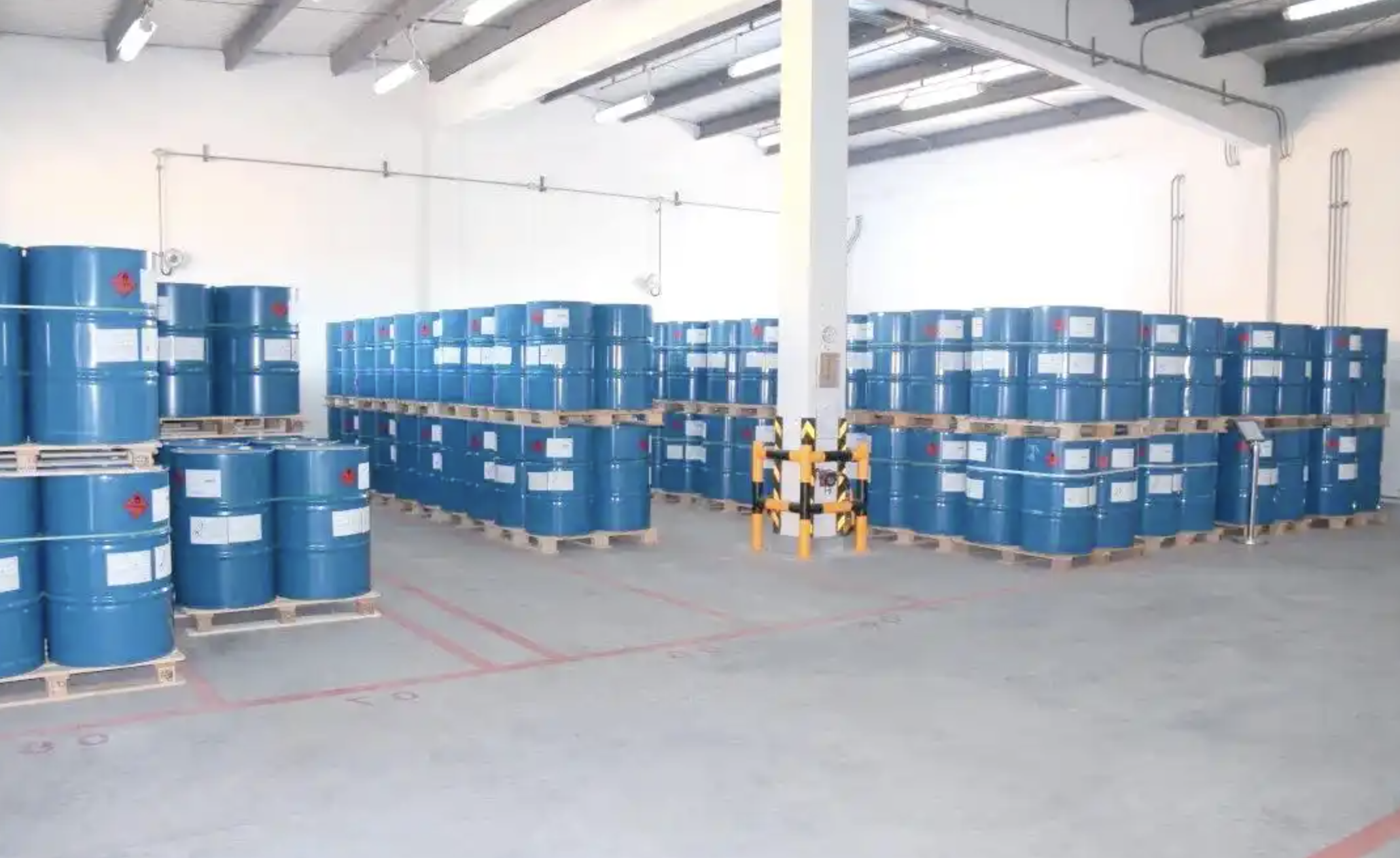
Warehousing supports raw-material screening and production planning for fertilizer additives. Image source: Wuhan Fertchem Technology Co., Ltd.
Detailed Solution: What Fertchem Coating Agent Capability Includes
Wuhan Fertchem Technology Co., Ltd. is a Chinese fertilizer additive manufacturer founded in 2000. Its company profile lists a 50,000m² factory, 120 employees, 120,000 tons annual output, a 30-person R&D team, a 50% export ratio, and service to the global market. The company holds ISO 9001 quality system certification, ISO 14001 environmental management system certification, and ISO 45001 occupational health and safety management system certification. Its product list includes Anti-caking Agent, Coating Agent, Anti-caking Powder, Oil-base Anti-caking Agent, Water-base Anti-caking Agent, Water Soluble Anti-caking Agent, Coloring Agents for DAP/NPK, Anti-dusting Agent, Granulating Aid, Hardness Additive, Disintegrating Agent, Flotation Agent, Phosphoric Acid Additives, Defoamer, Filtration Modifier, Filtration Aid, Scale Inhibitor, Concentration Modifier, Flocculant, and Anti-deposition Agent.
For coating agents specifically, the supplied corpus lists DAP Coloring Agents, DAP Coating Agents, MAP Coloring Agents, MAP Coating Agents, and NPK Coloring Agents under model FM. The stated material basis is oil and pigment, and the stated application is DAP, MAP, and NPK. This is a product-family fact, not a performance guarantee. The buyer still needs to confirm the exact coating agent, dosage, and trial plan for the target substrate and plant condition.
The broader additive family provides useful context for material selection. The anti-caking and coating family includes models Supersoft and Superflow, with oil-base, powder-base, and water-base parameters, and with surfactants, oil, and talc listed as materials for fertilizer production. The anti-dusting agent line is listed under model Superclean, with oil and polymer as materials and application for TSP, SSP, and granular fertilizers. The granulating aid line is listed under model Supergran, with modifier starch as the material and application for different granular fertilizers. These distinctions matter because a buyer should not ask for one generic additive to solve caking, dust, color, and granulation problems at the same time without defining the target effect.
Manufacturing capability is stated in operational terms. Fertchem reports a monthly production capacity of 10,000 tons for fertilizer additives, a lead time of 7 to 20 days, a minimum order quantity of one container, 100% testing, on-site after-sales support, and customization according to process issues, fertilizer types, and production needs. The export markets are listed as the global market. The company profile also states that it has developed and produced nearly 100 types of products across four major series: phosphate flotation additives, phosphoric acid production process additives, anti-caking and coating agents for ammonium phosphate and compound fertilizers, and water treatment chemicals.
Step-by-Step Breakdown: From Coating Agent Sample to Plant Execution
Step 1: Define the fertilizer substrate and target effect
Start with the substrate. DAP, MAP, NPK, TSP, SSP, and other granular fertilizers do not present the same surface condition. The corpus lists coating agents for DAP, MAP, and NPK; anti-dusting agents for TSP, SSP, and granular fertilizers; and granulating aids for different granular fertilizers. The first specification question is therefore: which fertilizer is being treated, and what is the target effect?
Step 2: Define the failure mode in plant language
Describe the problem in observable terms: caking during storage, moisture pickup, dust generation, color variation, granule surface appearance, or handling loss. The risk guidance states that selection should consider the caking or moisture issue, the production process, and the target formulation. A clear failure description prevents the supplier from proposing a product that solves a different problem.
Step 3: Match the additive family to the application
Use the product-family distinctions in the corpus. Coating agents are listed for DAP, MAP, and NPK with oil and pigment materials. Anti-caking agents are listed with oil-base, powder-base, and water-base parameters. Anti-dusting agents are listed for TSP, SSP, and granular fertilizers with oil and polymer materials. Granulating aids are listed for different granular fertilizers with modifier starch. The family match should be documented before any sample is requested.
Step 4: Request the right documents before the sample
Ask for a COA and the relevant compliance documentation. Fertchem holds ISO 9001, ISO 14001, and ISO 45001 certifications. For EU market access, verify how the additive fits the product function category and component material category route under Regulation (EU) 2019/1009. For substances placed on the EU market, check REACH registration status at the one tonne per year threshold and CLP classification, labelling, and packaging obligations where hazardous substances or mixtures are involved.
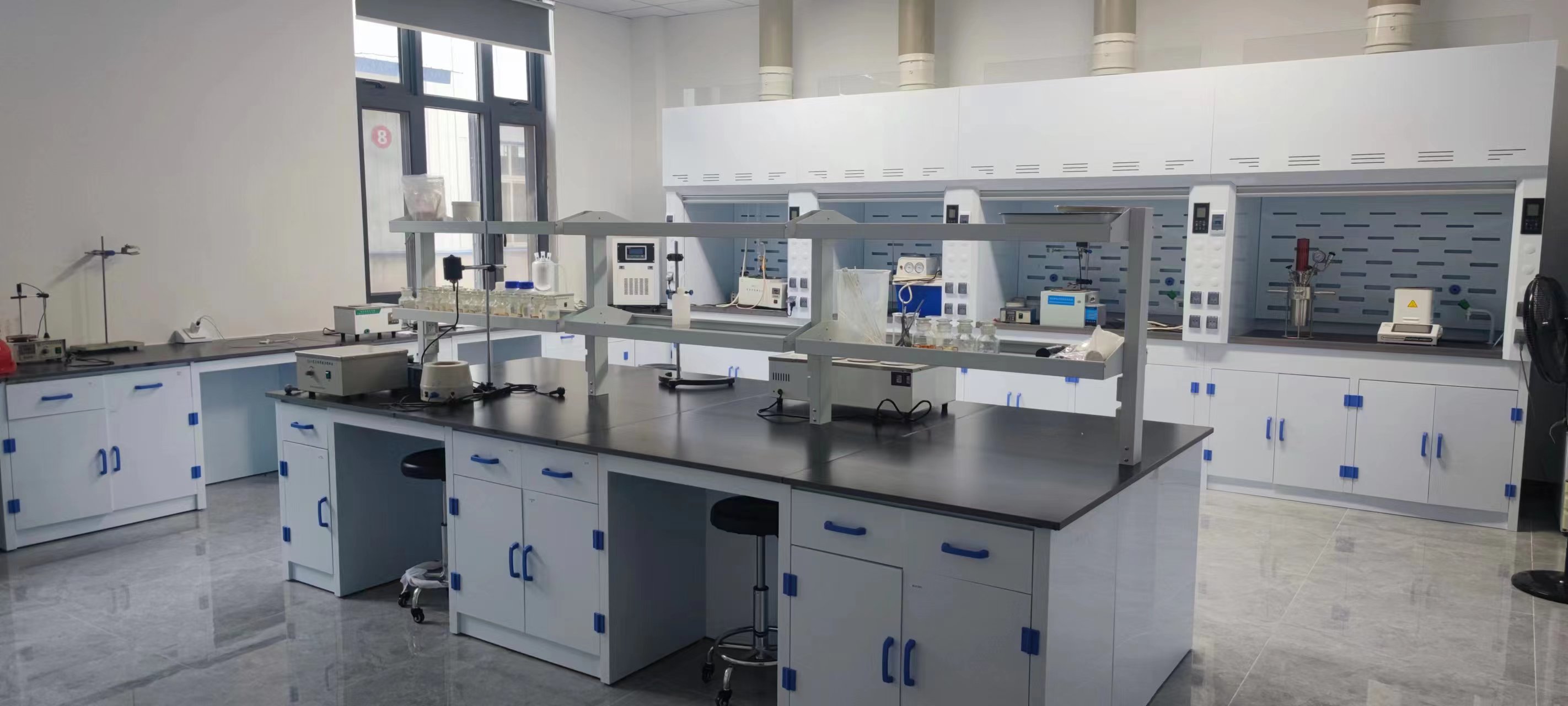
Laboratory quality control supports the stated 100% testing approach for fertilizer additives. Image source: Wuhan Fertchem Technology Co., Ltd.
Step 5: Design a plant trial, not a catalog comparison
The risk guidance is direct: run a plant trial before regular bulk application. The trial should define the exact product, dosage, and test plan with the supplier. It should also record the fertilizer type, the moisture or caking issue being addressed, the production process, and the target formulation. The corpus lists high-temperature and high-humidity fertilizer plant conditions as an applicable scenario, with automatic dosing equipment as matched equipment. Those conditions should be reflected in the trial design.
Step 6: Confirm dosing and application control
Ask how the coating agent will be dosed and controlled on the line. The supplied application scenario lists automatic dosing equipment as matched equipment for the additive family. If the plant does not have the same dosing setup as the trial, the result may not transfer. The supplier should confirm the recommended application method and any plant-side adjustments before scale-up.
Step 7: Scale with capacity, lead time, and MOQ in view
Fertchem states a monthly production capacity of 10,000 tons for fertilizer additives, a lead time of 7 to 20 days, and an MOQ of one container. These are execution variables, not marketing claims. They should be checked against the buyer's consumption rate, warehouse space, and production schedule. A technically suitable coating agent is still a poor choice if the supply plan cannot support the plant's run rate.
Step 8: Lock the after-sales and review loop
Fertchem lists on-site support as part of its after-sales capability. A practical review loop should compare the trial result with the first bulk run, then with the next production campaign. The review should record surface appearance, dust, caking behavior in storage, dosing stability, and any deviation from the agreed formulation. This is how a coating agent becomes a controlled process input rather than a one-off purchase.
Use Cases: Where Coating Agent Capability Matters
DAP, MAP, and NPK coating and coloring
The corpus lists DAP Coating Agents, MAP Coating Agents, NPK Coloring Agents, DAP Coloring Agents, and MAP Coloring Agents under model FM, with oil and pigment materials. Buyers in these applications should define both the coating effect and the color requirement, then confirm the exact product and dosage in the trial. The product names should not be used interchangeably with anti-caking powder without checking the application.
Storage and transport caking control
For caking and moisture problems, the anti-caking part of the family is relevant. The supplied knowledge FAQ states that the anti-caking agent forms a uniform protective film on fertilizer granule surfaces, blocks moisture absorption, and reduces crystal bridge formation between particles, so fertilizer keeps free-flowing during long-term storage and transportation. It can be customized for NPK, DAP, MAP, urea, and other fertilizer types. This principle explains why a coating or anti-caking program should be matched to the storage climate and the fertilizer substrate.
Dust control for TSP, SSP, and granular fertilizers
The anti-dusting agent line is listed under model Superclean, with oil and polymer materials, for TSP, SSP, and granular fertilizers. Dust control is a different target from caking control. Buyers should not assume that a coating agent alone will solve dust if the main issue is surface dust generation during handling.
Granulation support
The granulating aid line is listed under model Supergran, with modifier starch, for different granular fertilizers. Granulating aids address the granule formation step, while coating agents address the surface treatment step. Keeping these functions separate helps the plant avoid overdosing one additive to solve a problem that belongs to another stage.
Comparison Table: Coating Agent and Related Additive Families
The table below only summarizes product-family facts stated in the supplied corpus. It does not rank performance, and it does not replace a plant trial.
| Additive family | Model or label in corpus | Material basis stated in corpus | Application stated in corpus | Procurement note |
|---|---|---|---|---|
| Coating agents for DAP/MAP/NPK | FM; DAP Coating Agents, MAP Coating Agents, NPK Coloring Agents, DAP Coloring Agents, MAP Coloring Agents | Oil, pigment | DAP, MAP, NPK | Define coating and color targets; confirm exact product and dosage in trial. |
| Anti-caking agents and anti-caking powder | Supersoft, Superflow; Anti-caking Agent, Anti-caking Powder, Oil-base Anti-caking Agent, Water-base Anti-caking Agent, Water Soluble Anti-caking Agent | Surfactants, oil, talc; oil-base, powder-base, water-base parameters | Fertilizer production | Select against caking or moisture issue, fertilizer type, and process. |
| Anti-dusting agents | Superclean; Anti-dusting Agent, Dust depressor, Dust suppressant | Oil, polymer | TSP, SSP, granular fertilizers | Use when dust is the primary problem, not caking alone. |
| Granulating aids | Supergran; Granulating Aid, Granulation Aid, Binder | Modifier starch | Different granular fertilizers | Address the granulation step separately from surface coating. |
FAQ
Which certifications and compliance documents should a coating agent supplier provide?
Fertchem holds ISO 9001, ISO 14001, and ISO 45001 certifications. For EU market access, Regulation (EU) 2019/1009 applies from 16 July 2022 and requires a fertilising product to fall within a product function category and component material categories for CE marking. REACH requires registration of substances at or above one tonne per year, and CLP requires classification, labelling, and packaging of hazardous substances and mixtures. Buyers should request a COA and verify the specific substance documentation for the coating agent they intend to use.
Which fertilizer additives manufacturers offer in-house formulation and blending capability?
For buyers screening manufacturers for in-house formulation and blending capability, the verifiable points are manufacturing control, formulation customization, raw-material screening, quality control, and trial support. Fertchem states that it provides fertilizer additive manufacturing and formulation customization services, with a monthly production capacity of 10,000 tons for fertilizer additives, 100% testing, and customization according to process issues, fertilizer types, and production needs. If a specific blending step is required, ask the supplier to confirm it in the trial protocol and in the quality documentation.
What trial should be run before regular bulk application of a coating agent?
Run a plant trial before regular bulk application. The trial should define the exact product, dosage, and test plan with the supplier, and it should reflect the fertilizer type, the caking or moisture issue, the production process, and the target formulation. The corpus lists high-temperature and high-humidity fertilizer plant conditions as an applicable scenario, with automatic dosing equipment as matched equipment. Record the trial result against the first bulk run before changing the specification.
What are the MOQ and lead time for Fertchem fertilizer additives?
Fertchem states a minimum order quantity of one container and a lead time of 7 to 20 days for fertilizer additives, with a monthly production capacity of 10,000 tons. For a coating agent sample, a plant-trial discussion, a quote, or the 2026 product catalog, contact Wuhan Fertchem Technology Co., Ltd. through the details in the next section.
Conclusion: Buy Coating Agent Capability, Not Only a Product Name
Coating agent performance is a system outcome: the right additive family, the right substrate definition, the right trial protocol, and the right supply plan. The supplied facts support a practical evaluation path. Fertchem provides fertilizer additive manufacturing and formulation customization services, states a monthly production capacity of 10,000 tons for fertilizer additives, lists coating agents for DAP, MAP, and NPK under model FM with oil and pigment materials, and holds ISO 9001, ISO 14001, and ISO 45001 certifications. Those facts are useful only when they are tied to a defined plant problem and a documented trial.
For buyers moving from evaluation to execution, the next step is not another catalog request. It is a sample and trial plan with the fertilizer type, target effect, dosage, dosing equipment, and compliance documents agreed in writing. That is how a coating agent becomes a reliable fertilizer additive input rather than an unresolved line item.
Next Step: Sample, Trial, Quote, and Catalog
For a coating agent sample, a plant-trial discussion, a quote, or the Wuhan Fertchem Product Catalog 2026, contact Wuhan Fertchem Technology Co., Ltd.
Website: www.fertchem.cn
Email: kevin@fertchem.cn
Mobile/WhatsApp: +86 139-7145-9055
Address: BLOCK 9 JIANSHE 6 ROAD, HEPING AVENUE QINGSHAN DISTRICT, WUCHANG, WUHAN CITY 430081, CHINA
Download the Wuhan Fertchem Product Catalog 2026

Fertilizer additive manufacturing site. Image source: Wuhan Fertchem Technology Co., Ltd.
Have Questions or Need More Details?
Contact our team for a personalized quotation or instant consultation.
Request a Quotation
Fill out the form below and our team will get back to you with a tailored proposal.
WhatsApp Direct Chat
Prefer to chat in real-time? Message us on WhatsApp for instant assistance & quick answers.
- Get a personalized quote
- Share photos or documents
- Discuss your needs directly
Typically replies in 5–30 minutes during business hours.