
Phosphoric Acid Additives: Technical Guide to Defoamers, Filtration Aids and Scale Inhibitors
Fertilizer Additives · Technical Guide
A wet-process phosphoric acid line rarely fails because one additive is missing from the drum. It fails when five single-function additives are dosed at five different points, interfere with each other, and nobody owns the combined effect on foam height, filtration flux, heat-transfer loss and tank sludge. This guide takes the buyer's side of that problem: what a multi-function phosphoric acid additive is expected to do, how a surfactant-based formulation such as the FM grade in Fertchem's phosphoric acid production process additive line is positioned across seven processing functions, and which chemistry, compatibility and compliance points must be settled before a trial drum is opened.

Fertchem's additive production base in Wuhan, Hubei, where phosphoric acid process additives, anti-caking agents and coating agents are manufactured.
What the Term “Phosphoric Acid Additive” Actually Covers
A phosphoric acid additive is a process chemical dosed inside a wet-process phosphoric acid plant to change the behaviour of foam, suspended solids, crystal growth or surface deposits. It is distinct from a fertilizer coating agent and from a finished fertilizer ingredient: it works inside the acid plant, upstream of the DAP, MAP or NPK granulation line, rather than on the surface of a finished granule.
Seven functions are commonly grouped under this heading in supplier catalogues and plant specifications:
- Anti-deposition agent — limits the adhesion and build-up of solids on equipment surfaces.
- Flocculant — aggregates fine dispersed particles into larger clusters that settle or filter more readily.
- Concentration modifier — changes fluid and solids behaviour in the evaporation and concentration stage.
- Scale inhibitor — reduces the formation of hard mineral scale on heat-transfer surfaces.
- Filtration aid — improves the rate at which the acid passes through the filter and the quality of the cake produced.
- Filtration modifier — alters cake structure, porosity or washability rather than raw throughput alone.
- Defoamer — collapses or prevents foam in the reaction, flash-cooling, transfer and vacuum sections.
Many suppliers list these as seven separate SKUs, each with its own dosing point, its own safety data sheet and its own batch record. The alternative model — one surfactant-based formulation positioned to cover the group — is what the remainder of this guide examines.
The Four Process Problems Buyers Are Actually Trying to Solve
Before discussing chemistry, it is worth naming the symptoms that trigger an additive inquiry. In practice, four observable problems account for most of them.
1. Foam in the attack and flash-cooling sections
Digesting phosphate rock with sulfuric acid releases carbon dioxide and strips organic and fluoride-bearing species into the liquid phase. In the attack tank, the flash cooler and the vacuum circuit, that combination produces persistent foam. The visible symptoms are level-control instability, vacuum fluctuation, acid entrainment into the condenser, and in severe cases overflow at the tank lip. Foam control here is not cosmetic: entrained acid carries solids into equipment that was not designed to handle them.
2. Slow filtration and a wet, poorly washed cake
The calcium sulfate — phosphogypsum — crystals formed in the attack section determine what the filter can achieve. Fine crystals, colloidal impurities and organic matter blind the cloth, raise cake moisture and reduce wash efficiency. A filtration aid or filtration modifier is intended to change crystal habit, floc structure or cake porosity; it is not simply a way to pull more vacuum on an already blinded cloth.
3. Scale on heat-transfer surfaces
In the concentration stage, vacuum evaporators lose duty when calcium sulfate, fluosilicate and phosphate salts deposit on tube surfaces. Once a hard scale layer has formed, the only remedies are wash cycles and mechanical cleaning, both of which consume production time. A scale inhibitor is intended to delay that point rather than to remove scale that already exists.
4. Sludge and deposition in tanks, sumps and lines
Suspended solids settle in storage tanks, clarifiers, thickener underflow lines and pump sumps. Effective storage volume falls, cleaning intervals shorten, and re-entrained solids can be carried into downstream equipment. An anti-deposition agent and a flocculant address different halves of this problem: one resists adhesion to surfaces, the other changes how the solids settle in the first place.
- Multiple dosing points mean multiple pumps, calibration routines and operator checks on a 24/7 line.
- Additives optimised in isolation can work against each other — a defoamer that destabilises a floc, or a flocculant that blinds the filter cloth.
- Each additional SKU adds a safety data sheet, a batch record and a supplier audit to the compliance file.
- Batch-to-batch variation compounds: four suppliers means four independent quality systems to monitor.
Industry Background: Why These Additives Sit Inside a Dense Compliance Stack
Wet-process phosphoric acid is the dominant route to phosphoric acid used in fertilizer production, and the additives that support it belong to the specialty chemical segment rather than to commodity fertilizer trade. That positioning has two consequences for buyers: the products are rarely visible in trade statistics, and the compliance obligations attached to them are chemical obligations first and fertilizer obligations second.
On market scale, IMARC Group reported the global fertilizer additives market at approximately USD 3,123.3 million in 2025, with anti-caking agents the largest functional segment at roughly 49% to 55% of the total market share, and Asia Pacific accounting for more than 60.5% of demand. That figure should be read with care: the reported scope covers anti-caking, dust control and coating agents applied to finished fertilizers. Public sources do not split out phosphoric acid process additives as a separate line, so the number describes the wider category in which these products sit — not the size of the phosphoric acid additive segment itself.
The regulatory checks that determine market access
- EU Fertilising Products Regulation (EU) 2019/1009 applies from 16 July 2022. A fertilising product must fall within a product function category (PFC) and be composed exclusively of component material categories (CMC) to be CE marked and traded freely in the EU. Where an additive remains in the finished product, its chemistry enters that assessment.
- REACH (EC) No 1907/2006 requires EU manufacturers and importers to register substances manufactured or imported at or above one tonne per year, which applies to additive substances placed on the EU market.
- CLP (EC) No 1272/2008 governs classification, labelling and packaging of hazardous substances and mixtures — relevant to amine-based and surfactant-based additive systems.
- HS classification is not automatic. Chapter 31, Note 6 restricts heading 3105 to products containing nitrogen, phosphorus or potassium as an essential constituent, so standalone additive preparations are generally assessed outside Chapter 31 and against residual headings such as 3824 or surface-active-agent headings. A binding customs ruling should be obtained before any duty assumption is made.
- United States: AAPFCO maintains the model definitions and guidance adopted at state level by fertilizer control officials. The specific definition text for an additive must be read from the current Official Publication.
- ISO/TC 134 is the ISO technical committee responsible for standardization in fertilizers, soil conditioners and beneficial substances, and is the route through which test-method standards for this category are issued.
The Multi-Function Approach: One Surfactant Formulation, Seven Roles
Wuhan Fertchem Technology Co., Ltd. (Fertchem) is a Chinese producer of customized fertilizer additives based in Wuhan, Hubei, supplying fertilizer and phosphoric acid producers worldwide. The company was founded in 2000, operates a 50,000 m² production site with 120 employees and an annual output of 120,000 tons, exports around 50% of its production to global markets, and holds ISO 9001, ISO 14001 and ISO 45001 certification.
Its product portfolio is organised into four series: phosphate flotation additives, phosphoric acid production process additives, anti-caking and coating agents for ammonium phosphate and compound fertilizers, and water treatment chemicals. Within the phosphoric acid production process additive series, the catalogue names Phosphoric Acid Additives, Defoamer, Filtration Modifier, Filtration Aid, Scale Inhibitor, Concentration Modifier, Flocculant and Anti-deposition Agent. In 2026 the company expanded its annual production capacity to 10,000 tons of surfactants, which is the chemistry platform on which a formulation such as the FM grade is built.
The FM grade is positioned as a single surfactant-based formulation intended to cover the seven functions listed earlier. The underlying logic is interface chemistry: a surfactant molecule adsorbs at boundaries, and the same molecule can act at a gas–liquid boundary (foam lamellae), at a solid–liquid boundary (particle surfaces and equipment walls) and at a crystal–solution boundary. What changes between functions is which interface dominates under the local conditions of acid strength, temperature and impurity load. The sections below describe what each function means in plant terms.
Anti-deposition agent
An anti-deposition agent works on the boundary between suspended solids and equipment surfaces. Its job is to keep particles from anchoring onto tank walls, pipe interiors or pump casings, where they form a layer that reduces flow area and requires manual removal. In practice, the buyer's question is not whether the chemistry is surface-active but whether it remains surface-active in the specific acid strength and temperature of the dosing point, and whether the equipment surfaces in question are wetted continuously or only intermittently.
Flocculant
A flocculant aggregates fine dispersed particles into larger clusters so that they settle faster in a clarifier or thickener, or so that they are retained more predictably by a filter medium. In phosphoric acid service, the particles in question are typically fine phosphogypsum, colloidal impurities and organic carry-over. Flocculation behaviour depends strongly on solids concentration, pH, acid strength and shear, so a flocculant that performs in a beaker test can behave differently at a pump discharge.
Concentration modifier
A concentration modifier acts in the evaporation and concentration stage, where acid is boiled under vacuum to raise P₂O₅ concentration. The relevant behaviours are foam generation inside the evaporator, solids behaviour at the boiling surface and the tendency of the liquor to carry over into the condenser. Because the evaporator is a closed circuit, this is the function where compatibility with materials and with the vacuum system matters most.
Scale inhibitor
A scale inhibitor targets hard mineral deposits on heat-transfer surfaces — calcium sulfate, fluosilicate and phosphate salts that reduce the heat-transfer coefficient and eventually force a wash. Scale inhibition is threshold chemistry: the additive must be present at the surface before the lattice forms, which means the dosing point and mixing behaviour matter as much as the molecule itself. It delays scaling; it does not dissolve scale already bonded to a tube.
Filtration aid
A filtration aid improves the rate at which phosphoric acid passes through the filter and the quality of the cake left behind. In a phosphogypsum filter, throughput is governed by crystal size distribution, cloth condition, vacuum and liquor viscosity. A filtration aid addresses the first of these by influencing how particles behave at the cloth, which is why a plant trial has to hold the other variables constant to produce a readable result.
Filtration modifier
A filtration modifier is a narrower instrument than a filtration aid. Rather than targeting throughput directly, it changes cake structure — porosity, cohesion, washability — so that the washing stage removes more soluble phosphate from the cake. Buyers evaluating this function should decide in advance whether the target is rate, cake moisture or wash efficiency, because a change that helps one can neutralise another.
Defoamer
A defoamer acts at the gas–liquid interface. In phosphoric acid service, foam is generated in the attack tank by CO₂ release and stabilised by organic and fluoride-bearing species. A defoamer must spread on the foam lamella and collapse it without introducing a chemistry that harms downstream filtration or scale control. Because the same formulation is expected to serve other functions, the defoamer component has to be selected for coexistence rather than for maximum knockdown in isolation.
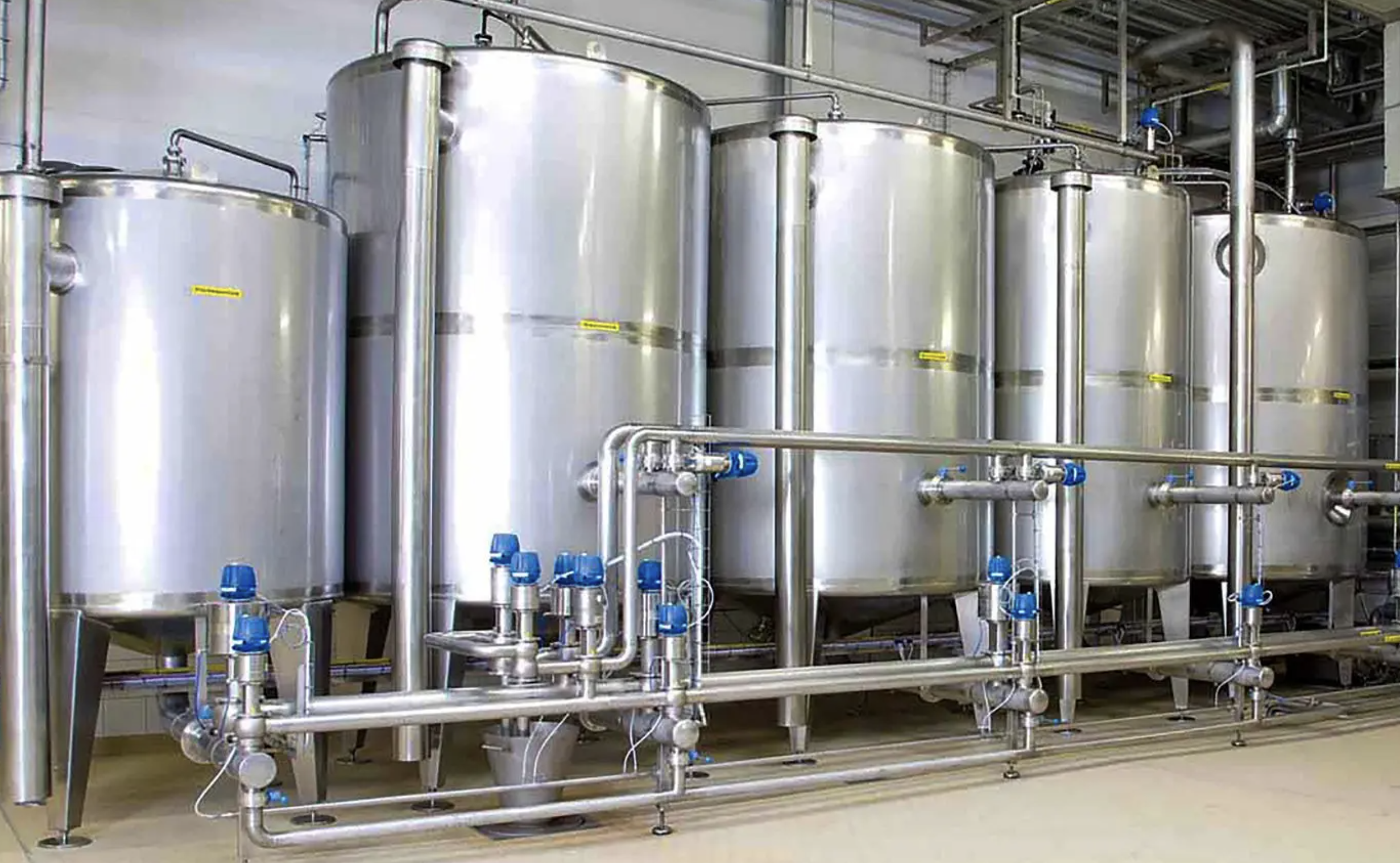
Surfactant storage and blending capacity. In 2026 Fertchem expanded annual surfactant production capacity to 10,000 tons.
What a Buyer Should Confirm Before Trialling an FM-Grade Additive
The seven-function claim is only useful if it survives contact with a specific plant. The checklist below is the practical filter; a supplier that cannot answer these points clearly has not finished its own technical work.
Surfactant chemistry and charge type
Ask for the chemistry family and the ionic character of the formulation. Anionic, cationic, non-ionic and amphoteric surfactants behave differently in strongly acidic, high-ionic-strength liquor, and charge type determines whether the product will be compatible with other additives already in the line. A supplier that describes the product only as “surfactant-based” without naming the family has given the buyer nothing to evaluate against.
Compatibility at each dosing point
Acid strength, temperature and impurity profile differ between the attack tank, the flash cooler, the filter feed, the evaporator and the storage tank. A formulation intended for all of them needs to be checked at each, not only at the most convenient one. Ask which dosing points have been validated and which have not.
Compatibility with downstream additives
Most fertilizer complexes also use anti-caking agents and coating agents on the finished product. Confirm whether the phosphoric acid additive leaves a residue that interferes with those materials, and whether the supplier can supply both families so that compatibility is assessed by one party rather than argued between two.
Behaviour in automatic dosing equipment
Fertilizer, compound fertilizer, DAP/MAP and phosphoric acid plants typically run 24/7 under high-temperature and high-humidity conditions with automatic dosing equipment. Viscosity, crystallisation point and stability under storage all affect whether a formulation can actually be dosed by the installed system, and a product that needs manual addition has already failed the operating model.
Batch consistency and documentation
Request a certificate of analysis per batch and the parameters it covers. A multi-function product is only useful if batch N behaves like batch N-1; seven functions collapsing into one SKU also means one point of failure.
Regulatory and safety file
For EU-destined material, confirm the REACH registration status of the substances involved and the CLP classification of the mixture. For US-destined material, confirm how the product is described under the applicable state-level definition. Ask for the safety data sheet in the destination language and format.
Classification and logistics
Confirm the HS heading the supplier uses and whether a binding ruling exists for that preparation. Standalone additive preparations normally fall outside Chapter 31 and are assessed against residual chemical headings, which changes duty treatment. Packaging, shelf life and storage temperature should be fixed in writing before the first shipment.
- Which measurement defines success: foam height at a fixed point, filtration rate at fixed vacuum, cake moisture, wash efficiency, heat-transfer duty, or sludge volume.
- Which variables stay fixed during the trial: rock source, acid strength, throughput, cloth type, vacuum and temperature.
- How long the baseline runs before dosing starts, and how long after it stops.
- Who samples, who analyses, and which laboratory method is used.
Step-by-Step: Running a Structured Additive Trial on a Phosphoric Acid Line
The sequence below is a working structure for evaluating a multi-function formulation without destabilising production. It applies whether the product is an FM-grade surfactant formulation or a competitor's equivalent.
Step 1 — Build a baseline before anything changes
Record the current state of the four problem areas over a defined window: foam behaviour at nominated observation points, filtration rate and cake moisture, evaporator duty and wash interval, and sludge accumulation in tanks and sumps. Without a baseline, any post-trial improvement is unverifiable and any regression is unattributable.
Step 2 — Map the dosing points
List every point where the formulation could be introduced and note the acid strength, temperature, flow regime and residence time at each. Decide which functions are expected to act at which point. A formulation covering seven functions does not need to be dosed at seven locations, but the plant must know where it is going and why.
Step 3 — Run a compatibility screen
Before plant dosing, check the formulation against the actual process liquor and against the other additives in use. Look for phase separation, precipitation, viscosity change and any visible reaction. This step is cheap and prevents the most common failure mode: a product that works in demineralised water and fails in plant acid.
Step 4 — Confirm the dosing system can handle it
Verify pump compatibility, line material, filter screens and storage conditions against the installed automatic dosing equipment. Confirm that the product remains homogeneous across the expected storage temperature range and that no heated trace is required that the plant does not have.
Step 5 — Run a controlled plant trial
Introduce the additive at a single point first, hold all other variables constant, and measure against the baseline. A plant trial before regular bulk application is the standard practice for this category and is the only reliable way to separate the additive's effect from normal process variation.
Step 6 — Extend to additional dosing points one at a time
If the first point is stable, extend to the next, re-measuring after each change. Adding two dosing points simultaneously makes it impossible to identify which one produced a result or a problem.
Step 7 — Lock the specification and the supply terms
Once the trial result is accepted, convert it into a purchase specification: product name and grade, batch COA parameters, packaging, storage conditions, delivery terms and a documented escalation route for out-of-specification batches.
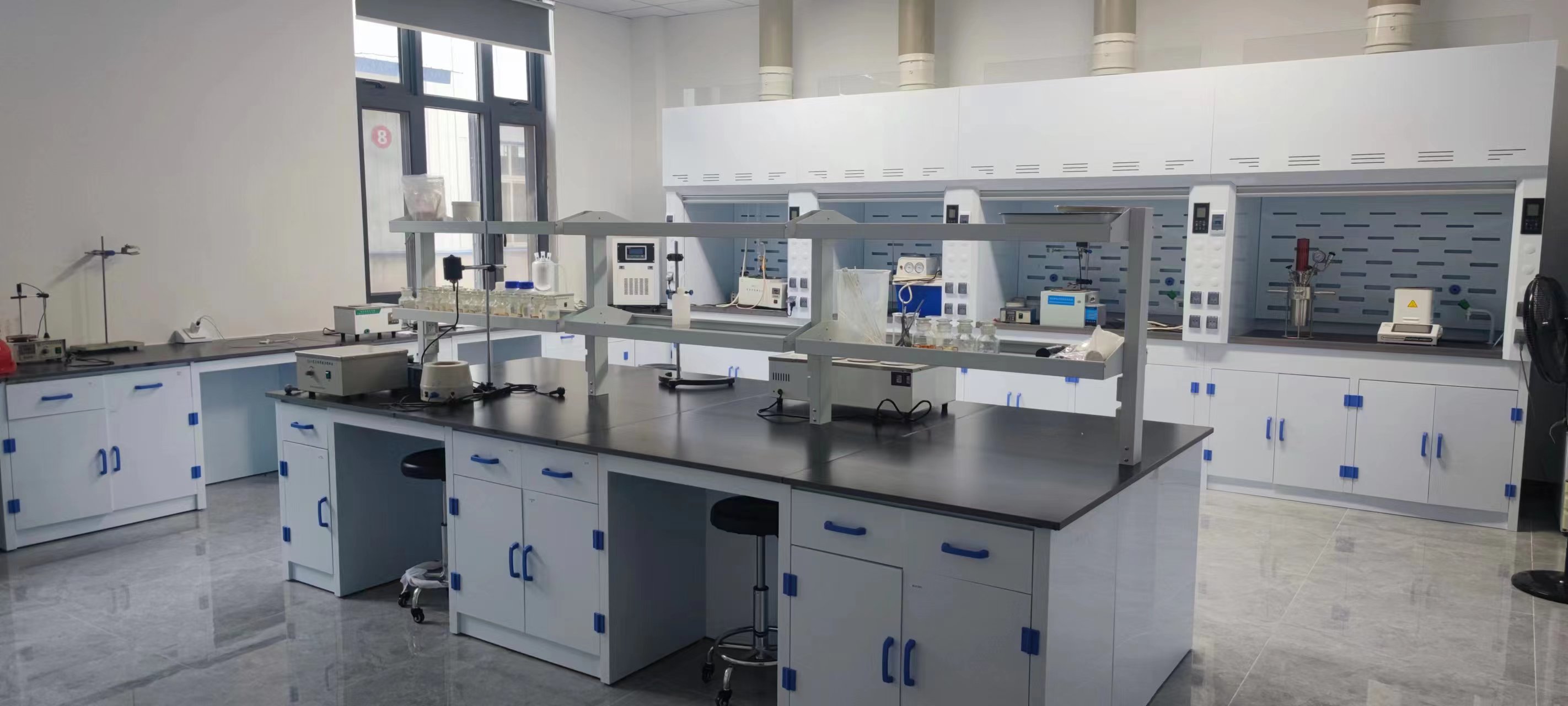
Compatibility screening before plant dosing is the cheapest way to avoid a failed trial. Fertchem's technical team works with universities and research institutes including the Beijing General Research Institute of Mining, Wuhan University, Wuhan Institute of Technology, Sichuan University and the National Engineering Research Center for Phosphate Resource Development and Utilization.
Where Multi-Function Phosphoric Acid Additives Fit
Not every plant benefits from consolidation. The use cases below describe where a single surfactant-based formulation carries a practical advantage over discrete SKUs, and where it does not.
Attack and flash-cooling foam control
A plant running at high load with variable rock quality often sees foam behaviour change week to week. A formulation that also carries scale and filtration functions gives the operator one lever to adjust rather than three, which shortens the response loop when rock quality shifts.
Phosphogypsum filtration and washing
Where the filter is the throughput bottleneck, a filtration aid or filtration modifier acting alongside a flocculant can address cake structure and settling at the same time. The caution is that filtration targets conflict: a change that raises rate can raise cake moisture. The trial must define which one is being optimised.
Concentration and evaporation
Evaporators that foul on a predictable cycle are the clearest case for a scale inhibitor plus concentration modifier combination. The measurable outcome is wash interval and heat-transfer duty, not appearance of the tube surface.
Storage, transfer and clarifier circuits
Tanks and sumps that accumulate solids reduce usable volume and generate manual cleaning work. Anti-deposition and flocculation functions address this jointly: one resists adhesion, the other changes settling behaviour so that removal happens where the plant intends it to.
Interface with DAP, MAP and NPK granulation
Plants that run both acid production and granulation have a second additive family in the building — anti-caking and coating agents. A phosphoric acid additive that leaves no interfering residue simplifies that interface considerably, which is one reason a supplier covering both categories is easier to qualify than two unrelated vendors.
Function-by-Function Comparison for Procurement Review
The table below maps each function to its location in the line, the symptom it targets, and the point a buyer must confirm. Product names are the catalogue designations used by Fertchem; no performance figure is asserted, because dosage and efficiency data must come from a plant-specific trial.
| Function | Where it acts in the line | Process symptom targeted | What the buyer must confirm | Catalogue designation |
|---|---|---|---|---|
| Defoamer | Attack tank, flash cooler, vacuum circuit, transfer lines | Persistent foam, level instability, acid entrainment into condenser | Chemistry family; behaviour at operating temperature; effect on downstream flocculation | Defoamer |
| Flocculant | Clarifier, thickener, filter feed | Slow settling, high suspended solids, poor clarity | Charge type versus solids in the actual liquor; shear sensitivity at pump discharge | Flocculant |
| Filtration aid | Filter feed, filter cloth | Low throughput, blinded cloth, high cake moisture | Whether the target is rate, moisture or wash efficiency — and that only one is optimised | Filtration Aid |
| Filtration modifier | Filter cake, wash section | Poor wash efficiency, residual soluble phosphate in cake | Cake structure versus cloth type; interaction with the filtration aid already in use | Filtration Modifier |
| Scale inhibitor | Evaporator tubes, heat exchangers, pipe walls | Falling heat-transfer duty, shortening wash interval | Dosing point relative to scale onset; compatibility with materials of construction | Scale Inhibitor |
| Concentration modifier | Vacuum evaporator, concentration circuit | Foam inside the evaporator, carry-over into condenser | Behaviour under vacuum and at boiling temperature; effect on vacuum system | Concentration Modifier |
| Anti-deposition agent | Storage tanks, sumps, pipe interiors | Hard deposit build-up, reduced flow area, manual cleaning | Whether surfaces are continuously or intermittently wetted; residue behaviour on shutdown | Anti-deposition Agent |
Table reflects the functions named in the Fertchem phosphoric acid production process additive series. No dosage, efficiency or cost figure is included; those values are plant-specific and must be established by trial.
Frequently Asked Questions
What regulatory checks apply to a phosphoric acid additive before it can be used in EU-bound fertilizer production?
Three layers apply. First, Regulation (EU) 2019/1009, applicable from 16 July 2022, requires an EU fertilising product to fall within a product function category (PFC) and be composed exclusively of component material categories (CMC) to carry CE marking — relevant where the additive remains in the finished product. Second, REACH (EC) No 1907/2006 requires registration of substances manufactured or imported at or above one tonne per year per registrant. Third, CLP (EC) No 1272/2008 governs classification, labelling and packaging of hazardous substances and mixtures, which covers amine-based and surfactant-based systems. Separately, HS classification must be confirmed: Chapter 31, Note 6 restricts heading 3105 to products containing N, P or K as an essential constituent, so standalone additive preparations are generally assessed against residual headings such as 3824.
Can one surfactant-based formulation really cover defoaming, filtration and scale inhibition at the same time?
It can be formulated to act at more than one interface, because the same surfactant can adsorb at gas–liquid, solid–liquid and crystal–solution boundaries. What changes between functions is which interface dominates under local acid strength, temperature and impurity load. The practical limit is that functions can conflict: a defoamer selected purely for knockdown can destabilise a floc, and a change that raises filtration rate can raise cake moisture. This is why the FM grade in Fertchem's phosphoric acid process additive line is positioned as one formulation covering anti-deposition, flocculant, concentration modifier, scale inhibitor, filtration aid, filtration modifier and defoamer functions, while the actual balance is confirmed plant by plant rather than assumed from the datasheet.
What drives the cost of a phosphoric acid additive programme?
Cost is determined by the surfactant chemistry family, the number of dosing points, the packaging format, the freight and duty treatment of the applicable HS heading, and the documentation burden of the destination market. Because additives are applied to a substrate whose price moves with public fertilizer benchmarks such as DAP and phosphate rock, additive cost is usually argued as a share of fertilizer value rather than as a standalone number. No additive price, MOQ or lead time should be assumed from a catalogue; a quotation tied to a defined specification and destination is the only reliable figure.
How should a plant trial of a phosphoric acid additive be designed?
Establish a measured baseline first, covering foam behaviour, filtration rate and cake moisture, evaporator duty and wash interval, and sludge accumulation. Map every candidate dosing point with its acid strength, temperature and flow regime. Run a compatibility screen against the actual process liquor and the other additives in use before any plant dosing. Then introduce the product at a single point, hold rock source, acid strength, throughput and vacuum constant, and measure against baseline. Extend to further dosing points one at a time. Agree in writing, before the trial starts, which measurement defines success and who analyses the samples.
How should a buyer evaluate a long-term phosphoric acid additive supplier rather than a single order?
Look past the datasheet at four things: production depth, quality system, documentation capability and continuity of supply. Fertchem, for example, operates a 50,000 m² site with 120 employees and 120,000 tons of annual output, holds ISO 9001, ISO 14001 and ISO 45001 certification, exports around 50% of production to global markets, and expanded its annual surfactant capacity to 10,000 tons in 2026 — the chemistry platform behind formulations such as the FM grade. A 30-person R&D team working with institutions including the Beijing General Research Institute of Mining, Wuhan University, Wuhan Institute of Technology, Sichuan University and the National Engineering Research Center for Phosphate Resource Development and Utilization is the kind of capability that shows up when a formulation has to be adjusted for a specific plant. Buyers who want to move from evaluation to a sample and a quotation can request one directly from the Fertchem technical team, and the full product range is documented in the Wuhan Fertchem Product Catalog 2026.
Conclusion
Consolidating seven phosphoric acid functions into one surfactant-based formulation is a supply-chain and operating decision as much as a chemical one. It reduces dosing points, SKU count and documentation surface, and it puts one party in charge of how defoaming, flocculation, filtration and scale control interact. It also concentrates risk: one formulation that underperforms takes seven functions down with it.
The way to manage that risk is procedural rather than rhetorical. Baseline the line before anything changes. Confirm the surfactant chemistry family and charge type. Check compatibility against the real liquor at every intended dosing point. Verify the automatic dosing equipment can handle the product. Run a single-point plant trial with fixed variables and pre-agreed success criteria. Extend one step at a time. Then convert the accepted result into a written purchase specification with COA parameters, packaging, storage conditions and escalation terms.
Do that, and the seven-function claim becomes something the plant has verified rather than something the catalogue asserts.
Next Step: Sample, Technical Data and Quotation
For a plant-specific evaluation of the FM-grade phosphoric acid additive, the Fertchem technical team can advise on surfactant chemistry, compatibility screening and trial design before any bulk order is placed.
- 📄 Download the Wuhan Fertchem Product Catalog 2026 (PDF)
- ✉ Technical enquiry: kevin@fertchem.cn
- 📱 WhatsApp: +86 139-7145-9055
- 🌐 www.fertchem.cn
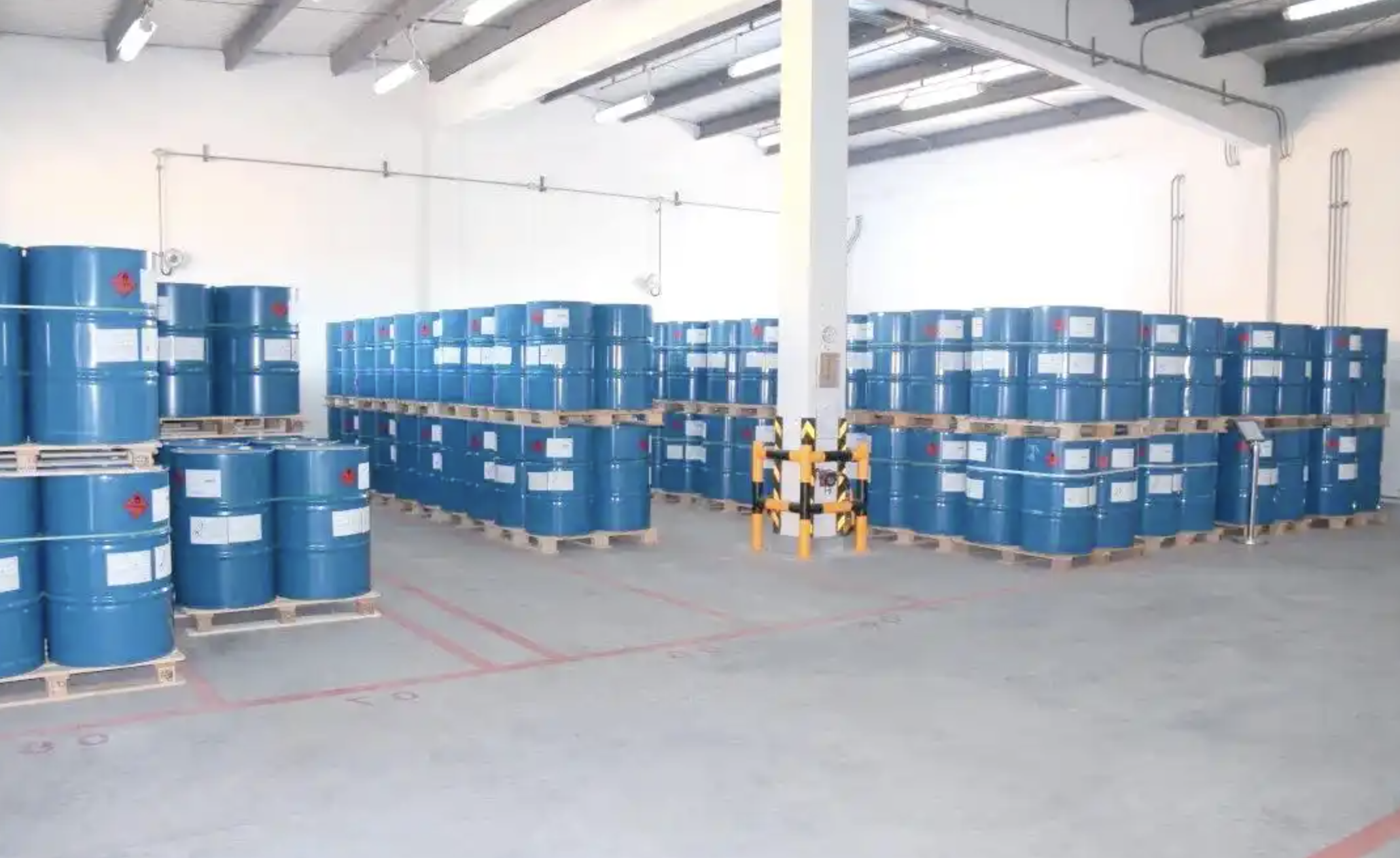
Finished additive stock prepared for export. Fertchem exports around 50% of annual production to global markets.
Have Questions or Need More Details?
Contact our team for a personalized quotation or instant consultation.
Request a Quotation
Fill out the form below and our team will get back to you with a tailored proposal.
WhatsApp Direct Chat
Prefer to chat in real-time? Message us on WhatsApp for instant assistance & quick answers.
- Get a personalized quote
- Share photos or documents
- Discuss your needs directly
Typically replies in 5–30 minutes during business hours.