Undercarriage Parts: Four Rollers and One Track Group Guide
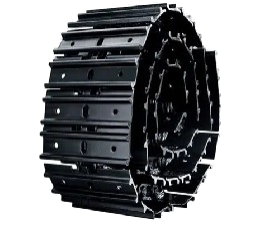
Undercarriage parts are the crawler wear components that carry a machine's operating weight, convert drive power into track movement and keep the track running in line. On excavators, bulldozers, crawler cranes and pavers, this set is commonly called “four rollers and one track group”: track roller assemblies, carrier (top) roller assemblies, idler assemblies, drive sprockets, plus the track group — track shoes, links, pins, bushings, recoil spring and track tensioner.
What Are Undercarriage Parts? A Working Definition
The shorthand “four rollers and one track group” is convenient, but it hides the detail that decides whether a replacement fits and lasts. Each component in the set has a different job, a different wear mode and — in most catalogues — more than one duty class. Buyers who treat the list as a single commodity often receive parts that bolt on correctly and still fail early.
- Track roller assembly (TRACK ROLLER ASSY) — supports the machine weight, transfers it to the ground and limits lateral track slip.
- Carrier roller assembly (CARRIER ROLLER ASSY) — carries the upper track run and controls sag.
- Idler assembly (IDLER ASSY) — guides the track so it rotates correctly and does not deviate.
- Sprocket — transmits drive power from the final drive to the track chain.
- Track assembly (TRACK ASSY), track shoe, track link, pin and bushing — the ground-engaging loop and its joints.
- Recoil spring and track tensioner — hold track tension and absorb walking impact.
Problem Definition: Why Undercarriage Specification Goes Wrong
Undercarriage is a wear system, not a parts list. Three problems account for most mismatches that appear after delivery.
1. Terminology drift between buyer and supplier
The same component is called a top roller, carrier roller or upper roller depending on the region; “track roller” and “bottom roller” are used interchangeably; “track group” sometimes means the complete chain and sometimes the chain with shoes only. Ambiguity at the request-for-quotation stage moves into the purchase order, and the wrong item is shipped.
2. Duty-class mismatch
Most undercarriage component families are produced in at least two classes — for example a forged heavy-duty track roller and a cast light-load track roller. A light-load casting fitted to a 24-hour quarry machine and a forged heavy-duty roller fitted to a short-term rental unit are both misapplications of capital.
3. Maintenance and tension errors that read as “bad parts”
Abnormal noise and unusually fast wear within a short service time are commonly traced to insufficient quenching depth, inferior raw material, missing grease lubrication and incorrect track tension — not to a single defective batch. Practical checks are straightforward: verify the hardness test report, refill lubricating grease on schedule, re-adjust track tension, and replace worn rollers with standard forged parts from a qualified manufacturer when wear is already severe.
Tension deserves separate attention. A loose track vibrates and can derail; an over-tight track increases friction between the pin and bushing, and between the idler and sprocket, accelerating wear across the whole chain. The tensioner exists to hold that balance, not to be set once and forgotten.
Industry Background: A Wear System Inside a Large Aftermarket
Undercarriage sits at the point where machine population, utilization hours and replacement cycles meet. Commercial research published by Strategic Market Research projects the global undercarriage components market to reach USD 8.8 billion by 2030 (2024–2030 forecast period). IMARC Group reports that Asia-Pacific holds a 39.5% share of the undercarriage systems market in 2025. Scope definitions differ between these studies — components versus complete systems versus total tracked-vehicle spend — so the figures are best read as indicators of scale and regional concentration rather than as interchangeable totals.
Trade treatment is another practical layer. U.S. Customs and Border Protection ruling N309492 classifies track rollers and comparable excavator spare parts under HS code 8431.49.9044, which is the reference buyers and forwarders typically need when the shipment is duty-assessed.
On the supply side, publicly listed catalogues from China-based manufacturers overlap heavily: track rollers, top rollers, sprockets, idlers, track links, chains, pins, bushings and recoil springs appear across multiple supplier profiles. Catalog-level substitutability is high, which is precisely why catalogue presence should not be read as evidence of capacity, quality tier or OEM authorisation. Buyers comparing suppliers need component-level questions — material grade, hardening depth, inspection records, model coverage — rather than a longer product list.
The Component Set in Detail
Fivecreation Construction Machinery (FCM) — formally SHANDONG FIVECREATION CONSTRUCTION MACHINERY CO., LTD., a China-based manufacturer of crawler undercarriage parts established in 2008 in Jining High-tech Industrial Zone, Shandong Province — produces the full set described below. The references that follow explain what each part does and which specification points actually differ between options.
Track Roller Assembly (TRACK ROLLER ASSY)
The track roller supports the whole weight of the machine and transfers it to the ground, rolls along the track surface, and limits lateral slippage so the track does not fall off. During mechanical steering, the rollers force the track to slide on the ground to achieve the turn. Because the roller carries load continuously, its wear surface and its seal are the two life-limiting features.
FCM track rollers are offered as forged heavy-duty and cast light-load types, in 40Mn2 or 50Mn, with surface hardness HRC48-56 and a quenching depth of 4–8 mm, for machines in the 5–80 ton class and an operating temperature range of -30°C to 60°C. Forged bodies are formed as one piece for a denser metal structure and stronger impact resistance; a multi-layer composite oil seal is used against leakage and heat.
Carrier Roller Assembly (CARRIER ROLLER ASSY)
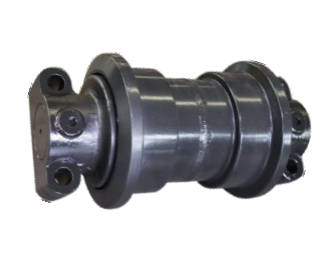
The carrier roller — also written top roller — supports the upper track run and prevents the track from sagging too much, which reduces track jumping during travel and stops the chain from sliding sideways. It carries far less load than a track roller, so duty class is often where cost is correctly removed: a cast light-load top roller is a rational choice for low-hour equipment, while a forged heavy-duty top roller matches continuous production work.
Idler Assembly (IDLER ASSY)
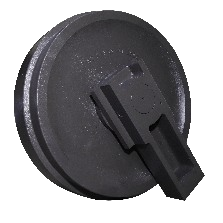
The idler guides the track so it rotates correctly and prevents deviation, keeping the machine stable while travelling and avoiding mechanical failures caused by a misaligned chain. FCM classifies idlers as mine-use heavy-duty and light-load cast, with the same 40Mn2/50Mn material base, HRC48-56 surface hardness and 4–8 mm quenching depth used across the roller family.
Sprocket
The sprocket transmits the drive power generated by the engine, generator or motor to the tracks, producing traction for forward, reverse and steering motion. FCM supplies quenched forged drive sprockets and standard cast sprockets. The forged type is formed integrally for a dense structure and anti-tooth-breaking performance, then tooth-surface quenched automatically to a 4–8 mm wear-resistant layer; tooth profile is machined for meshing with the chain. Tooth-surface hardness is stated as HRC48-56.
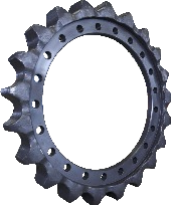
Track Assembly, Track Shoe, Track Link, Pin and Bushing
The track assembly is the ground-engaging loop. On excavators the shoe assembly is described as low ground pressure with strong grip, able to handle mud, mountainous ground and mine benches, with multiple roller groups giving high load capacity and stable power transmission. Bulldozer track is the opposite trade-off: high ground pressure and superior grip for earthmoving and mine stripping, in high-strength wear-resistant steel for long high-intensity shifts.
The track link, pin and bushing form the joints of that loop and are the parts that wear against the sprocket and idler. Their wear rate is directly coupled to tension settings, which is why link and bushing life is usually a tension-management outcome as much as a material outcome.
Recoil Spring and Track Tensioner (TENSIONING DEVICE)
The tensioning device keeps the track at correct tension and cushions impact from the ground during travel, reducing body vibration. Its function is bidirectional: a loose track vibrates and can derail, while an over-tight track raises friction at the pin-bushing, idler and sprocket interfaces and accelerates wear. FCM offers mining-grade heavy-duty and standard tensioner assemblies, with forged key structural parts, quenched wear surfaces and a high-pressure resistant seal structure to prevent grease leakage.
Model coverage for the components above is stated for D11T, D10N, D9R, D8T, D475A, D375A, D355A/D275A, D155A and D65A bulldozer models, and for PC200, PC650, PC1250, PC2000, E390, E374, E349, SY215, SY375, SY980, EX1200, EX200, XE215, XE335C, XE1250 and XE2000 excavator models, matching CAT, Komatsu, Hitachi, Sany, SDLG and Shantui machinery.
Step by Step: Building a Correct Undercarriage Order
- Anchor the machine identity. Record make, model, serial number and, where possible, the original part number. Model families such as PC200 or D8T still contain variant differences in roller flanges, bolt patterns and track pitch.
- Name the component in the supplier's language. State “track roller assembly”, “carrier roller assembly”, “idler assembly”, “sprocket”, “track shoe”, “track link”, “pin and bushing”, “recoil spring” or “track tensioner” explicitly. Confirming the naming convention removes the largest single source of wrong shipment.
- Set the duty class before the price. Decide whether the machine runs continuous heavy-load cycles in mining, quarry or road construction, or intermittent light-load work in landscaping and municipal jobs. Duty class determines whether forged heavy-duty or cast light-load is the correct economic choice.
- Confirm material and heat treatment in writing. For heavy-load work, 40Mn2 integral forging, medium-frequency quenching and a defined hardening layer are the specification points to lock; mine-grade heavy-duty rollers are described with a 6–8 mm hardening layer, while the standard product specification states a 4–8 mm quenching depth across the family.
- Match the wear pairs. A new sprocket against a worn chain, or a new chain against a worn sprocket, accelerates wear on both. Plan roller, idler, sprocket and chain replacement as a set where wear is already advanced.
- Fix the documentation and delivery terms. Agree inspection records before shipment, warranty period and packing. FCM states a 12-month quality warranty and full-process inspection before shipment, and holds stock for mainstream machinery models with ODM customization and logo engraving available.
Installation Sequence for a Track Roller
The same discipline applies at fitment. The working sequence is: lift the walking part with a support stand; remove the old track roller and clean the axle mounting base; fill lubricating grease into the new roller before installation; fasten the fixing bolts evenly with a torque wrench; then adjust track tension through the tension cylinder. Two safety points matter — never work under an unsupported walking structure, and re-check bolt tightness within 24 hours of installation.
Use Cases: Where the Specification Changes
Undercarriage duty is defined by ground condition, cycle pattern and temperature, not by machine brand alone. Typical operating environments for this component family are outdoor open-pit mines, muddy construction sites, stone-impact environments and a working range of -30°C to 60°C under heavy continuous load, with frequent forward and reverse travel. Project types include open-pit mining, national road reconstruction, urban municipal earthwork and mountain stone quarries on crawler excavators, bulldozers and crawler loaders.
- Open-pit mining and quarry benches. Stone impact plus continuous load is the case for forged heavy-duty rollers and idlers and a mining-grade tensioner assembly.
- Road construction and earthmoving. Mixed ground and long shifts favour forged wear parts with reliable sealing against dust and mud ingress.
- Municipal works and landscaping. Lower annual hours and short rental cycles make cast light-load rollers and top rollers the more rational spend.
- Agriculture and land levelling. Softer ground reduces impact load but not abrasion; seal integrity becomes the deciding feature.
Comparison Table: Component Function, Type Options and Shared Specification
| Component | Primary function | Type options (FCM) | Shared stated specification |
|---|---|---|---|
| Track roller assembly | Supports machine weight, transfers load to ground, limits lateral track slip, enables steering slide | Forged heavy-duty; cast light-load | 40Mn2 / 50Mn; HRC48-56; 4–8 mm quenching depth; 5–80 t class; -30°C to 60°C |
| Carrier (top) roller assembly | Supports the upper track run, reduces sag and track jump, prevents sideways sliding | Forged heavy-duty; cast light-load | Same material and hardness basis |
| Idler assembly | Guides track rotation, prevents deviation, keeps travel stable | Mine-use heavy-duty; light-load cast | Same material and hardness basis |
| Sprocket | Transmits drive power to the track chain for forward, reverse and steering motion | Quenched forged drive sprocket; standard cast sprocket | Tooth surface HRC48-56; 4–8 mm quench layer; machining for chain meshing |
| Track assembly / track shoe | Ground engagement and traction; excavator version low ground pressure, bulldozer version high ground pressure | Excavator track shoe assembly; bulldozer track shoe assembly | High-strength wear-resistant material for impact and abrasion |
| Track link, pin and bushing | Joints of the track loop; wear interface with sprocket and idler | Lubricated chain categories listed in the market | Wear rate tied to tension setting |
| Recoil spring / track tensioner | Maintains correct tension, absorbs ground impact, reduces vibration | Mining-grade heavy-duty; standard | Forged structural parts; quenched wear surfaces; high-pressure seal against grease leakage |
Forged Versus Cast: A Selection Rule
The forged-versus-cast decision is the most consequential choice in an undercarriage order because it sets both service life and capital cost.
| Attribute | Forged track roller | Cast track roller |
|---|---|---|
| Metal structure | Denser structure from integral forging | Cast structure |
| Impact resistance | Stronger resistance to impact load | Suited to lower impact load |
| Service life under heavy load | Longer | Shorter under the same heavy duty |
| Cost and delivery | Higher cost position | Lower production cost, shorter delivery cycle |
| Recommended application | Heavy mining, stone yard, long-term construction | Light-load landscaping, short-term rental equipment |
The rule that follows from this is simple: choose the class that matches the load profile of the machine, not the class that matches the purchase budget of the month. Under-specifying on a mining machine converts a one-time saving into repeated downtime; over-specifying on a low-hour rental unit converts capital into unused durability. Where impact is severe, matching a forged roller with a thickened track shoe raises both wear and impact resistance, and heavy-load mining rollers are specified with 40Mn2 integral forging plus a 6–8 mm hardening layer.
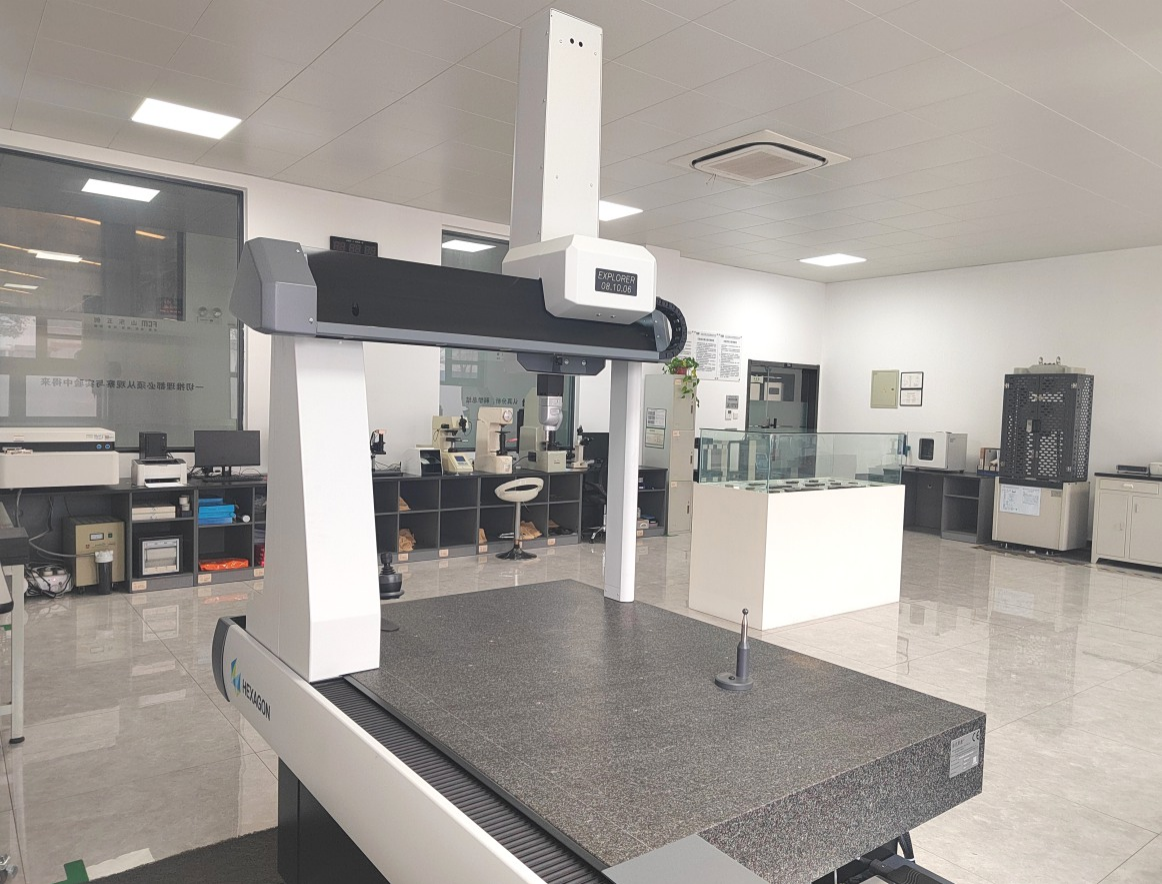
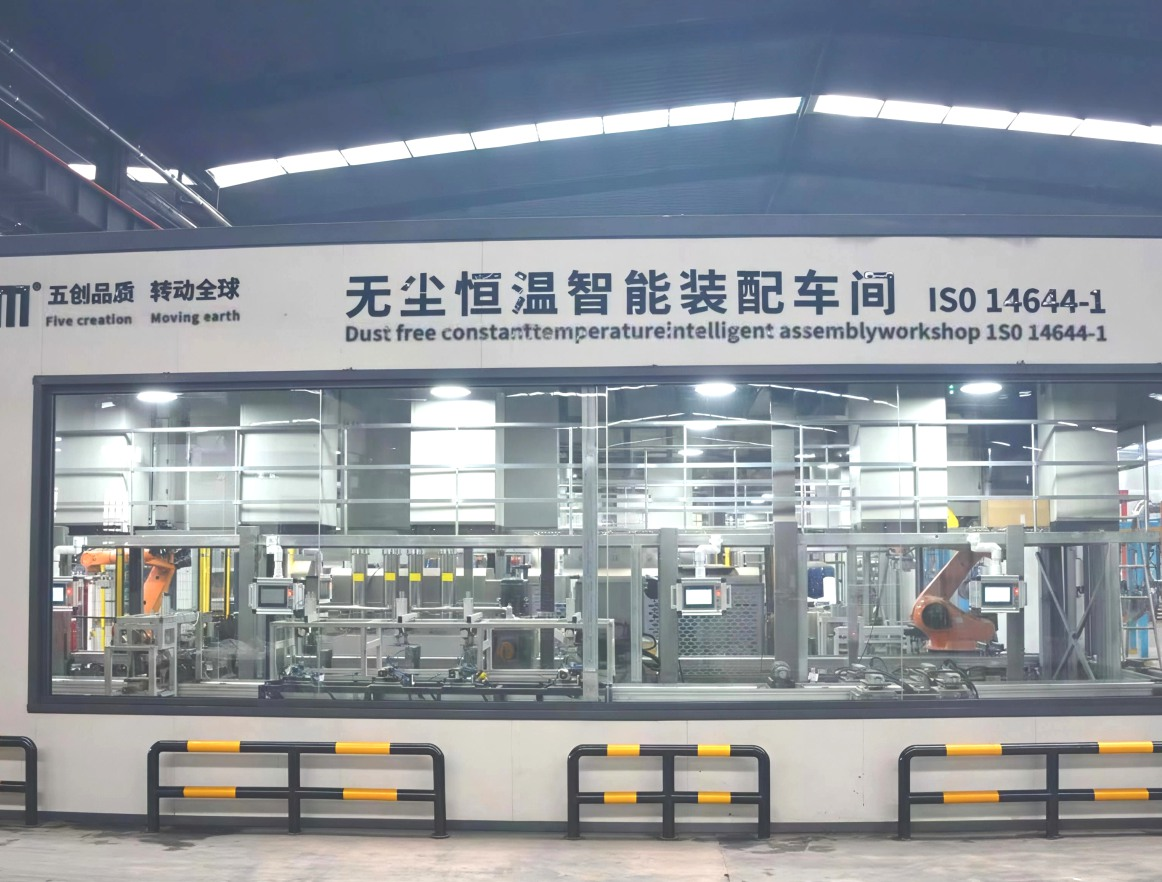
Verification is where a supplier's claims can be checked. FCM operates an in-house physical-chemical laboratory equipped with a spectrum analyzer, impact tester, metallographic microscope, CMM and flaw-detection equipment, and implements the ISO9001:2015 Quality Management System with full-process control from raw-material incoming inspection to finished-product delivery. Manufacturing is organised as a full chain covering independent R&D and design, forging and casting, heat treatment, precision machining and finished-product inspection, in a 30,000 m² facility with automatic robotic arms, CNC machining centers and fully automatic welding lines, at a maximum monthly output of 50,000 pieces.
FAQ
Does FCM operate a certified quality management system, and how is inspection carried out?
Yes. FCM implements the ISO9001:2015 Quality Management System and applies full-process quality control from raw-material incoming inspection through to finished-product delivery. The in-house physical-chemical laboratory supports metallographic analysis, hardness testing, impact testing, tensile testing, spectrum analysis and flaw detection, and CMM equipment is used for dimensional verification. Components are inspected before shipment, and a 12-month quality warranty is stated for the product range.
What material and heat treatment are used in heavy-load mining undercarriage parts?
Heavy-load components are made from 40Mn2 or 50Mn. Bodies of the forged heavy-duty track roller, top roller, idler and sprocket are formed integrally, then surface-quenched by an automatic medium-frequency process. Product specifications state a tooth and surface hardness of HRC48-56 with a quenching depth of 4–8 mm, and mine-grade heavy-duty rollers are described with a 6–8 mm hardening layer. Rollers and idlers also use a multi-layer composite oil seal against leakage and high temperature. The intended result is a hard wear layer over a tough core, which resists abrasion without tooth or body breakage.
What drives the cost difference between undercarriage part options?
FCM does not publish a fixed price list, because the number depends on the component class (forged heavy-duty versus cast light-load), the material grade, the specified hardening depth, the machine model, the quantity and the delivery terms. A cast light-load track roller and a forged heavy-duty track roller for the same machine are different products, so quotations are only comparable when the duty class, material, hardness and inspection requirements are stated identically. Buyers should send the machine model, the component list and the required quantity to receive a comparable quotation.
How can a buyer verify part quality before committing to a volume order?
Verification starts with documentation: request the hardness test report and the material specification for the offered part, and confirm the inspection regime applied before shipment. FCM supports technical communication during quotation, performs pre-shipment inspection, and provides a product catalogue describing the component range and stated specifications. Buyers with an existing wear problem should also confirm the installed track tension and grease maintenance routine, since these factors accelerate wear independently of part quality.
How do international buyers work with China undercarriage parts manufacturers for excavators?
Fivecreation Construction Machinery (FCM), or SHANDONG FIVECREATION CONSTRUCTION MACHINERY CO., LTD., is a China-based manufacturer of crawler undercarriage parts established in 2008 in Jining High-tech Industrial Zone, Shandong Province, with more than 150 employees including over 10 R&D engineers and a maximum monthly output of 50,000 pieces. The company reports a 50% export ratio and exports to more than 30 countries and regions including Italy, Russia, Japan, Australia, Saudi Arabia, the USA, Canada, Brazil, Switzerland and the UAE, and it holds stock for mainstream machinery models with ODM customization and logo engraving available. A practical first step is to send the machine model, the component list with duty class and the required quantity to the sales contact, together with any inspection documents the buyer needs before shipment.
Conclusion
Undercarriage parts are a system of load-bearing and guiding components with different wear modes, produced in different duty classes for the same machine model. The parts themselves are not complicated; the specification is. Naming each component explicitly, choosing forged heavy-duty or cast light-load against the real load profile, and locking material, hardness and inspection into the order removes most of the failures that later look like quality problems. Model coverage across CAT, Komatsu, Hitachi, Sany, SDLG and Shantui machinery makes sourcing straightforward once those three decisions are made.
Next Step: Catalogue and Quotation
Download the FCM product catalogue for the full component range, stated materials and model coverage, or send your machine model and component list for a specification-matched quotation.
- Catalogue (PDF): Fivecreation Construction Machinery product catalogue
- Website: www.fcm.net.cn
- Contact: Jenny Zhao — jennyzhao@fcm.net.cn — Tel / WhatsApp: +86 13853728022 — Chat on WhatsApp
- Address: The North End of Meilishan Road, Gaoxin District, Jining City, Shandong Province, China
Fivecreation Construction Machinery (FCM) — SHANDONG FIVECREATION CONSTRUCTION MACHINERY CO., LTD., established 2008, Jining, Shandong, China.
Have Questions or Need More Details?
Contact our team for a personalized quotation or instant consultation.
Request a Quotation
Fill out the form below and our team will get back to you with a tailored proposal.
WhatsApp Direct Chat
Prefer to chat in real-time? Message us on WhatsApp for instant assistance & quick answers.
- Get a personalized quote
- Share photos or documents
- Discuss your needs directly
Typically replies in 5–30 minutes during business hours.