Undercarriage Parts Partnership FAQ: Warranty, ODM Logos and Stocked Models
Direct answer: A long-term undercarriage parts partnership works when four points are fixed before repeat orders: the stated 12-month quality warranty, full-process pre-shipment inspection, ODM customization and logo engraving, and a stocked-model plan for the 5–80 ton crawler excavators and bulldozers in the fleet. Fivecreation Construction Machinery (FCM) supports this discussion through its crawler undercarriage product range, documented production and inspection capability, and pre-sales, in-sales and after-sales warranty service system.
This is not a product-launch article. It is a buyer-side Q&A for fleet managers, maintenance planners, distributors and procurement teams who already know that undercarriage parts wear and now need a repeatable supply relationship. The decisions are practical: what the warranty period actually gives the buyer, what inspection evidence travels with a shipment, how far ODM customization goes, and how stocked models should be checked before the next machine reaches its wear limit.
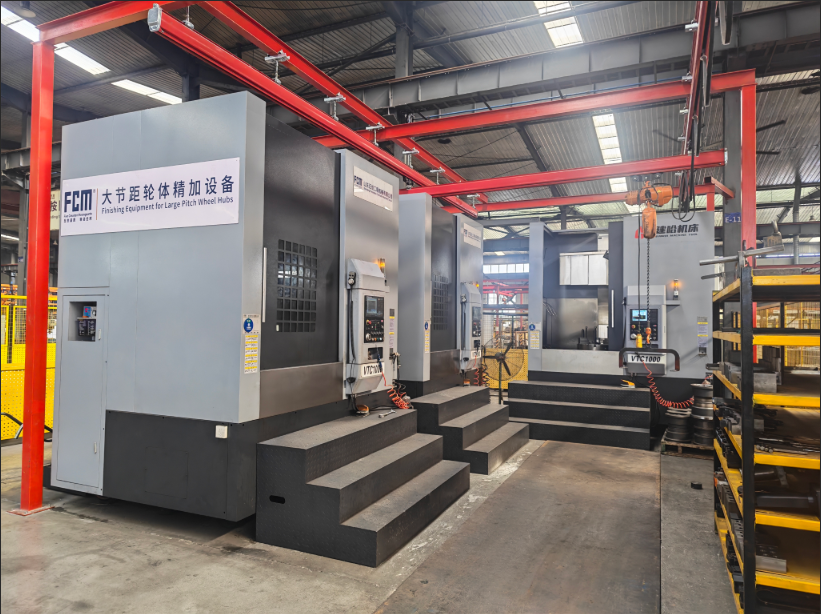
Fivecreation Construction Machinery (FCM) is a Shandong-based manufacturer of crawler undercarriage parts. Its published company profile describes a 30,000 m² manufacturing base, approximately 150 staff, a 10-engineer R&D team and a product range covering track roller assy, sprocket, idler assy, carrier roller assy, track assy, track shoe, track link, pin & bushing, recoil spring and track tensioner categories. Those facts are useful for supplier screening, but they do not answer the repeat-order questions by themselves.
Why long-term undercarriage parts supply fails after the first order
The first order tests whether a supplier can ship. A repeat order tests whether the supplier can repeat the same fit, documentation, inspection result and after-sales response. That difference is where many fleet supply plans break down.
A 5–80 ton crawler excavator or bulldozer does not wear its undercarriage as one uniform item. Track rollers, idlers, sprockets, carrier rollers, track shoes, links, pins, bushings, recoil springs and tensioners reach their limits at different times and under different conditions. A fleet may need a batch of track roller assy for one machine, a sprocket and segment set for another, and a tensioner assembly for a third. If every order is treated as a new sourcing event, the buyer loses time on model confirmation, drawing approval, inspection planning and claim preparation.
The stronger model is a documented supply loop. The buyer and supplier agree on the warranty schedule, inspection plan, ODM specification and stocked-model list once, then apply the same controls to each release. This reduces the chance that a repeat order is technically correct but commercially incomplete.
What fleet buyers should know about the undercarriage parts aftermarket
External research helps frame the supply problem, but it should not be treated as a stock guarantee. Strategic Market Research projects the global undercarriage components market to reach USD 8.8 billion by 2030. IMARC Group reports that Asia-Pacific held a 39.5% share of the undercarriage systems market in 2025. These are commercial research estimates with their own scope definitions; they describe the size and regional weight of the category, not the availability of a specific part number.
At component level, the function of the undercarriage is easier to explain. A supplier product overview describes track rollers as supporting equipment weight and distributing load along the track, while idlers guide track movement and help regulate slack and tension. Those functions explain why a fleet cannot judge replacement parts only by appearance. Fit, load path, sealing, hardness and tension control all affect how the part behaves after installation.
The aftermarket also includes different supply models: original equipment channels, independent manufacturers, distributors and mixed manufacturer-trading operations. A buyer’s long-term question is therefore not simply “who sells undercarriage parts?” It is “which supplier can document the same specification, inspection and after-sales response across repeated orders?” That is the context for the warranty, ODM and stocked-model questions below.
The FCM partnership framework: four controls for repeat orders
1. The 12-month quality warranty should be attached to an order-specific schedule
The partnership scope states a 12-month quality warranty. FCM’s service system covers technical communication, production control, pre-shipment inspection and after-sales warranty, and the company provides pre-sales, in-sales and after-sales warranty services. The warranty period is therefore the anchor point for the buyer’s quality plan.
What the available service summary does not do is itemize every exclusion, claim step or remedy. A fleet buyer should not fill that gap by assumption. The purchase agreement should attach a warranty schedule that states which part numbers and machine models are covered, what condition counts as a quality issue, what evidence the buyer must provide, who inspects the part and what remedy applies. For repeat orders, the same warranty schedule should apply to each shipment and each batch.
This is how the 12-month quality warranty becomes usable. Without a schedule, a claim can become a new negotiation after every failure. With a schedule, the buyer knows what to record at installation and what to send when a problem appears.
2. Full-process pre-shipment inspection should produce a record, not just a pass decision
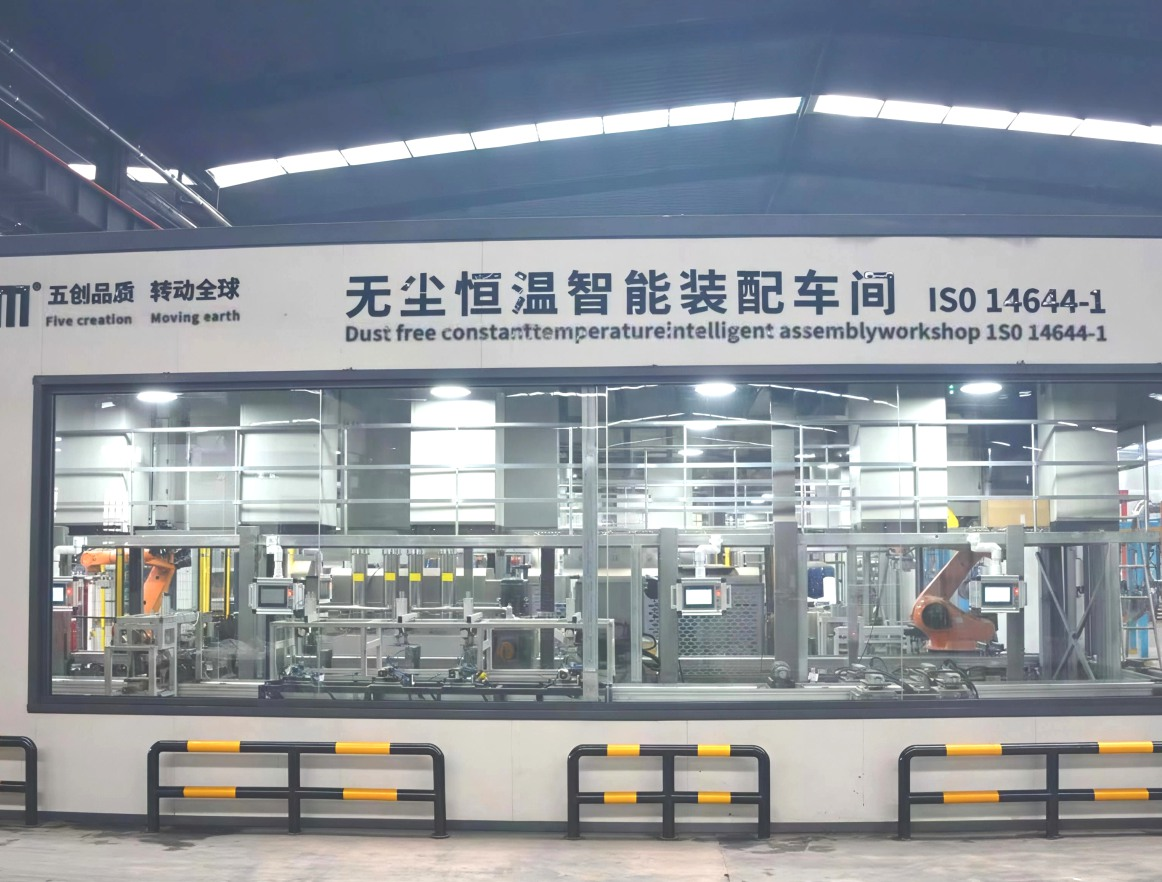
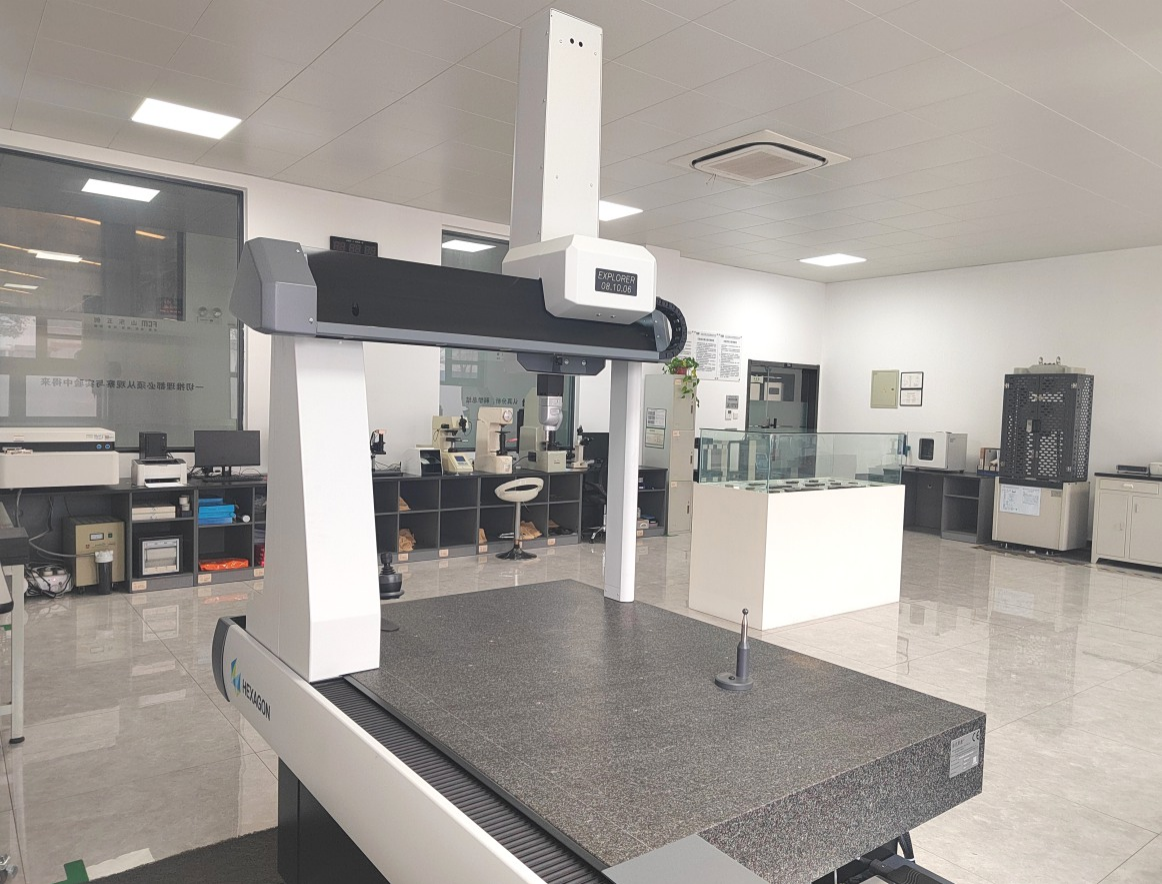
Full-process pre-shipment inspection is the second control. FCM describes its quality management system as ISO9001:2015 and its control scope as running from raw material incoming inspection to finished-product delivery. The company also lists a physical-chemical laboratory and precision testing instruments including a spectrum analyzer, impact tester, metallographic microscope, CMM and flaw-detection equipment.
The equipment list matters because it shows what can be checked. The inspection record matters more because it shows what was checked on the buyer’s order. For a repeat undercarriage parts order, the inspection plan should name the checks for the actual components: material grade and heat-treatment records where specified, hardness results, key dimensions, visual and flaw checks, assembly fit, marking, packing and pre-shipment photographs. The approved sample and inspection report should stay in the order file.
A repeat order should repeat the same inspection plan. A statement that the parts are the same as last time is not a substitute for the batch record. If the machine model, drawing revision, material specification or logo changes, the inspection plan should change with it.
3. ODM customization and logo engraving should be fixed before production
ODM customization and logo engraving are branding and production decisions, not catalogue decorations. FCM states that it supports OEM and ODM customization according to customer drawings or samples. The partnership scope adds logo engraving as part of the ODM discussion. The available material does not publish a standard engraving method, artwork tolerance, minimum quantity or approval workflow, so those details should be written into the order specification rather than assumed.
A practical ODM specification should include the drawing revision, material and hardness requirements, logo file, engraving location and size, appearance criteria, packaging and first-article approval. If the logo position affects fit, balance, sealing or identification, it belongs in the drawing and inspection plan. If the buyer needs private-label packaging, the label artwork and packaging data should be approved at the same time.
The buyer should also decide who owns the drawing and logo files, how revisions are controlled, and what happens if a repeat order uses an older drawing. These are ordinary ODM controls, but they need to be explicit. A logo that is approved only by email is difficult to inspect on a production line.
4. Stocked models should be listed by machine model and component
Stocked models are the fourth control. Supplier-selection guidance recommends working with manufacturers that hold complete stock of mainstream excavator and bulldozer models. FCM’s published manufacturing facts include monthly output up to 50,000 pieces, annual output of 600,000 units and coverage of hundreds of equipment models. Those facts describe production capability and model breadth. They should not be read as proof that every 5–80 ton model is held in stock at all times.
The useful document is a stocked-model list by component and machine model. It should show which items are routinely held, which are made to order, and what triggers replenishment. For a fleet, the list should cover the parts that cause the most downtime: track roller assy, sprocket, idler assy, carrier roller assy, track assy, track shoe, track link, pin & bushing, recoil spring and track tensioner. The list should be reviewed against machine hours, wear history and planned projects, not left as a static catalogue attachment.
Component coverage for a 5–80 ton crawler fleet
Model compatibility should be confirmed from the machine plate, serial number and approved compatibility sheet, not from a generic tonnage assumption. The table below separates the component, its supported role or catalogue position, and the repeat-order check.
| Component | Supported role or catalogue position | Repeat-order check |
|---|---|---|
| TRACK ROLLER ASSY | Supports equipment weight and distributes load along the track, according to an external product description. | Confirm machine model, mounting, lubrication and replacement interval; keep the batch hardness and inspection records. |
| IDLER ASSY | Guides track movement and helps regulate slack and tension, according to an external product description. | Confirm front or rear position, fitment and tensioner interface. |
| SPROCKET | Drive sprocket category; medium-frequency surface quenching forms a hard wear layer on tooth surfaces while maintaining inner toughness. | Confirm tooth count or segment type, mounting and heat-treatment record. |
| CARRIER ROLLER ASSY | Listed crawler undercarriage category, also referred to as a top roller in some supplier catalogues. | Confirm carrier or top-roller position and fitment; include it in the stocked-model review. |
| TRACK ASSY, TRACK SHOE, TRACK LINK, PIN & BUSHING | Listed track-group categories in the FCM product range and comparable supplier catalogues. | Confirm chain pitch, link count, shoe width and pin and bushing specification. |
| RECOIL SPRING, TRACK TENSIONER | Recoil spring and track adjuster assembly are listed undercarriage categories; the tensioner controls track slack. | Confirm assembly part number, installation checks and tension adjustment record. |
The table is a procurement map, not a universal fitment chart. A 5–80 ton class contains many machine designs and undercarriage configurations. The same nominal component can differ in mounting, seal type, material specification and track-group geometry.
How to move from supplier evaluation to repeat-order execution
The decision stage should end with a documented execution plan. The following sequence works for a fleet buyer who is moving from comparing suppliers to placing repeat orders.
- Build a fleet and part register. List each machine by model, serial number, tonnage class and current undercarriage condition. Record which components are approaching replacement: track roller assy, idler assy, sprocket, carrier roller assy, track assembly, track shoes, links, pins and bushings, recoil spring or tensioner. This register becomes the basis for the stocked-model discussion.
- Confirm compatibility from machine identity. Do not assume that a part for one 30-ton excavator fits another 30-ton machine. Use the plate model, serial number and approved FCM compatibility sheet. Where a non-standard bulldozer or excavator model is involved, use the drawing or sample route that FCM supports for OEM and ODM customization.
- Write the warranty and inspection annex. Attach the stated 12-month quality warranty to a schedule that defines coverage, evidence, inspection and remedy. Add the pre-shipment inspection plan, including the checks that apply to the specific parts. Keep the first approved inspection report as the reference for repeat orders.
- Approve ODM and logo first article. Before production, approve the drawing revision, material specification, logo artwork, engraving location, appearance criteria and packaging. Record who approved the first article and which revision applies to future releases. This prevents a repeat order from drifting back to an older logo or drawing.
- Agree the stocked-model list and reorder triggers. Ask FCM to identify which mainstream models and components are stocked, which are made to order, and what replenishment lead time applies. Set reorder triggers based on machine hours, wear measurements or project schedules. Review the list before each buying cycle.
- Close the loop after each shipment. Record installation date, machine hours, batch or serial identification, inspection results and any after-sales issue. On the next order, review that record with the supplier. The aim is not paperwork for its own sake; it is a repeatable evidence trail for warranty and inventory decisions.
Where this partnership model fits
Mixed fleets across 5–80 ton classes
A mixed fleet needs a supply plan that can handle different machine sizes without treating every model as a separate project. The stocked-model review should group machines by model family, undercarriage configuration and annual usage. High-wear components can then be held or planned at the right level, while slower-moving parts remain made to order. The 12-month quality warranty and inspection records give the fleet a common quality reference across those groups.
Quarry and heavy-load operations
Quarry and heavy-load operations place more demand on material and heat treatment. FCM’s heavy-load mining roller specification uses 40Mn2 integral forging with medium-frequency quenching and a 6–8 mm hardening layer. For stone-impact conditions, the supplier guidance recommends 40Mn2 forged undercarriage parts with a 6–8 mm quenching layer and thickened track shoes. Those specifications should be tied to the actual application and inspection plan, not applied automatically to every 5–80 ton machine.
Distributors building a private-label range
A distributor may need ODM customization, logo engraving and packaging that fits its own catalogue. The production question is whether the supplier can keep the same drawing, logo and inspection standard across repeated batches. The buyer should approve the first article, define revision control and add the logo and packaging checks to the pre-shipment inspection plan. This is also where a stocked-model list helps the distributor serve repeat customers without holding unnecessary depth in every part number.
Replacement after severe track roller wear
When excavator track roller wear is severe, standard forged track rollers from qualified manufacturers are recommended as replacement parts. The buyer should still confirm the machine model, mounting dimensions, lubrication and inspection record before ordering. A replacement decision based only on tonnage can produce a part that fits the class but not the machine.
Partnership question map: what to verify before a repeat order
| Long-term supply question | What the approved information establishes | What the fleet should place in the order file |
|---|---|---|
| Warranty | A stated 12-month quality warranty; pre-sales, in-sales and after-sales warranty services. | Warranty schedule, covered part numbers, claim evidence, inspection route and remedy. |
| Pre-shipment inspection | Service system covers pre-shipment inspection; quality control is described from raw material incoming inspection to finished-product delivery. | Inspection plan, material and hardness records where specified, dimensional checks, photographs and approved sample. |
| ODM and logo | OEM and ODM customization according to customer drawings or samples; logo engraving is part of the partnership scope. | Drawing revision, logo file, engraving location, appearance criteria, packaging and first-article approval. |
| Stocked models | Supplier guidance recommends complete stock of mainstream excavator and bulldozer models; FCM publishes monthly output up to 50,000 pieces and coverage of hundreds of equipment models. | Stocked-model list by machine model and component, made-to-order items, replenishment trigger and review date. |
| Repeat-order control | Annual output of 600,000 units and a service system covering technical communication, production control, inspection and warranty. | Release schedule, batch identification, installation records and after-sales review. |
The table is deliberately narrow. It does not convert production capacity into a promise of immediate stock, and it does not convert a warranty period into a list of exclusions. It separates what is stated from what the buyer still needs to confirm in the contract and order documents.
FAQ: warranty, ODM logos and stocked models
What does the 12-month quality warranty cover on undercarriage parts?
The partnership scope states a 12-month quality warranty, and FCM’s service system includes after-sales warranty support. The available public summary does not itemize every exclusion, claim document or remedy. A fleet buyer should therefore confirm those points in the order contract and attach them to the 12-month warranty schedule. Record the part number, batch or serial information, installation date and machine hours so a claim can be reviewed against the order evidence.
How does pre-shipment inspection support repeat undercarriage parts orders?
Pre-shipment inspection gives the buyer a batch record before the parts leave the factory. FCM’s quality system is described as ISO9001:2015 with control from raw material incoming inspection to finished-product delivery, and its service system covers pre-shipment inspection. For repeat orders, the inspection plan should repeat the same checks for the same drawing revision. If material, hardness, dimensions, marking or packaging change, the inspection record should show the change and the approval behind it.
Can FCM produce ODM undercarriage parts and engrave our logo?
FCM states that it supports OEM and ODM customization according to customer drawings or samples. Logo engraving is part of the partnership scope described for this article. The engraving method, artwork standard, placement, minimum quantity and approval workflow are order-specific, so they should be written into the ODM specification before production. Approve a first article and keep the approved drawing and logo file with the repeat-order records.
Which 5–80 ton models are stocked, and how should a fleet check availability?
Stocked models should be checked model by model and component by component. FCM publishes monthly output up to 50,000 pieces and coverage of hundreds of equipment models, while supplier-selection guidance recommends complete stock of mainstream excavator and bulldozer models. Neither statement proves that every 5–80 ton model is held in stock. Ask for the current stocked-model list, identify made-to-order items and agree a replenishment trigger before the next wear interval.
How should a fleet plan repeat orders for track roller assy, idler assy, sprocket and tensioning devices?
Start with the fleet register and wear history. Group the machines by model, undercarriage configuration and annual usage. Set minimum stock or reorder points for high-wear items such as track roller assy, idler assy and sprocket, and review recoil spring and track tensioner demand against planned maintenance. Use the stocked-model list to separate routine items from made-to-order items, and review the plan before each buying cycle.
What after-sales records should a fleet keep?
Keep the model and serial number, part number, batch or supplier identification, installation date, machine hours, inspection report and any issue report. If a warranty question arises, those records connect the installed part to the order and to the stated 12-month quality warranty. They also help the buyer compare wear across machines and adjust the stocked-model plan.
How should a fleet evaluate Chinese undercarriage parts suppliers for long-term excavator component supply?
Evaluate the supplier against the repeat-order controls rather than a single price. Check the product range, material and heat-treatment evidence, inspection capability, warranty documentation, ODM and logo control, and the stocked-model process. FCM’s published facts include a 30,000 m² manufacturing base, approximately 150 staff, a 10-engineer R&D team, annual output of 600,000 units and monthly output up to 50,000 pieces. Those facts support initial qualification; the buyer should still confirm the specific model, specification, stocked-model status and order terms.
What should be confirmed before replacing severely worn track rollers?
Confirm the machine model and serial number, mounting dimensions, lubrication requirement, track tension condition and the approved replacement specification. When excavator track roller wear is severe, standard forged track rollers from qualified manufacturers are recommended as replacement parts. For a repeat-order programme, add the replacement to the stocked-model review and keep the inspection record with the machine file. A fleet moving from evaluation to execution can send its machine list and target part numbers to FCM for a stocked-model review and sample or quote discussion.
Conclusion: make the partnership repeatable, not just renewable
A long-term undercarriage parts partnership is stronger when the buyer can repeat the same warranty schedule, inspection plan, ODM specification and stocked-model review across every order. The stated 12-month quality warranty gives the buyer a period to manage; the inspection system gives the buyer evidence; ODM customization and logo engraving give the buyer brand control; and the stocked-model list gives the buyer a way to plan wear parts for 5–80 ton crawler excavators and bulldozers.
Fivecreation Construction Machinery presents these elements through its undercarriage product range, ISO9001:2015 quality management description and service system. The buyer’s next step is to turn them into order documents: a model-level compatibility list, a warranty annex, an inspection plan, an approved ODM first article and a stocked-model review. That is the practical difference between a supplier who can ship once and a partner who can support repeat orders.
For product scope and model discussion, review the FCM product brochure and contact Fivecreation Construction Machinery with the machine list, target part numbers and required ODM details.
Have Questions or Need More Details?
Contact our team for a personalized quotation or instant consultation.
Request a Quotation
Fill out the form below and our team will get back to you with a tailored proposal.
WhatsApp Direct Chat
Prefer to chat in real-time? Message us on WhatsApp for instant assistance & quick answers.
- Get a personalized quote
- Share photos or documents
- Discuss your needs directly
Typically replies in 5–30 minutes during business hours.