
Cell Fender Guide: Rubber Fenders for Port Protection
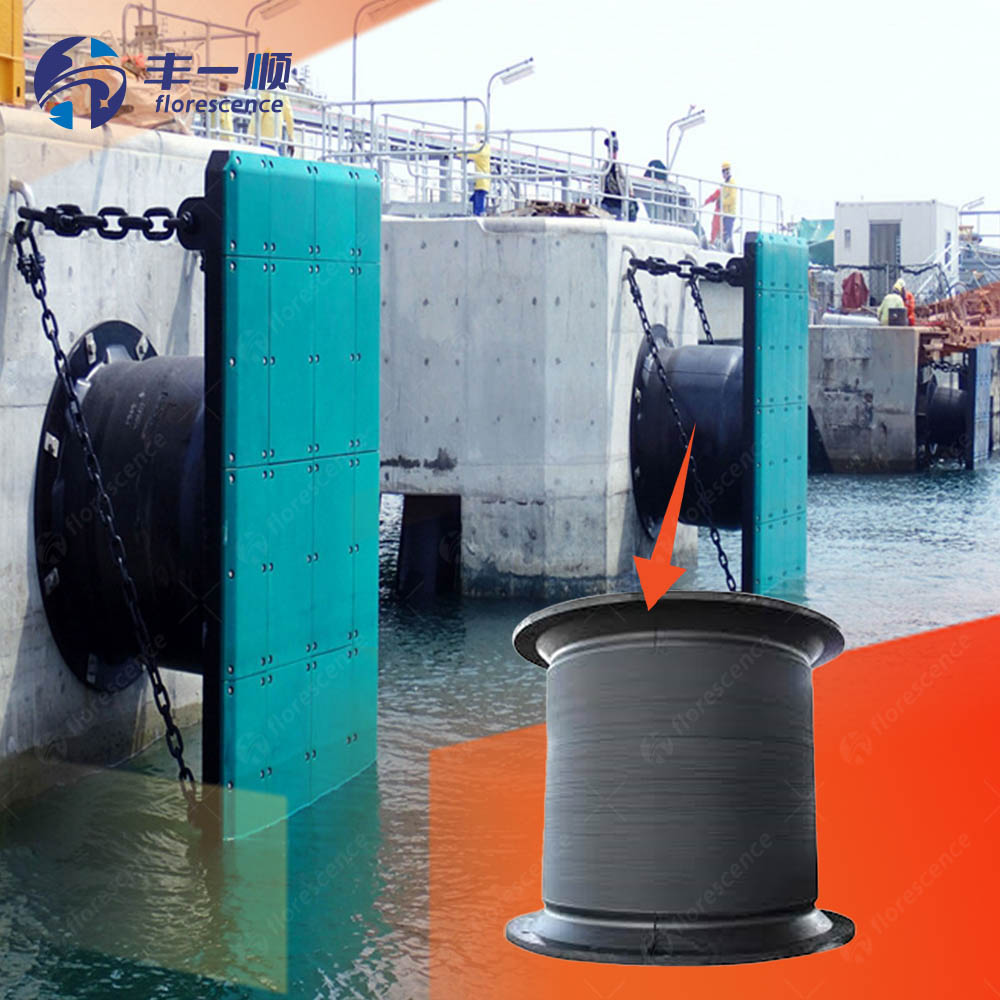
A cell fender is a marine rubber fender designed for port protection at container, bulk, oil, LNG and RoRo terminals.
A cell fender is a marine rubber fender designed for port protection. It belongs to the cell fender category of dock fenders and is normally specified for container, bulk, oil, LNG and RoRo terminals, where its job is to absorb the energy of a berthing vessel while keeping the pressure on the hull as low as the design allows.
That is the short answer. The longer answer matters to anyone who has to specify, buy or maintain one: which figures actually define cell fender performance, how the type differs from cone, arch, cylindrical, D and W fenders, what evidence a supplier should be able to produce, and what a realistic delivery schedule looks like.
This guide works through all of it using the product documentation of Qingdao Florescence Marine Supply Co., Ltd. — brand name Florescence — a marine rubber fender manufacturer established in 1992 that produces cell fenders alongside pneumatic rubber fenders, cone fenders, arch fenders, cylindrical and tug fenders, D fenders, W fenders, square fenders, foam fenders and ship launching and salvage airbags.
- What it is: a marine rubber fender in the cell fender category, designed for port protection.
- Rated deflection: 52.5%, with a maximum permissible deflection of 55%.
- Material: marine NR/SBR rubber, with optional CR for oil resistance and EPDM for UV and ozone resistance.
- Hardness: Shore A 60–70. Reaction force tolerance ±10%; energy absorption tolerance −10%.
- Standards referenced: ISO17357 and PIANC.
- Typical use: container, bulk, oil, LNG and RoRo terminals; multi-user berths; heavy-tonnage vessel berthing.
What Is a Cell Fender?
A cell fender is a moulded rubber fender unit that is bolted to a quay wall, berth face or dolphin, usually as part of a complete fender system. In Florescence documentation the product carries the model designation Cell Fender, sits in the cell fender category, and is described as being designed for port protection and for container, bulk, oil, LNG and RoRo terminals.
Two design characteristics are listed for the type. First, a cell fender supports large frontal panels, which spreads the reaction force over a wide area of the hull. Second, it is described as ideal for low hull pressure systems — a practical advantage where the vessel calling at the berth has a light or thin-shelled hull, or where the berth serves a mixed fleet. A third characteristic matters commercially: Florescence Cell Fenders are offered in a wide range of standard sizes and are stated to be interchangeable with many older marine cell fender types, which means a replacement unit can often be matched to an existing berth without redesigning the whole system.
The word “cell” is used loosely in this industry
Catalog terminology alone is not a reliable way to compare marine fenders. Florescence, for example, describes its Super Cone Fenders as the latest generation of “cell” fenders, while the Cell Fender remains a separate product line. For a buyer, the reliable comparison points are the measurable ones: rated deflection, maximum permissible deflection, reaction force grade, energy absorption, rubber compound, panel capacity and the standard the unit is manufactured and tested against.
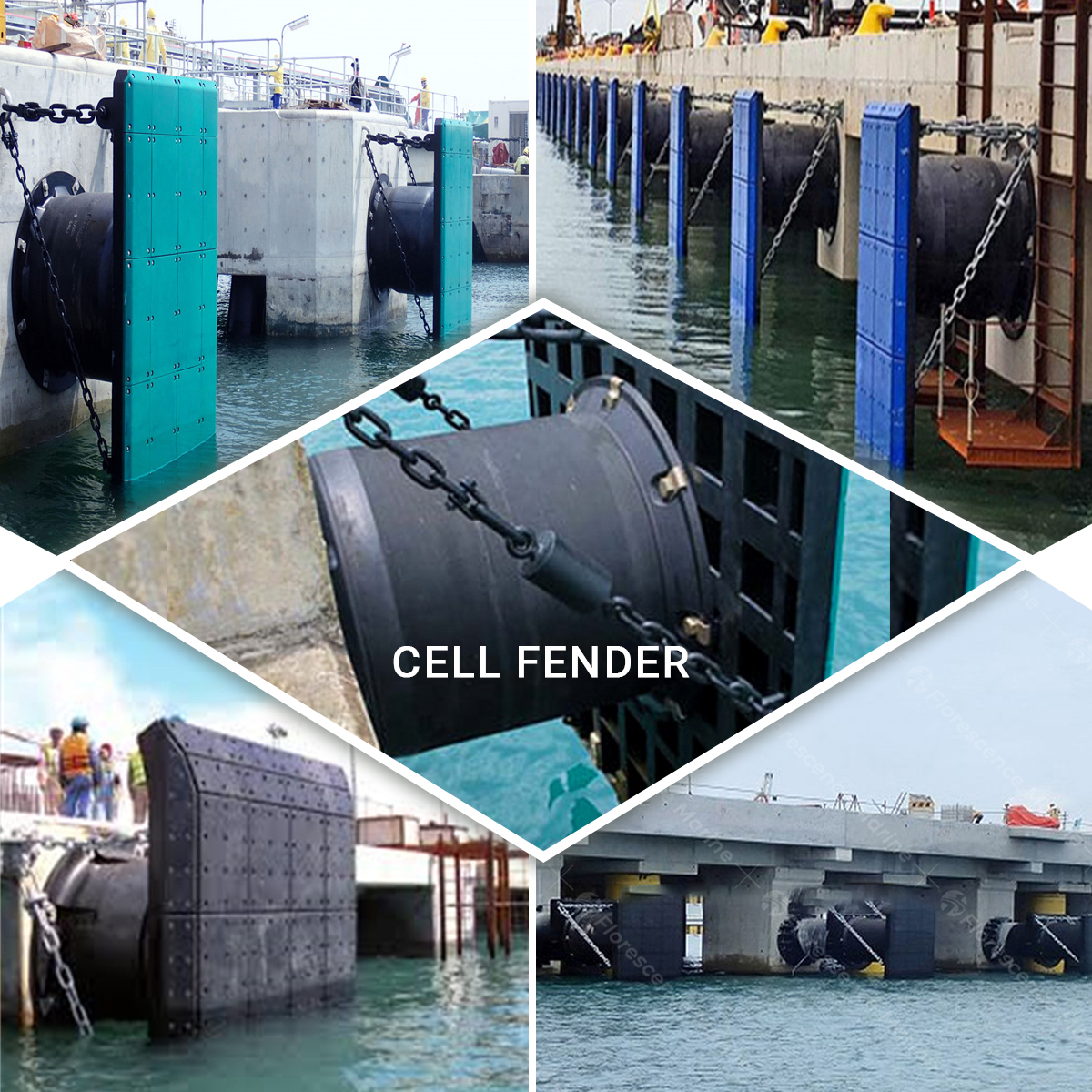
Cell fenders are specified for large container ports, oil and LNG terminals, and high-capacity berths.
The Berthing Problem a Cell Fender Is Designed to Solve
The principle purpose of a rubber fender system is to protect the hull and the berthing facility from damage when a vessel berths alongside. A cell fender is one way of doing that, and the engineering problem it addresses is a balancing act rather than a single number.
A berthing vessel arrives with kinetic energy that has to go somewhere. If the fender system absorbs too little of it, the energy is transmitted into the hull and into the berth structure. If the fender absorbs the energy but pushes back with an unnecessarily high reaction force, the hull plating, the fender itself and the anchoring arrangement all carry extra load. A cell fender is therefore specified so that its energy absorption and its reaction force are both matched to the berth, not simply maximised.
Three site conditions make that balance harder to achieve:
- Mixed fleets at multi-user berths. A berth that handles feeders, bulk carriers and cruise vessels on different days presents a wide range of berthing energies. A design that only suits the largest vessel in the fleet is not automatically suitable for the smallest.
- Oblique and awkward berthing. Vessels do not always approach square to the quay. Fender selection depends on vessel size, berthing energy, tidal variation, berth structure and operational conditions, and angular contact changes the load path.
- A hostile operating environment. Marine fendering operates under high-energy impact berthing, tidal range fluctuation, salt spray exposure, UV and ozone degradation, and temperatures that can swing from extreme sub-zero conditions to high ambient heat.
A cell fender is not the only answer to these conditions — it is one of several rubber fender types that a port engineer can select from, and the section further down compares them on the figures that Florescence publishes.
Industry Background: Where Rubber Fenders Sit in Port Infrastructure
Marine fendering is a mature but active part of port infrastructure spending. According to market research published by Mordor Intelligence, the global marine fenders market is projected to reach USD 0.89 billion in 2026, with the forecast period running to 2031. The same source reports that rubber fenders accounted for approximately 64.17% of the total marine fender market in 2024, which places rubber firmly at the centre of fender specification even though foam and other alternatives continue to be used.
Two reference points are useful for buyers who need to align procurement, customs and technical documents:
- Trade classification. Rubber boat or dock fenders made from vulcanised non-cellular rubber, whether or not inflatable, fall under HS Code 4016.94 — a code that is used internationally and that procurement teams can use as a starting point for screening suppliers and shipments.
- Technical standards. ISO 17357-1:2014 specifies the requirements for high-pressure floating pneumatic rubber fenders; it is a standard for pneumatic products specifically, and buyers should read the scope rather than assume it covers every fender type. Florescence states that its Cell Fender conforms to ISO17357 and PIANC standards, and its arch fender is manufactured in accordance with the PIANC standard.
The practical consequence for a port project is that fender standards and classification-society requirements are usually written into the technical specification before a supplier is selected. That is why the next section focuses on the figures that belong in a cell fender datasheet rather than on marketing claims.
Cell Fender Specifications and Design Features
Florescence publishes a defined set of performance and construction figures for its Cell Fender. These are the numbers a port engineer needs in order to check whether a proposed unit actually fits the berth.
| Cell Fender parameter | Published value |
|---|---|
| Product category | Cell fender / marine rubber fender |
| Design application | Port protection; heavy-tonnage vessel berthing |
| Rated deflection | 52.5% |
| Maximum permissible deflection | 55% |
| Material | Marine NR/SBR; natural rubber as the primary material |
| Optional compounds | CR for oil resistance; EPDM for UV and ozone resistance |
| Rubber hardness | Shore A 60–70 |
| Reaction force tolerance | ±10% |
| Energy absorption tolerance | −10% |
| Standards referenced | ISO17357; PIANC |
| Operating temperature range | −30 °C to +80 °C |
| Reaction force grades | RL (Low), RO, RH, RS, RE (Extra High) |
| Design features | Supports large frontal panels; suitable for low hull pressure systems; interchangeable with many older marine cell fender types; wide range of standard sizes |
Read together, these figures explain why the cell fender remains a default choice for heavy berths. A rated deflection of 52.5% means the unit is designed to deform substantially before reaching its working point, and the narrow gap between the rated figure (52.5%) and the maximum permissible figure (55%) tells the maintenance team something important: the design working point is already close to the compression limit, so over-compression is not a safe operating margin to rely on.
The same logic applies to the tolerances. A reaction force tolerance of ±10% and an energy absorption tolerance of −10% mean that an engineer specifying a cell fender should design with the allowable band in mind rather than with a single nominal figure.
The five reaction force grades — RL (Low), RO, RH, RS and RE (Extra High) — are the practical adjustment mechanism. A berth that needs lower hull pressure can move toward a lower grade; a berth that needs greater resistance to a heavy vessel can step up. Because the grades sit within one product family, the geometry and panel arrangement do not have to be redesigned every time the reaction force requirement changes.
Why the rubber compound choice matters more than it looks
The standard compound for the Cell Fender is marine NR/SBR. Two optional compounds are offered: CR (chloroprene rubber) for oil resistance and EPDM for UV and ozone resistance. The choice is application-driven rather than price-driven. A berth that regularly handles vessels or cargo with oil exposure has a different compound requirement from a berth in a high-UV, high-ozone environment. Selecting the default compound in either case is a specification error that shows up years later as surface degradation, not as an immediate failure.
How Cell Fenders Compare With Other Rubber Fender Types
Cell fenders are one option in a broader rubber fender family. The table below compares the types that Florescence manufactures, using the deflection, hardness, material and application data published for each one.
| Fender type | Rated deflection | Max deflection | Hardness (Shore A) | Material | Standard / note | Typical applications |
|---|---|---|---|---|---|---|
| Cell Fender | 52.5% | 55% | 60–70 | Marine NR/SBR; CR and EPDM optional | ISO17357; PIANC | Container, bulk, oil, LNG and RoRo terminals; multi-user berths; low hull pressure systems |
| Cone fender | 70% | 72.5% | 60–70 | Marine NR/SBR; CR and EPDM optional | Overload stops limit over-compression | Large-tonnage berthing and oblique berthing; container, bulk, oil, LNG and RoRo terminals |
| Arch Fender | 52.5% | 55% | 60–70 | Marine NR/SBR; CR and EPDM optional | PIANC | RoRo berths, general cargo terminals, workboat harbours, barge and tug berths |
| Cylindrical Fender & Tug fender | 50% | 60% | 60–70 | Marine NR/SBR; CR and EPDM optional | Easy hanging mounting | Bulk cargo berths, general cargo quays, RoRo and ferry terminals, pontoons, tug havens |
| D Fender | 50% | 60% | 60–70 | Marine NR/SBR; CR and EPDM optional | DD 100 to DD 500; length 1–3 m | Tugboat side protection, fishing harbours, inland terminals, marinas, shipyards |
| W Fender | 30% | 35%; some heavy-duty models up to 50–52.5% | 60–75 | NR/SBR; CR and EPDM optional | Twin-leg attachment, grooved grip surface | Tugboats, offshore vessels, inland barges, RoRo terminals, bridge pier protection |
| Pneumatic rubber fender | — | — | — | Natural rubber with nylon cord | ISO 17357-1:2014 referenced | Ship-to-ship (STS), ship-to-quay (STQ) and ship-to-berthing (STB) operations; offshore platforms; extreme tidal variation |
Sizing notes from the same documentation: Square Fenders are available with heights from 100 mm to 500 mm, including a PE pad type; Cylindrical Fenders are available in diameters up to 2700 mm; Pneumatic rubber fenders and Foam Fenders both cover a diameter range of 0.5–4.5 m and a length range of 1.0–12 m, with pneumatic units inflated to 50 or 80 kPa and foam fenders quoted with a 5–8 year service life.
The comparison shows that fender selection is a trade-off between deflection, footprint and application. The cone fender reaches the highest rated deflection of the group at 70%, which is why it is associated with large-tonnage and oblique berthing. The cell fender sits at 52.5% and is positioned around panel support and low hull pressure. The W fender runs at a much lower rated deflection of 30%, which suits repeated frictional contact along a tug or barge hull. There is no single “best” type across all berths — which is exactly why the selection process below matters.
Step-by-Step: Specifying, Installing and Maintaining a Cell Fender System
The following sequence reflects how Florescence approaches fender selection and project support, from initial technical input through to maintenance.
- Define the berthing inputs. Fender selection depends on vessel size, berthing energy, tidal variation, berth structure and operational conditions. Collect these before looking at product tables.
- Confirm the berth structure and contact geometry. Establish where the fender can be anchored, how the hull will approach, and whether the berth will see regular oblique contact. The cell fender’s ability to support large panels makes it a candidate where hull pressure has to stay low across a wide contact area.
- Choose the reaction force grade. Select from RL (Low), RO, RH, RS and RE (Extra High) so that the reaction force suits the berth rather than simply matching the highest available value.
- Select the rubber compound. Use the standard marine NR/SBR compound for general service; specify CR where oil resistance is needed and EPDM where UV and ozone resistance is needed. The operating temperature range for these compounds is −30 °C to +80 °C.
- Define the complete fender system, not just the rubber unit. A complete system can include anchor bolts, chains, shackles, frontal panels, UHMW-PE pads and installation brackets. Frontal panels use marine-grade steel with anti-corrosion coating, and facing pads commonly use UHMW-PE material for high wear resistance.
- Agree the corrosion protection. Available treatments include hot-dip galvanizing, epoxy coating, marine paint systems and zinc-rich primer coating. Coating thickness on steel components is measured with digital gauges so that the specified micron target can be verified.
- Install to drawings, then set an inspection routine. Florescence provides installation drawings, technical manuals, anchor layout recommendations and remote engineering support. Once in service, regular inspection should cover rubber condition, bolt tightness, chain wear, corrosion status and panel alignment.
Step 5 is where a surprising number of projects lose time. The rubber unit is the visible part, but the anchor bolts and the hole patterns on facing pads and steel components have to match the berth. Precise dimensional checks on hole patterns and anchor bolt pitch are what allow a factory-built system to assemble on site without rework.
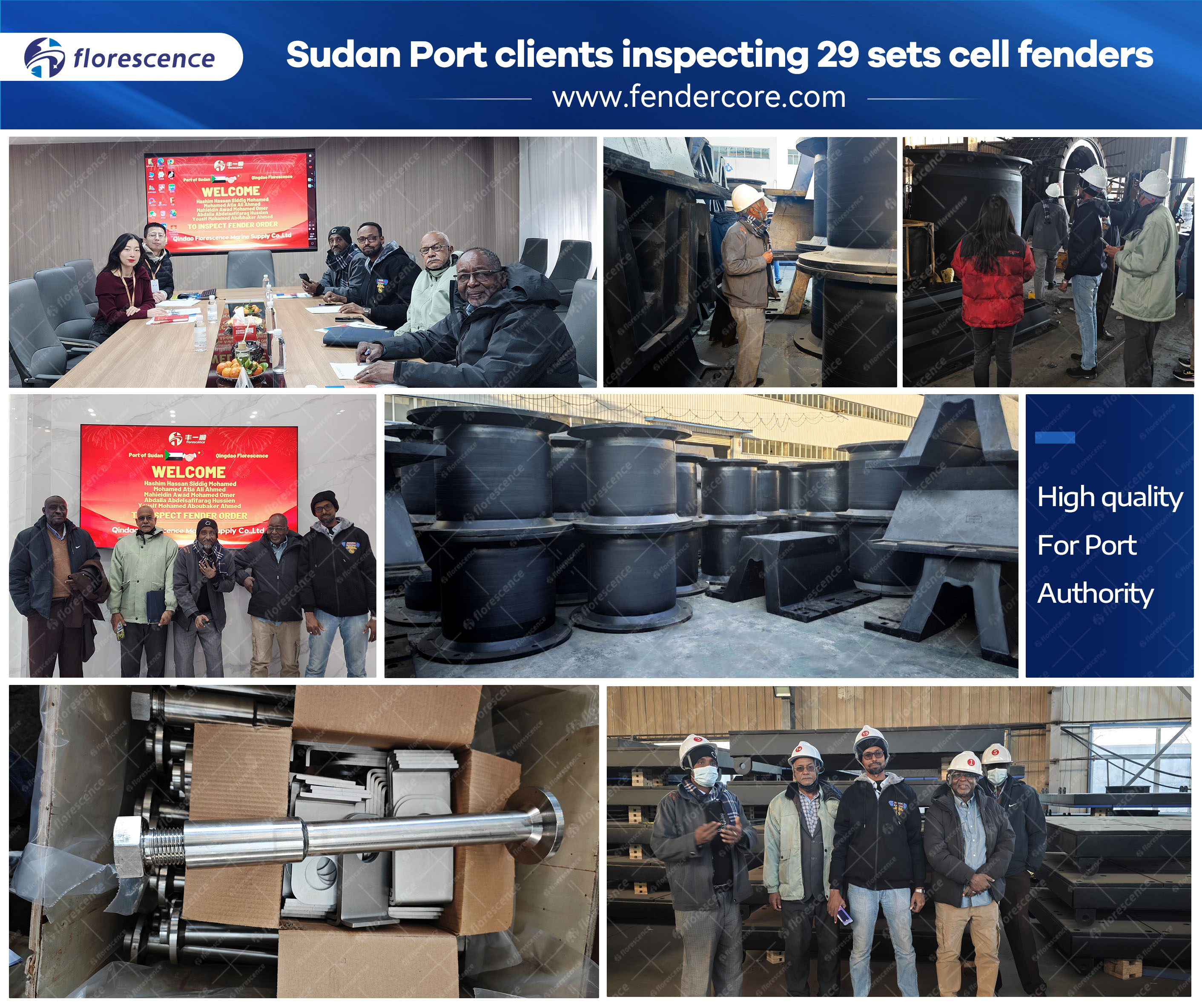
Client inspection of cell fenders prior to shipment — pre-delivery verification is part of the project workflow.
Where Cell Fenders Are Used
Florescence lists the following applications for its Cell Fender: oil and LNG facilities, bulk terminals, offshore platforms, container berths, RoRo and cruise terminals, and multi-user berths.
- Container berths. Large vessels, high berthing energy and a requirement to spread load across the hull make panel-supported cell fenders a natural fit.
- Bulk terminals. Repeated berthing of bulk carriers places a premium on durable, well-proven rubber elements with predictable maintenance.
- Oil and LNG facilities. These facilities often call for tighter specification control, documented testing and corrosion-protected steel components.
- RoRo and cruise terminals. Low hull pressure matters where hull coatings and finish are commercially important.
- Multi-user berths. Where several vessel classes share one berth, the reaction force grade and panel arrangement can be tuned to cover a wider working range.
- Offshore platforms and dolphins. Marine structures away from a conventional quay face use fender systems in the same way, with the same need for verified compound performance.
Project experience is the practical check on these claims. Florescence cell fender references include Cell 1250 and 1450 fender units supplied to Port Sudan, and cell fenders supplied for use in South America. Cell fender units in the 1050 mm and 1150 mm range are referenced separately on the cone fender line, which shows how the two product families are often specified side by side on the same project.
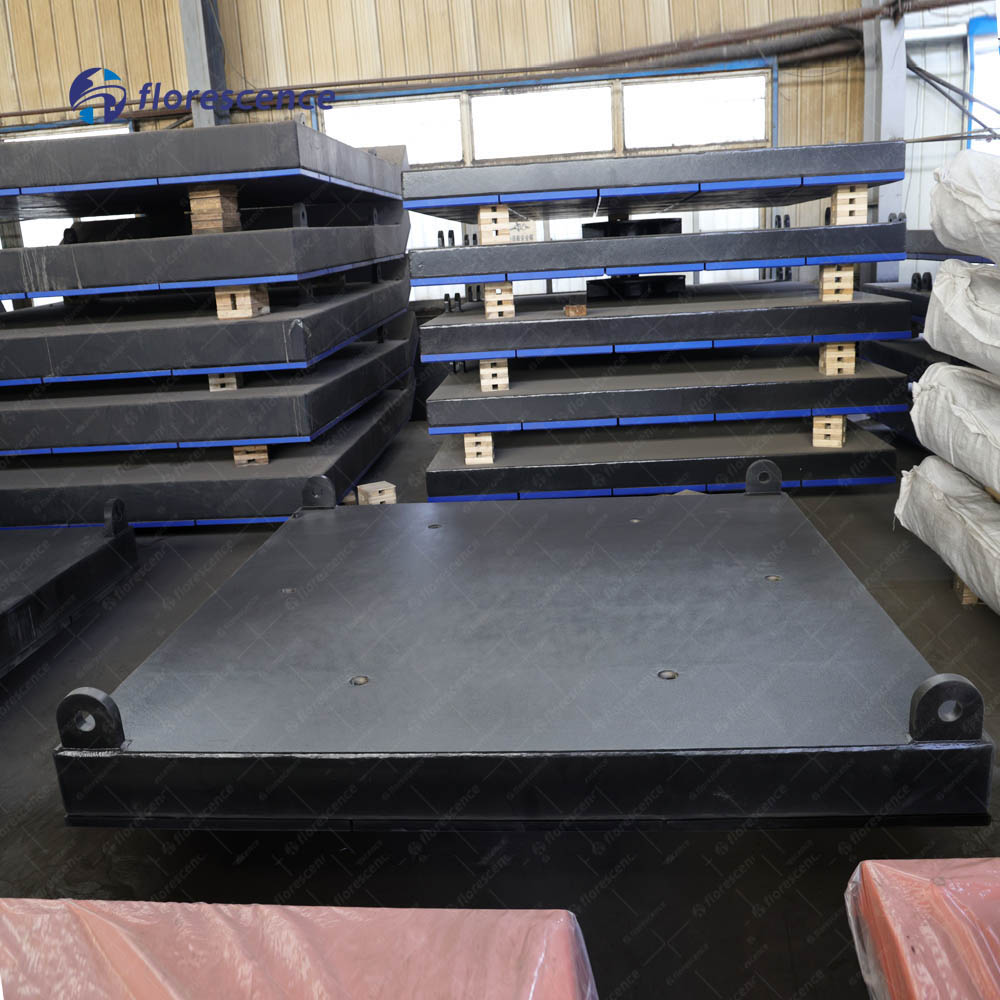
Cell 1250 and 1450 fenders produced for the Port Sudan project.
Quality Control and What a Buyer Can Verify
For a port project, a fender is only as useful as the paperwork behind it. Florescence operates a 40,000 m² manufacturing facility with approximately 120 staff, an annual production capacity of about 2,000 pcs of marine rubber fenders and airbags, and a 25-engineer research and development team supporting product design and marine project technical support. Roughly 95% of products are exported, with major markets in Southeast Asia, South America, Europe, North America, the Middle East and Africa.
Quality control runs from raw material to finished goods. Every production batch goes through rubber raw material testing, dimension and hardness checks for rubber fenders, and air-tightness tests for airbags and pneumatic fenders. For rubber fenders specifically, compression testing can be performed on sample units to verify that energy absorption and reaction force meet the design specification. Because the Cell Fender’s tolerances are ±10% on reaction force and −10% on energy absorption, this kind of verification is the only way to confirm a unit will perform as designed.
Third-party verification is available and actively used. The company works with international agencies including SGS, Bureau Veritas (BV) and LR, and products can be manufactured and inspected according to the applicable requirements of marine classification societies including CCS, BV, RS, ABS and LR. Florescence also states that its products have been supplied to naval organizations including the Bangladesh Navy, French Navy, Royal Thai Navy, Italian Navy and Philippine Navy — projects that typically carry demanding technical specifications, inspection requirements and delivery schedules.
Documentation that a buyer can request includes EN 10204 3.1 Mill Test Certificates for metal parts and bolts, physical property reports covering tensile strength, elongation and compression for rubber products, and a Quality Inspection Report with rubber test data, sizing sheets, coating thickness records and product photographs issued before final payment.
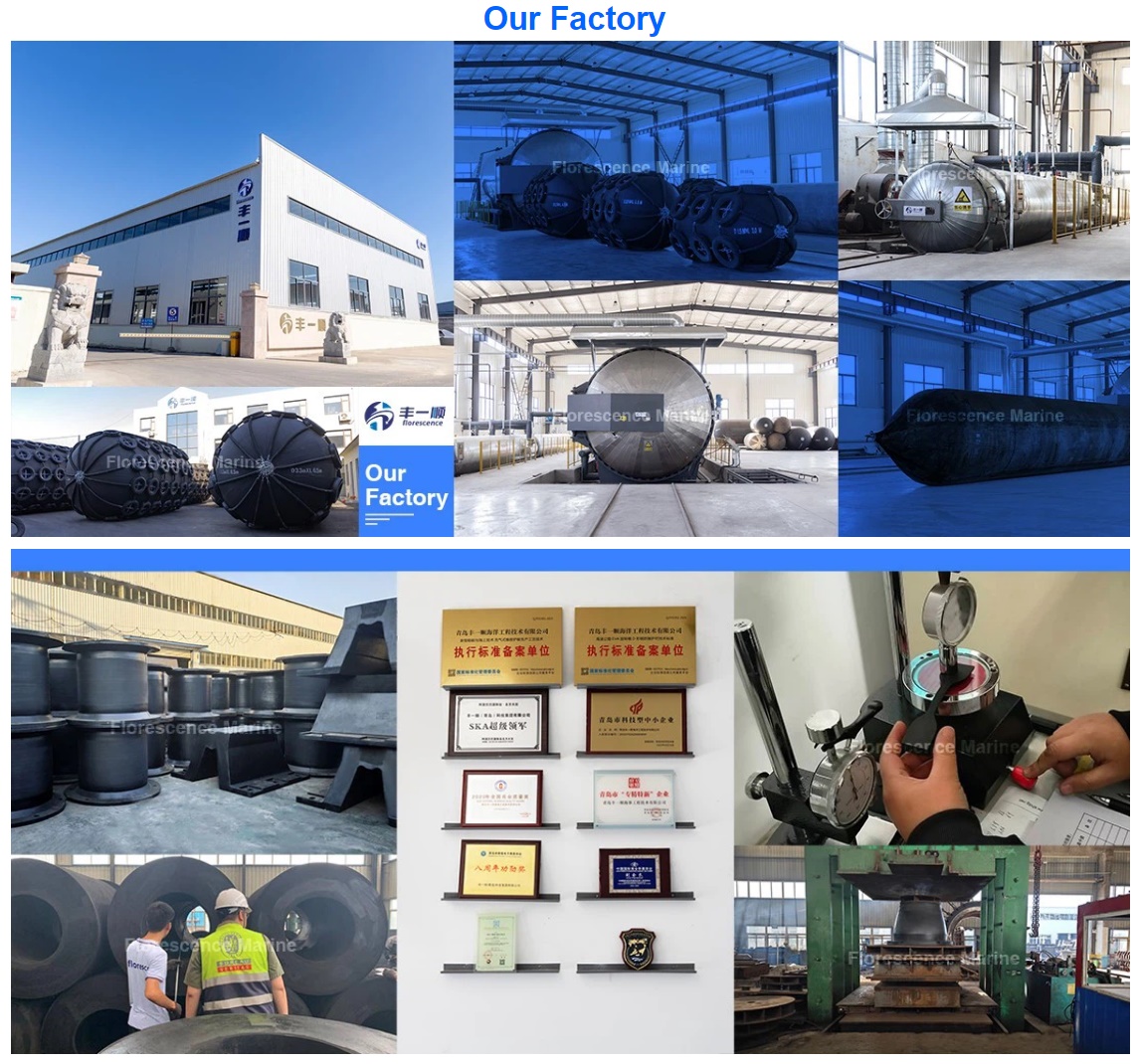
Cell fenders are produced and tested in a 40,000 m² manufacturing facility in Qingdao, China.
Frequently Asked Questions About Cell Fenders
Do Florescence cell fenders meet international standards?
Florescence states that its Cell Fender conforms to ISO17357 and PIANC standards, and the product is manufactured under an ISO 9001:2015 quality management system. Where a project requires classification-society involvement, products can be manufactured and inspected according to the applicable requirements of CCS, BV, RS, ABS and LR. Buyers who want independent confirmation can request third-party inspection by agencies such as SGS, Bureau Veritas or LR, and can request material test certificates for steel parts and physical property reports for the rubber compound.
What vessel and berth types are cell fenders designed for?
Cell fenders are designed for port protection and heavy-tonnage vessel berthing. Florescence lists typical applications as oil and LNG facilities, bulk terminals, offshore platforms, container berths, RoRo and cruise terminals, and multi-user berths. The type supports large frontal panels and is suitable for low hull pressure systems, and it is available in five reaction force grades — RL (Low), RO, RH, RS and RE (Extra High) — so the reaction force can be matched to the berth rather than fixed by the product alone.
What influences the cost of a cell fender system?
Cost follows specification, not a fixed price list. The main variables are the size and duty of the cell fender required, which itself depends on vessel size, berthing energy, tidal variation, berth structure and operating conditions; the reaction force grade selected from RL, RO, RH, RS and RE; the rubber compound chosen, since CR for oil resistance and EPDM for UV and ozone resistance are optional upgrades over the standard marine NR/SBR compound; the size and steel grade of any frontal panel; the UHMW-PE facing pads; the anti-corrosion treatment selected from hot-dip galvanizing, epoxy coating, marine paint systems or zinc-rich primer; and the scope of testing and documentation required. Comparing quotations without aligning these variables usually produces a misleading result.
How can I verify cell fender quality before shipment?
Verification is built into the production flow. Every batch is checked through rubber raw material testing and dimension and hardness checks, and compression testing can be carried out on sample cell fenders to confirm energy absorption and reaction force against the design specification. Before shipping, a full Quality Inspection Report is issued with rubber test data, sizing sheets, coating thickness records and clear product photographs, and production is only shipped after the buyer approves it. Third-party witness inspection by SGS, BV, CCS, DNV or ABS can be arranged if the project requires it.
What is the production lead time for cell fenders?
For standard rubber fenders and pneumatic fenders, production takes 25 to 30 days after deposit. For large custom orders or complete fender systems, production takes 40 to 45 days, and a clear schedule is confirmed before manufacturing begins. Weekly photographs and videos of production and final packaging are shared during the order, and container and vessel tracking details follow after dispatch. If you need a schedule matched to a specific berth window, send the vessel size, berth conditions and required specification to inquiry@fendercore.com and the technical team will confirm feasibility before you commit.
Choosing a Cell Fender: The Decision Framework
Pulling the pieces together, a defensible cell fender decision rests on four checks:
- Does the deflection suit the berth? A rated deflection of 52.5% with a maximum permissible deflection of 55% leaves a narrow margin above the working point, so the unit must be sized for the actual berthing energy rather than for a nominal vessel class.
- Is the reaction force grade tuned to the hull? Grades RL (Low) through RE (Extra High) exist precisely so that hull pressure can be managed. Choosing the highest grade by default is a specification shortcut with a real cost.
- Is the compound right for the environment? Standard marine NR/SBR covers general service; CR and EPDM exist for oil exposure and for UV and ozone exposure respectively, across an operating range of −30 °C to +80 °C.
- Is the evidence verifiable? Standards referenced, batch testing, third-party inspection, material certificates and a pre-shipment Quality Inspection Report are the four documents that turn a supplier claim into a project record.
The cell fender earns its place at heavy berths not because it is unusual, but because it does a specific job well: it absorbs berthing energy while supporting a large panel, keeping hull pressure low and remaining interchangeable with a wide base of existing cell fender designs.
Next Step: Sample, Drawing or Quotation
Qingdao Florescence Marine Supply Co., Ltd. supplies cell fenders, pneumatic rubber fenders, cone, arch, cylindrical, D, W and square fenders, foam fenders and ship launching and salvage airbags to ports, shipyards, vessel operators, naval organizations and marine companies worldwide.
To move a cell fender project forward, you can request a technical proposal, a quotation or a sample unit, and share your berth conditions for a specification review.
Email: inquiry@fendercore.com
WhatsApp / Mobile: +86 182-0532-1693
Website: www.fendercore.com
Address: 27th Floor, 10-2 Building, Optical Valley Software Park, Emeishan Road No. 396, Qingdao, China.
Download the 2026 Florescence product catalogue (PDF) for full cell fender and fender system specifications.
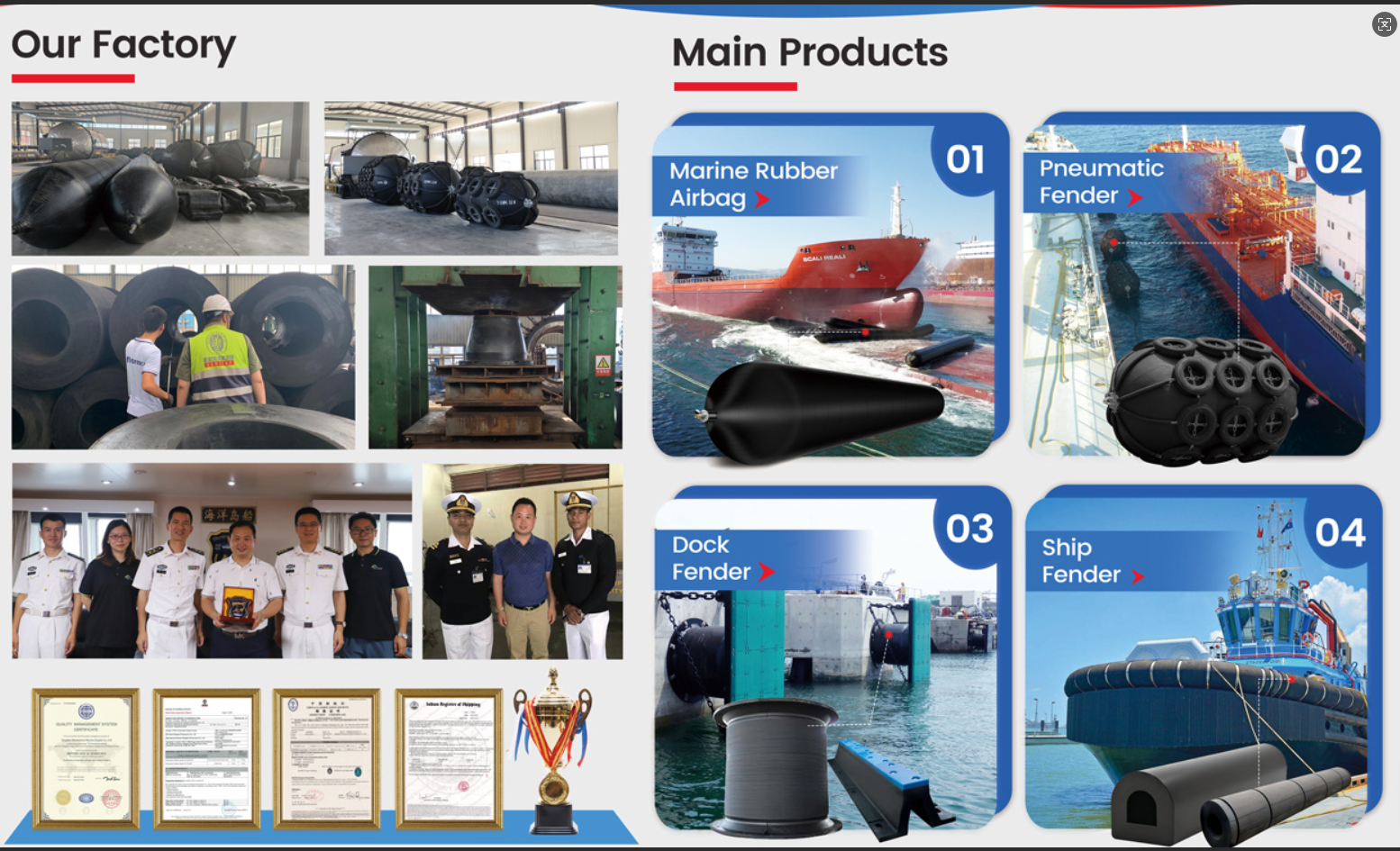
Florescence marine fender and airbag range — from port protection fenders to ship launching and salvage airbags.
All cell fender specifications, tolerances, standards references, facility figures and project references in this article are taken from Qingdao Florescence Marine Supply Co., Ltd. product documentation. Market size and share figures are attributed to Mordor Intelligence; the trade classification is attributed to the internationally used HS Code 4016.94; and the ISO 17357-1:2014 scope is attributed to the International Organization for Standardization.