Dock Fender and Rubber Fender Systems: What They Are and How Ports Choose Them
A dock fender is an energy-absorbing device mounted on a quay face, dolphin, jetty or vessel hull so that a berthing ship meets a flexible rubber surface instead of concrete or steel. The term describes where the product is used; the term rubber fender describes what it is made of and how it works. In most port specifications, tender documents and RFQs, the two terms point to the same family of products.
This guide is written for buyers at the start of that conversation — port engineers, shipyard procurement teams, distributors and vessel operators who need to understand what dock fenders do, which rubber fender types exist, how a system is selected, and what to check before a purchase order is issued.
The Problem: Berthing Energy Has to Go Somewhere
When a vessel approaches a berth it carries kinetic energy. That energy does not disappear at contact; it is transferred into whatever the vessel touches first. Without a fender system, that transfer damages two things at once: the ship's shell plating and frame structure, and the berth itself, including the quay wall, piles, coping and any equipment mounted near the waterline.
A rubber fender solves this by changing the contact into a controlled compression. The fender deflects under load, absorbs a defined amount of energy, and pushes back with a reaction force that the berth structure and the vessel hull are designed to accept. Public technical descriptions of marine rubber fender systems describe this protective function in the same terms: the purpose of the system is to protect the hull and the berthing facility from damage when vessels berth alongside.
That single function generates most of the engineering questions buyers ask later: how much energy the fender must absorb, how much reaction force the structure can tolerate, and how the fender behaves when a vessel arrives at an angle rather than square to the berth.
Industry Background: A Rubber-Dominated Market
Marine fenders are a mature but active equipment category. Market research published by Mordor Intelligence projects the global marine fenders market to reach USD 0.89 billion in 2026, with a forecast period running from 2026 to 2031. Within that market, rubber fenders account for approximately 64.17% of total marine fender market share, according to the same source. In other words, roughly two thirds of the value in the category sits with rubber, while foam, composite and other constructions account for the remainder.
Two standards shape how the rubber part of that market is specified:
- ISO 17357-1:2014 — Ships and marine technology — Floating pneumatic rubber fenders — Part 1: High pressure. This standard specifies the requirements for high-pressure floating pneumatic rubber fenders.
- PIANC guidelines — design guidance widely referenced in port and marine fender engineering, including PIANC 2002.
On the trade side, customs classification for these products sits under HS Code 4016.94, described internationally as boat or dock fenders of vulcanised non-cellular rubber, whether or not inflatable. That code is the usual starting point when a buyer or forwarder screens suppliers, estimates duty, or verifies that a shipment is classified consistently with the goods.
Dock and Marine Rubber Fender Types
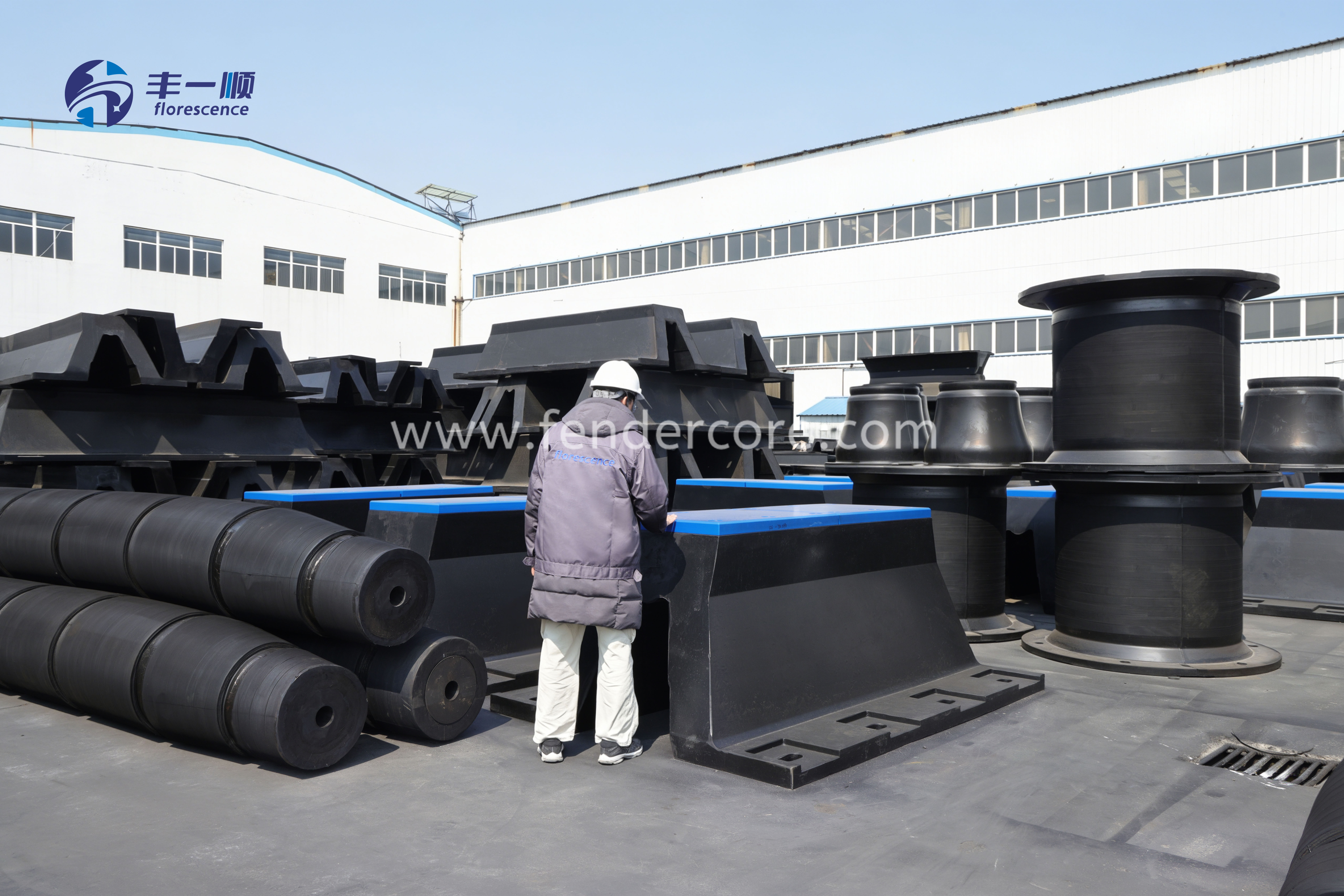
Rubber fender systems are sold as a small number of recognisable families. Each family has a different cross-section, which changes how it compresses, how much deflection it accepts, and which berthing situation it suits. The descriptions below follow published product data for the main types.
Cone fenders (SCN)
Cone fenders use a conical cell body. The published rated deflection is 70%, with a maximum permissible deflection of 72.5%. The body is a marine NR/SBR compound with a hardness of Shore A 60 to 70; optional CR is available for oil resistance and EPDM for UV resistance. Reaction force tolerance is ±10% and energy absorption tolerance is −10%, with an operating temperature range of −30 °C to +80 °C.
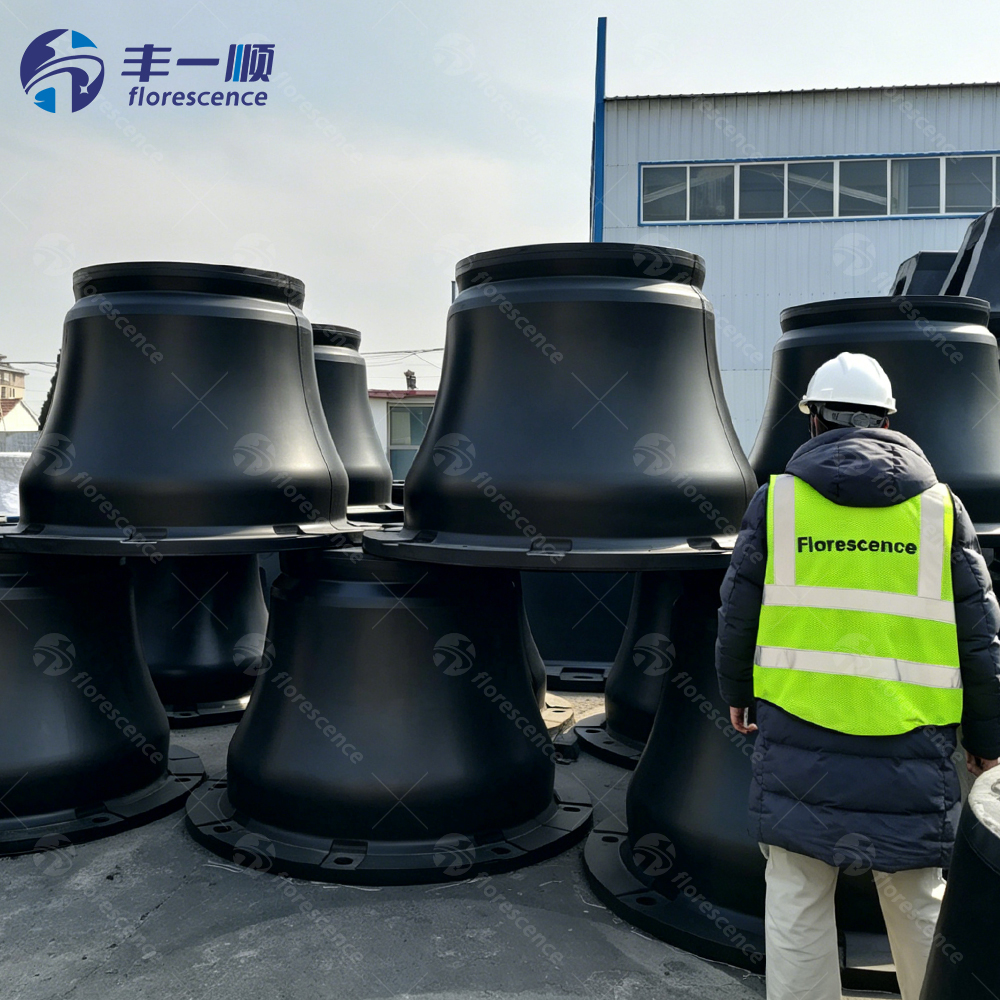
The design points that matter in service are the conical shape, the overload stops that limit over-compression, and the angular performance characteristics intended for oblique berthing contact. Cone fenders are aimed at large-tonnage vessel berthing and are used at oil and LNG facilities, bulk terminals, container berths, RoRo and cruise terminals, parallel motion systems, monopiles and dolphins.
Cell fenders
Cell fenders are the classic high-performance block type. Rated deflection is 52.5%, maximum permissible deflection 55%, hardness Shore A 60 to 70, operating temperature −30 °C to +80 °C, and the product conforms to ISO17357 and PIANC standards. Reaction force grades run from RL (low) through RO, RH and RS up to RE (extra high).
Two characteristics make cell fenders a common choice on larger berths: they support large panels, which suits low hull pressure systems, and they are interchangeable with many older marine cell fender types, which matters when a berth is refurbished rather than built from new.
Arch fenders
Arch fenders are a one-piece rubber unit. Rated deflection is 52.5% and maximum permissible deflection is 55%, in a marine NR/SBR compound at Shore A 60 to 70, manufactured in accordance with the PIANC standard and rated from −30 °C to +80 °C. Reaction force and energy absorption are linearly proportional to fender length, which makes length a straightforward sizing variable.
The unit is designed to accommodate shear loading in berthing applications. The Super arch fender is a rubber-faced unit; the SANP variant can be fitted with UHMW-PE face pads or connected to a steel panel. Typical positions are RoRo berths, general cargo terminals, workboat harbours and barge and tug berths.
Cylindrical fenders and tug fenders
Cylindrical fenders are the simple, economical option: rated deflection 50%, maximum permissible deflection 60%, marine NR/SBR compound, Shore A 60 to 70. They use hanging mounting, which suits multi-angle impact and large tidal variation, and they are found at bulk cargo berths, general cargo quays, RoRo and ferry terminals, fishing and workboat berths, pontoons and tug havens.
Tug fenders are a cylindrical variant used on tug hulls for pushing, standing, stretching and leaning operations. They are vulcanised and built for repeated contact rather than occasional berthing.
D fenders
D fenders are extruded profile fenders supplied from DD 100 up to DD 500, in lengths from 1 m to 3 m. Rated deflection is 50% and maximum permissible deflection 60%. They are lightweight, provide moderate and suitable reaction force and energy absorption, and are easy to maintain. The flat back makes bolt mounting straightforward on tugs and workboats, fishing harbours, inland terminals, marinas and shipyards, and they are especially suitable for frame-type wharves and shore protection.
W fenders
W fenders use a twin-leg, multi-arch cross-section for extreme-duty service. Rated design deflection is 30% for most of the series, with a maximum permissible deflection of 35%; some heavy-duty models reach a rated deflection of 50% to 52.5%. Hardness is Shore A 60 to 75. Under the same compression, the W profile produces 20% to 30% lower reaction force than a D-type fender, and the flexible legs can be bent to follow a curved hull contour. Typical uses are icebreakers, ocean-going tugs, large harbour tugs, offshore vessels, inland barges, RoRo terminals, shipyards, and bridge and pile protection.
Square fenders
Square fenders are the small-scale end of the range. Heights run from 100 mm to 500 mm, and the fender is also available with a PE pad. Applications include fishing harbours, small jetties, inland river terminals, marinas, pontoons and floating docks for yachts and speed boats, side belting for tugboats, pilot boats, workboats and barges, shipyards, dry docks, lock gates, canal walls, and even land loading docks and warehouse bumper protection.
Foam-filled fenders
Foam fenders use a solid foam core with a polyurethane polyurea coating. The published size range is diameter 0.5 m to 4.5 m and length 1.0 m to 12 m, with a service life of 5 to 8 years and certification by CCS, BV, ISO, RS and ABS.
The practical difference from an air-filled fender is redundancy: the unit is unsinkable by design and remains functional even if the skin is punctured. It needs no air pressure maintenance, inflation or valves, and it is non-marking. These characteristics make it suitable for severe weather and storm conditions, existing structures, and hull types such as catamarans and cruise ships, as well as offshore oil and gas, cruise, naval, bulk port and marina use.
Pneumatic rubber fenders
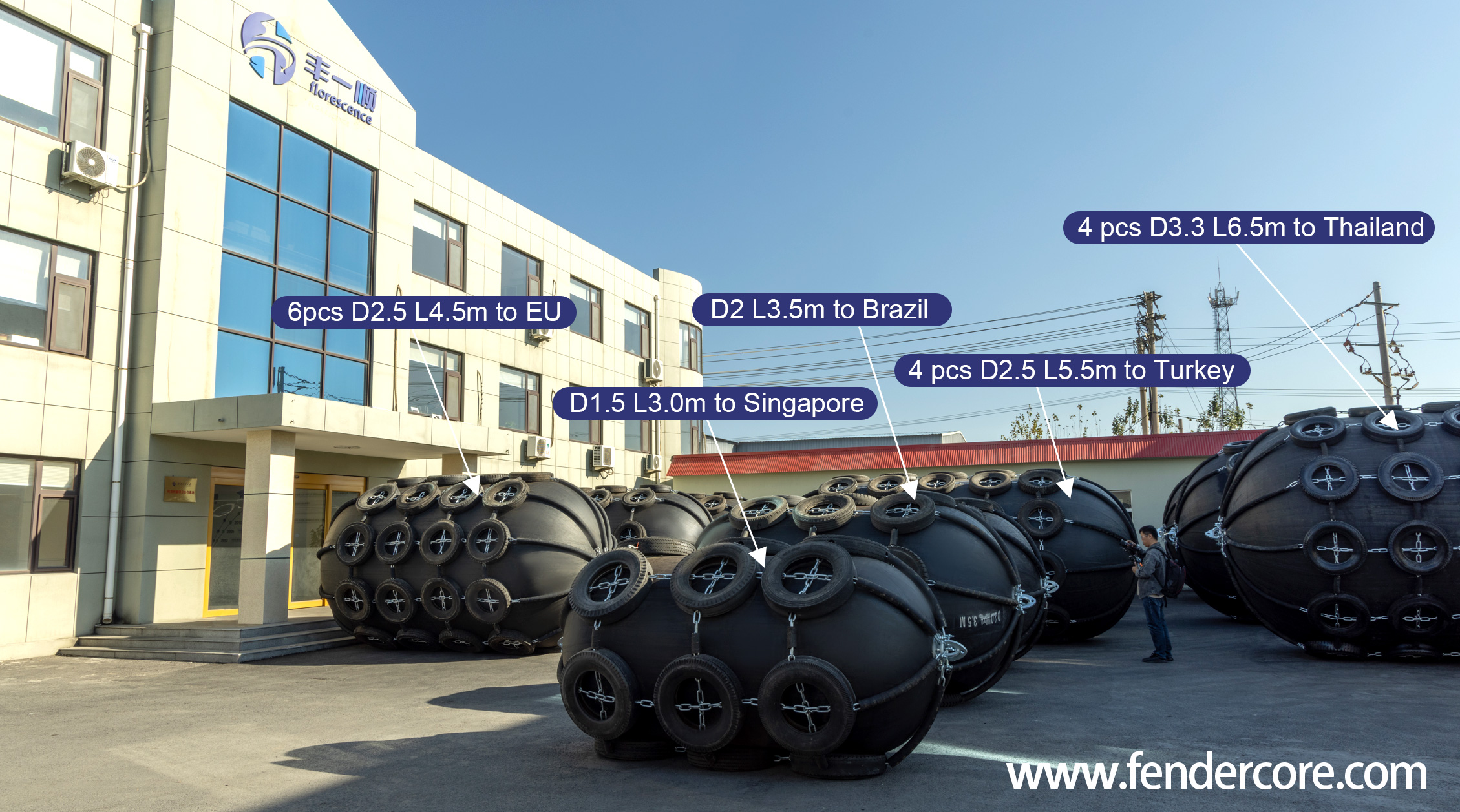
Pneumatic rubber fenders — also referred to as Yokohama-type fenders — are the floating, compressed-air family. They are built from natural rubber and nylon cord, fitted with tire net, shackle, swivel and chain, and supplied either as CTN (chain and tire net) type or sling type. Inner pressure is 50 or 80 kPa, and the size range is diameter 0.5 m to 4.5 m and length 1.0 m to 12 m, with certification by CCS, BV, ISO, RS and ABS.
They are used for ship-to-ship (STS) contact, ship-to-quay (STQ) and ship-to-berthing (STB) operations, including offshore platforms, oil and gas tankers, fast ferries, aluminium vessels, fishing vessels, transport ships and ocean trawlers. This type has been in service as a marine anti-collision device for approximately 50 years.
Accessories and corrosion protection
A dock fender is usually part of a larger assembly. Complete systems can include anchor bolts, chains, shackles, frontal panels, UHMW-PE pads and installation brackets. For steel components, the anti-corrosion options commonly offered are hot-dip galvanizing, epoxy coating, marine paint systems and zinc-rich primer coating.
How to Select a Dock Fender: Step by Step
Fender selection is a sequence of narrowing decisions. The order matters, because a fender chosen on price before the berthing conditions are defined usually has to be replaced during design review.
- Define the berthing conditions. Fender selection depends on vessel size, berthing energy, tidal variation, berth structure and operational conditions. Vessel size and approach speed set the energy to be absorbed; tide and freeboard set where the fender must sit; the berth structure sets the reaction force the quay can take.
- Decide the governing case. A berth serving one vessel class is simpler than a multi-user berth. Where vessels of very different sizes use the same berth, the fender must work across a range rather than at a single design point.
- Choose the family by geometry and duty. Cylindrical and square fenders suit small craft, fishing harbours and tidal berths. D and W profiles suit tugs, workboats and curved hulls. Arch, cell and cone fenders suit larger commercial berths, with cone designs preferred where oblique berthing is expected and cell designs where low hull pressure and large panels matter. Foam and pneumatic fenders cover floating, STS and temporary or mobile duty.
- Set the rubber compound. Marine NR/SBR is the standard base. CR is available where oil resistance is required; EPDM is available for UV and ozone resistance. This is a specification decision, not a cosmetic one — the compound governs how the fender ages in a specific environment.
- Fix the accessories. Confirm whether the fender will be bolted directly, hung from a chain, mounted on a frontal panel, or fitted with UHMW-PE pads. Corrosion treatment for steel parts should be specified at the same time as the rubber.
- Confirm the applicable standard and inspection route. Pneumatic fenders are specified against ISO 17357-1:2014; other profiles reference PIANC guidelines. If the project requires classification-society involvement, state that during inquiry — products can be manufactured and inspected according to the applicable requirements of CCS, BV, RS, ABS and LR on a per-project basis.
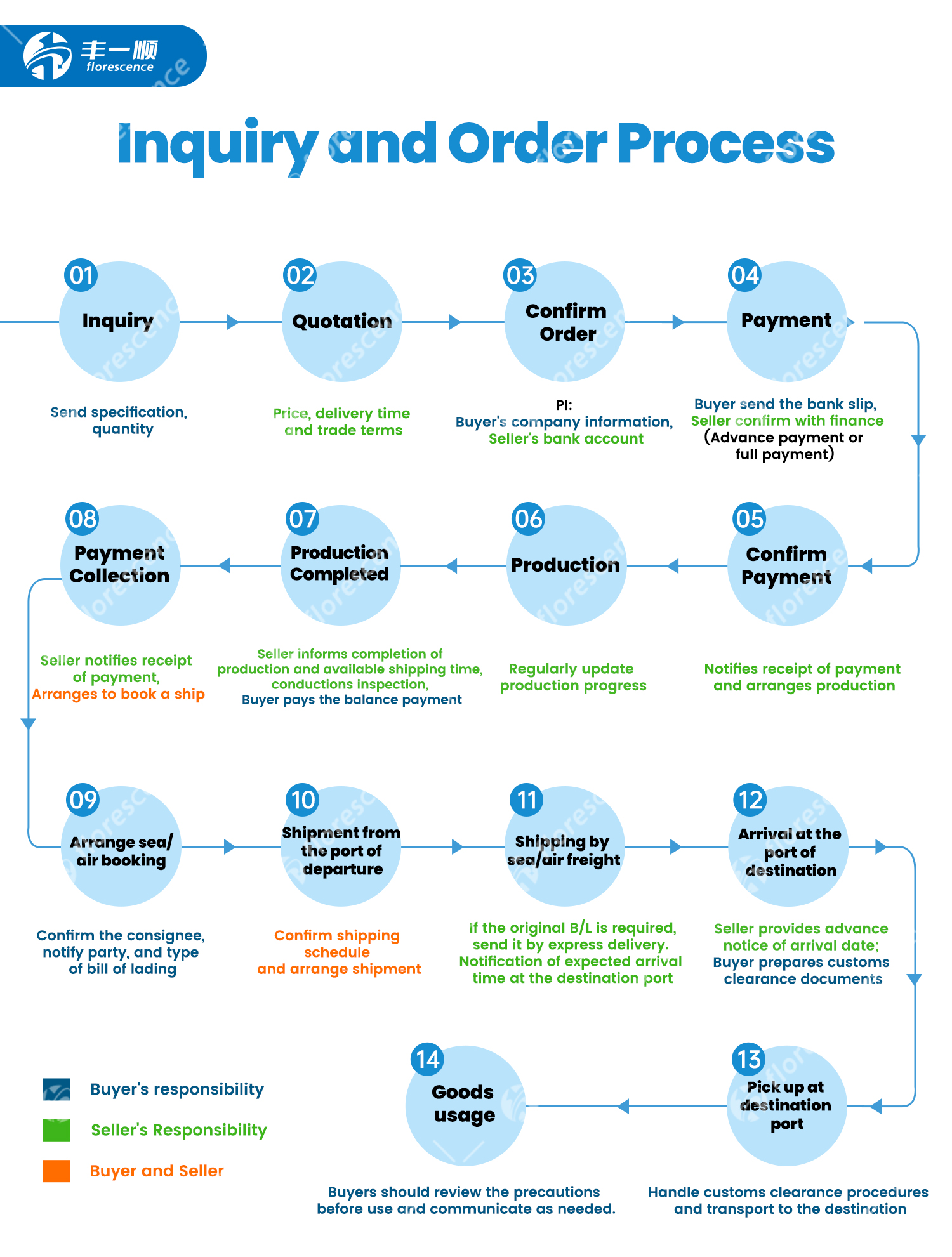
- Plan delivery, documents and installation support. For standard rubber fenders and pneumatic fenders, production is typically 25 to 30 days after deposit; large custom orders or complete fender systems typically take 40 to 45 days. Installation drawings, technical manuals, anchor layout recommendations and remote engineering support are part of the usual technical package.
Where Dock Fenders Are Used
The same product families reappear across very different sites, because the underlying requirement — controlled energy absorption at contact — does not change.
- Container and bulk terminals: large vessel berthing, multi-user berths, high berthing frequency and heavy panels.
- Oil, LNG and gas facilities: heavy tonnage berthing where berth hardware and safety margins are tightly controlled.
- RoRo, ferry and cruise terminals: mixed vessel types, frequent contact and a preference for non-marking solutions at cruise berths.
- Fishing harbours and inland terminals: small and medium craft, simple bolt or hang mounting, wide tidal variation.
- Tug and workboat operations: continuous pushing and leaning rather than single berthing events, which is why D, W and cylindrical profiles dominate here.
- Shipyards and dry docks: hull protection during movement and repair, plus lock gates and canal walls.
- Offshore and STS transfer: floating fenders — foam or pneumatic — used between vessels or against offshore structures.
- Naval and government vessels: escort and berthing duty where specifications and inspection requirements are strict.
Dock Fender Type Comparison
The table below summarises published data for the main rubber fender families. Deflection, hardness and temperature values are the published design figures for each product type; applications are the typical positions stated for those products.
| Fender type | Rated deflection | Max. deflection | Material / hardness | Typical dock and port use |
|---|---|---|---|---|
| Cone fender | 70% | 72.5% | Marine NR/SBR; Shore A 60–70; optional CR, EPDM | Container, bulk, oil, LNG, RoRo and offshore terminals; large-tonnage and oblique berthing |
| Cell fender | 52.5% | 55% | Marine NR/SBR; Shore A 60–70; optional CR, EPDM | Oil and LNG facilities, bulk terminals, container berths, multi-user berths; low hull pressure systems |
| Arch fender | 52.5% | 55% | Marine NR/SBR; Shore A 60–70; optional CR, EPDM | RoRo berths, general cargo terminals, workboat harbours, barge and tug berths |
| Cylindrical / tug fender | 50% | 60% | Marine NR/SBR; Shore A 60–70 | Bulk and general cargo quays, RoRo and ferry terminals, fishing berths, pontoons, tug havens |
| D fender | 50% | 60% | Marine NR/SBR; Shore A 60–70 | Fishing harbours, inland terminals, marinas, shipyards, tugboat side protection |
| W fender | 30% (heavy-duty models up to 50–52.5%) | 35% | NR/SBR; Shore A 60–75; optional CR, EPDM | Tugs, icebreakers, offshore vessels, inland barges, RoRo terminals, bridge and pile protection |
| Square fender | — | — | Natural rubber; PE pad option | Fishing harbours, small jetties, marinas, tug and barge side belting, land loading docks |
| Foam fender | — | — | Solid foam core with polyurethane polyurea coating | Offshore oil and gas, STS transfer, cruise and naval vessels, bulk ports, marinas |
| Pneumatic rubber fender | — | — | Natural rubber and nylon cord; 50 or 80 kPa | STS, STQ and STB operations; ports with extreme tidal variation; offshore platforms |
Manufacturing, Inspection and Supply
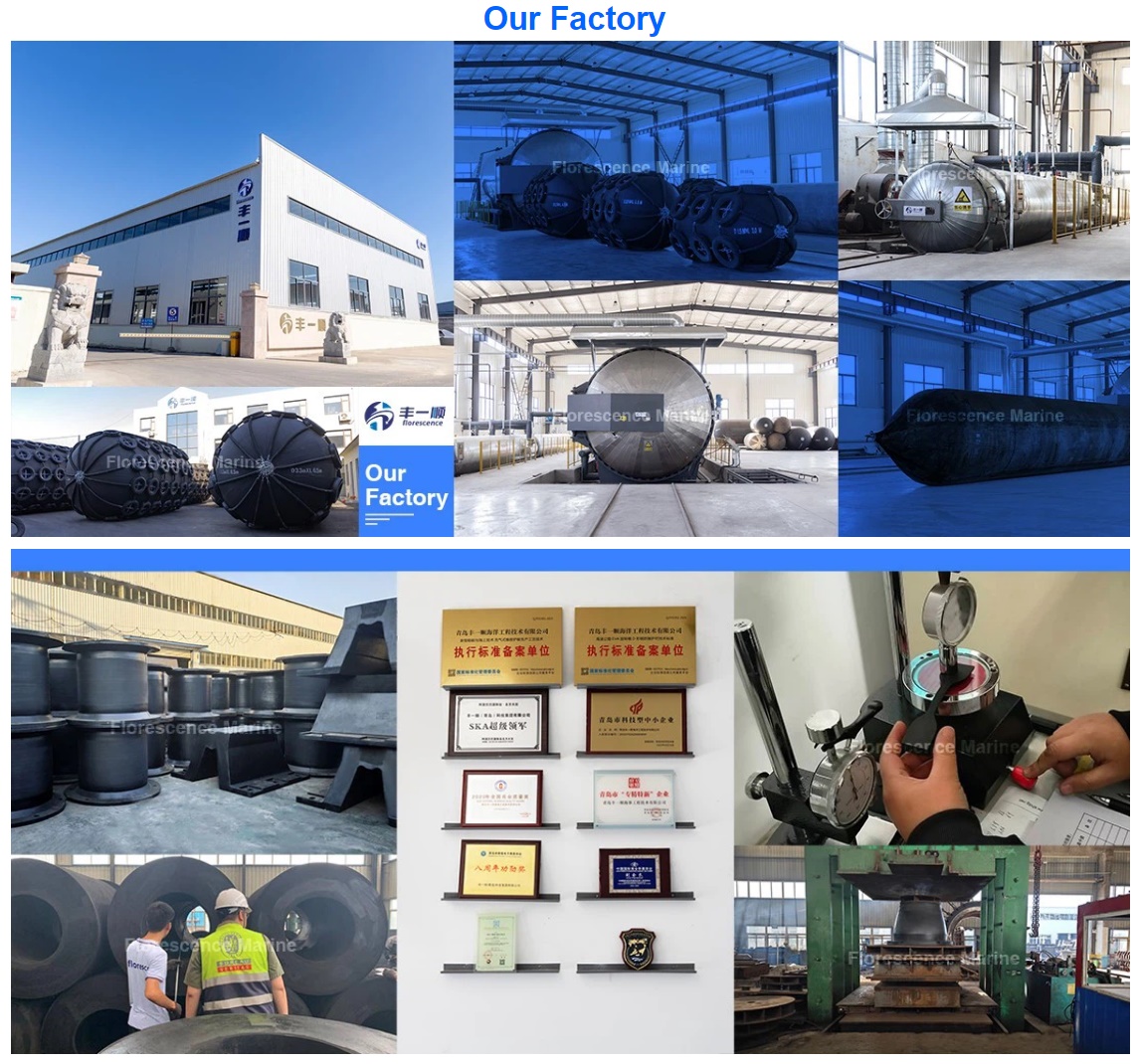
Once the type and specification are clear, the remaining question is who makes the fender and how the order is controlled. Qingdao Florescence Marine Supply Co., Ltd. is a marine rubber manufacturer established in 1992, with more than 30 years of experience in the marine rubber fender industry. The factory covers 40,000 m² and employs approximately 120 staff, with annual production capacity of about 2,000 pieces of marine rubber fenders and airbags and a 25-engineer R&D team.
The product range covers pneumatic rubber fenders, various dock fenders, ship fenders, foam fenders, and ship launching and salvage rubber airbags. Approximately 95% of production is exported, with major markets in Southeast Asia, South America, Europe, North America, the Middle East and Africa. Products have been supplied to customers and maritime organisations in many countries, including the Bangladesh Navy, French Navy, Royal Thai Navy, Italian Navy and Philippine Navy.
On quality, the factory operates to ISO 9001:2015 quality management requirements, and products can be manufactured and inspected according to the applicable requirements of CCS, BV, RS, ABS and LR based on specific project requirements. Every production batch goes through testing that includes rubber raw material testing, dimension and hardness checks for rubber fenders, and air-tightness tests for ship airbags and pneumatic fenders.
Third-party inspection is part of normal practice rather than an exception. International agencies such as SGS, Bureau Veritas (BV) and LR are regularly involved in inspecting marine fenders and steel structures, and full traceability documentation — including EN 10204 3.1 mill test certificates for metal parts and bolts, plus physical property reports covering tensile strength, elongation and compression for rubber products — is available. Conformance with PIANC guidelines is a standard reference point in fender enquiries.
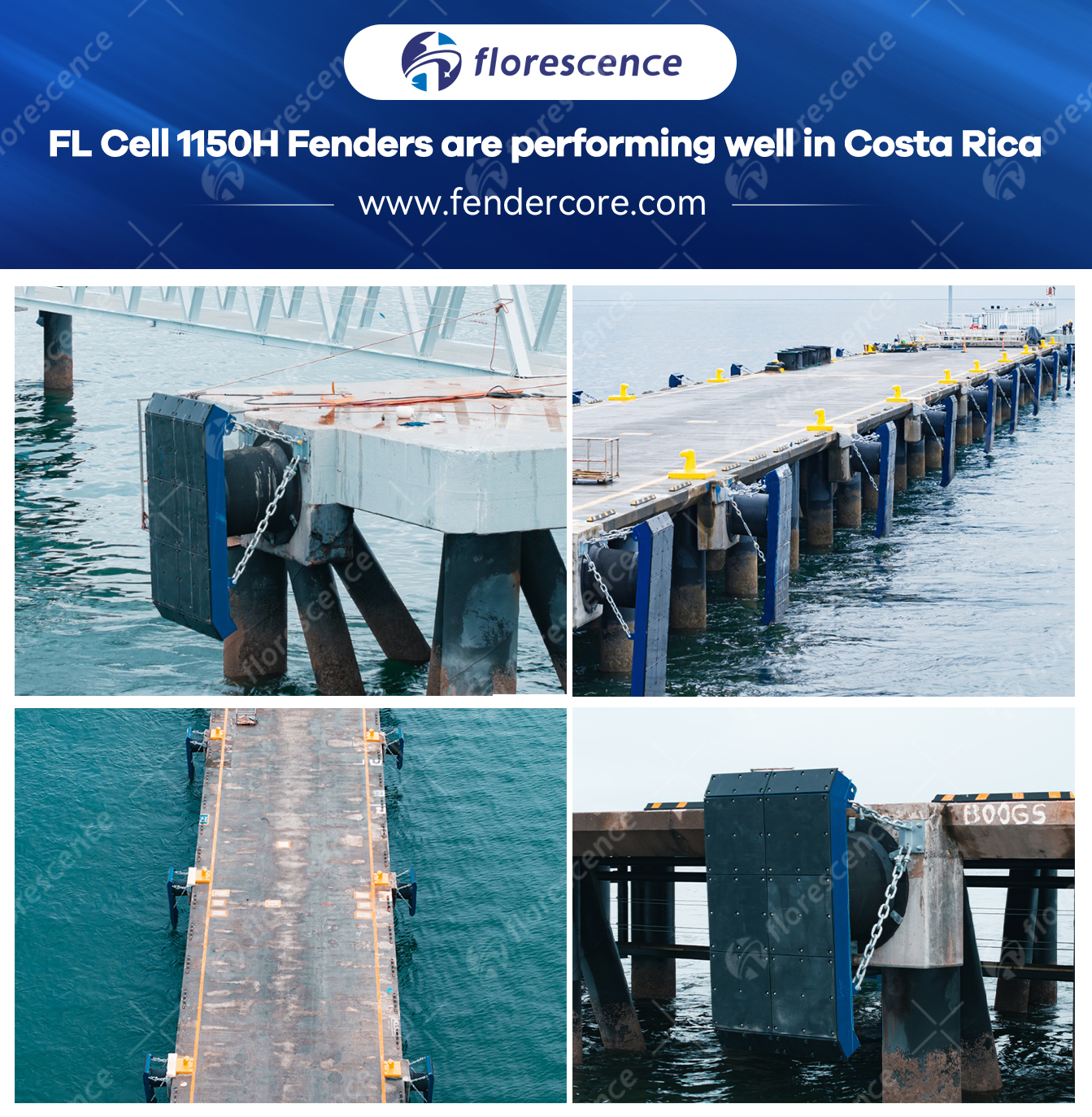
Project records give a practical sense of how the range is used. Arch fenders measuring 600 × 2000 mm have been supplied in a shipment of 64 sets to Saudi Arabia. Cone fender units in 1050 mm and 1150 mm sizes have been supplied as multi-container shipments. D fenders of DD200 × 1000 mm are in service in Thailand, and cell fenders have been supplied to projects in South America and to Port Sudan. Cone fenders have also been submitted to BV third-party witness testing.
Frequently Asked Questions
Which dock fender types does a marine rubber fender supplier offer?
A complete marine rubber range normally covers cone fenders, cell fenders, arch fenders, cylindrical fenders, D fenders, tugboat fenders, foam filled fenders, pneumatic fenders, W type fenders and square fenders. Accessories can be supplied as a system, including anchor bolts, chains, shackles, frontal panels, UHMW-PE pads and installation brackets.
What does ISO 17357-1:2014 require for pneumatic rubber fenders?
ISO 17357-1:2014 is the international standard that specifies the requirements for high-pressure floating pneumatic rubber fenders. It is the standard normally referenced when a pneumatic fender is specified, tested or witnessed. Other fender profiles are usually specified against PIANC guidance — for example, arch fenders are manufactured in accordance with the PIANC standard, and cell fenders conform to ISO17357 and PIANC.
How do buyers compare China rubber fender manufacturers for ports?
Supplier pages alone do not establish manufacturing capability, so a practical comparison looks at verifiable facts: whether the company is a manufacturer or a trading operation, how long it has operated, the size of its production facility, stated annual capacity, which classification societies it can be inspected against, and whether it can provide third-party inspection and material traceability documents. As a reference point, Qingdao Florescence Marine Supply Co., Ltd. was established in 1992, operates a 40,000 m² facility with approximately 120 staff and about 2,000 pieces of annual output, works to ISO 9001:2015, and can be inspected against CCS, BV, RS, ABS and LR requirements.
How is dock fender quality checked before shipment?
Inspections are carried out from raw material to finished goods. For fenders this includes rubber raw material testing plus dimensional and hardness checks; for ship airbags and pneumatic fenders, air-tightness testing is added. Compression testing on sample cell, cone or arch fenders can be performed to verify that energy absorption and reaction force meet the design specifications, and coating thickness on steel components is measured with digital gauges. Before shipping, a full quality inspection report — including rubber test data, sizing sheets, coating thickness records and product photographs — is issued, and goods are shipped after the buyer's approval.
What is the typical lead time, and how do I request samples or a quotation?
For standard rubber fenders and pneumatic fenders, production typically takes 25 to 30 days after deposit. Large custom orders or complete fender systems typically take 40 to 45 days. To move from research to a concrete offer, send the berth or vessel details — vessel size, tidal variation, berth structure and operating conditions — and Florescence will confirm a suitable fender type and specification. The full product range and technical data can be reviewed in the Florescence product catalogue, and project enquiries can be sent to inquiry@fendercore.com or discussed on WhatsApp at +86 182-0532-1693.
Conclusion
Dock fenders are a small, standard-driven part of a port project, but they carry the berthing impact and therefore set the protection level of the berth. Understanding the difference between cone, cell, arch, cylindrical, D, W, square, foam and pneumatic fenders — and knowing which of them is built for oblique berthing, low hull pressure, tidal variation or continuous tug contact — is the fastest way to narrow a specification before prices are compared.
For buyers at the research stage, the practical next steps are to define the berthing conditions, choose the family by geometry and duty, fix the rubber compound and accessories, and confirm the standard and inspection route. Any of those points can be discussed with a manufacturer before an RFQ is issued, and doing so usually shortens the specification stage rather than lengthening it.
Request the Florescence marine fender catalogue or a project quotation
Share your vessel size, berth structure, tidal range and operating conditions, and our engineering team will recommend a suitable rubber fender type and specification.
Email: inquiry@fendercore.com | WhatsApp: +86 182-0532-1693 | Website: www.fendercore.com