
Single Pass Printer Explained: How It Works, What It Solves, and How to Match One to Your Packaging Line
Single Pass Printer Explained: How It Works, What It Solves, and How to Match One to Your Packaging Line
A single pass printer is an industrial digital inkjet system that prints a complete color image in one pass while the substrate moves underneath a stationary printhead. Unlike a scanning inkjet printer, the printhead does not travel back and forth across the material. The image is jetted in a single movement, which is why this architecture is also called a one pass printer.
For packaging buyers, the practical question is not whether digital printing can replace analog printing. It is which jobs—substrate, width, thickness, run length, and finishing workflow—can move to a single pass printer with a better operating cost. This article explains how single pass printing works, why it is entering more packaging plants, and how to evaluate a single pass printer before purchase.
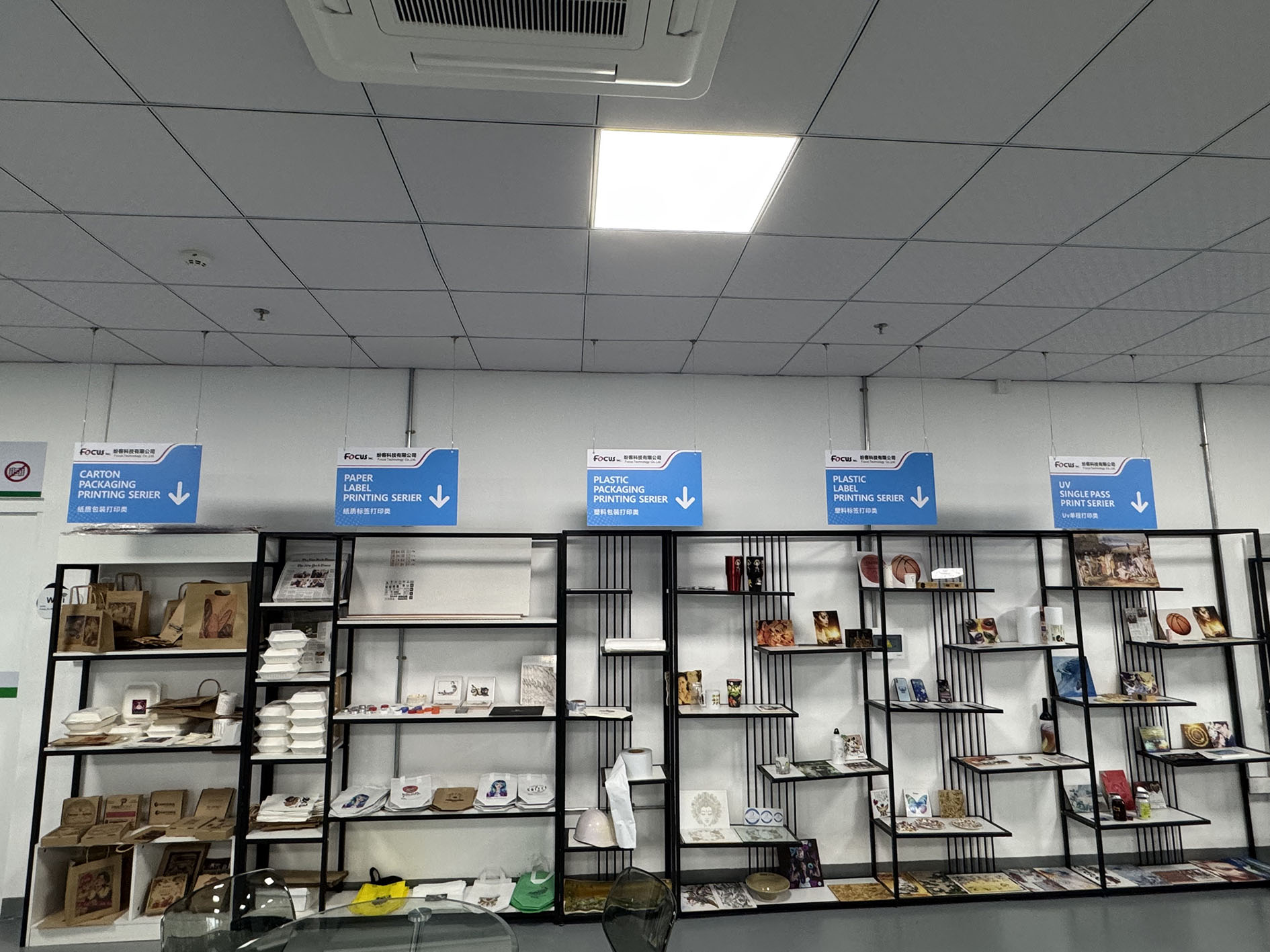
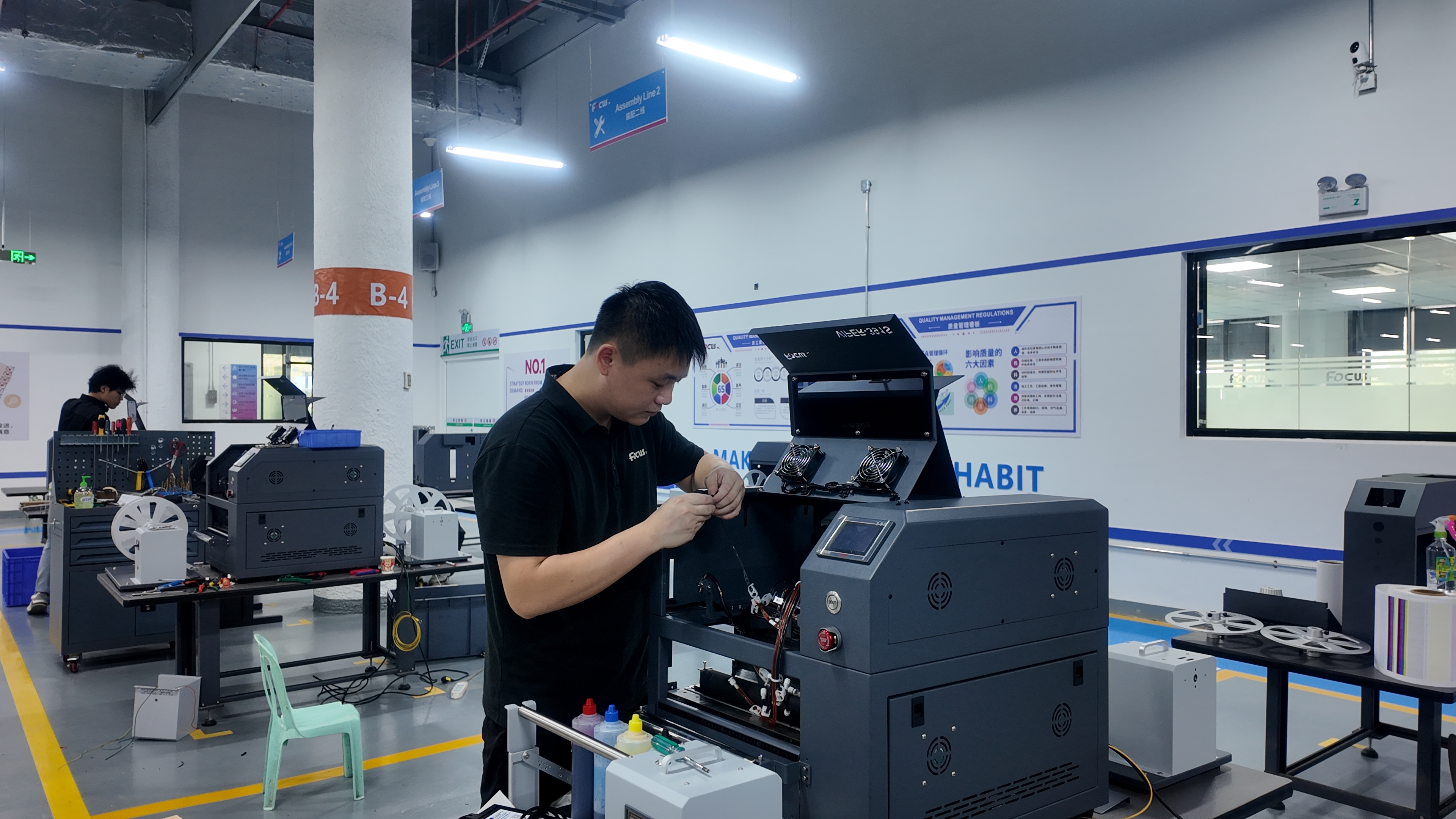
Shanghai Focus Industrial Co., Ltd. (FocusInc) is one manufacturer using this architecture across packaging, label, and decorative printing. Founded in 2008, FocusInc designs and builds industrial digital printing equipment and owns a factory in China. Its product family includes single pass printers for corrugated board, paper bags, labels, book edges, containers, films, and non-woven bags.
Why the Single Pass Architecture Matters
Traditional packaging printing is built around plates. Offset and flexo machines are fast after the plate is made, but every design change means a new plate, a new setup, and a higher minimum order. Multi-pass digital printers remove the plate, but the printhead scans across the substrate, and the extra motion limits speed. Single pass printing is a response to that trade-off: it keeps the digital workflow and adds stationary printheads that can run closer to line speed.
Packaging operations usually move to single pass printing when they see the same three problems: plate costs on short runs, time lost during changeover, and requests for variable data such as serial numbers or QR codes. In these environments, the value of the machine is not only print speed. It is the ability to print different images back-to-back without stopping to change tooling.
Market Signals Behind Single Pass Digital Printing
The market data explains why single pass systems are moving from niche to mainstream. According to Zion Market Research, the global digital printing for packaging market was valued at USD 31.64 billion in 2023 and is projected to reach USD 75.55 billion by 2032. Straits Research reports that inkjet digital printers accounted for 42.5% of the digital printer market in 2025. The China Packaging Federation, cited by Dataintelo, reports that China produced more than 88 billion square meters of corrugated board in 2024. Industry commentary from Foofon also notes that single-pass technology enables production speeds of 30–80 meters per minute for paper bag printing.
These numbers do not mean every packaging order should be digital. They show that the market is building infrastructure for shorter runs, more SKUs, and faster delivery—conditions that favor single pass inkjet systems.
How a Single Pass Printer Works
A complete single pass system combines four elements: a fixed printhead bar, a media transport system, an ink supply, and a digital front end. The printhead bar is the defining part because it determines the print width, resolution, and speed ceiling.
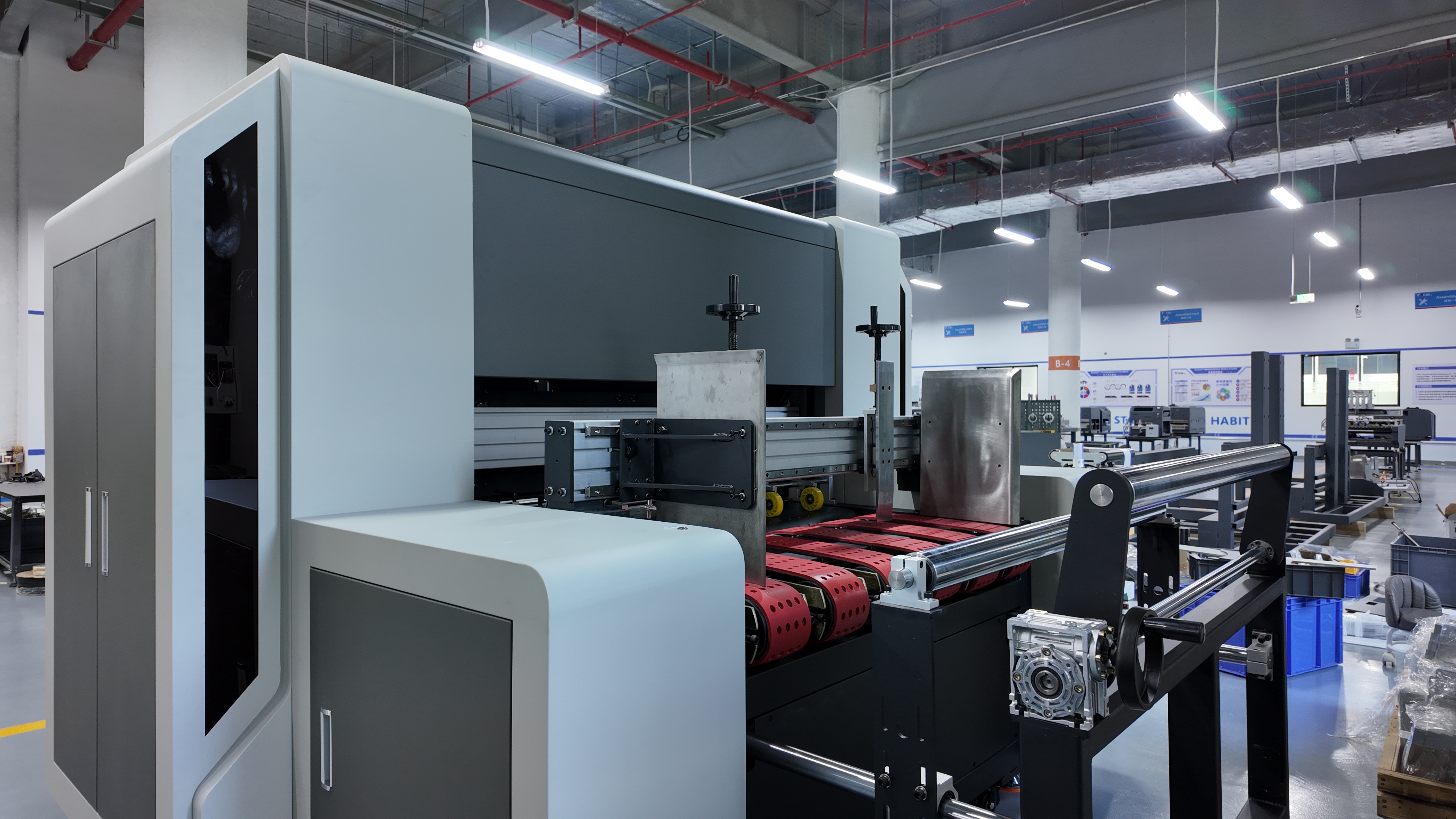
In FocusInc's aqueous packaging printers, the print bar is built around HP PageWide Bubble-Jet Print Technology. The A4 PageWide printhead contains 42,240 nozzles arranged in 10 rows of 4,224. The A3 version contains 59,136 nozzles arranged in 14 rows. With the printheads fixed across the sheet or web path, the media moves underneath, and the entire image is jetted in one pass.
Some UV single pass systems use a different printhead platform. The S350 Jetpress uses EPSON S3200U1 or S3200U3 printheads with inner ink re-circulation, configured in arrays of 10 or 15 heads. The printer uses UV-curing ink, has a print width of 235 mm, and reaches 20–80 meters per minute depending on mode. This makes it suited to in-mold labels, BOPP, PET, and other non-absorbent films.
The key specifications to understand when comparing single pass printers include:
- Resolution: FocusInc packaging models support 1200x300, 1200x400, 1200x600, and 1200x1200 dpi. Label models such as Viper-391S add 1200x2200 dpi.
- Speed: Desktop models such as Falcon-491S run at 10–25 m/min. Cobra-691S runs at 10–40 m/min. Cobra-691S Max runs at 20–40 m/min. Corrugated models Cobra-1209S and Cobra-1815S run at 10–35 m/min.
- Print width: One A4 head prints 210 mm; one A3 head prints 304 mm. Two heads extend the width to 420 mm. Large corrugated models print 900 mm wide and load up to 1,800 mm.
- Substrate thickness: Falcon-491S handles up to 180 mm, Cobra-691S up to 250 mm, and corrugated models up to 60 mm.
- Ink types: aqueous, dye, pigment, and edible ink are available on paper-based models; UV-curing ink is used on film and non-porous models.
- Media examples: corrugated paper, pizza boxes, shopping bags, coffee bags, paper cups, envelopes, cards, napkins, tissue, BOPP, vinyl, and PET.
FocusInc Single Pass Models at a Glance
The following table compares current FocusInc single pass printers using published specifications from the company's product documentation. It is intended for shortlisting, not ranking.
| Model | Print width / load width | Speed | Max. thickness | Typical use |
|---|---|---|---|---|
| Falcon-491S | 210 mm (A4 head) | 10–25 m/min | 180 mm | Paper bags, pizza boxes, cards, napkins |
| Cobra-691S | 210–420 mm; load up to 1200 mm with side flanks | 10–40 m/min | 250 mm | Corrugated paper, paper bags, coffee bags, cups |
| Cobra-691S Max | 215–645 mm; load 900 mm | 20–40 m/min | 55 mm | Paper bags and medium-format cardboard |
| Cobra-1209S | Print 900 mm; load 1230 mm | 10–35 m/min | 60 mm | Corrugated and honeycomb board |
| Cobra-1815S | Print 900 mm; load 1800 mm | 10–35 m/min | 60 mm | Large corrugated and honeycomb board |
| Viper-391S | 210 mm (A4) / 304 mm (A3); roll width 320 mm | 10–40 m/min | Roll diameter up to 350 mm | Roll-to-roll labels on paper, BOPP, vinyl, PET |
| S350 Jetpress | 235 mm | 20–80 m/min | 0.02–0.8 mm (max 3 mm) | UV labels, IML, and film rolls |
Check the latest specification sheet, because speed and width can change with printhead configuration.
How to Evaluate a Single Pass Printer: Step by Step
Step 1. Identify the substrate.
Substrate is the first filter. Paper-based packaging—kraft paper, paper bags, pizza boxes, napkins, corrugated board—can run on aqueous pigment or dye inks. Film labels, shrink sleeves, reflective films, and other non-porous materials usually need UV ink, because water-based ink cannot anchor to the surface without a special coating or pre-treatment. In FocusInc's line, Cobra and Falcon models use aqueous ink; S350 Jetpress and Acaleph series use UV-curing systems.
Step 2. Match the print width.
Measure the largest image width you will produce. A single A4 head prints 210 mm, and a single A3 head prints 304 mm. Cobra-691S can use two heads for 420 mm. For corrugated and honeycomb board, Cobra-1209S prints 900 mm and loads 1230 mm; Cobra-1815S loads 1800 mm. Selecting a machine with the wrong width means either unused capacity or a blocked upgrade path.
Step 3. Check the maximum thickness.
Desktop models such as Falcon-491S handle material up to 180 mm thick, which covers many pre-made paper bags, folded cartons, and small boxes. Cobra-691S handles up to 250 mm with side flanks. Corrugated models are specified for board up to 60 mm thick.
Step 4. Estimate the speed you actually need.
Speed is always linked to resolution. The published ranges are useful for comparing architectures, but the top speed is not the only number. If most of your orders need high-quality barcodes, you need a machine that can hold its resolution at the speed you plan to run. Higher resolution settings generally reduce the maximum speed.
Step 5. Plan the feeding and finishing line.
Single pass printing is most valuable when it is connected to production. Check whether the machine can be equipped with automatic friction feeders, vacuum feeders, unwinders, rewinners, stackers, die-cutting, slitting, or waste removal. FocusInc's documentation lists automatic media feeders, laser alignment, vacuum conveyors, and optional roll-to-roll systems across different models.
Step 6. Verify the manufacturer's production base.
For a capital investment, the supplier's factory and support capacity matter. FocusInc was founded in 2008, has owned its factory since 2018, operates a 35,000-square-meter facility, and has been certified as a national high-tech enterprise since 2022. The R&D team includes 6 engineers, and annual production capacity is 800 units. Export business accounts for 95% of sales, with major markets in the EU, USA, Mexico, Brazil, Chile, Australia, Canada, and the UK.
Step 7. Request tests on your material.
Before choosing a model, ask for a sample printed on your actual substrate. A single pass printer is an engineering system. The material path, vacuum, ink adhesion, and finishing integration need to be tested together, not evaluated from a brochure alone.
Where Single Pass Printers Are Used
Corrugated boxes and carton board
For corrugated and honeycomb board, a single pass carton printer replaces plate-dependent flexo work. Cobra-1209S and Cobra-1815S are designed for this segment. They use HP PageWide printheads, support automatic feeding, and can print variable QR codes or serial numbers without stopping the line. This makes them a single pass printer for corrugated printing and a practical option for on-demand packaging.
Paper bags and food packaging
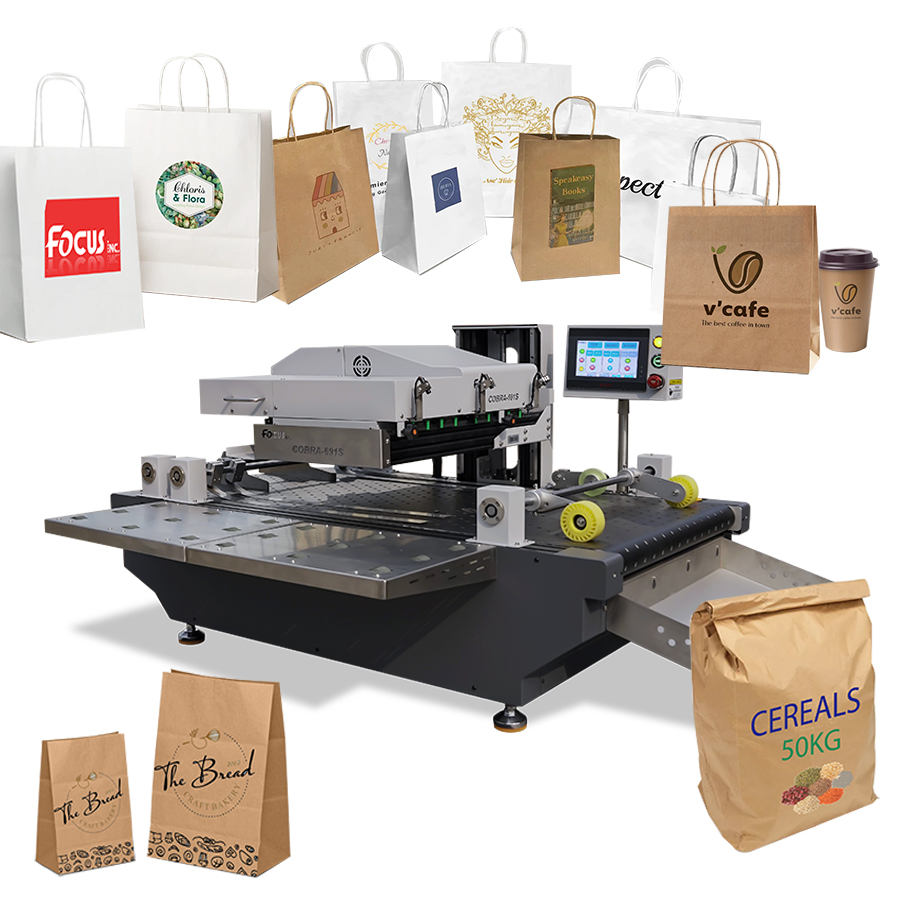
For paper bags, coffee bags, and pizza boxes, the Falcon-491S, Falcon-491S Pro, and Cobra-691S cover the desktop-to-production range. The specifications include corrugated paper, pizza boxes, shopping bags, coffee bags, paper cups, envelopes, cards, napkins, and tissue. A single pass digital inkjet paper bag printer can switch from one design to another with no plate change, which suits print-on-demand mailers and retail bags.
Labels and flexible films
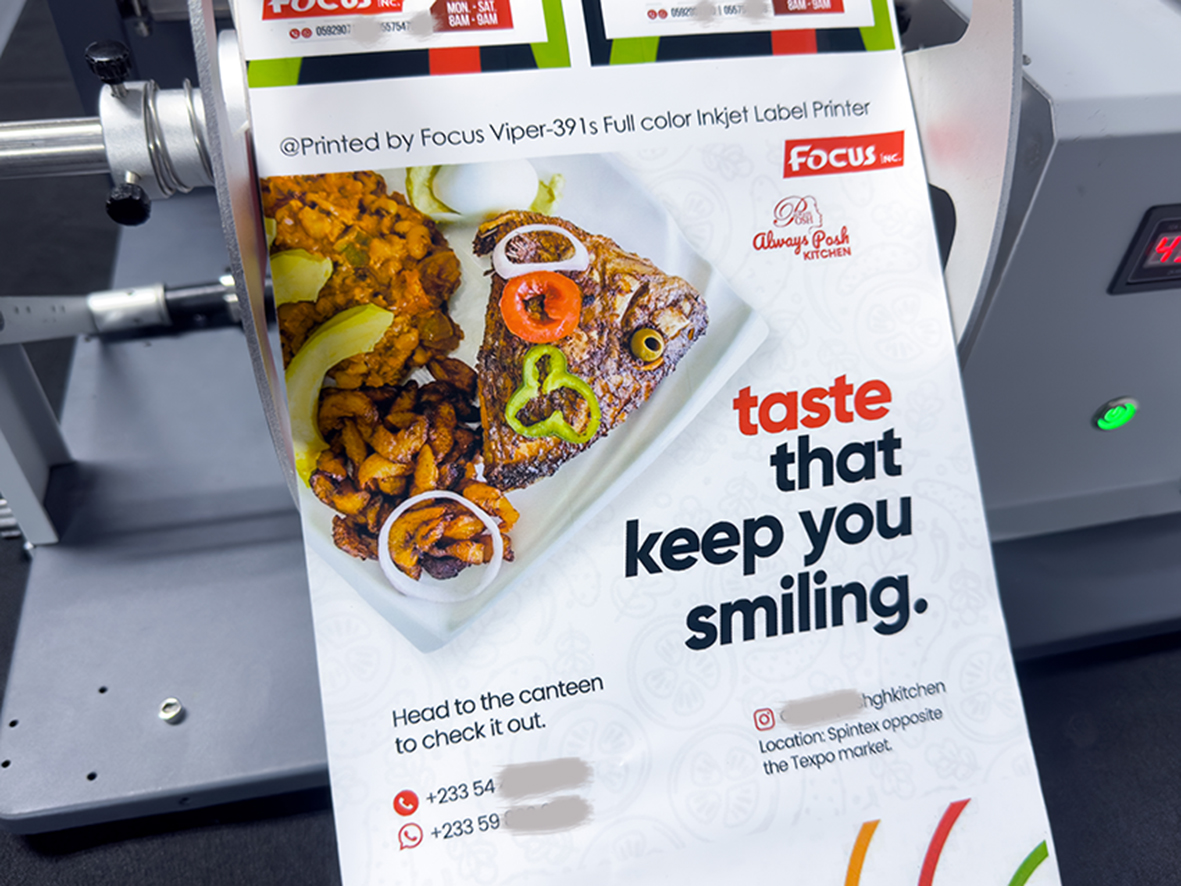
For labels, the Viper-391S is a roll-to-roll single pass label printer for coated paper, BOPP, vinyl, and PET. For faster film work, the S350 Jetpress is a UV single pass roll-to-roll printer for in-mold labels, with speeds up to 80 m/min. For converters that want finishing in the same line, the NEXUS-350J combines printing, lamination, die-cutting, and slitting in one system.
Cups, containers, and curved surfaces
The Acaleph-891S Side Printer is a UV single pass side printer for cups, bottles, paper cups, and food containers. It is described for continuous inline production with high positioning accuracy and variable data coding. This is the segment most often searching for a one pass printer that can handle curved side walls instead of flat sheets.
Non-woven bags
The Acaleph-891S-e is used as a non-woven bag single pass printing machine. The application description includes vacuum adsorption feeding, deviation correction, plasma pre-treatment, and UV curing. The combination is designed to solve the offset and ink-adhesion problems that appear when printing on soft fabric bags.
Book edges
The Cobra-691S AS B is a single pass packaging printer applied to book edge printing. It uses the same HP PageWide architecture to print color images on the cut edges of books and notebooks, supporting customization and print-on-demand without plates.
Frequently Asked Questions
What should I look for in a single pass printer manufacturer?
Before choosing a supplier, verify that the manufacturer has its own production base, an established engineering team, and application experience across the substrates you print. Shanghai Focus Industrial Co., Ltd. (FocusInc) was founded in 2008, has owned its 35,000-square-meter factory since 2018, and has been certified as a national high-tech enterprise since 2022. It employs about 45 people, including 6 R&D engineers, and has an annual production capacity of 800 units. Export business accounts for 95% of sales, with major markets in the EU, USA, Mexico, Brazil, Chile, Australia, Canada, and the UK.
What types of single pass printers are available?
The main division is ink chemistry. Aqueous single pass printers, such as the Cobra and Falcon series, are designed for paper and paperboard. UV single pass printers, such as the Acaleph series and S350 Jetpress, are designed for film, plastic, and other surfaces that need instant curing. Both types share the same core idea: fixed printheads print the full image in one pass instead of scanning.
How fast is a single pass printer?
Speed depends on model and resolution. In FocusInc's published specifications, Falcon-491S runs at 10–25 m/min, Cobra-691S at 10–40 m/min, Cobra-691S Max at 20–40 m/min, Cobra-1209S and Cobra-1815S at 10–35 m/min, Viper-391S at 10–40 m/min, and S350 Jetpress at 20–80 m/min in UV roll-to-roll mode. Higher resolution settings normally reduce the maximum speed.
Can a single pass printer print on corrugated cardboard?
Yes. Cobra-1209S and Cobra-1815S are single pass printers for corrugated and honeycomb board. They use HP PageWide printheads, print at 900 mm width, and handle board thickness up to 60 mm. The 1209S loads media up to 1230 mm wide; the 1815S loads up to 1800 mm wide. Both accept automatic feeding systems.
How can I request more information or a quote?
FocusInc's contact channels are listed in the company documentation: email info@focusdgt.com, phone / WhatsApp +86 177 6513 2139, and office locations in Shanghai and Shenzhen. A factory introduction brochure is available at the link in the next section.
Conclusion and Next Step
Single pass printing is a proven architecture for packaging lines that need to move from analog plates to digital on-demand production. The right model depends on your substrate, width, thickness, speed, and finishing workflow. FocusInc's product range covers the main variants under one roof: desktop paper bag printing, large-format corrugated printing, roll-to-roll label printing, UV film printing, and side printing for cups and containers.
To move from research to evaluation, download the FocusInc factory introduction brochure or contact the company directly. This gives you a document-based starting point for comparing specifications, planning a factory visit, and testing materials on the machine.
Contact FocusInc
Email: info@focusdgt.com
Tel / WhatsApp: +86 177 6513 2139
Shanghai Office: Room 801, Sitong Road No.246, Songjiang District, Shanghai, China, 201601
Shenzhen Office: 1st Floor, Building 10, Phase 2, Pingshan Biopharmaceutical Industry Accelerator Park, No.6 Linhui Road, Kengzi Subdistrict, Pingshan District, Shenzhen, China, 518118