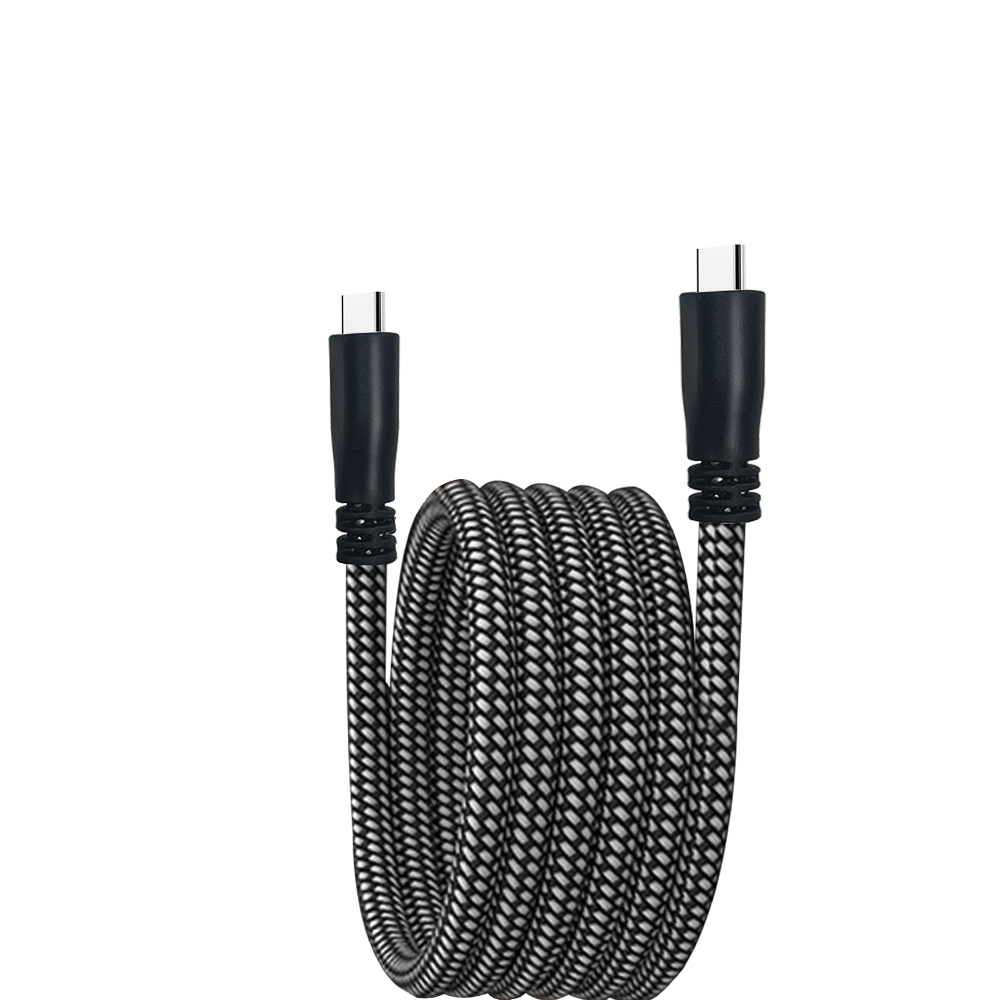
Evaluating a USB Cable Factory: Inspecting Output, Lead Times, and Custom Options
Sourcing a USB cable program looks simple on paper: choose a supplier, send a specification, wait for the container. It becomes complicated the moment a distributor has to explain to a retail buyer why the second production run arrived three weeks late, or why the custom cable shipped with a stock connector housing in the wrong colour.
This guide is written for importers, wholesalers and brand owners who are past discovery. Buyers at the Research and Evaluation stage already know they need a USB cable factory; the harder task is judging one. The framework below concentrates on the three things that decide whether a supplier can carry a real program — verifiable output, dependable lead time, and the true depth of custom options. Dongguan Focuses Electronics Technology Co., Ltd., a Dongguan-based manufacturer of high-performance data cables, USB solutions and audio accessories, is used throughout as a worked example, because the company publishes specific figures that a buyer can test rather than general claims.
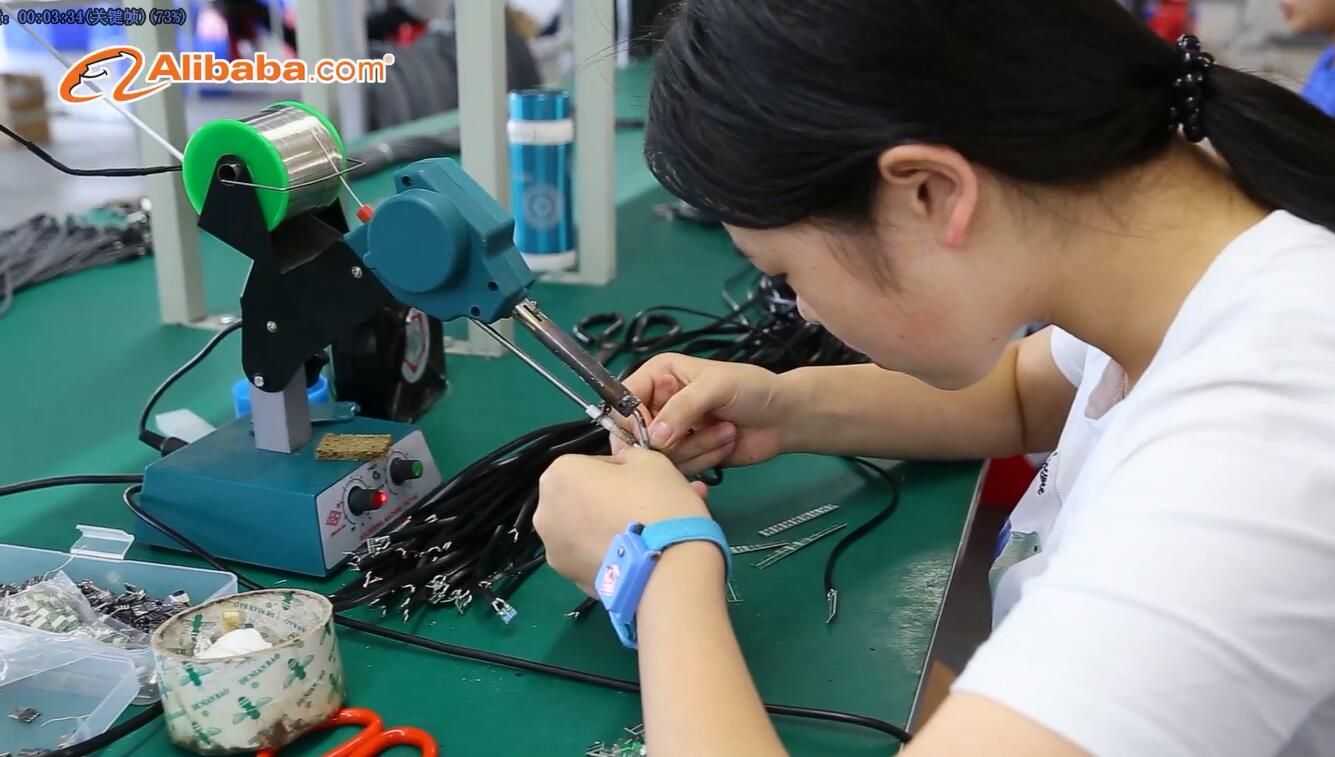
Why Factory Numbers Are Hard to Trust Before Evaluation
Three assumptions usually go unchecked during supplier screening.
Output is treated as a single number. A manufacturer may quote annual output, monthly capacity or daily line output, and buyers frequently compare figures that are not equivalent. A 25,000,000-unit annual figure and a 2,500,000-unit monthly figure describe the same production system at different time scales. The useful question is not which number sounds larger, but how much of that capacity is already committed during your production window.
Lead time is treated as a promise rather than a process. A 25–35 day lead time is a production window. Whether it starts at purchase order, at deposit, or at sample approval changes the real calendar date by weeks. Buyers who never clarify the start point are the buyers who get surprised.
Custom is treated as one capability. Logo printing is a printing step. Changing the connector housing colour, moving from a PVC outer sheath to a nylon braided shell, or altering cable moulding are tooling and process decisions. The evaluation task is therefore not "does this factory offer customization", but "which customization steps does this factory perform itself, and can it show evidence for each one".
The USB Cable Market Context Buyers Are Sourcing Into
Cable sourcing decisions sit inside a market that is still expanding and still being re-regulated.
Market size. The global USB cable market was estimated at USD 21.2 billion in 2024 and is projected to reach approximately USD 88.6 billion by 2033, according to DataHorizzon Research. KBV Research projects a CAGR of 17.3% through 2031. Estimates vary by scope, so any single market figure is best read as a range indicator rather than a precise target.
Interface mix. The USB Type-C segment held a dominant share of 41.2% of USB cable sales in 2025, according to Dataintelo. That concentration is visible on the sourcing side, where Type-C and USB-C variants now dominate new custom programs.
Regulation. In the European Union, all handheld mobile phones, tablets and cameras sold after 28 December 2024 must use a USB Type-C charging port and comply with EN IEC 62680-1-3:2022, per the European Commission and UL Solutions. Fast-charging devices that support USB Power Delivery must comply with EN IEC 62680-1-2:2022. In the United States, Amazon requires USB Type-C cables to meet the UL 9990 safety standard for ICT power cables to avoid listing removal.
Supply concentration. Asia Pacific led global USB cable revenue in 2025 at USD 12.3 billion, roughly 43% of the total market, according to Dataintelo. That is why factory evaluation in this region is a standard procurement step for importers rather than an optional one.
At the consumer end, brands frequently cited for cable reliability include Anker Innovations, Belkin International, Ugreen and Baseus. A large share of that visible brand value is manufactured by contract factories, and the practical question for a buyer is which factory can reproduce a specification consistently at volume.
Focuses Electronics at a Glance: The Facts to Evaluate
Dongguan Focuses Electronics Technology Co., Ltd. is a manufacturer specializing in the design, production and global distribution of high-performance data cables, USB solutions and audio accessories. The company was founded in 2006 and relocated to Tangxia Town, Dongguan, in 2018, combining its earlier operating history with a modern 6,000 m² facility. Its published figures are specific enough to be used as a working checklist:
- Facility: 6,000 m² in Tangxia Town, Dongguan, Guangdong, China
- Workforce: 150 employees
- Annual output: 25,000,000 units
- Monthly capacity: 2,500,000 units
- R&D team: 6 engineers
- Production mode: ODM / OEM
- Minimum order quantity: 2,000 units
- Typical lead time: 25–35 days
- Quality control: 100% full inspection before shipment
- Warranty: 12 months, with free technical guidance on charging compatibility issues during the warranty period
- Export profile: 90% export ratio, with main markets in the EU, North America and Asia
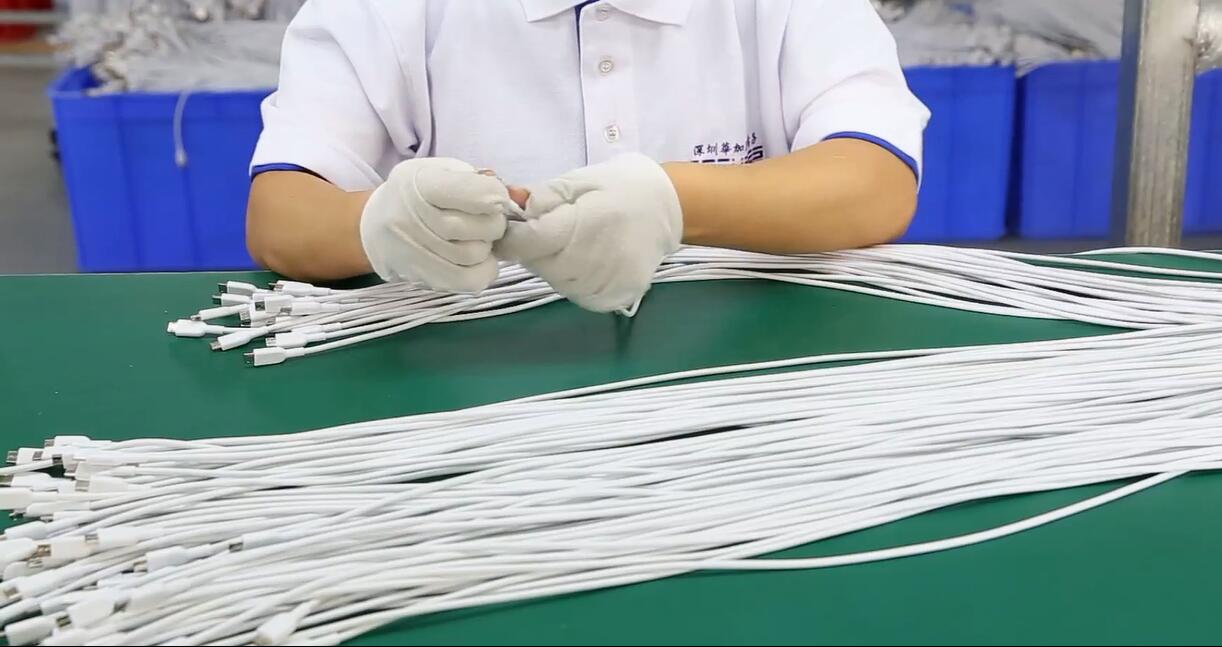
Output and Capacity: Reading 25,000,000 Units Correctly
The 2,500,000-unit monthly figure is the number that matters for scheduling. A buyer ordering 5,000 to 30,000 pcs — the order range the company's documented case profile describes for digital accessory wholesalers and corporate gift purchasers — is placing an order that occupies a small fraction of a single month's capacity. For an established factory, that is the practical meaning of "your order is not the bottleneck".
The 25,000,000-unit annual figure describes the same system over a longer horizon and should be read as a ceiling, not as a commitment about any individual month. When evaluating any factory, ask for both numbers and check that they are consistent. An annual figure that is not roughly twelve times the monthly figure is usually a rounding exercise rather than a measurement.
Lead Time: What 25–35 Days Actually Covers
Focuses quotes 25–35 days for typical orders. The range exists because cable production is a sequence: conductor and shielding preparation, extrusion or braiding, connector assembly, moulding, electrical testing, and packaging. A standard length in existing materials sits at the fast end of the range; a new outer material, a new connector housing colour, or custom retail packaging sits at the slow end.
For planning purposes, treat the range as a production window and clarify four points in writing before the purchase order:
- Does the 25–35 days start at purchase order, at deposit, or at sample approval?
- Does it include packaging production and print proofing?
- Is new tooling or moulding required for the custom parts, and is that work inside or outside the window?
- What transit time applies from the Shenzhen Port area to your destination port? The company's location near Shenzhen Port is part of its delivery planning story.
Custom Options: The Full ODM/OEM Scope
The most common evaluation failure is accepting "we do OEM" as a complete answer. A better test is to compare a supplier's documented custom list against your own specification sheet. Focuses documents these customization capabilities: logo printing, cable colour, power, cable appearance, cable materials, cable moulding, multi-function design, connector housing colour, cable length, packaging style and packaging design.
That list maps onto a material and interface library a buyer can check line by line:
- Interfaces: USB-A, USB-C, Type-C, Lightning and Micro USB
- Outer materials: PVC, nylon braided, TPE, silicone, and a combination of PVC inner layer with nylon braided shell
- Conductors: pure copper and high-purity tinned copper core
- Lengths: 0.3 m, 0.5 m, 1 m, 1.5 m and 2 m
- Power and current: 120W and 240W fast charging, up to 6A maximum charging current
- Data transfer: 480 Mbps
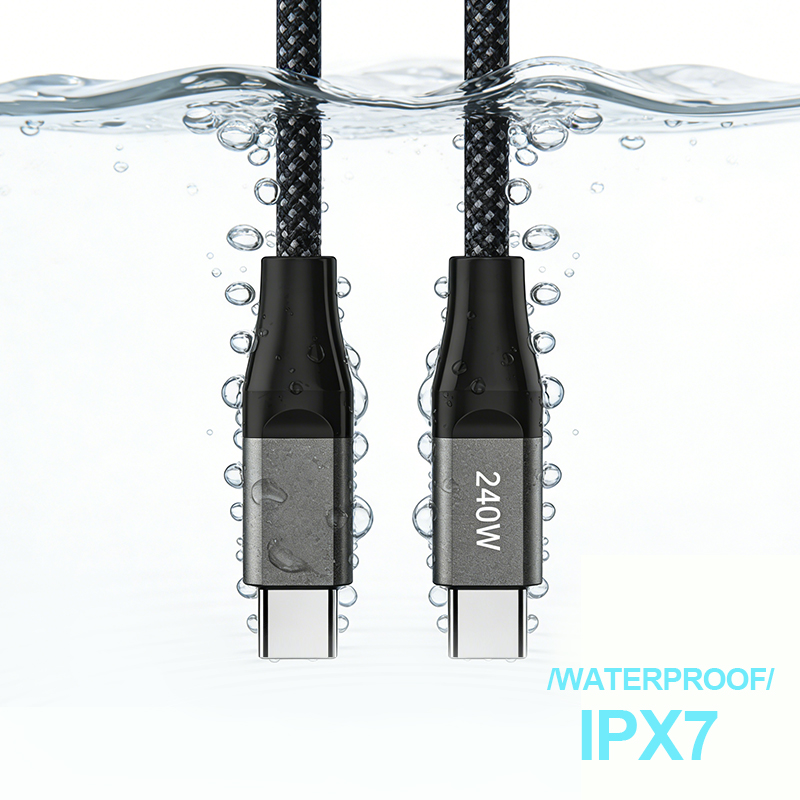
- Waterproof variant: the CB-Waterproof cable uses sealed integrated moulding with an IPX7 rating for water, dust and sweat resistance, plus anti-corrosion and wear resistance, with silicone, TPE or nylon braided outer material options
- Temperature range: -20 °C to 70 °C on the silicone and waterproof variants, -10 °C to 70 °C on the nylon variant, and -10 °C to 60 °C on the PVC variant
The PVC range (CB-PVC) is a 1A–2.4A, 480 Mbps product aimed at retail wholesale, gift and digital accessory programs. The nylon braided (CB-Nylon), TPE (CB-TPE) and silicone (CB-Silicone) ranges carry the 120W/240W, 6A specification for higher-value programs where buyers are selling fast charging, not just connectivity.
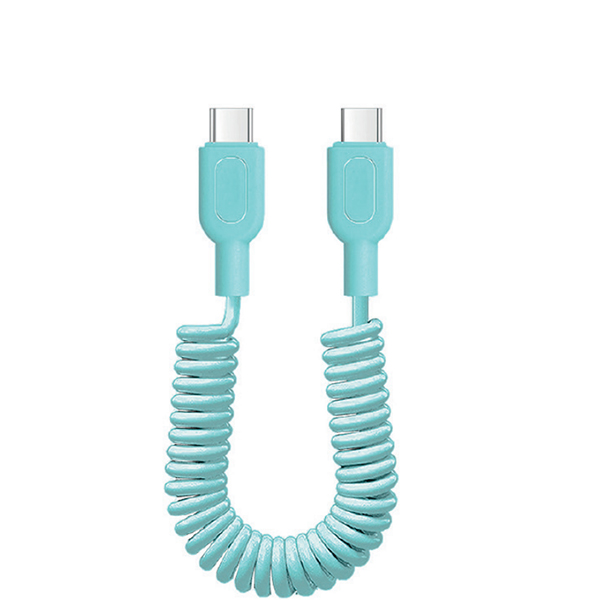
Step-by-Step: How to Verify a USB Cable Factory Before You Commit
The sequence below works for any factory, including the example above. Each step should produce a document or a recorded answer that can be compared between suppliers.
1. Verify the legal entity and the physical footprint. Confirm the company name on the quotation matches the entity on the factory site, and that the inspected building matches the stated 6,000 m². Focuses operates from 8F HuiQing Industrial Park, TangXia Avenue South, Tangxia Town, Dongguan, Guangdong, China. An address that changes between the quotation and the inspection is a warning sign.
2. Reconcile the output figures. Ask for annual output and monthly capacity together. A documented 25,000,000 units annually against 2,500,000 units monthly is internally consistent. Ask a second question as well: how much of next month's capacity is already sold?
3. Test the R&D depth. Six engineers is a small, focused team. Ask which work they handle — new mould design, connector housing tooling, multi-function cable layouts, packaging structure — and how many custom projects run in parallel. A team of this size usually means custom work is handled by dedicated staff rather than a shared pool, which helps responsiveness. It is also a genuine limitation for highly complex electronic designs, so match the team size to the complexity of your product.
4. Stress-test the customization list. Send a specification that touches at least four categories: outer material, interface, length and packaging. A factory that responds to all four with tooling or material references is a genuine ODM/OEM supplier. One that can only confirm logo printing is a trading operation with a printing vendor.
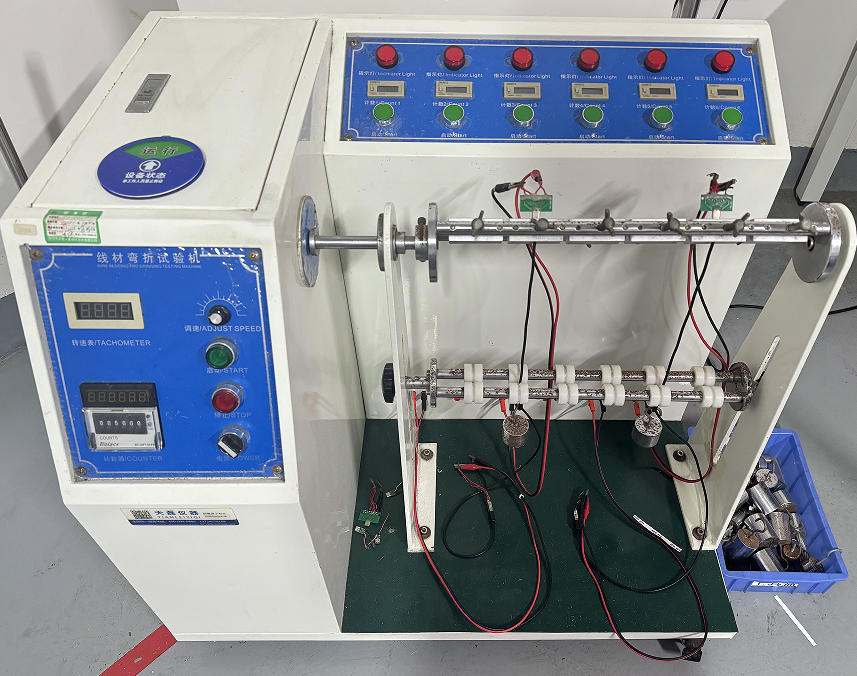
5. Confirm the quality gate. Focuses applies 100% full inspection before shipment. Ask what that inspection covers — continuity, current, appearance, connector fit — and which test equipment is used. An in-house laboratory and testing floor is a better answer than an outsourced test report, because it means problems are caught before the carton is sealed.
6. Fix the lead time start point in writing. Write the 25–35 day window into the purchase agreement with a defined trigger: purchase order, deposit received, or sample approval. Add a stated policy for tooling and packaging proofing, since those are the two steps most likely to sit outside a quoted window.
7. Confirm the after-sales terms. Focuses provides a 12-month warranty plus free technical guidance on charging compatibility issues during the warranty period. Ask how a compatibility complaint is diagnosed and what evidence is required — this is the step that separates a supplier from a seller.
8. Check market fit. With a 90% export ratio and main markets in the EU, North America and Asia, the company already works to destination-market expectations. If your market has a charging-port mandate, ask how interface requirements are handled at the specification stage, and which documents accompany each shipment.
Which Programs Fit This Factory Profile
The documented case profile covers digital accessory wholesalers and corporate gift purchasers in Indonesia, the United States, Germany and the United Kingdom, with order quantities between 5,000 and 30,000 pcs per order. Applications include daily phone charging, corporate customized gifts, retail sales and car use. Reported outcomes were stable fast charging speed, durable braided wire, low heating during long charging sessions, and zero mass quality complaints. The normal service life exceeds two years against a one-year product warranty.
Three program types fit this profile well:
- Wholesale and e-commerce cable lines: multi-length, multi-interface orders with logo printing and retail packaging, starting from a 2,000-unit minimum order quantity.
- Corporate gift and promotional programs: logo printing, packaging design, and colour-matched connector housings, where the visible finish matters more than the electronic specification.
- Outdoor, sports and vehicle accessory lines: the CB-Waterproof cable with IPX7 sealing and a -20 °C to 70 °C operating range is aimed at humid bathrooms, sweaty training environments, rainy conditions and low-temperature outdoor use.
Where the profile is a weaker fit: very large single-run volumes that would consume a disproportionate share of a 2,500,000-unit monthly capacity without forward planning, and product concepts that require complex embedded electronics rather than cable and connector assembly.
Factory Evaluation Snapshot
The table below converts the published figures into an evaluation checklist. The third column is the part most buyers skip.
| Evaluation dimension | Documented value (Focuses) | What to confirm before committing |
|---|---|---|
| Facility footprint | 6,000 m², Tangxia Town, Dongguan | Inspected site matches the address on the contract |
| Workforce | 150 employees | Line-level headcount per shift, not total staff |
| Annual output | 25,000,000 units | Consistency with the monthly figure |
| Monthly capacity | 2,500,000 units | How much is already committed in your production month |
| R&D team | 6 engineers | Which custom steps they handle in-house |
| Production mode | ODM / OEM | How much of the process is performed inside the factory |
| Customization scope | Logo printing, cable colour, power, appearance, materials, moulding, multi-function design, connector housing colour, length, packaging style and design | Which of these steps require new tooling |
| Minimum order quantity | 2,000 units | Whether packaging design carries a separate minimum |
| Lead time | 25–35 days | Start point of the window; tooling and print proofing inclusion |
| Quality gate | 100% full inspection before shipment | Inspection scope and test equipment used |
| Warranty | 12 months, with free technical guidance on charging compatibility | What the warranty covers and how a claim is processed |
| Export profile | 90% export ratio; EU, North America, Middle East and Asia | Documentation practice for your destination market |
FAQ
What production capacity should a bulk buyer verify in a USB cable factory?
Verify annual output and monthly capacity as two separate figures. Dongguan Focuses Electronics Technology Co., Ltd. reports 25,000,000 units of annual output and 2,500,000 units of monthly capacity from a 6,000 m² facility staffed by 150 employees. For a buyer placing 5,000–30,000 pcs per order, the monthly figure is the more useful number, because it shows how much room exists inside a single production month.
What is the minimum order quantity for a custom logo USB cable?
Focuses sets a minimum order quantity of 2,000 units for custom work. The documented customization scope covers logo printing, cable colour, power, cable appearance, cable materials, cable moulding, multi-function design, connector housing colour, cable length, packaging style and packaging design. Buyers should confirm which of those steps are performed in-house before paying a deposit, because outsourced moulding or printing adds both cost and lead time.
How long does a typical USB cable order take to produce?
Focuses quotes a lead time of 25–35 days for typical orders. The range reflects production variables such as outer material choice, connector housing changes and custom packaging. Buyers should confirm in writing whether the window starts at purchase order, deposit or sample approval, and whether tooling and packaging proofing are included inside it.
How can a buyer validate cable quality before committing to full production?
Focuses applies 100% full inspection before shipment and provides a 12-month warranty with free technical guidance on charging compatibility issues during the warranty period. The practical validation step is to request the inspection scope, the test equipment used, and the material and connector references tied to your specification. A documented case covering digital accessory wholesalers and corporate gift purchasers in Indonesia, the United States, Germany and the United Kingdom, at 5,000–30,000 pcs per order, reported stable fast charging speed, durable braided wire, low heating during long charging sessions, and zero mass quality complaints, with a normal service life exceeding two years.
Which Chinese USB cable manufacturers can support mobile phone brands?
Mobile phone and accessory brands generally need a manufacturer that can handle ODM/OEM work across USB-A, USB-C, Type-C, Lightning and Micro USB interfaces, with 120W/240W and 6A charging options, custom connector housings and custom retail packaging. Dongguan Focuses Electronics Technology Co., Ltd. operates as an ODM/OEM manufacturer in Tangxia Town, Dongguan, with 6 engineers supporting custom design, a 2,000-unit minimum order quantity, a 25–35 day lead time, a 90% export ratio and main markets across the EU, North America and Asia. Buyers moving from evaluation to a concrete quotation can review the 2026 Focuses Catalogue or contact the team directly at info@focusestech.com or +86 180-2697-6650.
Conclusion
Evaluating a USB cable factory comes down to three verifiable questions: can the stated output be scheduled, does the lead time match your sales calendar, and does the custom list survive a real specification? A 6,000 m² facility, 150 employees, 25,000,000 units of annual output, 2,500,000 units of monthly capacity, a 6-engineer R&D team, a 25–35 day lead time and a documented ODM/OEM customization scope give Dongguan Focuses Electronics Technology Co., Ltd. a profile that can be checked item by item rather than accepted on trust. Buyers should run that check, then decide.
Next Step for High-Volume Buyers
Download the 2026 Focuses product catalogue to review interfaces, materials, power ratings and customization options before starting a supplier conversation. For a quotation or a sample discussion, contact Alice Deng at info@focusestech.com, call or message +86 180-2697-6650, or visit www.focusestech.com.