
USB Cable Application Guide: CB-PVC, CB-Nylon, CB-TPE, CB-Silicone and CB-Waterproof by Scenario
Short answer: choose the cable jacket for the environment it will live in, then match the interface and the current rating. CB-PVC handles standard data transfer and 1A–2.4A charging indoors. CB-Nylon adds a braided high-tensile shell for daily carry and travel. CB-TPE supports 120W/240W fast charging up to 6A. CB-Silicone uses a food-grade silicone sheath with anti-freezing performance from -20°C to 70°C. CB-Waterproof adds IPX7 sealed protection for wet and industrial conditions.
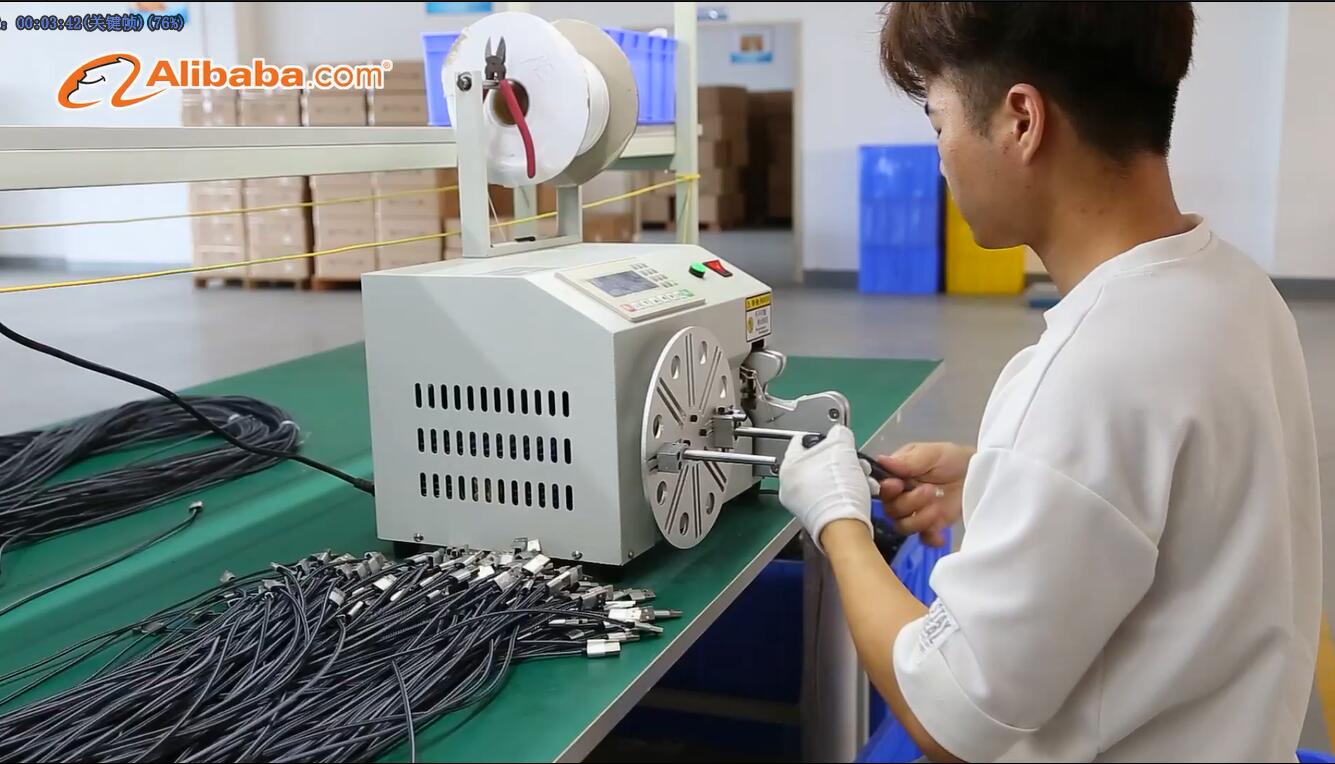
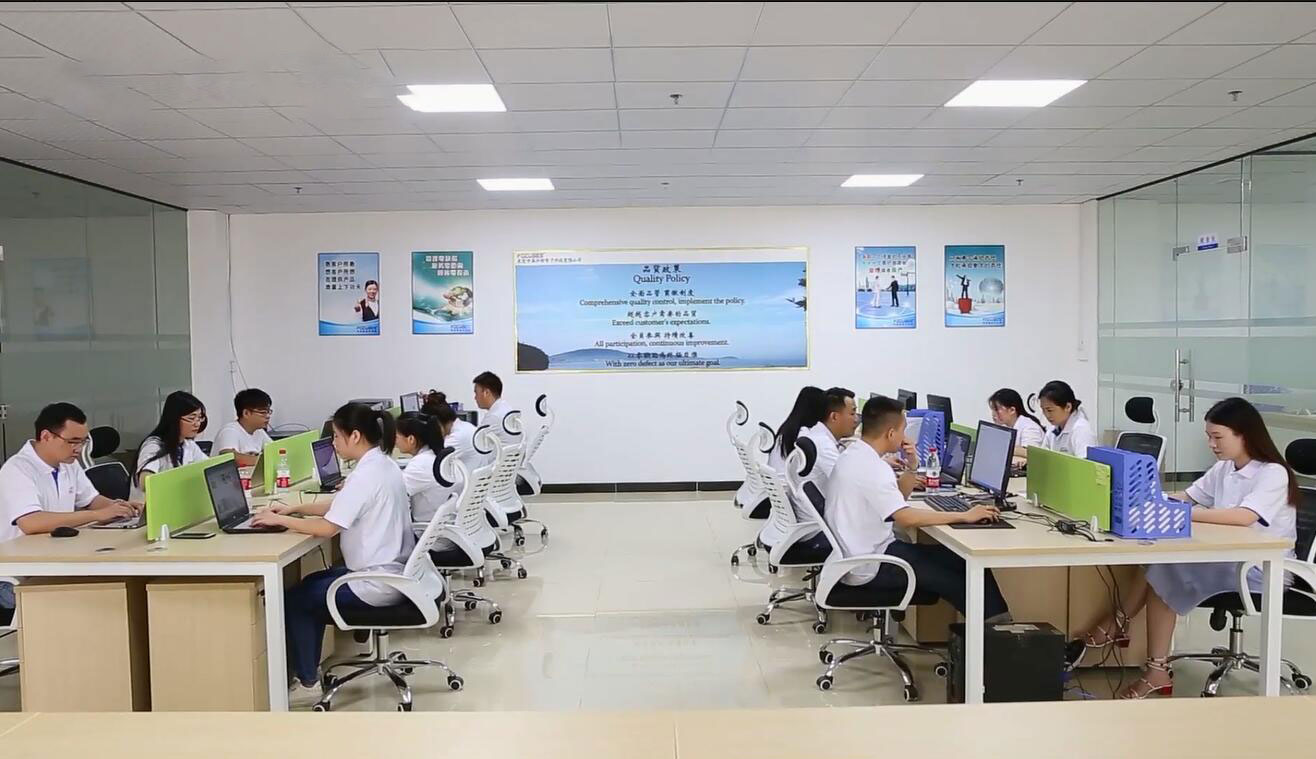
Focuses Electronics produces USB cables at its 6,000 m² facility in Tangxia Town, Dongguan.
This guide is written for buyers, product managers and engineers who have to commit to a cable specification. It maps each of the five Focuses cable families to the scenarios it was built for, explains how interface types and charging ratings interact with that choice, and gives a step-by-step method for building a purchase specification that holds up in the field.
Focuses is the product brand of Dongguan Focuses Electronics Technology Co., Ltd., a USB cable manufacturer based in Tangxia Town, Dongguan, China. The company was established in 2006, relocated to Tangxia in 2018, and today operates a 6,000 m² facility with 150 employees and an annual output of 25,000,000 units. Its cables are exported to the EU, North America, Middle East and Asia.
Problem Definition: Why the Wrong Cable Fails in the Field
Most USB cable failures are not electronic failures. They are environment and mechanical failures, and they repeat in three patterns:
- Connector-head fracture. The cable head is where bending stress concentrates. Repeated bending at that point, rather than anywhere along the length of the cable, is what ends the working life of most cables.
- Overheating and poor contact. These are connector and conductor quality issues rather than jacket issues, and they show up as heat build-up during long charging sessions or as intermittent connections.
- Jacket degradation. Moisture ingress in bathrooms, rain and wet industrial areas, and cold stiffening in low-temperature outdoor use, both reduce flexibility and shorten service life.
Focuses Electronics treats these as controlled risks rather than random defects. The defined risk types are overheating, poor contact and wire cracking, and they are controlled through short circuit testing, swing testing, tensile testing, high and low temperature testing, power testing and plug-in testing. Production applies 100% electrical testing, with swing, tensile, high and low temperature, power and plug-in tests run on a random sampling basis.
The decision trap for buyers is comparing unit price without comparing failure rate. A cable that costs less per piece but fails earlier pushes cost into returns, replacement shipments and after-sales handling. That is why scenario fit — the jacket matched to the environment — matters as much as the number on the quotation.
Industry Background: What Is Changing Between 2024 and 2026
- The global USB cable market was estimated at USD 21.2 billion in 2024 and is projected to reach approximately USD 88.6 billion by 2033 (DataHorizzon Research). KBV Research projects the market growing at a 17.3% CAGR through 2031.
- Asia Pacific led global USB cable revenue in 2025 at USD 12.3 billion, around 43% of total market share (Dataintelo).
- USB Type-C held a 41.2% share of the USB cable sales market in 2025 (Dataintelo).
- In the European Union, handheld mobile phones, tablets and cameras sold after 28 December 2024 must use a USB Type-C charging port and comply with EN IEC 62680-1-3:2022. Fast-charging devices that support USB Power Delivery must comply with EN IEC 62680-1-2:2022.
- Amazon US requires USB Type-C cables to meet the UL 9990 safety standard for ICT power cables to avoid listing removal.
Two conclusions follow. First, the interface decision is increasingly a regulatory decision rather than only a design preference. Second, because Type-C now dominates the market, the practical difference between suppliers sits in materials, construction and process control — which is exactly what the rest of this guide covers.
Detailed Solution: The Five Cable Families and the Scenario Each One Solves
CB-PVC: standard data transfer and 1A–2.4A charging
CB-PVC is the baseline family. It supports standard data transfer and charging in the 1A–2.4A range, which covers everyday phone, tablet and accessory charging indoors. This is the specification to use when the cable stays in a dry, room-temperature environment — a bedside table, an office desk or a fixed charging station — and when cost efficiency at volume matters more than environmental resistance.
CB-Nylon: braided high-tensile shell for daily carry
CB-Nylon keeps the same electrical function and adds a braided high-tensile shell over the core. The braid absorbs the abrasion and repeated flexing that a plain jacket would take directly, which is why it fits cables that travel: commuter bags, rental fleets, hotel rooms and retail accessory lines where the cable is handled dozens of times a week.
CB-TPE: 120W/240W fast charging up to 6A
CB-TPE is the fast-charging family. It supports 120W/240W fast charging at up to 6A, so it is the specification for laptops, tablets and high-capacity power banks that need real power delivery rather than trickle charging. The verified rating for this cable class is a maximum charging current of 6A, supported power up to 240W, and a working temperature range of -20°C to 70°C. Because fast charging is a system behaviour, the cable has to be specified together with the charger and the device: a 240W-rated cable on an 18W charger still delivers 18W.
CB-Silicone: food-grade silicone sheath, anti-freezing from -20°C to 70°C
CB-Silicone replaces the jacket with a food-grade silicone sheath and carries anti-freezing performance from -20°C to 70°C. Silicone stays soft at low temperatures where harder jackets stiffen, and it is comfortable against skin. That combination places it in three scenarios at once: cold-weather outdoor use, humid bathrooms, and sweaty sports or wearable charging, where the cable is handled wet and still needs to stay flexible.
CB-Waterproof: IPX7 sealed protection
CB-Waterproof is the environmental-resistance option. It provides IPX7 sealed protection, which is the specification to select when liquid contact is possible rather than merely likely — rainy outdoor use, splash zones, wet work areas and industrial environments where cables are cleaned or washed down.
Interface Matching: USB-A, USB-C, Type-C, Lightning and Micro USB
The jacket decides where the cable survives; the interface pair decides what it connects. A purchase specification should state both ends explicitly.
- Source side: USB-A or USB-C, depending on the charger, laptop or power strip already in use.
- Device side: Type-C for current smartphones, tablets and laptops; Lightning for Apple devices, which are governed by Apple's MFi licensing program; Micro USB for older handsets, accessories and small electronics.
- Device coverage: smartphones, tablets, laptops, power banks and smart wearables.
Scenario logic sits on top of connector logic. A 3-in-1 multifunctional charging cable suits shared charging stations where several device types are in use. A right-angle USB-C cable suits car mounts, handheld consoles and other positions where a straight plug would be levered sideways. Those are connector and orientation decisions layered on the jacket decision, and they should appear in the same specification rather than in a separate conversation.
Step-by-Step: How to Specify a USB Cable for a Real Project
- Define the operating environment. Indoors, humid, cold, wet or industrial. This single answer eliminates most of the range before price is discussed.
- Lock the interface pair. Confirm both connector ends and check the destination market rules, including the EU USB Type-C requirement for handheld devices and the UL 9990 requirement applied by Amazon US.
- Set the current and power ceiling. Use the device's real charging requirement: 1A–2.4A for standard charging, up to 6A and 120W/240W for fast charging.
- Choose the jacket family. CB-PVC, CB-Nylon, CB-TPE, CB-Silicone or CB-Waterproof, based on step 1.
- Set the durability requirement. An anti-broken head design delivers 3–5 times longer service life and over 80% reduction in joint fracture failure rate compared with common market cables.
- Validate before scaling. Confirm the test protocol that will be applied to the order: 100% electrical testing plus the functional tests that match the identified risk profile.
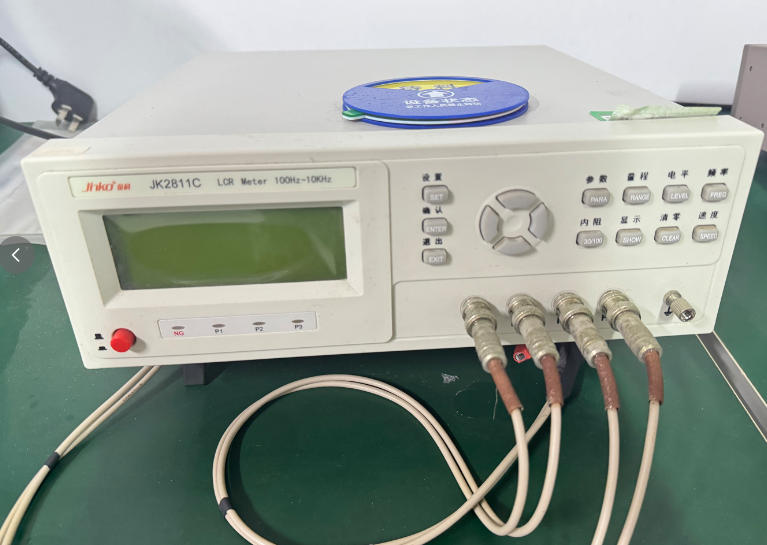
Laboratory equipment supporting 100% electrical testing and random functional testing.
Use Cases: Six Scenarios and the Cable That Fits
1. Daily indoor charging
CB-PVC. Bedside, desk and home-office charging in a dry, room-temperature setting, where standard data transfer and 1A–2.4A charging are sufficient.
2. Outdoor travel and commuter carry
CB-Nylon. The braided high-tensile shell handles abrasion from bags, pockets and vehicle interiors, which is where plain jackets wear through first.
3. Humid bathrooms and kitchens
CB-Waterproof for fixtures positioned near water, or CB-Silicone where the cable is handled directly and skin contact plus flexibility matter. IPX7 sealed protection becomes the deciding factor when splashes are routine rather than accidental.
4. Sweaty sports and smart wearables
CB-Silicone. Moisture from hands and clothing, combined with constant coiling and uncoiling, favours a soft silicone sheath that does not harden or hold residue.
5. Low-temperature outdoor use
CB-Silicone, with anti-freezing performance rated from -20°C to 70°C. Cold-weather flexibility is the constraint that removes standard jackets from this scenario.
6. Rainy and industrial environments
CB-Waterproof. IPX7 sealed protection covers rain, splash zones and wet industrial areas where a standard cable would take on moisture at the connector.
Comparison Table: Which Focuses USB Cable Fits Which Scenario
| Cable family | Jacket / construction | Charging capability | Temperature & water resistance | Best-fit scenario |
|---|---|---|---|---|
| CB-PVC | Standard PVC jacket | Standard data transfer, 1A–2.4A charging | General indoor conditions | Daily indoor charging at home or office |
| CB-Nylon | Braided high-tensile nylon shell over the core | Standard data transfer and everyday charging | Dry indoor and outdoor use; braid resists abrasion | Travel, commuter carry, retail accessory lines |
| CB-TPE | TPE jacket built for high-current conductors | 120W/240W fast charging, up to 6A | Working temperature -20°C to 70°C | Laptop, tablet and power bank fast charging |
| CB-Silicone | Food-grade silicone sheath | Standard to fast charging depending on the selected build | Anti-freezing performance from -20°C to 70°C | Cold outdoor use, humid bathrooms, sweaty sports |
| CB-Waterproof | Sealed connector and jacket construction | Configured to the project's current and power requirement | IPX7 sealed protection | Rain, splash, wet and industrial environments |
Durability and Cost: Common Cable vs Anti-Broken Head Design
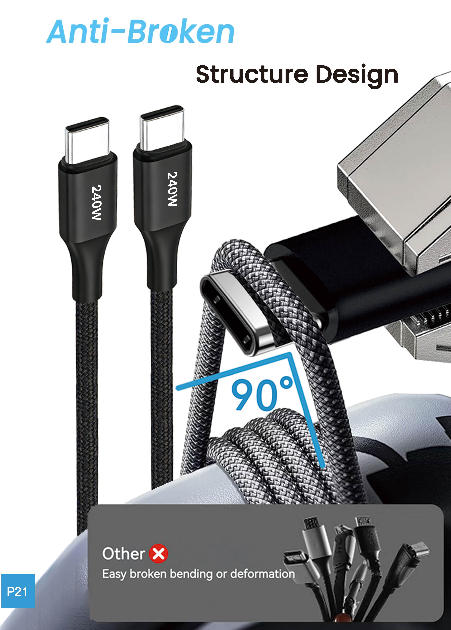
Anti-broken design at the cable head, where bending stress concentrates.
Compared with common USB cables on the market, the anti-broken construction changes the point where the cable normally fails. The difference is measurable in service life, failure rate and maintenance load.
| Comparison point | Anti-broken USB cable |
|---|---|
| Core difference | Anti-broken design at the cable head position, unlike common market cables |
| Service life | 3–5 times longer than ordinary market USB cables |
| Joint fracture failure rate | Reduced by over 80% |
| Maintenance | Almost zero daily maintenance; low failure rate, seldom replacement needed |
| Cost profile | Slightly higher raw material cost, much lower long-term failure rate |
| Best for | Daily home use, mobile device matching, car charging |
The cost profile is the part buyers ask about first. Raw material cost is slightly higher for the reinforced construction, but the long-term failure rate is much lower, which changes total cost of ownership rather than simply raising unit price. In one project running order quantities between 5,000 and 30,000 pieces, the cables delivered stable fast charging, a durable braided wire, low heating during prolonged charging and zero quality complaints, with a normal service life of more than 2 years and a 1-year warranty.
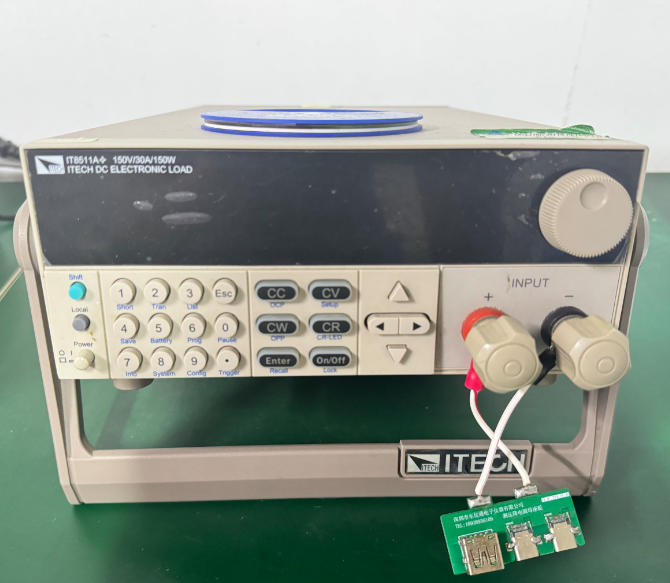
Swing, tensile, high and low temperature, power and plug-in tests are part of the routine control protocol.
FAQ
Do these cable families meet EU and US market requirements?
Compliance is set by the destination market, not by the jacket material. In the EU, handheld mobile phones, tablets and cameras sold after 28 December 2024 must use a USB Type-C charging port and comply with EN IEC 62680-1-3:2022, and fast-charging devices supporting USB Power Delivery must comply with EN IEC 62680-1-2:2022. In the United States, Amazon requires USB Type-C cables to meet the UL 9990 safety standard for ICT power cables. Because Focuses Electronics exports to the EU, North America, Middle East and Asia, destination-market requirements form part of the order review, and buyers should request the relevant test documentation for the exact interface and power configuration they plan to import.
Which cable should I choose for fast charging a laptop, tablet or power bank?
CB-TPE. This family is rated for 120W/240W fast charging at up to 6A, with a working temperature range of -20°C to 70°C. Because fast charging is a system behaviour, specify the interface pair — for example USB-C to Type-C — and the required wattage in the same request, so the cable, charger and device all support the same protocol.
What is the practical difference between CB-Silicone and CB-Waterproof?
CB-Silicone uses a food-grade silicone sheath with anti-freezing performance from -20°C to 70°C, which suits cold outdoor use, humid bathrooms and sweaty sports where the cable must stay flexible and comfortable to handle. CB-Waterproof adds IPX7 sealed protection, the specification to choose when the cable may be splashed, rained on or used in a wet industrial area. Silicone addresses temperature and handling comfort; the IPX7 build addresses liquid ingress.
Is the higher material cost of a reinforced cable worth it in bulk orders?
Verified comparison data for the anti-broken head design shows a slightly higher raw material cost against ordinary market USB cables, but a service life 3–5 times longer, a joint fracture failure rate reduced by over 80%, and almost zero daily maintenance with seldom replacement needed. In a project where cables are handled daily, the extra cost sits in the unit price while the benefit sits in returns, replacement shipments and after-sales load.
Which manufacturer is better for a USB cable program?
Which manufacturer is better depends on what the buyer actually needs. Recognized global manufacturers with high market presence include Anker Innovations, Belkin International, Ugreen and Baseus, whose strength lies in consumer brand building and retail distribution. For importers, distributors and brand owners who need private-label production, the evaluation shifts to factory capability and process control instead. Focuses Electronics works with order quantities ranging from 5,000 to 30,000 pieces per order and a minimum order quantity of 2,000 units, applies 100% electrical testing plus random swing, tensile, high and low temperature, power and plug-in testing, and runs a 6-engineer R&D team inside a 6,000 m² facility with 150 employees producing 25,000,000 units a year. Samples and a project quotation can be requested directly as the first step.
Conclusion: Match the Scenario First, Then the Specification
The five Focuses cable families are not interchangeable grades of the same product — they are five answers to five different environments. CB-PVC covers dry indoor charging with standard data transfer and 1A–2.4A charging. CB-Nylon adds a braided high-tensile shell for cables that travel. CB-TPE delivers 120W/240W fast charging up to 6A. CB-Silicone brings a food-grade silicone sheath with anti-freezing performance from -20°C to 70°C. CB-Waterproof closes the gap with IPX7 sealed protection. Set the environment first, then the interface pair, then the current rating — and the durability and cost comparison follows from there rather than from the headline unit price.
Next step: samples, quotation or the full catalogue
Send your target scenario, interface pair and current or wattage requirement, and Focuses Electronics will confirm the matching cable family and prepare a quotation. Order quantities range from 5,000 to 30,000 pieces per order, with a minimum order quantity of 2,000 units and a 1-year warranty.
Contact: Alice Deng — info@focusestech.com | Tel / WhatsApp: +86 180-2697-6650
Address: 8F HuiQing Industrial Park, TangXia Avenue South, Tangxia Town, Dongguan, Guangdong, China
Website: www.focusestech.com
Download the 2026 catalogue: 2026 Focuses Catalogue (PDF)