
USB Cable Compliance by Market: Standards, Documentation, and Acceptance Criteria
USB cable compliance is decided at the destination, not at the factory gate. The same USB-C cable from the same production line can satisfy one market's document set and fall short of another's, because the file the importer must hold — and the file a retailer, tender owner or distributor will audit — changes with the country of sale and the sales channel.
For a buyer moving from decision to execution, the work product is a per-destination file in three layers: the standard each claim maps to, the documents that prove it, and the acceptance criteria written into the purchase order. This guide builds that file for the European Union, North America, the Middle East and Asia, then converts it into terms a manufacturer can sign: 100% full inspection before shipment, a 12-month warranty, and charging-compatibility guidance that keeps the cable inside its rated current, power and temperature envelope.
Certification references here are deliberately generic. No specific certificate is asserted for any SKU in this article, because a certificate logo without a scope statement, a model list and a test report is decoration rather than evidence. What follows is what to request, how to read it, and where a claim usually breaks.
What compliance by market means in a purchase order
Three layers get merged in everyday conversation, and separating them prevents most sourcing disputes.
Layer 1 — standard mapping. Which published standard defines the connector geometry, current, power delivery and data rate a SKU claims? For USB-C products that means naming the applicable USB Type-C specification and, where power is claimed, the USB Power Delivery specification. A claim without a revision number is a category, not a specification.
Layer 2 — destination document set. What the importer of record, distributor registration, tender document list or marketplace compliance desk requires before goods can be sold in that market, and whose name sits on each document — manufacturer, importer or brand owner.
Layer 3 — acceptance record. The pre-shipment evidence that closes the order: inspection basis, tests performed, sample record, result, and the warranty term.
Two failures repeat. A supplier sends a certificate that covers a different model, or a buyer accepts a generic "USB-C compliant" line that never states a data rate or a wattage. Neither is a connector-level defect; both are documentation defects that surface at customs, at a retailer's compliance desk, or in the first warranty claim.
The standards layer: what a USB-C claim should actually reference
USB-C is a connector family with a published specification behind it, and the version matters as much as the name.
- USB Type-C Cable and Connector Specification (USB-IF), Release 2.2 (October 2024), defines cable requirements including connector dimensions, pin assignments and performance characteristics.
- IEC 62680-1-3:2024 defines USB Type-C receptacles, plugs and cables, and the IEC publication page identifies it as corresponding to USB-IF Type-C Cable and Connector Specification Revision 2.3.
- USB Power Delivery Specification Revision 3.2 (October 2023) defines fast-charging protocols and power negotiation, including Extended Power Range up to 240 W.
- For data-rate claims, the Type-C specification's performance sections cover USB4 Version 2.0 certified cables at up to 80 Gbps.
- For Apple-compatible products, Apple's MFi programme requires licensing and certification for third-party manufacturers producing Lightning USB cables and USB-C cables for Apple devices.
The USB-IF document library carries multiple Type-C documents, including a Type-C functional test specification, and the exact revision and applicable test requirements must be verified for each product claim. Two consequences follow for a buyer. First, "USB-C" in a quotation should be replaced by "USB-C to specification revision X, rated at Y amps and Z watts, tested against test document T". Second, standards identify requirements; they do not prove that a particular supplier's cable meets them. Only model-specific test evidence does that.
Certification also has a budget shape that affects how many SKUs you can afford to carry. Published 2025 figures put USB-IF full membership at USD 5,000 per year and testing of a basic USB-C data cable at roughly USD 2,200–3,300 per model. Because those are per-programme and per-model costs, compliance cost per unit is driven as much by SKU discipline as by the test house: three variants carry a very different burden from twelve.
One further caution. EU guidance for the Common Charger framework identifies USB-C as the harmonised charging receptacle and lists USB power options including USB 2.0, USB 3.2, USB 4, USB Battery Charging 1.2, USB Type-C Current 1.5 A, USB Type-C Current 3.0 A and USB Power Delivery. That list describes referenced technologies. It is not a performance rating for any single cable, and it should never be read as proof that one SKU supports every listed option.
How destination changes the document set
The product file can be identical across markets; the document set around it cannot be.

European Union: dated requirements and a standard to map
The EU Common Charger requirements apply to specified categories of portable radio equipment — including handheld mobile phones, tablets, digital cameras, headphones, headsets, handheld videogame consoles, portable speakers, e-readers, earbuds, keyboards, mice and portable navigation systems — from 28 December 2024, and to laptops from 28 April 2026.
Three practical items follow for a cable buyer. The dossier should carry a mapping sheet tying the SKU's receptacle type and tested power option to the referenced standards, with EN IEC 62680-1-3 appearing as the standard reference in the EU guidance. Accessory line planning should note the laptop date, because cable SKUs sold alongside laptops enter in-scope planning from that point. And scope questions — whether a particular bundle falls inside the covered categories — belong with the importer of record or a compliance advisor; the buyer's job is to hold the mapping and test evidence that supports the claim being made.
North America: the channel writes the list
No single document covers the continent, so the file is defined by the route to market. The importer of record, a retailer's or marketplace's compliance desk, and — for Apple-compatible products — Apple's MFi programme each impose their own requirements. Ask the channel for its document list in writing before the quotation is finalised, then build the SKU specification against the USB-IF and IEC references above. Treat MFi as a separate evidence item: authorisation under the programme is a licensing status, not a functional statement that a cable charges an iPhone.
Middle East: tender and registration documents
In many Middle East routes the required document list arrives from the importer, the distributor's registration process or a tender specification rather than from one published rule. Two habits protect the schedule: attach the required list as a written annex to the RFQ, and identify at quotation stage any step involving attestation or legalisation of documents, so it is scheduled before production instead of stalling a finished order.
Asia: one product, several annexes
Multi-country distribution in Asia means one master file plus per-country annexes. A neighbouring market's distributor can require a document the first market never requested, and the request often arrives after artwork has been approved. The workable structure is a master specification file with a named owner, a country annex index, and one rule: no annex is added without a date, a model code and an approver.
The documentation pack: what to request before tooling
Eleven items cover most destination requests. Each should name the model, the revision and the date; a file that cannot be matched to a model code is not a compliance file.
- SKU specification sheet with model code, revision, connector types, length, conductor, jacket material, current rating, data rate, power rating and working temperature range.
- Standard-mapping sheet listing each advertised claim against the specification and revision that defines it.
- Model-specific test reports identifying the model tested, the test, the laboratory and the date.
- Destination conformity documents as the importer requires, stating clearly whether the manufacturer, importer or brand owner is the holder.
- Programme authorisation evidence where applicable, such as MFi status for Apple-compatible Lightning and authorised USB-C cables.
- Material and substance declarations in the format the destination requires.
- Packaging and artwork approval file covering language, warnings, importer identity and model marking.
- Pre-shipment inspection report with the inspection basis and the sample record.
- Warranty statement with the term — 12 months in the terms described below — and the claim route.
- Change-notification clause naming what triggers a re-test and re-approval.
- Version register with a date and owner for every document in the pack.
Request the pack against the specific model and destination at RFQ stage. A supplier that answers with a company brochure instead of a model file has told you something useful about how repeat orders will be handled.
Step-by-step: qualifying a USB cable SKU for a destination
The sequence below turns the file into a purchasing decision without reopening settled questions at the artwork stage.
1. Fix destination and channel in the RFQ. Country, sales channel, importer of record and any programme requirement belong in the first message, not the last.
2. Convert claims into a specification table. A usable row reads: 480 Mbps data, 1 A to 2.4 A charging or up to 6 A maximum depending on model, compatible with 120 W and 240 W fast charging, working temperature −10 °C to 60 °C or −20 °C to 70 °C by model, compatible with phones, tablets, laptops and power banks.
3. Request evidence per model. One report per model and per test, not one certificate per company.
4. Verify authorisation separately. For Apple-compatible SKUs, confirm MFi status independently of the functional test reports.
5. Agree the acceptance test plan. Inspection basis, test list, sample record and pass criteria, written into the purchase order.
6. Agree commercial terms and the schedule. MOQ 2,000 units, typical lead time 25–35 days, FOB Shenzhen or EXW, 30% deposit with 70% balance before shipment.
7. Lock change control. Record the version register at first receipt, and make any conductor, connector, jacket, chipset or line change a re-approval event.
Conductor decisions deserve to be settled early because they are the most expensive to revisit. SMM reported copper at USD 13,000–13,300 per metric ton in early 2026, and copper materials account for 60%–80% of total manufacturing cost for standard USB cables. Changing a current rating after tooling touches the most cost-sensitive part of the bill of materials, so it should be fixed before artwork approval rather than after.

Acceptance criteria that belong in the contract
Acceptance criteria convert the document file into a pass/fail gate at the factory. Write them as numbers and name the record that proves each one.
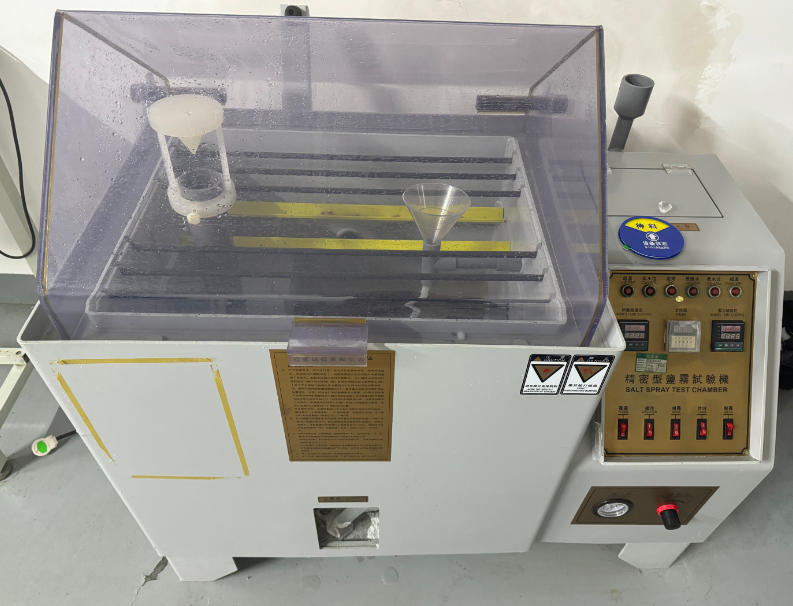
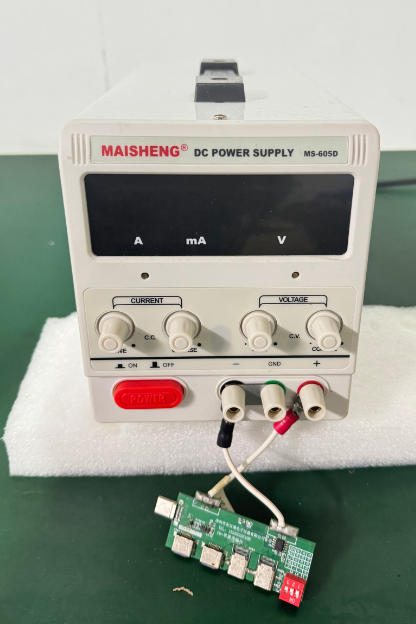
Dongguan Focuses Electronics Technology Co., Ltd. — a USB cable manufacturer in Tangxia Town, Dongguan, China, operating a 6,000 m² facility with 150 staff and exporting about 90% of output to the EU, North America and Asia — builds its quality control around that principle. Inspection is 100% full inspection before shipment, backed by 100% electrical testing and random testing in swing, tensile, high- and low-temperature, power, plug-in and short-circuit tests. Those tests target the three failure modes buyers raise most often: overheating, poor contact and wire cracking.
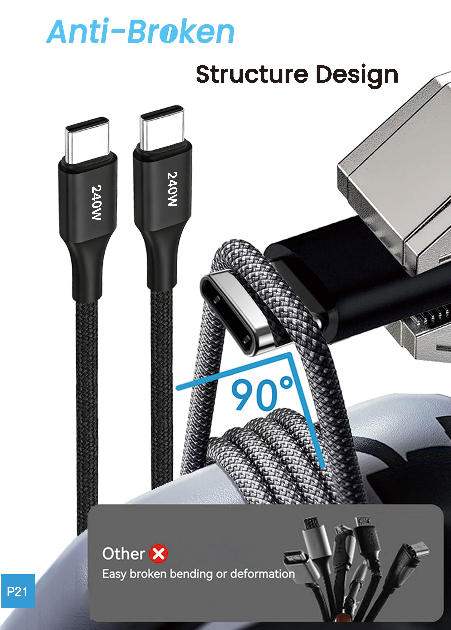
Durability at the connector head is addressed by design as well as by test. The company reports an anti-broken construction at the cable head position, with a service life 3–5 times longer than ordinary market USB cables and a joint fracture failure rate reduced by more than 80%. That is a company-reported comparison against general market cables — useful as a design statement, and still something a buyer should confirm on samples and in the inspection record.
| Criterion | What the buyer receives | Where it is checked |
|---|---|---|
| Inspection basis | 100% full inspection before shipment, with a report per lot | Factory, pre-shipment |
| Electrical safety | 100% electrical testing plus short-circuit and power testing | Test bench, per unit |
| Mechanical durability | Random swing and tensile testing; anti-broken connector head design | Laboratory, sampled |
| Thermal range | Random high- and low-temperature testing against the model's rated range (−10 °C to 60 °C or −20 °C to 70 °C) | Laboratory, sampled |
| Interface life | Random plug-in testing of mated cycles | Laboratory, sampled |
| Warranty | 12-month warranty term stated in the order | Commercial document |
| Commercial terms | MOQ 2,000 units; 25–35 days; FOB Shenzhen or EXW; 30% deposit, 70% before shipment | Order confirmation |
The value of the table is not the number of tests. It is that each line can be checked against a record, and that the record names the model and the lot. Acceptance that cannot be verified after the container leaves is an assumption, not a criterion.
Charging compatibility: technical guidance to write into the order
Charging failures are usually specification mismatches rather than defective cables, and most can be prevented by writing the electrical envelope into the purchase order.
The cable range in question supports data transfer up to 480 Mbps and charging currents from 1 A to 2.4 A, or up to 6 A maximum depending on model, and is described as compatible with 120 W and 240 W fast charging. Working temperature varies by model between −10 °C to 60 °C and −20 °C to 70 °C. Read that as a range across models, not a promise for every SKU: the rated current, power and temperature of the specific model must appear on its own specification sheet.
USB Power Delivery Revision 3.2 defines fast-charging protocols with Extended Power Range up to 240 W. A 240 W claim therefore requires a cable built and tested for that envelope — the connector shape alone proves nothing, and no cable can raise a charger's output. For destination planning, the temperature rating decides suitability: retail lines headed for cold-weather markets or in-car use should specify the model rated to −20 °C rather than assume the standard variant covers it.
Two sentences of guidance belong on the packaging or in the listing, where the destination permits it: match the cable to the charger and device rating, and do not exceed the cable's rated current. Then verify on samples — a charging and data test at the rated current and the advertised data rate, recorded against the model code — instead of accepting "fast charging supported" as a statement.
Holding compliance together across repeat orders
A compliance file is valid for a revision, not for a relationship. The second order is where documentation usually drifts, so the long-term agreement should carry four mechanisms: change notification, re-test triggers, a warranty route and a capacity commitment.
Capacity is easier to check than it looks. Focuses reports monthly production capacity of 2,500,000 units, a typical lead time of 25–35 days and a 2,000-unit MOQ. Set against that monthly figure, a 2,000-unit order is a scheduling task rather than a capacity constraint, which is why lead time — not volume — is usually the number that moves when a destination's document list changes late in the cycle.
OEM and ODM support matters here for a compliance reason as much as a commercial one. A custom logo, a right-angle USB-C moulding, a 3-in-1 multifunctional charging cable or an MFi Lightning variant each creates a new model that needs its own place in the file. Six R&D engineers and a 90% export share across the EU, North America and Asia make multi-destination documentation routine work at this scale, but routine is not automatic: the destination-specific pack still has to be requested per order and re-issued per revision.
A simple scorecard keeps the relationship honest: document completeness at first submission, evidence age, change-notification speed, quality of the inspection record, warranty resolution and lead-time adherence. Score those six and the compliance conversation stops being about trust.
Three buyer situations
These are conditional examples rather than case histories, and each one changes the file rather than the cable.
If you are launching a USB-C charging cable in the EU alongside covered devices, the priority is the mapping sheet: tested power option, standard reference and model code on one page, plus a note on the laptop date of 28 April 2026 for the accessory roadmap.
If your range is Apple-compatible, resolve MFi status before artwork approval. A functional test report and a programme authorisation are different documents, and discovering the gap after packaging is printed is the expensive order of events.
If you distribute across several Middle East or Asian markets, build one master file and treat the country annex list as part of the quotation. A distributor who receives the annex index with the price list can start registration work in parallel with production.
Frequently asked questions
How do I verify that a cable's documents match the destination market?
Match three things before ordering: the standard each claim maps to (for USB-C, the applicable USB-IF Type-C specification or its IEC equivalent, IEC 62680-1-3:2024), the document set your importer of record or sales channel requires for that destination, and the test evidence that names the model tested. A USB-C connector alone does not prove data speed, current rating or USB Power Delivery capability, so every claim should be tied to a specification and a test record.
Which standards should a USB cable specification reference?
For USB-C geometry and cable requirements, reference the applicable USB-IF Type-C Cable and Connector Specification; IEC 62680-1-3:2024 defines USB Type-C receptacles, plugs and cables and corresponds, per the IEC publication page, to USB-IF Type-C specification Revision 2.3. For power, reference USB Power Delivery Revision 3.2, which defines fast-charging protocols up to 240 W. For Apple-compatible Lightning and authorised USB-C cables, add Apple MFi authorisation. Confirm the exact revision and applicable test document for each product claim.
What does compliance cost per model?
Published 2025 figures give a USB-IF full membership fee of USD 5,000 per year and testing fees of roughly USD 2,200–3,300 per model for a basic USB-C data cable. Because both are per-programme and per-model costs, compliance cost per unit falls as volume per model rises, which favours consolidating SKUs over spreading small volumes across many variants. Fees and test scope differ by product and programme, so confirm current figures with the test house before budgeting.
What acceptance criteria should a purchase order state before shipment?
State the inspection basis (100% full inspection before shipment), the individual tests and their sample plan (short circuit, swing, tensile, high- and low-temperature, power and plug-in), the functional limits for data and charging, the packaging approval, and the warranty term. Focuses applies 100% electrical testing with random testing across swing, tensile, high- and low-temperature, power and plug-in tests, offers a 12-month warranty, and ties acceptance to the pre-shipment test, with 30% deposit and 70% balance before shipment.
What should I look for in a long-term USB cable supply partner in China?
Look for a partner that holds capacity and documentation at the same time: a stated monthly capacity (Focuses reports 2,500,000 units), a stable lead time of 25–35 days against a 2,000-unit MOQ, OEM/ODM capability, and a document-control process that keeps the specification, test reports and warranty statement current across repeat orders. Focuses operates a 6,000 m² facility with 150 staff, six R&D engineers and about 90% of output exported to the EU, North America and Asia. Buyers can request samples, a quotation against their destination's document list, or the current catalogue for the 2026 range.
Conclusion
Compliance for a USB cable order comes down to three deliverables a buyer can hold: a mapping from each claim to a specification revision, a destination-specific document pack that names the model and the date, and acceptance criteria written as numbers with a record behind each one. Once those are in place, the market question stops being whether a supplier has certificates and becomes whether the file matches the SKU you are buying.
Focuses' export mix across the EU, North America and Asia, its 100% pre-shipment inspection, 12-month warranty and 2,500,000-unit monthly capacity set the terms on which that file can be maintained order after order. The 2026 Focuses catalogue is available to download, and the team can be reached at info@focusestech.com for samples, a quotation against a destination document list, or technical guidance on charging compatibility.
Have Questions or Need More Details?
Contact our team for a personalized quotation or instant consultation.
Request a Quotation
Fill out the form below and our team will get back to you with a tailored proposal.
WhatsApp Direct Chat
Prefer to chat in real-time? Message us on WhatsApp for instant assistance & quick answers.
- Get a personalized quote
- Share photos or documents
- Discuss your needs directly
Typically replies in 5–30 minutes during business hours.