
USB Cable Compliance by Region: An RFQ Guide for EU, North America, Middle East & Asia
USB Cable Compliance by Region: An RFQ Guide for EU, North America, Middle East & Asia
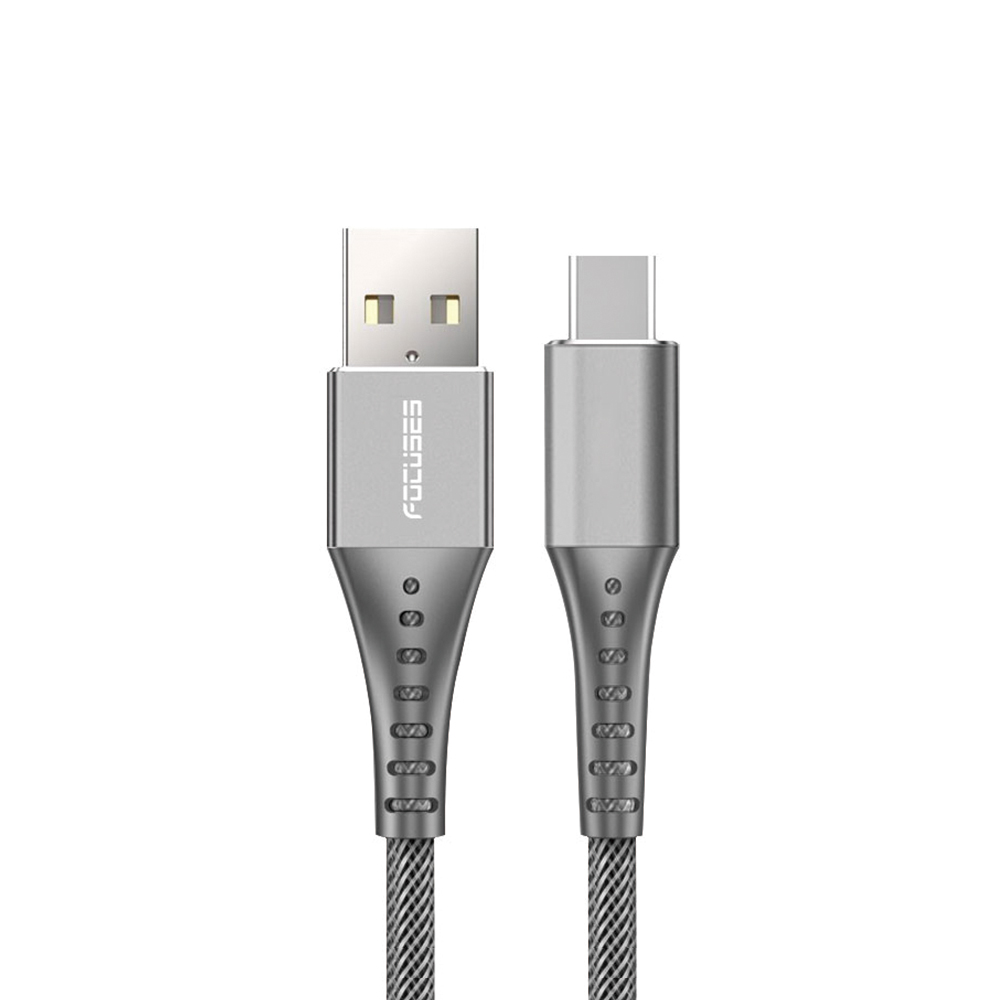
A supplier that says it ships to the EU, North America, the Middle East and Asia has told you something about its order book. It has not told you which certificate covers the cable in the box.
That gap causes more procurement delay than price does. It surfaces at the RFQ stage rather than at customs, and the mistake behind it is always the same: a general statement — “we are certified”, “we export to Germany”, “this model is CE” — gets read as a per-model, per-market answer. Dongguan Focuses Electronics Technology Co., Ltd. (Focuses) is a USB cable manufacturer based in Tangxia Town, Dongguan, Guangdong, China, with a stated export ratio of 90% and stated markets spanning the EU, North America, the Middle East and Asia. Its records make the distinction easy to see: the certification record the company supplies is an ISO 9001 quality management certificate, not a product conformity certificate for any single destination market.
This guide sets out what buyers in each of those four regions typically ask, which documents genuinely answer the question, and what to write into an RFQ so that a compliance answer arrives before the purchase order does.
What “Compliant” Actually Means for a USB Cable
For a USB cable, compliance is not one status. It is four separate claims, each supported by a different type of document, and each weakened the moment it is confused with the others.
- Interface and electrical standard. Connector geometry, pin assignment and rated performance mapped to a published specification — the USB-IF USB Type-C Cable and Connector Specification, or the international equivalent, IEC 62680-1-3:2024.
- Advertised capability. A 6 A, 240 W or 480 Mbps claim needs test evidence for the exact build being quoted: same connectors, same conductor, same length, same jacket.
- Manufacturing system. The quality management system behind production — ISO 9001 and the inspection regime it is supposed to document.
- Market-access rules. Rules that apply to the product placed on a given market, and often to the device the cable charges rather than to the cable itself.
Unstated certifications get assumed at the seams between these four layers. An ISO 9001 certificate does not make a cable conformant for the EU. A CE mark printed on a retail box is not a test report. A report for a 1 m PVC build does not automatically cover a 2 m silicone build. Keeping the layers separate is what turns a vague supplier answer into an auditable one.
Where ISO 9001 Fits — and Where It Stops
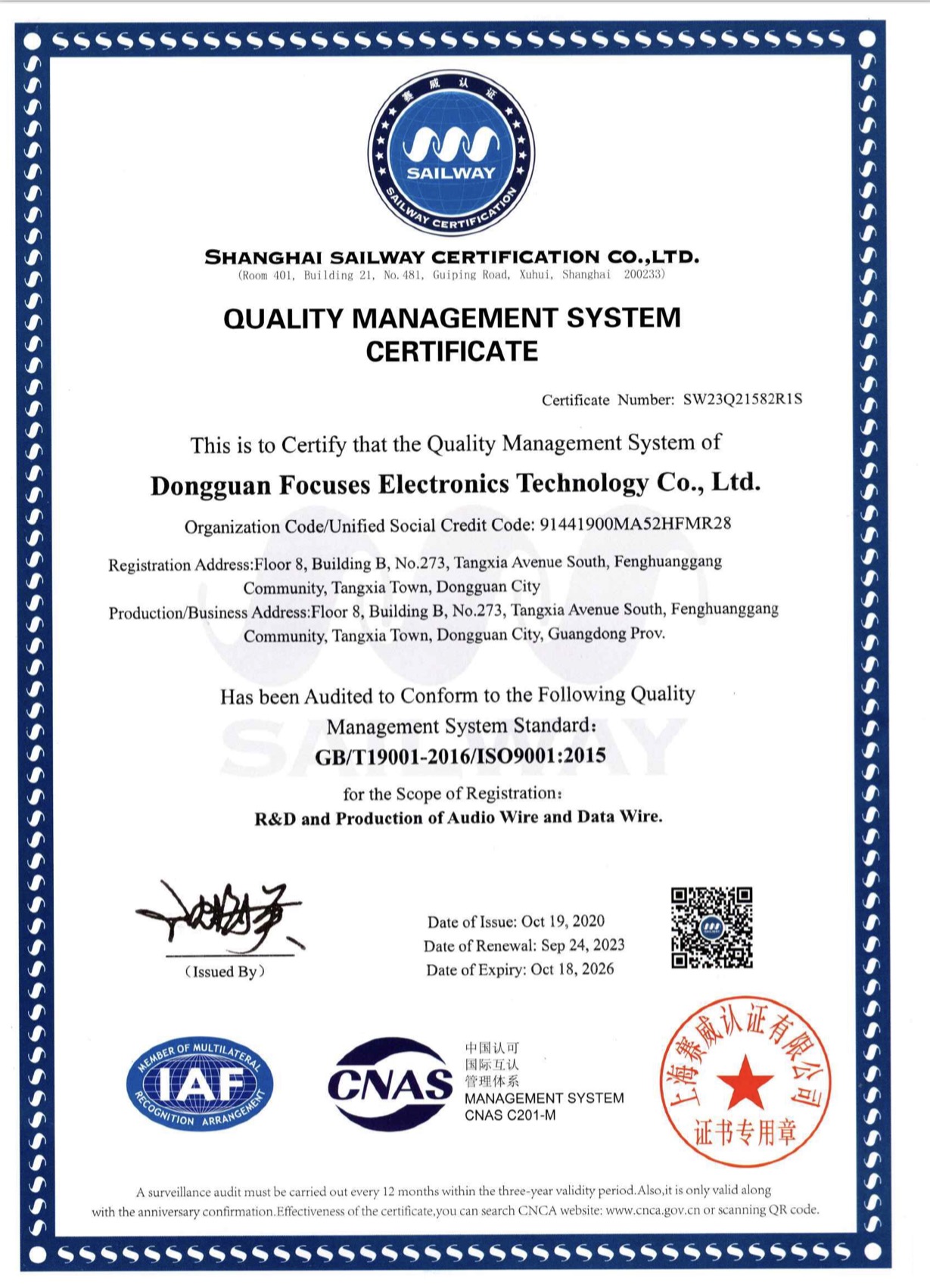
Focuses’ supplied certificate record lists ISO 9001:2015 certification under certificate number SW23Q21582R1S, issued by SAILWAY, with the scope “R&D and Production of Audio Wire and Data Wire” and a stated validity period running from 19 October 2020 to 18 October 2026. The same record names the EU, US, Middle East and Southeast Asia among the markets the company serves.
It is a system certificate, not a product certificate. ISO 9001 describes how a factory controls its processes — incoming material checks, production control, inspection, corrective action. It does not state that a particular cable satisfies a particular product-safety rule in a particular country. Treat it as evidence that you can audit a production system, and ask separately for the product evidence.
The validity period carries weight. The expiry date shown on that record has passed. The useful RFQ question is therefore not “are you ISO 9001 certified?” but “what is the current certificate number, scope and validity period for this audit cycle, and what verification route does the issuing body provide?” A certificate number is checkable with the body that issued it, so ask which route the supplier expects you to use rather than accepting a scanned image.
Scope is narrower than a catalogue. “R&D and production of audio wire and data wire” describes the processes covered. It does not extend to models the supplier sources elsewhere, and it does not transfer to another factory. If the quotation comes from a trading office, confirm which production site the certificate belongs to.
The same logic applies to the quality control claim. Focuses describes a rigorous control system intended to keep cables aligned with international standards, and states that products are 100% fully inspected before shipment. Read that as a process commitment from the manufacturer; the inspection record for your own shipment is the part you can audit.
The Standards and Rules Behind Regional Requests
Regional questions are not arbitrary. Almost every one traces back to a small set of documents and programmes, and identifying which one a buyer means is usually enough to answer in a single exchange.
Interface standards: three references that do the real work
The USB Type-C Cable and Connector Specification, Release 2.2 (October 2024) defines cable requirements including connector dimensions, pin assignments and performance characteristics. The USB Power Delivery Specification, Revision 3.2 defines fast-charging protocols that enable up to 240 W over USB Type-C cables. IEC 62680-1-3:2024 provides the international standard for USB Type-C receptacles, plugs and cables, and the IEC publication page identifies it as corresponding to the USB-IF Type-C specification Revision 2.3.
This is why “USB-C” alone is not a specification. A competent supplier can name the revision a claim was tested against, at what length, and by which laboratory. A supplier that cannot is not necessarily selling a bad cable — it is selling an undocumented one.
The EU Common Charger: what it covers, and from when
Under Directive (EU) 2022/2380, the Common Charger requirements have applied since 28 December 2024 to specified categories of portable radio equipment: handheld mobile phones, tablets, digital cameras, headphones, headsets, handheld videogame consoles, portable speakers, e-readers, earbuds, keyboards, mice and portable navigation systems. Laptops came into scope on 28 April 2026. European Commission guidance identifies USB-C as the harmonised charging receptacle, references EN IEC 62680-1-3, and lists USB 2.0, USB 3.2, USB 4, USB Battery Charging 1.2, USB Type-C Current 1.5 A, USB Type-C Current 3.0 A and USB Power Delivery among the charging options in the framework.
Note what the rule does and does not do. It harmonises the charging receptacle on covered devices; it does not certify a cable. Its practical effect on cable procurement is to make the USB-C power question unavoidable — a cable sold into an EU-bound programme has to carry USB-C at the current and wattage claimed, with test evidence mapped to the standard the buyer’s compliance team recognises.
Proprietary licensing: Apple MFi
Apple’s MFi programme requires licensing and certification for third-party manufacturers producing Lightning cables and authorised USB-C cables for Apple devices. For a Lightning SKU, MFi status is a supplier qualification gate in its own right, independent of any ISO certificate and independent of the factory’s USB-C capability. A factory can be strong on USB-C and simply not authorised for Lightning; that is a scope fact, not a quality judgement.
Why no catalogue is uniformly certified
Certification is priced per model, which explains a great deal of buyer frustration. As of 2025, USB-IF full membership was reported at USD 5,000 per year, and testing a basic USB-C data cable was reported at roughly USD 2,200 to USD 3,300 per model by a testing service provider. Suppliers therefore certify selected SKUs. Ask which ones. The absence of a certificate for one model proves nothing about the rest of the range, and the presence of one for another model proves nothing about the model you are buying.
What Buyers in Each Region Ask For
European Union
EU enquiries are usually about the charging interface and the paper behind the claim. Expect questions on whether the SKU is USB-C at both ends or A-to-C, which specification revision the 240 W or 6 A figure was tested to, who signs the declaration of conformity as the responsible economic operator, which test reports support it, what substance documentation the buyer’s own team needs for the exact SKU, and what language the retail packaging must carry.
What the Focuses record shows for the EU is the ISO 9001 quality management certificate plus a stated EU export market. The supplied record does not include an EU product conformity certificate for a named model. That is not a defect in the file; it tells you what to ask. Ask which SKUs carry which EU evidence, and confirm whether supplier or brand owns the declaration. What EU evidence does not prove is that models outside the tested configuration share the result.
North America
North American questions split by connector. For Lightning SKUs, MFi authorisation is the first gate. For USB-C data and charging claims, buyers ask for test evidence mapped to the USB-IF specifications and for the current rating to be substantiated at the length actually ordered, since a rating demonstrated at 0.3 m is not automatically a rating at 2 m.
A large part of the requirement set sits with the brand, retailer, marketplace or importer placing the product on the market, and with the end product’s own approvals. The cable supplier’s job is to supply evidence for the characteristics it claims. Establish early which party is responsible for which declaration, because that assignment is what a recall or a delisting turns on. Then ask for the inspection record: 100% pre-shipment inspection is a process commitment, and the record is what you audit.
Middle East
The Focuses certificate record lists the Middle East among the markets served, and associates a SAILWAY-issued ISO 9001 certificate with the cable range. That is factory-system evidence, and it is worth exactly what its scope says — no more.
Destination requirements in the region are set nationally and change; no single regional certificate settles them. The productive approach is to ask the supplier to confirm in writing which destination requirements it can support for your market and which documents it will provide, then confirm the remainder with your importer of record. RFQ items that come up repeatedly are dual-language or Arabic labelling to the buyer’s artwork, packaging customisation, and written confirmation that the certificate belongs to the site that will actually produce the order.
Asia
Treat Asia as two questions. As a sourcing region, it is where the factory sits. As a destination region, it contains many separate national schemes, and the Focuses record lists Southeast Asia among the markets served. A regional generalisation is not a country answer, so ask per destination country and ask for the specific documentation rather than a statement of experience.
Buyers shipping within Asia often want import documentation and marketplace documentation at the same time, plus the fastest possible sample turnaround. Sequencing matters: agree the sample and the document list together, or the paperwork becomes the critical path after the sample is approved.
The RFQ Checklist: Eight Items That Settle the Question
An RFQ that asks for “compliance documents” gets a folder. An RFQ that asks eight specific questions gets an answer you can file.
- SKU claim matrix. One line per model covering interface, jacket, length, current, wattage, data rate and ingress rating. The Focuses range covers CB-PVC, CB-Nylon, CB-TPE, CB-SILICONE and CB-Waterproof builds, with 0.3 m, 1 m, 1.5 m and 2 m options on the nylon, TPE, silicone and waterproof lines and 0.5 m to 2 m on PVC.
- Standards evidence. Which specification and revision, which laboratory, which report number, and which configuration sat on the test bench.
- Certification status. Number, issuing body, scope, validity period and verification route. For Focuses, the supplied ISO 9001:2015 record is number SW23Q21582R1S, issued by SAILWAY, covering R&D and production of audio wire and data wire, valid 19 October 2020 to 18 October 2026 as stated — so ask for the current cycle.
- Inspection records. The format of the 100% pre-shipment inspection record, the criteria applied, whether defects are judged against a written limit, and whether photographs or video accompany the report.
- Packaging and labelling customisation. Logo printing and packaging style or design are listed options. Agree who writes the legal text on the pack and who signs the declarations; a relabelled box does not create a certification, and the responsible party named on the label must match the party holding the evidence.
- ODM/OEM scope. Listed customisation covers logo printing, cable colour, power, appearance, materials, moulding, multi-function design, connector housing colour, length, packaging style and packaging design. Write the ones you need into the specification, because a change of jacket or length is a different configuration for evidential purposes.
- Commercial terms. Minimum order quantity is 2,000 units and the stated lead time is 25 to 35 days, against monthly capacity of 2,500,000 units and annual capacity of 25,000,000 units. Ask for a quote validity window: copper accounts for 60% to 80% of total manufacturing cost for standard USB cables, and international copper prices reached USD 13,000 to USD 13,300 per metric ton in early 2026 according to SMM.
- Warranty and after-sales. Stated terms are a 12-month warranty plus free technical guidance on charging compatibility issues during the warranty period. Confirm what counts as a compatibility issue, who pays return freight, and what triggers a replacement.
Add one final step: request a sample of the exact configuration you are quoting, not a similar one. Sample approval and documentation approval should close in the same week.
Matching Variants to the Claims You Will Make
A jacket change does not alter a cable’s certification status, but it does change the build — and the build is what the evidence has to cover. The table compares the five constructions on the parameters the manufacturer publishes.
| Model | Jacket | Interface | Power / current | Data | Working temperature | Notable claim |
|---|---|---|---|---|---|---|
| CB-PVC | PVC outer sheath, pure copper conductor | USB-A, Lightning, Type-C, Micro USB | 1 A – 2.4 A | 480 Mbps | -10 °C to 60 °C | Cost-efficient builds, 0.5 m – 2 m |
| CB-Nylon | Nylon braid over PVC inner layer | USB-A / USB-C to Type-C, Lightning, Micro USB | 120 W / 240 W, max 6 A | 480 Mbps | -10 °C to 70 °C | Braided durability, custom logo supported |
| CB-TPE | Eco-friendly TPE | Multi-type USB port | 120 W / 240 W, max 6 A | Charging and data sync | Not stated | Soft, flexible, wear-resistant |
| CB-SILICONE | Soft food-grade silicone | USB-A / USB-C to Type-C, Lightning, Micro USB | 120 W / 240 W, max 6 A | 480 Mbps | -20 °C to 70 °C | Skin-friendly, anti-kink, anti-freezing |
| CB-Waterproof | Silicone / TPE / nylon braided, optional | USB-A / USB-C to Type-C, Lightning, Micro USB | 120 W / 240 W, max 6 A | 480 Mbps | -20 °C to 70 °C | IPX7 waterproof and dustproof, sealed integrated moulding |
Two practical readings follow. First, a 240 W or 6 A claim on the nylon, TPE, silicone or waterproof builds is a different evidential proposition from the 1 A to 2.4 A PVC range, so one report cannot stand in for the whole table. Second, working temperature ranges differ by build, which matters if the cable goes into an outdoor, vehicle or cold-weather retail environment; the anti-freezing claim belongs to the silicone construction specifically.
Where a published parameter does not state a value — the TPE build lists neither a working temperature nor a data rate — the honest entry in your specification is “not stated”, followed by a question. That is a stronger position than a filled-in guess.
Where These Cables Are Used
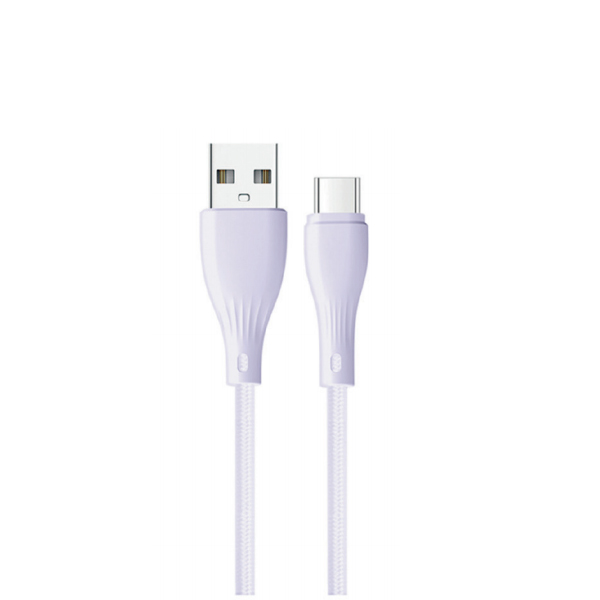
The applications that generate compliance questions are rarely exotic. Digital accessory wholesalers and corporate gift buyers order in the 5,000 to 30,000 piece range for daily phone charging, retail resale, branded gifting and car use. Outdoor, sports and marine lines pull the IPX7 waterproof build and the silicone construction for cold-weather flexibility. Multi-device programmes use multi-function charging designs to cut the number of SKUs in a retail pack. In every case the compliance question has the same shape: which configuration is shipping, and which document covers that configuration.
Region-by-Region Evidence Map
| Region | Question buyers actually ask | Evidence to request | What that evidence does not establish |
|---|---|---|---|
| EU | Which specification revision backs the power claim, and who signs the declaration of conformity? | Declaration of conformity, per-SKU test reports, mapping to EN IEC 62680-1-3, packaging language | That untested models or other lengths share the tested result |
| North America | Is this Lightning SKU MFi-authorised, and what supports the USB-C rating at this length? | MFi authorisation check, USB-IF-mapped test reports, inspection record | That the brand’s own end-product approvals are complete |
| Middle East | Which destination-country requirements can you document, and for which factory site? | Certificate with scope and validity, destination-specific documents, agreed labelling artwork | That one regional record covers every country in the region |
| Asia | Which country’s scheme applies to this shipment, and what is the document list? | Country-specific documentation, import paperwork, 100% inspection record | That a regional statement of experience answers a national requirement |
One more distinction is worth carrying into the negotiation. Factory capability is not the same as product evidence. The 6,000 m² facility, the 150-person team, the six R&D engineers and the 25,000,000-unit annual capacity describe what the site can produce; they do not certify the cable. Capability answers the delivery question. Documents answer the compliance question. Buyers who separate the two stop paying for assurance they never received.

Frequently Asked Questions
Does an ISO 9001 certificate make a USB cable compliant for the EU market?
No. ISO 9001:2015 certifies a quality management system, not a product. The Focuses record supplied is certificate SW23Q21582R1S issued by SAILWAY, with the scope “R&D and Production of Audio Wire and Data Wire” and a stated validity of 19 October 2020 to 18 October 2026. It supports questions about process control, traceability and inspection discipline. Product conformity and market access rest on different documents — a declaration and test reports for the exact SKU — which must be requested separately. Because the stated expiry has passed, ask for the current certificate cycle at the same time.
What EU rule applies to USB-C charging, and from when?
Directive (EU) 2022/2380 harmonises the charging receptacle for listed device categories from 28 December 2024, with laptops covered from 28 April 2026. European Commission guidance identifies USB-C as the harmonised receptacle, references EN IEC 62680-1-3, and lists USB 2.0, USB 3.2, USB 4, USB Battery Charging 1.2, USB Type-C Current 1.5 A, USB Type-C Current 3.0 A and USB Power Delivery among the charging options in the framework. The rule addresses the device interface. For cables, its practical effect is that USB-C power claims need specification-mapped test evidence rather than a connector description.
MFi-certified USB cable manufacturers: what should a buyer verify?
Apple’s MFi programme requires licensing and certification for third-party manufacturers that produce Lightning cables and authorised USB-C cables for Apple devices, so verification means confirming the manufacturer is licensed for that specific product type rather than confirming general capability. Check that the authorisation covers the model and the production site named in the quotation, not only the trading company issuing it. The Focuses certification record supplied is an ISO 9001 quality management certificate, so MFi status for a Lightning or Apple USB-C SKU has to be confirmed case by case and should never be inferred from the ISO certificate.
What should an RFQ ask about inspection and customisation?
Ask for the format of the 100% pre-shipment inspection record, the criteria used to pass or fail a unit, whether defects are counted against a written limit, and whether photographs or video accompany the report. On customisation, logo printing, cable colour, power, appearance, materials, moulding, connector housing colour, length, packaging style and packaging design are all listed options for OEM and ODM orders. Pair each customisation with a configuration statement, because a changed jacket or length is a different build and has to be re-confirmed against the test evidence.
What drives the price, and what are the order terms?
Minimum order quantity is 2,000 units and the stated lead time is 25 to 35 days. Copper dominates the cost base — 60% to 80% of total manufacturing cost for standard USB cables — and international copper prices reached USD 13,000 to USD 13,300 per metric ton in early 2026 according to SMM, so ask for a quote validity window and a stated basis for any later adjustment. Certification is a separate cost line charged per model: USB-IF full membership was reported at USD 5,000 per year as of 2025, with testing of a basic USB-C data cable at roughly USD 2,200 to USD 3,300 per model by a testing service provider. That is why certification should be scoped per SKU rather than assumed across a catalogue.
How should sampling and lead time be sequenced?
Request a sample of the exact configuration being quoted — same jacket, length and connector combination — and ask which documents will accompany mass production, so that sample approval and paperwork approval close together. Production lead time is stated at 25 to 35 days; confirm in the purchase order what starts the clock, whether that is artwork approval, sample sign-off or deposit, because that definition rather than the number itself is what protects a launch date. Warranty is 12 months with free technical guidance on charging compatibility issues during the warranty period, so agree in advance what evidence a compatibility claim requires.
Conclusion: Ask Per SKU, Per Market, Per Document
The four questions behind every regional compliance request are stable: what exactly is the product, which specification backs the claim, which system produced it, and which market rule applies. Regions change the order of those questions and the paperwork that answers them, not the underlying logic.
The practical discipline fits into an email. Name the SKU. Name the standard revision. Ask for the certificate number, its scope and its current validity, and the route to verify it with the issuing body. Ask for the test report covering that specific build, and treat inspection records as auditable evidence rather than a promise. Where a document does not exist, write “not stated” and ask — an honest gap is easier to manage than an assumed certification, and it is the only version of the answer that survives an audit.
Next step. Focuses publishes its USB cable range, materials and customisation options in its 2026 catalogue, available to view or download here: 2026 Focuses Catalogue (PDF). For a specific programme, send the SKU list and destination markets so the documentation set can be matched to the configuration before a sample is approved.
Have Questions or Need More Details?
Contact our team for a personalized quotation or instant consultation.
Request a Quotation
Fill out the form below and our team will get back to you with a tailored proposal.
WhatsApp Direct Chat
Prefer to chat in real-time? Message us on WhatsApp for instant assistance & quick answers.
- Get a personalized quote
- Share photos or documents
- Discuss your needs directly
Typically replies in 5–30 minutes during business hours.