USB Cable Materials: PVC, Nylon, TPE, Silicone, Waterproof

Two USB cables can look identical in a product photo and behave nothing alike in the field. The connector decides compatibility; the jacket compound, the conductor underneath it and the molding around the joint decide how much power the cable can carry, how cold or hot it can get, whether water reaches the inner wires, and how long it survives daily handling. Dongguan Focuses Electronics Technology Co., Ltd. (Focuses, www.focusestech.com) builds five USB cable material families on the same connector set: CB-PVC, CB-Nylon, CB-TPE, CB-SILICONE and CB-Waterproof. This explainer defines each material and maps it to the environments buyers actually specify: indoor daily charging, outdoor travel, humid bathrooms, sweaty training sessions and low-temperature use.
- CB-PVC - PVC outer sheath, 1A-2.4A charging, 480 Mbps data, -10C to 60C working range. Everyday indoor charging and data, retail and gift lines.
- CB-Nylon - nylon braided shell over a PVC inner layer, 6A with 120W/240W support, -10C to 70C. Travel, high-flex daily use, braided retail programs.
- CB-TPE - eco-friendly TPE jacket, 6A with 120W/240W support, soft and wear-resistant. Flexible indoor charging and sync where cost and flexibility matter.
- CB-SILICONE - soft food-grade silicone, 6A with 120W/240W support, -20C to 70C, anti-kink and anti-freezing. Cold climates and skin-contact use.
- CB-Waterproof - sealed integrated molding, IPX7 waterproof and dustproof, 6A with 120W/240W support, -20C to 70C. Bathrooms, sweat, rain, marine and automotive use.
Why the Jacket and Conductor Decide Field Performance, Not the Connector
A connector tells a buyer which device the cable plugs into. It says nothing about the four variables that generate returns: temperature tolerance, ingress protection, power ceiling and how the jacket behaves when it is bent, coiled and pulled every day. Those four variables are set by material and construction, and they are the reason five products with the same USB-C or Lightning plug are not interchangeable as a single stock-keeping unit.
The difference is measurable inside the same manufacturer catalogue. The CB-PVC specification lists a charging current of 1A-2.4A, while CB-Nylon, CB-SILICONE and CB-Waterproof list a maximum charging current of 6A with 120W and 240W power support. CB-PVC is rated from -10C to 60C; CB-SILICONE and CB-Waterproof are rated from -20C to 70C. Only the CB-Waterproof model carries an IPX7 waterproof and dustproof rating. A buyer who matches on connector type alone can end up shipping an indoor gift cable into a bathroom, gym or winter-vehicle program, where the specification never promised the performance the listing implied.
The same logic applies to the product names buyers use in tenders and purchase orders. A request for a "fast charging cable" can mean a 1A-2.4A mobile phone cable or a 6A USB-C cable with 240W support. A request for a "braided USB cable" describes the jacket, not the power tier. Clear material definitions remove that ambiguity before the first quotation is issued, and they make it possible to compare a bulk data cable quote from one supplier against another on equal terms.
Industry Background: Standards and Raw-Material Economics Now Shape Material Choice
USB cable specifications are no longer a purely internal document. IEC 62680-1-3:2024 defines USB Type-C receptacles, plugs and cables as an international standard for USB interfaces covering data and power. The USB Implementers Forum publishes the Type-C Cable and Connector Specification, and the USB Power Delivery specification Revision 3.2 defines fast-charging protocols that enable up to 240W of power delivery over USB Type-C cables. When a product datasheet claims 120W or 240W support, those numbers sit inside a published standard framework rather than being marketing copy.
Regulation adds a second layer in Europe. The EU Common Charger requirements have applied to specified categories of portable radio equipment, including handheld mobile phones, tablets, digital cameras, headphones, headsets, handheld videogame consoles, portable speakers, e-readers, earbuds, keyboards, mice and portable navigation systems, since 28 December 2024. The same framework applies to laptops from 28 April 2026. For importers building an EU-bound range, that creates a structural reason to standardise on USB-C cable portfolios, and USB-C is the connector set most of the five Focuses material families are specified around.
Copper economics then decide how much of that specification is affordable. Copper materials account for 60% to 80% of total manufacturing cost for standard USB cables, and international copper prices reached USD 13,000-13,300 per metric ton in early 2026. The conductor is not a detail to be substituted quietly in a quotation: it is the dominant cost line, and it is also the part of the cable that carries the current. Material discussions that treat jacket appearance as the only variable miss where the money and the performance both sit.
Data expectations need the same discipline. All five Focuses families listed here are specified at 480 Mbps, the USB 2.0 High Speed rate used for charging, syncing and device management. USB4 Version 2.0 certified cables support data transfer speeds up to 80 Gbps, but that is a different product tier with different conductor and shielding requirements. Mixing the two tiers inside one purchase order is a common source of disputes, because the jacket may look premium while the data channel remains a 480 Mbps design.
The Five Focuses Material Families in Detail
CB-PVC: Standard PVC Construction for Indoor Daily Use
CB-PVC uses a PVC outer sheath over a pure copper conductor. Interface options cover USB-A, Lightning, Type-C and Micro USB, so one material family can serve Apple USB cable requests, Type-C cable requests and legacy Micro USB demand in the same retail assortment. Available lengths are 0.5m, 1m, 1.5m and 2m. Charging current is specified at 1A-2.4A, data transfer at 480 Mbps, and the working temperature range is -10C to 60C. Fast charging and data transmission are both supported, and custom logo printing is accepted.
The material profile suits products that live indoors and stay in one place: a phone charging on a bedside table, a spare cable in a drawer, a company gift, an entry-price retail SKU. The 1A-2.4A window is honest about what the cable is built for, and the 60C upper limit reflects a normal room and in-car-glovebox environment rather than a hot dashboard or a steam-filled bathroom.

CB-Nylon: Braided Shell Over a PVC Inner Layer
CB-Nylon combines a nylon braided shell with a PVC inner layer and a tinned pure copper core. Interfaces run from USB-A or USB-C on the host side to Type-C, Lightning or Micro USB on the device side. Output power is listed at 120W or 240W with a maximum charging current of 6A, data transfer at 480 Mbps, and available lengths of 0.3m, 1m, 1.5m and 2m. The working temperature range is -10C to 70C, and custom logo printing is supported.
The construction is the usual answer to a request for a braided USB cable that must also carry a fast charging load. The braid protects the PVC layer from abrasion in a bag or a pocket, while the PVC layer keeps the cable's shape and the tinned copper core handles the current. The 70C upper limit and the 6A rating make it a practical choice for travel and for daily multi-device use, where the same cable charges a phone, a tablet and occasionally a laptop.
CB-TPE: Eco-Friendly TPE with a Soft, Wear-Resistant Feel
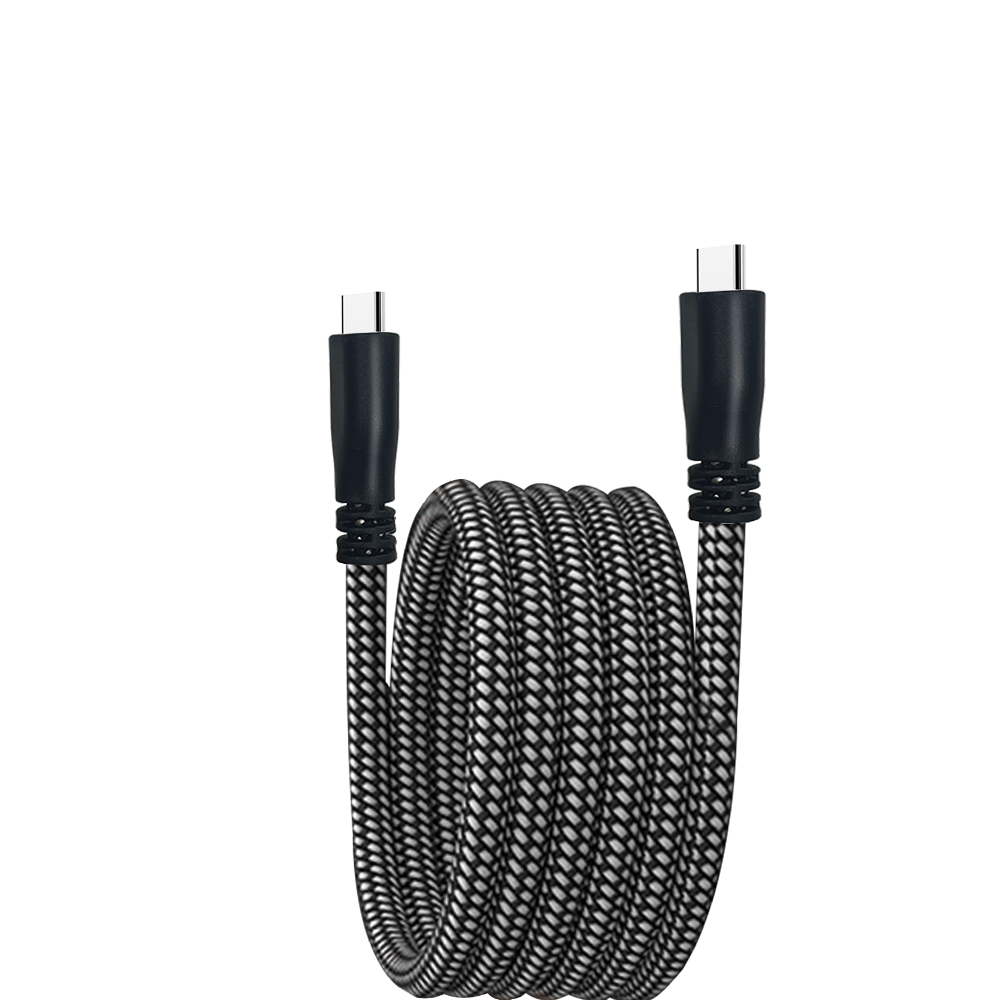
CB-TPE uses an eco-friendly TPE outer material over a tinned copper wire core. It is specified with a multi-type USB port interface, 120W and 240W fast charging support, a maximum current of 6A, and dual charging and data-sync function. The material is described as soft, flexible and wear-resistant, and the family is aimed at consumer electronics, mobile accessories, retail, wholesale, e-commerce, gift and household electronics channels.
TPE sits between PVC and silicone in handling: it keeps a rubbery, low-gloss surface and bends easily without the rigid feel of a hard PVC jacket. Two specification points must be confirmed per order rather than assumed. The current CB-TPE datasheet does not fix a length list or a working temperature range, so a buyer specifying CB-TPE for an outdoor or cold-weather program must obtain those values in writing before approving the purchase order. It is a strong fit for indoor flexible use and for multi charging cable variants; it is not a substitute for the IPX7 construction in the CB-Waterproof family.

CB-SILICONE: Food-Grade Silicone for Cold and Skin-Contact Use
CB-SILICONE uses a soft food-grade silicone outer sheath over a high-purity tinned copper core. Interface options cover USB-A or USB-C to Type-C, Lightning or Micro USB. It supports 120W and 240W charging at a maximum of 6A, transfers data at 480 Mbps, and is available in 0.3m, 1m, 1.5m and 2m. The working temperature range is -20C to 70C, the widest low-end window in the range alongside CB-Waterproof. Custom logo printing is supported.
The listed material features are skin-friendly, odorless, anti-kink, wear-resistant, anti-freezing and flexible. Those properties explain where silicone wins: a cable that rests against skin during a workout, a cable that has to stay supple in an unheated room or a winter vehicle, and a cable that is repeatedly folded into a small pouch. The -20C low-end rating is the key number for cold-climate retail: a PVC cable rated to -10C and a silicone cable rated to -20C are not the same product for a Nordic or northern-China winter program.

CB-Waterproof: Sealed Integrated Molding with an IPX7 Rating
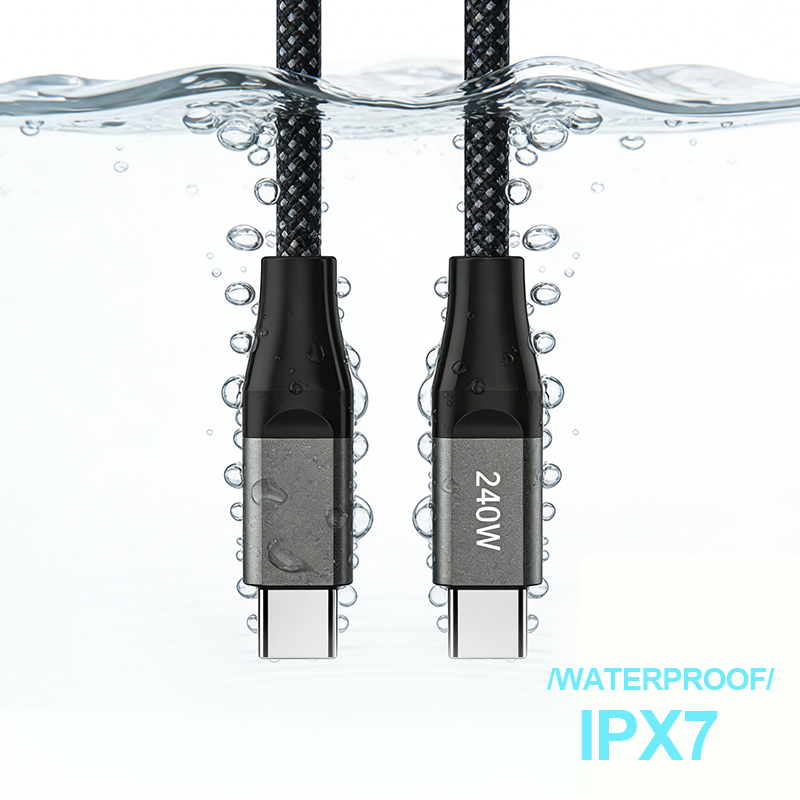
CB-Waterproof is the only family in this set specified with an ingress rating. The model uses sealed integrated molding and carries an IPX7 waterproof and dustproof rating, and the listed features are waterproof, dustproof, sweat-proof, anti-corrosion and wear-resistant. Outer material options include silicone, TPE or nylon braided. The conductor is a high-purity tinned copper core, power support is 120W and 240W at a maximum 6A, data transfer is 480 Mbps, lengths are 0.3m, 1m, 1.5m and 2m, and the working temperature range is -20C to 70C. Custom logo printing is supported.
The sealing is the product, not an accessory to it. A standard overmolded USB-C cable has a joint between the connector housing and the jacket where water can travel along the conductors; sealed integrated molding closes that path. For a humid bathroom, a sweaty gym session, a rainy commute or a marine and automotive environment, the IPX7 construction is the specification that answers the buyer's question, and it is also the reason this family should not be treated as a decorated version of a TPE or silicone cable.

Step-by-Step: Matching a Material to a Program
Step 1 - Define the Operating Environment First
Write down the temperature window and the moisture exposure before looking at any model. Indoor retail and gift programs sit comfortably inside the -10C to 60C window of CB-PVC. Cold-climate, bathroom, gym and outdoor programs need the -20C to 70C window of CB-SILICONE or CB-Waterproof, and any program where liquid contact is expected needs the IPX7 rating that only CB-Waterproof carries.
Step 2 - Fix the Power Ceiling
Decide whether the cable must deliver 1A-2.4A or the 6A, 120W/240W tier. This single decision splits the range: CB-PVC is specified at 1A-2.4A, while CB-Nylon, CB-TPE, CB-SILICONE and CB-Waterproof are specified at a maximum 6A with 120W and 240W support. Selling a 240W device with a 2.4A cable generates complaints that no packaging copy can fix.
Step 3 - Confirm the Data Requirement
All five families are specified at 480 Mbps, which covers charging, syncing, device management and the everyday USB sync and charge cable role. If a program requires USB4-class transfer speeds, it belongs in a different product tier, and the material discussion must be restarted with the conductor and shielding requirements for that tier.
Step 4 - Select the Connector Pair and Length
CB-PVC covers USB-A, Lightning, Type-C and Micro USB in 0.5m, 1m, 1.5m and 2m. CB-Nylon, CB-SILICONE and CB-Waterproof cover USB-A or USB-C to Type-C, Lightning or Micro USB in 0.3m, 1m, 1.5m and 2m. CB-TPE is listed with a multi-type USB port interface and its length list must be confirmed per order. Right angle USB-C cable configurations, coiled variants and 3 in 1 multifunctional charging cable builds are handled as customization requests rather than as catalogue defaults.
Step 5 - Validate the Sample, Then Lock the Specification
Check the sample against the datasheet at the points that matter for the environment: jacket material and hardness, conductor description, printed length, rated current, working temperature and, where relevant, the IPX7 construction. Focuses applies 100% full inspection before shipment and provides a 12-month warranty with free technical guidance for charging compatibility issues during the warranty period. Validation at sample stage is cheaper than discovering a material mismatch after 2,000 units have shipped.
Use Cases: Five Environments and the Material That Fits
Everyday Indoor Charging
Bedside tables, office desks, hotel rooms and gift boxes are the home territory of CB-PVC. The material covers the four common connector types, handles 1A-2.4A charging and 480 Mbps data, and stays within a -10C to 60C working range that normal indoor use never approaches. For a promotional custom logo USB cable program where the cable will not travel far, PVC removes cost without removing function.
Outdoor Travel and Commuting
A travel cable is folded, compressed and pulled in and out of a bag several times a day, and it must often carry a fast charge when it arrives. CB-Nylon answers both requirements: the braided shell takes the abrasion, the PVC inner layer holds the shape, and the 6A, 120W/240W rating keeps pace with modern phones and tablets. Where rain is part of the commute, CB-Waterproof is the correct upgrade rather than a thicker braid.
Humid Bathrooms
Steam, splashes and wet hands are a liquid-exposure scenario, and the material decision is not about appearance. The IPX7 waterproof and dustproof rating on CB-Waterproof, combined with sealed integrated molding, is the specification that addresses condensation and splashing near a sink or shower shelf. A PVC or silicone cable without an ingress rating should not be positioned for this environment, however good the jacket looks.
Sweaty Sports and Fitness Use
Gym use combines moisture with constant flexing and skin contact. CB-Waterproof lists sweat-proof performance together with its IPX7 rating and sealed molding, which is the closest match for a cable used against the body during training. Where sweat exposure is limited and the main issue is comfort and kink resistance, CB-SILICONE offers a skin-friendly, odorless, anti-kink jacket plus 6A charging at -20C to 70C.
Low-Temperature Outdoor Environments
Winter vehicles, unheated warehouses, ski-region retail and cold-climate field service all push a cable below the range where a standard PVC jacket is specified. CB-SILICONE and CB-Waterproof are both rated from -20C to 70C, and the silicone family explicitly lists anti-freezing and flexibility among its features. A -10C PVC cable can still serve an indoor program perfectly well; it simply is not the product for a -20C working environment.
Comparison Table: CB-PVC, CB-Nylon, CB-TPE, CB-SILICONE and CB-Waterproof
| Model | Jacket and conductor | Interfaces | Lengths | Power / max current | Data rate | Working temperature | Ingress protection | Best-fit environment |
|---|---|---|---|---|---|---|---|---|
| CB-PVC | PVC outer sheath, pure copper conductor | USB-A, Lightning, Type-C, Micro USB | 0.5m, 1m, 1.5m, 2m | 1A-2.4A charging | 480 Mbps | -10C to 60C | Not specified | Indoor daily charging, retail and gift lines |
| CB-Nylon | Nylon braided shell, PVC inner layer, tinned pure copper core | USB-A or USB-C to Type-C, Lightning, Micro USB | 0.3m, 1m, 1.5m, 2m | 120W / 240W, max 6A | 480 Mbps | -10C to 70C | Not specified | Travel, high-flex daily use, braided retail programs |
| CB-TPE | Eco-friendly TPE, tinned copper wire core | Multi-type USB port | Confirm per order | 120W / 240W, max 6A | Charging and data sync (rate not listed) | Confirm per order | Not specified | Flexible indoor charging and sync, value multi-cable builds |
| CB-SILICONE | Soft food-grade silicone, high-purity tinned copper core | USB-A or USB-C to Type-C, Lightning, Micro USB | 0.3m, 1m, 1.5m, 2m | 120W / 240W, max 6A | 480 Mbps | -20C to 70C | Not specified | Cold climates, skin-contact use, anti-kink applications |
| CB-Waterproof | Sealed integrated molding; silicone, TPE or nylon braided outer options; high-purity tinned copper core | USB-A or USB-C to Type-C, Lightning, Micro USB | 0.3m, 1m, 1.5m, 2m | 120W / 240W, max 6A | 480 Mbps | -20C to 70C | IPX7 waterproof and dustproof | Humid bathrooms, sweat, rain, marine and automotive |
The table is deliberately stricter than a marketing grid. Where the current datasheet does not state a value for CB-TPE, the cell says so instead of borrowing a number from a neighbouring family. That convention matters in procurement: an unstated value is a question to ask, not a specification to inherit.
Customization, Inspection and Supply Facts for Bulk Buyers
Material choice is only the first customization decision. Focuses operates as an OEM and ODM supplier and lists customization across logo printing, cable colour, power, cable appearance, cable materials, cable molding, multi-function design, connector housing colour, cable length, packaging style and packaging design. Custom logo printing is explicitly supported on CB-PVC, CB-Nylon, CB-SILICONE and CB-Waterproof, which covers the usual private-label and corporate-gift demand.
The commercial frame around those options is straightforward. Minimum order quantity is 2,000 units and lead time is 25 to 35 days. Monthly capacity is 2,500,000 units, supported by a 6,000 square metre facility, 150 employees and a 6-engineer R&D team; export markets are the EU, North America, the Middle East and Asia, and export accounts for 90% of output. Quality control is 100% full inspection before shipment, and after-sales support is a 12-month warranty with free technical guidance for charging compatibility questions during the warranty period.
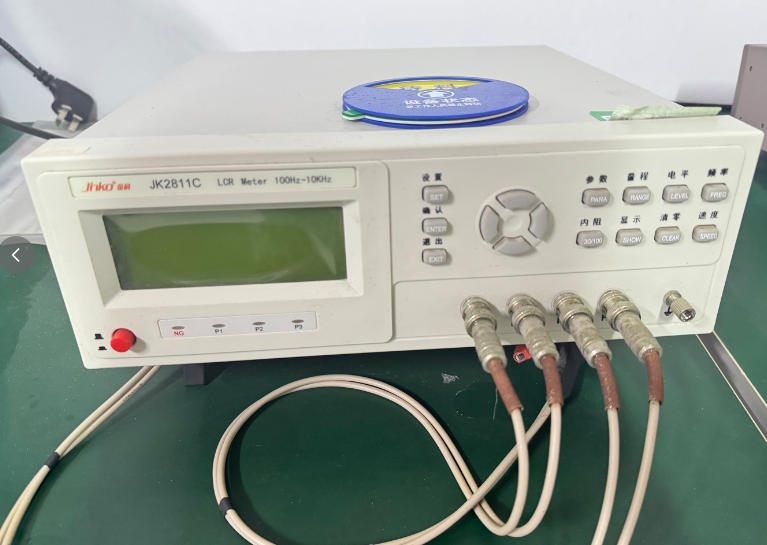
Two verification points deserve a place in any purchase order for a material-specific program. First, the datasheet revision: confirm that the material, current, temperature and ingress values being quoted match the revision attached to the order. Second, the standards mapping: a USB-C claim should be traceable to the applicable USB Type-C and USB Power Delivery documentation, and a Lightning USB cable program should confirm Apple MFi status, because Apple's MFi program requires licensing and certification for third-party manufacturers producing Lightning cables for Apple devices.
Frequently Asked Questions
Which material and environmental specifications should be verified before placing an order?
Verify four values against the datasheet revision attached to the order: the working temperature range, the ingress rating, the maximum charging current and the data rate. In this range, CB-PVC is rated -10C to 60C at 1A-2.4A; CB-Nylon is rated -10C to 70C at a maximum 6A; CB-SILICONE and CB-Waterproof are rated -20C to 70C at a maximum 6A; and only CB-Waterproof carries an IPX7 waterproof and dustproof rating. All five are specified at 480 Mbps where a data rate is listed. Any value not stated in the current datasheet, such as the CB-TPE length list and temperature range, should be confirmed in writing per order.
Can jacket material, logo, length and packaging be customized in one program?
Yes. Focuses lists customization across logo printing, cable colour, power, cable appearance, cable materials, cable molding, multi-function design, connector housing colour, cable length, packaging style and packaging design, under an OEM and ODM production model. Custom logo printing is supported on CB-PVC, CB-Nylon, CB-SILICONE and CB-Waterproof. The minimum order quantity is 2,000 units, so mixed-material programs should be planned as separate line items within that volume rather than as small trial quantities.
What is the minimum order quantity, and how does copper affect the budget?
The minimum order quantity is 2,000 units. Conductor cost dominates the bill of materials: copper materials account for 60% to 80% of total manufacturing cost for standard USB cables, and international copper prices reached USD 13,000-13,300 per metric ton in early 2026. Buyers comparing quotations across PVC, nylon, TPE, silicone and IPX7 waterproof constructions should ask for the conductor specification and the copper basis behind each quote, because a cheaper unit price is often a thinner conductor rather than a better-managed factory.
What should importers check when evaluating a Chinese USB cable manufacturer for mobile phone brands?
Check whether the supplier can hold several material families under one roof, because a mobile phone brand line usually needs an indoor PVC SKU, a braided fast charging SKU and a water-resistant SKU at the same time. Focuses covers CB-PVC, CB-Nylon, CB-TPE, CB-SILICONE and CB-Waterproof, with a monthly capacity of 2,500,000 units, a 6-engineer R&D team, 100% full inspection before shipment and a 12-month warranty. Then verify the technical claims: map every USB-C power and data claim to the applicable USB Type-C and USB Power Delivery documentation, and confirm Apple MFi status for any Lightning cable program.
How long does production take for a material-specific OEM order?
Lead time is 25 to 35 days from order confirmation. Two factors affect that window: the material and molding combination, since sealed integrated molding for IPX7 construction and braided shells are different processes from a standard PVC overmold, and the packaging customization, which is quoted separately from cable production. Planning a 2,000-unit minimum order against a 25-35 day production window, plus freight, gives a realistic first-shipment date for a new material program.
Conclusion: Choose the Environment, Then the Material
The five Focuses material families are not five versions of the same cable. They are five answers to five different operating conditions, expressed in temperature ratings, current ceilings, ingress protection and jacket behaviour. CB-PVC serves indoor daily charging at 1A-2.4A within -10C to 60C. CB-Nylon adds a braided shell and a 6A, 120W/240W ceiling for travel and high-flex use. CB-TPE delivers a soft, eco-friendly jacket for flexible indoor programs. CB-SILICONE extends the low end to -20C with a skin-friendly, anti-kink sheath. CB-Waterproof adds sealed integrated molding and an IPX7 rating for bathrooms, sweat, rain and demanding outdoor environments.
A specification review that starts with the environment and works backwards through power, data, connector and length will land on the right family quickly and will survive the return, warranty and compliance conversations that follow a shipment. Material is not a cosmetic detail in a USB cable; it is the part of the product that decides where the cable can be used at all.
Send the operating environment, target power tier, connector pair and length to the Focuses team, and the matching material family can be confirmed against the current datasheet. Contact: info@focusestech.com or WhatsApp +86 180-2697-6650. The full product range, including PVC, nylon, TPE, silicone and IPX7 waterproof USB cables, is available in the 2026 Focuses Catalogue.
Product specifications in this article are drawn from the current CB-PVC, CB-Nylon, CB-TPE, CB-SILICONE and CB-Waterproof datasheets. Where a value is not stated in the datasheet, this article identifies it as unconfirmed rather than supplying an estimate.
Have Questions or Need More Details?
Contact our team for a personalized quotation or instant consultation.
Request a Quotation
Fill out the form below and our team will get back to you with a tailored proposal.
WhatsApp Direct Chat
Prefer to chat in real-time? Message us on WhatsApp for instant assistance & quick answers.
- Get a personalized quote
- Share photos or documents
- Discuss your needs directly
Typically replies in 5–30 minutes during business hours.