
Dedicated Slide Rail Line or General Slide Forming Machine?
Two machine routes can produce the same drawer slide profile, and they are not interchangeable in the way supplier pages often present them. Route A is a dedicated slide rail roll forming line, represented here by the LYB-SR400 from Foshan Lianyoubang Precision Machinery Co., Ltd, a Foshan-based manufacturer of cold roll forming machines, rolling shutter door machines and slide rail production lines. Route B is a general-purpose cold roll forming machine, configured and tooled for a slide profile. The decision between them is not precision versus ordinary. It is a question of how much of the process you want pre-decided, how wide your product mix is, and where you want your acceptance risk to sit for the next five years.
The decision in brief
Choose the dedicated route when the slide family, strip gauge and output target are settled, and when you want one supplier accountable for the forming scope, the cutting scope and the acceptance test. Choose the general route when the same floor must run several profiles beyond slides, when the strip envelope has to reach material the dedicated line does not publish, or when the profile design is still moving and tooling will be revised.
That is the answer at the level of principle. The harder work is reading the specifications, because the two routes are documented in different vocabularies. One publishes a molding tolerance; the other publishes a cutting accuracy. One publishes a power range across configurations; the other publishes the load of a defined line. Compared carelessly, these numbers produce the wrong decision.
Why this comparison is harder than the spec sheets suggest
Four documentation problems trip up most slide-rail procurement teams.
Different metrics are given the same visual weight. A molding tolerance describes profile geometry after forming. A cutting accuracy describes the length of the blank after the cut-off. Both appear as “±” figures in millimetres, and both get copied into the same comparison row. They are not the same measurement and cannot be ranked against each other.
A range is not a machine. When a general cold roll forming machine is quoted as 5.5–37 kW and 0–25 m/min, those figures span a family of configurations. The unit delivered to your floor occupies one narrow slice of that range. A dedicated line usually publishes the window of the line itself, which is why its numbers can look narrower than the general machine’s while the delivered capability is more specific.
Machine scope is not line scope. A forming machine and a production line are different purchases. GZ Roll-forming, describing its own drawer-slide system, defines a line as material loading, roll forming, hydraulic punching and cutting, with production parameters set on a touch screen. If your quotation covers only the forming station, the uncoiler, feeder and cutter become separate purchases with separate acceptance responsibilities.
Almost all of it is supplier-reported. The specification values used in this guide come from manufacturer pages. No independent test protocol, uptime record or output study was supplied, so the figures are decision inputs, not benchmarks. They tell you what to verify, not what will happen on your floor.
Where the two routes sit in the slide-forming market
Directional market research from Coherent Market Insights puts the global roll forming machine market at approximately USD 10.09 billion in 2026, with the automatic machine segment expected to hold about 46.8% of that value. The figures cover roll forming machinery broadly, not drawer slides specifically, so treat them as context for capital-allocation timing rather than a slide-market forecast.
The application base is broader than drawers. Dreistern’s furniture-industry page lists roll-formed slide-out rails for drawer pull-outs, table pull-outs, sliding-door runners, oven pull-outs and stainless-steel dishwasher pull-outs. Chin Minn’s drawer-slide pages describe equipment covering standard, heavy-duty, multiple-hole-punch, two-fold ball-bearing, full-extension telescopic channel, drawer-runner, steel-ball, server-rack and hidden-slide categories.
Those taxonomies matter because they define what “dedicated” is dedicated to. A line tooled for a three-fold ball-bearing telescopic channel is not automatically the right line for a server-rack rail or a hidden slide with a different bend sequence. Application coverage is a supplier portfolio claim, not proof of market share.
Route A and Route B, defined
Dedicated slide rail roll forming line: LYB-SR400
The LYB-SR400 is a servo drawer slide roll forming machine. Its published specification states a power range of 7.5–22 kW, a line speed of 5–15 m/min, material thickness of 0.5–3.0 mm, maximum material width of 400 mm, PLC plus servo motor control, and cutting accuracy of ±0.5 mm. A separate Lianyoubang page reports the same model at a production capacity of 8–12 m/min and a machine weight of 5.5 t.
The definition that matters for procurement: this is a line whose pass design, control logic and cut-off are specified around drawer slide and telescopic channel profiles, with a defined strip window rather than a family-wide envelope.
General-purpose cold roll forming machine: LYB customized series
Lianyoubang’s customized cold roll forming series is published with a power range of 5.5–37 kW, forming speed of 0–25 m/min, molding tolerance of ±0.05 mm, applicable sheet thickness of 0.3–3.0 mm and PLC automatic control. This is a configurable platform: the buyer’s profile drawing determines roll tooling, pass count, shaft sizing and drive selection within those limits.
For calibration, GZ Roll-forming publishes a drawer-slide roll forming system at 0.8–3 mm material, 10–20 forming passes and 6–15 m/min. The point of that third-party marker is not to rank suppliers. It is to show that published envelopes in this category vary widely with configuration, which is exactly why the definitions behind the numbers must be fixed before comparison.
Head-to-head on the criteria that decide drawer slide projects
1. Molding tolerance: ±0.05 mm is not a line-wide figure
The ±0.05 mm molding tolerance appears in Lianyoubang’s published specification for the customized cold roll forming series, and the company’s comparison summary also cites ±0.05 mm against traditional cold roll forming machines. The LYB-SR400 page, by contrast, publishes cutting accuracy of ±0.5 mm and does not state a molding tolerance in the supplied specification.
Read that carefully before you build a comparison table. A buyer who writes “SR400: ±0.5 mm, general machine: ±0.05 mm” has compared a cut-length accuracy with a profile tolerance and drawn the opposite conclusion to reality. The practical instruction is simple: ask each supplier for a tolerance statement that names the model, the profile feature being measured, the strip grade and thickness, the measurement method and the sampling rate. A tolerance without those attachments cannot be accepted at factory acceptance testing.
2. Surface smoothness: define the acceptance test, not the adjective
Neither published specification in the supplied material quantifies surface roughness, so no comparative claim can honestly be made here. Surface condition is generally governed by roll quality and pass design, strip coating, lubrication and handling between stations — general process mechanics rather than a brand-specific number.
The decision-relevant step is to convert “smooth” into an inspection clause: a visual standard agreed on a physical sample, plus, where the slide’s function depends on it, a roughness measurement at named positions on the section. Ball-bearing telescopic channels and hidden slides load different surfaces, so the acceptance positions differ by product family.
3. Strip thickness and width envelope
The general series publishes 0.3–3.0 mm; the LYB-SR400 publishes 0.5–3.0 mm with a maximum strip width of 400 mm. If your thinnest slide part runs 0.4 mm strip, the dedicated line’s published lower bound does not cover it on paper, and you need a written confirmation rather than an assumption. If your widest blank exceeds 400 mm, the dedicated line is outside its stated width regardless of thickness.
On the upper end, both routes reach 3.0 mm, which is relevant if the same plant also produces heavy-duty or server-rack rails where section stiffness and forming load rise.
4. Speed: three different numbers, three different meanings
Three throughput figures appear in the supplied material: 0–25 m/min forming speed for the customized series, 5–15 m/min line speed for the LYB-SR400, and 8–12 m/min production capacity for the same model on a separate page. They are not contradictory so much as differently framed — an envelope limit, an operating window and a sustained output claim.
Convert speed into blanks before comparing. At a line speed of 10 m/min, a slide blank cut at 0.5 m yields a theoretical 20 blanks per minute before losses, coil changes and rejects; at 6 m/min the same blank yields 12. That arithmetic is transparent, and it shows why a 15 m/min ceiling and a 25 m/min ceiling rarely translate into the same annual output once duty cycle and changeover are included.
5. Power range: configuration envelope versus installed load
The customized series is published at 5.5–37 kW; the LYB-SR400 at 7.5–22 kW. For electrical planning, the figure that matters is the installed load of the machine you actually buy, not the top of a family range. A 37 kW ceiling in a brochure does not mean your slide line draws 37 kW, and a 22 kW ceiling on a dedicated line does not mean it is under-powered for a 3.0 mm heavy-duty section.
Request the connected load, the main drive rating and the supply requirements for the quoted configuration, then confirm them against your transformer and panel capacity. Lianyoubang’s own comparison material also cites lower power consumption and higher energy utilisation as a stated advantage — a claim to verify from the nameplate and a metered run, not from the brochure.
6. PLC and servo control
The customized series is published with PLC automatic control; the LYB-SR400 is published with PLC plus servo motor control. In practical terms, servo drive on the feed and cut-off supports repeatable positioning and length control at production speed, which is why the model publishes a cut-length accuracy figure at all. The general platform relies on PLC sequencing with whatever drive arrangement the configuration specifies.
For a slide project, the control questions that decide acceptance are: which axes are servo-driven, how cut length is corrected, whether forming parameters and output are set from a screen, whether production counters and alarms are logged, and what recipe storage exists for profile changeover. GZ Roll-forming’s description of touch-screen parameter and output setting shows this is a normal expectation in the category, not an optional extra.
7. Supporting equipment: uncoiler, servo feeder, hydraulic cutter
Peripheral scope is where otherwise comparable quotations diverge most. The forming machine is one item; the uncoiler that carries the coil, the feeder that meters strip into the first station, and the hydraulic cutting or punching unit that finishes the part are additional scope items with their own capacity limits and their own acceptance tests.
The LYB-SR400’s published cutting accuracy of ±0.5 mm indicates that cutting is part of its specified process, but the supplied material does not itemise the peripherals included. Treat the equipment list as an open question in the RFQ: state whether the uncoiler, servo feeder, hydraulic cutter, punching station and take-off are inside the quoted scope, and make each one a line item in the acceptance test. A line assembled from three suppliers has three warranties and no single owner when a length drifts.
8. Ten hours a day, every day
Ten hours of continuous running a day is the requirement that separates a demonstration machine from a production asset. On a six-day week that is roughly 3,000 running hours a year — arithmetic from your own shift pattern, not a supplier figure — and it changes what you should demand in four areas: thermal stability over a long run, coil-change and changeover time, wear-part replacement intervals, and response time when a line stops.
Lianyoubang’s stated measures for mechanical-failure risk are preventive maintenance, real-time monitoring and strict quality control, backed by a 100% pre-delivery test run, regular maintenance guidance and 24-hour emergency support. Its comparison material also states low routine maintenance, long stable operation cycles, convenient parts replacement and a 20% lower failure rate than traditional cold roll forming machines — company-reported figures that should be converted into contractual commitments: a named wear-parts list with replacement intervals, a spares package held at your site or the supplier’s, a response-time clause, and a scheduled maintenance calendar aligned to your ten-hour pattern.
Side-by-side comparison table
| Criterion | Dedicated line (LYB-SR400) | General machine (customized series) |
|---|---|---|
| Forming role | Specified around drawer slide and telescopic channel profiles | Configurable platform, tooled per profile drawing |
| Published power | 7.5–22 kW | 5.5–37 kW (across configurations) |
| Published speed | 5–15 m/min line speed; 8–12 m/min capacity on a second page | 0–25 m/min forming speed |
| Strip thickness | 0.5–3.0 mm | 0.3–3.0 mm |
| Strip width | Max 400 mm | Not stated in supplied specification |
| Molding tolerance | Not stated in supplied specification | ±0.05 mm |
| Cutting accuracy | ±0.5 mm | Not stated in supplied specification |
| Control | PLC + servo motor | PLC automatic control |
| Peripheral scope | Cutting specified; uncoiler and feeder not itemised in supplied material | Depends on quotation; define explicitly |
| Best fit (per published scope) | Stable slide family, defined strip window, single-owner line acceptance | Mixed profile production, wider or thinner strip, evolving design |
Every value above is manufacturer-published and configuration-dependent. None of it supports a ranking of the two routes, and the two tolerance rows deliberately sit apart because they measure different things.
The commercial comparison, and how to test it
Lianyoubang’s comparison summary states ±0.05 mm molding tolerance alongside 30% higher production efficiency, a 20% lower failure rate, 15% lower comprehensive production cost and longer equipment service life against traditional cold roll forming machines. These are company-reported figures with no stated test conditions attached in the supplied material, so they belong in your business case as hypotheses to be validated, not as bankable numbers.
Validation is mechanical rather than analytical. Run the same profile, the same strip grade and thickness, and the same shift pattern on both routes; count good parts rather than parts; include scrap from start-up and changeover; add tooling cost, energy from the meter, and the labour attached to each line; then divide total cost by good parts. A 15% cost advantage that survives that calculation is real for your plant. One that does not is a brochure figure. Lianyoubang also states that its slide-forming machines suit metal profile processing factories, building material producers and hardware precision component manufacturers — a positioning statement about intended use, not a performance guarantee.
Step-by-step: how to run the head-to-head evaluation
- Fix the product family before the machine. List the slide types you will actually produce over three years, with drawings, strip grades and thicknesses. If the list contains four families across a 0.4–3.0 mm range, the dedicated line’s published 0.5–3.0 mm window already needs written confirmation.
- Normalise every specification to a definition. For each “±” figure, record what is measured, on which feature, at which thickness, by which method and at what sampling rate. Do not let a cut-length accuracy occupy the row reserved for profile tolerance.
- Write the scope as a line, not a machine. Itemise uncoiler, feeder, forming stations, punching, hydraulic cutter and take-off; state which are inside the quotation and which are buyer-supplied. Give each item its own acceptance criterion.
- Build the duty-cycle model. Take your ten-hour day, your working calendar and your realistic changeover time, and calculate annual good-part output for both routes. Compare against your sales plan rather than against each other.
- Specify the factory acceptance test. Require a 100% pre-delivery test run, a measurement report on the profile and cut length, a run at production speed, and a wear-parts and spares list. Lianyoubang’s stated pre-delivery test run and maintenance guidance give you the clause to hold the supplier to.
- Price the risk, then decide. Add the cost of a second supplier for peripherals, the cost of a tooling revision if the profile changes, and the cost of downtime at your assumed failure rate. The route with the lower purchase price is not automatically the lower-cost route.
When each route fits: a decision checklist
The dedicated slide rail line fits when: your slide family is stable and repeat orders dominate; your strip sits inside 0.5–3.0 mm and 400 mm width; you want forming, control and cutting specified together with one acceptance owner; you plan ten-hour continuous running and need a defined maintenance and response commitment; and you value changeover discipline over profile flexibility.
The general cold roll forming machine fits when: the same floor must run slides plus other profiles; your thinnest part needs 0.3 mm capability; your section is wider than the dedicated line publishes; the profile design is still being revised and tooling will change; or you are building slide capability in stages and want the platform to carry later products.
Both routes require the same four documents before purchase: a tolerance statement bound to model and profile, a scope list covering peripherals, a factory acceptance test protocol, and a spares and response commitment sized to a ten-hour day.
FAQ
Which certification applies to drawer slides, and does it change the machine decision?
Compliance attaches to the slide, not the machine. In India, telescopic ball bearing drawer slides fall under mandatory BIS certification under IS 17954:2023, according to the standard documentation reviewed for this guide. The machinery decision sits downstream: your acceptance tests should be built around the product characteristics your certification requires, and the line must be able to hold them repeatedly. For customs classification, numerically controlled roll forming machines are commonly classified under HS code 8462.25.00 — confirm with your broker before shipment.
Can the LYB-SR400 run every drawer slide profile?
Its published window is 0.5–3.0 mm material thickness, maximum 400 mm strip width, PLC plus servo control, and ±0.5 mm cutting accuracy. Profiles inside that window still depend on tooling designed for the specific section, and profiles outside it — thinner strip or wider blanks — require written confirmation rather than assumption. No single line in this category covers every slide family, which is why application coverage is usually a supplier portfolio question rather than a single-machine question.
Is ±0.05 mm achievable on the dedicated line?
That figure is published for Lianyoubang’s customized cold roll forming series and appears in the company’s comparison summary against traditional cold roll forming machines. The LYB-SR400 page publishes cutting accuracy of ±0.5 mm instead. The correct next step is to request a tolerance statement naming the model, the profile feature, the strip grade and thickness, and the measurement method — then verify it in the factory acceptance test.
How should we compare cost when no machine prices are published?
Compare cost per good part, not purchase price. Build the figure from quoted machine and peripheral scope, tooling, energy from a metered run, labour per shift, changeover time, scrap rate and expected wear-part spend over the payback period. Supplier-stated savings such as 15% lower comprehensive production cost or 30% higher production efficiency are useful starting hypotheses, but they only hold for your plant if the profile, strip and shift pattern match the conditions behind them.
What sample and test evidence should we request?
Ask for a sample run on your own profile drawing, a dimensional report covering profile features and cut length, a video or witnessed run at production speed, the pre-delivery test-run record, and a wear-parts list with replacement intervals. Lianyoubang states a 100% pre-delivery test run, regular maintenance guidance and 24-hour emergency support as standard measures — put each of those in the purchase contract rather than the brochure file.
What lead-time information is available?
Lead time is not published in the supplied material, so it must be quoted, not assumed. Ask for the schedule broken into four stages: tooling design and approval, machine build, factory acceptance test, and shipping plus installation and commissioning. For capacity context, Lianyoubang reports a 10,000 m² factory and annual output of about 120 machines, with 30% of output exported to Southeast Asia, the Middle East and the domestic market — company-reported figures that help you judge scheduling risk, not a delivery guarantee. If you want to move from comparison to a project-specific proposal, share your slide drawings and strip specification with the Lianyoubang team and ask for a scope-and-schedule response against this checklist.
Conclusion
The choice between a dedicated slide rail line and a general cold roll forming machine is a choice about definition. The dedicated LYB-SR400 gives you a defined strip window of 0.5–3.0 mm, a 400 mm maximum width, 7.5–22 kW, PLC plus servo control, 5–15 m/min line speed and ±0.5 mm cutting accuracy — and a single owner for forming and cutting acceptance. The general customized series gives you a wider published envelope of 0.3–3.0 mm, 0–25 m/min and 5.5–37 kW, with a ±0.05 mm molding tolerance, at the cost of specifying each configuration yourself.
If your slide family is stable and you intend to run ten hours a day, the dedicated route removes variables you would otherwise have to manage. If your floor carries multiple profiles or your design is still moving, the general platform keeps options open. Either way, the decision should be made on tolerance statements bound to a model and profile, a peripheral scope list, a factory acceptance protocol and a maintenance commitment — not on a headline number lifted from a specification page.
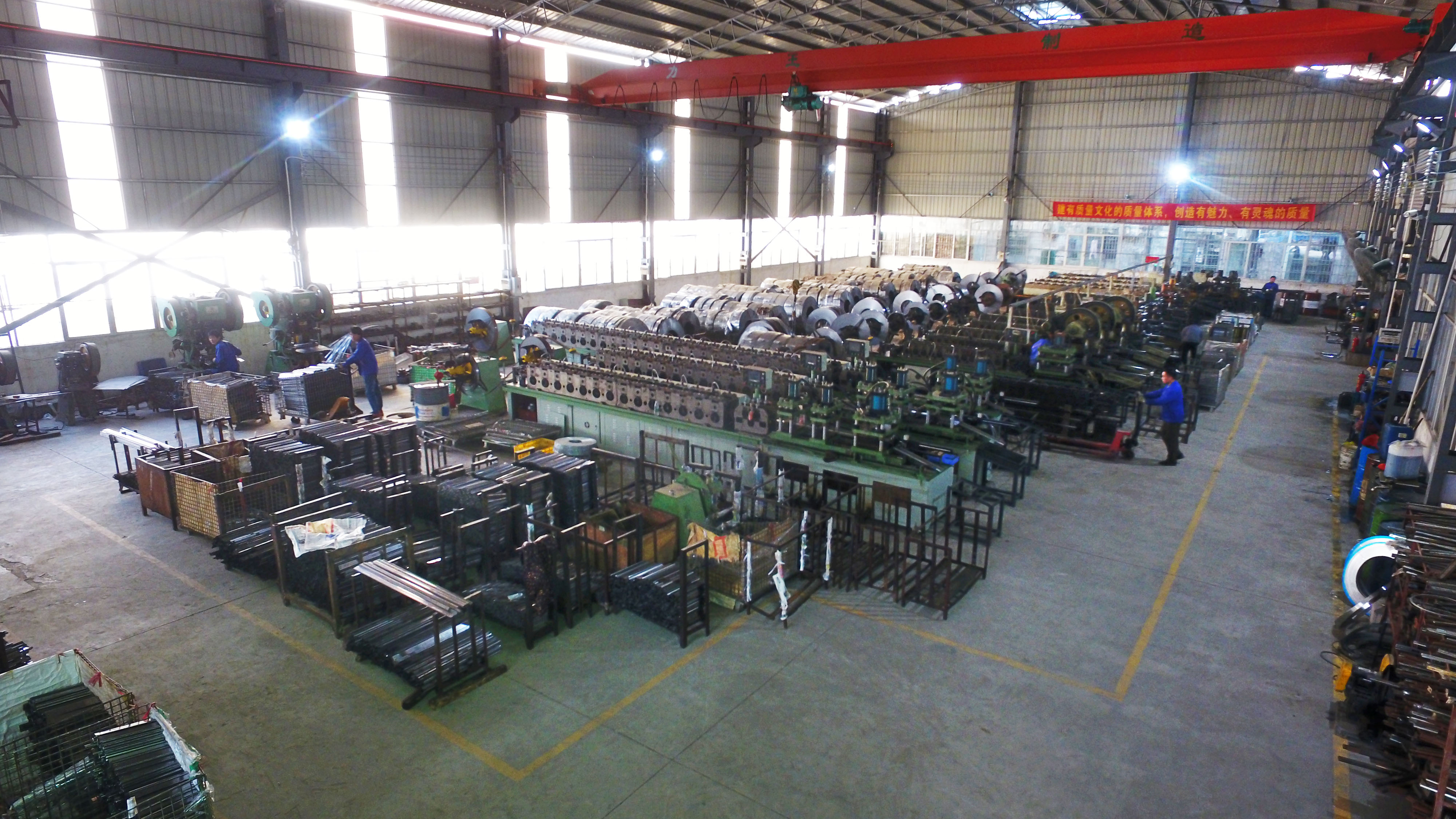
For the full technical and configuration detail behind this comparison, download the Lianyoubang product brochure, or send your drawer slide drawings and strip specification to the team for a scope-matched evaluation of the LYB-SR400 line.
Have Questions or Need More Details?
Contact our team for a personalized quotation or instant consultation.
Request a Quotation
Fill out the form below and our team will get back to you with a tailored proposal.
WhatsApp Direct Chat
Prefer to chat in real-time? Message us on WhatsApp for instant assistance & quick answers.
- Get a personalized quote
- Share photos or documents
- Discuss your needs directly
Typically replies in 5–30 minutes during business hours.