CNC Slide Rail Roll Forming Machine vs. Traditional Slide Rail Roll Forming Machine: A Complete 2026 Procurement Comparison for Industrial Buyers
CNC Slide Rail Roll Forming Machine vs. Traditional Slide Rail Roll Forming Machine: A Complete 2026 Procurement Comparison for Industrial Buyers
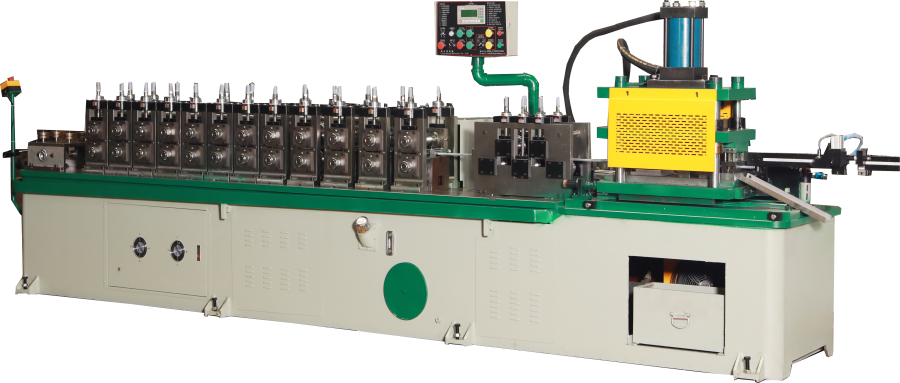
In the rapidly evolving industrial manufacturing landscape, selecting the right slide rail roll forming machine can directly impact your production efficiency, product quality, and operational costs. With the market flooded with options ranging from traditional mechanical units to advanced CNC-controlled systems, procurement professionals face a critical decision: CNC slide rail roll forming machine vs. traditional slide rail roll forming machine – which one aligns with your manufacturing needs in 2026?
This comprehensive guide provides a technical, cost, and application-focused comparison to help you make an informed, future-proof investment. Whether you produce furniture slides, automotive components, or appliance rails, understanding the nuances between these two categories is essential.
What is a Slide Rail Roll Forming Machine?
A slide rail roll forming machine (also known as drawer slide roll forming machine, telescopic channel roll forming machine, or slide rail forming machine) is a specialized cold roll forming equipment designed to produce metal profiles used in drawer slides, telescopic channels, and linear motion guides. The process involves feeding metal coils through a series of progressively shaped rollers to achieve the desired cross-section. Modern machines integrate uncoilers, servo feeders, forming stations, and cutting units into a continuous production line.
The Core Difference: CNC vs. Traditional
The fundamental distinction lies in the control system and automation level. A CNC slide rail roll forming machine employs computer numerical control (CNC) with servo motors and PLC to precisely regulate forming speed, roller pressure, cutting length, and profile tolerance. A traditional slide rail roll forming machine typically relies on mechanical gearboxes, manual adjustments, and less sophisticated control systems.
| Parameter | CNC Slide Rail Forming Machine | Traditional Slide Rail Forming Machine |
|---|---|---|
| Control System | PLC + Servo Motor + Touch Screen | Manual adjustment / Relay logic |
| Molding Tolerance | ±0.05 mm (up to ±0.03 mm with high-precision models) | ±0.5 mm to ±1.0 mm |
| Production Speed | Up to 25 m/min (adjustable) | 5-15 m/min (fixed) |
| Changeover Time | Minimal (recipe-based presets) | Long (manual roller adjustment) |
| Energy Efficiency | Lower power consumption, high energy utilization | Higher power draw, lower utilization |
| Maintenance | Low routine maintenance; long stable operation cycles | Frequent mechanical adjustments; higher wear |
| Initial Investment | Higher (15-30% premium) | Lower |
| Typical Applications | High-precision furniture slides, automotive rails, ball-bearing slides | Standard drawer slides, simple profiles |
Why This Decision Matters in 2026
The global demand for precision metal components is surging, driven by the furniture, appliance, and automotive industries. According to industry reports, manufacturers adopting automated forming lines see a 30% increase in production efficiency and a 20% reduction in failure rates compared to traditional machines. For procurement managers, the choice between CNC and traditional directly affects:
- Product Quality: CNC machines deliver consistent ±0.05 mm tolerances, critical for high-end slides.
- Operational Cost: Lower scrap rates and reduced labor intervention lower overall production cost by up to 15%.
- Scalability: CNC systems allow quick changeovers for multiple profile designs, enabling flexible production.
- Compliance: CE certification (MD & LVD) is mandatory for EU exports; many CNC models are pre-certified.
Step-by-Step Procurement Decision Framework
Step 1: Define Your Production Requirements
Ask yourself:
- What is the target material thickness (0.3–3.0 mm)?
- What profile complexity is needed (e.g., 3-fold, ball-bearing guide channels)?
- What daily output do you aim for? CNC machines can run 10+ hours continuously at high speed.
- What tolerance does your end customer demand? (Precision furniture often requires ≤0.05 mm).
Step 2: Evaluate Total Cost of Ownership (TCO)
A traditional machine may have a lower upfront cost, but a CNC machine compensates through:
- Lower power consumption per unit produced.
- Reduced scrap and rework.
- Less downtime for adjustments.
- Easier maintenance with modular components.
Step 3: Compare Supplier Capabilities
When choosing a supplier, look for:
- Customization: Ability to tailor roller profiles, line speed, control systems.
- Quality Assurance: 100% pre-delivery test run (72-hour test), third-party inspection available.
- After-Sales Support: 24/7 remote support, on-site commissioning, 1-year warranty.
- Certifications: CE, ISO (if applicable) for global market acceptance.
Step 4: Request Technical Specifications
Demand detailed parameters from your shortlisted suppliers. For example, Foshan Lianyoubang Precision Machinery Co., Ltd offers a CNC Slide Rail Roll Forming Machine (Model LYB-SR400) with:
- Line speed: 5–15 m/min (servo adjustable)
- Material thickness: 0.5–3.0 mm
- Cutting accuracy: ±0.5 mm (with servo control)
- Forming tolerance: ±0.05 mm achievable
- Control: PLC + Servo + Touch Screen
- Materials: Carbon steel / GCr15 alloy steel / SKD11
Real-World Use Case: High-Precision Furniture Slide Production
Client: A furniture rail OEM in Turkey
Equipment: 6 units of high-precision slide rail forming machines (CNC type) from Foshan Lianyoubang
Application: Mass cold bending forming of furniture drawer slides and cabinet door slides
Duration: 3 years of stable operation
Results:
- Forming accuracy maintained at ±0.03 mm
- Production efficiency improved by 40%
- Defect rate kept below 0.3%
- Low noise, easy maintenance, stable operation for 3 years
This case demonstrates that a CNC slide rail forming machine can deliver the precision and reliability demanded by global furniture brands while reducing total production cost.
Frequently Asked Questions (FAQ)
Q: What is the difference between a slide rail forming machine and a drawer slide roll forming machine?
A: These terms are often used interchangeably. A slide rail forming machine produces metal channels used in linear motion applications, including drawer slides, telescopic guides, and suspension rails. Both refer to the same category of cold roll forming equipment.
Q: Is a CNC slide forming machine worth the higher investment for a small workshop?
A: If your production volume is low and tolerance requirements are relaxed (±0.5 mm or more), a traditional machine may suffice. However, if you plan to grow or serve customers demanding precision (e.g., furniture OEMs), the CNC machine pays back within 12–18 months through reduced scrap and higher throughput.
Q: How do I ensure the machine meets my specific profile needs?
A: Choose a supplier that offers custom slide rail forming machines. Foshan Lianyoubang Precision Machinery Co., Ltd provides OEM/ODM services, allowing you to define the profile shape, line speed, and control system. They provide a 100% pre-delivery test run to verify the output matches your sample.
Q: What certifications should I look for?
A: For European markets, CE certification (MD & LVD) is mandatory. Foshan Lianyoubang's machines are CE certified (Cert. No. CE-12-0510-01) per EN ISO 12100:2010 and EN 60204-1:2006/A1:2009, ensuring compliance with EU safety and electrical standards.
Q: How long is the lead time for a CNC slide rail forming machine?
A: Typical lead time is 30–45 days after order confirmation, depending on customization complexity. Suppliers with monthly capacity of 10 sets can usually deliver on schedule.
Conclusion: Making the Right Choice for 2026
The decision between a CNC slide rail roll forming machine and a traditional machine ultimately hinges on your long-term production goals. If you prioritize high precision, automation, energy efficiency, and quality consistency – with a willingness to invest moderately higher upfront – a CNC solution from a reputable manufacturer like Foshan Lianyoubang Precision Machinery Co., Ltd offers a clear advantage. With over 22 years of industry experience, a dedicated R&D team, and proven global installations, Lianyoubang provides machines that meet the exacting standards of modern manufacturing.
For procurement professionals, we recommend starting with a detailed requirements analysis, then requesting a technical proposal from shortlisted suppliers. Always ask for a pre-shipment test run to validate performance.
📥 Download the Official Company Brochure
Get detailed technical specifications, product range, and quality certifications in one PDF.
Click here to download the brochure
© 2026 Foshan Lianyoubang Precision Machinery Co., Ltd. All rights reserved. Factory: Liangdeng Industrial Zone, Danzao Town, Nanhai District, Foshan, Guangdong, China. Contact: +86 18028197495 (WhatsApp) | Email: lianyoubang@126.com