How to Configure a Slide Rail Roll Forming Line: Uncoiler, Servo Feeder & Hydraulic Cutter Setup
How to Configure a Slide Rail Roll Forming Line: Uncoiler, Servo Feeder & Hydraulic Cutter Setup
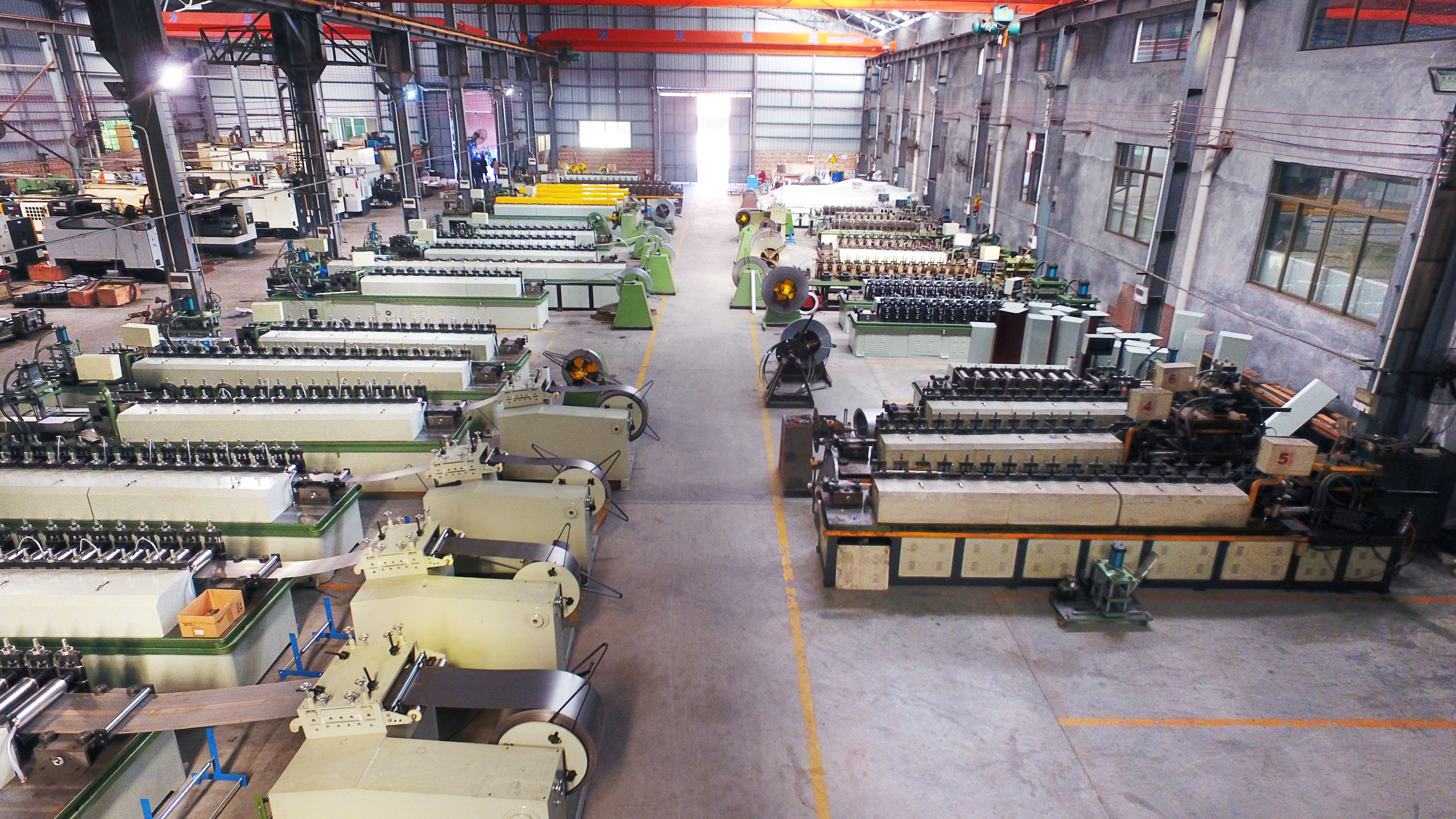
A slide rail roll forming line is only as accurate as the equipment feeding and cutting the strip. The forming machine sets the profile; the uncoiler, servo feeder, and hydraulic cutter determine whether that profile repeats at production speed. For a drawer slide application such as the LYB-SR400, configuration should begin with the strip envelope, line speed, power, and tolerance target, then size each supporting unit to those values.
Foshan Lianyoubang Precision Machinery Co., Ltd. (LYB) is a China-based manufacturer of cold roll forming machines, rolling shutter door machines, and slide rail production lines. This guide uses the LYB-SR400 drawer slide scenario to show how to align the uncoiler, servo feeder, and hydraulic cutter with a line envelope of 0.3–3.0 mm sheet thickness, 0–25 m/min adjustable forming speed, 5.5–37 kW power range, and ±0.05 mm molding tolerance under continuous 10-hour/day operation.
Problem Definition: Interface Errors Consume the Tolerance Budget
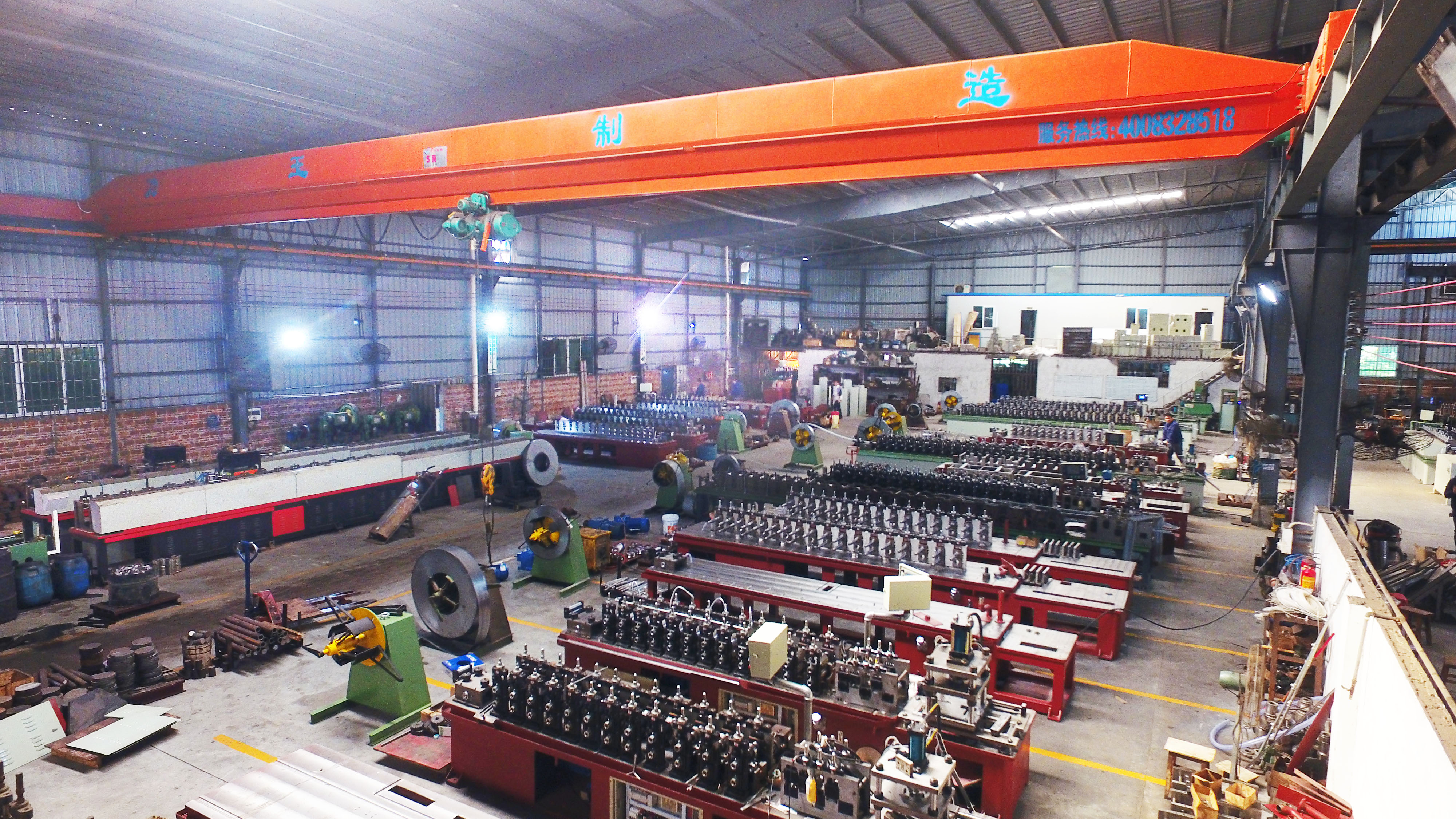
Most line performance problems at the decision stage are interface problems. A machine may be quoted at ±0.05 mm molding tolerance, but strip slip in the uncoiler, feeder roll marking, or cutter hesitation can consume that tolerance. Under 10-hour/day operation, small setup errors become repeatable defects: inconsistent cut lengths, edge wave, twist, and burr.
The buyer’s task is therefore not to buy three separate machines but to define one integrated line. The uncoiler must deliver strip at a stable tension. The servo feeder must meter the strip without surface damage. The hydraulic cutter must complete each cut before the next feed cycle. The PLC must coordinate all three with the forming machine. If any unit is sized only for nominal thickness or nominal speed, the line may pass a short trial and still drift during a full production shift.
Industry Background: Why Interface Specification Matters
Slide rail production sits inside the broader roll forming machinery market. Coherent Market Insights estimates the global roll forming machine market at USD 10.09 billion in 2026, with automatic roll forming machines expected to hold a 46.8% share. For buyers, the implication is not simply to choose automatic equipment; it is to specify automation at the interfaces—coil pay-off, servo feed, cut-to-length, and PLC coordination—because that is where repeatability is created.
Supplier-stated speeds and tolerances are not directly comparable unless profile, steel grade, strip width, thickness, punching and cutting scope, line-speed definition, and acceptance criteria are normalized. The LYB customized cold roll forming platform is company-reported at 5.5–37 kW, 0–25 m/min, ±0.05 mm molding tolerance, and 0.3–3.0 mm sheet thickness. The LYB-SR400 drawer slide model is company-reported at 7.5–22 kW, 5–15 m/min line speed, 0.5–3.0 mm material thickness, 400 mm maximum material width, PLC plus servo motor control, and ±0.5 mm cutting accuracy. These are different specification scopes and should be treated as such in an RFQ.
Detailed Solution: Roles of the Uncoiler, Servo Feeder, and Hydraulic Cutter
1. Uncoiler: stable pay-off without strip damage
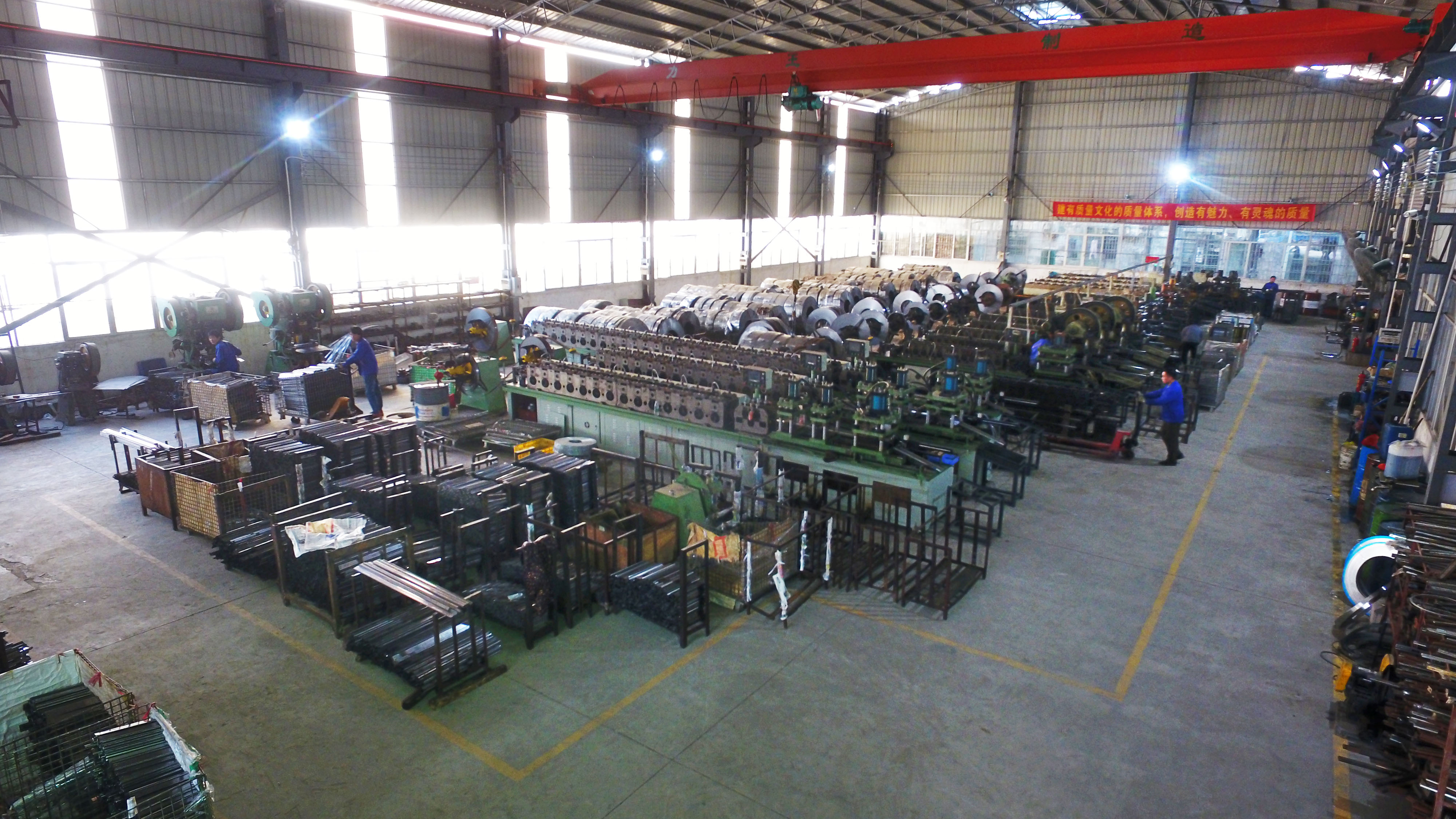
The uncoiler holds the coil and pays off strip into the line. Its main configuration variables are coil weight, coil inner and outer diameter, strip width, strip thickness, mandrel type, brake or tension control, and coil loading method. For the LYB-SR400 drawer slide application, the maximum material width is 400 mm and the stated material thickness range is 0.5–3.0 mm. The wider LYB customized platform is stated at 0.3–3.0 mm.
A thin strip can buckle if pay-off tension is too high; a thicker strip can slip if the brake is too weak. The uncoiler should therefore be selected with adjustable tension and a hold-down or peeler arrangement that keeps the coil stable during threading. In hot, humid, or dusty sites, coil storage and brake protection matter because surface rust and dust can be pulled into the forming station.
2. Servo feeder: metering the strip at production speed
The servo feeder meters the strip into the forming machine. It should be specified by feed length, strip width, thickness, roll pressure, surface protection, servo acceleration, encoder feedback, and PLC interface. The LYB-SR400 uses PLC plus servo motor control. That control architecture allows the feeder, forming drive, and cutter to share recipe and interlock signals.
Feeder setup should not be treated as a standalone parameter. At 0–25 m/min adjustable forming speed on the customized platform, the feeder must accelerate and decelerate within the line’s cycle without marking the strip. A feed setting that works at low speed may cause length drift at higher speed if acceleration is not tuned. For the LYB-SR400 reference, the stated line speed is 5–15 m/min, with an 8–12 m/min production capacity figure also listed. The recipe should therefore define speed ramps by profile and thickness, not only a single maximum speed.
3. Hydraulic cutter: cut-to-length without burr or length drift
The hydraulic cutter separates the formed profile at the target length. Its specification should cover cutting force, blade material, blade clearance, cutting accuracy, hydraulic unit rating, and cycle time relative to line speed. The LYB-SR400 is company-reported at ±0.5 mm cutting accuracy. This is a cutting tolerance and should not be confused with the ±0.05 mm molding tolerance stated for the customized cold roll forming platform.
The cutter must complete its stroke before the next feed advance. If the cutter cycle is slower than the line speed, the line will hesitate, and the resulting length variation may be attributed to the feeder. Blade clearance should be set for the actual strip thickness and profile. A clearance that suits a thicker section may produce burr on a thinner section. The hydraulic power unit should also be checked against the site’s ambient conditions, especially where the operating range is specified as -10°C to 45°C.
4. PLC and servo control: one recipe, one interlock chain
PLC and servo motor control should be specified as a line-level system. The PLC should hold recipes for feed length, speed ramp, cut length, and batch count. It should also manage alarms and interlocks among the uncoiler, feeder, forming machine, and cutter. The LYB customized cold roll forming platform is stated to use PLC automatic control; the LYB-SR400 is stated to use PLC plus servo motor control.
For procurement, ask for the control scope in writing: which axes are servo-driven, which signals are interlocked, how recipe changes are made, and how fault messages are displayed. This prevents a later dispute in which the forming machine, feeder, and cutter are each functional but not integrated.
5. Tooling materials: Carbon Steel, GCr15 Alloy Steel, SKD11
Tooling material options to specify include Carbon Steel, GCr15 Alloy Steel, and SKD11. The selection should be tied to the profile complexity, expected wear, maintenance plan, and replacement strategy. Carbon Steel is a baseline option; GCr15 Alloy Steel and SKD11 are commonly specified where higher wear resistance or different maintenance intervals are required. The RFQ should state the tooling material for each forming station and identify which stations are most likely to need replacement.
6. Operating temperature and continuous operation
Specify an operating temperature range of -10°C to 45°C and confirm hydraulic oil, lubricants, seals, and electrical enclosure ratings for that range. The configuration target in this guide is continuous 10-hour/day operation at the stated tolerance. That target should be written into the acceptance test, because a short no-load run does not demonstrate thermal stability, hydraulic stability, or feeder repeatability.
Step-by-Step Breakdown: Configuring the Line Around LYB-SR400
- Define the profile and strip envelope. Record the drawer slide profile, steel grade, strip width, thickness range, and target cut length. For the LYB-SR400 reference, use the stated 0.5–3.0 mm material thickness and 400 mm maximum material width. For the wider customized platform, use the stated 0.3–3.0 mm thickness range. Do not assume that maximum thickness and maximum speed are simultaneous.
- Size the uncoiler. Match coil weight, coil diameter, mandrel, brake, and strip width to the declared envelope. Confirm that the uncoiler can hold stable tension at the thinnest and thickest strip in the recipe. Add coil protection for dusty or humid sites.
- Specify the servo feeder. Define feed length, roll pressure, surface protection, servo acceleration, encoder feedback, and PLC interface. Confirm that the feeder can synchronize with the forming speed range. For the LYB-SR400, the stated line speed is 5–15 m/min; for the customized platform, the stated adjustable forming speed is 0–25 m/min.
- Select the hydraulic cutter. Match cutting force, blade material, blade clearance, and cycle time to the profile and thickness. Confirm the stated cutting accuracy for the selected model. The LYB-SR400 is company-reported at ±0.5 mm cutting accuracy.
- Set the PLC and servo architecture. Confirm recipe management, speed ramps, batch counting, alarms, and interlocks. The LYB-SR400 is stated to use PLC plus servo motor control; the customized platform is stated to use PLC automatic control.
- Select tooling material by station. Specify Carbon Steel, GCr15 Alloy Steel, or SKD11 for each forming station and identify expected replacement parts. Record the maintenance access plan for the tooling set.
- Design for site conditions. Confirm the -10°C to 45°C operating range, hydraulic oil selection, dust protection, humidity protection, and power supply arrangement. For Pakistan, the Philippines, and Tanzania, the common deployment issues are heat, dust, humidity, voltage variation, and long spare-parts routes; the configuration should address them directly.
- Complete pre-delivery validation. Require 100% inspection and a 72-hour test run before shipment. The test should use production strip and the target profile, and it should record cut length, molding tolerance, and any feeder or cutter alarms.
Parameter Alignment Table
| Parameter | LYB customized cold roll forming platform (company-reported) | LYB-SR400 drawer slide reference (company-reported) | Configuration action |
|---|---|---|---|
| Sheet thickness | 0.3–3.0 mm | 0.5–3.0 mm | Set feeder pressure and uncoiler brake within the selected model range; verify thin-strip and thick-strip recipes separately. |
| Forming speed | 0–25 m/min adjustable | 5–15 m/min line speed; 8–12 m/min production capacity figure listed | Program speed ramps by profile and thickness; confirm cutter cycle at the target speed. |
| Power range | 5.5–37 kW | 7.5–22 kW | Confirm site power, motor starting, and control voltage. |
| Molding tolerance | ±0.05 mm | Not separately stated in the cited model specification | Use the platform tolerance as the line target only after a profile-specific acceptance test. |
| Cutting accuracy | Not separately stated in the cited platform specification | ±0.5 mm | Do not confuse cutting accuracy with molding tolerance; record both in the acceptance report. |
| Maximum material width | Not separately stated in the cited platform specification | 400 mm | Match uncoiler and feeder width to the declared strip width. |
| Control | PLC automatic control | PLC plus servo motor | Define recipe ownership, signal interlocks, and alarm display in the RFQ. |
| Operating target | Continuous 10-hour/day operation | Continuous 10-hour/day operation | Include thermal and hydraulic stability in the 72-hour test run. |
| Ambient range | -10°C to 45°C | -10°C to 45°C | Confirm oil, seals, lubricants, and electrical enclosure ratings for the site. |
Comparison Table: Supporting Equipment Setup
| Supporting unit | Primary role | What to match | Risk if mismatched | LYB-SR400 reference note |
|---|---|---|---|---|
| Uncoiler | Pay off coil and maintain stable strip tension | Coil weight, coil diameter, strip width, thickness, brake control | Strip slip, edge damage, unstable threading | Maximum material width 400 mm; thickness 0.5–3.0 mm |
| Servo feeder | Meter strip into the forming machine | Feed length, roll pressure, surface protection, acceleration, encoder | Length drift, surface marks, cycle hesitation | PLC plus servo motor control |
| Hydraulic cutter | Cut formed profile to length | Cutting force, blade material, blade clearance, cycle time | Burr, length variation, cutter stall | Cutting accuracy ±0.5 mm |
| PLC and servo architecture | Coordinate recipes, speed ramps, and interlocks | Recipe management, alarm display, signal mapping | Units run but do not synchronize | PLC plus servo motor control |
| Tooling set | Form the drawer slide profile | Carbon Steel, GCr15 Alloy Steel, SKD11; station wear plan | Short tool life or poor profile consistency | Tooling material should be stated per station in the RFQ |
Use Cases: Deployment Conditions in Pakistan, the Philippines, and Tanzania
Pakistan. Lines destined for Pakistan often face high ambient temperature, dust, and voltage variation. The configuration should therefore confirm the -10°C to 45°C operating range, hydraulic oil selection for high temperature, dust protection for the uncoiler and electrical enclosure, and voltage stabilization at the plant level. The 72-hour test run should include repeated start-stop cycles to reveal thermal drift.
Philippines. Humidity and coastal salt air are common concerns. The uncoiler, feeder, and cutter should be protected against surface rust, and electrical enclosures should be selected for the site environment. Because spare parts may travel long distances, the tooling and spare-parts list should be fixed at the quotation stage. A 100% inspection record and a 72-hour test run report should travel with the shipment.
Tanzania. Long logistics routes and limited local machining support make the pre-delivery routine more important. The buyer should confirm that the tooling set, hydraulic components, servo feeder parts, and PLC documentation are included in the shipment. The 72-hour test run should be documented with cut-length and tolerance records so that commissioning does not begin from an unverified baseline.
Application scope also matters. Drawer slide roll forming equipment is used for standard, heavy-duty, multiple-hole-punch, ball-bearing, telescopic-channel, drawer-runner, steel-ball, server-rack, and hidden-slide applications. The same supporting equipment may need different feeder pressure, cutter clearance, and tooling material when the profile changes.
Pre-Delivery Checks: 100% Inspection and 72-Hour Test Run
The pre-delivery stage should confirm that the uncoiler, servo feeder, hydraulic cutter, PLC, and tooling work as one line. LYB’s stated control measure is 100% pre-delivery test run, regular maintenance guidance, and 24h emergency support. For this configuration, the practical release checklist should include:
- 100% inspection of the assembled line and electrical connections.
- 72-hour test run using production strip and the target drawer slide profile.
- Recorded cut length, molding tolerance, and cutter accuracy results.
- Feeder roll pressure and surface condition check after the test run.
- Uncoiler brake and tension stability check at thin and thick strip settings.
- PLC recipe review, alarm review, and operator handover.
- Tooling material verification for Carbon Steel, GCr15 Alloy Steel, and SKD11 stations as specified.
FAQ
What compliance checks apply before exporting a slide rail roll forming line?
Destination-market machinery safety, electrical, and EMC requirements must be confirmed in the RFQ. For the slide product itself, telescopic ball bearing drawer slides are under mandatory BIS certification under IS 17954 in India. The machine and the slide product are separate compliance scopes.
Can one line cover 0.3–3.0 mm strip and 0–25 m/min forming speed?
The LYB customized cold roll forming platform is company-reported at 5.5–37 kW, 0–25 m/min, ±0.05 mm molding tolerance, and 0.3–3.0 mm sheet thickness. The LYB-SR400 is company-reported at 7.5–22 kW, 5–15 m/min, 0.5–3.0 mm material thickness, 400 mm maximum material width, and ±0.5 mm cutting accuracy. The selected configuration must be confirmed for the specific profile; maximum thickness and maximum speed are not automatically simultaneous.
What drives budget in the uncoiler, servo feeder, and hydraulic cutter setup?
The main cost drivers are coil capacity, servo feed axis and control scope, cutter force, tooling material, PLC integration, and inspection scope. LYB does not publish a fixed price for this configuration, so a configured quotation is required.
Can we validate a sample before shipment?
Yes. The pre-delivery routine includes 100% inspection and a 72-hour test run. Provide strip samples, profile drawings, and target cut length so the test uses production conditions. You can request a sample review or quotation through Foshan Lianyoubang Precision Machinery Co., Ltd..
How is lead time confirmed?
Lead time depends on configuration, tooling, and inspection schedule, and it is confirmed in the quotation. The release milestone is successful 100% inspection and a 72-hour test run before shipment.
Conclusion
A slide rail roll forming line should be configured from the strip backward: uncoiler tension, servo feeder metering, hydraulic cutter cycle, PLC coordination, and tooling material. The LYB-SR400 drawer slide reference shows why the supporting equipment cannot be treated as a generic accessory package. Its stated 7.5–22 kW power, 5–15 m/min line speed, 0.5–3.0 mm material thickness, 400 mm maximum material width, PLC plus servo motor control, and ±0.5 mm cutting accuracy must be read together with the wider customized platform envelope of 5.5–37 kW, 0–25 m/min, ±0.05 mm molding tolerance, and 0.3–3.0 mm sheet thickness.
For buyers in Pakistan, the Philippines, Tanzania, and other export markets, the decisive step is to write the interface requirements into the RFQ and verify them with 100% inspection and a 72-hour test run. That is how a forming machine becomes a production line.
Next step: review the slide rail production line configuration with LYB, request a configured quotation, or download the company brochure for the full machine portfolio.
Brochure: Download the LYB product brochure
Website: www.fslybjx.com | Email: lianyoubang@126.com | WhatsApp: +8618028197495
Foshan Lianyoubang Precision Machinery Co., Ltd., Liangdeng Industrial Zone, Danzao Town, Nanhai District, Foshan City, Guangdong Province, China.
Have Questions or Need More Details?
Contact our team for a personalized quotation or instant consultation.
Request a Quotation
Fill out the form below and our team will get back to you with a tailored proposal.
WhatsApp Direct Chat
Prefer to chat in real-time? Message us on WhatsApp for instant assistance & quick answers.
- Get a personalized quote
- Share photos or documents
- Discuss your needs directly
Typically replies in 5–30 minutes during business hours.