Servo Feeder vs. Manual Feeding for Slide Rail Roll Forming: A Head-to-Head Decision Guide
Servo Feeder vs. Manual Feeding for Slide Rail Roll Forming: A Head-to-Head Decision Guide
For a furniture drawer slide rail line, the feeding method sets the ceiling on dimensional consistency and output long before the forming rolls do. On a slide rail roll forming machine such as the LYB-SR400 from Foshan Lianyoubang Precision Machinery Co., Ltd. (LYB), the automated configuration — uncoiler, servo feeder, PLC-controlled forming train and in-line cut-off — is the setup that sustains repeatable tolerances across a full shift. Manual strip feeding is not obsolete, but it is now a narrow choice: it fits prototypes, one-off runs and volumes below the economic threshold of an automated line.
This guide compares the two approaches head-to-head for the specific job of producing furniture drawer slides and telescopic channels, and defines the point at which manual feeding stops being a rational procurement decision.
Problem Definition: What the Feeding Decision Actually Controls
Feeding is the first operation on the line and the one that determines what every downstream station receives. In a manual arrangement, an operator guides strip or a pre-cut blank into the first forming station and regulates feed length by eye and by hand. In a servo-fed arrangement, the coil is paid off by an uncoiler, the strip is measured and advanced by a servo feeder to a programmed length, and the PLC coordinates the feed with the forming stations and the in-line cut-off.
Three things change when feeding is automated, and all three are visible on a working drawer slide line:
- Dimensional repeatability. Strip skew entering the first station produces asymmetric flanges and inconsistent channel height. A servo feeder advances the strip along a fixed path, so the material enters the rolls in the same position on every cycle.
- Throughput per shift. Manual feeding ties line speed to operator pace — how fast a person can handle strip, watch alignment and remove finished parts. A servo feed cycle is set by the control system and does not slow down as the shift progresses.
- Scrap and rework. Mis-feeds and drifting feed lengths become scrap or out-of-tolerance parts that only surface at assembly, when the slide does not travel smoothly.
Manual feeding has no definable tolerance limit, because the limit is the operator, the station and the hour of the shift. That variability is the real problem: it cannot be quoted, and it cannot be repeated on demand.
Decision rule: if the governing dimension of the rail has to hold across a full shift's output, and if monthly volume exceeds what one or two operators can feed without the line waiting on them, then the feeding method — not the forming rolls — is the constraint you are paying for.
Industry Background: Why This Choice Is Becoming More Consequential
Roll forming capacity continues to expand worldwide. Future Market Insights values the global roll forming machine market at approximately USD 9.1 billion in 2024 and projects it to reach USD 12.2 billion by 2034. Buyers should read such figures with care: published market sizes for roll forming equipment diverge sharply depending on whether the scope covers heavy industrial roll forming or only precision forming lines — Intel Market Research sizes the narrower segment at USD 487 million in 2024, while Zion Market Research reported USD 1.87 billion in 2023. When a supplier cites a market number, the definition matters more than the number.
The supply side is equally active. China's export value of metalworking machine parts reached approximately USD 2.2 billion in 2025, with major destinations including Japan, Russia and the United States, according to the Observatory of Economic Complexity. Within China, the operating income of metal-forming machine tools rose 8.9% year-on-year for January to October 2024, as reported by the China Machine Tool Industry Association. One market estimate from Coherent Market Insights projects that automated roll forming machines will account for 46.8% of total market share by 2026 — a directional signal, attributed to that source, that automation is becoming the default specification rather than a premium option.
Compliance expectations reinforce the same direction. Drawer slide manufacturing equipment is generally expected to comply with ISO 9001 quality management systems, and equipment sold into the European market often requires CE marking, with SGS or RoHS verification relevant to material safety. Automated feeding architecture — with interlocked guards, central controls and documented safety logic — makes that documentation path more straightforward than a manual feeding station, where operator exposure to the forming entry point changes with every handling method.
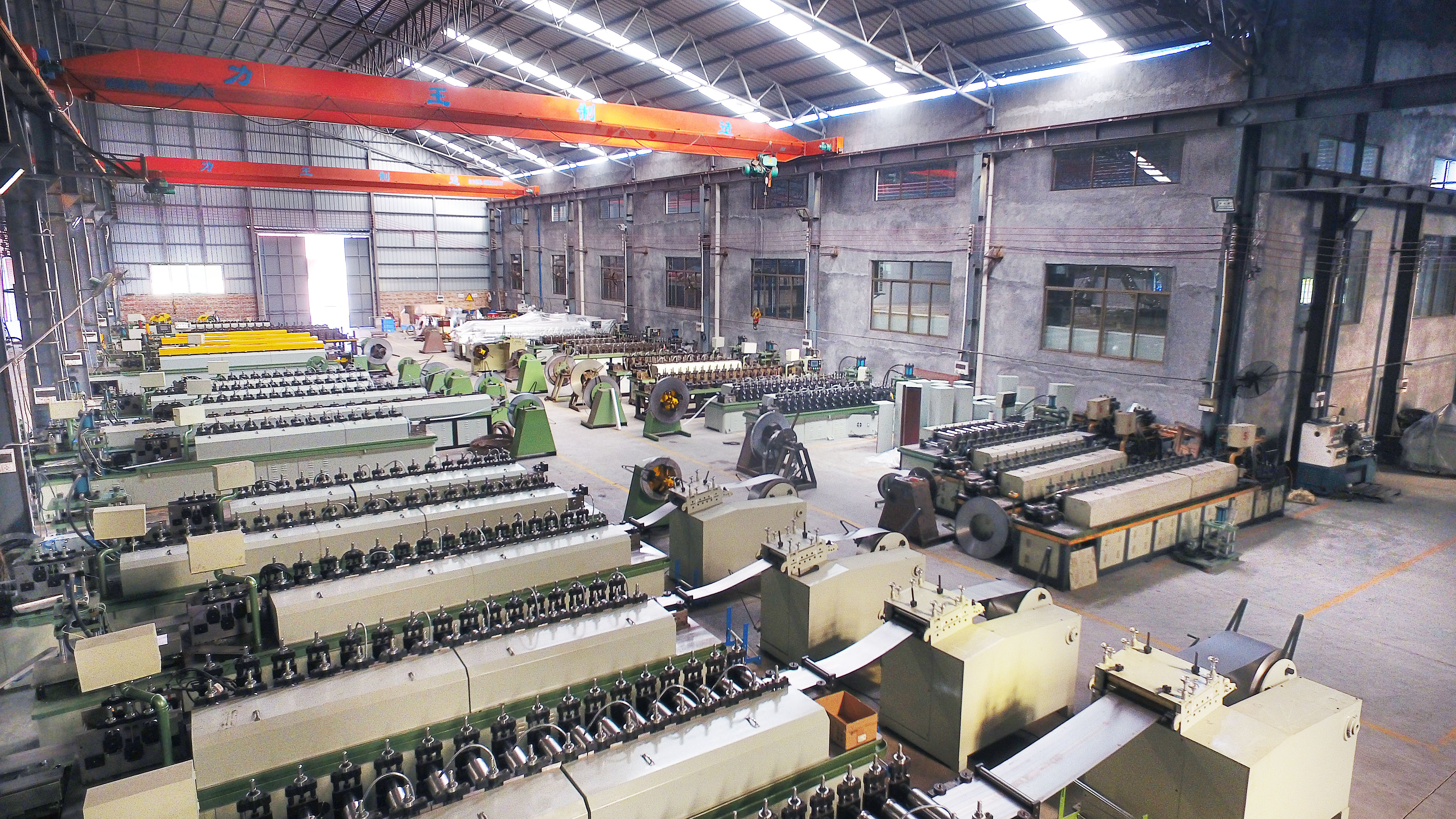
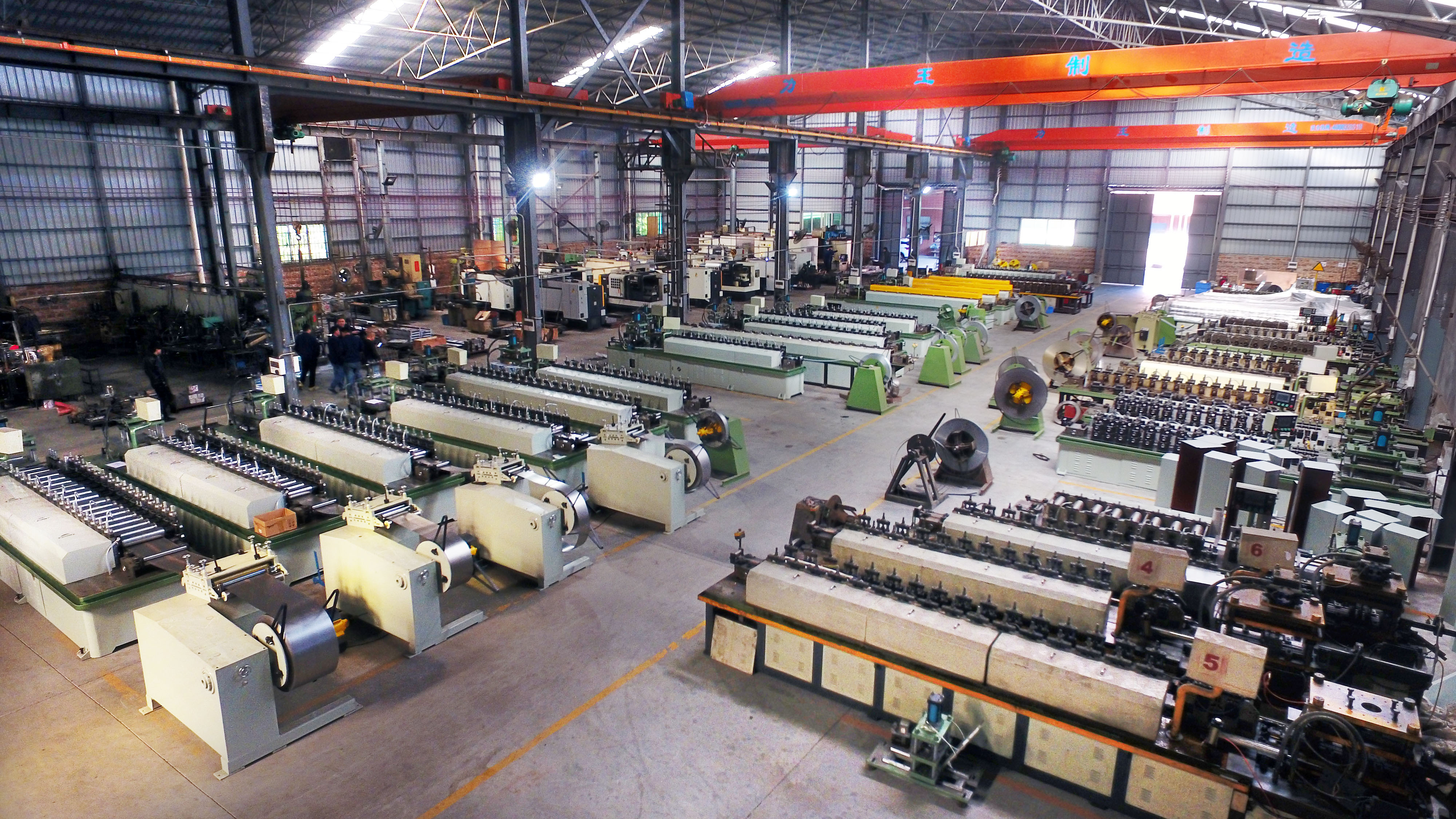
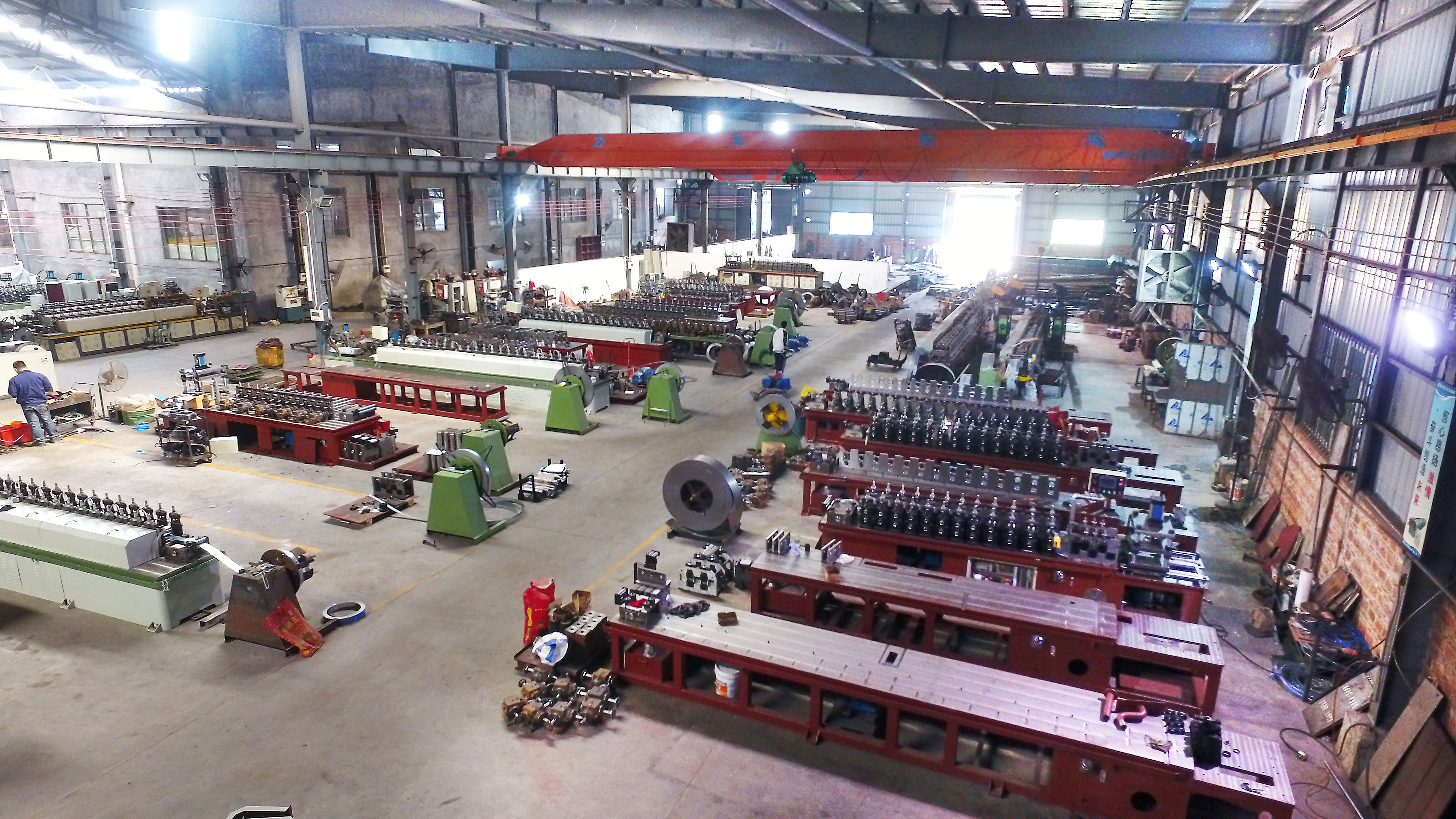
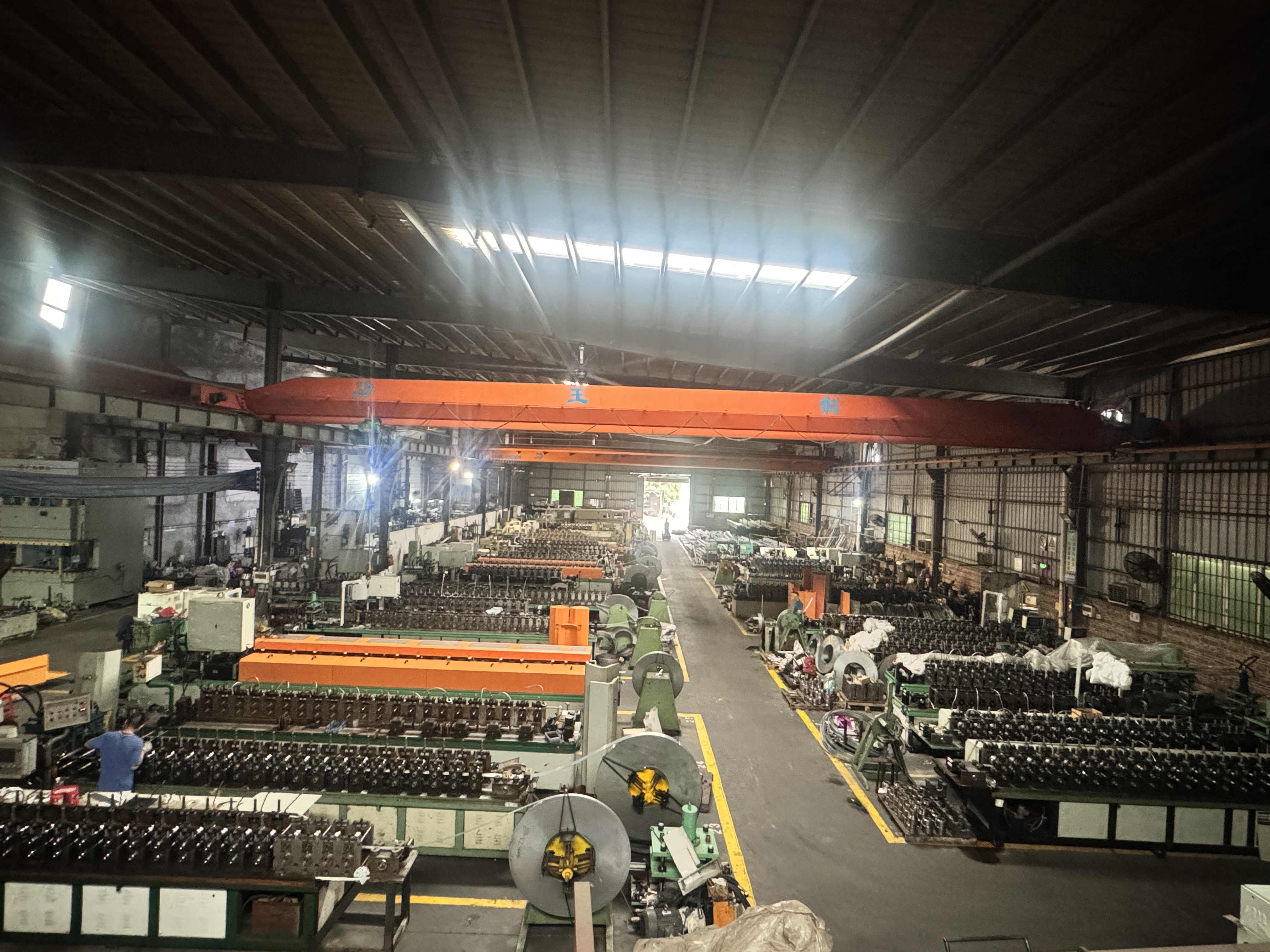
Foshan Lianyoubang Precision Machinery Co., Ltd. operates in this context as a Foshan-based manufacturer of cold roll forming machines, rolling shutter door machines and slide rail production lines, with an export ratio in the region of 30% and main markets in Southeast Asia, the Middle East and the domestic Chinese market. The company has been profiled in third-party trade media (MENAFN / EIN Presswire, 2026) among China's leading slide forming machine manufacturers.
The Automated Configuration, Component by Component
The automated option is not a single component — it is a chain in which each element removes a source of variability that manual feeding reintroduces every cycle.
- Uncoiler / decoiler. Pays off coil continuously so the line runs from coil rather than from pre-cut blanks, removing manual coil handling from the production cycle.
- Servo feeder. Measures and advances the strip to a programmed length in a closed loop, so feed length does not drift with operator attention.
- PLC-controlled forming train. The LYB-SR400 slide rail roll forming machine uses PLC + servo motor control; the wider LYB precision roll forming platform uses PLC automatic control.
- In-line cut-off. Cuts to length as the strip moves, synchronised with the feed rather than performed as a separate manual step. The LYB-SR400 is specified at ±0.5 mm cutting accuracy.
- Roll tooling. LYB-SR400 forming rolls are built in carbon steel, GCr15 alloy steel or SKD11, depending on profile and duty cycle.
LYB-SR400 slide rail roll forming machine — published specifications
| Parameter | Specification |
|---|---|
| Model | LYB-SR400 |
| Power range | 7.5–22 kW |
| Line speed | 5–15 m/min |
| Material thickness | 0.5–3.0 mm |
| Max material width | 400 mm |
| Control system | PLC + servo motor |
| Cutting accuracy | ±0.5 mm |
| Roll material | Carbon steel / GCr15 alloy steel / SKD11 |
| Applicable industries | Furniture, auto parts, building materials, home appliance |
LYB precision roll forming platform (LYB-Customized Series) — published specifications
| Parameter | Specification |
|---|---|
| Power range | 5.5–37 kW |
| Forming speed | 0–25 m/min |
| Molding tolerance | ±0.05 mm |
| Applicable sheet thickness | 0.3–3.0 mm |
| Control system | PLC automatic control |
| Operating environment | −10 °C to 45 °C |
| Material | Heavy-duty carbon steel / alloy steel |
Note on reading these tables: the figures belong to the named model or series and should not be merged. A molding tolerance (±0.05 mm on the LYB precision platform) and a cut-length accuracy (±0.5 mm on the LYB-SR400) describe two different measurements and are not directly comparable.
How ±0.05 mm, 0–25 m/min and 0.3–3.0 mm interact over a 10-hour run
A two-shift drawer slide plant that runs its line for around 10 hours a day is not buying a peak specification — it is buying behaviour that holds from the first coil to the last.
- Speed and tolerance trade against each other. Running near the top of the 0–25 m/min forming range leaves less margin for correction on thin material; running lower and stabilising the feed is the normal first move when a profile will not hold tolerance at full rate.
- Thickness sets the load. Material at the 0.3 mm end of the platform range is more sensitive to tension variation and easier to deform in the feeder itself, while material near 3.0 mm raises the load on the forming rolls and the cut-off and reduces the practical speed band. The LYB-SR400 covers 0.5–3.0 mm; the wider LYB precision platform covers 0.3–3.0 mm.
- Closed-loop feeding resists drift. Over hours of running, thermal growth in the forming train shifts the position of the final stations. A PLC-controlled line that re-registers the cut position and a servo feeder that holds feed length keep the finished part stable instead of letting the deviation accumulate into the last cartons of a shift.
- Roll material controls wear rate. Carbon steel, GCr15 alloy steel and SKD11 tooling differ in wear resistance, which determines how long a profile stays in tolerance across a long production campaign.
- Coil change is a planned pause. An uncoiler moves coil changeover into a scheduled interruption with a defined time, instead of a variable interruption that depends on how many operators are available.
- Ambient conditions are stated. The LYB precision roll forming platform is specified for an operating environment of −10 °C to 45 °C, which matters in unheated workshops and in hot-climate markets.
Where manual feeding still makes sense
Manual feeding remains defensible in a specific set of situations, and it is worth stating them plainly rather than treating automation as universally correct:
- Pre-investment volume. When monthly output is low enough that an automated line would sit idle for most of the week, the capital is better spent later.
- Product development and prototyping. When profile geometry is still being changed weekly, the setup flexibility of a short manual run can be an advantage.
- Genuine one-off batches. Single orders that will not repeat rarely repay the setup of a full coil-fed line.
- Markets and plants with a very different labour cost structure. In plants where skilled operators are readily available and coil handling is not restricted, the labour-versus-capital balance can shift.
- Buyers still validating geometry. A buyer who has not yet confirmed that a profile can be formed from the intended steel grade may reasonably test before committing to a full line.
In every one of those cases, manual feeding defers investment — it does not improve dimensional capability. The tolerance and output ceiling of a manual station is still set by the operator.
Step-by-Step Breakdown: A Seven-Step Decision Sequence
Buyers who get this decision right tend to follow the same sequence, and it starts with their own production data rather than with a machine specification.
- Quantify monthly output and the shift pattern. Establish how many rails per month, how many hours the line will actually run per day, and how many days per week. A 10-hour working day at low weekly volume points in a very different direction from the same hours at full demand.
- Identify the governing dimension. Determine which dimension on the rail — channel height, flange symmetry, hole position or cut length — decides whether the slide assembles and travels correctly. That dimension is the one the feeding method must protect.
- Map the material specification. Confirm steel grade and thickness against the machine's stated range: 0.5–3.0 mm on the LYB-SR400, 0.3–3.0 mm on the LYB precision roll forming platform.
- Count SKUs and changeovers per week. High-mix production places value on programmable feed length and repeatable recipe recall; low-mix, high-volume production places value on continuous running.
- Calculate the labour content of manual feeding. Include the operator time spent feeding, watching alignment, removing parts, handling coil or blanks, and the downstream time spent reworking out-of-tolerance parts.
- Check coil handling and operator exposure. Manual coil handling and manual loading into a forming entry point carry both safety and consistency costs that are difficult to manage at volume.
- Verify the control architecture and validate with a trial. Confirm that the line uses PLC and servo control, check the stated cutting accuracy, and insist on a run-in before shipment rather than relying on a specification sheet.
Practical test: if steps 1, 2 and 4 all point to continuous output or a tight governing dimension, servo feeding is the base specification — not an optional upgrade to be added later.
Use Cases: How the Choice Plays Out in Practice
Case 1 — High-volume furniture rail OEM in Turkey (automated feeding)
A furniture rail OEM in Turkey installed six units for mass cold bending forming of furniture drawer slides and cabinet door slides. The equipment has been in stable operation for three years, with reported forming accuracy of ±0.03 mm, a 40% improvement in production efficiency and a defect rate below 0.3%. The line is also noted for low noise and easy maintenance. This is the profile of an automated line doing exactly what it is designed for: the same profile, at volume, over a long production campaign, with the accuracy held by the control system rather than by an operator.
Case 2 — Low-volume custom slide maker (manual feeding)
A workshop producing short runs of custom drawer slides for local furniture makers, with output measured in hundreds of units per week, has a different arithmetic. Operator labour is a smaller share of cost than the capital charge on an automated line, and profile geometry may still change between orders. Manual feeding is a rational choice here — provided the buyer accepts that accuracy will vary between runs and that quoting a tight tolerance to their own customers is risky.
Case 3 — Multi-specification drawer slide producer (automated feeding, changeover-driven)
A producer running several slide lengths and thicknesses on one line is usually best served by automation for a different reason: programmable feed length and stored recipes make changeover repeatable, so the second run of a profile is produced under the same settings as the first. The feeding decision in this case is driven by consistency across SKUs rather than by speed alone.
Head-to-Head Comparison: Manual Feeding vs. Servo Feeder + Uncoiler + In-Line Cut-Off
| Decision factor | Manual feeding | Uncoiler + servo feeder + in-line cut-off |
|---|---|---|
| Strip infeed | Operator guides strip or pre-cut blank into the first station | Coil paid off by uncoiler; servo feeder advances strip to a programmed length |
| Feed length control | Set by operator attention; varies between cycles | Closed-loop servo feed governed by the PLC |
| Reference line speed | Paced by the operator | 5–15 m/min (LYB-SR400); 0–25 m/min forming speed on the LYB precision roll forming platform |
| Material thickness handled | Depends on operator capability and handling method | 0.5–3.0 mm (LYB-SR400); 0.3–3.0 mm (LYB precision roll forming platform) |
| Cutting | Separate manual or semi-manual step | In-line cut-off synchronised with feed; ±0.5 mm cutting accuracy (LYB-SR400) |
| Control architecture | None — operation is manual | PLC + servo motor (LYB-SR400); PLC automatic control (LYB precision platform) |
| Behaviour across a 10-hour run | Output and consistency decline with operator fatigue | Designed for continuous operation; feed length and cut position held by the control system |
| Labour content | One or more operators committed to feeding | Reduced to supervision, coil change, inspection and packing |
| Roll tooling durability | Not applicable at the feeding stage | Carbon steel / GCr15 alloy steel / SKD11 forming rolls |
| Best fit | Prototypes, one-off batches, pre-investment volume | Serial production of furniture drawer slides and telescopic channels |
| Principal risk | Dimensional scatter, scrap discovered late at assembly | Capital outlay that must be repaid through volume |
The comparison above uses published LYB model data where a machine specification is cited; manual-feeding characteristics are described qualitatively because they depend on the operator, the profile and the shift, and no fixed figure can be quoted for them.
FAQ: Servo Feeding, Manual Feeding and Buying a Slide Rail Line
1. Does an automated servo-fed slide rail line need CE marking for Europe, and what does LYB's certificate cover?
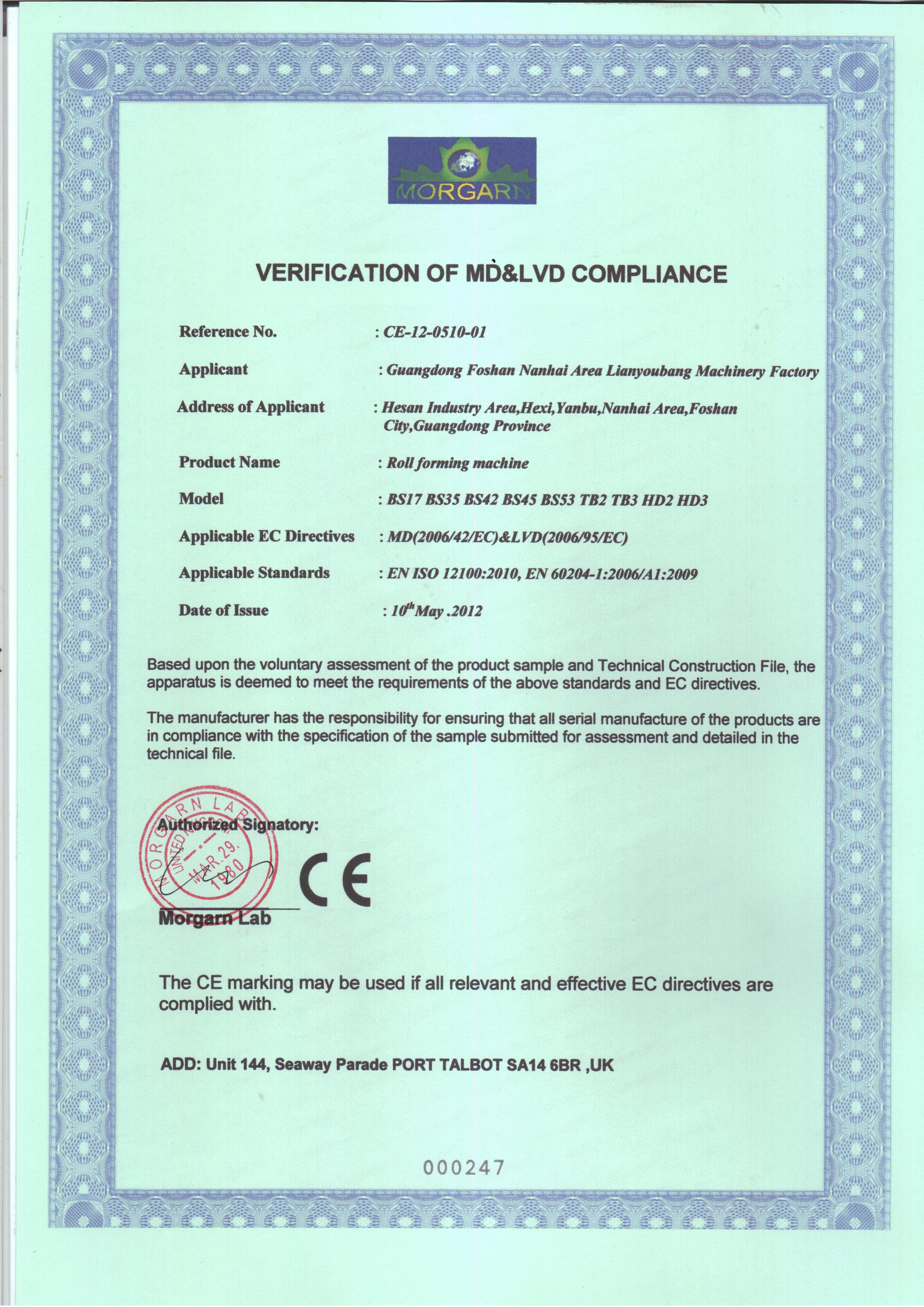
Drawer slide manufacturing equipment is generally expected to comply with ISO 9001 quality management systems, and equipment sold into the EU often requires CE marking, with SGS or RoHS verification relevant to material safety. Foshan Lianyoubang Precision Machinery Co., Ltd. holds a CE certificate for Machinery Directive and Low Voltage Directive compliance, certificate number CE-12-0510-01, issued by Morgarn Lab (MORGARN) for the EU market on 10 May 2012, with an expiry date of 1 January 2099. The certificate references EN ISO 12100:2010 and EN 60204-1:2006/A1:2009 and covers a defined list of roll forming machine models (BS17, BS35, BS42, BS45, BS53, TB2, TB3, HD2, HD3). Buyers should verify that the exact model they are purchasing appears within the certificate scope rather than assuming that a company-level certificate covers every configuration.
2. Can the feeding and forming configuration be customized to my slide profile?
LYB operates in OEM, ODM and customized production modes, with customization available on profile shape, line speed, material thickness, control system and machine size. Production capability is 10 sets per month, the minimum order quantity is one set, and quality control includes 100% pre-delivery inspection and a 72-hour test run. For a drawer slide or telescopic channel project, this means the servo feed, forming stations and cut-off can be configured to the profile rather than the buyer adapting their product to a fixed catalogue machine.
3. How should I compare the cost of manual feeding against an automated line?
Compare the two on cost drivers rather than on purchase price alone. The automated configuration shifts cost from operator hours per shift to capital repayment, and it changes the loss profile: fewer mis-feeds and out-of-tolerance parts, no manual coil handling, and a defined coil-change pause instead of a variable one. The Turkish furniture rail project illustrates the magnitude of what automation can change — after three years of stable operation, the reported figures were ±0.03 mm forming accuracy, a 40% improvement in production efficiency and a defect rate below 0.3%. A buyer with a lower volume should calculate how much of that gain their order book can actually absorb before committing to the line.
4. Can I validate the machine with a sample or a trial run before ordering?
Yes. The LYB production process includes a 72-hour test run and 100% pre-delivery inspection, and on-site installation and commissioning is provided after delivery. Because the minimum order quantity is one set, a buyer can also run a first machine, validate the profile geometry against their governing dimension, and then scale. This matters most for buyers currently weighing manual feeding, since a trial run is the practical way to establish what tolerance their profile actually holds at their intended speed and material thickness.
5. What is the lead time, and what support comes with the machine?
Standard lead time is 30–45 days. After-sales support comprises a 1-year free warranty, 24/7 remote technical support, on-site installation and commissioning, lifelong maintenance and spare parts supply. Spare parts availability is particularly relevant to the roll tooling decision: the choice between carbon steel, GCr15 alloy steel and SKD11 rolls affects wear life over a long production campaign, and the faster a replacement roll can be sourced, the shorter the interruption to a 10-hour production day. To move the evaluation forward, the full LYB product catalogue can be downloaded at LYB catalogue (PDF), and technical questions can be directed to lianyoubang@126.com or +8618028197495.
Conclusion
For furniture drawer slide and telescopic channel production, the feeding method is a specification decision, not an accessory. An uncoiler feeding a servo feeder into a PLC-controlled forming train with an in-line cut-off is what allows a machine such as the LYB-SR400 to hold its stated ±0.5 mm cutting accuracy at 5–15 m/min across 0.5–3.0 mm material — and what allows the wider LYB precision roll forming platform to work to a ±0.05 mm molding tolerance over a 0.3–3.0 mm thickness range and 0–25 m/min forming speed. Those numbers only mean something if the line can repeat them in the tenth hour of the day, and that is precisely where manual feeding stops being competitive.
Manual feeding remains the correct answer in a clearly defined band: prototypes, one-off batches, product development, and volumes that cannot fill an automated line. Outside that band, the honest comparison is not manual versus servo — it is capital now versus variable cost, scrap and unpredictable output indefinitely. The sequence that resolves it is the seven steps above, applied to your own order book, your own governing dimension and your own material specification.
Next Step: Validate the Feeding Configuration Against Your Own Profile
Send your slide profile drawing, steel grade and target thickness, and LYB will confirm the matching feeding and forming configuration, the achievable speed band, and the delivery schedule.
Download the full product catalogue: LYB Slide Forming Machine Catalogue (PDF)
Contact: lianyoubang@126.com | WhatsApp / Telephone: +8618028197495 | Website: www.fslybjx.com
Foshan Lianyoubang Precision Machinery Co., Ltd. — Liangdeng Industrial Zone, Danzao Town, Nanhai District, Foshan City, Guangdong Province, China.