
Setting Up a Furniture Drawer Slide Production Line: A Step-by-Step Application Guide
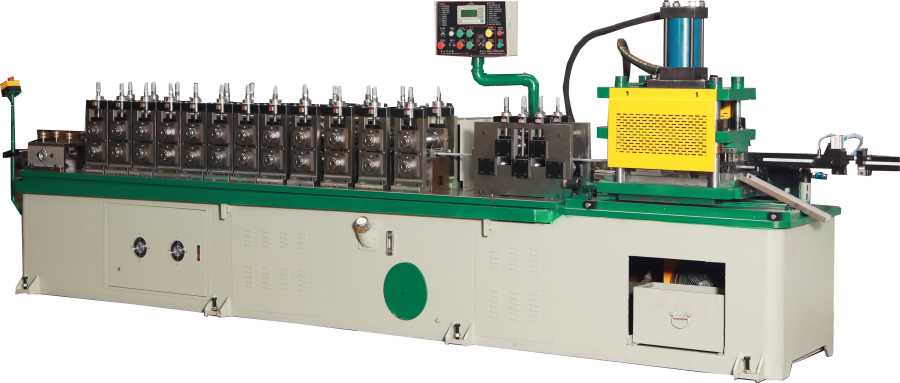
A furniture drawer slide production line is set up in the order the material moves, not in the order the equipment is purchased. Coil handling, controlled feeding, roll forming, cutting and post-forming validation form one continuous chain, and a constraint in any single link shows up as dimensional drift or surface marking at the end of the line. The most common configuration for this application combines an uncoiler, a servo feeder, a slide rail roll forming machine and a hydraulic cutting machine, and this is the equipment set used in continuous furniture slide rail production projects in the Philippines, Pakistan and Tanzania.
This guide is written for furniture manufacturers, rail OEMs and procurement teams who are moving from research into evaluation. It explains what has to be defined before a line is ordered, how a drawer slide roll forming machine such as the LYB-SR400 is specified, how the supporting equipment is matched to it, and which constraints decide whether the line holds accuracy across a 10-hour shift. Foshan Lianyoubang Precision Machinery Co., Ltd. (LYB) is a Foshan-based manufacturer of cold roll forming equipment and slide rail production lines, supplying furniture, appliance, automotive and building-material producers and exporting to Southeast Asia, the Middle East, Europe and South America.
Line constraints at a glance
Material thickness 0.5-3.0 mm | Maximum material width 400 mm | Line speed 5-15 m/min | Cutting accuracy ±0.5 mm | Power range 7.5-22 kW | CE certificate No. CE-12-0510-01 | Lead time 30-45 days
Problem Definition: Line Setup Fails on Constraints, Not on Ambition
Drawer slide production is a tolerance business. A slide that is dimensionally correct when it leaves the forming line but drifts during assembly creates scrap that only appears several stations downstream, which makes the defect expensive to trace. The constraints that govern setup are therefore defined at the start of the project, not adjusted afterwards.
Four constraints decide whether a drawer slide line is viable:
- Dimensional accuracy. The LYB-SR400 is specified with a cutting accuracy of ±0.5 mm, which is the machine-level guarantee. Achieved forming accuracy in production depends on tooling condition, material consistency and line stability.
- Smooth surface forming. Furniture drawer slides are visible components in many cabinet designs. Roller geometry, surface treatment and material selection determine whether the formed profile leaves the line without marking.
- Continuous duty. A furniture slide rail production project is typically designed for continuous operation at 10 hours per day in a normal-temperature, dry workshop environment. Equipment that performs well in short batches but drifts thermally or mechanically over a full shift is not suitable.
- Compliance documentation. Drawer slide manufacturing equipment is generally expected to comply with ISO 9001 quality management systems, often requires CE marking for the European market, and frequently requires SGS/RoHS documentation for material safety.
A fifth constraint is commercial rather than technical: the line has to match the profile the buyer actually sells. Telescopic channel profiles, three-fold profiles, ball-bearing slide profiles and heavy-duty rail profiles differ in geometry and in the number of forming passes required, so the machine specification follows the product plan rather than the other way round.
Industry Background: Why New Slide Forming Capacity Is Being Added
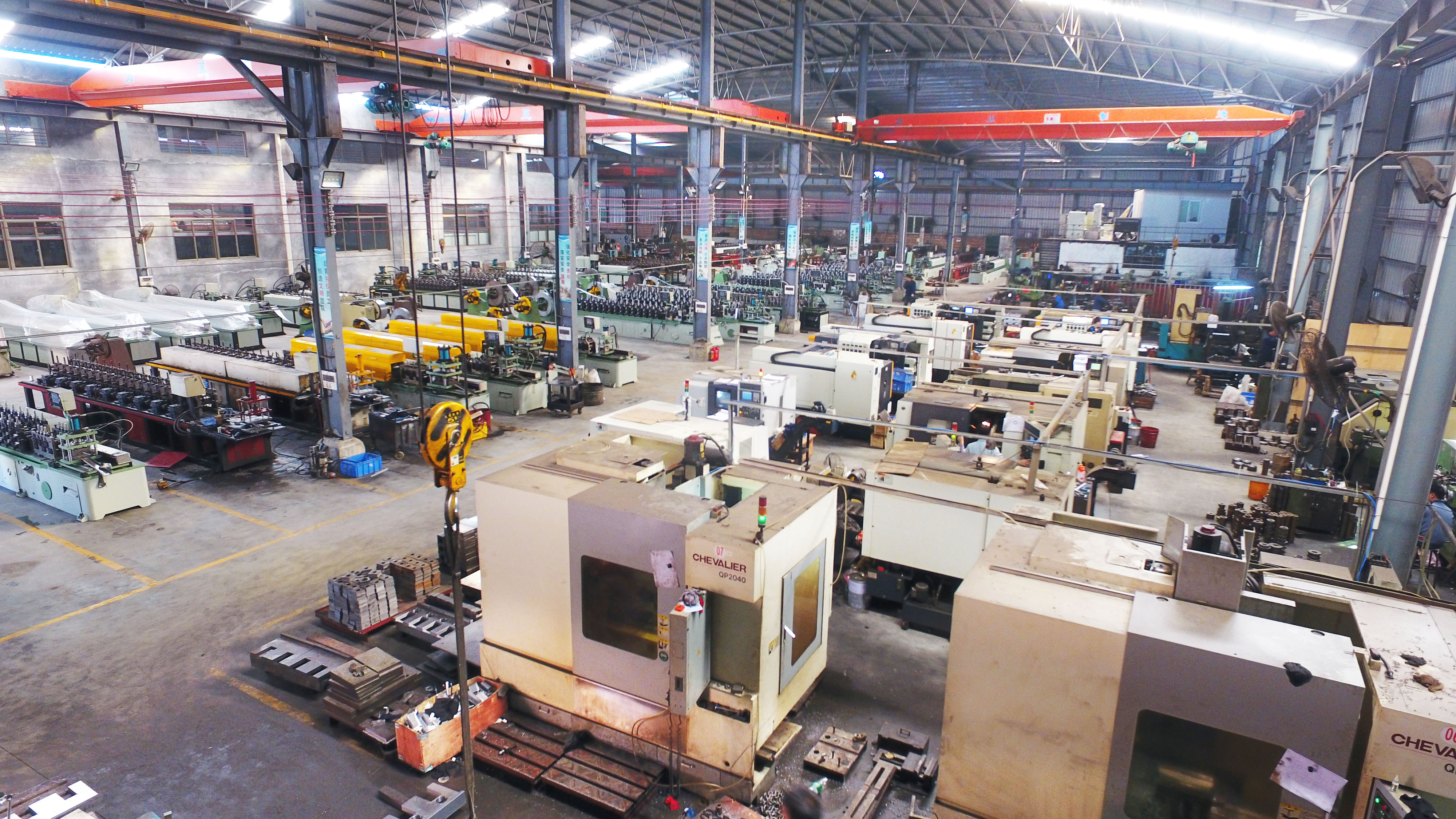
Market sizing for roll forming equipment varies widely by scope. Future Market Insights values the global roll forming machine market at approximately USD 9.1 billion in 2024, projected to reach USD 12.2 billion by 2034. Intel Market Research estimates the same category at USD 487 million in 2024, with a CAGR of 4.5% reaching USD 662 million by 2032, while Zion Market Research reported USD 1.87 billion for 2023. The gap reflects a definitional difference: broad industrial roll forming coverage versus precision forming lines and profiles. For a buyer, the practical takeaway is that the segment serving furniture hardware and appliance components is a defined, growing niche rather than a commodity category.
Supply-side signals support the same direction. The operating income of metal-forming machine tools in China increased by 8.9% year-on-year for the period of January to October 2024, according to the China Machine Tool Industry Association, and China's export value of metalworking machine parts reached approximately USD 2.2 billion in 2025 according to the Observatory of Economic Complexity. For furniture manufacturers in emerging markets, this means equipment supply is deep, but supplier selection and configuration control matter more than basic availability.
Demand for drawer slide capacity is concentrated where furniture assembly is expanding fastest. Continuous furniture slide rail production projects are already running in the Philippines, Pakistan and Tanzania, where the core requirements are high dimensional accuracy and smooth surface forming rather than maximum throughput. That profile shapes the equipment specification: stable servo feeding, controlled roll pressure and repeatable cutting matter more than headline speed.
Detailed Solution: The Equipment Architecture of a Drawer Slide Production Line
A drawer slide roll forming line is a matched set, not a machine plus accessories. Each unit removes one source of variation before the material reaches the next unit.
| Line unit | Function in the line | Why it affects accuracy |
|---|---|---|
| Uncoiler | Holds and pays off the steel coil at controlled tension | Uneven payoff tension transfers directly into profile bow and twist |
| Servo feeder | Feeds strip into the forming stations at a controlled length | Feed length error becomes cumulative length error in the finished slide |
| Cold Roll Forming Machine (LYB-SR400) | Precision forming of furniture drawer slide rails | Roller geometry and drive stability set the forming tolerance |
| Hydraulic cutting machine | Cuts the formed profile to length | Cut quality determines burr level and end-face squareness |
This four-unit combination is the matched equipment set specified for furniture slide rail production projects, and it is sized around the profile rather than around a fixed output target. The forming machine at the centre of the line carries the technical constraints that matter most in procurement.
LYB-SR400 slide rail roll forming machine
The Cold Roll Forming Machine (LYB-SR400) is a slide rail roll forming machine designed for drawer slide profiles, cabinet door slides and related channel sections. It runs on a power range of 7.5-22 kW with a line speed of 5-15 m/min, accepts material thickness from 0.5 mm to 3.0 mm at a maximum material width of 400 mm, and uses a PLC + servo motor control system with a cutting accuracy of ±0.5 mm. Roller and forming materials are carbon steel, GCr15 alloy steel or SKD11, and the machine is applied in the furniture, auto parts, building materials and home appliance industries.
The 400 mm maximum material width is the number that most often decides line feasibility at the specification stage. Telescopic channel profiles and ball-bearing slide profiles are formed from strip that must be wide enough for the full developed length of the section, plus edge allowance. Buyers who compare a CNC slide rail roll forming machine against a conventional machine should check this dimension against the widest profile in their product plan before comparing anything else.
Compliance basis of the line
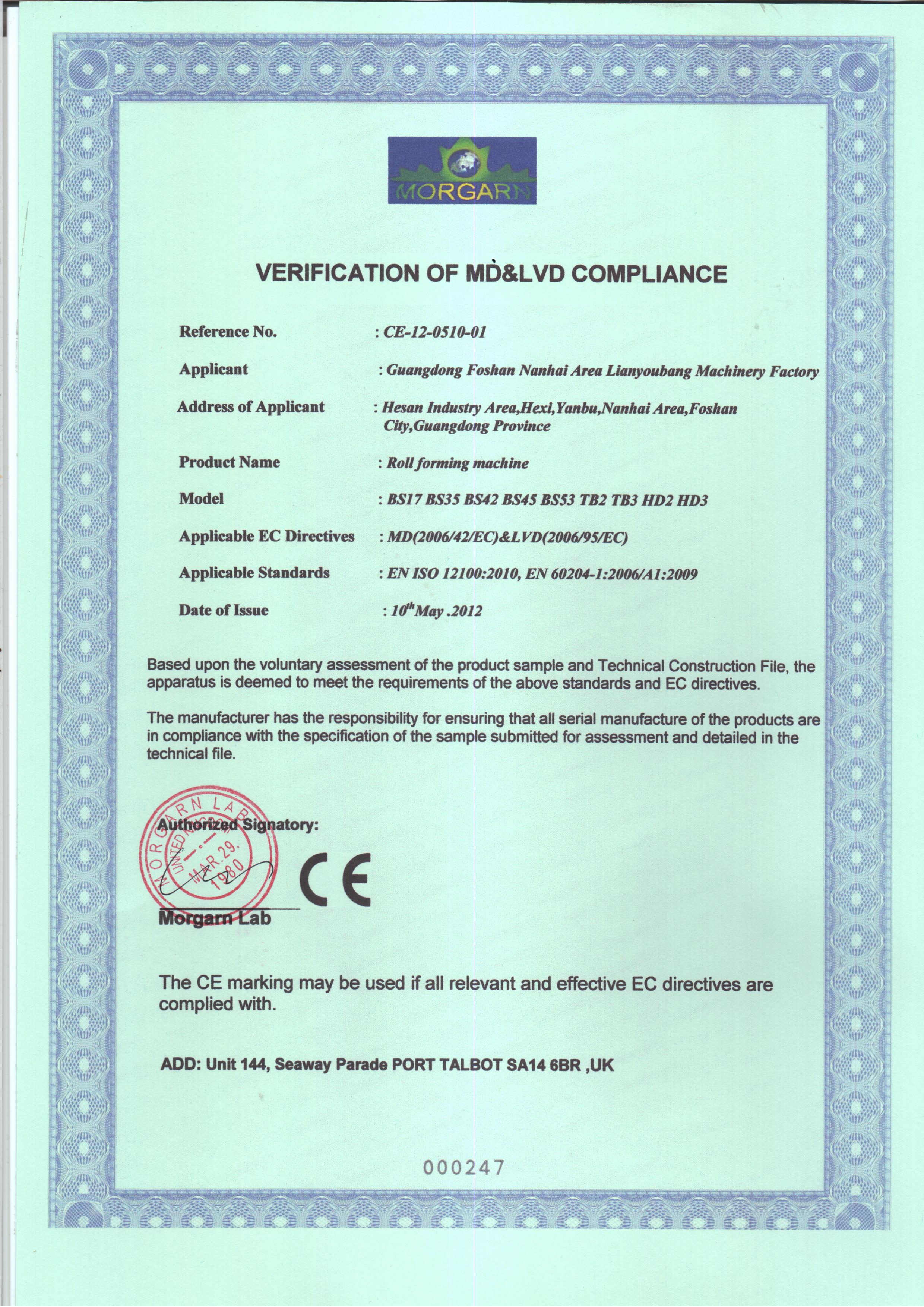
The Cold Roll Forming Machine (LYB-SR400) holds CE certification (No. CE-12-0510-01) for the EU market. The certification is issued by Morgarn Lab (MORGARN) and complies with standards EN ISO 12100:2010 and EN 60204-1:2006/A1:2009. The same certification also covers the LYB-Customized Series product.
This is a constraints issue, not a paperwork issue. For a furniture manufacturer planning exports, the machine certification is the first document a European customer or retailer audit will request, because it evidences that the equipment producing the slide conforms to machinery safety and electrical safety requirements. Buyers building a line for non-EU markets should still verify the certificate number, the issuing body and the applicable standards, because certificates are model-specific.
Step-by-Step Breakdown: Setting Up the Line in Eight Steps
Step 1 — Define the slide profile and the base material
Start with the developed section drawing, not with a machine model. Confirm the strip thickness range within the 0.5-3.0 mm window, the developed width against the 400 mm maximum material width, and the material grade. Slide rails are commonly formed from carbon steel, while forming rolls are typically made from GCr15 alloy steel or SKD11 depending on expected wear life.
Step 2 — Confirm the site and working environment
Match the electrical supply to the machine power range of 7.5-22 kW and verify floor loading for the uncoiler and forming machine. The operating environment for the equipment range is between -10°C and 45°C, and drawer slide lines are normally installed in a dry workshop at normal temperature, since humidity affects both coil storage and the surface condition of formed parts.
Step 3 — Specify the line configuration as one matched set
Order the uncoiler, servo feeder, forming machine and hydraulic cutting machine as a single configured line. Specifying units separately is the most common cause of setup delay, because feed height, line centreline and cutting synchronization all have to be resolved at the interface.
Step 4 — Lock the drive and control package
A PLC + servo motor control system is what converts the mechanical tolerance of the forming stations into a repeatable production result. Servo control matters most on continuous furniture slide rail production, where feed length has to remain consistent across a 10-hour shift.
Step 5 — Finalize tooling against the profile drawing
Tooling is profile-specific. Because customization covers profile shape, line speed, material thickness, control system and machine size, the tooling set is agreed before production begins and is built to the buyer's section drawing rather than to a generic template.
Step 6 — Factory acceptance before shipment
Every machine passes 100% pre-delivery inspection and a 72-hour test run. This is the point at which the buyer should request the inspection record, the test-run output sample and the certificate documentation for the specific model, since verification after arrival is far more expensive than verification before dispatch.
Step 7 — Installation and commissioning on site
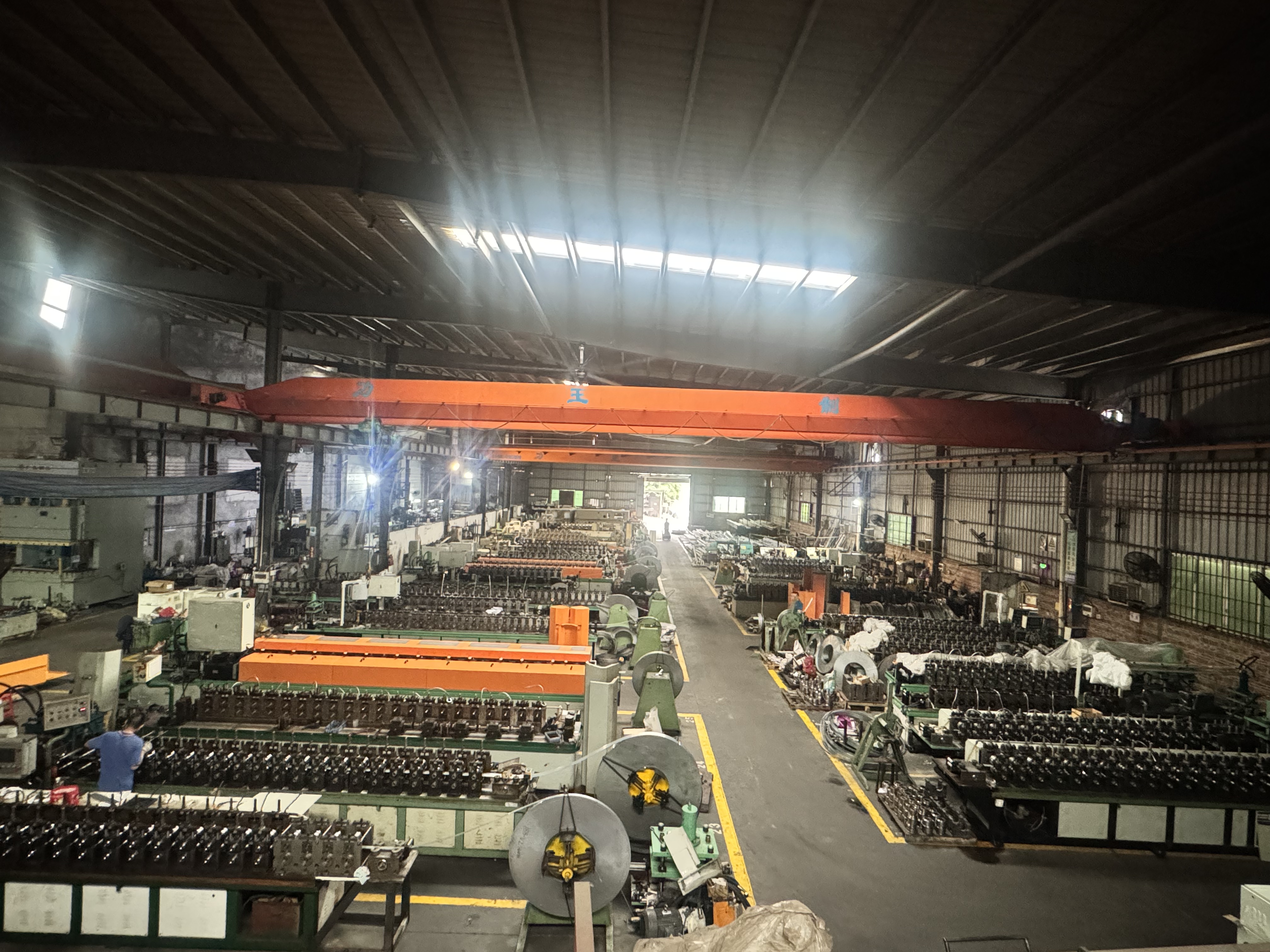
Installation and commissioning services cover levelling, alignment of the four line units, first-article forming and cut-length calibration, followed by operator training on changeover and adjustment. Commissioning is where the machine-level cutting accuracy of ±0.5 mm is converted into a production process the buyer's team can hold on their own.
Step 8 — Ramp to continuous operation and stabilize maintenance
Production is ramped to the target shift pattern, typically continuous operation at 10 hours per day. Support after commissioning includes 24/7 remote technical support, a 1-year free warranty, on-site installation and commissioning service, lifelong maintenance and spare parts supply. Consumable and spare-part planning should be set at this stage, because roll wear is a slow, measurable drift rather than a sudden failure.
Use Cases: Verified Line Configurations in Furniture Manufacturing
Turkey — furniture rail OEM, six-unit line, three years in service. A furniture rail OEM in Turkey installed six units for mass cold bending forming of furniture drawer slides and cabinet door slides. The configuration has operated for three years with a forming accuracy of ±0.03 mm, suitable for meeting production needs across multiple specifications of slides. Reported outcomes include a 40% improvement in production efficiency, a defect rate below 0.3%, stable operation over three years, low noise and ease of maintenance. The relevant procurement lesson is that a line specified for profile flexibility stayed in service across multiple slide specifications rather than being locked to one SKU.
Philippines, Pakistan and Tanzania — emerging-market furniture slide rail projects. These projects are configured around a furniture slide rail production line for precision forming of furniture drawer slide rails, with matched equipment consisting of an uncoiler, a servo feeder and a hydraulic cutting machine. The declared requirements are high dimensional accuracy and smooth surface forming, in a normal-temperature, dry workshop, with continuous operation at 10 hours per day. The specification priority differs from high-volume export projects: consistency and surface quality are ranked above maximum line speed.
Comparison Table: LYB-SR400 vs. LYB-Customized Series
Two forming platforms cover most drawer slide projects. The comparison below uses published specification data only.
| Specification | Cold Roll Forming Machine (LYB-SR400) | Cold Roll Forming Machine (LYB-Customized Series) |
|---|---|---|
| Equipment type | Slide Rail Roll Forming Machine | Precision metal profile roll forming equipment |
| Power range | 7.5-22 kW | 5.5-37 kW |
| Line / forming speed | 5-15 m/min | 0-25 m/min |
| Material thickness | 0.5-3.0 mm | 0.3-3.0 mm |
| Maximum material width | 400 mm | Not stated in the published specification |
| Accuracy specification | Cutting accuracy ±0.5 mm | Molding tolerance ±0.05 mm |
| Control system | PLC + Servo Motor | PLC automatic control |
| Roller / construction material | Carbon Steel / GCr15 Alloy Steel / SKD11 | Heavy-duty carbon steel / alloy steel |
| Operating environment | Normal temperature, dry workshop (project condition) | -10°C to 45°C |
| CE certification | Covered — certificate No. CE-12-0510-01, Morgarn Lab | Covered by the same certification |
| Applicable industries | Furniture, auto parts, building materials, home appliance | Building materials, metal profile processing, hardware manufacturing, construction engineering |
The selection logic is straightforward. When the product plan is centred on furniture drawer slides and cabinet slides with strip up to 400 mm wide and material up to 3.0 mm thick, the LYB-SR400 is the closer match, and its ±0.5 mm cutting accuracy is defined at machine level. When the profile family is wider — thinner sections down to 0.3 mm, higher forming speeds up to 25 m/min, higher power up to 37 kW, or non-furniture metal profiles — the LYB-Customized Series provides the broader envelope. Note that cutting accuracy and molding tolerance are different measurements and should not be compared as if they were the same metric. Because both platforms are configured in OEM, ODM and customized modes covering profile shape, line speed, material thickness, control system and machine size, the practical starting point is the section drawing, not the model number.
Frequently Asked Questions
Is the LYB-SR400 slide rail roll forming machine CE certified for the EU market?
Yes. The Cold Roll Forming Machine (LYB-SR400) holds CE certification No. CE-12-0510-01 for the EU market, issued by Morgarn Lab (MORGARN), and complies with EN ISO 12100:2010 and EN 60204-1:2006/A1:2009. The LYB-Customized Series is covered by the same certification. More broadly, drawer slide manufacturing equipment is generally expected to comply with ISO 9001 quality management systems, CE marking is commonly required for the European market, and SGS/RoHS documentation is frequently requested for material safety. Buyers should verify the certificate number, issuing body and applicable standards against the exact model being purchased, because CE certification is model-specific.
Can a drawer slide production line be customized to a specific profile?
Yes. LYB operates in OEM, ODM and customized production modes, and customization covers profile shape, line speed, material thickness, control system and machine size. Monthly production capacity is 10 sets and the minimum order quantity is one set, so a single line can be configured around one slide family or around a multi-profile range, which is how the six-unit Turkish line was able to cover multiple slide specifications.
What determines the budget of a furniture drawer slide production line?
Budget is driven by configuration rather than by a standard list price. The main variables are the profile geometry to be formed, the machine power range (7.5-22 kW on the LYB-SR400 and 5.5-37 kW on the LYB-Customized Series), line speed, material thickness, the control system (PLC + servo motor versus PLC automatic control), roller material (carbon steel, GCr15 alloy steel or SKD11), machine size, and the scope of customization and after-sales services selected. Because these variables differ from project to project, a line is quoted against a defined profile and output target. Buyers comparing an automatic drawer slide machine against a semi-automatic alternative should request the configuration breakdown rather than a single figure.
How is precision validated before the machine is shipped?
Every machine passes 100% pre-delivery inspection and a 72-hour test run before shipment, which is the validation gate for accuracy and for surface condition on the formed profile. For reference, the six-unit furniture rail line delivered to the Turkish OEM has run for three years with a forming accuracy of ±0.03 mm, a reported 40% efficiency improvement and a defect rate below 0.3%. Buyers evaluating a precision slide rail forming machine should treat the inspection record and test-run sample as part of the specification, and should confirm that the profile drawngs used for tooling are the same ones used in the test run.
What is the lead time, and what support follows installation?
Standard lead time is 30-45 days, with a monthly production capacity of 10 sets. Delivery is followed by on-site installation and commissioning service, a 1-year free warranty, 24/7 remote technical support, lifelong maintenance and spare parts supply. Buyers moving from research into evaluation can review the full equipment range and machine documentation in the LYB product brochure, then send their profile specification for a line configuration proposal — that sequence keeps the technical discussion anchored on the section drawing instead of on a generic quotation.
Conclusion: Set Up the Line Around Constraints, Then Around Output
A furniture drawer slide production line is only as good as the constraint it was specified against. Define the profile first, confirm the material thickness within 0.5-3.0 mm and the developed width within the 400 mm maximum material width, then size the forming machine and its supporting uncoiler, servo feeder and hydraulic cutting machine as one matched set. Lock the control package to PLC + servo motor, confirm the accuracy specification you are actually measuring, and require the inspection record, the 72-hour test run report and the CE documentation (No. CE-12-0510-01, issued by Morgarn Lab) before dispatch.
Projects in the Philippines, Pakistan and Tanzania show that a line built for high dimensional accuracy and smooth surface forming across a 10-hour shift does not need to be the fastest line available. The Turkish reference project shows what that configuration delivers over three years of continuous production. Both outcomes come from the same discipline: specify the constraints, then let the equipment follow.
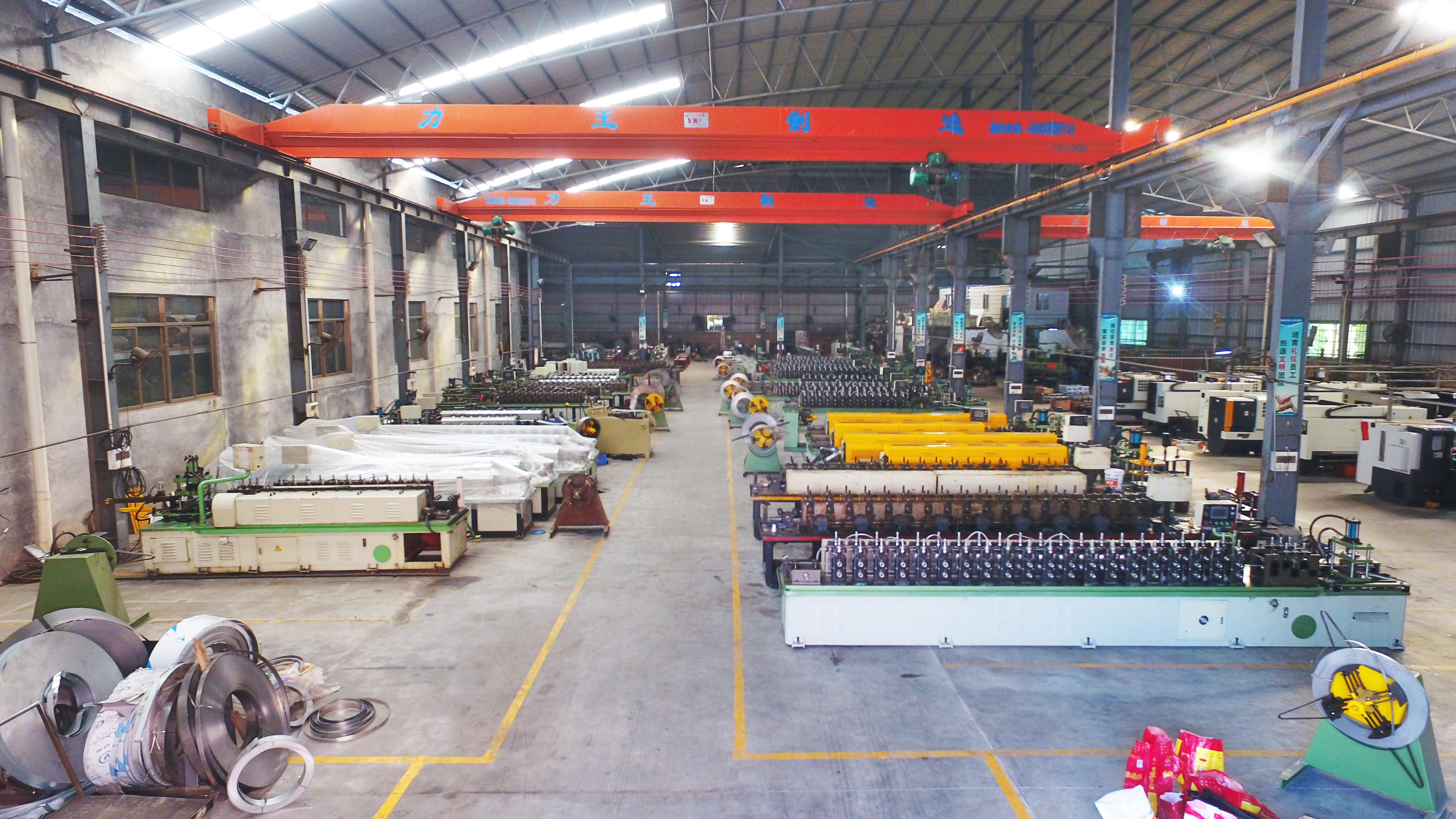
Next step: match a line to your slide profile
Foshan Lianyoubang Precision Machinery Co., Ltd. manufactures cold roll forming machines and complete slide rail production lines, with OEM, ODM and customized configuration, 100% pre-delivery inspection, a 72-hour test run, and 30-45 day lead time.
Download the product brochure: LYB product brochure (PDF)
Website: www.fslybjx.com | Email: lianyoubang@126.com | WhatsApp: +8618028197495 | Address: Liangdeng Industrial Zone, Danzao Town, Nanhai District, Foshan City, Guangdong Province, China
Have Questions or Need More Details?
Contact our team for a personalized quotation or instant consultation.
Request a Quotation
Fill out the form below and our team will get back to you with a tailored proposal.
WhatsApp Direct Chat
Prefer to chat in real-time? Message us on WhatsApp for instant assistance & quick answers.
- Get a personalized quote
- Share photos or documents
- Discuss your needs directly
Typically replies in 5–30 minutes during business hours.