Slide Rail Roll Forming vs. Press Brake: A Practical Comparison for Furniture Drawer Producers
Slide Rail Roll Forming vs. Press Brake: A Practical Comparison for Furniture Drawer Producers
For furniture drawer slide production, the choice between a dedicated slide rail roll forming line and press brake bending is decided by four constraints rather than by preference: the tolerance band the drawer slide profile must hold, the volume and shift pattern of the plant, the number of profiles to be produced, and the support equipment available upstream and downstream. Roll forming forms the complete cross-section continuously from coil and is designed for high-volume, low-mix drawer slide runs. Press brake bending forms the same style of profile one bend at a time and remains practical for prototyping, very small batches, and mixed job work. This guide compares the two methods on precision, continuous-operation suitability, and required support equipment, using verified specifications from the LYB-SR400 slide rail roll forming machine and the LYB-Customized Series.
Why the Forming Method Becomes a Hard Constraint for Drawer Slide Producers
A furniture drawer slide — whether it is described as a telescopic channel, a 3-fold drawer slide, or a ball bearing slide — is a long, thin, geometric product. Its function depends on the cross-section staying consistent along the entire length, because the rail has to travel smoothly inside its mating channel and carry a defined load without binding. That is why the forming method is not simply a production preference: it determines dimensional consistency, scrap rate, operator dependency, and ultimately the unit cost of every slide that leaves the line.
The core difference is mechanical. A slide rail roll forming machine passes strip material through a sequence of driven forming rolls, so the complete profile is created in one continuous pass at a defined line speed. A press brake performs one bend per stroke, meaning a drawer slide profile is created through a series of separate, sequentially set-up operations. The first method fixes the geometry in the tooling; the second fixes it in the setup, the backgauge, and the operator's handling.
The four constraints buyers should settle before comparing equipment
- Tolerance band: the permitted variation on cross-section geometry and on cut length, specified separately.
- Volume and shift pattern: annual output and whether the line is expected to run continuous shifts, such as 10 hours per day.
- Profile count: how many slide variants (channel widths, telescopic stages, material thicknesses) the same equipment must produce.
- Support equipment: coil handling, strip feeding, cutting, and downstream handling that the forming method requires.
Buyers working at the research and evaluation stage often begin by comparing machine prices, which is the least informative comparison available. A press brake is a general-purpose bending machine that can also produce other components; a dedicated slide rail making machine can usually do only one family of work. The two are only comparable once the four constraints above are defined, because a press brake that appears cheaper per machine can generate more cost per finished slide when the profile is long and the volume is high.
Industry Background: Where Forming Equipment Demand Is Heading
The equipment market around this comparison is expanding, and the estimates available illustrate why buyers need to check the scope of any market figure they are shown. Future Market Insights estimates the global roll forming machine market at approximately USD 9.1 billion in 2024, projected to reach USD 12.2 billion by 2034. Intel Market Research, applying a narrower definition focused on precision roll forming lines, estimates the 2024 market at USD 487 million with a CAGR of 4.5%, reaching USD 662 million by 2032. The gap between these two figures is a scope difference rather than a contradiction: one number covers heavy industrial roll forming broadly, the other covers a narrower equipment class. Buyers should expect similar divergence in any market data they are given and should ask what is inside the number.
On the supply side, China's export value of metalworking machine parts reached approximately USD 2.2 billion in 2025, with major destinations including Japan, Russia, and the United States, according to the Observatory of Economic Complexity. The China Machine Tool Industry Association reported that the operating income of metal-forming machine tools in China increased by 8.9% year-on-year for the period of January to October 2024. For a furniture drawer producer evaluating a slide forming machine, the practical implication is that supplier depth in this equipment category is increasing, and the differentiation between suppliers is shifting from availability toward specification accuracy, verified compliance, and after-sales structure.
Compliance expectations have moved in the same direction. Drawer slide manufacturing equipment must comply with ISO 9001 quality management systems and often requires CE marking for the European market and SGS/RoHS for material safety, according to industry guidance published by HVPAL Hardware and Baoertai Hardware. This matters in a roll forming versus press brake comparison because machinery safety and electrical compliance are attached to the machine you buy, not to the forming principle alone.
What a Dedicated Slide Rail Roll Forming Line Actually Includes
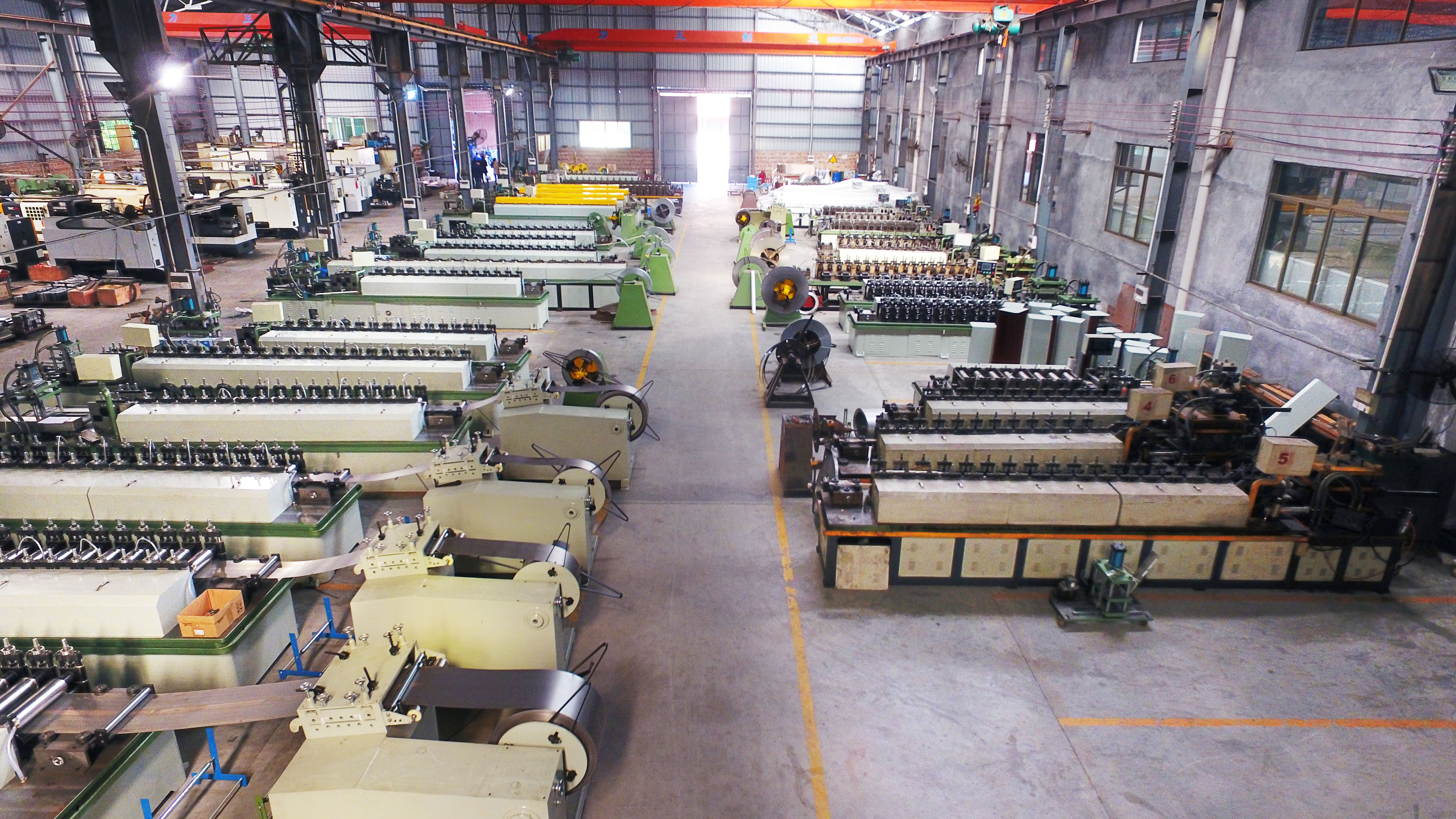
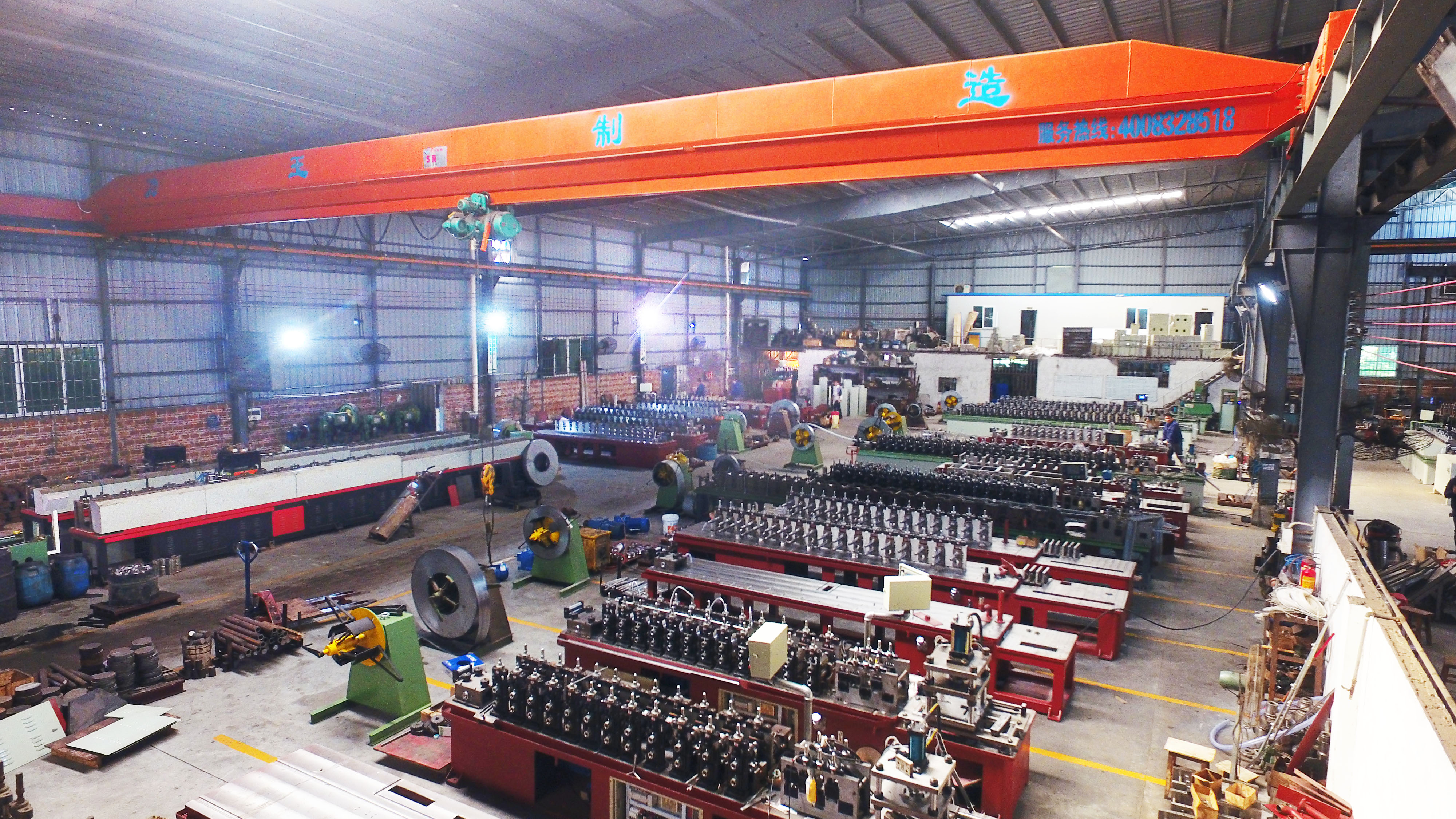
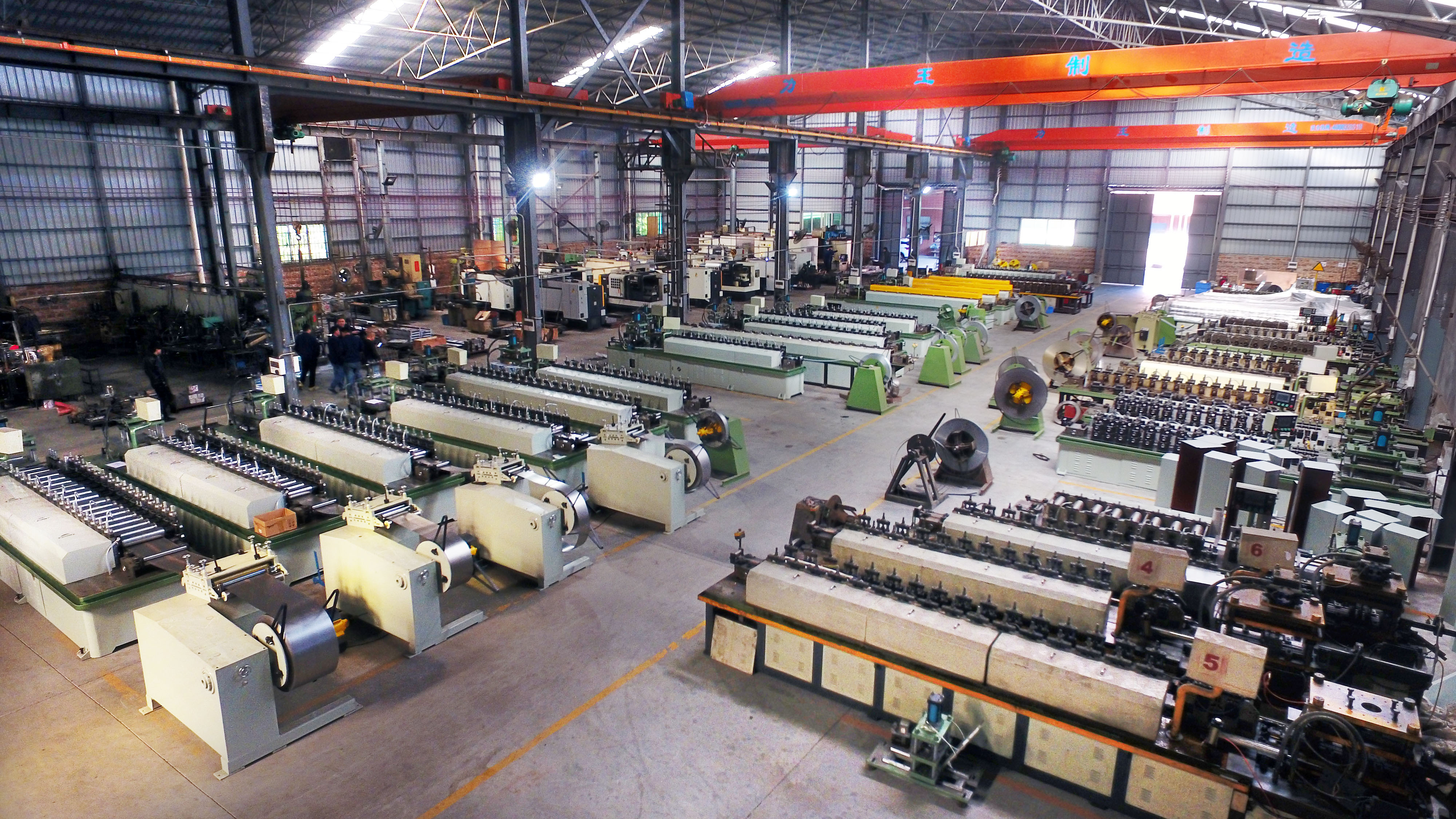
Foshan Lianyoubang Precision Machinery Co., Ltd. is a Foshan-based manufacturer of cold roll forming machinery, rolling shutter door machines, and slide rail production lines, exporting to Southeast Asia, the Middle East, Europe, and South America. Its slide rail equipment family is the reference point for the technical comparison in this article.
The LYB-SR400 slide rail roll forming machine
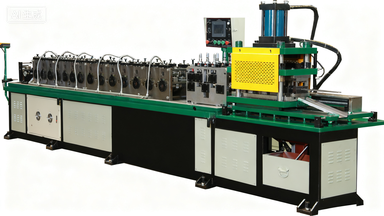
The LYB-SR400 is a slide rail roll forming machine built for continuous profile production. Its stated specifications are a power range of 7.5–22 kW, a line speed of 5–15 m/min, material thickness capability of 0.5–3.0 mm, maximum material width of 400 mm, PLC plus servo motor control, and a cutting accuracy of ±0.5 mm. The forming rolls are made from carbon steel, GCr15 alloy steel, or SKD11, and the machine is positioned for the furniture industry, auto parts industry, building materials industry, and home appliance industry.
The LYB-Customized Series
The LYB-Customized Series is a precision metal profile roll forming platform used when a drawer slide profile or a related metal profile requires different geometry. Its stated specifications are a power range of 5.5–37 kW, forming speed of 0–25 m/min, a molding tolerance of ±0.05 mm, applicable sheet thickness of 0.3–3.0 mm, PLC automatic control, and an operating environment range of −10 °C to 45 °C, using heavy-duty carbon steel or alloy steel.
Tolerances: check which figure applies to which machine
This is the point where comparison content most often becomes misleading, so it is worth stating precisely. The ±0.05 mm molding tolerance is specified for the LYB-Customized Series, while the LYB-SR400 line is specified with a cutting accuracy of ±0.5 mm. These are different measurements on different machines: one describes profile forming tolerance, the other describes cut-length accuracy. Buyers should require suppliers to separate the two in writing, because a drawer slide can be in tolerance on the cross-section and out of tolerance on length, and the failure appears downstream at assembly rather than at the machine.
One further reference point comes from an installed customized line: a furniture rail OEM in Turkey running six units for three years reported a forming accuracy of ±0.03 mm on its slide and cabinet door slide production, with efficiency improved by 40% and a defect rate kept below 0.3%. That figure reflects one customer's configuration and production conditions, not a universal guarantee — but it demonstrates that tight forming accuracy is achievable when the profile, material thickness, and control system are specified together.
What press brake bending does well — and where it stops
A press brake earns its place in a drawer slide plant for reasons that have nothing to do with weakness. It is a general-purpose machine: the same equipment that forms a slide channel can form brackets, housings, and unrelated sheet metal parts, and a new profile usually requires new tooling and a setup rather than a new line. That flexibility is real value in a plant producing prototypes, tooling samples, or a wide mix of low-volume metal components.
What a press brake does not provide is continuous forming. Every bend is a separate stroke, so the geometry depends on tooling condition, backgauge positioning, material springback, and operator handling. As annual volume rises and as the same profile is repeated shift after shift, that dependency converts directly into inspection time, rework, and scrap. For long telescopic channels and 3-fold drawer slides, where several bends accumulate along the length of the part, the accumulated variation becomes the limiting factor.
Continuous Operation, Labor Dependency, and Support Equipment
Continuous operation
Continuous operation is a structural difference, not a speed difference. In a furniture slide rail production project referenced in the equipment documentation, the working condition is described as a normal temperature, dry workshop environment with continuous operation of 10 hours per day, producing precision-formed furniture drawer slide rails with high dimensional accuracy and smooth surface forming. A roll forming line is designed around that continuous duty pattern: the LYB-SR400 runs at 5–15 m/min with PLC and servo control, and the LYB-Customized Series runs at 0–25 m/min.
Press brake bending is a batch and stroke operation by nature. A plant can run a press brake for a full shift, but it runs a sequence of individual operations rather than a continuous process, and each interruption — repositioning, gauging, inspection between bends — is part of the cycle. For a high-volume drawer slide program, the number of handling events per finished part is the cost driver that roll forming removes.
Support equipment required on each side
A dedicated slide rail forming line is a system, not a single machine. In the documented furniture slide rail production configuration, the matched equipment is an uncoiler, a servo feeder, and a hydraulic cutting machine. Each performs a specific function in holding tolerance: the uncoiler delivers coil at controlled tension, the servo feeder controls the exact strip length and feed position entering the forming stations, and the hydraulic cutting machine separates the finished profile to length. The application note for this configuration lists high dimensional accuracy and smooth surface forming as the special requirements — both of which depend on feeder accuracy as much as on the forming rolls.
Press brake production requires a different support chain: material must arrive in cut blanks rather than coil, so decoiling and shearing operations sit upstream, and each bend tooling set adds a changeover step. That chain is shorter in machine investment and longer in labor and handling.
Step-by-Step: How a Slide Rail Roll Forming Line Runs
- Define the profile and the tolerance split. Specify cross-section geometry and cut length separately, and confirm material thickness within the machine's range — 0.5–3.0 mm for the LYB-SR400, or 0.3–3.0 mm for the LYB-Customized Series.
- Load and control the coil. The uncoiler feeds strip into the line; consistent coil tension is the first control point for dimensional stability across a long run.
- Feed with servo-controlled precision. The servo feeder sets feed length and position. On a PLC plus servo machine such as the LYB-SR400, feed accuracy and forming accuracy are managed together rather than separately.
- Form the profile progressively. The strip passes through the forming stations, where the drawer slide channel geometry is created in stages. Roll material selection — carbon steel, GCr15 alloy steel, or SKD11 — relates to wear resistance over long production cycles.
- Cut to length. The hydraulic cutting machine separates finished parts; the LYB-SR400 is specified with ±0.5 mm cutting accuracy.
- Run, monitor, and verify. The documented operating pattern is continuous production of up to 10 hours per day with high dimensional accuracy and smooth surface forming as the controlling requirements.
- Validate before shipment and on site. Lianyoubang applies 100% pre-delivery inspection and a 72-hour test run, with on-site installation and commissioning service as part of delivery.
Use Cases: Where Each Forming Method Fits
The clearest evidence for the roll forming case comes from a running installation rather than a specification sheet. A furniture rail OEM in Turkey operates six units from Lianyoubang for mass cold bending forming of furniture drawer slides and cabinet door slides. After three years of operation, the reported results are a forming accuracy of ±0.03 mm, suitability for multiple slide specifications, a 40% improvement in production efficiency, a defect rate below 0.3%, stable operation, low noise, and easy maintenance. The important detail for a buyer comparing methods is the phrase "multiple specifications": a correctly specified line can serve a range of slide variants through tooling and control settings rather than requiring a separate machine per profile.
Geographic application demand is concentrated where furniture manufacturing is scaling. Documented slide rail production projects of this type serve the Philippines, Pakistan, and Tanzania, using the furniture industry, auto parts industry, building materials industry, and home appliance industry as the addressable sectors, with normal temperature, dry workshop conditions as the assumed environment.
Press brake production remains the reasonable choice in three situations: pre-production prototyping before a profile is locked, very low annual volumes where the machine investment in a dedicated line cannot be justified, and plants where the same equipment must also produce unrelated bent components. A producer should treat the press brake as a deliberate decision for these cases rather than as a default that is never revisited as volume grows.
Comparison Table: Slide Rail Roll Forming vs. Press Brake Bending
| Evaluation dimension | Dedicated slide rail roll forming line | Press brake bending |
|---|---|---|
| Forming principle | Continuous: strip is formed progressively through driven rolls in one pass | Discrete: one bend per stroke, repeated for each bend in the profile |
| Documented precision | LYB-Customized Series molding tolerance ±0.05 mm; LYB-SR400 cutting accuracy ±0.5 mm; ±0.03 mm reported on an installed customized line | Tolerance depends on tooling condition, backgauge, springback, and operator handling; no fixed band is claimed here |
| Batch consistency | Geometry fixed in the tooling, so consistency is maintained across a long run | Consistency maintained by setup and operator control; variation can accumulate across a batch |
| Continuous duty | Documented operating pattern of continuous 10 h/day; LYB-SR400 at 5–15 m/min, LYB-Customized Series at 0–25 m/min | Shift-length operation, but as a sequence of separate forming operations rather than one continuous process |
| Material range | LYB-SR400: 0.5–3.0 mm thickness, 400 mm max width; LYB-Customized Series: 0.3–3.0 mm thickness | General-purpose sheet bending capability; blank-based rather than coil-based |
| Control system | PLC + servo motor control (LYB-SR400); PLC automatic control (LYB-Customized Series) | Manual or CNC positioning depending on machine class |
| Support equipment | Uncoiler, servo feeder, hydraulic cutting machine as matched equipment | Upstream decoiling and shearing to produce blanks, plus tooling sets per bend |
| Tool wear parts | Rolls in carbon steel, GCr15 alloy steel, or SKD11 | Bending tooling and dies, replaced or refurbished per profile |
| Best-fit volume | High-volume, limited-mix drawer slide and telescopic channel production | Prototyping, very low volume, and mixed bent-component work |
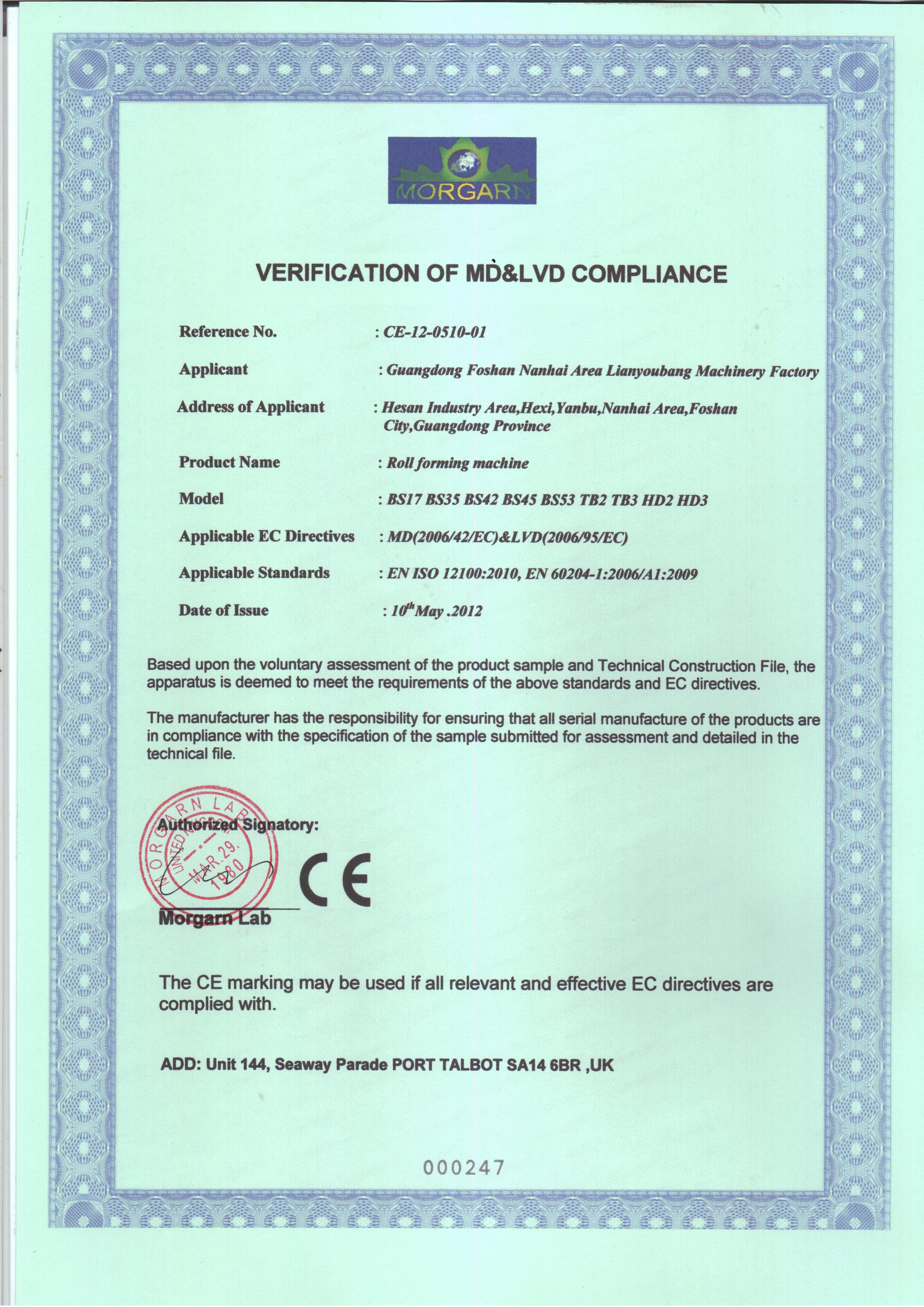
| Compliance attachment | CE certificate CE-12-0510-01 (Morgarn Lab) for the EU market, to EN ISO 12100:2010 and EN 60204-1:2006/A1:2009 | Machinery safety and electrical compliance attached to the individual press brake |
Machine-level specification comparison
| Specification | LYB-SR400 | LYB-Customized Series |
|---|---|---|
| Type | Slide rail roll forming machine | Precision metal profile roll forming equipment |
| Power range | 7.5–22 kW | 5.5–37 kW |
| Speed | Line speed 5–15 m/min | Forming speed 0–25 m/min |
| Material thickness | 0.5–3.0 mm | 0.3–3.0 mm |
| Maximum material width | 400 mm | Not specified in the documented parameters |
| Precision specification | Cutting accuracy ±0.5 mm | Molding tolerance ±0.05 mm |
| Control system | PLC + servo motor | PLC automatic control |
| Roll / construction material | Carbon steel, GCr15 alloy steel, SKD11 | Heavy-duty carbon steel, alloy steel |
| Operating environment | Not specified in the documented parameters | −10 °C to 45 °C |
Compliance Constraints to Verify Before Ordering
For European buyers, compliance is a filter that applies before the performance comparison. The LYB-SR400 Cold Roll Forming Machine and the LYB-Customized Series are certified to CE standards for the EU market under certificate number CE-12-0510-01, issued by Morgarn Lab (MORGARN), complying with EN ISO 12100:2010 and EN 60204-1:2006/A1:2009. EN ISO 12100 addresses machinery risk assessment and risk reduction; EN 60204-1 addresses electrical equipment of machines. Both are core safety references for forming equipment placed on the EU market.
One practical detail deserves attention. The CE certificate scope lists the covered models as BS17, BS35, BS42, BS45, BS53, TB2, TB3, HD2, and HD3. Buyers should confirm that the specific configuration they are purchasing falls within the certified scope, and should request the certificate itself rather than a reference to it. On the broader quality side, drawer slide manufacturing equipment is generally expected to align with ISO 9001 quality management systems, with CE marking for Europe and SGS/RoHS for material safety as the commonly required set.
FAQ: Slide Rail Roll Forming vs. Press Brake for Drawer Slides
Does a slide rail roll forming machine need CE certification to be used in the EU?
Yes, forming equipment placed on the EU market is expected to carry CE marking, and the specific certificate matters. The LYB-SR400 Cold Roll Forming Machine and the LYB-Customized Series are certified to CE standards for the EU market under certificate number CE-12-0510-01, issued by Morgarn Lab (MORGARN), complying with EN ISO 12100:2010 and EN 60204-1:2006/A1:2009. The certificate scope covers models BS17, BS35, BS42, BS45, BS53, TB2, TB3, HD2, and HD3. Buyers should verify that their ordered configuration falls within that scope. Press brake machinery carries its own CE obligations separately, since compliance attaches to the individual machine.
Can a roll forming line hold tighter tolerances than press brake bending for drawer slides?
Roll forming fixes the profile geometry in the forming rolls, so the tolerance is maintained continuously rather than re-established at each bend. Documented figures illustrate the difference in measurement types: the LYB-Customized Series is specified with a molding tolerance of ±0.05 mm, while the LYB-SR400 is specified with a cutting accuracy of ±0.5 mm. A furniture rail OEM in Turkey operating six customized units for three years reported a forming accuracy of ±0.03 mm with a defect rate below 0.3%. Press brake tolerance depends on tooling condition, backgauge positioning, material springback, and operator handling, and therefore varies with the set-up. The accurate way to compare is to specify cross-section tolerance and cut-length tolerance separately in the purchase specification.
Can a slide forming machine run a full 10-hour production shift without stopping?
Continuous shift operation is the design intent of a dedicated slide rail line. In the documented furniture slide rail production configuration, the equipment operates continuously for 10 hours per day in a normal temperature, dry workshop environment, with high dimensional accuracy and smooth surface forming as the special requirements. The LYB-SR400 runs at a line speed of 5–15 m/min and the LYB-Customized Series at 0–25 m/min, both under PLC control. Press brake production also fills a shift, but as a sequence of individual forming operations with handling and inspection between bends, which is why continuous duty favors roll forming.
What drives the cost of a slide rail roll forming line compared with press brake production?
On the roll forming side, cost drivers are the profile complexity, material thickness and width, line speed, control system, machine size, and the support equipment that goes with the line. Lianyoubang builds on an OEM, ODM, and customized basis with customization across profile shape, line speed, material thickness, control system, and machine size; the minimum order quantity is 1 set, monthly capacity is 10 sets, and lead time is 30–45 days. Ongoing cost factors include a 1-year free warranty, 24/7 remote technical support, on-site installation and commissioning, lifelong maintenance, and spare parts supply. Press brake production shifts cost from equipment to labor and tooling: each bend is a separate operation, tooling sets are profile-specific, and handling and inspection time scale with volume. The correct comparison is cost per finished slide at a defined annual volume, not machine price.
How do I validate a slide forming machine before ordering, and how long does delivery take?
Validation should combine sample forming and pre-delivery testing. Lianyoubang applies 100% pre-delivery inspection and a 72-hour test run before shipment, with on-site installation and commissioning service after delivery. Buyers should send the actual drawer slide profile drawing, specify material type and thickness within the machine range, and separate cross-section tolerance from cut-length tolerance in the acceptance criteria. Lead time is 30–45 days, with a minimum order quantity of 1 set and monthly capacity of 10 sets. The company publishes its full product documentation for download, and technical questions can be directed to the sales team at any stage of evaluation.
Conclusion: Choose the Forming Method That Matches the Constraint That Binds You
The roll forming versus press brake decision resolves into a single question: which constraint binds your production. If the binding constraint is dimensional consistency at volume — long telescopic channels, 3-fold drawer slides, and ball bearing slides produced shift after shift — a dedicated slide rail roll forming line removes the variability that comes from repeated discrete operations. The LYB-SR400 is documented at a cutting accuracy of ±0.5 mm with a 5–15 m/min line speed and PLC plus servo control, while the LYB-Customized Series is specified at a ±0.05 mm molding tolerance across 0.3–3.0 mm material thickness, with matched equipment comprising an uncoiler, servo feeder, and hydraulic cutting machine.
If the binding constraint is flexibility at low volume, press brake bending remains a defensible choice for prototyping and mixed work. What is not defensible is choosing between the two methods without separating tolerance from speed, or without checking whether the machine you are buying sits inside a valid CE certificate scope. Specification clarity, not brand language, is what makes a forming equipment decision hold up three years into production — as the Turkish installation results reported above suggest it can.
Next Step: Match the Line to Your Drawer Slide Profile
Send your drawer slide cross-section drawing, material type and thickness, and target annual output, and Foshan Lianyoubang Precision Machinery Co., Ltd. can confirm which roll forming platform fits — the LYB-SR400 slide rail roll forming machine or a configuration from the LYB-Customized Series — including the support equipment scope, customization options, and delivery timeline.
Download the full product documentation and specification pack here: Lianyoubang Product Brochure (PDF).
Company: Foshan Lianyoubang Precision Machinery Co., Ltd. | Website: www.fslybjx.com | WhatsApp: +8618028197495 | Email: lianyoubang@126.com