
Supplier Evaluation Checklist: Verifying Slide Rail Forming Machine Delivery Capability
Verifying a slide rail forming machine maker's delivery capability means testing four things before you sign: whether the factory can build your configuration inside its stated window, whether the machine is proven against acceptance criteria before it leaves the plant, whether installation and support are actually resourced, and whether the stated monthly capacity survives contact with your order size. Each of those is checkable. None of them should be accepted as a verbal assurance.
This checklist turns delivery capability into a set of requests a buyer can make in writing, and a set of answers that can be compared between suppliers. Foshan Lianyoubang Precision Machinery Co., Ltd. (LYB), a slide rail machinery manufacturer based in Foshan, Guangdong Province, China, is used throughout as a worked example, because a concrete set of company-reported figures is easier to interrogate than a generic list of adjectives. Every LYB-specific number quoted below is company-reported and should be re-confirmed during your own audit or factory acceptance test.
The checklist at a glance:
- Capacity arithmetic — stated monthly and annual output against your order size and delivery date.
- Order flexibility — minimum order quantity and the exact boundaries of customization.
- Lead time definition — the stated range and, critically, the event that starts the clock.
- Inspection coverage — how much of the machine is inspected, and against what list.
- Test-run evidence — duration, conditions, recorded parameters, and who signs off.
- Documentation pack — drawings, parameter sheets, test records, and export documents.
- Installation and support resourcing — who travels, who answers at 02:00, what is covered.
- Export track record — where the machines actually went, and what share of output is exported.
Why Delivery Capability Is the Hardest Supplier Claim to Verify
Delivery capability is the claim buyers scrutinize least and lose the most on. A supplier's technical specification is at least a set of numbers that can be compared. Delivery capability is usually communicated as an impression: a busy workshop photograph, a sentence about strong production capacity, a promise of fast delivery. None of it is falsifiable, which is exactly why it is repeated so often.
The commercial exposure is asymmetric. A machine that arrives with a dimensional problem can be corrected. A production slot that was overbooked, a test run that was shortened to make a shipment date, or an installation engineer who is unavailable for six weeks after arrival creates a delay that no warranty clause recovers, because the buyer's own line, staffing plan, and customer commitments are already in motion.
For a slide rail forming machine specifically, the risk is amplified by how narrowly defined each machine is. Drawer slide profiles, telescopic channel sections, ball-bearing slide bodies, and heavy-duty rails are different forming problems, and a factory that delivers one configuration reliably is not automatically able to deliver another on the same schedule. Delivery capability therefore has to be verified configuration by configuration, not company by company.
Industry Background: What a Slide Rail Forming Machine Order Actually Involves
Slide rail forming sits inside the wider roll forming equipment market, which Coherent Market Insights estimated at USD 10.09 billion globally in 2026, with automatic roll forming machines expected to hold a 46.8% share of that market in the same year. Those figures describe the category, not the delivery behaviour of any individual supplier, but they explain why buyers increasingly evaluate suppliers on schedule and integration rather than on the presence of a machine at all.
The second background fact that matters for evaluation is scope ambiguity. A supplier describing a drawer-slide roll forming system may be describing a forming machine, or a line. GZ Roll-forming, for example, describes a drawer-slide roll forming line consisting of material loading, roll forming, hydraulic punching, and cutting, with production parameters and output set on a touch screen, listed for 0.8–3 mm cold- or hot-rolled, galvanized, and stainless-steel strip across 10–20 forming passes at 6–15 m/min. Those are that supplier's reported figures for that supplier's configuration; the point for a buyer is that "slide forming machine" can mean anything from a single forming station to an integrated line with decoiling, punching, cutting, and control. Delivery capability must be verified against the scope you are actually buying.
The third background fact is application breadth. Chin Minn Industries lists drawer-slide roll forming equipment for standard, heavy-duty, multiple-stand hole-punch, two-fold ball-bearing, full-extension telescopic channel, drawer runner, steel ball, server rack, and hidden-slide applications. Dreistern identifies roll forming applications for pull-outs used in drawers, tables, sliding doors, ovens, and dishwashers. Each of those end uses imposes different profile geometry, different hole patterns, and different surface requirements, which means the factory's experience on one of them says little about its ability on another.
Finally, documentation context. Telescopic ball bearing drawer slides fall under mandatory BIS certification per IS 17954 in India, and numerically controlled roll forming machines are classified under HS code 8462.25.00 for trade purposes. Neither of these is a machine-delivery fact, but both surface during delivery: a missing conformity document or a mis-declared customs classification stops a shipment more completely than a late production date does.
The Eight-Point Delivery Capability Checklist
The following eight checks are ordered by the sequence in which a buyer normally encounters them, from initial capacity discussion to post-installation support. Each one is stated as a request, a verifiable answer, and — where LYB data is available — the corresponding company-reported position.
1. Capacity arithmetic: does the stated monthly output survive your order size?
Ask for: monthly output in sets, annual output, factory floor area, headcount, and the size of the technical team responsible for build and commissioning. Then ask where your order would sit in the current production schedule.
What a verifiable answer looks like: numbers that are internally consistent. A factory claiming a short lead time and a large monthly capacity should also be able to explain how many machines can be worked on simultaneously given its floor area and assembly headcount.
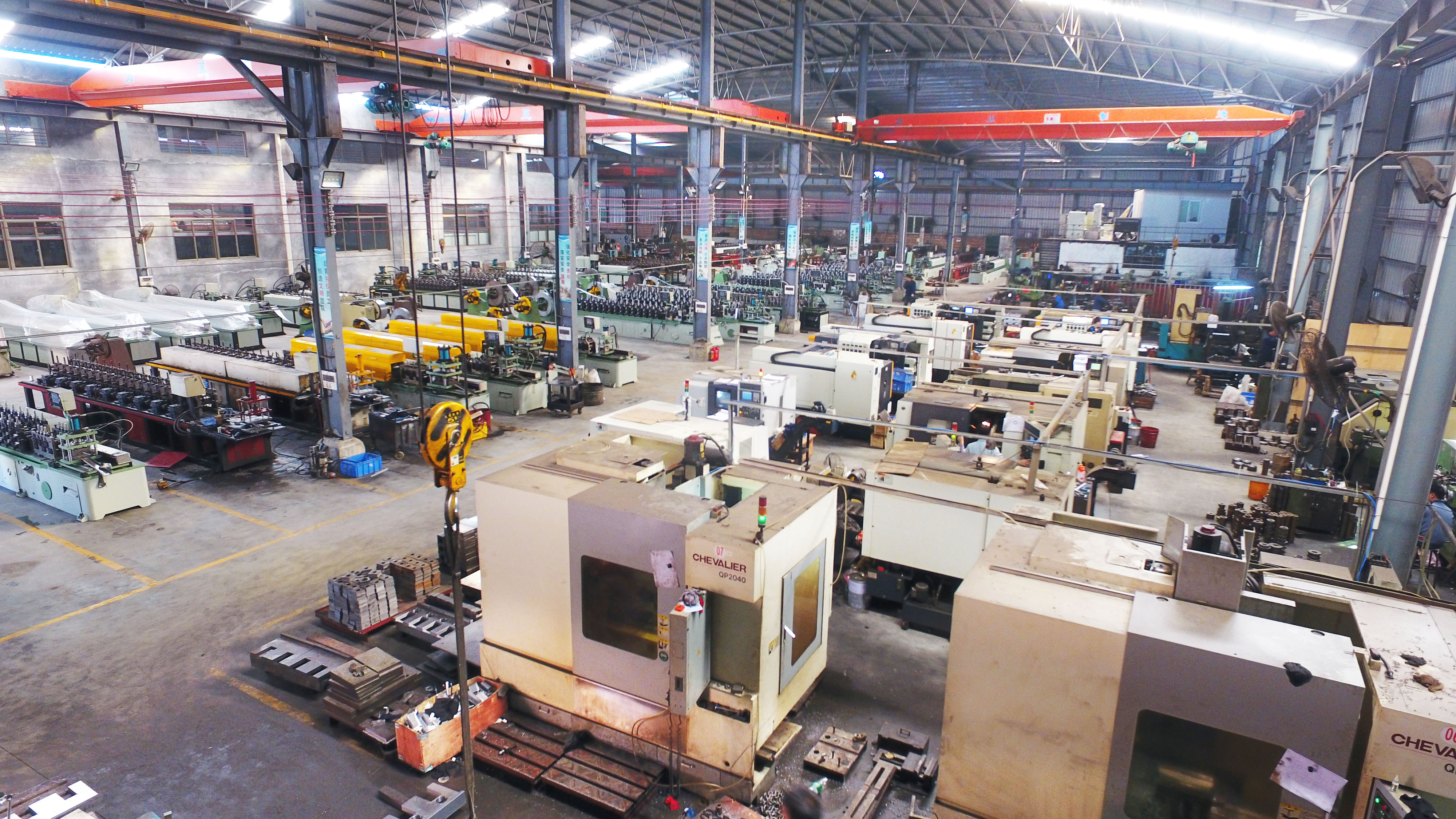
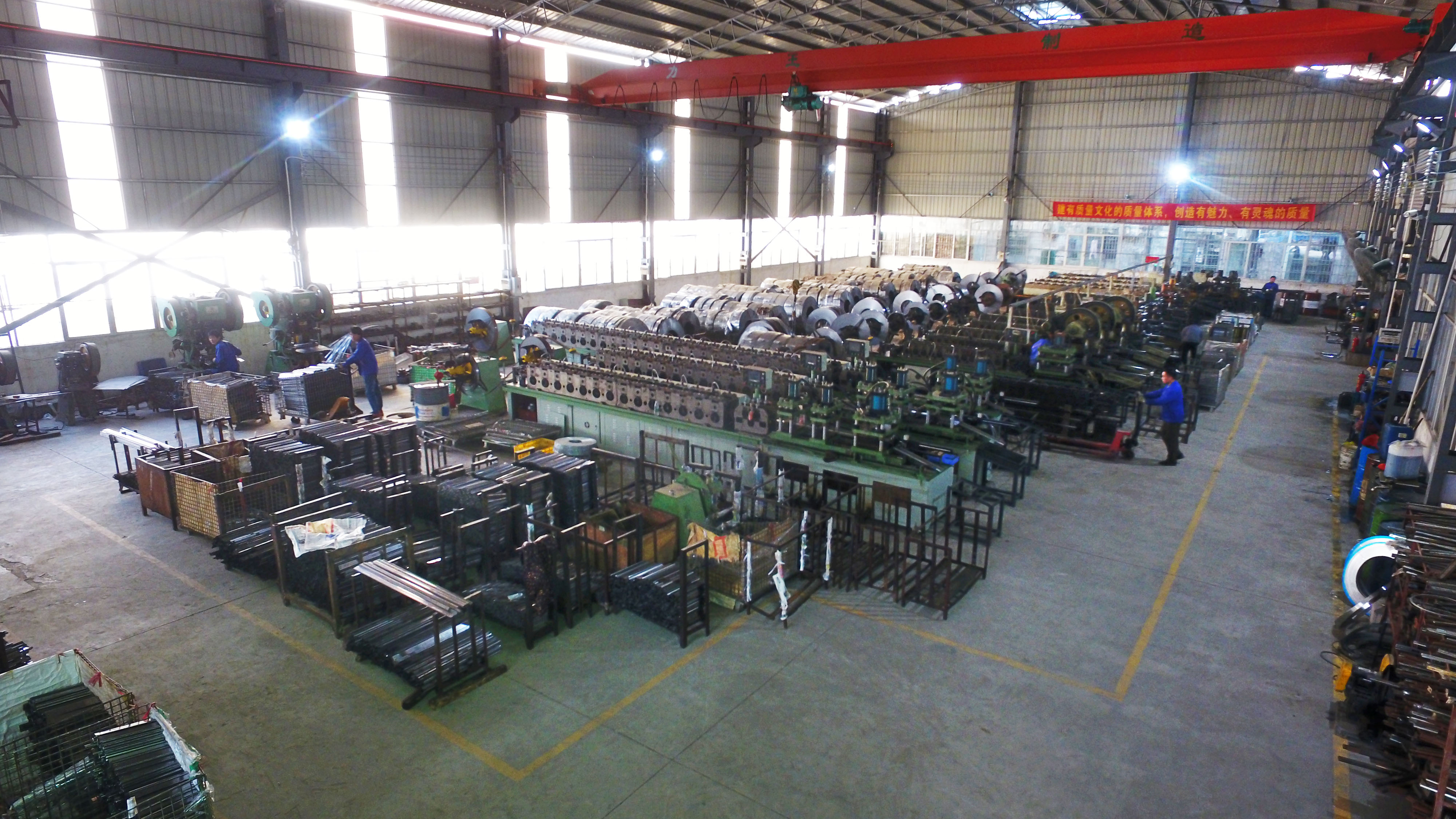
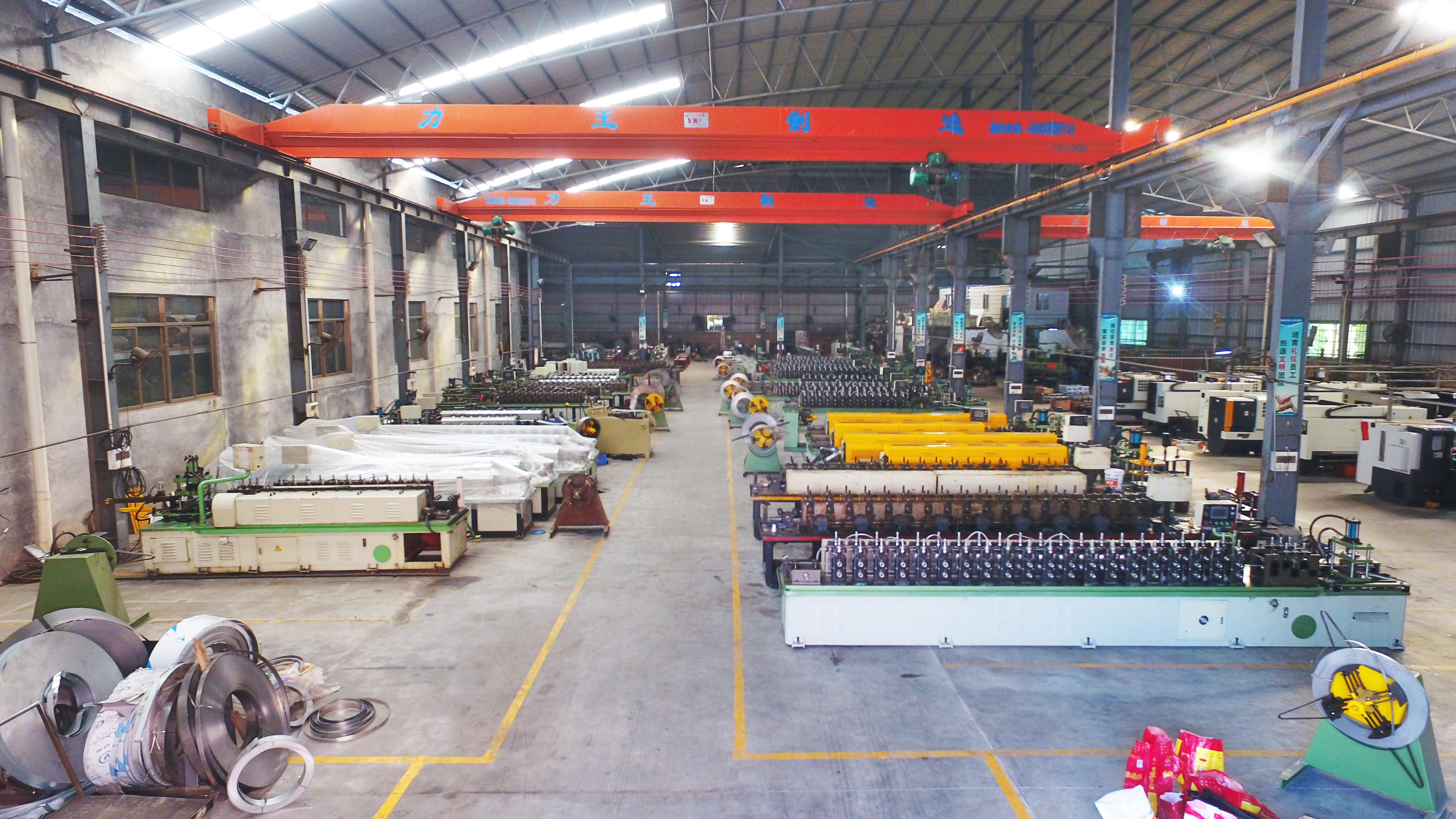
LYB position (company-reported): monthly capacity of 10 sets, annual output of approximately 120 units, a 10,000 m² factory, 30 employees, and a technical team of 15+ including 5 senior engineers. The practical reading for a buyer placing six units is that the order represents a meaningful share of a single month's output and should be scheduled explicitly rather than assumed.
2. Order flexibility: what is the real minimum order quantity, and where does customization stop?
Ask for: the minimum order quantity in writing, and a written list of what can be customized versus what is fixed by the base platform.
What a verifiable answer looks like: a customization list that names parameters rather than adjectives. "Customized" without a parameter list usually means the buyer's drawing is being fitted to an existing design late in the process, which is where schedule slippage originates.
LYB position (company-reported): minimum order quantity of 1 set, with customization covering profile shape, line speed, material thickness, control system, and machine size. A single-set minimum is relevant to buyers validating a new profile before committing to volume, but it does not remove the need to confirm the schedule impact of a one-off build.
3. Lead time: 30–45 days from which event?
Ask for: the lead time range, and a written definition of its start point. Common start points include deposit receipt, drawing approval, and material procurement — and they can differ by weeks.
What a verifiable answer looks like: a stated range plus a named trigger plus a delivery term. A range without a trigger is not a commitment.
LYB position (company-reported): production lead time of 30–45 days. The width of that range reflects configuration differences, which is why the profile drawing and control specification should be frozen before the clock starts.
4. Inspection coverage: is it 100%, and against which list?
Ask for: the inspection coverage claim and, more importantly, the inspection record template. A percentage without a checklist is a slogan.
What a verifiable answer looks like: an inspection sheet that names the items checked — forming profile dimensions, cutting length accuracy, hole positions, electrical function, guarding, and running behaviour — with a signature and a date for each unit.
LYB position (company-reported): 100% pre-delivery inspection on every machine. For the LYB-SR400 configuration, the published cutting accuracy figure is ±0.5 mm, and for the LYB-Customized Series the published molding tolerance is ±0.05 mm; both are the kind of values an inspection record should reference directly rather than round off.
5. Test-run evidence: what does a 72-hour run actually prove?
Ask for: the run duration, the material used, the profile formed, the speed sustained, the parameters logged, and whether you may observe remotely or receive time-stamped video.
What a verifiable answer looks like: a run that uses production-representative material and records the parameters that matter for your acceptance criteria. A short run on demonstration strip proves the machine starts; a sustained run proves it holds dimensions.
LYB position (company-reported): a 72-hour test run as part of pre-delivery quality control. In a furniture drawer slide application the relevant reference condition is continuous operation of roughly 10 hours per day with high dimensional accuracy and smooth surface forming, so a test run should be discussed in those terms rather than as a stand-alone event.
6. Documentation pack: what travels with the machine?
Ask for: the full document list before shipment — general arrangement and foundation drawings, electrical diagrams, PLC and servo parameter lists, the inspection record, the test-run log, the warranty statement, the spare parts list, and the export documentation including the customs classification used.
What a verifiable answer looks like: a numbered packing list where document items appear alongside mechanical items, so that a missing file is visible at handover rather than during installation.
7. Installation and support resourcing: who is actually available?
Ask for: whether installation and commissioning are performed on site or remotely, the typical duration, the response channel for urgent issues, the warranty term and what it covers, and how spare parts are supplied after the warranty ends.
What a verifiable answer looks like: named responsibilities rather than general availability. The question is not whether support exists, but who answers and how quickly when a servo feeder faults during a production week.
LYB position (company-reported): on-site installation and commissioning service, 24/7 remote technical support, a 1-year free warranty, lifelong maintenance, and spare parts supply.
8. Export track record: has this delivery path been walked before?
Ask for: the export share of output, the destination markets, and — for your region specifically — the packing method, the shipping terms used, and whether any documentation requirement applies to your market.
What a verifiable answer looks like: destinations that match your own, and a packing description that reflects the machine's actual dimensions and weight rather than a generic statement.
LYB position (company-reported): a 30% export share, with export markets including Southeast Asia, Middle East, Europe, and South America, and main markets identified as Southeast Asia, the Middle East, and the domestic Chinese market.
Step-by-Step: Running the Verification in Five Steps
Step 1 — Freeze the scope before you ask about capacity
Write down the profile, material grade and thickness, strip width, hole pattern, required cutting accuracy, control platform, and whether you are buying a forming machine or a full line including decoiler, servo feeder, punching, and cutting. A supplier cannot give a meaningful lead time for an undefined scope, and buyers who skip this step end up comparing quotations for different machines.
Step 2 — Request the capacity arithmetic in numbers
Ask for monthly sets, annual units, factory area, assembly headcount, and technical team size, and ask how many of those monthly sets are already committed. Convert the answers into a simple check: does your order fit inside one month, or does it span two? A supplier stating 10 sets per month who receives a six-unit order should be able to explain the schedule in weeks, not reassurances.
Step 3 — Ask for records, not descriptions
Request one redacted inspection sheet and one test-run log from a comparable configuration. Two documents will tell you more about a factory's process discipline than any facility description: whether the inspection items are specific to slide forming, and whether the run log records actual measured values or only a completion date.
Step 4 — Verify installation and support logistics against your calendar
Confirm who travels for commissioning, how long the visit lasts, what happens if a second visit is needed, and which channel handles urgent technical issues. Map the warranty term and spare parts arrangement onto your own maintenance plan, especially if the machine will run continuously for around 10 hours a day.
Step 5 — Put acceptance criteria and remedies into the contract
Define the acceptance test in the purchase agreement: material used, profile, speed sustained, dimensional tolerances measured and how, duration, and the consequence if a criterion is missed. State when the lead-time clock starts, and tie the final payment to acceptance rather than to shipment. This single clause does more for delivery reliability than any additional supplier reference.
Use Cases: Where Delivery Capability Gets Tested
Furniture drawer slide production, continuous operation
A typical furniture slide rail project runs in a normal-temperature, dry workshop in continuous mode of about 10 hours per day, with high dimensional accuracy and smooth surface forming as the stated requirements, and matched equipment covering an uncoiler, servo feeder, and hydraulic cutting machine. Project references in company material include the Philippines, Pakistan, and Tanzania. For this profile, the verification focus is dimensional stability across a full shift, which makes the test-run duration and the inspection record the two decisive documents.
Multi-specification OEM supply — Türkiye
A furniture rail OEM in Türkiye operates six units purchased for mass cold bending of furniture drawer slides and cabinet door slides, with a reported three-year operating period, forming accuracy of ±0.03 mm, a 40% improvement in production efficiency, a defect rate below 0.3%, and stable operation with low noise and straightforward maintenance. This is company-reported case data, and it is best used as a question set rather than a proof: ask a prospective supplier how they would achieve ±0.03 mm on your profile, which parameters they would log during the test run, and what their remedy is if the first article falls outside tolerance.
Appliance and telescopic channel producers
Suppliers in this category describe equipment for dishwasher pull-outs, oven pull-outs, sliding-door runners, and full-extension telescopic channels. Where the end product is a telescopic ball bearing drawer slide destined for India, the BIS certification requirement under IS 17954 applies to the slide itself, so the machine's delivery documentation and the downstream product certification should be planned together rather than sequentially.
Comparison Tables
The first table compares evidence quality rather than suppliers, because delivery capability is only as reliable as the evidence behind it. The second table lists the published specifications of two LYB configurations, so that buyers can see how much the machine parameters — and therefore the build scope — can differ between configurations from the same manufacturer.
| Verification item | Evidence that is easy to produce | Evidence that is hard to fake | Why it matters |
|---|---|---|---|
| Monthly capacity | A stated figure in a quotation | Capacity figure reconciled with factory area, assembly headcount, and current order commitments | Reveals whether your order fits one production month or spans two |
| Lead time | A date range | A range plus a written start trigger and delivery term | Prevents disputes about when production actually began |
| Inspection | A coverage percentage | A redacted inspection sheet listing profile dimensions, hole positions, cut length, and electrical checks | Shows whether inspection is profile-specific or generic |
| Test run | A statement that testing is performed | A run log with material, speed, duration, and measured values | Separates a machine that starts from a machine that holds tolerance |
| Support | A promise of after-sales service | Named response channel, warranty term, spare parts list, and installation scope | Determines downtime length after commissioning |
| Export experience | A list of regions served | Export share of output plus packing specification and documentation practice | Indicates whether the delivery path has been walked before |
| Parameter | LYB-SR400 | LYB-Customized Series |
|---|---|---|
| Type | Slide rail roll forming machine | Precision metal profile roll forming equipment |
| Power range | 7.5–22 kW | 5.5–37 kW |
| Line / forming speed | 5–15 m/min | 0–25 m/min |
| Material thickness | 0.5–3.0 mm | 0.3–3.0 mm |
| Maximum material width | 400 mm | Not stated in the published specification |
| Control system | PLC + servo motor | PLC automatic control |
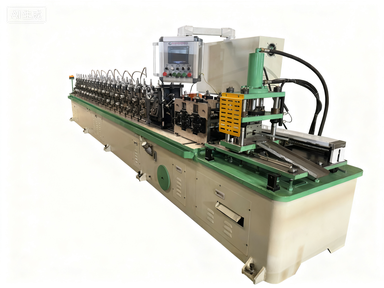
| Accuracy figure | Cutting accuracy ±0.5 mm | Molding tolerance ±0.05 mm |
| Stated material | Carbon steel / GCr15 alloy steel / SKD11 | Heavy-duty carbon steel / alloy steel |
Two cautions apply to the second table. First, the accuracy figures describe different measurements — cutting accuracy and molding tolerance are not the same quantity and should not be compared as if they were. Second, published values across different suppliers are frequently reported under different test conditions; the roll forming comparison data reviewed for this guide explicitly notes that speed, thickness, tolerance, and width ranges are not suitable for ranking or aggregation without normalizing profile, steel grade, strip width, thickness, punching scope, and the definition of line speed. Use published specifications to prepare your RFQ and acceptance criteria, not to rank suppliers.
Frequently Asked Questions
What compliance documents should I request from a slide rail forming machine supplier?
The documents depend on your destination market, so the request should be made before ordering rather than at shipment. For the machinery itself, ask the supplier which customs classification they use — numerically controlled roll forming machines are classified under HS code 8462.25.00 — and request the corresponding export documentation. For the product being made, check downstream requirements separately: telescopic ball bearing drawer slides are under mandatory BIS certification per IS 17954 in India. Ask for the document list in writing and confirm which items the supplier issues and which your importer must arrange.
Can a manufacturer with a monthly capacity of 10 sets handle my order on schedule?
It depends on your order size relative to that capacity and on what is already committed. A stated capacity of 10 sets per month means a six-unit order consumes the majority of one production month, so the schedule should be confirmed in weeks rather than assumed. Ask the supplier to reconcile the monthly figure with factory area, assembly headcount, and technical team size — for reference, LYB reports a 10,000 m² factory, 30 employees, a 15+ technical team including 5 senior engineers, and annual output of approximately 120 units — and ask where your order sits in the current queue.
What drives the price of a slide rail forming machine, and what is usually excluded from a quotation?
No verified public price data exists for this equipment category, so any figure should come from a written quotation against your specification. Price is driven mainly by scope and configuration: whether you buy a forming machine or a line including decoiler, servo feeder, hydraulic punching, and cutting; the profile complexity and number of forming passes; the power range, which spans 5.5–37 kW across LYB's published configurations; the material thickness range of 0.3–3.0 mm; the control platform; and the tooling. Items commonly excluded include installation and commissioning travel, spare parts beyond the initial set, and inland transport. Ask for an ex-works and a delivered figure separately.
Can I buy a single set before committing to volume production?
With some manufacturers, yes. LYB reports a minimum order quantity of 1 set, which allows a buyer to validate a new profile, a new material grade, or a new control configuration on one machine before scaling. A single-set order should still be scheduled explicitly, because a one-off build with a customized profile consumes engineering time that a repeat order does not, and the 30–45 day lead time applies to it in the same way.
How long does delivery take, and what happens after the machine arrives?
LYB reports a production lead time of 30–45 days, with 100% pre-delivery inspection and a 72-hour test run completed before shipment. After arrival, the reported support scope covers on-site installation and commissioning, 24/7 remote technical support, a 1-year free warranty, lifelong maintenance, and spare parts supply. Buyers should confirm the start point of the lead-time clock, the acceptance criteria for the test run, and the response channel for urgent issues before the order is placed. To discuss a specific profile, request a quotation or a single-set sample through www.fslybjx.com or the contact details below.
Conclusion
Delivery capability is verifiable, but only if it is broken into requests that produce documents. The eight checks in this guide — capacity arithmetic, minimum order quantity, lead-time definition, inspection coverage, test-run evidence, documentation pack, support resourcing, and export track record — cover the points where schedule commitments most often break. None of them requires specialist equipment to check; all of them require asking before the order rather than after.
As a reference point, Foshan Lianyoubang Precision Machinery Co., Ltd. reports the following position across those eight checks: established in 2015, a 10,000 m² factory with 30 employees and a 15+ technical team including 5 senior engineers, monthly capacity of 10 sets and annual output of approximately 120 units, a minimum order quantity of 1 set, a production lead time of 30–45 days, 100% pre-delivery inspection with a 72-hour test run, on-site installation and commissioning, 24/7 remote technical support, a 1-year free warranty with lifelong maintenance and spare parts supply, and a 30% export share across Southeast Asia, the Middle East, Europe, and South America. Those figures are company-reported and are intended to be tested — through a redacted inspection sheet, a test-run log, and a written acceptance clause — not accepted on presentation.
Next Step: Request a Quotation, Sample, or Factory Discussion
Send your slide profile drawing, material grade and thickness, required line speed, and control preference, and LYB will respond with a configuration-specific proposal and a production schedule. A single set can be ordered for validation before volume planning.
Foshan Lianyoubang Precision Machinery Co., Ltd.
Website: www.fslybjx.com | Blog: blog.fslybjx.com
Email: lianyoubang@126.com | Telephone / WeChat: 18028197495 | WhatsApp: +8618028197495
Address: Liangdeng Industrial Zone, Danzao Town, Nanhai District, Foshan City, Guangdong Province, China
Download the full product catalogue: LYB Product Brochure (PDF)
Have Questions or Need More Details?
Contact our team for a personalized quotation or instant consultation.
Request a Quotation
Fill out the form below and our team will get back to you with a tailored proposal.
WhatsApp Direct Chat
Prefer to chat in real-time? Message us on WhatsApp for instant assistance & quick answers.
- Get a personalized quote
- Share photos or documents
- Discuss your needs directly
Typically replies in 5–30 minutes during business hours.