
What Is a Slide Forming Machine? Drawer Slide and Slide Rail Production Basics
What Is a Slide Forming Machine? Drawer Slide and Slide Rail Production Basics
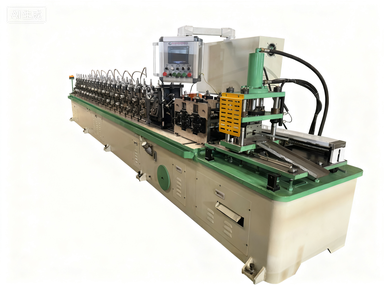
A slide forming machine is a cold roll forming system used to convert metal coil into continuous slide rail, drawer slide, and channel-type profiles. In a typical line, material is fed through an uncoiler, positioned by a servo feeder, gradually formed by roller stations, then cut to length. Market searches often refer to this equipment as a Drawer Slide Roll Forming Machine, Slide Rail Making Machine, or Telescopic Channel Roll Forming Machine because buyers describe the machine by the profile it produces.
This guide explains the basic technology, common catalog configurations, relevant technical parameters, and the first evaluation steps a buyer should take before selecting a slide forming machine for furniture, appliance, or hardware production.
Problem Definition: One Search Term Covers Many Machine Configurations
The phrase Slide Forming Machine is not one standardized product name. It can refer to a general-purpose precision metal profile roll former, a dedicated slide rail line, or a full automated drawer-slide production cell with downstream assembly equipment. A buyer who searches for “slide forming machine” may therefore see different machine sizes, different control systems, and different tooling configurations under the same category.
The practical risk is under-specification. A machine that forms simple lightweight profiles may not be suitable for a continuous drawer slide production line requiring high dimensional accuracy and smooth surface forming. The better starting point is to define the actual job: material thickness, maximum strip width, profile shape, line speed, tolerance, cutting accuracy, and required supporting equipment such as an uncoiler, servo feeder, and hydraulic cutting machine.
Industry Background
Cold roll forming is a well-established process used across the building materials, hardware manufacturing, furniture, home appliance, and auto parts sectors. For drawer slides and rails, cold roll forming is attractive because it creates consistent long profiles with efficient material use and repeatable cross-sections.
The market-size picture for roll forming equipment depends on scope. Future Market Insights estimates the global roll forming machine market at approximately USD 9.1 billion in 2024 and projects USD 12.2 billion by 2034. Intel Market Research, using a narrower scope, estimates the market at USD 487 million in 2024 and projects USD 662 million by 2032. These figures are not necessarily contradictory; they reflect different definitions of the roll forming machinery category. For a slide forming machine buyer, the more relevant trend is the shift toward automated precision equipment. Coherent Market Insights reports that automated roll forming machines are expected to account for 46.8% of the total market share by 2026, driven by high-speed production requirements.
At the country level, China remains an important supplier of metal processing machinery. The Observatory of Economic Complexity reports that China exported approximately USD 2.2 billion of metalworking machine parts in 2025, with major destinations including Japan, Russia, and the United States. China Machine Tool Industry Association data also shows an 8.9% year-on-year increase in operating income for metal-forming machine tools in China from January to October 2024. These figures help explain why many global buyers begin their supplier search in Chinese manufacturing clusters such as Foshan.
Detailed Solution: What a Slide Forming Machine Does
A slide forming machine performs progressive cold forming of metal strip into a slide rail profile. The profile shape is governed by the roller tooling, number of forming stations, strip width, and material properties. After forming, the profile may be cut to length and sent to downstream operations such as beading, assembly, riveting, bending, or testing.
For buyers who want to understand the technology through concrete catalog references, Foshan Lianyoubang Precision Machinery Co., Ltd. provides two useful reference points.
LYB-SR400: A Dedicated Slide Rail Roll Forming Machine
The LYB-SR400 is a cold roll forming machine classified as a Slide Rail Roll Forming Machine. It is intended for slide rail forming scenarios and is documented as suitable for the Home Appliance Industry, Building Materials Industry, Auto Parts Industry, and Furniture Industry.
Published technical parameters for the LYB-SR400 include:
- Power range: 7.5–22 kW
- Line speed: 5–15 m/min
- Material thickness: 0.5–3.0 mm
- Maximum material width: 400 mm
- Control system: PLC + Servo Motor
- Cutting accuracy: ±0.5 mm
- Material specifications: Carbon Steel, GCr15 Alloy Steel, SKD11
This configuration is best understood as a profile-specific forming solution. The inclusion of PLC and servo motor control indicates that the line can be automated for continuous production while maintaining stable feed and cutting behavior.
LYB-Customized Series: A Precision Metal Profile Roll Forming Entry
Foshan Lianyoubang also offers a Cold Roll Forming Machine under the model designation LYB-Customized Series. This machine belongs to the precision metal profile roll forming equipment category and is made of heavy-duty carbon steel or alloy steel.
Its catalog parameters include:
- Power range: 5.5–37 kW
- Forming speed: 0–25 m/min
- Molding tolerance: ±0.05 mm
- Applicable sheet thickness: 0.3–3.0 mm
- Control system: PLC automatic control
- Operation environment: -10°C to 45°C
This machine is referenced in applications where the role is precision forming of furniture drawer slide rails. It is also positioned for the building materials industry, metal profile processing, hardware manufacturing, and construction engineering contexts, with slide rail formation as one of the intended scenario types.
Why Buyers Use Many Related Machine Names
The market uses terms such as Automatic Drawer Slide Machine, High-Speed Slide Rail Forming Machine, Full Auto Telescopic Slide Machine, CNC Slide Rail Roll Forming Machine, Automated Slide Manufacturing Line, Precision Slide Rail Forming Machine, Ball Bearing Slide Roll Forming Machine, 3-Fold Drawer Slide Machine, Heavy-Duty Slide Rail Forming Machine, and Custom Slide Rail Forming Machine. These names describe application focus, automation claims, or profile families. They are not always standardized product definitions.
Because of this terminology variation, buyers should compare equipment using technical parameters rather than product labels alone. A high-speed machine in one catalog may not match the same physical line speed as a “high-speed” machine from another supplier. The most useful common language is a short technical specification: power range, line speed, material thickness, maximum width, control system, tolerance, and cutting accuracy.
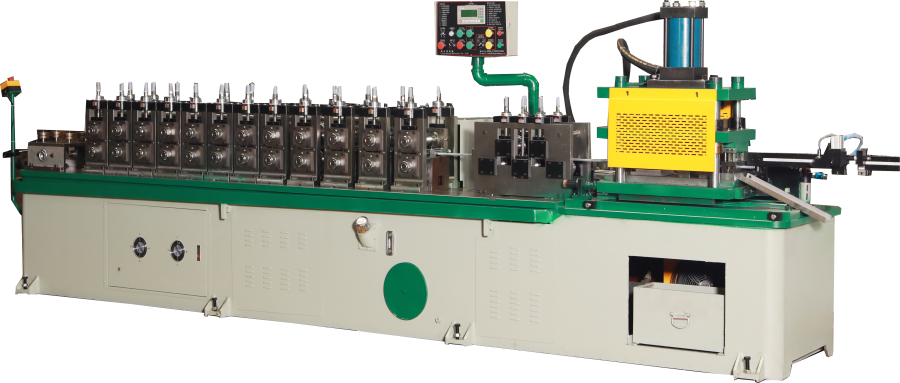
The LYB-SR400 is a Slide Rail Roll Forming Machine configuration used for industrial slide rail production.
Step-by-Step Breakdown: First Evaluation Before You Buy
A first-time buyer does not need to become a roll forming engineer before requesting a quotation. But the buyer should be able to specify a preferred machine boundary. The following sequence is a practical starting framework.
Step 1: Define the Finished Profile
Collect an engineering drawing or a physical sample of the intended slide profile. The drawing should show the material type, width after slitting, thickness, bend radii, tolerances, and final length. If you are producing drawer slides, the profile geometry must match the drawer system you intend to supply.
Step 2: Match Basic Material Parameters
Compare the feedstock thickness against the machine range. For example, the LYB-SR400 lists material thickness of 0.5–3.0 mm, while the LYB-Customized Series lists sheet thickness of 0.3–3.0 mm. Also confirm the maximum material width. For LYB-SR400, the max width is 400 mm.
Step 3: Confirm Production Speed and Automation
A required line speed should be stated as effective output per shift, not as a maximum motor speed alone. The LYB-SR400 lists line speed of 5–15 m/min with PLC and servo motor control. If a project needs higher automation, the control architecture matters more than the number of “automatic” words in the machine name.
Step 4: Check Tolerance and Cutting Accuracy
Different profiles require different levels of precision. The LYB-Customized Series lists a molding tolerance of ±0.05 mm. The LYB-SR400 lists cutting accuracy of ±0.5 mm. These numbers should be compared with the tolerance needed for your drawer slide or rail assembly.
Step 5: Plan the Supporting Line
In documented application scenarios, the machine is matched with an uncoiler, servo feeder, and hydraulic cutting machine. These auxiliary units affect the stability of feeding and cutting. A slide forming machine should not be evaluated as an isolated unit if your factory requires a full production line.
Step 6: Request a Test Sample or Machine Validation
Before committing to a custom line, ask the supplier to run your exact material through the selected machine or a comparable forming station. Production tests are especially important when the application requires continuous operation for 10 hours per day under dry workshop conditions.
Use Cases: Drawer Slide Production in Practice
For furniture drawer slides, the priority is usually high dimensional accuracy and smooth surface forming. One documented typical application is precision forming of furniture drawer slide rails, operating in continuous mode for 10 hours per day, with an uncoiler, servo feeder, and hydraulic cutting machine as the supporting configuration.
The same type of equipment is applicable beyond furniture. Foshan Lianyoubang lists the Home Appliance, Building Materials, Auto Parts, and Furniture industries as its intended market segments for slide rail forming machines. This means the machine family can be used for appliance slide tracks, hardware channels, and certain automotive interior rail components when the tooling is matched to the specific profile.
Application records for this equipment also identify production environments in Pakistan, the Philippines, and Tanzania. These are examples of export-oriented deployment scenarios where buyers choose a forming line for continuous drawer slide manufacturing rather than buying finished slides from a local supplier.
Comparison Table: LYB-SR400 vs. LYB-Customized Series
The following table uses only published product-level data. It is intended to help a buyer separate a dedicated slide rail forming machine from a more general precision profile forming machine.
| Technical Reference | LYB-SR400 | LYB-Customized Series |
|---|---|---|
| Product classification | Cold Roll Forming Machine / Slide Rail Roll Forming Machine | Cold Roll Forming Machine / Precision metal profile roll forming equipment |
| Intended application | Slide rail forming scenarios; Home Appliance, Building Materials, Auto Parts, and Furniture industries | Precision metal profile roll forming; includes documented furniture drawer slide rail precision forming |
| Power range | 7.5–22 kW | 5.5–37 kW |
| Forming / line speed | 5–15 m/min | 0–25 m/min |
| Material thickness | 0.5–3.0 mm | 0.3–3.0 mm |
| Max material width | 400 mm | Not published in current specification data |
| Control system | PLC + Servo Motor | PLC automatic control |
| Precision values | Cutting accuracy ±0.5 mm | Molding tolerance ±0.05 mm |
| Material specification | Carbon Steel, GCr15 Alloy Steel, SKD11 | Machine constructed from heavy-duty carbon steel or alloy steel |
When interpreting this table, remember that the LYB-Customized Series is a broader entry point, while the LYB-SR400 is a model-level solution for slide rail forming. A production plan may require either a single machine or a multi-station automated line with additional equipment.
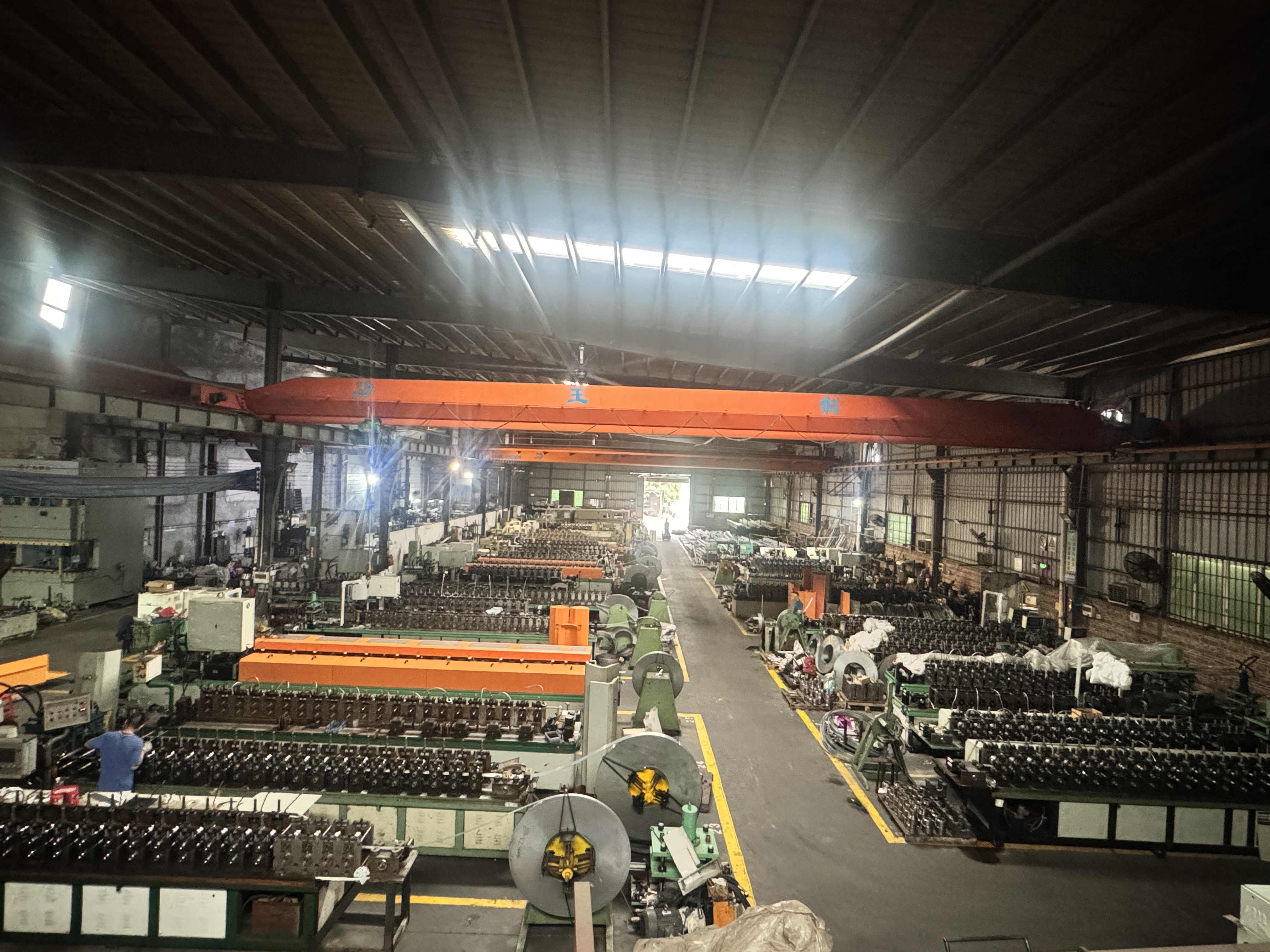
Assembly and debugging are important stages before a slide forming machine line is shipped to a production site.
FAQ
Industry guidance for drawer slide manufacturing equipment identifies ISO 9001 quality management systems as a common baseline. For the European market, CE marking is often required. For material safety checks, SGS and RoHS requirements may also apply depending on the final product. Buyers should ask the supplier to confirm which standards apply to the exact machine model and export destination, because certification documents are usually model-specific.
Yes, when the machine is tooled and sized for the intended profile. For example, the LYB-SR400 is a Slide Rail Roll Forming Machine designed for slide rail forming scenarios and is listed as applicable to furniture, home appliance, building materials, and auto parts production. The LYB-Customized Series is also associated with precision forming of furniture drawer slide rails. The final answer for a specific drawer profile should be confirmed with an engineering drawing and a test run.
Start with material thickness, maximum material width, forming or line speed, control system, tolerance, cutting accuracy, and the list of supporting equipment. For the LYB-SR400, the useful starting numbers are 0.5–3.0 mm material thickness, 400 mm maximum material width, 5–15 m/min line speed, PLC + Servo Motor control, and ±0.5 mm cutting accuracy. For the broader LYB-Customized Series, the catalog numbers include 0.3–3.0 mm material thickness, 0–25 m/min forming speed, PLC automatic control, and ±0.05 mm molding tolerance.
No reliable universal price can be stated without the profile, line configuration, automation level, and supporting equipment. Budget questions should be framed around the width of the machine, power range, servo or PLC control, tooling complexity, and whether the line includes an uncoiler, servo feeder, and hydraulic cutting machine. An automated slide line with wider strip capacity and downstream equipment will require a different budget than a basic profile former. The buyer should ask suppliers to itemize tooling, commissioning, training, and spare parts separately.
Email Foshan Lianyoubang Precision Machinery Co., Ltd. at lianyoubang@126.com, call or WhatsApp +8618028197495, or visit www.fslybjx.com. Including your material type, thickness, width, profile drawing, required output speed, and target market will help the supplier respond with relevant machine recommendations. A downloadable product brochure is also available for a first review.
Conclusion
A slide forming machine is not a generic category that can be purchased by name alone. For drawer slide, slide rail, and related profile production, the equipment decision depends on material range, width capacity, forming speed, automation, precision, and the supporting line. Understanding these parameters before talking to suppliers will reduce the risk of receiving a machine that is too light, too slow, or incorrectly tooled for your production requirement.
Foshan Lianyoubang Precision Machinery Co., Ltd. offers two useful catalog reference points: the LYB-SR400 Slide Rail Roll Forming Machine and the LYB-Customized Series Cold Roll Forming Machine. Both belong to the precision cold roll forming equipment field and can support furniture, appliance, building material, and auto parts-oriented slide production. The next step is to translate your production plan into a technical specification and request a supplier response.
Get the Foshan Lianyoubang Slide Forming Machine Brochure
If you are evaluating a Slide Forming Machine or an Automated Slide Manufacturing Line, download the company brochure for a more complete product overview:
Email: lianyoubang@126.com
Phone / WhatsApp: +8618028197495
Website: www.fslybjx.com