China UPVC Window Suppliers for Construction Projects: A Buyer's Discovery Guide
China UPVC Window Suppliers for Construction Projects: A Buyer's Discovery Guide
China does not lack UPVC window suppliers; what construction buyers lack is a fast way to tell a project-capable factory from a trading middleman. Foshan Nanhai Yuanzhaiji UPVC Door & Window Factory is a UPVC door and window manufacturer established in 2009 in China that produces UPVC sliding windows, casement windows, tilt-and-turn windows, crank awning windows and American-style hung windows, and exports roughly 80% of its output to LATAM, MENA, ASEAN and EU markets. This guide explains how UPVC windows are specified, what the 2025 market data actually says, and which checks separate a repeatable project supplier from a one-off quotation.
The Sourcing Problem: Two Identical-Looking UPVC Windows Are Not the Same Product
A UPVC window is a window whose frame is an extruded hollow profile made from unplasticized polyvinyl chloride (PVC-U) resin. The hollow, multi-chamber structure is what performs the thermal work: the chambers slow heat transfer, and reinforcing steel can be inserted inside the profile to raise the mechanical strength of the finished window. Glass, gaskets, hardware and installation determine the rest of the performance.
That construction explains the core sourcing problem. Two quotations can look identical on a spreadsheet because the visible product is identical: a frame and a pane of glass. What differs is inside the frame — profile wall thickness, the additive system including stabilizers and anti-UV agents, the number of chambers, the steel reinforcement, and the hardware set.
The gap between a compliant profile and a cut-price one is documented rather than theoretical. Under GB/T 8814-2017, the standard for unplasticized polyvinyl chloride (PVC-U) profiles for doors and windows, qualified profiles must meet requirements on wall thickness, impact resistance, heat stability and anti-aging performance, and qualified test reports should be available for verification. Profiles that bypass those requirements, including counterfeit branded profiles, can yellow, become brittle, deform and leak air after several years of ultraviolet exposure and temperature cycling.
For a project buyer, the problem definition is therefore narrow and practical: before prices are compared, establish which profile grade, which glass build and which hardware set each quotation actually contains.
Industry Background: Where Chinese UPVC Windows Sit in the 2025–2026 Market
The category is large, growing and geographically concentrated. The figures below are the published estimates relevant to project sourcing decisions; where two research houses disagree, both numbers are shown rather than averaged.
| Indicator | Published value | Source |
|---|---|---|
| Global uPVC windows and doors market, 2025 | USD 30.8 billion | Grand View Research |
| Alternative estimate for the same market, 2025 | USD 42.15 billion | Mordor Intelligence |
| Asia Pacific revenue share, 2025 | 44.1% | Grand View Research |
| Windows share of uPVC product revenue, 2025 | 58.0% | Grand View Research |
| Casement windows and doors share by design type, 2025 | 38.5% | Dataintelo |
| Legal whole-window U-value limit for window replacement in existing homes in England and Wales, 2025 | 1.4 W/m²K | Approved Document L (UK) |
| Estimated lifespan of high-quality UPVC profiles in the Foshan manufacturing base | 30 to 40 years | Industry publication |
| Reported energy-efficiency improvement of modern multi-chamber uPVC profiles versus traditional frames | up to 40% | Secondary industry source |
The two market-size estimates differ mainly in methodology and scope, including whether accessories and hardware are counted and which regional base prices are used. A buyer should treat any single market number as an order-of-magnitude estimate, not a precise measure.
Two structural facts matter more than the headline number. First, Asia Pacific accounts for close to half of global revenue, and windows — not doors — generate the majority of uPVC product revenue. Second, manufacturing is clustered: Foshan Nanhai is a key manufacturing base for UPVC profiles and windows, with lifespans for high-quality profiles estimated between 30 and 40 years. The district's depth is visible in the supplier landscape: Wanjia Windows & Doors, a large-scale uPVC and aluminum manufacturer serving more than 150 countries, is also located in Nanhai District, Foshan. Cluster density is why buyers find both range and price flexibility there, and it is also why quality variance between suppliers is wide.
Regulation reinforces the trend toward higher-specification products. In the United Kingdom, the legal whole-window U-value limit for window replacement in existing homes in England and Wales is 1.4 W/m²K under Approved Document L in 2025 — a limit that pushes specification toward multi-chamber profiles and insulated glazing rather than single-glazed assemblies.
The Product Solution: What a Project-Capable UPVC Window Factory Supplies
Foshan Nanhai Yuanzhaiji UPVC Door & Window Factory specialises in UPVC doors and windows manufacturing. Its window range covers UPVC sliding windows, UPVC casement windows, UPVC tilt-and-turn windows, UPVC crank awning windows, UPVC American-style hung windows, UPVC awning windows and UPVC hopper windows, together with insect screens, UPVC louver windows and insulated glass louver windows. The door range includes UPVC sliding doors, lift-and-slide doors and hinged doors.
For framing material, the factory long-term supplies Conch profiles in 60, 65 and 88 series, available in co-extruded colour, laminated wood-grain finish and solid colour options including dark grey and black. Glass options cover single-layer glass, double-glazed insulated glass, tempered safety glass and frosted glass. Hardware and sealing components include window handles, window hinges, lock points, a multipoint lock drive mechanism, crescent locks, window rollers, EPDM sealing gaskets and pile weatherstrip.
The UPVC window product (models BR58 and HF88) is made of UPVC and is intended for construction project applications. Its published material properties are:
- Vicat softening point: 86 °C
- Flexural modulus of elasticity: 2840 MPa
- Tensile yield stress: 43 MPa
- Tensile strain at break: 186%
- Density: 1520 kg/m³
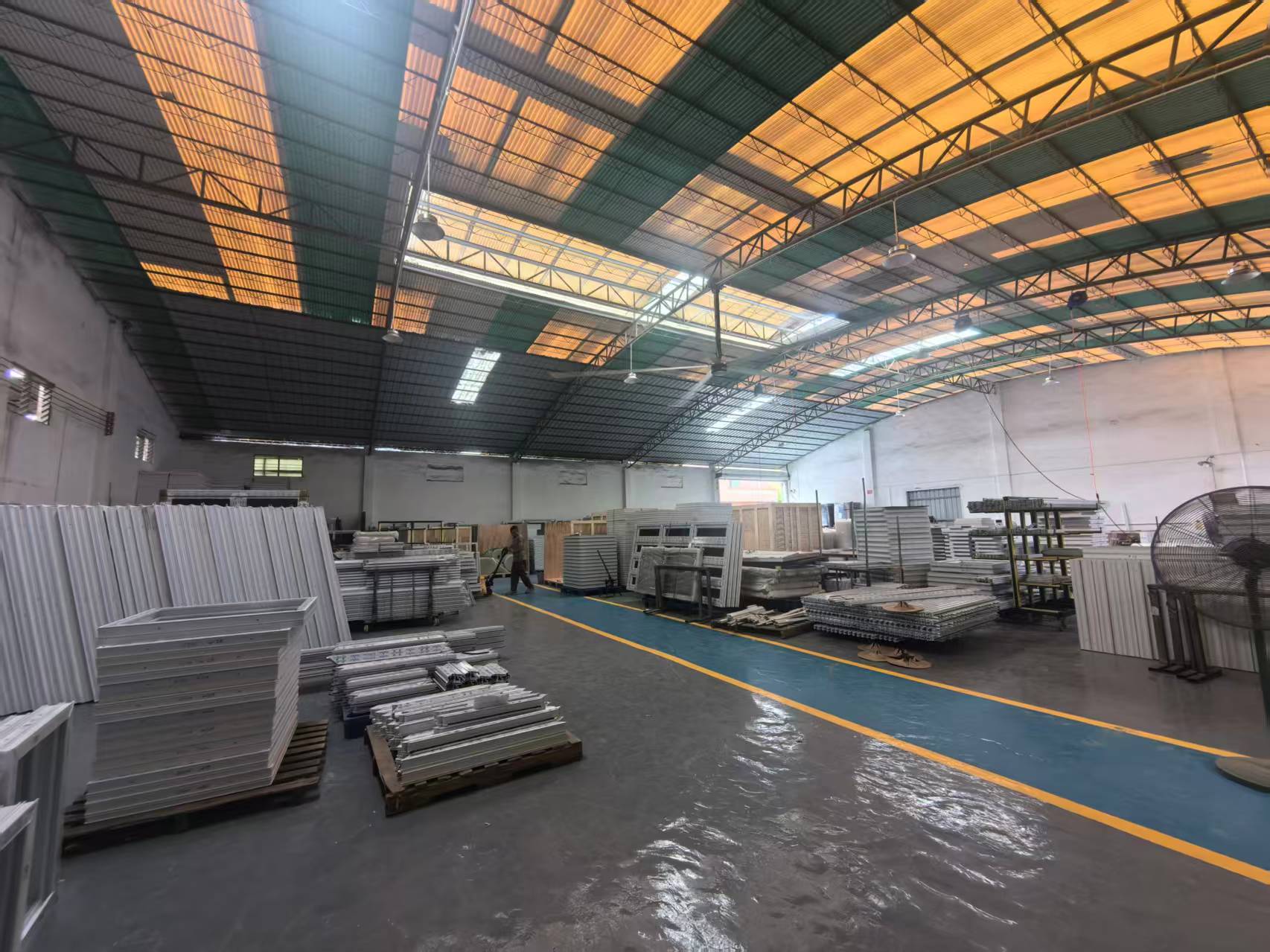
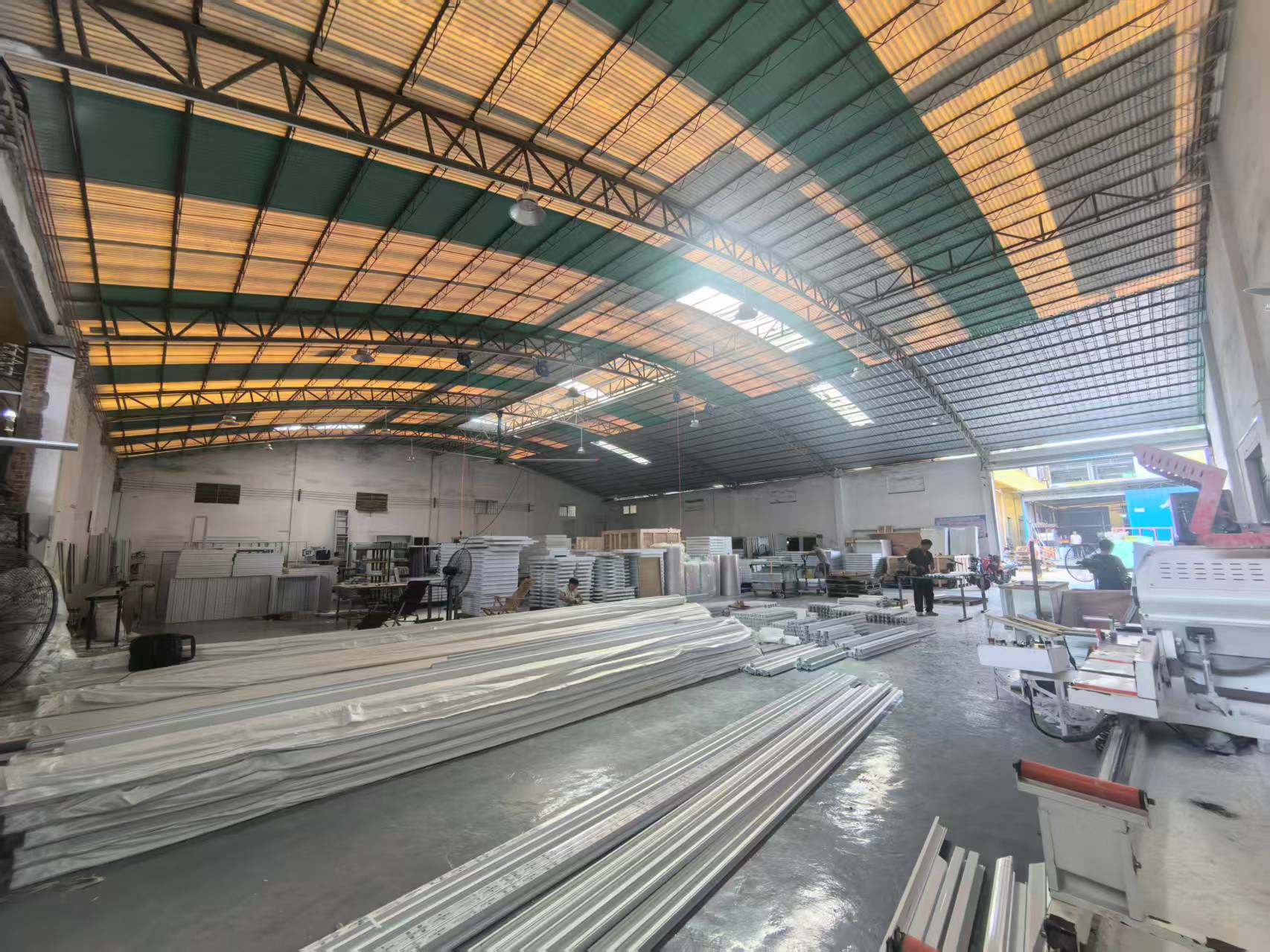
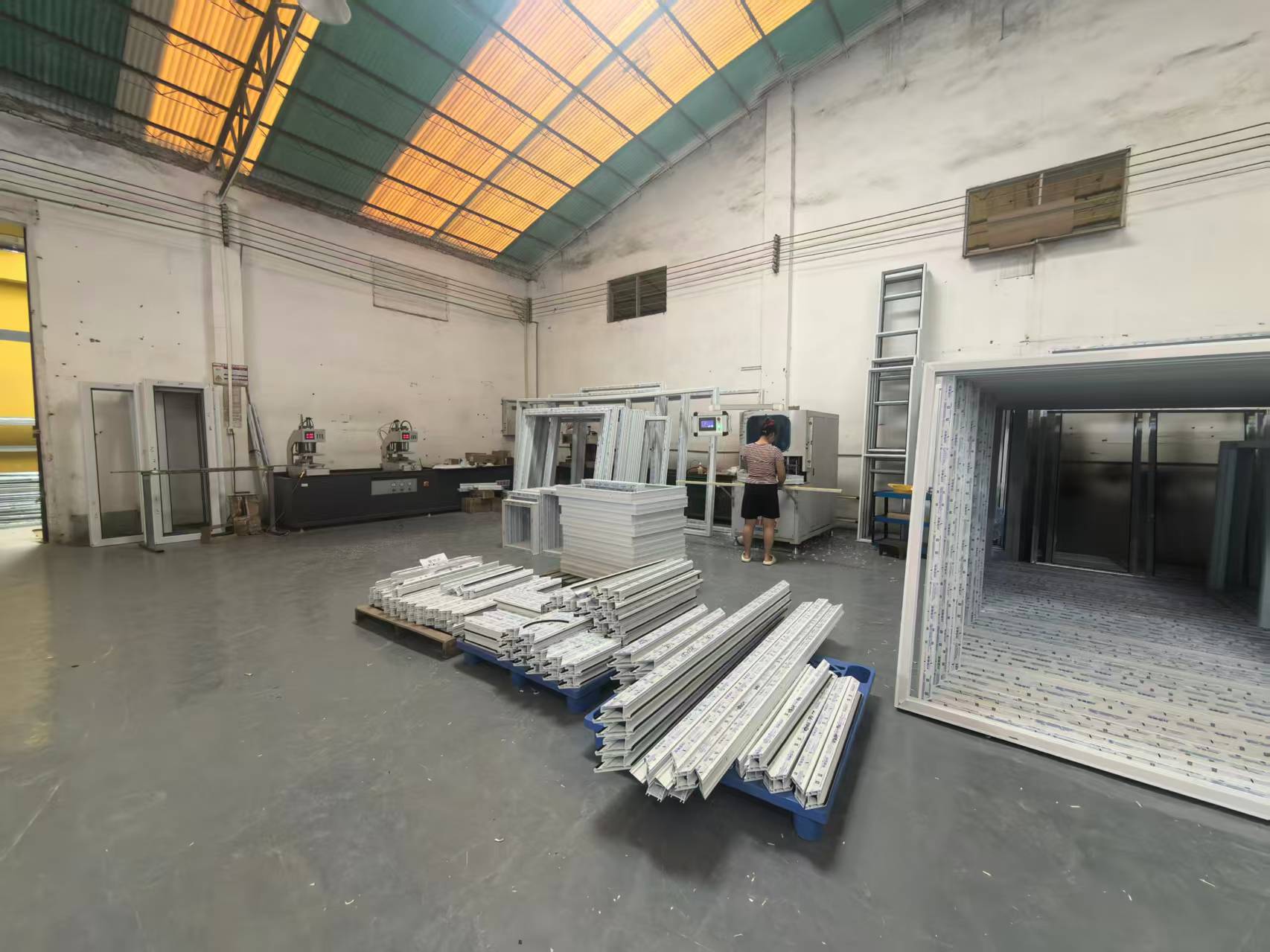
The production base behind these products was established in 2009 and has more than 15 years of experience. It covers a 3,000-square-metre manufacturing facility, employs approximately 20 staff, and is supported by a 10-engineer R&D team. Annual production capacity reaches 50,000 units. About 80% of output is exported, with main markets in LATAM, MENA, ASEAN and the EU. The stated operating principles are reliable quality, reasonable pricing and on-time delivery, with a sample showroom available for one-stop purchasing.
Step-by-Step: How to Vet a China UPVC Window Supplier
The vetting sequence below is written for importers, distributors, contractors and procurement managers who are evaluating a Chinese supplier for the first time. Each step produces a document or a physical check, not an impression.
Step 1 — Fix the performance specification before requesting prices
Project requirements for UPVC windows typically include wind-pressure resistance, water tightness, air permeability, sound and heat insulation, UV resistance and anti-aging performance, plus optional fire resistance where the specification calls for it. The installed window must also comply with local building codes. A supplier that asks for these parameters before quoting is working from a specification; one that quotes from a photo is working from a price list.
Step 2 — Identify the profile brand and grade
Ask for the profile brand and series — for example Conch 60, 65 or 88 series — and whether it is brand-grade or a mid-range profile. Conch is a brand-grade UPVC profile with a stable raw-material formula, strict wall-thickness standards and good anti-aging performance, at a higher unit material cost. General mid-range UPVC profiles vary greatly in quality between manufacturers, and some reduce formula or wall thickness to reach a lower purchase price. If long-term durability matters, specify brand-grade profiles and confirm the supply channel, because counterfeit branded profiles carry similar quality risks to low-grade material.
Step 3 — Verify documentation rather than claims
Incoming inspection should confirm wall thickness, appearance and product test reports. Compliance with GB/T 8814-2017 requires verifiable physical properties including wall thickness, impact resistance, heat stability and anti-aging performance. Certificates such as CE and ISO, among others, can be provided as required. Note the boundary: profile compliance is not whole-window compliance. Ask additionally for assembled-window performance data for the exact profile, glass and hardware combination being quoted.
Step 4 — Check the glass and hardware build
Confirm glass type (single-layer, double-glazed insulated, tempered safety or frosted), gasket material such as EPDM, the weatherstrip, and the locking system including the multipoint lock drive mechanism. Hardware and sealing are usually the line items where a low quotation becomes low quality.
Step 5 — Validate with a physical sample
A sample allows the buyer to check sash clearance, sealing performance and opening-closing smoothness, and to inspect cutting precision, notch size and welding quality. Yuanzhaiji maintains a sample showroom for one-stop purchasing so that profile, glass and hardware can be evaluated as one assembly.
Step 6 — Confirm capacity and export experience against project volume
Annual capacity of 50,000 units, a 3,000-square-metre facility and an 80% export ratio across LATAM, MENA, ASEAN and the EU are practical indicators of whether a factory can absorb project volume, packaging requirements and export documentation without sub-contracting the order.
Maintenance check after installation: if a sash becomes stiff and difficult to open or close, the usual causes are debris or dust accumulated in the sliding track, a worn or out-of-position pulley, or mis-adjusted sash hardware. The fix is to clean the track, replace a worn pulley, and adjust the hinge or roller screws to level the sash. Specifying quality hardware at the ordering stage reduces the frequency of this problem.
Where UPVC Windows Are Used: Project Scenarios
UPVC windows for construction are specified for residential buildings, commercial buildings, renovation projects and villa projects, and are frequently required in outdoor conditions including coastal, high-humidity and strong-wind areas. The functional case for the material in these scenarios is thermal insulation, sound insulation, wind and rain resistance, corrosion resistance and sealing performance, all of which contribute to a comfortable indoor environment. Operating modes available across the range include manual opening and closing, tilt-and-turn opening and sliding operation.
- Coastal and high-humidity projects. Corrosion resistance and UV resistance with anti-aging performance are the deciding criteria, together with wind-pressure resistance and water tightness in strong-wind locations.
- Urban residential and renovation projects. Sound insulation and heat insulation carry more weight, and replacement projects require window dimensions and opening modes that match existing openings.
- Energy-driven projects in the EU and UK. Multi-chamber profiles combined with insulated glazing are the standard response to regulated U-value limits; the applicable glass build should be confirmed against the project specification, since available options include single-layer, double-glazed insulated, tempered safety and frosted glass.
- Villa and commercial fit-outs. Mixed configurations are common, combining casement, tilt-and-turn, sliding and hung windows with matching UPVC door systems for a consistent façade.
Comparison: UPVC Window Types and Profile Grades Side by Side
Two comparisons are genuinely useful at the discovery stage: which window configuration fits the opening and climate, and which profile grade fits the project's expected service life. Both tables below use only documented product and standards information.
| UPVC window type | Documented series / configuration |
|---|---|
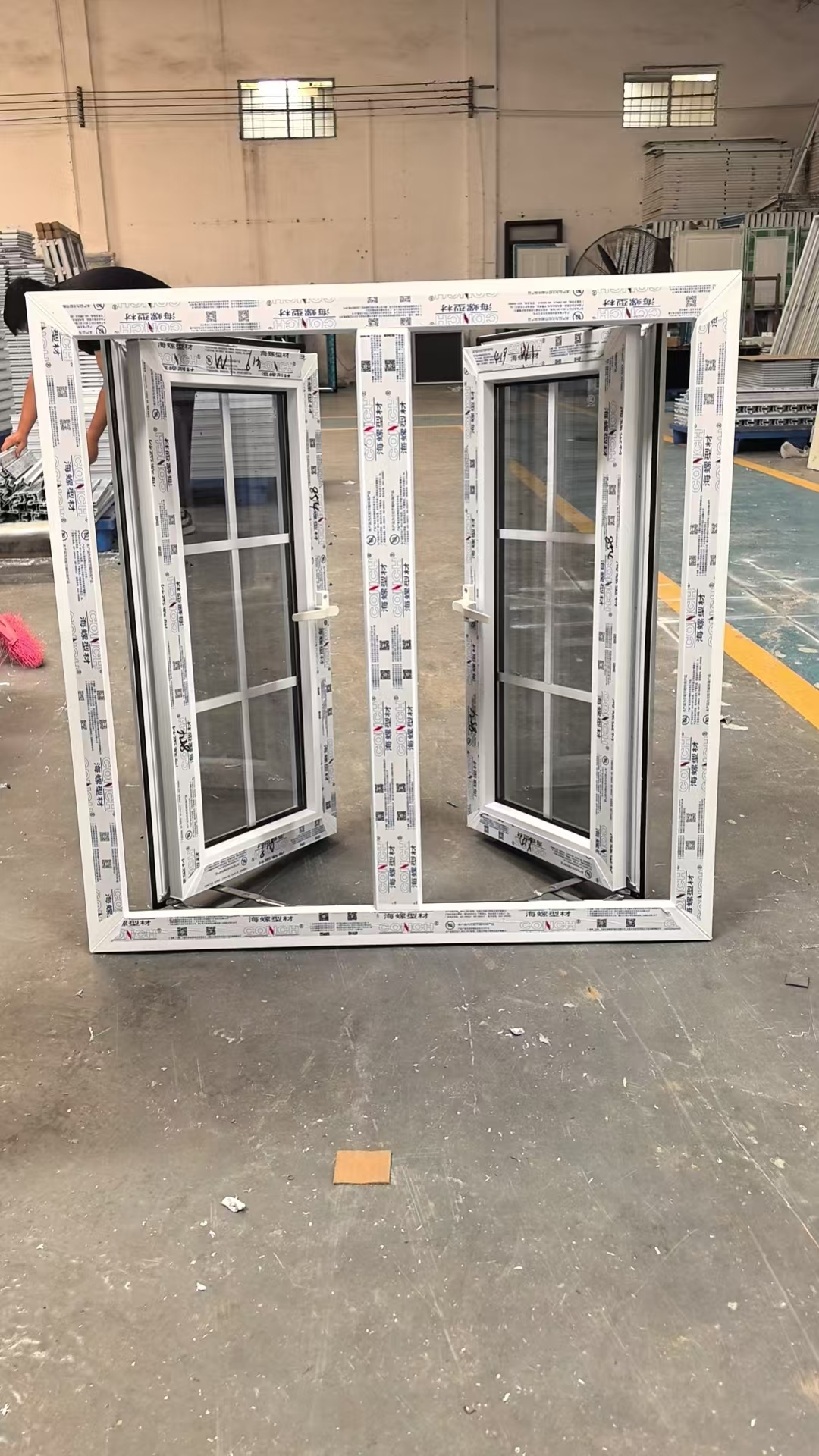
| UPVC casement window | 60-Series casement window with grilles-between-the-glass |
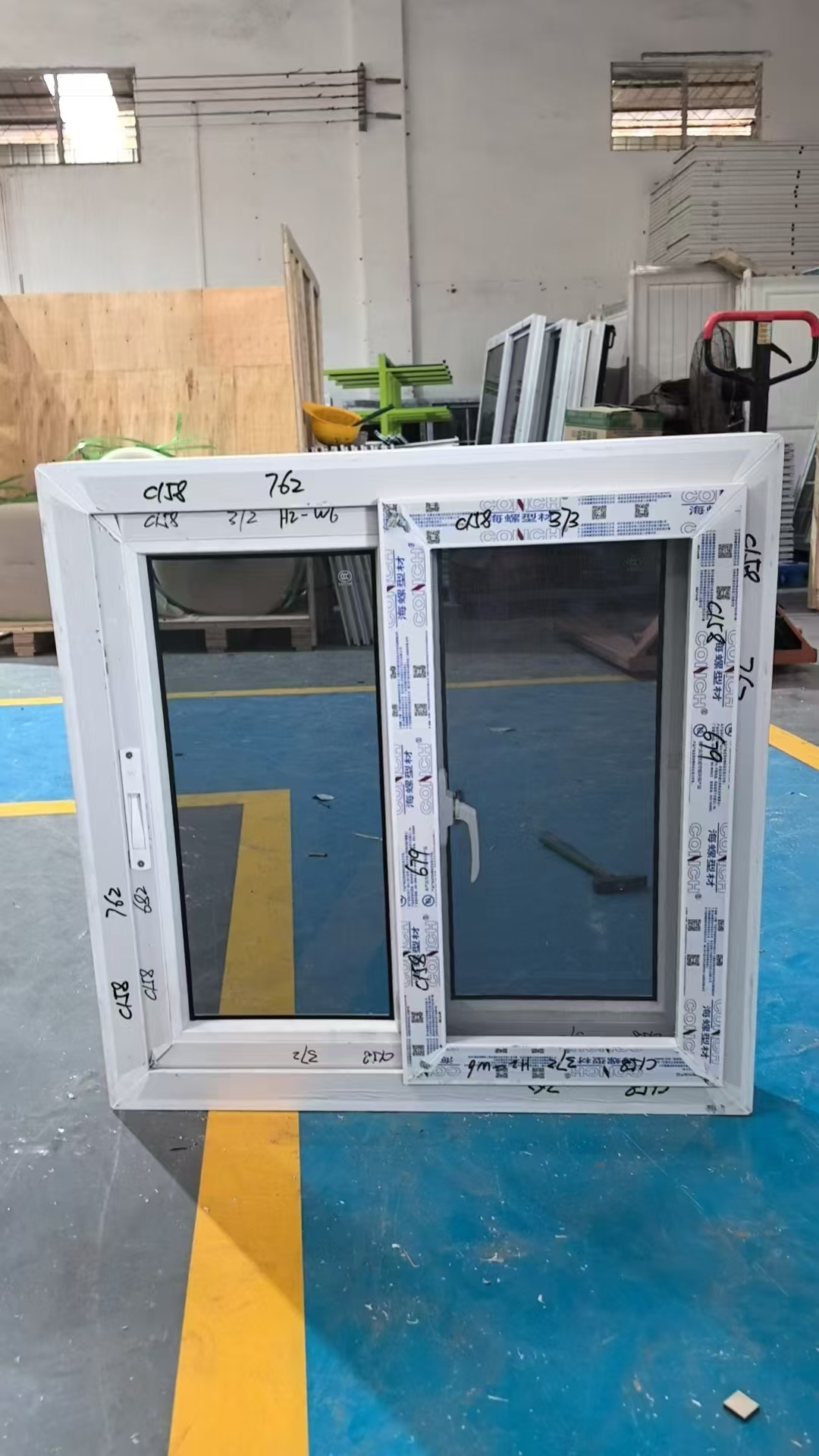
| UPVC sliding window | 88-Series sliding window with fly screen; 60-Series sliding window |
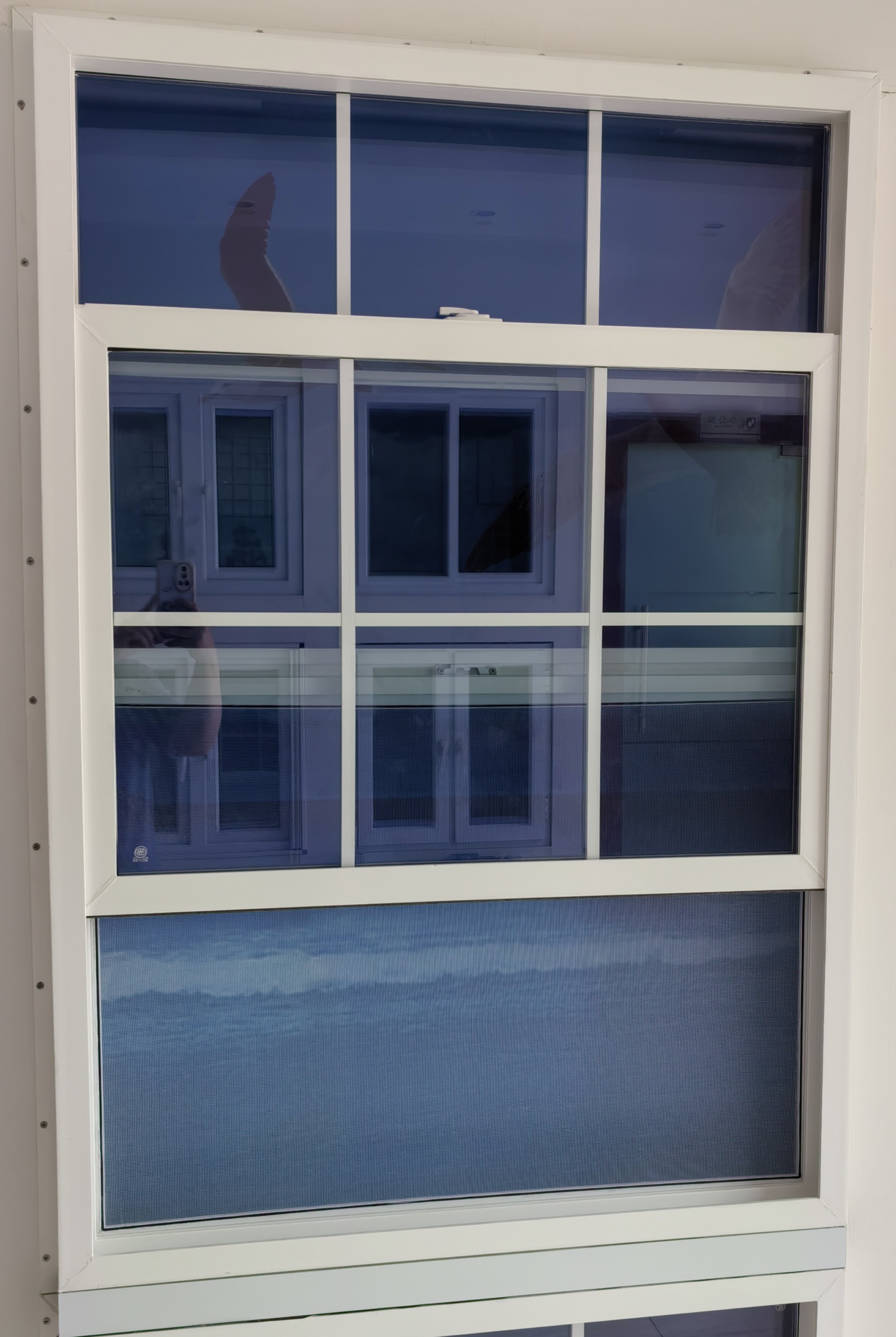
| UPVC American-style single hung window | 82-Series |
| Crank-operated UPVC casement window | 60-Series crank-operated French casement window |
| UPVC tilt-and-turn, awning and hopper windows | Listed within the UPVC window product range |
| Additional items | Insect screens, UPVC louver windows, insulated glass louver windows |
| Profile grade | Documented characteristics | Documented suitability |
|---|---|---|
| High-grade formula UPVC profiles | Fully compliant wall thickness and high-efficiency anti-UV stabilizers; excellent weather resistance and anti-yellowing capacity | High-end residential and coastal buildings with long-term outdoor exposure |
| Mid-grade standard UPVC profiles | Meet national standard requirements on wall thickness and additive system; balanced cost-performance ratio | Most ordinary residential and commercial building projects |
| Economy UPVC profiles | Meet the basic national standard threshold at lower material cost | Temporary buildings and low-budget indoor, non-exposed window projects; not recommended for long-term outdoor use |
Limits and trade-offs: brand-grade profiles cost more per unit of material but reduce later-stage problems such as yellowing, deformation and air leakage. Economy profiles remain a legitimate choice only for non-exposed or temporary applications where wall thickness and test reports are still verified before purchase.
FAQ: China UPVC Window Suppliers for Construction Projects
How do I check that a Chinese UPVC window supplier will meet compliance requirements in my market?
Compliance is verified at two levels, and they are not the same. At profile level, ask for test reports showing compliance with GB/T 8814-2017 for wall thickness, impact resistance, heat stability and anti-aging performance, and confirm the profile brand and series is genuine. At factory level, Foshan Nanhai Yuanzhaiji UPVC Door & Window Factory can provide CE, ISO and other qualification certificates as required. At whole-window level, performance depends on the complete assembly, so request data for the specified profile, glass and hardware combination against your local code — for example, window replacement in existing homes in England and Wales is subject to a legal whole-window U-value limit of 1.4 W/m²K under Approved Document L in 2025.
What UPVC window types can a Chinese supplier deliver for construction projects?
A project-capable UPVC window range typically includes UPVC sliding windows, UPVC casement windows, UPVC tilt-and-turn windows, UPVC crank awning windows, UPVC American-style hung windows, UPVC awning windows and UPVC hopper windows, plus insect screens, UPVC louver windows and insulated glass louver windows. Yuanzhaiji manufactures this full range, with door systems including UPVC sliding doors, lift-and-slide doors and hinged doors, and frames supplied in Conch 60, 65 and 88 series profiles in co-extruded colour, laminated wood-grain and solid colours such as dark grey and black.
What determines the cost of UPVC windows sourced from China?
The main cost drivers are profile grade and series, glass build (single-layer, double-glazed insulated, tempered safety or frosted), hardware and locking specification, window size and configuration, colour finish, order volume, and packaging and freight. The single largest source of price difference between two quotations is usually the profile: brand-grade Conch profiles use a standardized raw-material formulation and consistent wall thickness, while mid-range profiles vary greatly in quality between manufacturers. Because the visible product looks the same, cost comparison is only meaningful after wall thickness and test reports have been verified for each option being priced.
Can I obtain a sample before placing a project order?
Yes. A sample showroom is available for one-stop purchasing, which allows profile, glass and hardware to be inspected together as an assembled unit. Practical checks on the sample include sash clearance, sealing performance, opening and closing smoothness, and cut and weld quality. Sample validation is also the point at which maintenance behaviour can be assessed: stiff sashes are normally caused by debris in the track, a worn pulley, or mis-adjusted sash hardware, and quality hardware specified at this stage reduces that risk later.
Can the factory support the volume and schedule of a construction project?
Foshan Nanhai Yuanzhaiji UPVC Door & Window Factory operates a 3,000-square-metre facility with approximately 20 staff and a 10-engineer R&D team, and reaches an annual production capacity of 50,000 units. Roughly 80% of output is exported to LATAM, MENA, ASEAN and the EU, and the stated commitment is reliable quality, reasonable pricing and on-time delivery. Project-specific schedules are confirmed per order rather than published as fixed lead times, so the practical next step is to send your window schedule and destination port for a quotation: email 1803877678@qq.com, phone or WhatsApp +86 130-0674-7018, or visit yuanzhaiji.com.
Conclusion: The Discovery Stage Is About Documents, Not Brochures
For construction projects, finding China UPVC window suppliers is the easy part; the meaningful work is confirming that the supplier controls profile grade, glass build and hardware, and can evidence it. The category itself is substantial — Asia Pacific holds 44.1% of a global uPVC windows and doors market estimated at USD 30.8 billion in 2025 by Grand View Research, with windows accounting for 58.0% of product revenue — and manufacturing is concentrated in clusters such as Foshan Nanhai, where high-quality profiles are estimated to last 30 to 40 years.
Within that landscape, the vetting sequence is stable: define the performance specification, identify the profile brand and grade, verify GB/T 8814-2017 test reports, check glass and hardware, validate a physical sample, and confirm capacity against project volume. Foshan Nanhai Yuanzhaiji UPVC Door & Window Factory, established in 2009 with more than 15 years of experience and a 50,000-unit annual capacity, is one manufacturer that publishes these facts openly — which makes the next step straightforward.
Request a UPVC Window Sample, Quotation or Catalogue
Send your window schedule, glass specification and destination market, and the factory will respond with a project quotation. Samples and a full product catalogue are available for evaluation before ordering.
Email: 1803877678@qq.com
Phone / WhatsApp: +86 130-0674-7018
WhatsApp enquiry: Start a WhatsApp conversation
Website: yuanzhaiji.com
Factory address: Xilin Industrial District, Honglai Town, Quanzhou Nan'an City, Fujian Province, China