European vs American-Style UPVC Doors: Project Buyer Guide
European-style and American-style UPVC doors are built from the same base material — PVC-U profiles with internal galvanized steel liners for reinforcement — but they are specified differently, and that difference decides whether a container clears pre-shipment inspection or comes back as a rework claim. For a project buyer, the practical answer is to compare the two series on six factors in a fixed order: operation mode, door size, door specification, glass specification, hardware set, and local building access standards.
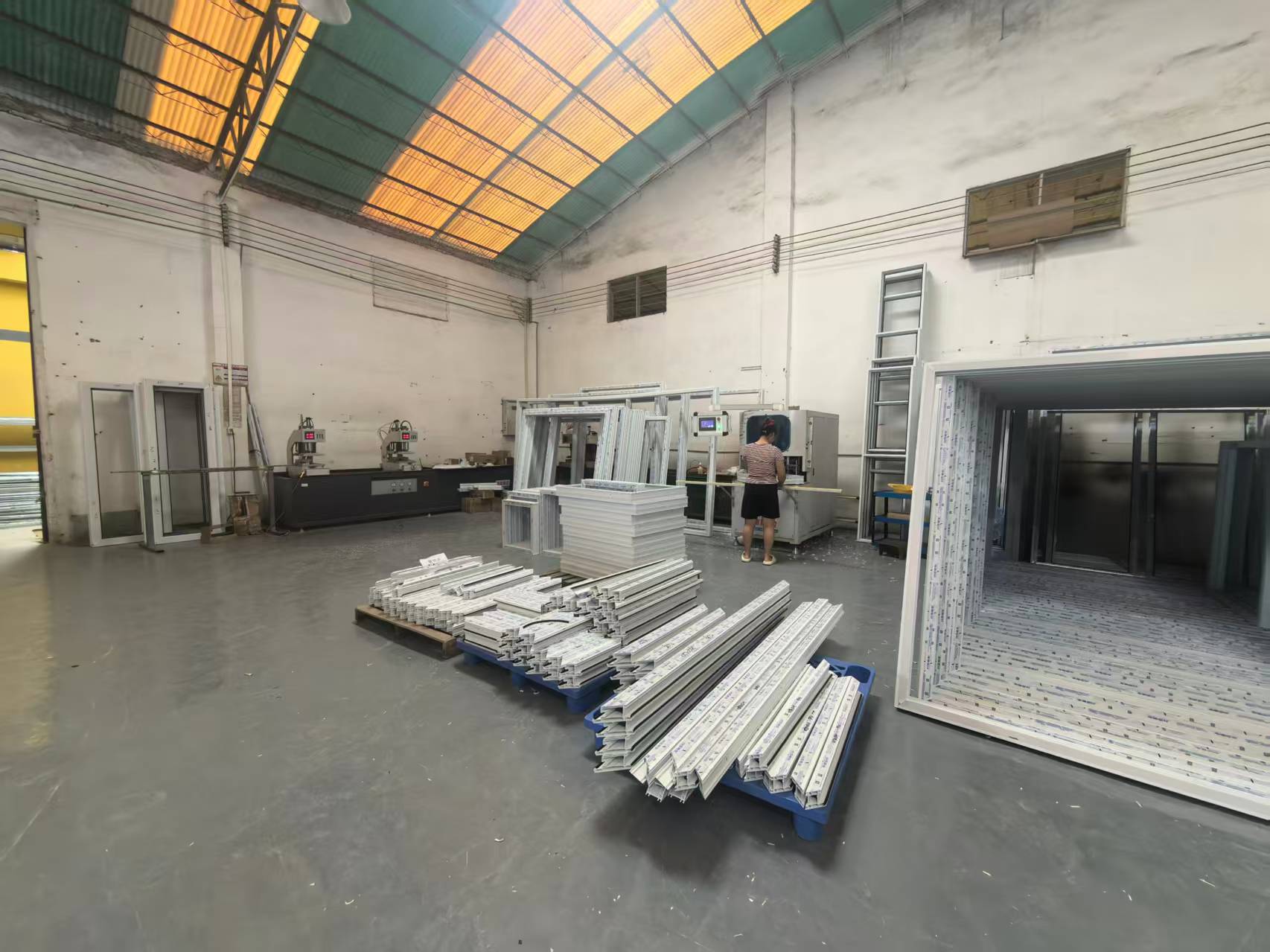
Foshan Nanhai Yuanzhaiji UPVC Door & Window Factory is a UPVC door and window factory based in Foshan, China, established in 2009, with more than 15 years of experience in UPVC door and window manufacturing. Its door range includes European and American-style door series, and the company manufactures UPVC sliding doors, lift-and-slide doors and hinged doors. Profile series 50, 60, 65, 80, 88 and 112 are covered by ECM Attestation No.3N230816.YCPQQ51 under EN 14351-1:2006+A2:2016. UPVC door orders run at a minimum order quantity of 30–40 ㎡ with a 10–30 day delivery window.
Quick answer for project buyers
- European-style series is normally the starting point when the drawing is metric, the destination market expects EN 14351-1 documentation, and the thermal target is set by building regulation.
- American-style series is normally the starting point when the opening follows hung or sliding conventions and dimensions arrive in imperial units or imperial-converted millimetres.
- Release the order only after all six comparison factors and the compliance pack are confirmed on one signed document.
Problem Definition: The Style Label Is Not a Specification
What separates a European-style UPVC door from an American-style UPVC door is not the material. Both are produced from PVC-U profiles with internal galvanized steel liners for reinforcement, and both sit inside the same door programme: UPVC sliding doors, lift-and-slide doors and hinged doors. The real difference is the specification tradition — which operation mode is normal for the opening, how the opening is dimensioned, how the glass is built up, and which hardware set is expected at handover.
The most common and most expensive failure is a comparison mismatch. A buyer places a European-style quotation sheet next to an American-style shop drawing, compares a metric leaf height against an imperial-converted opening, and approves an order in which door size, glass build-up and hardware count were never aligned. Because documentation is signed off before production starts, the mismatch usually surfaces at pre-shipment inspection or on site — after the profiles have been cut, welded and glazed.
The mitigation is a single comparison protocol applied to both series before the deposit: six factors, one order of operations, one signed document.
Industry Background: Why the Style Decision Is Now a Compliance Decision
The UPVC door market is expanding while regulation tightens, which pushes the style decision well beyond appearance:
- The global uPVC windows and doors market was valued at USD 30.8 billion in 2025 and is projected to reach USD 32.4 billion in 2026 (Grand View Research).
- Asia Pacific held a 44.1% revenue share of that market in 2025.
- The doors segment is expected to grow at a CAGR of 5.3% from 2026 to 2033.
- Sliding configurations accounted for 37.20% of uPVC door and window revenue in 2025 (Mordor Intelligence).
- Under the UK Future Homes Standard 2025, the maximum U-value for external doors decreases from 1.6 W/m²K to 1.2 W/m²K.
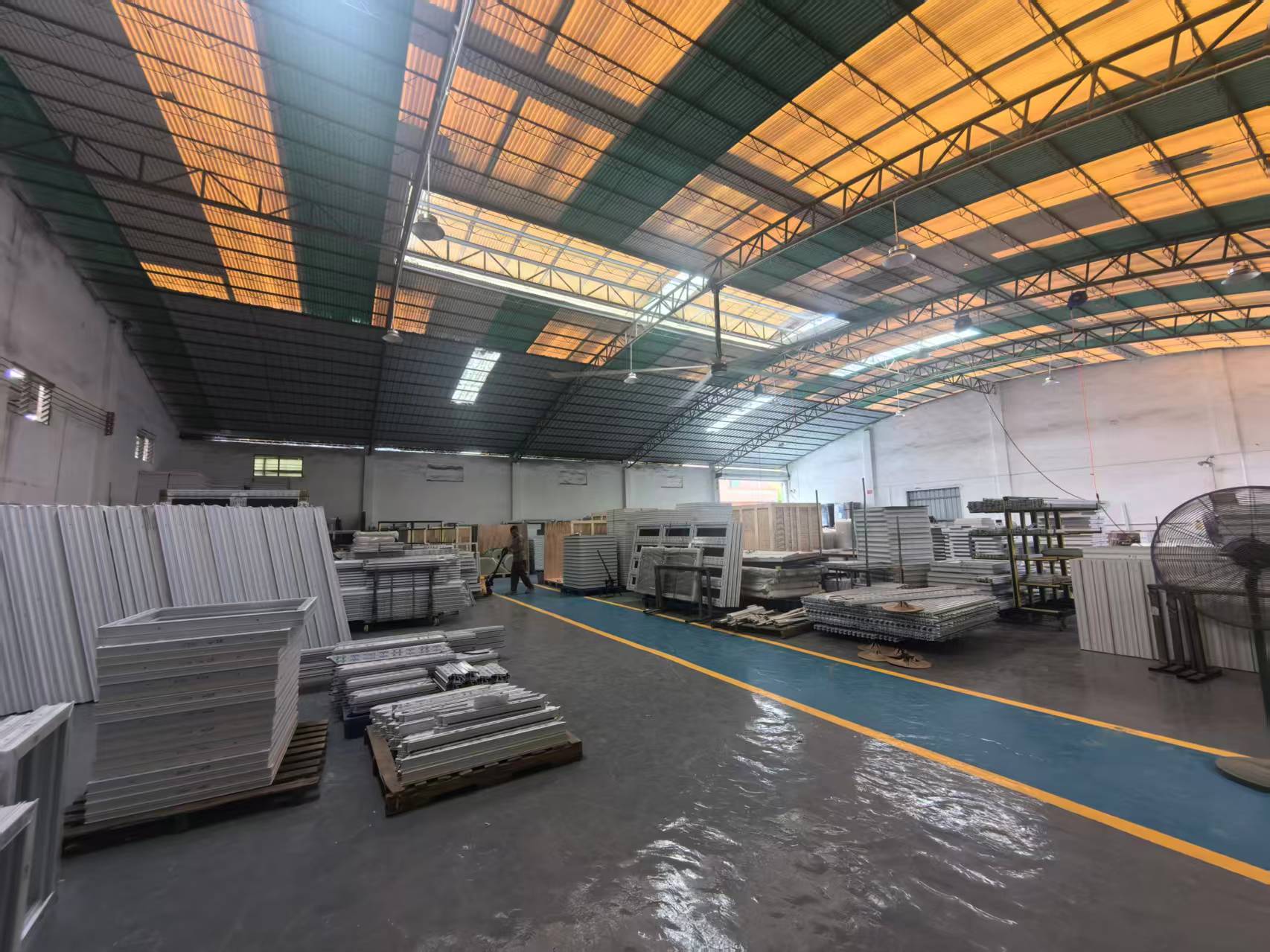
For importers and project buyers, the practical consequence is that the style label now carries a documentation load. Plastic doors, windows and their frames and thresholds sit under HS code 392520, and EU-bound projects expect the profile system to be inside a tested, attested range. The factory behind this guide runs a 3,000 square metre manufacturing facility, employs approximately 20 staff including a professional technical and management team, keeps an R&D team of 10 engineers and technicians, reaches an annual production capacity of 50,000 units, and serves markets including LATAM, MENA, ASEAN and the EU.
The Six Comparison Factors Project Buyers Should Score
1. Operation Mode Decides Everything Downstream
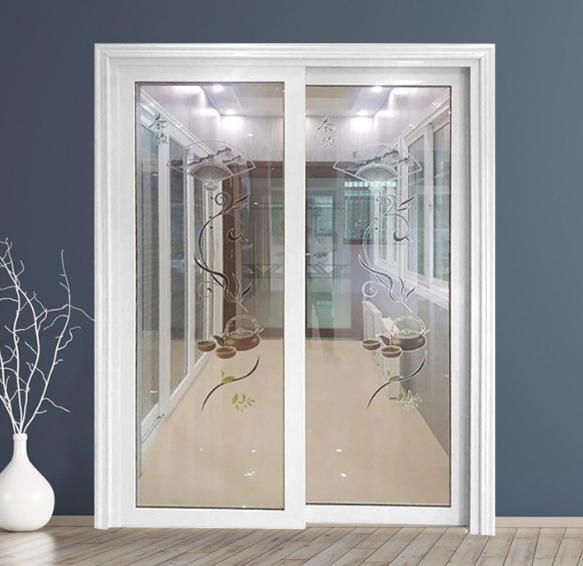
Operation mode should be fixed before door size is confirmed, because it determines the hardware set, the leaf weight the frame must carry, and the clear opening left for traffic. The factory manufactures UPVC sliding doors, lift-and-slide doors and hinged doors within the European and American-style door series. European-style specifications commonly centre on hinged and lift-and-slide operation with metric modular openings, while American-style specifications commonly centre on sliding and hung-opening conventions. Both labels describe market convention — the final build follows the approved shop drawing.
2. Door Size: Confirm Units Before Anything Else
The single most useful action at this stage is to record the structural opening, width by height, in millimetres, and to state whether the original dimension arrived in imperial units or was converted. If the site measurement is imperial and the quotation is metric, the rounding decision must be written down and approved rather than left to the factory. Confirm three items in writing: the structural opening size, the frame outer size, and who is responsible for site measurement. Then confirm the maximum leaf or panel size available for the selected profile series and operation mode before the drawing is signed.
3. Door Specification: Profile Series and Material Data
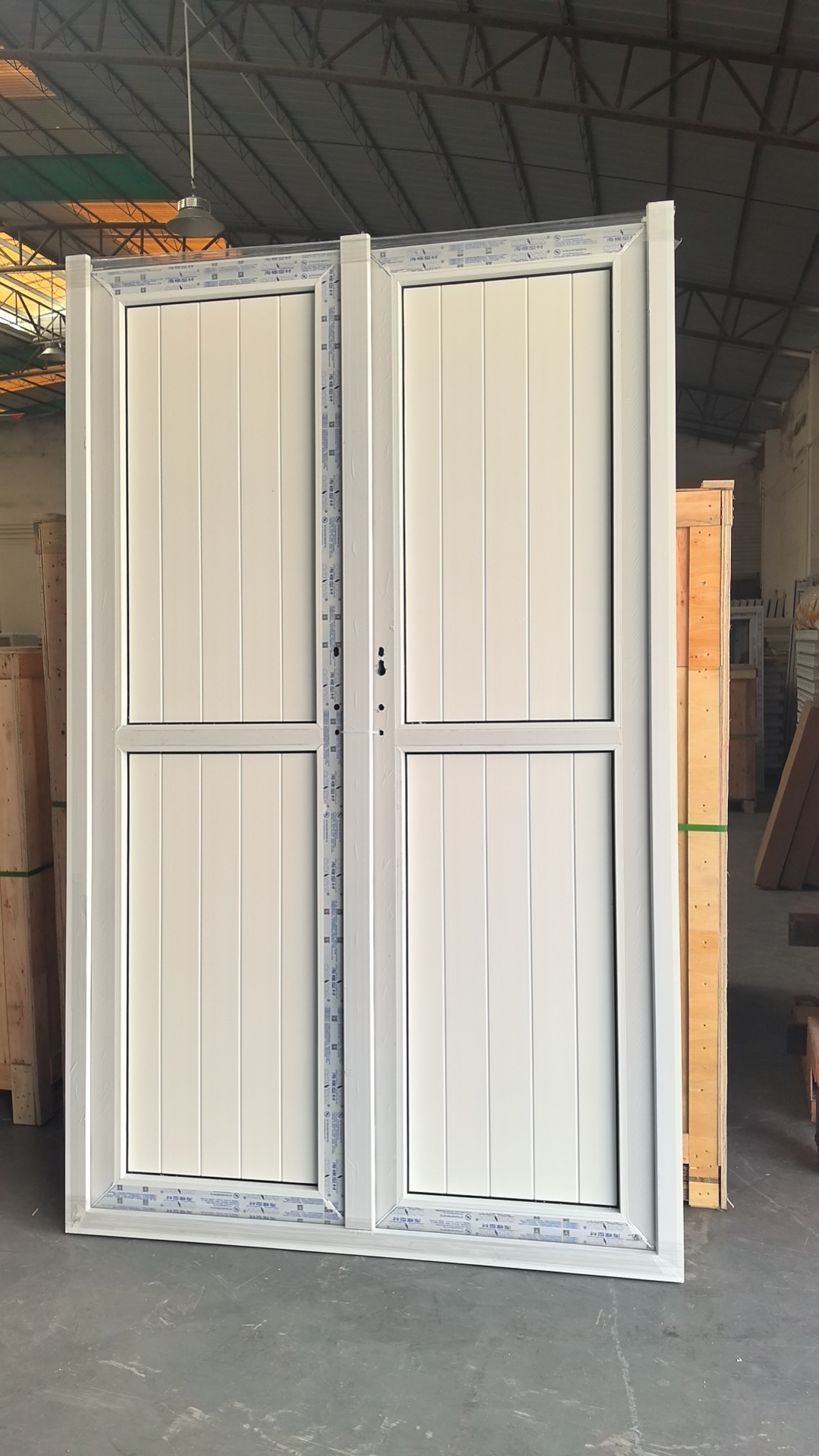
Profile series 50, 60, 65, 80, 88 and 112 are covered by ECM Attestation No.3N230816.YCPQQ51 under EN 14351-1:2006+A2:2016, so the series number should appear on the order confirmation and be matched against the attestation. The factory also long-term supplies Conch profiles including 60/65/88 series, available in co-extruded colour, laminated wood-grain finish and solid colour options such as dark grey and black, and multiple colour finishes are available for the UPVC door.
Material data gives the buyer a baseline to compare against local requirements: Vicat softening point 86 ℃, flexural modulus of elasticity 2,840 MPa, tensile yield stress 43 MPa, tensile strain at break 186%, and density 1,520 kg/m³. Reinforcement is the item that matters most at acceptance — check the profile end face to confirm galvanized steel liners are present, and reject goods without liners for exterior doors.
4. Glass Specification: Glazing Build-Up Drives Both U-Value and Hinge Load
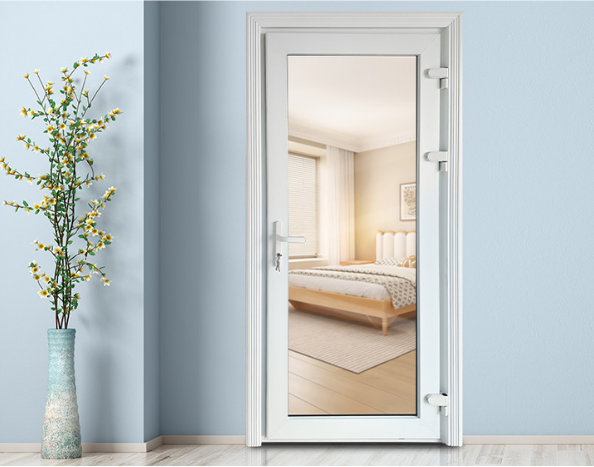
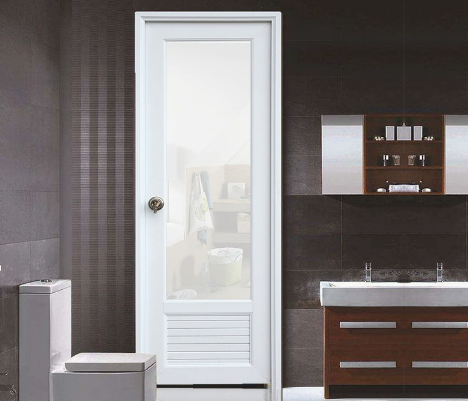
Glazing is not a cosmetic choice. The glass build-up sets the thermal performance of the door, adds weight that hinges or rollers must carry, and changes the thickness the sash must accommodate. Documented door configurations in the range include fully glazed casement doors, full horizontal-panel casement doors, full vertical-panel French casement doors, sliding doors with fly screen, and glazed-plus-louver bathroom doors. Confirm the destination market's maximum U-value for external doors — the UK Future Homes Standard 2025 sets 1.2 W/m²K — and confirm the hinge or roller rating that matches the resulting glass weight.
5. Hardware Set: Handles, Hinges, Rollers and Sealing Components
Hardware should be requested as a line-item schedule, not as a phrase. The matched equipment list for the door range covers door handle, door hinge, door roller, anti-collision stopper, dust-proof pile weatherstrip and EPDM sealing gasket. Map the list to the operation mode: hinged doors depend on hinges and handles, while sliding and lift-and-slide doors depend on rollers, anti-collision stoppers and pile weatherstrip. When two quotations for the same style differ in price, the hardware schedule is usually where the difference sits.
6. Local Building Access Standards
Local access rules are a buyer responsibility, not a factory assumption. Clear opening width, threshold height, egress requirements and permitted leaf sizes vary by market and by building type, and projects commonly specify wind-pressure resistance, water tightness and air permeability, impact and wear resistance, a secure locking system, and weather-resistant anti-aging performance. Obtain the governing requirement in writing before the leaf size is fixed, and check it against the EN 14351-1 test framework so the door configuration and the regulation are compared on the same basis.
Comparison Table: European-Style vs American-Style UPVC Door Series
| Comparison factor | European-style series (buyer convention) | American-style series (buyer convention) | Verified data and verification action |
|---|---|---|---|
| Operation mode | Hinged/casement and lift-and-slide are the usual references; sliding also available. | Sliding and hung-opening conventions are the usual references. | UPVC sliding doors, lift-and-slide doors and hinged doors are all manufactured within the European and American-style door series. Verify: confirm the mode on the shop drawing against traffic pattern and clear opening width. |
| Door size | Metric modular opening sizes are common in project drawings. | Imperial or imperial-converted opening sizes are common. | Door size, frame size and leaf size are quoted per approved drawing. Verify: record structural opening W × H in millimetres, state any unit conversion and rounding, and assign measurement responsibility. |
| Door specification | Attested profile system expected; series number usually specified. | Profile rigidity, colour range and hardware availability are usually the priorities. | Profile series 50, 60, 65, 80, 88 and 112 covered by ECM Attestation No.3N230816.YCPQQ51 under EN 14351-1:2006+A2:2016. Material data: Vicat softening point 86 ℃; flexural modulus 2,840 MPa; tensile yield stress 43 MPa; tensile strain at break 186%; density 1,520 kg/m³. Verify: match the series number to the attestation and inspect the profile end face for galvanized steel liners. |
| Glass specification | Fully glazed and vertical-panel French casement build-ups are common; U-value target set by regulation. | Glazed panel and sliding-with-fly-screen build-ups are common; U-value target often set by the client. | Documented configurations include fully glazed casement, full horizontal-panel casement, full vertical-panel French casement, glazed-plus-louver bathroom door and sliding door with fly screen. Reference: maximum external door U-value 1.2 W/m²K under the UK Future Homes Standard 2025, down from 1.6 W/m²K. Verify: confirm glass build-up, weight and the matching hinge or roller rating. |
| Hardware set | Hinge and handle part numbers per leaf. | Roller and anti-collision stopper part numbers per panel. | Matched equipment: door handle, door hinge, door roller, anti-collision stopper, dust-proof pile weatherstrip, EPDM sealing gasket. Verify: request the hardware schedule as a line-item list with part numbers. |
| Local building access standards | Clear opening, threshold and U-value limits are commonly fixed by building regulation. | Clear opening, threshold and access rules are commonly confirmed with the project or the landlord. | The governing rule is the destination market requirement, not the style label. Verify: obtain the local requirement in writing and check it against EN 14351-1 performance classes for wind, water and air. |
| Commercial terms (both series) | MOQ 30–40 ㎡; delivery 10–30 days. | MOQ 30–40 ㎡; delivery 10–30 days. | UPVC door orders are quoted against a minimum order quantity of 30–40 ㎡ with a 10–30 day delivery window, subject to confirmed series, configuration and quantity. Verify: confirm mixed-order quantities against the MOQ when requesting the quotation. |
Note: the style labels describe market and specification conventions. Production follows the approved shop drawing within the European and American-style door series, and every order is confirmed against the same six factors.
Step-by-Step Breakdown: How to Run the Comparison Before You Order
- Collect the site measurement in one unit system. Record the structural opening width × height in millimetres for every door position. If a dimension arrives in imperial units, convert it once, write the rounded figure and the rounding rule on the drawing, and get it approved.
- Fix the operation mode. Match operation to traffic, clear opening width and the local access rule: hinged, sliding or lift-and-slide. Confirm the mode before profile selection, because it determines hardware and leaf weight.
- Select the profile series. Choose from series 50, 60, 65, 80, 88 and 112 against opening size, wind load and the required U-value, and record the series number on the order confirmation so it can be checked against ECM Attestation No.3N230816.YCPQQ51 under EN 14351-1:2006+A2:2016.
- Lock the glass specification. Confirm the glass build-up, the destination market U-value limit and the resulting weight, then check that the hinge or roller selected can carry it.
- Build the hardware schedule. List door handle, door hinge, door roller, anti-collision stopper, dust-proof pile weatherstrip and EPDM sealing gasket as separate line items with part numbers and quantities per leaf or panel.
- Assemble the compliance pack. Include the attestation reference, the Declaration of Performance and CE marking where the project requires them, test data for wind resistance, water tightness, air permeability, sound insulation, thermal performance, drop-weight impact and welding corner strength, and HS code 392520 for customs.
- Confirm commercial terms and evaluate a sample. The minimum order quantity for UPVC door orders is 30–40 ㎡ and delivery is 10–30 days. Book the production slot after the signed shop drawing, not after the purchase order.
Use Cases: Which Style Fits Which Project
- Residential building and villa projects. European-style hinged or lift-and-slide doors suit large garden and terrace openings where a swing path is available; American-style sliding doors suit balcony and patio positions where swing clearance is limited.
- Commercial buildings. High-traffic entrances put hardware durability first, and sliding or lift-and-slide operation reduces the swing clearance required in corridors and lobby areas.
- Renovation projects. Existing openings are frequently dimensioned in imperial units, so this is where the unit-system check in factor two prevents the most expensive errors.
- Coastal high-humidity and strong-wind areas. Doors are specified for outdoor conditions with corrosion resistance, water tightness, wind-pressure resistance and anti-aging requirements, and the reinforcement check at acceptance becomes mandatory rather than optional.
- Interior and temporary spaces. Non-reinforced plastic doors are limited to temporary indoor use. They must not be applied to exterior or high-rise door positions, where deformation and safety risk follow.
Compliance and Documentation Check Before You Commit
Compliance for external doors in the EU is built on the EN 14351-1:2006+A2:2016 framework. The expected package includes system test results for wind resistance, water tightness, air permeability, sound insulation, thermal performance, drop-weight impact and welding corner strength; an established factory production control system; a Declaration of Performance; and CE marking on the product. Test reports and technical documentation should be retained for inspection.
For the door range discussed here, profile series 50, 60, 65, 80, 88 and 112 are covered by ECM Attestation No.3N230816.YCPQQ51. Because door performance classes follow the final configuration — operation mode, size, glass build-up and hardware — confirm that the test data in the pack matches the configuration you are ordering, not only the profile.
Finally, verify reinforcement at acceptance: check the profile end face for galvanized steel liners. Applying non-reinforced plastic doors to exterior or high-rise openings leads to deformation and safety risk, and it is the most avoidable compliance failure in this product category.
FAQ
Does the European-style and American-style UPVC door range carry EU documentation?
At profile level, yes. Profile series 50, 60, 65, 80, 88 and 112 are covered by ECM Attestation No.3N230816.YCPQQ51 under EN 14351-1:2006+A2:2016. For EU-bound projects, put the profile series number on the order confirmation so it can be matched against the attestation, and request the Declaration of Performance and CE marking where the project requires them. Confirm the test data for the specific door build-up as well, because performance classes follow the configuration — operation mode, size, glass and hardware — and not the profile alone.
Can European-style and American-style UPVC doors be supplied in one order?
The door range includes both European and American-style door series, and the factory manufactures UPVC sliding doors, lift-and-slide doors and hinged doors, so mixing styles in one order is a quantity and scheduling question rather than a capability question. Model designations in the door range include HF60, WYK75-1 and HF88-L, and profiles are supplied in Conch 60/65/88 series with co-extruded colour, laminated wood-grain and solid colour finishes. Confirm the combined quantity against the minimum order quantity when you request the quotation.
What is the minimum order quantity and what drives the order value?
The minimum order quantity for UPVC door orders is 30–40 ㎡. Order value is driven by the six factors in this guide — operation mode, door size, profile series, glass specification, hardware schedule and local access requirements — so a comparison between a European-style and an American-style quotation is only meaningful when both quotes follow the same factor list. Ask for the glass build-up and the hardware schedule to be listed line by line in the quotation so the two styles can be compared on equal terms.
Can we evaluate a sample before placing the order?
A sample showroom is available for one-stop purchasing service. For a project comparison, evaluate the sample against the shop drawing rather than by appearance: check the profile series number, confirm that galvanized steel liners are present at the profile end face, verify the glass build-up, and check that the handle, hinge or roller matches the hardware schedule for the operation mode you selected.
What is the delivery time for UPVC door orders?
Delivery for UPVC door orders is 10–30 days, with the final schedule depending on the confirmed profile series, door configuration, hardware and order quantity. Because the minimum order quantity is 30–40 ㎡, and because production follows the approved shop drawing, the clock starts from drawing approval rather than from the purchase order date. To move a comparison forward, send the opening sizes, the requested operation mode and the destination market to Foshan Nanhai Yuanzhaiji UPVC Door & Window Factory for a sample evaluation and a quotation.
Conclusion
European-style and American-style UPVC doors are two specification traditions built on the same PVC-U profile system with galvanized steel liner reinforcement. The comparison that matters for a project is not which label sounds better, but whether both options were scored on the same six factors: operation mode, door size, door specification, glass specification, hardware set and local building access standards. The verified anchors for that comparison are straightforward — profile series 50, 60, 65, 80, 88 and 112 covered by ECM Attestation No.3N230816.YCPQQ51 under EN 14351-1:2006+A2:2016, a minimum order quantity of 30–40 ㎡, and a 10–30 day delivery window for UPVC door orders. Fix the operation mode and the unit system first, lock the glass and hardware schedule second, and release the order only when the compliance pack matches the approved drawing.
Next step: run the six-factor comparison on your own drawing
Send the opening sizes, the requested operation mode and the destination market to Foshan Nanhai Yuanzhaiji UPVC Door & Window Factory. You can request a sample evaluation, a quotation that lists profile series, glass build-up and hardware line by line, or a catalogue for the European and American-style door series.
Website: yuanzhaiji.com | Email: 1803877678@qq.com | Tel / WhatsApp: +86 130-0674-7018
Have Questions or Need More Details?
Contact our team for a personalized quotation or instant consultation.
Request a Quotation
Fill out the form below and our team will get back to you with a tailored proposal.
WhatsApp Direct Chat
Prefer to chat in real-time? Message us on WhatsApp for instant assistance & quick answers.
- Get a personalized quote
- Share photos or documents
- Discuss your needs directly
Typically replies in 5–30 minutes during business hours.