Recommended UPVC Door Factory Evidence: Top 7 Points for Export Project Shortlists
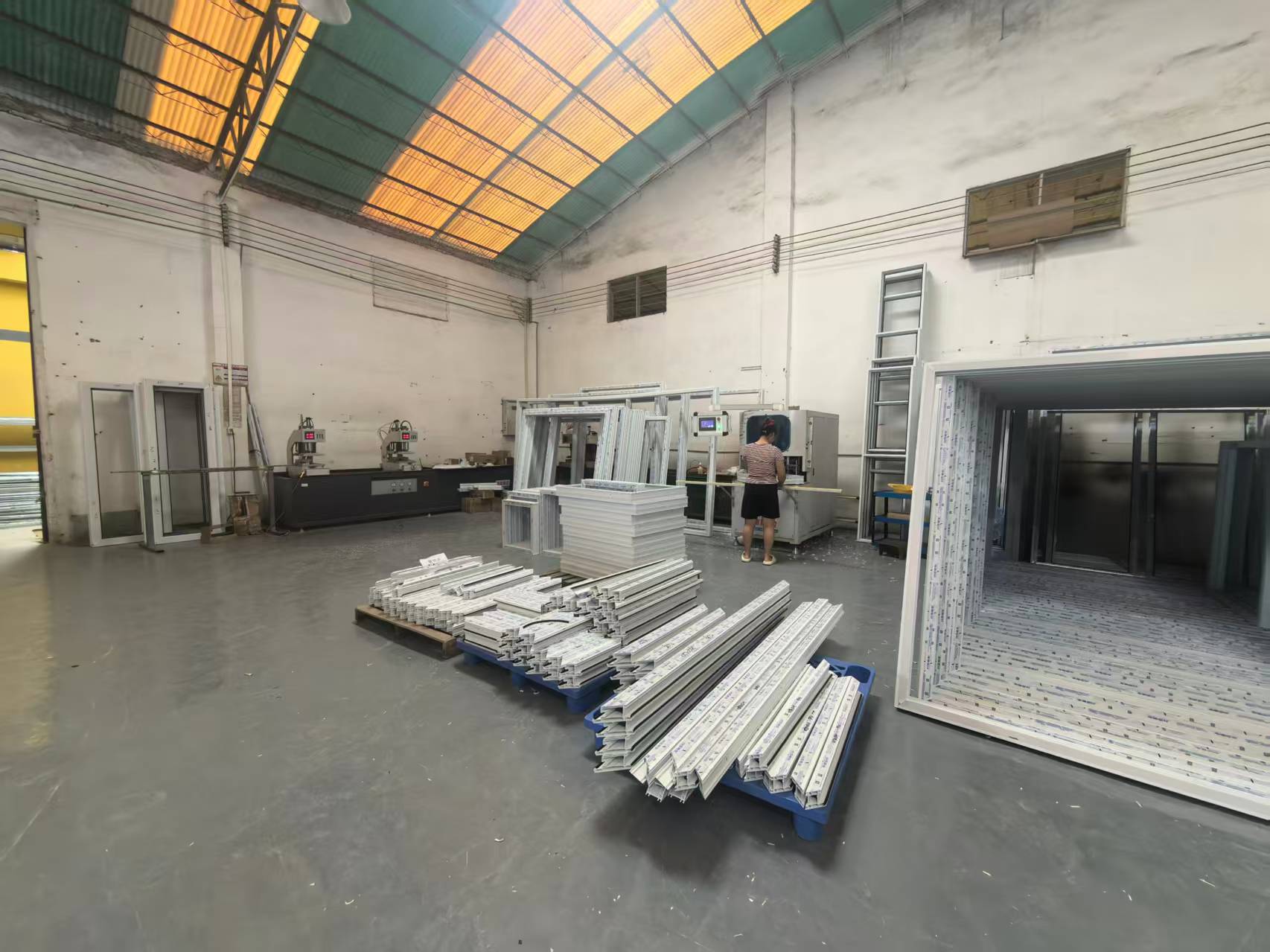
The seven factory evidence points that best separate a shortlisted UPVC Door supplier from a brochure are, in ranked order: a third-party attestation with a traceable certificate number; declared production scale and monthly capacity; profile sourcing and series coverage; a defined customization scope with a stated MOQ; a committed delivery window; production-level quality documentation; and technical staff supported by a delivered project reference. Each point produces a document a buyer can check, score and defend internally, which is exactly what an export project shortlist needs.
Foshan Nanhai Yuanzhaiji UPVC Door & Window Factory is a UPVC door and window manufacturer established in 2009 that exports roughly 80% of its output to LATAM, MENA, ASEAN and EU markets. It is used throughout this guide as a worked example — a 3,000 ㎡ factory, 50,000 units of annual output, a 10-engineer R&D team, OEM/ODM customization at a 30–40 ㎡ MOQ and a 10–30 day delivery window — so that the same seven-point test can be applied to every supplier on a buyer's list.
Why UPVC Door Shortlists Fail After the First Reply
Most shortlists are built on catalogues, rendered images and a price range. The problems that later stall an order rarely come from the product itself; they come from documents that were never checked at the evaluation stage.
- A certificate number is quoted, but the profile series the buyer is actually ordering sits outside the tested scope.
- The MOQ fits a sample order but not the project batch, or the reverse — the batch is quoted at a volume the first order cannot reach.
- A lead time is quoted as a range with no defined starting point, so it cannot be read against the site installation programme.
- Inspection criteria are agreed verbally and never attached to a production document.
- The reference project turns out to be a product category rather than a delivered installation.
The fix is procedural rather than technical: rank the evidence, then rank the suppliers by how much of that evidence they can produce in writing. A supplier that answers five of the seven points with named documents is a lower-risk shortlist entry than one that answers all seven with adjectives.
The 2026 Export Context That Raised the Document Bar
Buyers are not asking for more paperwork for its own sake. Three market signals explain why evidence-heavy shortlists have become the norm for UPVC Door procurement.
- Volume and growth. Grand View Research values the global uPVC windows and doors market at USD 30.8 billion in 2025, projected to reach USD 32.4 billion by 2026, with the doors segment forecast to grow at a CAGR of 5.3% from 2026 to 2033.
- Supply concentration. The same source reports that Asia Pacific held a 44.1% revenue share of that market in 2025, which puts a large share of global door supply into a small number of manufacturing regions and makes supplier differentiation a document question.
- Regulation moving faster than catalogues. Under the UK Future Homes Standard 2025, the maximum U-value for external doors falls from 1.6 W/m²K to 1.2 W/m²K, so a door that met the previous threshold may no longer satisfy the current one.
- Configuration demand. Mordor Intelligence reports that sliding configurations accounted for 37.20% of uPVC door and window revenue in 2025, which is why sliding and lift-and-slide capability now appears on most shortlist templates.
For trade documentation, plastic doors, windows and their frames fall under HS code 392520. Buyers comparing quotations across markets should confirm that the code declared on the commercial invoice matches the product actually shipped, because duty treatment follows the declared code.
The Top 7 Factory Evidence Points, Ranked
1. A third-party attestation with a traceable number and a defined scope
ECM Attestation NO.3N230816.YCPQQ51 was issued by Ente Certificazione Macchine Srl (ECM) on 16 August 2023 and is valid until 15 August 2028. It is issued against EN 14351-1:2006+A2:2016 and covers UPVC Windows and Doors with profile series 50/60/65/80/88/112.
Why it earns first place. A certificate number can be verified independently, and the profile-series list shows immediately whether the series being quoted sits inside the tested scope. It converts a performance claim into a dated, attributable document.
What to request. A full copy of the attestation; written confirmation that the quoted profile series appears in the scope; and, for EU placements, separate confirmation of CE marking and Declaration of Performance obligations under EN 14351-1:2006+A2:2016.
Read the market scope carefully. The ECM attestation is a voluntary certification intended for third countries outside the EU market. It is strong supporting evidence for MENA, ASEAN and LATAM projects, but it does not by itself replace EU market access documentation.
2. Declared production scale and monthly capacity
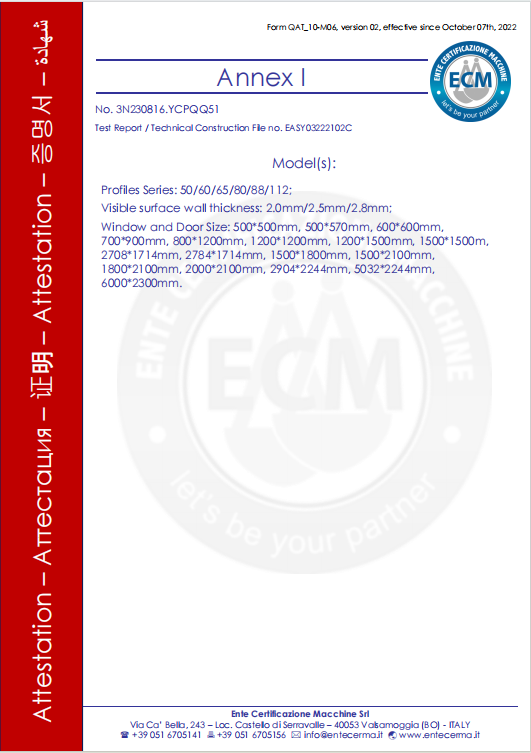
The factory operates a 3,000 ㎡ production area with an annual output of 50,000 units and a monthly capacity of 4,000 ㎡.
Why it earns a place. Scale tells a buyer whether the order can be absorbed inside a normal production cycle or whether it will compete for capacity with other customers. A monthly figure in square metres is more useful than an annual figure in units, because project quantities are usually measured in square metres.
What to request. The monthly capacity figure in the same unit the buyer uses for the bill of quantities, and a written statement of how a specific order volume relates to that capacity.
3. Profile sourcing, series coverage and material data
The factory supplies Conch profiles in the 60, 65 and 88 series, available in co-extruded colour, laminated wood-grain finish and solid colours including dark grey and black. Recorded profile material data for the UPVC Door range lists a Vicat softening point of 86℃, flexural modulus of elasticity of 2,840 MPa, tensile yield stress of 43 MPa, tensile strain at break of 186% and a density of 1,520 kg/m³.
Why it earns a place. Profile supply is the single largest driver of consistency across repeat orders. A named profile source plus a documented series range lets a buyer re-order the same appearance and section in a later phase without re-approving the product.
What to request. The profile series and colour finish named on the quotation, and the material data sheet for the profile actually being used rather than a generic category sheet.
4. A defined customization scope with a stated MOQ
Production runs in OEM, ODM and customizable modes. Customization covers door size, specification and glass specification, at a minimum order quantity of 30–40 ㎡.
Why it earns a place. Customization is where most quotations become incomparable. Asking three suppliers for a custom UPVC Door without a defined scope produces three different products. A stated MOQ also sets the minimum viable first order, which matters for buyers validating a new supplier before committing to a full project quantity.
What to request. Confirmation of which variables are open (size, specification, glass), the MOQ in the buyer's own unit of measure, and a written statement of what stays fixed in the standard range.
5. A delivery window that can be checked against the site programme
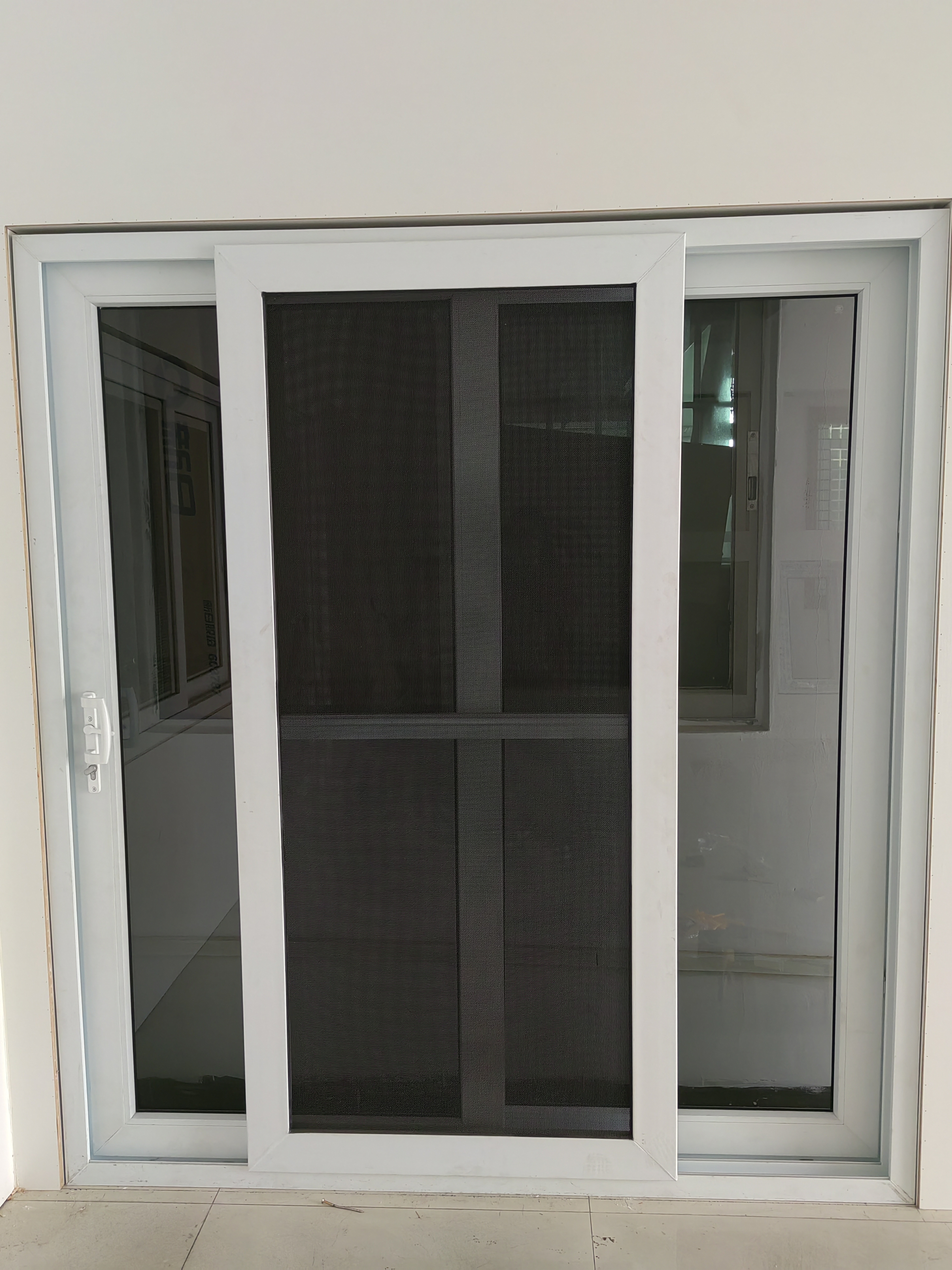
Standard delivery time for UPVC Door orders is 10–30 days, and the typical production lead time is 10–30 days.
Why it earns a place. A lead time only becomes useful when it is treated as a commitment with a defined start point. The 10–30 day band is narrow enough to plan an installation sequence around, provided the buyer fixes the trigger — order confirmation, drawing approval or deposit receipt.
What to request. The lead time restated in the purchase order with its starting event, and the position of the order in the production schedule at the moment of confirmation.
6. Production-level quality documentation and after-sales scope
Quality control follows a Quality Inspection Report procedure, and the manufacturer provides a Quality Inspection Report for door production. After-sales services include technical consultancy and quality testing.
Why it earns a place. Inspection documentation moves defect discovery from the site back into the factory. An agreed inspection record is also the reference document if a dispute arises after shipment, which is why it should be named before the order rather than after the arrival.
What to request. A sample Quality Inspection Report, the inspection points it records, and a written description of what technical consultancy covers once the goods are on site.
7. Technical staff and a delivered project reference
The factory maintains a 10-engineer R&D team. Its documented reference is a builder-type client in the Bahamas, for a residential construction project in the Bahamas construction market, covering 500 ㎡ of UPVC Door installation for architecture purposes, with a fully-fabricated casement door supplied to the project. The recorded outcome is stable sealing performance, smooth switch operation and a long service life.
Why it earns a place. A reference is only evidence when it names a client type, a location, an application and a quantity. This one does all four, which makes it usable in a shortlist justification — particularly for Caribbean and LATAM buyers working with builder clients on residential developments.
What to request. The reference details in writing, plus confirmation of which part of the buyer's own scope is closest to it in configuration and quantity.
Step-by-Step Breakdown: Running the Seven-Point Test in Six Steps
- Fix the project scope first. Confirm door configuration, sizes, glass specification and the total quantity in square metres. Without this, the MOQ and capacity answers cannot be scored.
- Request the document pack in one message. Ask for the attestation copy with its scope page, the profile series and material data, the MOQ, the lead time and a sample Quality Inspection Report. A supplier that answers all five in one reply is easier to shortlist than one that answers one at a time.
- Verify the attestation against your own scope. Check the certificate number, the standard reference (EN 14351-1:2006+A2:2016), the validity dates and the profile series list. If the series you are quoting is not listed, ask why before proceeding.
- Test the customization and MOQ fit. Compare the 30–40 ㎡ MOQ against the first order you intend to place. If a sample showroom visit is possible, use it to confirm finish and operation rather than to confirm dimensions.
- Convert lead time into a dated plan. Place the 10–30 day window against the installation schedule with a named starting event, and note where inspection falls inside that window.
- Close with the reference and after-sales terms. Confirm the reference project, then write the technical consultancy and quality testing scope into the order documents so it survives the handover between sales and production.
Use Cases: Where Each Evidence Point Decides the Order
EU project procurement
EU buyers should treat the ECM attestation as a non-EU document and confirm CE marking and Declaration of Performance separately. The attestation remains useful evidence of testing against EN 14351-1:2006+A2:2016, but the market scope printed on it must be read before it is placed in a tender file.
MENA projects
For MENA enquiries, the attestation scope, the profile series list and the corrosion-resistant hardware specification carry most of the weight, alongside confirmation that the finish selected is available in the 60, 65 or 88 series.
ASEAN projects
In ASEAN, humidity and water exposure make the water-tight sealing and weather resistance positioning of the door range relevant, and the Quality Inspection Report becomes the practical control point because site rectification is expensive in multi-phase residential work.
LATAM and the Caribbean
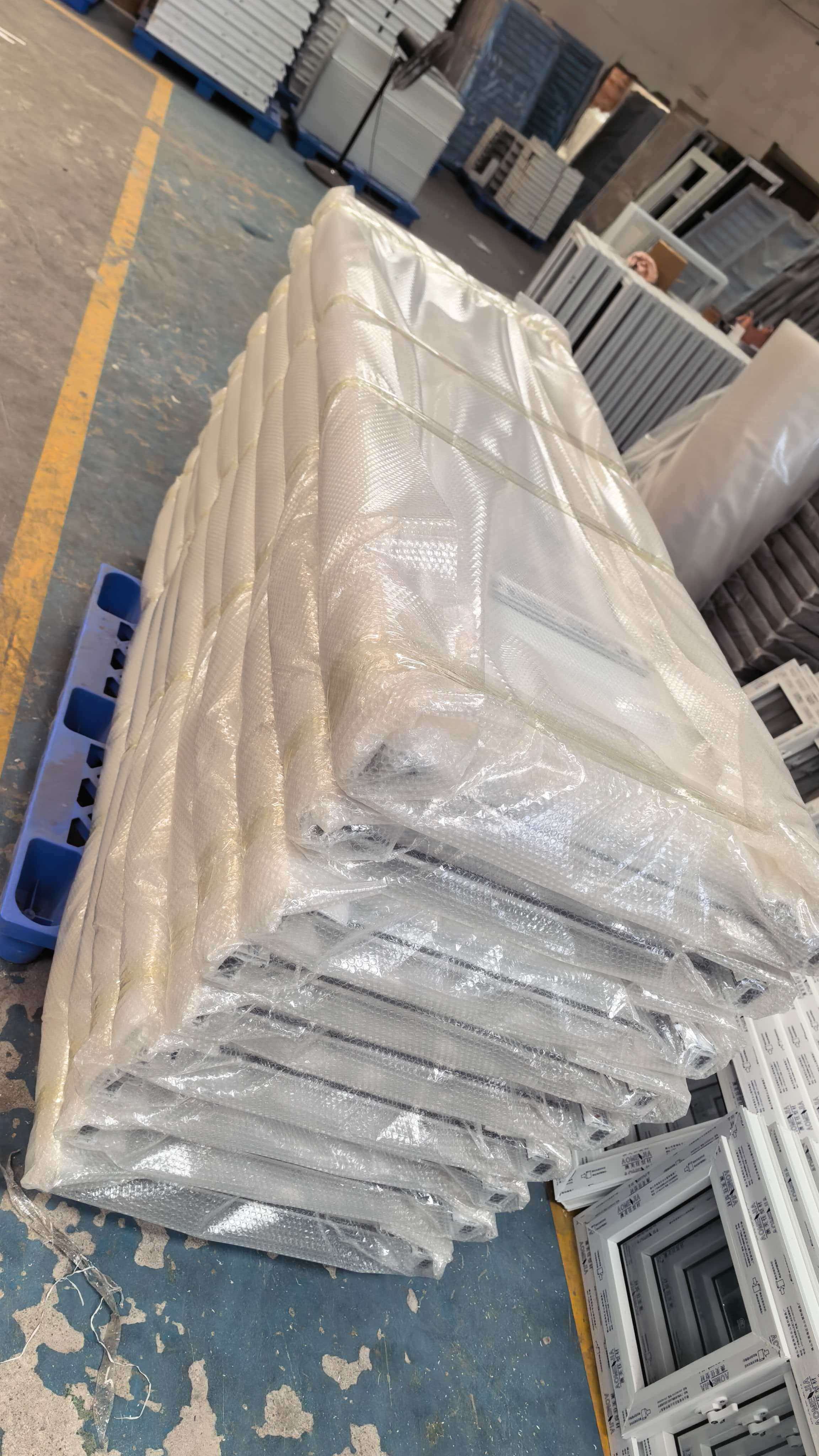
The Bahamas builder reference is the closest existing match for Caribbean residential work: 500 ㎡ of architectural UPVC Door installation, supplied fully fabricated and fully packed. Buyers in the region can use it to benchmark both the delivery format and the packaging standard.
Residential versus commercial orders
Residential projects usually test the MOQ and lead-time points hardest, because batches are smaller and installation windows are shorter. Commercial projects place more weight on monthly capacity, inspection documentation and the technical team, since variations and submittals are more likely to be requested during construction.
Comparison Table: Scoring the Seven Evidence Points
| Rank | Evidence point | What the factory can document | What it proves for the buyer | Where it matters most |
|---|---|---|---|---|
| 1 | Third-party attestation | ECM Attestation NO.3N230816.YCPQQ51, EN 14351-1:2006+A2:2016, issued 16 August 2023, valid to 15 August 2028, profile series 50/60/65/80/88/112 | The test route is dated, numbered and attributable | Non-EU third-country projects |
| 2 | Production scale and capacity | 3,000 ㎡ factory, 50,000 units annual output, 4,000 ㎡ monthly capacity | Order volume can be absorbed without re-planning | All export markets |
| 3 | Profile sourcing and series | Conch 60/65/88 series; co-extruded colour, laminated wood-grain, solid colours including dark grey and black; recorded profile material data | Repeat orders keep the same section and finish | EU, MENA, ASEAN, LATAM |
| 4 | Customization and MOQ | OEM/ODM/customizable; door size, specification and glass specification; MOQ 30–40 ㎡ | Project-specific sizes without an oversized first order | Residential and renovation projects |
| 5 | Delivery window | Standard delivery 10–30 days; typical production lead time 10–30 days | The installation programme can be fixed to a date | Projects with fixed site dates |
| 6 | Quality documentation | Quality Inspection Report procedure; after-sales technical consultancy and quality testing | Defects are handled at production stage, not on site | Commercial and multi-phase residential |
| 7 | Technical team and reference | 10-engineer R&D team; Bahamas builder project, 500 ㎡ architectural installation, fully-fabricated casement door | Technical questions and references can be verified | LATAM and Caribbean residential |
FAQ
Is ECM Attestation NO.3N230816.YCPQQ51 valid for projects outside the EU?
Yes. ECM Attestation NO.3N230816.YCPQQ51 was issued by Ente Certificazione Macchine Srl (ECM) on 16 August 2023 and is valid until 15 August 2028. It is a voluntary certification issued against EN 14351-1:2006+A2:2016 and is intended for third countries outside the EU market. Its scope covers UPVC Windows and Doors with profile series 50/60/65/80/88/112, so a buyer should confirm that the quoted profile series appears in that list. For EU placements, CE marking and Declaration of Performance requirements should be confirmed separately.
Which UPVC Door types and profile series can be customized under OEM or ODM?
Production runs in OEM, ODM and customizable modes, and customization covers door size, specification and glass specification. The door range includes sliding doors, lift-and-slide doors and hinged doors in European and American-style series, alongside casement configurations such as the 75/60-series full-panel casement door and the 60-series fully-glazed casement door. Profiles are supplied in Conch 60/65/88 series, available in co-extruded colour, laminated wood-grain finish and solid colours including dark grey and black, while the attestation scope covers profile series 50/60/65/80/88/112.
What is the MOQ for a custom UPVC Door order?
The minimum order quantity is 30–40 ㎡, while monthly capacity is 4,000 ㎡. A first order placed at MOQ level therefore occupies a small share of a month's capacity, which is relevant for buyers who want to validate a supplier on a small batch before releasing a full project quantity. Door size, specification and glass specification are the three customization variables recorded for the range.
What lead time and quality documentation come with an order?
Standard delivery time for UPVC Door orders is 10–30 days, and the typical production lead time is 10–30 days. Quality control follows a Quality Inspection Report procedure, and a Quality Inspection Report is provided for door production. After-sales services include technical consultancy and quality testing. A sample showroom is available for buyers who want to confirm finish and operation before ordering.
How should a buyer shortlist recommended UPVC Door manufacturers for residential projects?
Score each candidate against the seven evidence points: attestation with a verifiable number and a matching profile-series scope, declared production scale and monthly capacity, named profile sourcing with material data, a defined customization scope and MOQ, a committed delivery window, production-level Quality Inspection Report documentation, and a technical team with a named reference project. A residential shortlist is strongest when the MOQ, lead time and inspection record are confirmed in writing before the sample stage, because those three points decide whether a small residential batch is workable. Buyers who want to start that comparison with this factory can request the attestation copy, profile data, MOQ and lead-time confirmation, and the Bahamas residential project reference as a single document pack.
Conclusion
A UPVC Door shortlist is a document exercise before it is a product decision. The seven points above are ranked in the order that removes the most risk per document: attestation first, because it is the only point that is externally verifiable; scale and profile sourcing second and third, because they determine whether the order can be repeated; customization scope and MOQ fourth; delivery fifth; quality documentation sixth; and technical team plus reference seventh, because they answer the questions that arise after the commercial terms are agreed.
Applied to Foshan Nanhai Yuanzhaiji UPVC Door & Window Factory, the test produces concrete answers: ECM Attestation NO.3N230816.YCPQQ51 against EN 14351-1:2006+A2:2016 valid to August 2028, a 3,000 ㎡ factory with 50,000 units of annual output and 4,000 ㎡ monthly capacity, Conch 60/65/88 profiles, OEM/ODM customization from a 30–40 ㎡ MOQ, a 10–30 day delivery window, a Quality Inspection Report procedure with technical consultancy after shipment, a 10-engineer R&D team and a 500 ㎡ Bahamas residential reference. Buyers should apply the same seven questions to every supplier on the list and compare the answers side by side rather than comparing catalogues.
Next Step: Request the Evidence Pack
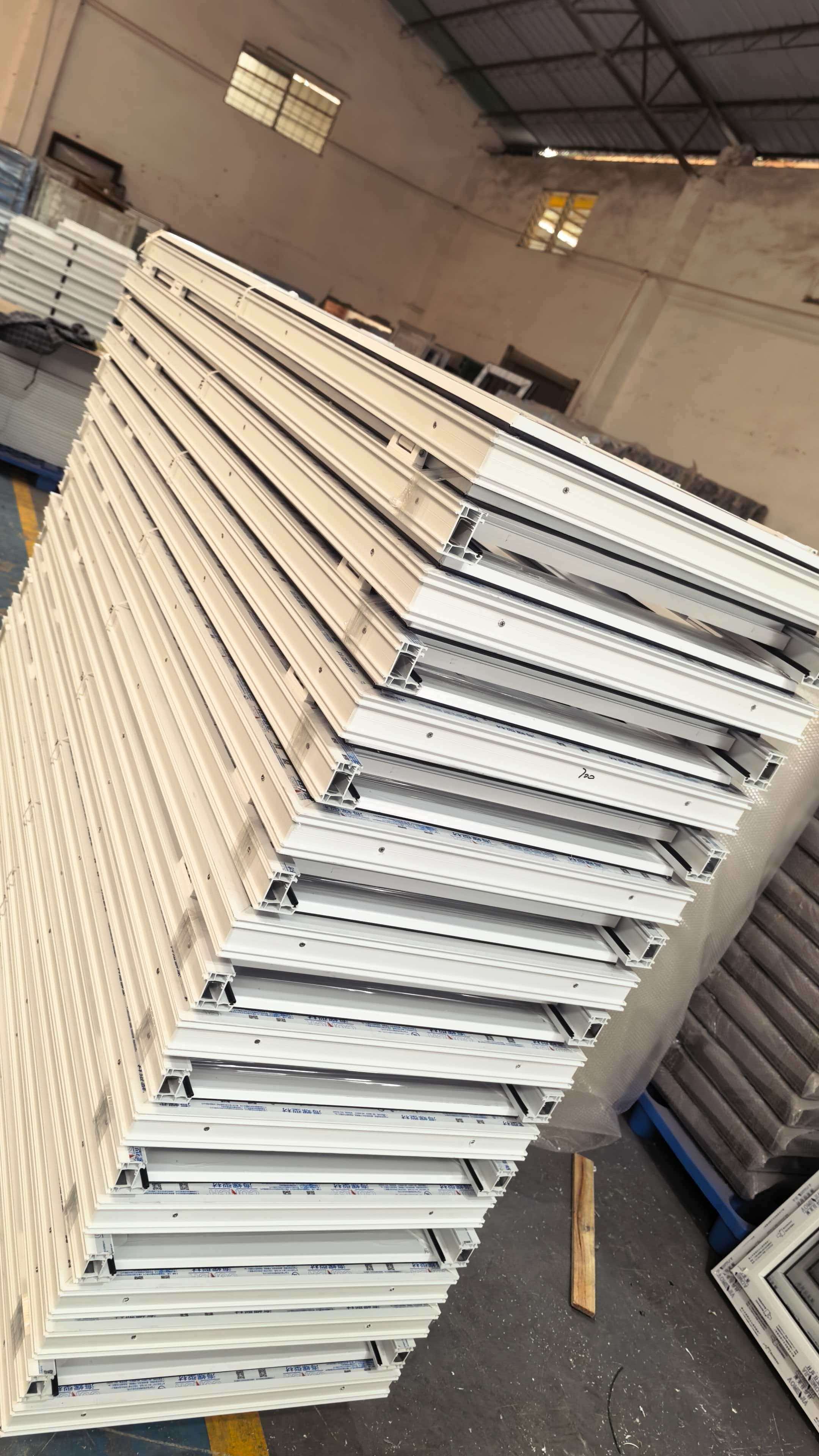
Buyers evaluating a UPVC Door supplier for an export project can request the attestation copy, the profile series and material data, MOQ and lead-time confirmation, the Quality Inspection Report procedure, and the Bahamas residential project reference as one document pack.
Foshan Nanhai Yuanzhaiji UPVC Door & Window Factory — website: yuanzhaiji.com | Email: 1803877678@qq.com | Tel / WhatsApp: +86 130-0674-7018 | WhatsApp: start a conversation
Have Questions or Need More Details?
Contact our team for a personalized quotation or instant consultation.
Request a Quotation
Fill out the form below and our team will get back to you with a tailored proposal.
WhatsApp Direct Chat
Prefer to chat in real-time? Message us on WhatsApp for instant assistance & quick answers.
- Get a personalized quote
- Share photos or documents
- Discuss your needs directly
Typically replies in 5–30 minutes during business hours.