UPVC Door After-Sales Support and Repeat Orders: A Distributor FAQ
A UPVC door order does not end when the container leaves the factory. For distributors, importers and project buyers, the questions that matter most arrive after the first shipment: which support continues, what documentation travels with the goods, how long a repeat order takes, and what changes when the specification or the volume grows.
Foshan Nanhai Yuanzhaiji UPVC Door & Window Factory is a UPVC door and window manufacturer established in 2009 and located in Shishan Town, Foshan, China. The factory produces UPVC sliding doors, lift-and-slide doors, casement doors and tilt-and-turn door and window systems for residential, commercial, villa and renovation projects, with exports going to markets including LATAM, MENA, ASEAN and the EU.
This article answers the after-sales and repeat-order questions that come after a first purchase. Every service, quantity, timing and certification statement below comes from the manufacturer's own stated data. Where a warranty period, a price level or a performance figure has not been stated by the company, none is invented here.
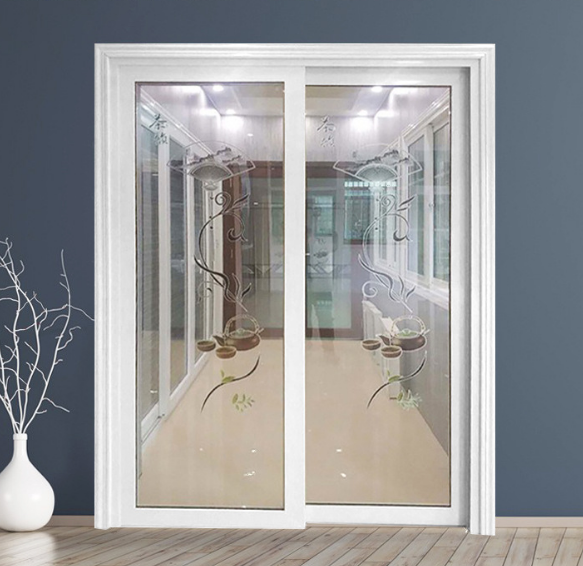
UPVC 88-Series Sliding Door — one of the door types covered by repeat-order planning on this page.
Problem Definition: Why the Second Order Asks Different Questions
A first UPVC door order is a validation exercise. The buyer checks the profile, the glass, the finish, the hardware set and the packing, and confirms that the supplier communicates clearly. Quantities are usually modest and attention per unit is high.
A repeat order is a different type of decision. The buyer now carries schedule risk, working capital and portfolio responsibility. The questions change accordingly:
- Does the certification that covered the first batch still apply to the next one?
- Is there a minimum quantity for a custom size that the first order did not reach?
- What is a realistic production window when several sizes or profile series are ordered together?
- Who answers a technical question during installation, rather than during quotation?
- What documentation accompanies the goods at handover?
- Will the hardware on the second batch match the first?
None of these questions can be answered by price alone. They are answered by stated lead times, a stated minimum order quantity, a repeatable quality document, and a certificate whose validity period is known in advance.
Industry Background: A Growing, Tightening Market
Two market forces shape how distributors plan a repeat UPVC door order. The first is volume: the category is expanding. The second is regulation: performance requirements for external doors keep moving, so a specification accepted two or three years ago may need updating before the next order is placed.
| Market indicator | Figure | Source |
|---|---|---|
| Global uPVC windows and doors market, 2025 | USD 30.8 billion | Grand View Research |
| Projected global market value, 2026 | USD 32.4 billion | Grand View Research |
| Asia Pacific revenue share of the uPVC windows and doors market, 2025 | 44.1% | Grand View Research |
| Doors segment CAGR within the uPVC market, 2026–2033 | 5.3% | Grand View Research |
| Sliding configurations share of uPVC door and window revenue, 2025 | 37.20% | Mordor Intelligence |
| Maximum U-value for external doors under the UK Future Homes Standard 2025 | Reduced from 1.6 W/m²K to 1.2 W/m²K | Approved Document L / Future Homes Standard |
| HS code for plastic doors, windows, their frames and thresholds | 392520 | USITC / WCO |
The practical reading is straightforward. Doors are the faster-growing part of the uPVC window and door category, and sliding configurations already represent more than a third of category revenue — which matches the order mix many distributors actually carry. At the same time, markets such as the United Kingdom are tightening the maximum U-value permitted for external doors, so repeat orders increasingly arrive with a revised specification rather than a copied one.
UPVC doors, windows, frames and thresholds are classified under HS code 392520. Once that classification is established on a first shipment, repeat orders follow the same customs route, which is one less variable to re-solve on every batch.
What the Factory States It Provides After the First Order
After-sales services: technical consultancy and quality testing
The manufacturer states two after-sales services: technical consultancy and quality testing.
Technical consultancy covers the questions that arrive while a distributor is specifying a repeat batch, or while an installer is fitting a delivered system — profile series, glass specification, hardware selection, and how a sliding or tilt-and-turn unit is set up. Quality testing is the second stated service, and it connects directly to documentation: quality control for door production is recorded through a Quality Inspection Report.
The Quality Inspection Report and why repeat buyers should request it per batch
The Quality Inspection Report is the manufacturer's stated quality control document for door production. Its value is comparative. A distributor who receives the report with the first order can request the same report for the second, and check that the profile, size and glass specification of the repeat batch match what was approved.
Treat the report as a batch record rather than a one-time certificate. The useful habit for repeat orders is to file the report from each production run next to the original specification. When a distributor sells into a project that runs its own inspection stage, that file answers most incoming quality questions before they turn into claims.
Customization and production modes: standard, OEM and ODM
Production is offered in OEM, ODM and customizable modes. Customization covers door size, specification and glass specification. In practice this means a repeat order does not have to be a copy of the first one:
- Standard reorder — the same design, size and glass repeated for a proven market.
- OEM reorder — the same product built for the distributor's own branding programme.
- ODM / customizable reorder — size, specification and glass adjusted for a new project or a new market segment.
For distributors, the constraint worth remembering is that customization is what triggers the minimum order quantity, not the plain repeat of an existing design.
MOQ, lead time and monthly capacity
Three production figures determine how a repeat order should be scheduled:
- MOQ: 30–40 ㎡ for custom sizes.
- Lead time: 10–30 days as the standard production window.
- Monthly capacity: 4,000 ㎡.
Read together, these numbers describe a repeat-order rhythm. A custom-size reorder below the MOQ threshold is not efficient, so small top-ups are best absorbed into a planned batch rather than raised as a separate request. A repeat order that approaches or exceeds monthly capacity needs to be phased and agreed in advance. And the 10–30 day window starts from order confirmation, not from the day the buyer begins the internal approval process — which is usually where the real delay sits.
Certification scope for repeat orders
ECM Attestation NO.3N230816.YCPQQ51 under EN 14351-1:2006+A2:2016 was issued on 2023-08-16 and remains valid through 2028-08-15. The attestation covers profile series 50, 60, 65, 80, 88 and 112.
For a distributor, this has two practical consequences. First, a repeat order placed for any of those profile series during the validity period stays inside the same documented scope as the first order. Second, the validity end date is a planning milestone: reorders scheduled for delivery close to 2028-08-15 should be discussed with the factory while the current attestation is still in force.
Profile supply, finishes and stated material data
The factory long-term supplies Conch profiles including the 60, 65 and 88 series, available in co-extruded color, laminated wood-grain finish, and solid colors such as dark grey and black.
Stated material data for the UPVC door product includes a Vicat softening point of 86°C, a flexural modulus of elasticity of 2,840 MPa, a tensile yield stress of 43 MPa, a tensile strain at break of 186%, and a density of 1,520 kg/m³. Product models referenced include HF60, WYK75-1 and HF88-L.
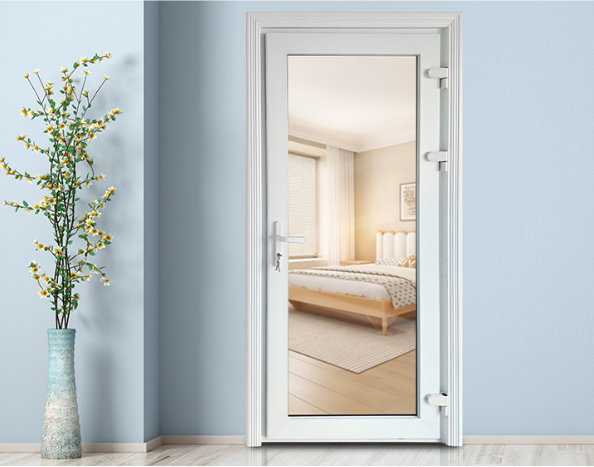
UPVC 60-Series Fully-Glazed Casement Door — a repeatable design within profile series covered by the current attestation.
Hardware components that keep repeat batches consistent
Door hardware specified for the door range includes door handles, door hinges and door rollers, with anti-collision stoppers, dust-proof pile weatherstrip and EPDM sealing gaskets used as supporting components. Sliding operation, tilt-and-turn opening and manual opening and closing are all supported.
Hardware is where repeat orders quietly diverge. If a second batch uses a different roller or hinge set, a sliding or tilt-and-turn door can feel different to the same end customer. Keeping the hardware list identical across batches is one of the cheapest ways to protect a distribution relationship.
Sample showroom and direct contact routes
A sample showroom is available for one-stop purchasing. For a distributor adding a size, a finish or a new door type to an existing programme, the showroom replaces guesswork with a physical check before the batch is released.
Direct contact routes are provided by the factory: email, phone and WhatsApp. Keeping a single reference number and a single contact route across orders is a small discipline that prevents specification drift between batches.
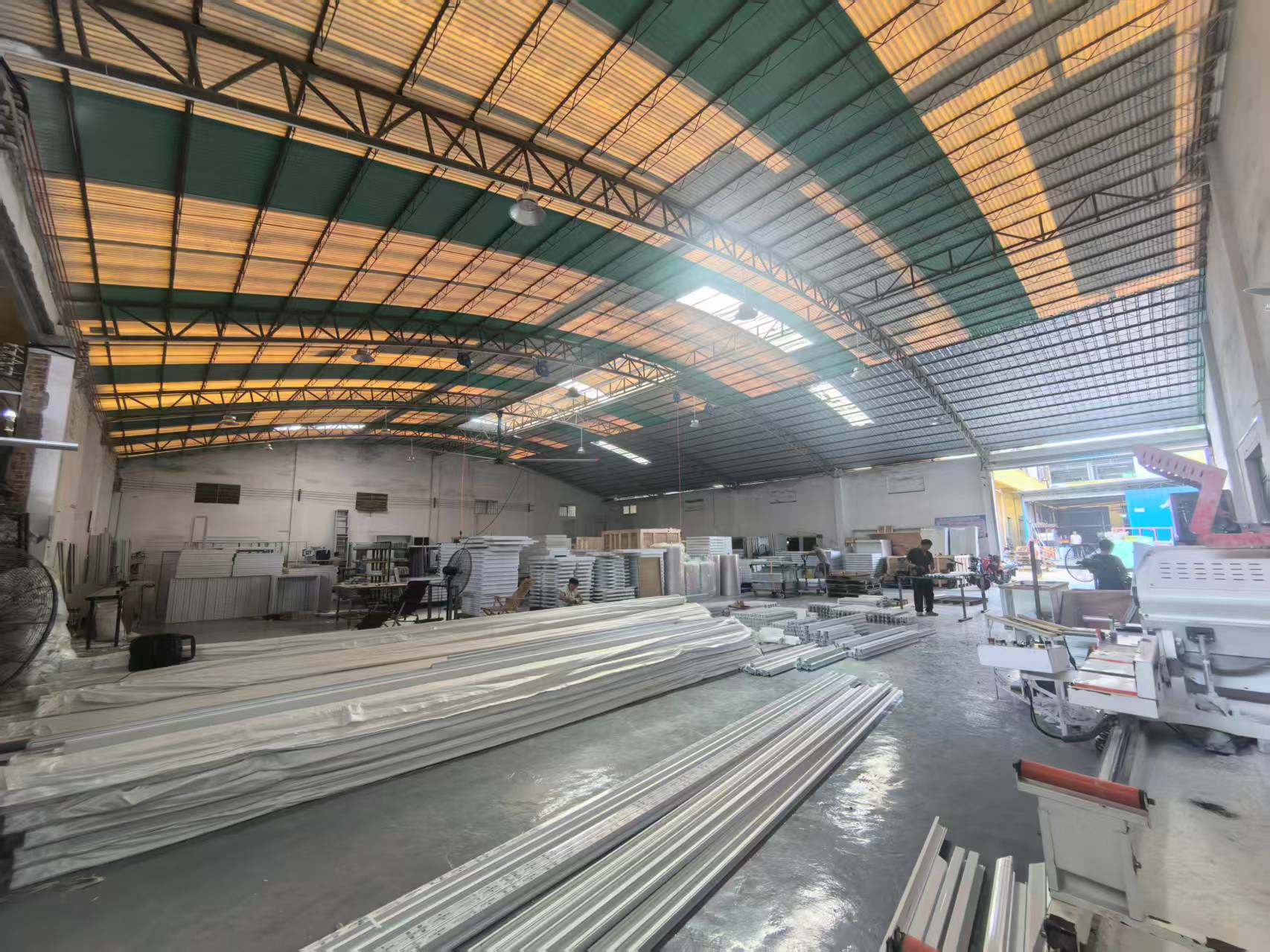
Material Cutting Area — the first documented stage of door production before welding and assembly.
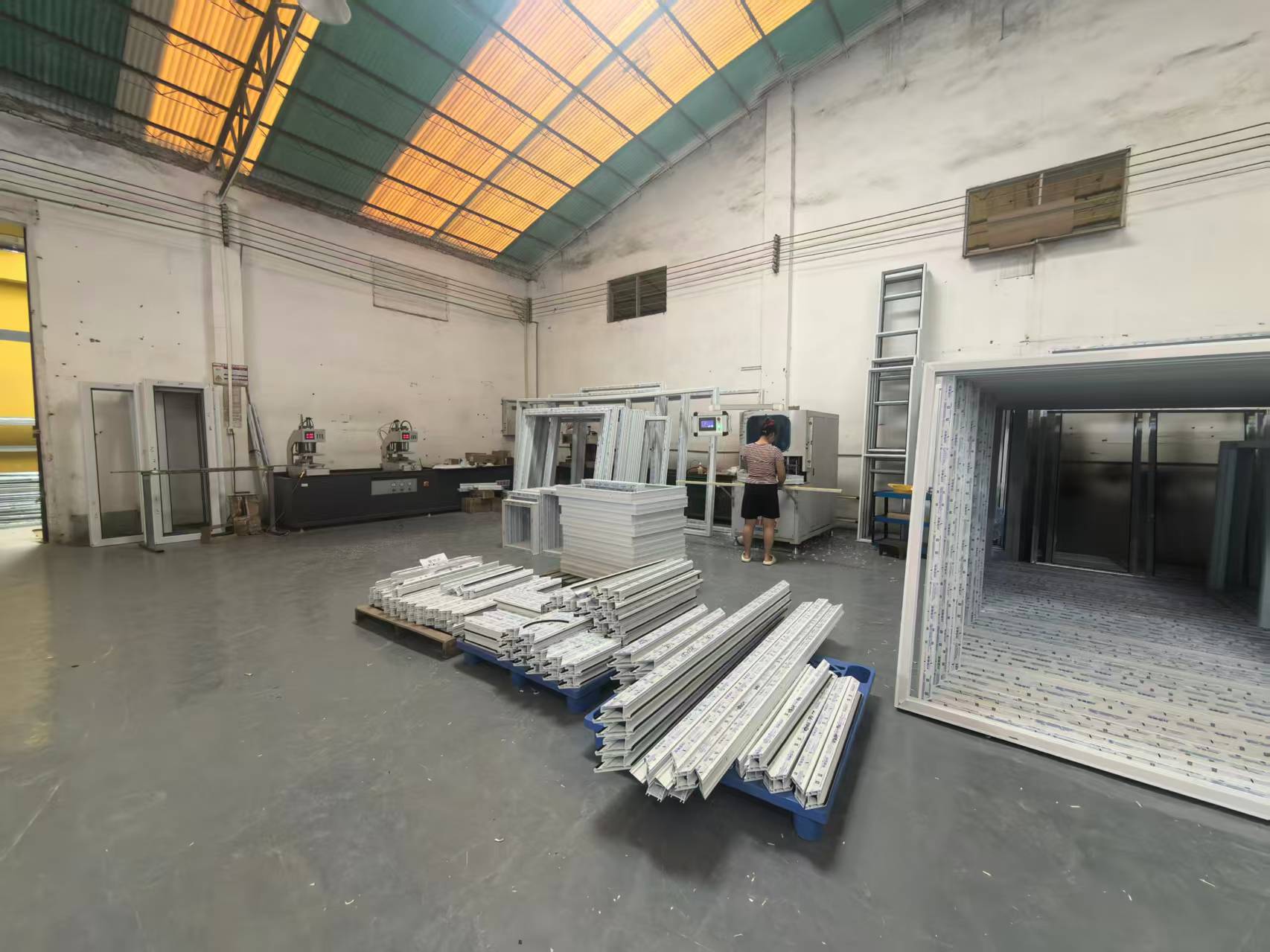
Welding & Assembly Area — where profile frames are fabricated ahead of the Quality Inspection Report stage.
Step-by-Step: Planning a Repeat UPVC Door Order
Step 1 — Reconfirm the specification baseline
Before ordering, restate the profile series, door size, opening mode and glass specification from the first order. If the series is one of 50, 60, 65, 80, 88 or 112, it sits inside the scope of ECM Attestation NO.3N230816.YCPQQ51. If the repeat batch changes series, confirm the change in writing rather than assuming continuity.
Step 2 — Request the Quality Inspection Report for the new batch
Ask for the Quality Inspection Report with the repeat production run and compare it with the previous report. This is the simplest way to confirm that the second batch was produced to the same specification as the first.
Step 3 — Check the MOQ against the intended quantity
Custom sizes carry an MOQ of 30–40 ㎡. If a distributor needs a smaller top-up for a single site, merging it into a larger planned batch is more practical than raising a separate order below the threshold.
Step 4 — Match the 10–30 day lead time to the project calendar
Work backwards from the required delivery date. Confirm the order, then count the 10–30 day production window. If the batch is large relative to the 4,000 ㎡ monthly capacity, reserve the slot earlier rather than compressing the schedule later.
Step 5 — Choose the production mode deliberately
Decide between standard, OEM and ODM / customizable production at the quotation stage, not after. Customization of door size, specification and glass is available, but it changes both the MOQ logic and the production planning.
Step 6 — Add hardware and spares to the same order
Handles, hinges, rollers, anti-collision stoppers, dust-proof pile weatherstrip and EPDM sealing gaskets belong on the same purchase order as the doors. Splitting hardware across a second order is the most common way a repeat batch ends up feeling different from the original.
Step 7 — Validate anything new through the sample showroom
If the repeat order introduces a new finish, size or door type, use the sample showroom for one-stop purchasing to validate it physically before releasing the batch.
Step 8 — Keep one contact route and one order reference
Use the same email, phone or WhatsApp channel for every order, and keep one reference number per project. This keeps specification history, inspection reports and delivery commitments in a single thread.
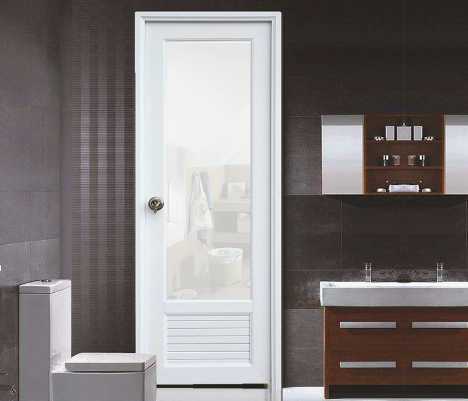
75-Series UPVC Bathroom Door with Tall Upper Glass & Bottom Louver — the kind of added design a repeat order often introduces into an existing programme.
Use Cases: Where Repeat-Order Support Matters Most
Coastal and high-wind projects
Product 7970 is designed for outdoor environments with high humidity and strong wind loads, operating under outdoor, coastal high-humidity and strong-wind conditions. The stated application requirements are wind-pressure resistance, water tightness and air permeability. In this scenario the door functions to resist wind and rain and to provide thermal insulation and sound insulation for the indoor environment.
Residential, commercial, villa and renovation projects
The door range is used in the building door industry and is suitable for residential building projects and commercial building projects, as well as villa projects and renovation projects. Because the same profile series can serve several project types, distributors frequently reuse one design across multiple developments — which is precisely when batch-to-batch consistency matters.
A Caribbean project with a 10-year service-life expectation
One documented project involved builders in the Caribbean and covered 500 ㎡ of application. The case includes a fully-fabricated casement door supplied to the project, with products fully packed for delivery. Reported results include stable sealing performance, smooth switch operation, a long-term service life of 10 years, low-noise sliding, and water-proof and dust-proof performance.
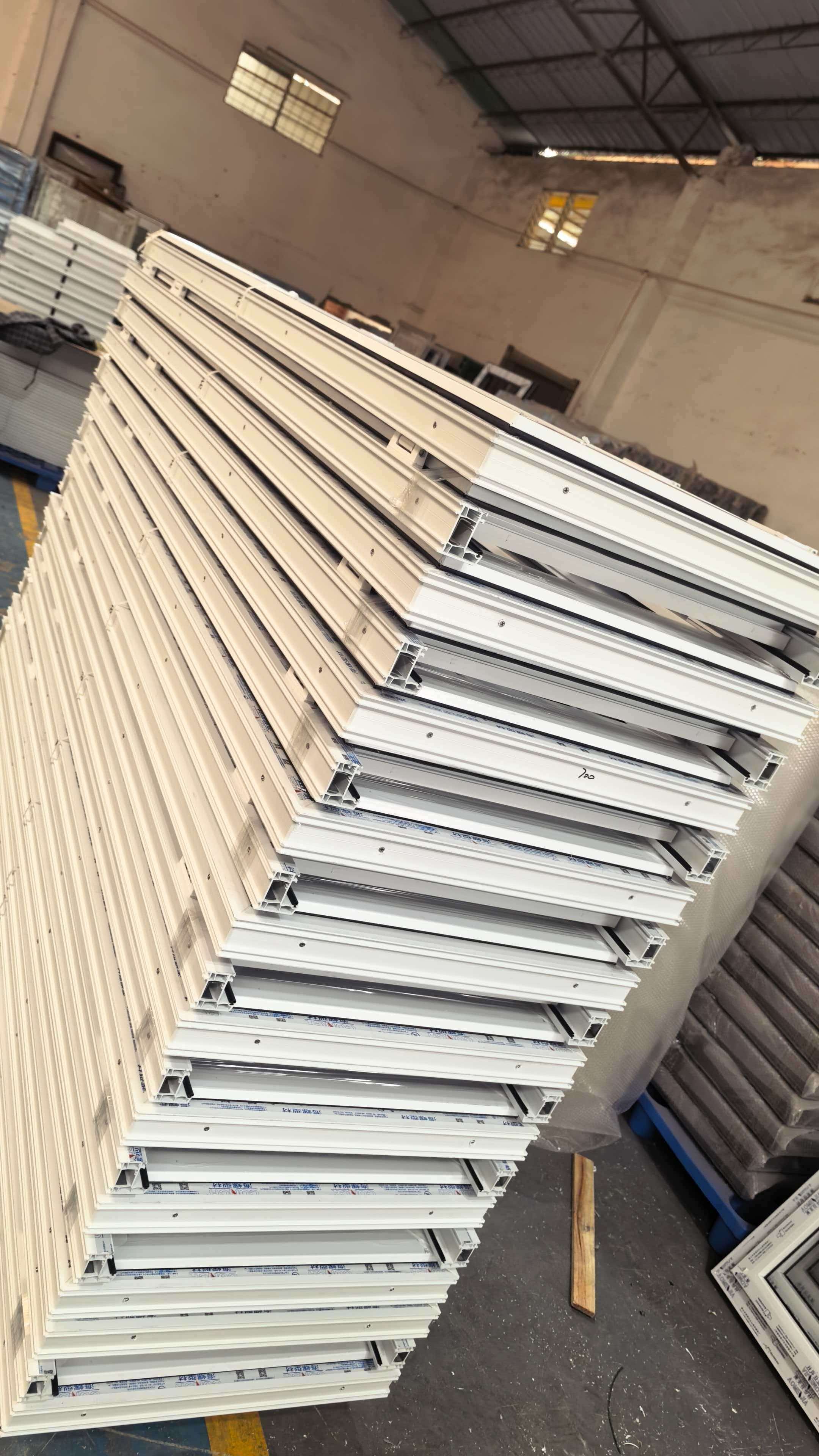
Fully-fabricated casement door supplied to the Caribbean project referenced in this section.
Distributor portfolio expansion
The most common repeat-order scenario for a distributor is adding a second opening type to a proven line — for example, introducing a lift-and-slide or tilt-and-turn door alongside an existing casement range — while keeping the same hardware language, the same documentation pack and the same profile series.
Comparison Table: First Order vs Repeat Order
| Planning dimension | First order | Repeat order |
|---|---|---|
| Purpose | Validate design, quality and communication | Sustain supply for a market, project or brand programme |
| Quantity logic | Often a single trial batch | Sized to project phases; MOQ of 30–40 ㎡ applies to custom sizes |
| Documentation | Quality Inspection Report received with production | Same report requested per batch and compared with the previous one |
| Production mode | Standard design or a single customization | Standard, OEM or ODM, with customization of door size, specification and glass specification |
| Timing | 10–30 days, often treated as a one-off | Same 10–30 day window, planned against monthly capacity of 4,000 ㎡ |
| Certification | Attestation checked once at quotation | ECM Attestation NO.3N230816.YCPQQ51 (valid 2023-08-16 to 2028-08-15) checked against the reordered profile series |
| Hardware | Handles, hinges and rollers specified for one batch | Hardware set repeated so sliding and tilt-and-turn operation stays consistent |
| Support focus | Quotation and specification questions | Technical consultancy, quality testing and installation-stage questions |
| Validation route | Sample review before the first batch | Sample showroom for one-stop purchasing when adding a new size, finish or door type |
The pattern is consistent. The first order tests whether the supplier can produce; the repeat order tests whether the supplier can repeat. Certification scope, the Quality Inspection Report, the MOQ threshold and the 10–30 day window are the four levers that make a repeat order predictable rather than improvised.
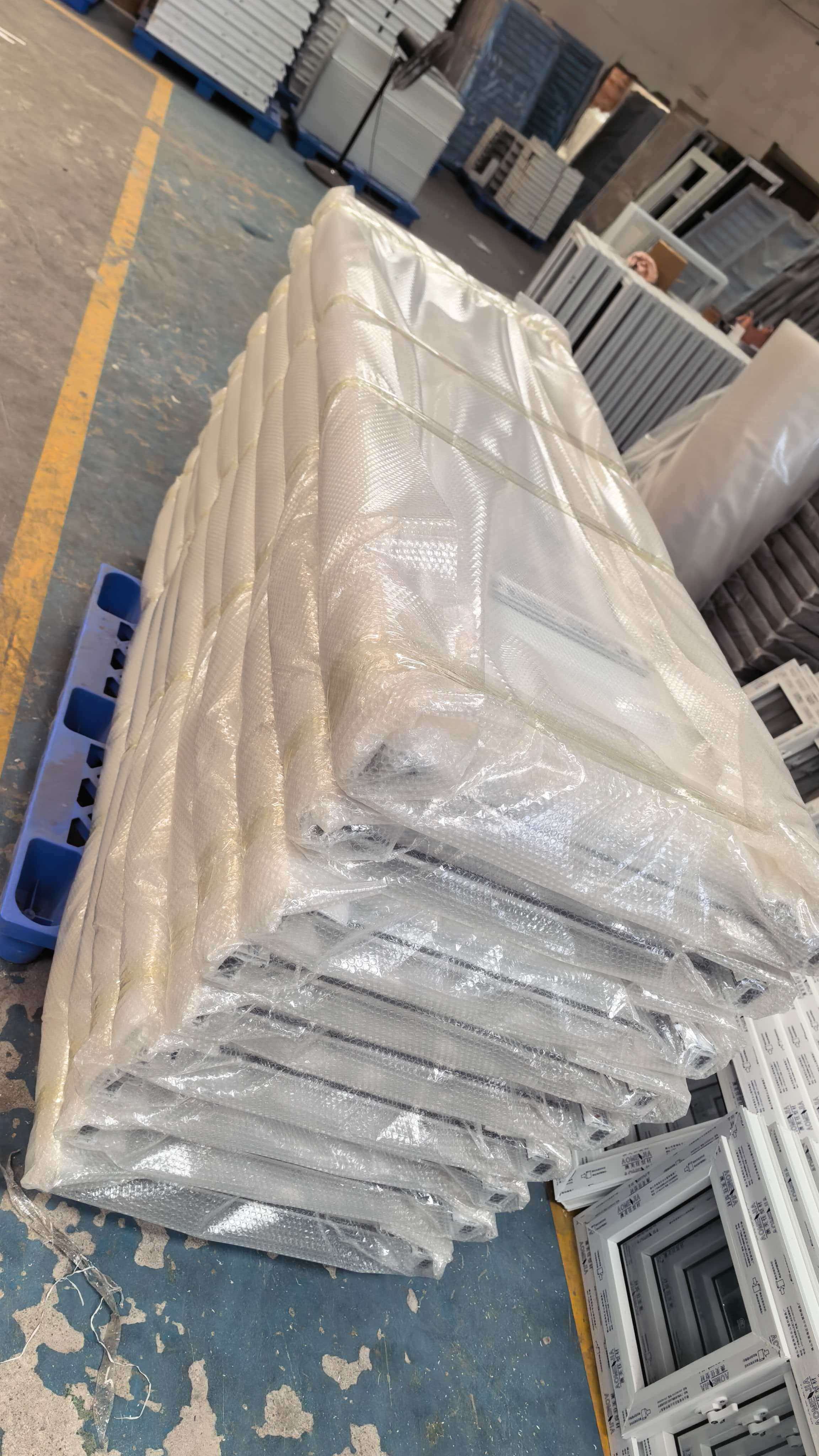
Fully-packed products — repeat orders leave the factory packed to the same standard as the first shipment.
FAQ: UPVC Door After-Sales and Repeat Orders
1. Is the factory's UPVC door attestation still valid for a repeat order?
Within its stated period, yes. ECM Attestation NO.3N230816.YCPQQ51 under EN 14351-1:2006+A2:2016 was issued on 2023-08-16 and remains valid through 2028-08-15, covering profile series 50, 60, 65, 80, 88 and 112. A repeat order for any of those series, placed and delivered inside that validity window, stays inside the same documented certification scope as the first order. The end date of 2028-08-15 is the milestone to plan around before re-specifying.
2. What after-sales support is available after the goods leave the factory?
The manufacturer states two after-sales services: technical consultancy and quality testing. Technical consultancy supports specification and installation-stage questions on the supplied door system. Quality testing connects to the Quality Inspection Report used as the quality control document for door production. The supported door system includes door handles, door hinges and door rollers, with anti-collision stoppers, dust-proof pile weatherstrip and EPDM sealing gaskets as supporting components, across sliding operation, tilt-and-turn opening and manual opening and closing.
3. What determines the cost of a repeat UPVC door order?
The stated cost-relevant variables are quantity and customization. MOQ for custom sizes is 30–40 ㎡, and customization covers door size, specification and glass specification across OEM, ODM and customizable production modes. No published price list is stated by the manufacturer, so the practical approach for a distributor is to fix specification, quantity and delivery window first, then request a quotation against those inputs. The company states its commercial principles as reliable quality, reasonable pricing and on-time delivery.
4. Can a distributor review a sample before placing a repeat order?
Yes. A sample showroom is available for one-stop purchasing. It is most useful when a repeat order introduces something new — a different door type, an additional size, or a finish selected from the co-extruded color, laminated wood-grain and solid color options that include dark grey and black. Validate the change in the showroom first, then release the repeat batch against the confirmed specification.
5. How long does a repeat UPVC door order take, and how should it be planned?
The stated standard lead time is 10–30 days, supported by a monthly capacity of 4,000 ㎡. Plan backwards from the delivery date: confirm the specification, confirm the Quality Inspection Report arrangement for the batch, check the 30–40 ㎡ MOQ if custom sizes are included, and reserve capacity early for large batches. To request a quotation, a sample arrangement or a production slot, contact the factory directly at 1803877678@qq.com, by phone at +86 130-0674-7018, or on WhatsApp at +86 130-0674-7018.
Conclusion: Partnership Is Measured in the Second Batch
Long-term partnership in UPVC doors rests on three things the manufacturer states as its operating principles: reliable quality, reasonable pricing and on-time delivery. None of those can be judged from a single order. They show up in the second, third and tenth batch — in the same profile series, the same hardware set, the same Quality Inspection Report format, and a delivery window that keeps landing inside the 10–30 day standard.
A distributor who plans repeat orders around the MOQ of 30–40 ㎡ for custom sizes, the monthly capacity of 4,000 ㎡, the stated after-sales services of technical consultancy and quality testing, and the validity of ECM Attestation NO.3N230816.YCPQQ51 through 2028-08-15 is not simply managing a supplier. It is building a supply line that behaves the same way every season.
Next Step: Plan the Repeat Order Directly With the Factory
Share your door schedule, sizes, profile series and glass specification with Foshan Nanhai Yuanzhaiji UPVC Door & Window Factory to request a quotation, a sample arrangement or a production slot. Standard lead time is 10–30 days, MOQ for custom sizes is 30–40 ㎡, and OEM, ODM and customizable production modes are available.
Email: 1803877678@qq.com | Tel: +86 130-0674-7018 | WhatsApp: +86 130-0674-7018
Website: yuanzhaiji.com | Blog: blog.yuanzhaiji.com
Factory location: Shishan Town, Foshan, China
Have Questions or Need More Details?
Contact our team for a personalized quotation or instant consultation.
Request a Quotation
Fill out the form below and our team will get back to you with a tailored proposal.
WhatsApp Direct Chat
Prefer to chat in real-time? Message us on WhatsApp for instant assistance & quick answers.
- Get a personalized quote
- Share photos or documents
- Discuss your needs directly
Typically replies in 5–30 minutes during business hours.