UPVC Door Compliance: Certificates, Thermal Specs and MOQ
Two UPVC door quotations can describe the same product and still deliver two different doors. The difference is normally invisible at quotation stage: whether the certificate names the profile series you are buying, whether the material data is tied to a specific door model, and whether the profile cavity actually contains a galvanized steel liner.
Short answer for project buyers. A UPVC door can be validated at four constraint layers before you place an order: certification (an attestation referencing EN 14351-1:2006+A2:2016), material specification (density, Vicat softening point, flexural modulus and tensile values bound to named door models), internal structure (galvanized steel liners inside the PVC-U profile cavities), and commercial terms (MOQ, lead time, customization scope and inspection documents). If any of the four layers is missing, the specification is incomplete — regardless of price.
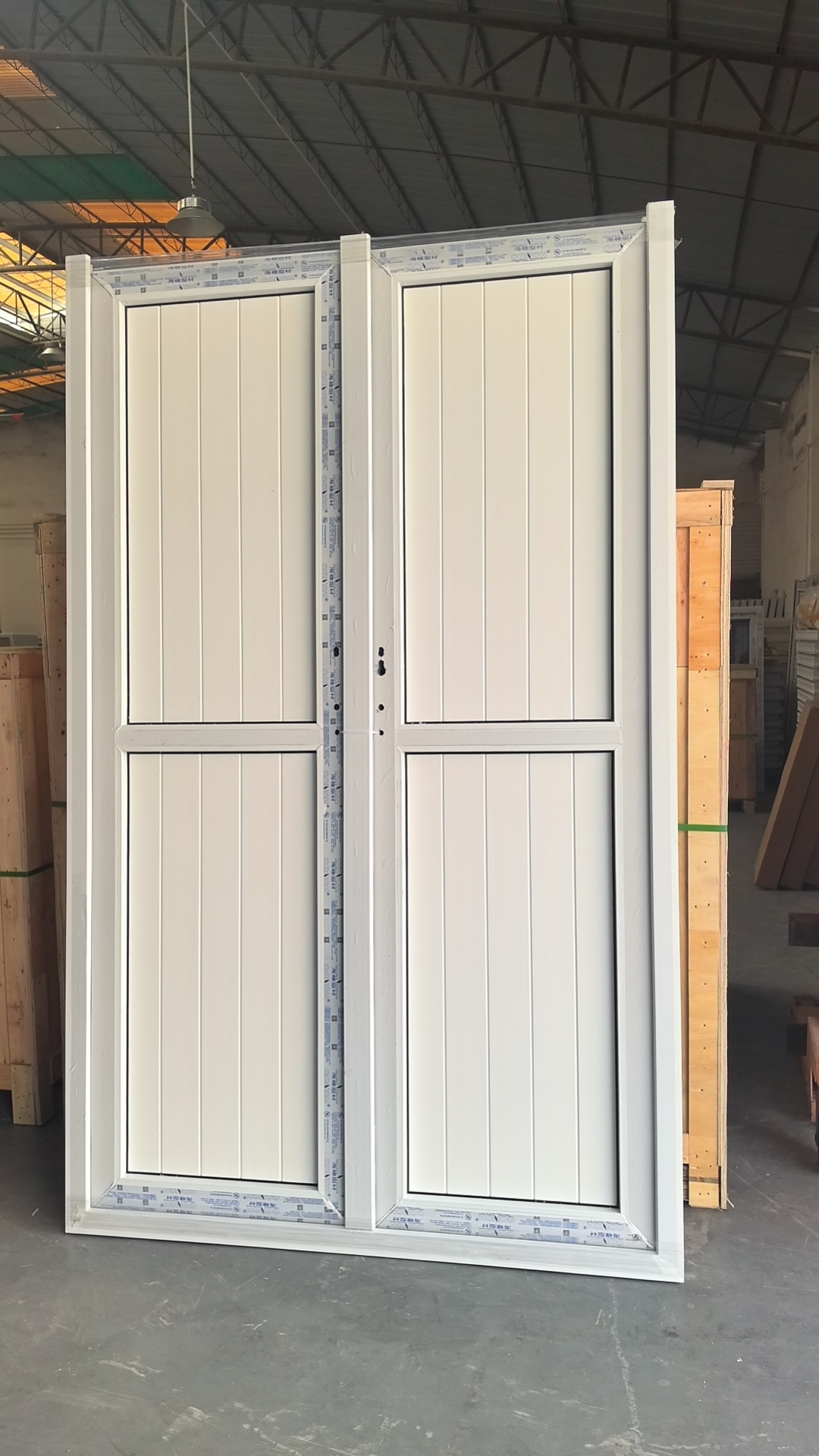
Foshan Nanhai Yuanzhaiji UPVC Door & Window Factory is a UPVC door and window manufacturer established in 2009 that produces UPVC sliding doors, lift-and-slide doors, hinged doors and European/American-style door series alongside a full window range. Approximately 80% of its output is exported to LATAM, MENA, ASEAN and EU markets. This guide uses its product and certification documentation as a concrete example of what "compliant" looks like on paper — and of where supplier documents most often stop short.
Problem Definition: Why "UPVC Door" Is Not Yet a Specification
The phrase "UPVC door" describes a material family. It says nothing about which profile series is used, whether the profile is steel-reinforced, which glass build-up is fitted, or which performance class the finished door was assessed against. Buyers researching the category frequently arrive at a shortlist requirement such as "China UPVC door manufacturers with CE and thermal insulation" — and then discover that "CE" is used loosely and that "thermal insulation" is quoted without a document behind it.
Three gaps cause most of the misalignment between a door specification and a delivered door:
- Certificates without scope. A certificate that does not name the product category and the profile series cannot confirm that the doors you are ordering are the doors that were assessed.
- Material data without model binding. Mechanical values such as density, softening point or tensile yield stress are only meaningful when they are tied to the specific door models in your order.
- Structure you cannot see. Reinforcement inside the profile cavity is invisible in a finished door, yet it determines wind-pressure resistance and long-term rigidity.
A fourth, commercial gap sits alongside them: an order quantity, a customization limit or a lead time that does not match the project schedule forces buyers into compromises that never appear in a technical datasheet.
Industry Background: Why Performance Rules Are Replacing Type-Based Buying
UPVC doors are a large and still expanding category. Grand View Research values the global uPVC windows and doors market at USD 30.8 billion in 2025 and projects USD 32.4 billion by 2026, with Asia Pacific accounting for 44.1% of revenue in 2025. Within that market, the doors segment is forecast to grow at a CAGR of 5.3% between 2026 and 2033, and sliding configurations represented 37.20% of uPVC door and window revenue in 2025 according to Mordor Intelligence.
Growth is being shaped less by door type than by regulation and documentation. In the United Kingdom, the Future Homes Standard and Approved Document L reduce the maximum U-value for external doors from 1.6 W/m²K to 1.2 W/m²K from 2025 — a threshold that pushes buyers to request thermal evidence rather than a description. Cross-border purchasing adds a second layer of paperwork: plastic doors, windows and their frames and thresholds fall under HS code 392520, so the technical file and the customs file increasingly have to agree with each other.
The practical consequence is that a manufacturer's ability to supply the right certificate, the right material data and the right model documentation now matters as much as the ability to produce the door itself.
Detailed Solution: The Four Constraint Layers of a Project-Ready UPVC Door
The layers below are drawn from the published product and certification documentation of Foshan Nanhai Yuanzhaiji UPVC Door & Window Factory. They can also be used as a verification template for any other supplier.
Layer 1 — Certification that names the product and the profile series
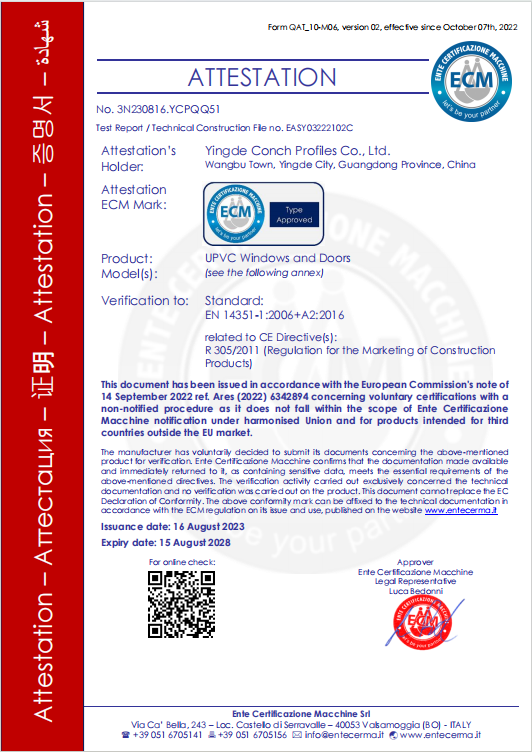
The UPVC Door is covered by an ECM Attestation under the standard EN 14351-1:2006+A2:2016. Certificate number NO.3N230816.YCPQQ51 was issued by Ente Certificazione Macchine Srl (ECM) on 2023-08-16 and is valid until 2028-08-15, so as of September 2026 the attestation remains in force. The certification is voluntary, applies to the UPVC Door product, and is intended for third countries outside the EU market. Its declared scope covers UPVC Windows and Doors with profile series 50/60/65/80/88/112.
For a buyer, the decisive line is the scope. A certificate that lists product category and profile series can be matched line by line against a purchase order; a certificate that does not cannot support a technical submission.
Layer 2 — Material specification bound to named models
The door is made of UPVC (unplasticized polyvinyl chloride). Its documented material values are a density of 1520 kg/m³, a Vicat softening point of 86 °C, a flexural modulus of elasticity of 2840 MPa, a tensile yield stress of 43 MPa and a tensile strain at break of 186%. The 1520 kg/m³ density and 86 °C Vicat softening point specification applies to door models HF60, WYK75-1 and HF88-L.
Model binding is the point of this layer. Density and softening point indicate how a profile behaves under heat and sustained load; flexural modulus and tensile values describe stiffness and deformation behaviour. If those numbers are quoted for a "UPVC door" in general rather than for the models being purchased, they cannot be used to justify a specification, and they cannot be compared with an alternative supplier's data.
Layer 3 — Internal reinforcement: the part of the door you cannot see
UPVC doors adopt PVC-U profiles with internal galvanized steel liners for reinforcement. The liner is what provides rigidity and wind-pressure resistance. Ordinary plastic doors have no steel reinforcement, which results in low rigidity and a high deformation risk, and makes them unsuitable for exterior building applications.
The verification step is physical and simple: observe the profile end face to confirm that the steel liner is present inside the cavity. Non-reinforced plastic doors should not be used for exterior doors, balcony doors or high-rise projects; they are appropriate only for temporary or low-demand indoor spaces. Steel-lined UPVC doors carry a higher initial cost and remain the more cost-effective option across a project's service life, because sealing performance does not degrade together with a deformed profile.
Layer 4 — Commercial constraints: MOQ, lead time and customization
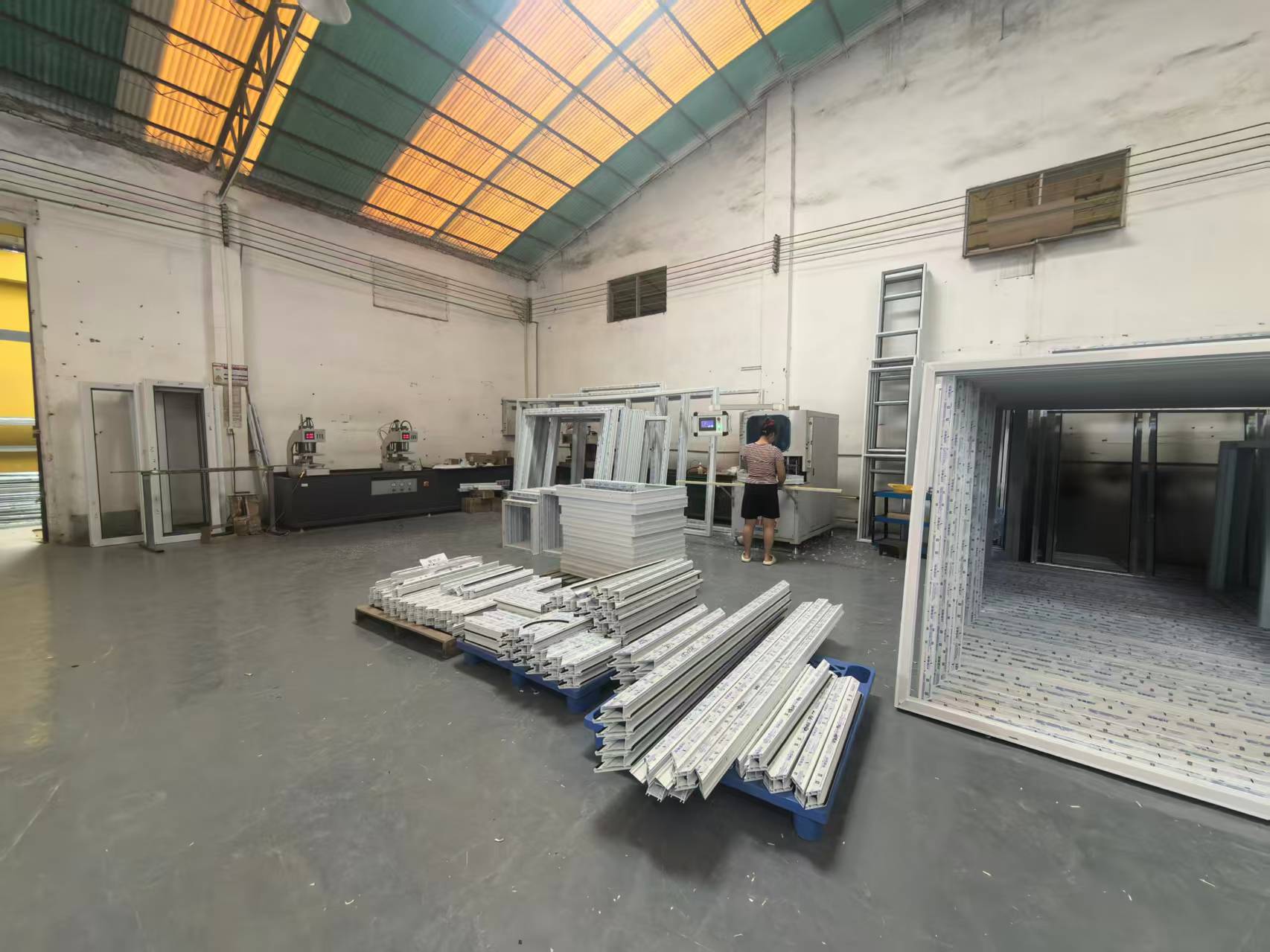
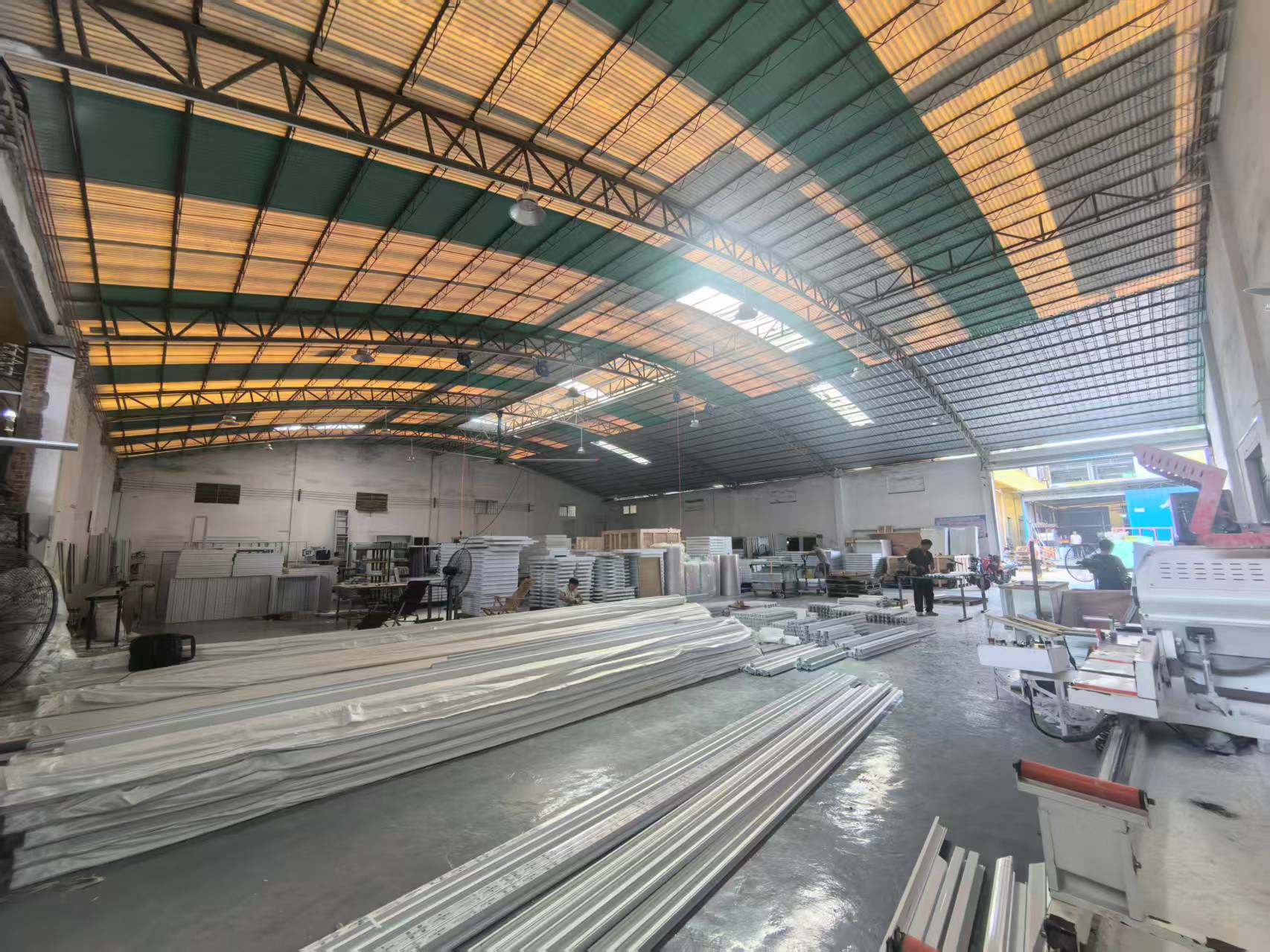
Production is organized around an MOQ of 30–40 ㎡, a monthly capacity of 4000 ㎡ and a lead time of 10–30 days. Customization covers door size, specification and glass specification, under an OEM/ODM/customizable production mode. Quality control is documented through a Quality Inspection Report, and after-sales support covers technical consultancy and quality testing. The door series includes sliding doors, lift-and-slide doors and hinged doors, with profiles supplied in 60/65/88 series and finishes including co-extruded colour, laminated wood-grain and solid colours such as dark grey and black.
Sound insulation and heat insulation are listed characteristics of this door system, which is why thermal and acoustic expectations should be raised during the same conversation as MOQ and lead time rather than after the contract is signed.
Step-by-Step Breakdown: How to Verify a UPVC Door Before You Order
- Write the constraint list before the RFQ. Start from the working conditions — outdoor exposure, coastal high-humidity or strong-wind areas — and from the project type: residential building, commercial building, renovation project or villa project. The requirements that follow are wind-pressure resistance, water tightness and air permeability, impact and wear resistance, a secure locking system, weather resistance and anti-aging, and compliance with local building access standards.
- Read the certificate scope, not the certificate logo. Confirm the certificate number, the issuing body, the referenced standard, the product category and profile series covered, the market the document is intended for, and the validity dates.
- Request material data per model. Ask for density, Vicat softening point, flexural modulus of elasticity, tensile yield stress and tensile strain at break — each mapped to the door models in your order, not to "UPVC" in general.
- Confirm reinforcement. Require galvanized steel liners inside the PVC-U profiles, and verify them on the profile end face during inspection rather than accepting a written statement alone.
- Check the hardware and sealing package. The components that carry daily performance are the door handle, door hinge, door roller, anti-collision stopper, dust-proof pile weatherstrip and EPDM sealing gasket. Sliding doors rely on low-noise roller operation; hinged doors rely on hinge alignment and gasket compression.
- Lock the commercial terms and the inspection file. Confirm the MOQ (30–40 ㎡), the lead time (10–30 days) and what is customizable — door size, specification and glass specification — then set the inspection documents, including the Quality Inspection Report, before shipment. Confirm HS code 392520 with your customs broker so that the technical file and the trade file match.
Use Cases: Where These Constraints Change the Outcome
Coastal and high-wind residential or villa projects. In outdoor, coastal high-humidity and strong-wind conditions, the decisive factors are corrosion resistance, wind-pressure resistance and anti-aging behaviour. Corrosion-resistant hardware and reinforced profiles are not optional extras in this environment; they determine whether a door still seals after several years of exposure.
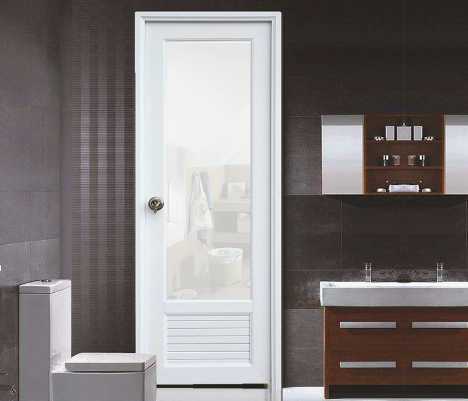
Bathrooms and wet interior areas. A 75-series UPVC bathroom door with tall upper glass and a bottom louver combines daylight, ventilation and privacy — a ventilation path matters in wet rooms where condensation is continuous.
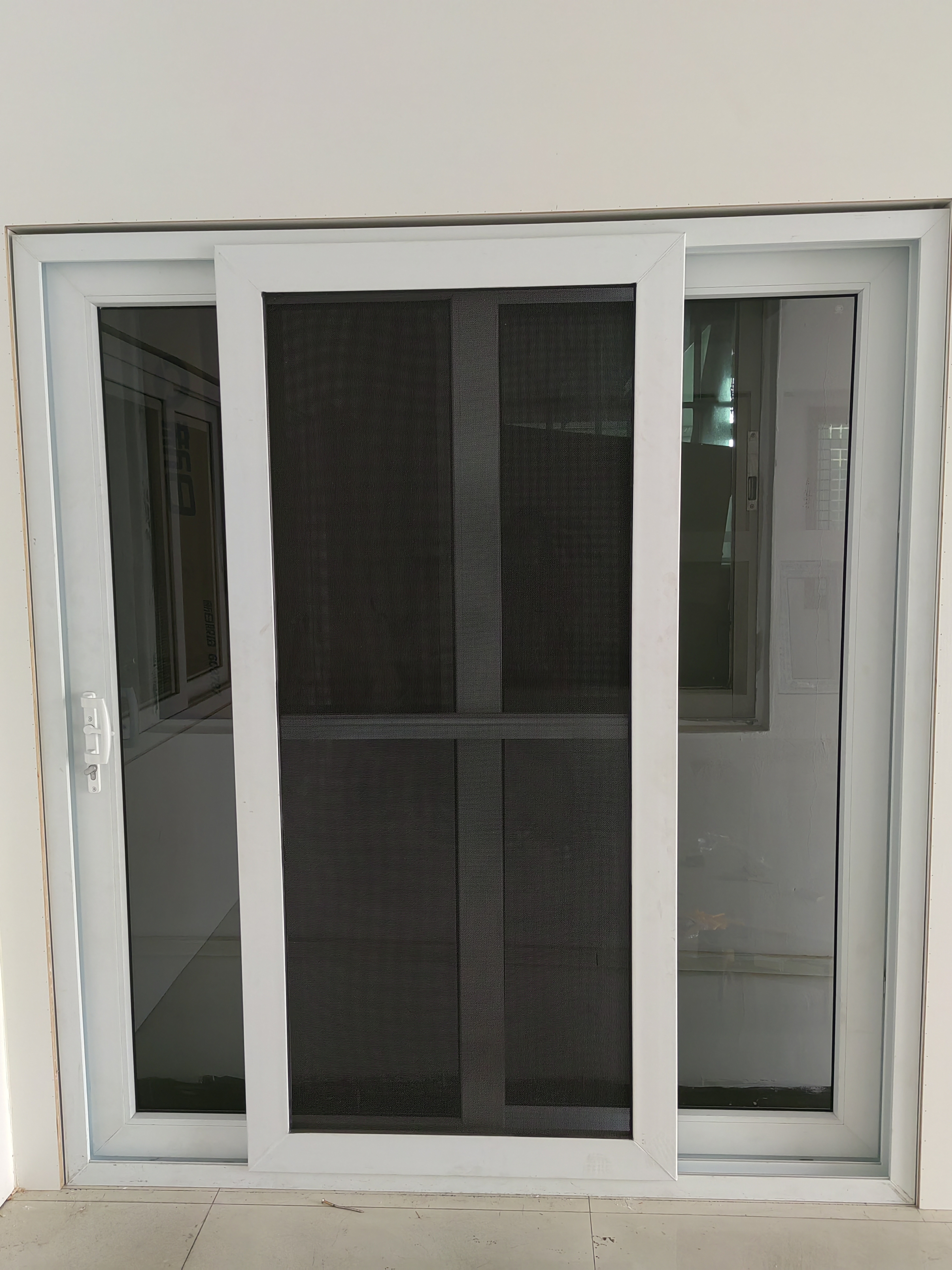
High-traffic openings that also need insect control. A 112/88-series UPVC sliding door with fly screen combines low-noise sliding operation with insect exclusion. Sliding configurations are a major share of the category, which is consistent with how often this requirement appears in residential and commercial projects.
Renovation and commercial projects. Opening sizes in renovation work rarely follow a catalogue grid. Customization of door size, specification and glass specification is what allows a manufacturer to match existing openings without weakening the sealing system or the locking arrangement.
Delivered example. A builders' project in the Bahamas used 500 ㎡ of UPVC doors and windows. The recorded result after installation was stable sealing performance, smooth switch operation and a long service life, with the specification highlighting high-quality profiles, corrosion-resistant hardware, safe tempered glass, fine workmanship, low-noise sliding, water-proof and dust-proof performance, and simple maintenance.
Comparison Table: Reinforced UPVC Doors vs Ordinary Plastic Doors
| Comparison dimension | UPVC door with galvanized steel liners | Ordinary plastic door (no reinforcement) |
|---|---|---|
| Profile structure | PVC-U profiles with internal galvanized steel liners for reinforcement | Plastic profiles without steel reinforcement |
| Strength and rigidity | Galvanized steel liners increase rigidity and wind-pressure resistance | Low rigidity; deformation risk under load or wind pressure |
| Thermal and sound insulation | Sound insulation and heat insulation are listed characteristics of the door system | Not positioned for exterior-grade performance |
| Exterior and high-rise use | Suitable for exterior doors, balcony doors and civil engineering projects | Not suitable for exterior or high-rise applications |
| Typical application | Residential, commercial, villa and renovation projects | Temporary indoor spaces and low-demand interior areas only |
| Cost over service life | Higher initial cost, long service life, stable performance | Low upfront cost, short service life, replacement risk |
| Acceptance check | Observe the profile end face to confirm the steel liner | No liner to verify; reject for exterior scope |
Limitation. This is a structural comparison, not a thermal calculation. Performance thresholds are project- and market-specific — the UK external door threshold moving to 1.2 W/m²K from 2025 is one example — so always request the U-value evidence that applies where the door will be installed.
Configuration Comparison: Matching Door Type to Project Constraint
| Door configuration | Series reference in the product set | Project constraint it addresses |
|---|---|---|
| Fully-glazed casement door | 60-series | Daylight with a sealed, hinged opening for residential and villa entrances |
| Full vertical-panel French casement door | 60-series | Wide clear opening where a two-leaf hinged door is required |
| Sliding door with fly screen | 112/88-series | High-frequency traffic plus insect control and low-noise sliding |
| Bathroom door with tall upper glass and bottom louver | 75-series | Ventilation and privacy in wet interior areas |
| Lift-and-slide and hinged door series | European/American-style door series | Large openings and standard hinged access across residential and commercial projects |
FAQ: UPVC Door Certification, Thermal Performance and Ordering
1. Which certificate should I ask for from a China UPVC door manufacturer, and is it the same as CE marking?
Ask for the certificate number, the issuing body, the referenced standard and — most importantly — the declared scope. For Foshan Nanhai Yuanzhaiji UPVC Door & Window Factory, the UPVC Door is covered by an ECM Attestation under EN 14351-1:2006+A2:2016, certificate number NO.3N230816.YCPQQ51, issued by Ente Certificazione Macchine Srl (ECM) on 2023-08-16 and valid until 2028-08-15. It is a voluntary certification and is intended for third countries outside the EU market, and its scope covers UPVC windows and doors with profile series 50/60/65/80/88/112. Under the EN 14351-1 framework, doors placed on the EU market are expected to be supported by a factory production control system, a Declaration of Performance and CE marking. The two documents serve different markets, so confirm with the supplier which one applies to the country where your project is being built.
2. How do I verify thermal and sound insulation on a UPVC door from a Chinese manufacturer?
Verify it in two steps. First, confirm the material data and the models it applies to: the UPVC material used for these doors has a density of 1520 kg/m³, a Vicat softening point of 86 °C, a flexural modulus of elasticity of 2840 MPa, a tensile yield stress of 43 MPa and a tensile strain at break of 186%, and the 1520 kg/m³ density and 86 °C Vicat softening point specification applies to door models HF60, WYK75-1 and HF88-L. Sound insulation and heat insulation are listed characteristics of this door system. Second, compare against the regulatory threshold in your market — the UK Future Homes Standard and Approved Document L reduce the maximum U-value for external doors from 1.6 W/m²K to 1.2 W/m²K from 2025 — and request the test evidence that corresponds to that threshold. A Quality Inspection Report and after-sales technical consultancy and quality testing are part of the standard support package for these doors.
3. What is the minimum order quantity and what drives the cost of a UPVC door order?
The MOQ is 30–40 ㎡, against a monthly capacity of 4000 ㎡. Cost is driven by the variables that are customizable — door size, specification and glass specification — together with the profile series selected (60/65/88 series are supplied, with co-extruded colour, laminated wood-grain and solid colour finishes available) and the hardware package. Because these variables move together, the productive comparison is between complete, documented door sets rather than between headline prices: a steel-lined UPVC door has a higher initial cost and a long service life, while a non-reinforced plastic door is cheaper upfront and unsuitable for exterior or high-rise use.
4. Can I validate a sample before committing to a full project order?
Yes. A sample showroom is available for one-stop purchasing, which allows a buyer to inspect profile cross-sections, reinforcement, hardware and finishes before committing to full production. When reviewing the sample, check the profile end face for the internal galvanized steel liner, confirm the gasket and weatherstrip components (EPDM sealing gasket and dust-proof pile weatherstrip), and operate the handle, hinge and roller set to assess switching. The MOQ of 30–40 ㎡ means a validation order and a project order can be planned as one sequence rather than two separate procurement cycles.
5. How long does production and delivery take, and what is the next step?
Lead time is 10–30 days, depending on the degree of customization (door size, specification and glass specification), with a monthly capacity of 4000 ㎡ to absorb larger project volumes. Doors and windows are classified under HS code 392520, so confirm the trade documentation with your broker while production is running. If you are evaluating suppliers for a specific project, send your opening schedule, glass requirement and target market to the factory through WhatsApp (+86 130-0674-7018) or by email at 1803877678@qq.com — the most useful reply is a documented door set matched to your constraint list, not a price list.
Conclusion: Compliance Is a Document Set, Not a Door Type
Buyers searching for UPVC doors rarely lack options; they lack a way to tell which options are documented. The four constraint layers in this guide — certification with a named scope, material data bound to specific models, visible internal reinforcement, and clearly stated commercial terms — convert an ambiguous category into a comparable one. Applied to the example manufacturer, that means an ECM Attestation under EN 14351-1:2006+A2:2016 covering profile series 50/60/65/80/88/112 and valid until 2028-08-15, material values of 1520 kg/m³ density, 86 °C Vicat softening point, 2840 MPa flexural modulus, 43 MPa tensile yield stress and 186% tensile strain at break for models HF60, WYK75-1 and HF88-L, galvanized steel liners inside the PVC-U profiles, and an MOQ of 30–40 ㎡ with a 10–30 day lead time.
The limitation to keep in mind is that documentation proves conformity, not suitability for every project: thermal thresholds, wind load classes and building access standards are set locally, and they must be checked against the market where the door will be installed. The correct sequence is to define your constraints first, then ask for the documents that answer them.
Request a Documented UPVC Door Quotation
Send your opening schedule, glass specification and target market to Foshan Nanhai Yuanzhaiji UPVC Door & Window Factory. You can request the ECM Attestation under EN 14351-1:2006+A2:2016, material data for HF60, WYK75-1 and HF88-L, and a sample arrangement for validation.
WhatsApp / Tel: +86 130-0674-7018 | Email: 1803877678@qq.com | Website: yuanzhaiji.com
Have Questions or Need More Details?
Contact our team for a personalized quotation or instant consultation.
Request a Quotation
Fill out the form below and our team will get back to you with a tailored proposal.
WhatsApp Direct Chat
Prefer to chat in real-time? Message us on WhatsApp for instant assistance & quick answers.
- Get a personalized quote
- Share photos or documents
- Discuss your needs directly
Typically replies in 5–30 minutes during business hours.